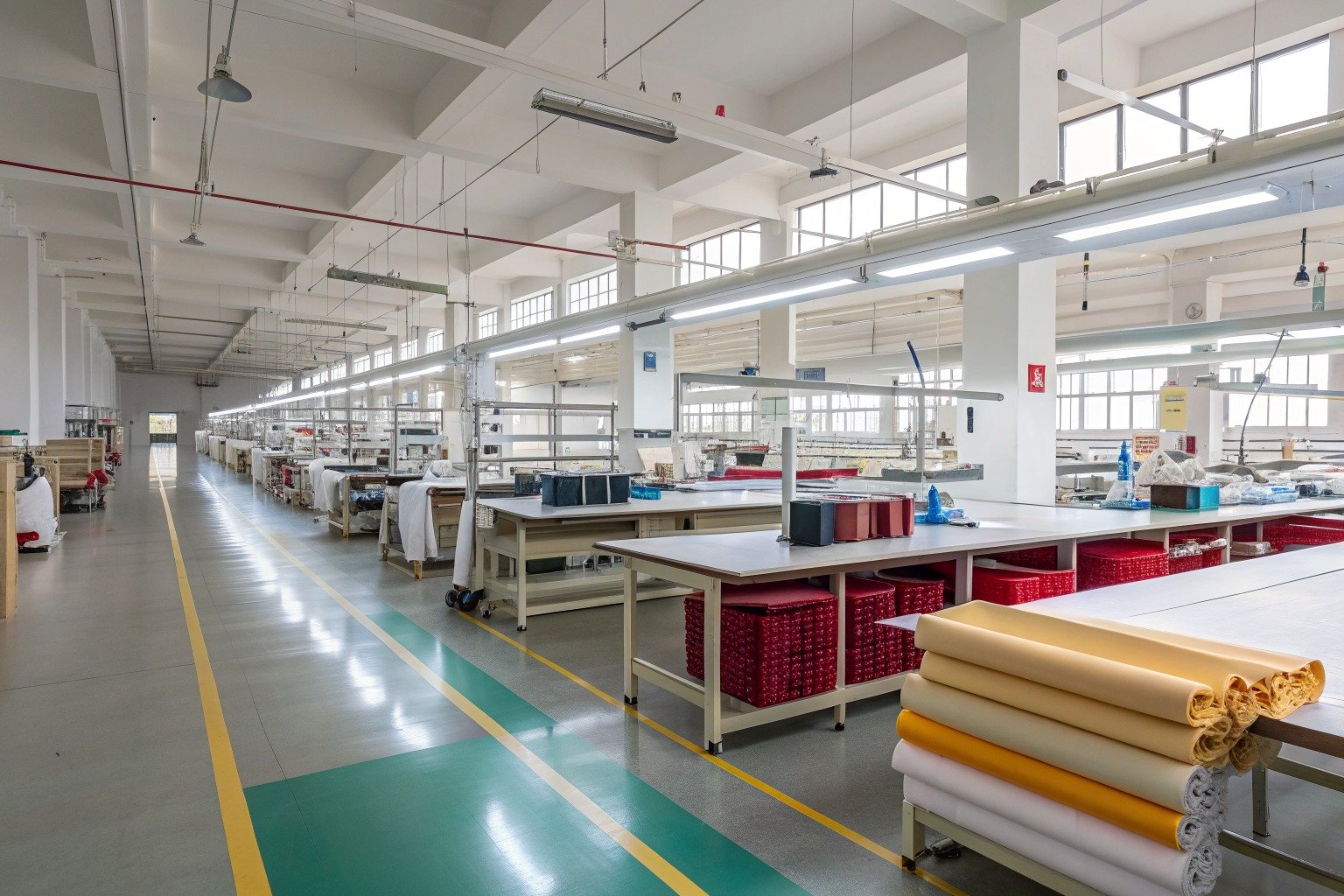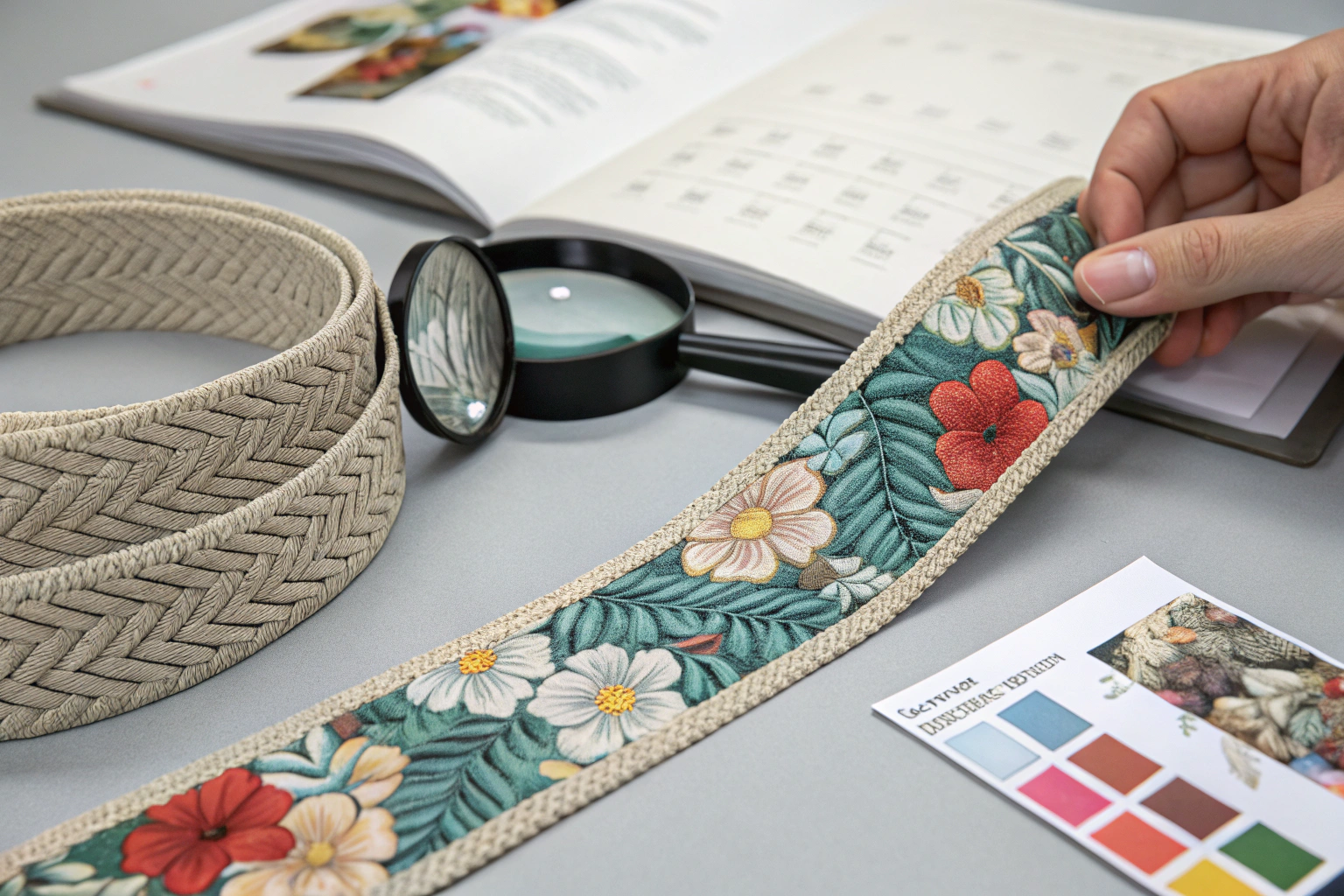
I once sat in a meeting with a menswear brand owner who had just received a shipment of belts that looked nothing like the samples. He had ordered a striped pattern that was supposed to be woven into the fabric, a classic grosgrain look with textured, dimensional stripes. What arrived was a flat polyester belt with the stripe pattern printed on the surface. The print was already cracking at the buckle fold point after just a few wears. His customers noticed. His returns spiked. The supplier had substituted a cheaper production method without informing him, and he did not know enough about the difference to catch it in the sample photos. That meeting was painful, but it taught both of us a lesson that every belt importer needs to learn.
The fundamental difference between a woven belt and a printed belt from a Chinese supplier is how the design is created. A woven belt uses different colored yarns physically interlaced on a loom to form the pattern as an integral part of the fabric structure. The design goes all the way through the material. A printed belt starts with a pre-made blank fabric, usually a solid white or natural polyester or cotton webbing, and applies the pattern onto the surface using heat transfer, screen printing, or digital printing technology. The design sits on top of the material. This single distinction cascades into differences in durability, cost, texture, minimum order quantities, production lead times, and the very character of the finished product.
At our factory in Zhejiang, we produce both woven and printed belts, and I believe the right choice depends entirely on your brand positioning, your budget, and your customer’s expectations. Neither is universally superior. But confusing one for the other, or being sold a printed belt at a woven belt price, is a costly error that I want to help you avoid. Let me walk you through exactly how each is made, how they differ in cost and performance, and how to specify your requirements so that what arrives in your warehouse is exactly what you approved.
How Are Woven Belts Manufactured and What Makes Them Unique?
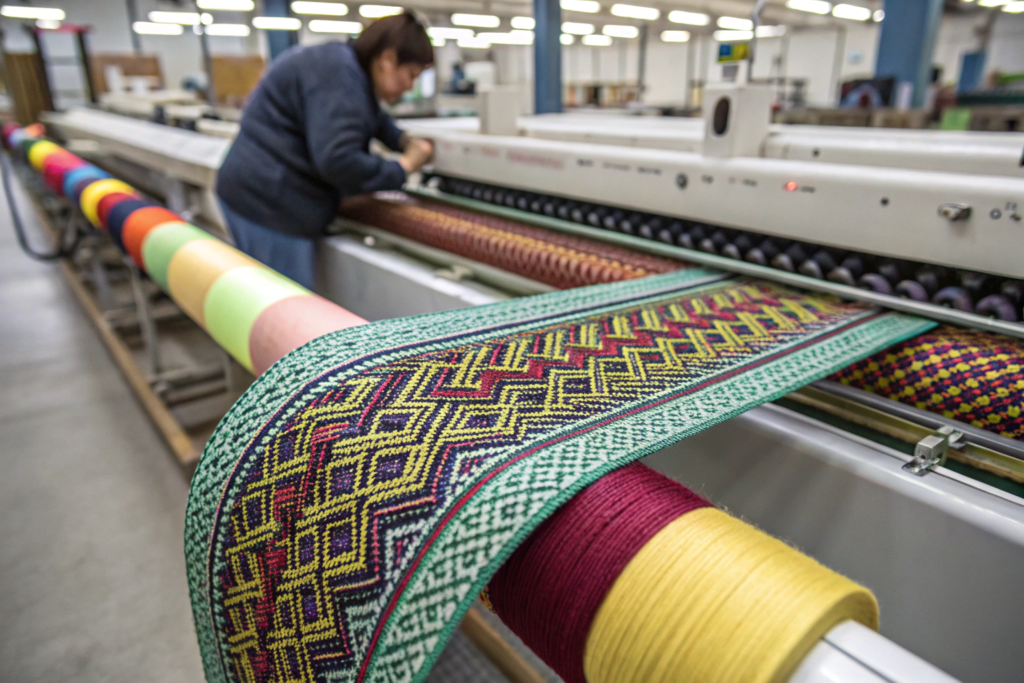
Woven belt production begins with yarn, not fabric. This is the defining characteristic that shapes everything about the final product. The design exists as a digital file that instructs a jacquard loom which of dozens or hundreds of individual yarn threads to lift and which to lower with each pass of the weft. The pattern is constructed thread by thread, line by line, in three-dimensional relief. A woven belt is not decorated. It is engineered from the raw material up.
This manufacturing process gives woven belts their signature characteristics. The pattern has physical depth. You can feel the texture with your fingertip. The colors are saturated and permanent because they are the color of the yarn itself, not a surface coating. The belt is fully reversible in many weaves, with the pattern appearing in negative on the back. The edges are naturally finished by the weave structure and do not require hemming. These qualities position woven belts in the premium segment, where customers expect longevity, texture, and a hand-feel that communicates quality.
What types of looms produce different woven belt qualities?
The loom is the primary determinant of a woven belt’s quality and design capability. Needle looms are the most common for standard webbing and simple striped patterns. They are fast, efficient, and produce a consistent, tight weave suitable for utilitarian belts, bag straps, and basic fashion belts. Jacquard looms are the advanced machines for complex patterns. A computerized jacquard head controls each warp thread individually, allowing for intricate geometric designs, brand logos, photographic-like tonal patterns, and multi-color motifs that a needle loom cannot achieve. The hook count of the jacquard head determines the resolution. A 640-hook loom produces finer detail than a 384-hook loom. We invest in high-hook-count jacquard looms specifically to serve brand clients who require detailed, exclusive patterns. The jacquard weaving technology is the gold standard for premium woven belts. When discussing a woven belt order, ask your supplier what type of loom will be used and what the hook count is. A supplier who cannot answer this question is likely a trading company that does not control production.
Why does yarn dyeing before weaving create permanent, fade-resistant color?
In a woven belt, the yarn is dyed before it reaches the loom. This is called yarn-dyed or piece-dyed construction. The dye penetrates the entire fiber structure under controlled heat and pressure, and the color is fixed through a chemical bonding process before the weaving begins. The result is a color that is integral to the material, not applied on top of it. A woven belt can be washed, rubbed, folded, and exposed to sunlight for years without the pattern fading, peeling, or cracking. The color literally runs through the entire thickness of the yarn. This permanence is a key selling point for brands that position their belts as durable, long-lasting products. The yarn dyeing process adds cost and lead time compared to piece-dyeing or printing, but it delivers a level of colorfastness that printed products cannot match. When a customer runs their fingers over a woven belt, they feel the individual colored threads. That tactile experience is the physical proof of the manufacturing quality.
How Are Printed Belts Produced and Where Do They Excel?
Printed belt production begins with a finished blank fabric, typically a tight-woven polyester webbing or a smooth cotton canvas. The fabric is produced in large, undyed batches and stockpiled as raw material. When an order comes in, the design is printed onto the surface of this blank fabric using heat transfer, screen printing, or digital inkjet printing. The printed fabric is then cut into belt lengths, the ends are finished, and the buckle hardware is attached.
The defining advantage of printed belts is design freedom. Because the pattern is applied as an image file, there are virtually no limits on color count, gradient complexity, or photographic detail. A printed belt can reproduce a watercolor painting, a photograph, a complex ombre gradient, or a design with twenty distinct colors with absolute fidelity. Woven belts are limited by the number of yarn colors that can be physically loaded onto the loom. Printed belts have no such limitation. This makes printed belts the preferred choice for brands with highly detailed, colorful, or photographic design aesthetics.
What is the difference between heat transfer, screen, and digital belt printing?
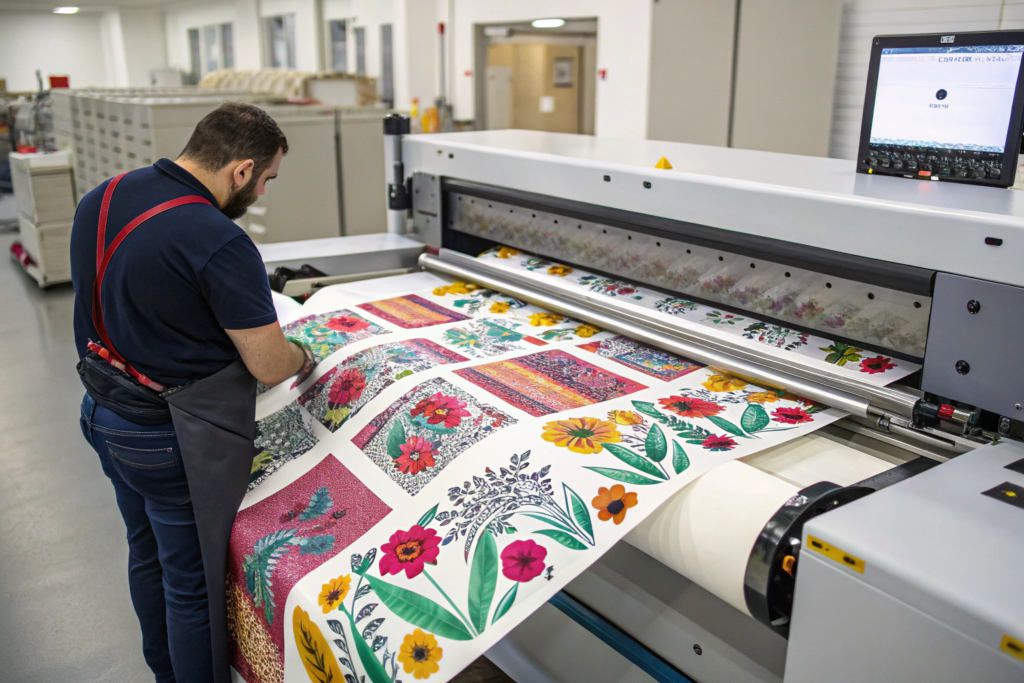
Heat transfer printing involves printing the design onto a special release paper using sublimation inks, then using a heat press to transfer the image from the paper to the polyester webbing. The heat turns the ink into a gas that penetrates the polyester fibers and solidifies inside them. This produces a vibrant, durable print on polyester, but it does not work on natural fibers like cotton. Screen printing uses a fine mesh screen for each color in the design. Ink is pushed through the screen onto the belt surface, one color at a time. It produces a thick, opaque, highly durable print, but each color adds setup cost, making it economical only for simple designs at higher quantities. Digital inkjet printing sprays microscopic ink droplets directly onto the belt surface, curing instantly under UV light or heat. It requires no screens, so it handles unlimited colors and photographic detail at no additional setup cost. Digital printing is ideal for small-batch, highly detailed designs. This digital textile printing technology has transformed the printed belt market by making short-run, full-color production economically viable.
Why are printed belts ideal for high-detail, multi-color designs?
A woven belt with eight colors requires eight separate yarn cones, each loaded onto the loom, each tensioned correctly, and each managed through the weaving process. Adding a ninth color means adding a ninth yarn, which may require a higher-capacity loom. A printed belt with twenty colors requires no additional setup. The digital file contains all twenty colors, and the printer reproduces them in a single pass. This makes printed belts the superior choice for designs with gradients, photographic elements, fine typography, or complex illustrations. The print color gamut achievable with modern digital printers is exceptionally wide, covering a large percentage of the Pantone color space. For brands whose identity is built on specific, vibrant brand colors, printed belts offer color accuracy that woven belts, with their physical yarn limitations, cannot always match precisely.
What Are the Key Differences in Durability Between Woven and Printed Belts?
Durability is where the structural difference between woven and printed belts becomes most apparent to the end consumer. A belt is a stressed accessory. It is pulled, bent, buckled, unbuckled, rubbed against belt loops, and exposed to sweat, rain, and sunlight. The failure modes for woven and printed belts are fundamentally different because the design is structural in one and surface-applied in the other.
A woven belt’s pattern cannot peel, crack, or flake off because there is nothing on the surface to peel. The pattern is the fabric. The primary failure mode for a woven belt is abrasion, the gradual wearing away of the yarn fibers on the surface, which dulls the pattern over a long period. A printed belt’s pattern exists as an ink layer bonded to the fabric surface. The primary failure modes are flex cracking at stress points like the buckle fold, and surface abrasion that physically removes the printed ink. These are different timelines and different visual outcomes.
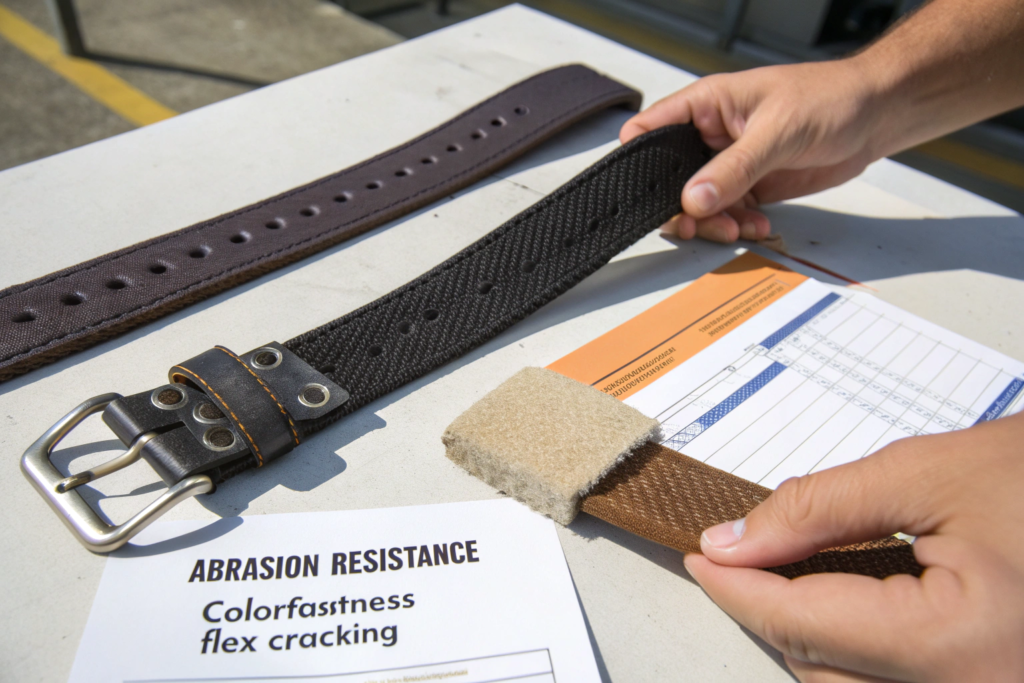
How does the buckle fold point test reveal the structural difference?
The buckle fold is the most concentrated stress point on any belt. Every time the wearer fastens the belt, the leather or webbing bends sharply around the buckle bar. A woven belt at this point bends its yarns, which are flexible and resilient. The pattern may experience some surface fuzz over thousands of cycles, but the color and design remain intact because they exist throughout the yarn structure. A printed belt at this point bends the ink layer. Inks, even flexible textile inks, are less elastic than polyester yarn. Over repeated flexing, the ink layer can develop micro-cracks that grow into visible cracks. The white or natural base fabric becomes visible through the cracks. This is the most common durability complaint with printed belts, and it is the reason we recommend woven construction for any belt that will experience frequent, repeated buckling, such as a daily-wear casual belt. The flex cracking resistance is a measurable property that differentiates the two constructions.
Which belt type offers better resistance to abrasion and fading?
Abrasion resistance depends on the specific materials and finishes, but there are general truths. A woven belt made from high-tenacity polyester or nylon yarn has excellent abrasion resistance because the yarn itself is tough, and the weave structure presents a textured surface that distributes rubbing force across many high points. A printed belt’s abrasion resistance depends almost entirely on the ink adhesion and the protective topcoat. A high-quality digital print with a polyurethane topcoat can have very good abrasion resistance. A low-quality heat transfer print with no topcoat can begin to show wear within weeks of regular use. Fading from sunlight exposure follows a similar pattern. Yarn-dyed colors in woven belts are inherently lightfast because the pigment is locked inside the fiber. Printed colors depend on the lightfastness of the ink chemistry and the UV-blocking properties of any topcoat. We test both belt types for colorfastness to light and provide the test results to clients who require documented durability specifications.
How Do Minimum Orders, Pricing, and Lead Times Compare?
The structural differences between woven and printed belts translate directly into different commercial terms. Understanding these differences allows you to choose the right production method for your business model, whether you are a startup testing a first design or an established brand placing a replenishment order for a best-selling pattern.
Woven belts generally have higher minimum order quantities, higher per-unit costs, longer lead times, and significant upfront setup costs for yarn dyeing and loom programming. These costs reflect the material and labor intensity of the weaving process and the setup required to change from one design to another. Printed belts have lower minimums, lower per-unit costs, shorter lead times, and minimal setup costs, especially with digital printing. These advantages reflect the efficiency of printing on stock blank webbing and the ease of changing designs digitally.
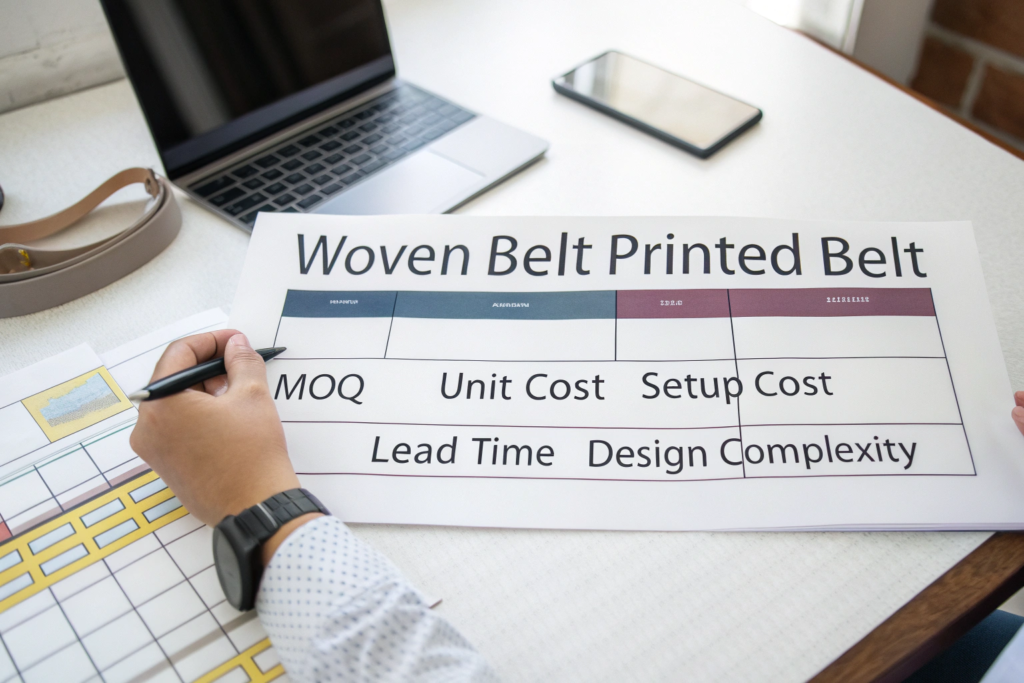
What is the typical MOQ difference between woven and printed belt orders?
A custom woven belt typically requires a minimum order of 500 to 1,000 pieces per design. This minimum is driven by the yarn dyeing minimums at the dye house and the loom setup time at the weaving mill. The dye house has a minimum dye lot per color, and that minimum lot of yarn will produce a certain number of belts. Ordering fewer belts than that yarn lot can produce means wasting dyed yarn, which the factory cannot afford to absorb. A custom printed belt using digital printing can be ordered in quantities as low as 100 to 300 pieces per design. The blank webbing is a stock material, and the digital printer can switch designs instantly with no physical setup. This minimum order quantity comparison makes printed belts the accessible entry point for small brands and market testing. Woven belts become economical at the scale-up stage when a design has proven demand.
Why do woven belts carry a higher per-unit cost than printed equivalents?
The cost difference is rooted in the manufacturing process. Woven belt production is slower. A jacquard loom weaves a few meters of patterned fabric per hour. The yarn must be dyed, wound, warped, and threaded through the loom before production begins. Skilled operators monitor the weaving and repair broken yarns. All of this labor and machine time adds cost per unit. Printed belt production is faster. The blank webbing is produced in high volumes on high-speed needle looms. The printing, especially heat transfer or digital, is a rapid, automated process that can produce hundreds of meters of printed webbing per hour. The labor content is lower, and the machine throughput is higher. The result is a per-unit cost for printed belts that is typically 30% to 50% lower than a comparable woven belt. The manufacturing cost structure is not a reflection of quality but of the inherent efficiency of the two processes. A brand choosing woven belts is paying for the permanent, textured, yarn-dyed quality. A brand choosing printed belts is paying for design flexibility and accessible entry quantities.
Conclusion
The choice between a woven belt and a printed belt from a Chinese supplier is not a choice between good and bad. It is a choice between two different value propositions, each suited to a different brand strategy. Understanding the difference allows you to make that choice intentionally rather than having it made for you by a supplier who ships whatever is cheapest to produce.
A woven belt offers a pattern that is part of the fabric. It will not crack, peel, or fade in the way a surface print might. It has a three-dimensional texture that communicates quality to the touch. It is the premium option for brands that position themselves on durability, craftsmanship, and timeless design. A printed belt offers unlimited design complexity. It can reproduce photographs, watercolors, and intricate graphics with a color fidelity that weaving cannot match. It is the accessible option for brands that prioritize visual impact, design variety, and fast market entry.
When you specify your belt order, know which construction you are requesting. Ask your supplier to confirm the production method in writing. Request a cross-section photo of the belt that shows whether the pattern is woven through or printed on the surface. These simple steps protect you from the costly substitution that my menswear client experienced.
If you are developing a belt collection and want to explore both woven and printed options with a supplier who will clearly explain the trade-offs and deliver exactly what is specified, we can provide samples of both constructions with your design. Our Business Director Elaine manages belt programs for our brand clients and can guide you through the technical and commercial considerations. Contact her directly at elaine@fumaoclothing.com. A belt is a daily-wear product. Make sure yours is built the way your customer expects.