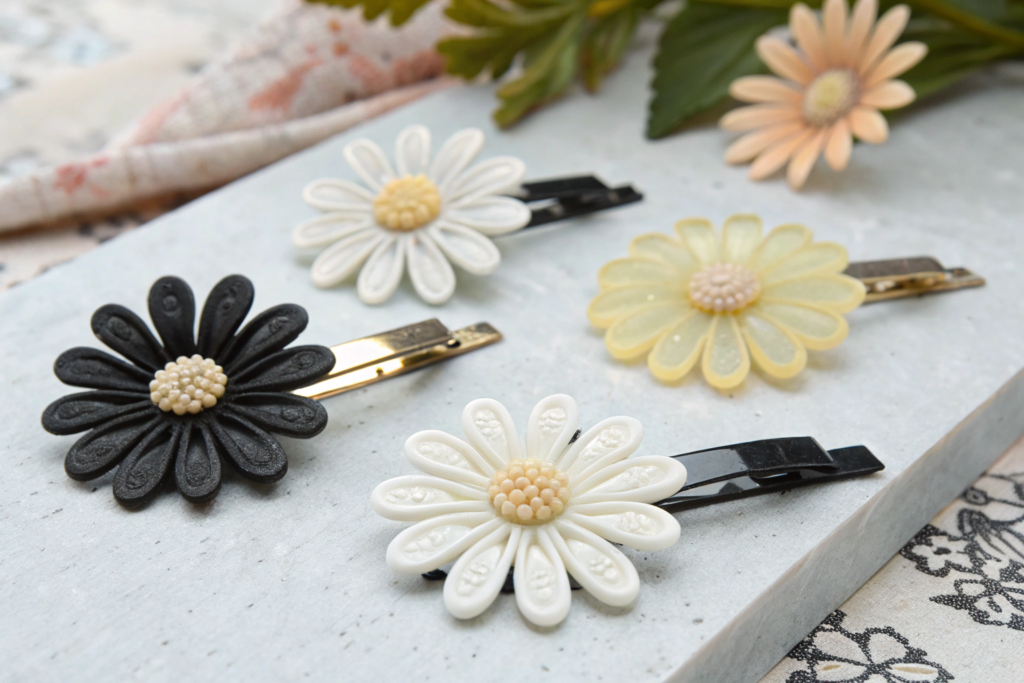
You browse the hair accessories aisle of a fast-fashion retailer in early spring. The wall is covered in daisy clips. White petals, yellow centers. They look exactly like the daisy clips from last year, and the year before that. The consumer walks past them without slowing down. The daisy, one of the most beloved floral motifs in hair accessories, has become invisible through ubiquity. The same five-petal, yellow-center, white-petal design has been produced by every factory for a decade. The trend hasn’t died. It has gone dormant, waiting for a design refresh that makes the daisy feel new again.
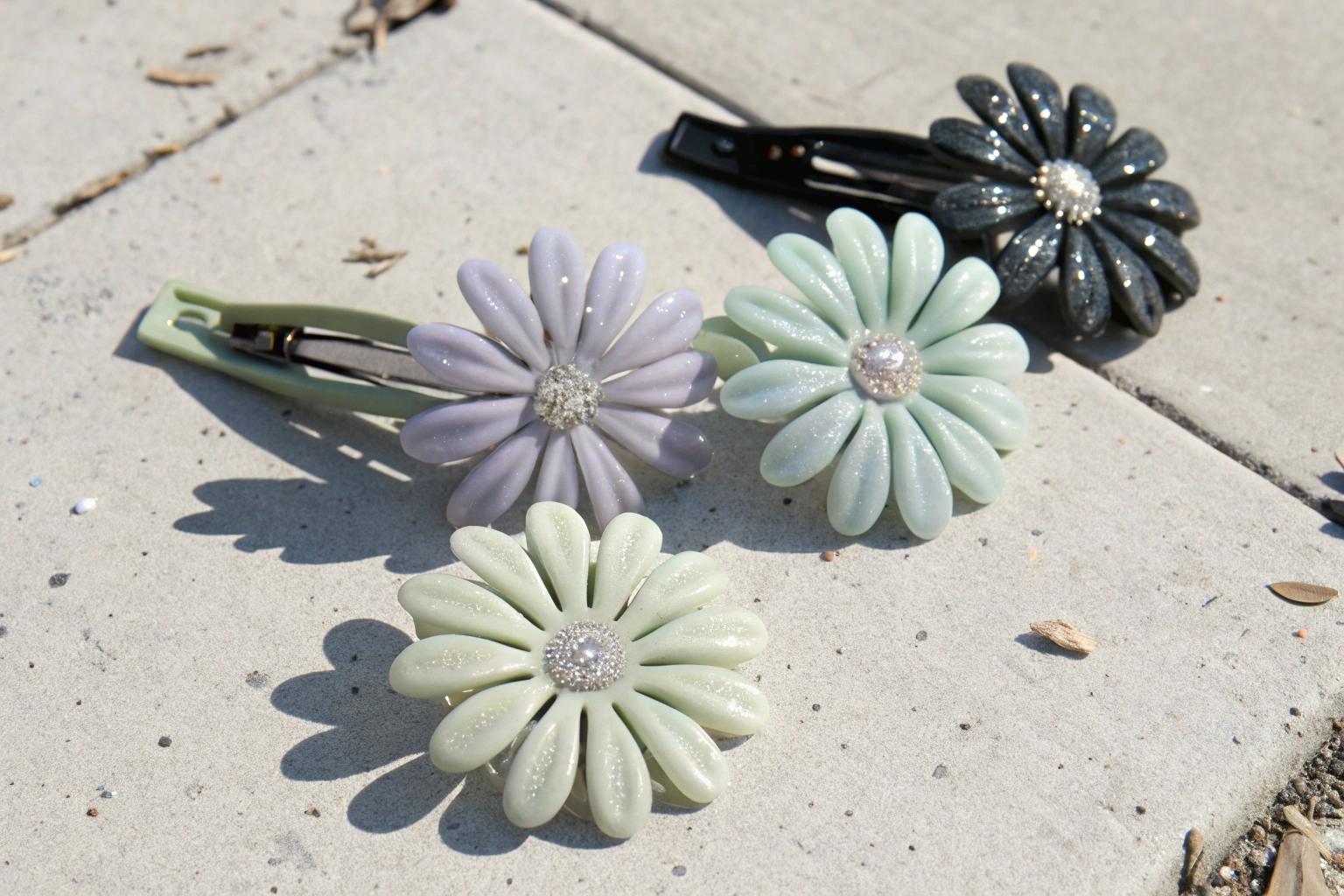
The 2026 daisy hair clip trends are defined by three dramatic design shifts away from the classic white-and-yellow: a "monochrome matte" daisy where the entire flower, petals and center, is cast in a single matte acetate shade like sage green, terracotta, or dusty lavender, creating a sculptural, tonal accessory; a "translucent jelly" daisy made from semi-transparent, colored acetate with a glossy, wet-look finish, often with a subtle glitter suspension inside the material; and an "outsized scale" daisy where the flower diameter is increased from the standard 3 to 4 centimeters to a dramatic 8 to 12 centimeters, transforming the clip into a statement piece that covers a significant portion of the wearer’s hair.
These three trends share a common thread: the daisy is no longer a literal representation of a flower. It is a sculptural shape that can be rendered in unexpected materials, colors, and scales. I want to break down each trend, the acetate formulations and mold designs required to produce them, and how our Zhejiang facility is helping brands transition from the classic daisy to the 2026 daisy.
Why Is the "Monochrome Matte" Daisy Replacing the Classic White and Yellow?
The white-petal, yellow-center daisy is a literal representation of a flower. It is cheerful, feminine, and timeless. It is also overexposed. The consumer who has seen this exact clip in every store for a decade no longer registers it as a fashion choice. It has become a default, not a decision. The monochrome matte daisy breaks the literal connection to the flower and transforms the clip into a color-blocked, sculptural accessory.
The monochrome matte daisy replaces the classic two-tone design by casting the entire flower, petals, center, and any leaf detail, in a single, solid matte acetate color. The visual interest comes from the play of light and shadow on the three-dimensional petal surfaces, not from color contrast. A sage green daisy in matte finish reads as a sophisticated, contemporary accessory that happens to be flower-shaped, rather than a literal flower pinned to a child’s hair.
We achieve the matte finish by bead-blasting the injection mold cavity with a fine glass bead media. This creates a microscopically textured surface on the mold steel, which transfers to the acetate during injection molding. The acetate piece emerges from the mold with a soft, non-reflective, almost suede-like surface texture. This eliminates the high-gloss, plastic-like shine that makes a standard acetate clip look inexpensive. Our custom acetate hair clip production includes this matte finish as a standard option.

What acetate colors are most requested for the monochrome daisy trend?
The 2026 color palette for monochrome daisies is drawn from the broader fashion trend toward earthy, muted tones. Sage green, terracotta, dusty lavender, warm sand, and charcoal grey are the five most requested colors. These shades coordinate with the neutral, tonal dressing trend and work across multiple seasons. A terracotta daisy reads as autumnal in September and as a warm neutral against a white linen dress in July.
How does the bead-blasted matte finish hold up to handling and wear?
A matte finish achieved through surface texture is permanent. It cannot rub off, unlike a matte spray coating. The texture is embedded in the acetate itself. It does, however, require slightly more care to keep clean, as skin oils can create shiny spots on a matte surface over time. We advise consumers to gently wipe the clip with a dry microfiber cloth.
What Is the "Translucent Jelly" Daisy and How Is It Produced?
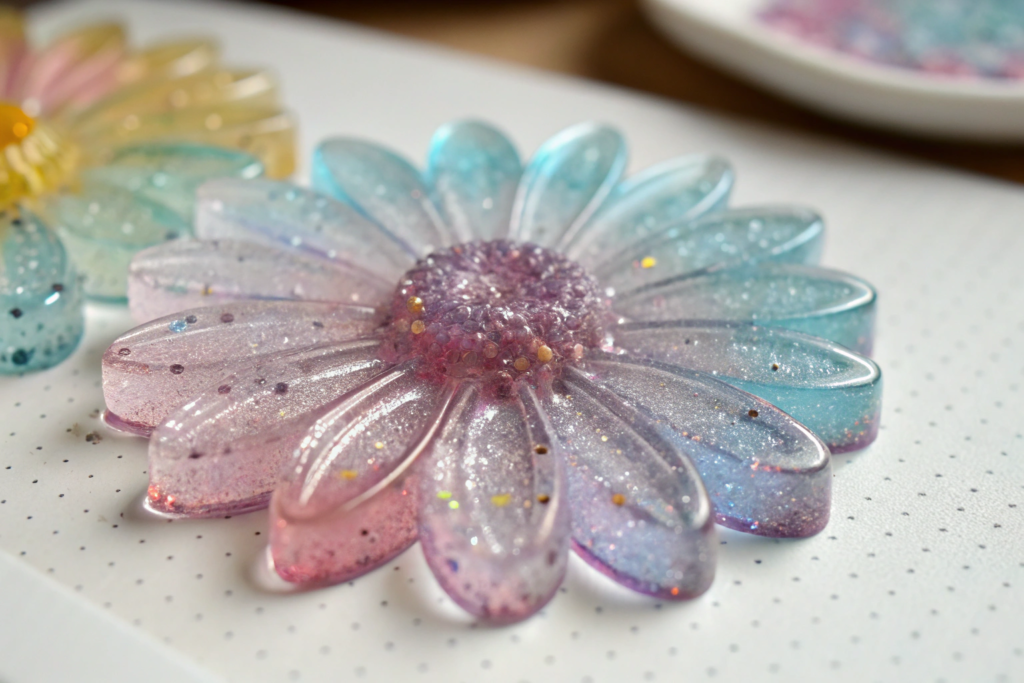
The translucent jelly daisy looks like a piece of hard candy. Light passes through the acetate, creating a glowing, dimensional effect that a solid opaque clip cannot achieve. The material itself becomes the decorative feature, with the flower shape acting as a frame for the color and light.
The translucent jelly daisy is produced using a crystal-clear acetate base that is tinted with a transparent dye rather than an opaque pigment. The dye colors the material without blocking light transmission, creating a see-through, glass-like appearance in shades like translucent lavender, jelly pink, clear amber, and aqua blue. A fine, cosmetic-grade glitter, typically 0.2-millimeter hexagonal particles, can be suspended in the acetate during the mixing phase to add a subtle, scattered sparkle that catches the light without looking like a child’s craft project.
The technical challenge is achieving a perfectly clear, bubble-free acetate piece. Air bubbles trapped in the acetate during injection molding are invisible in an opaque piece but glaringly obvious in a translucent piece. We address this by pre-drying the acetate resin to a moisture content below 0.02%, using a slower injection speed to allow air to vent from the mold cavity, and maintaining a precisely controlled barrel temperature to prevent the acetate from thermally degrading and producing gas bubbles.
Does the translucent acetate yellow over time with UV exposure?
Standard acetate is susceptible to UV yellowing. A clear jelly clip left in direct sunlight for extended periods will develop a yellowish cast. We add a UV stabilizer additive to the acetate resin for all translucent colors. This additive absorbs UV radiation and dissipates it as harmless heat, protecting the polymer chains from degradation. The stabilized acetate retains its clarity for the expected life of the accessory.
Can the glitter be customized to match a brand’s signature color?
Yes. We stock glitter in standard silver, gold, and holographic finishes. For a custom brand color, we source a cosmetic-grade glitter in the specific Pantone-matched shade. The minimum order for a custom glitter color is 500 clips, which covers the glitter supplier’s minimum batch size and the acetate mixing set-up.
How Is the "Outsized Scale" Daisy Clip Constructed to Stay in Hair?
A standard daisy clip is 3 to 4 centimeters in diameter. It clips into the hair and sits discreetly against the head. An outsized daisy clip, at 8 to 12 centimeters in diameter, is a fundamentally different product. It is a statement piece that behaves more like a small hat than a hair clip. The engineering challenge is keeping a large, relatively heavy acetate object securely attached to the hair without pulling or sliding out.
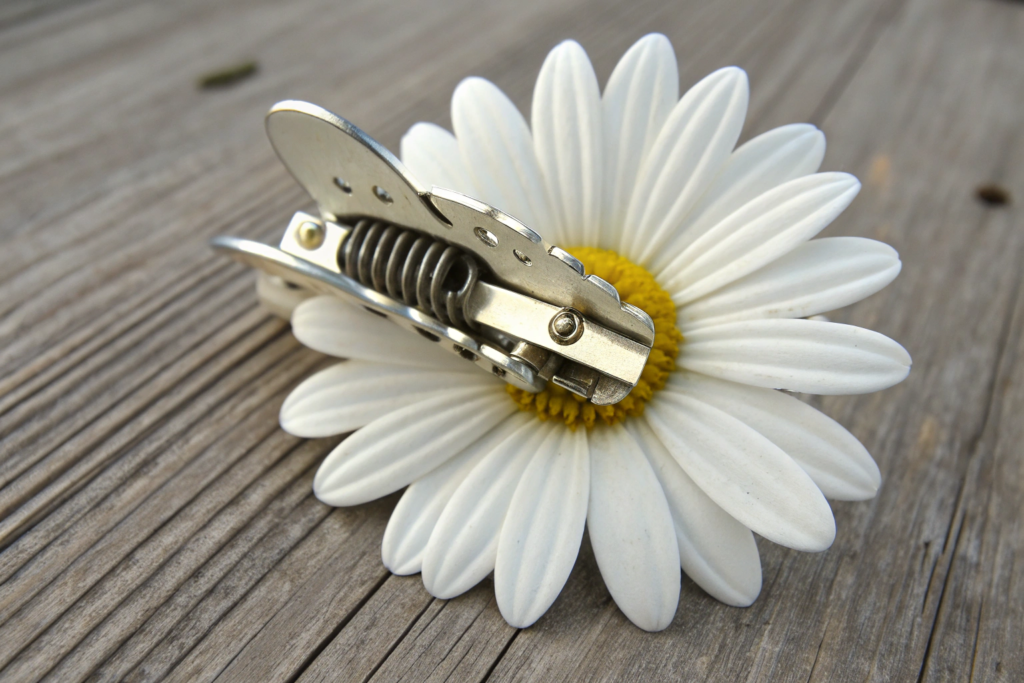
The outsized scale daisy clip is constructed with three structural adaptations to manage the increased weight and size: a reinforced spring hinge with a higher tension torsion spring, specified at 4.5 to 5.5 Newtons of closing force compared to 2.5 to 3.5 Newtons for a standard clip; a larger, deeper jaw profile with a 15-millimeter opening depth to accommodate a thicker section of hair; and a soft, clear silicone grip strip molded directly into the inner jaw surface to prevent the clip from sliding down the hair shaft over the course of the day.
The spring tension increase is critical. A standard spring on a 10-centimeter clip is too weak. The weight of the acetate, combined with the lever arm length of the large diameter, creates a significant rotational force that a standard spring cannot resist. We tested spring forces at different diameters and arrived at the 4.5 to 5.5 Newton specification through iterative prototyping with a mechanical wig form.
What is the weight of an outsized daisy clip, and is it comfortable?
A 10-centimeter daisy clip weighs approximately 45 to 55 grams in acetate. This is significantly heavier than a 12-gram standard clip but still within the comfort range for a statement accessory worn for a few hours. We reduce weight by hollowing out the back of the clip body, creating a honeycomb internal structure that removes approximately 30% of the acetate mass while maintaining the full front surface area.
How does the silicone grip strip stay attached to the acetate jaw?
The silicone strip is molded in place using a two-shot injection process. The acetate jaw is molded first, then the part is transferred to a second mold cavity where the liquid silicone rubber is injected directly onto the acetate surface. The silicone chemically bonds to the acetate during the heat-curing process, creating a permanent, non-peelable grip surface.
What Hair Types and Styling Techniques Does the 2026 Daisy Clip Suit?
The three daisy clip trends appeal to different hair types and styling preferences. A clip that is perfect for fine, straight hair may slip out of thick, curly hair immediately. The monochrome matte, the translucent jelly, and the outsized scale each find their ideal match in a specific consumer and styling context.
The monochrome matte daisy in standard 4-centimeter size suits fine to medium hair and is styled as an accent piece, clipped at the temple to hold back a side section. The translucent jelly daisy, also in a 3 to 4-centimeter size, suits all hair types and is often worn in multiples, three or four clips scattered through a half-up hairstyle. The outsized scale daisy, at 8 to 12 centimeters, requires medium to thick hair with enough volume to support the clip’s weight and is styled as a single, focal-point piece at the back of the head or low on one side.
We include a styling guide card with every wholesale order, illustrating the recommended placement and hair type for each clip size and style. This card is designed for the retail sales associate to use as a training tool, helping them recommend the right clip to the right customer.
Can the outsized daisy clip be worn in children’s hair?
We do not recommend the outsized clip for children under eight. The weight and size are not appropriate for fine children’s hair, and the clip is heavy enough that it could cause discomfort or pull on the hair. We produce a smaller, 5-centimeter version for the children’s market with a proportionally lighter spring and a smaller jaw opening.
Are the jelly and matte daisies available on different clip backings?
Yes, all three daisy designs are available on a standard metal spring clip, a metal snap clip for fine hair, and a soft, fabric-covered elastic hair tie backing for a softer, no-metal look. The hair tie backing is popular for the jelly daisy, as it allows the translucent clip to be worn in a ponytail or bun.
Conclusion
The 2026 daisy hair clip is not your standard white-and-yellow flower. The monochrome matte daisy in earthy tones like sage and terracotta transforms the floral shape into a sculptural, tonal accessory. The translucent jelly daisy in lavender or amber, with or without suspended glitter, uses light and color transparency as its decorative feature. The outsized scale daisy at 8 to 12 centimeters becomes a statement piece, engineered with a reinforced spring, a deeper jaw, and a silicone grip strip. These three trends revitalize a classic motif by changing the material, the finish, and the scale.
Our Zhejiang facility produces all three daisy clip trends. We stock the matte-finished acetate in five trend colors, the translucent acetate with UV stabilizer, the cosmetic-grade glitter, and the reinforced spring hardware for outsized clips. Our mold library includes daisy petal shapes in five different configurations, from classic five-petal to layered multi-petal.
If your brand is planning a daisy hair clip collection for 2026 and needs a factory that understands the trend shift from classic to contemporary, contact our Business Director, Elaine. She will send you a trend sample kit with one of each daisy style in the current palette, along with our daisy clip spec sheet and pricing tiers. Write to her at elaine@fumaoclothing.com. Let’s make the daisy fresh again.