
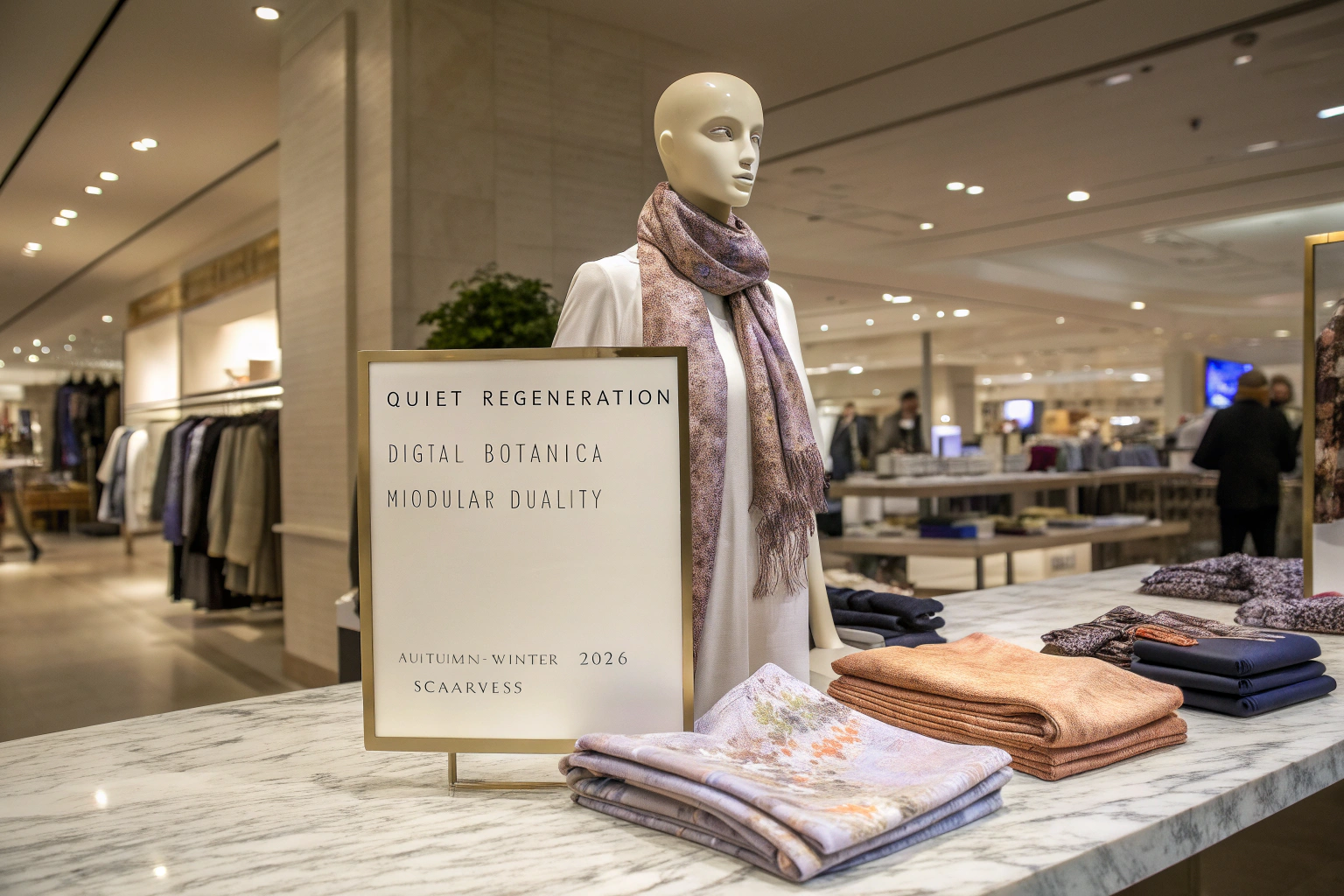
You walk into a major European department store in March 2026. The scarf wall that was packed with oversized blanket scarves and chunky wool wraps two years ago now looks completely different. The fabrics are lighter. The prints tell a story. The hangtags mention carbon-neutral dyeing and regenerative wool. A buyer who stocked up on heavy winter wraps based on 2024 trends is now staring at a wall of dead inventory while competitors sell out of whisper-weight scarves in colors that seem pulled from a desert landscape painting. The shift is not subtle. It is a wholesale generational change in what the European consumer expects from a scarf purchase.
The 2026 scarf trends for European department stores are defined by three macro movements: "Quiet Regeneration" featuring scarves made from regenerative wool and peace silk in undyed, natural cream and oatmeal tones, "Digital Botanica" showcasing AI-assisted floral prints in vibrant digital lavender and circuit bloom purple on lightweight modal-silk blends, and "Modular Duality" offering reversible two-texture scarves that combine a printed side with a solid brushed side, giving the consumer two styling options in one SKU.
These are not fringe runway experiments. These are the three trends that buying directors at Galeries Lafayette, KaDeWe, and Selfridges are writing into their fall-winter 2026 open-to-buy budgets right now. I want to break down each trend’s material composition, color palette, and the specific production techniques we are using in our Zhejiang facility to deliver them at department store quality standards.
What Is "Quiet Regeneration" and Why Are Natural Undyed Fibers Dominating?
The loud, logo-driven scarf trend is extinct in the 2026 European department store. The consumer who once wanted a giant LV monogram now craves a scarf that tells a story of soil health, animal welfare, and carbon sequestration. This is not a marketing gimmick. It is a cultural shift driven by the EU Green Deal and a post-pandemic desire for authenticity.
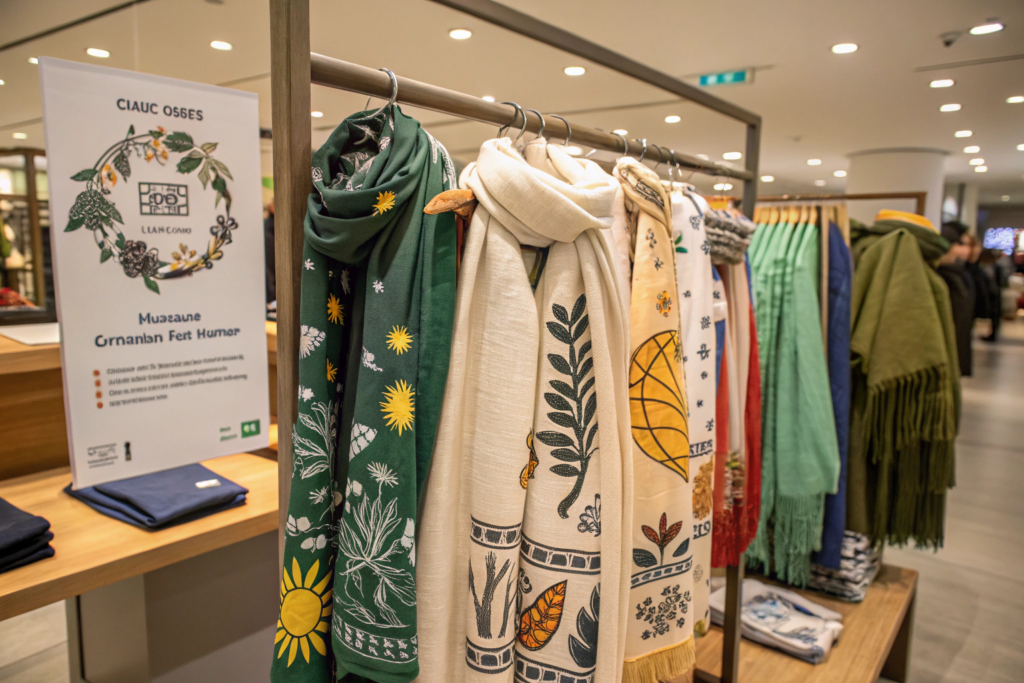
"Quiet Regeneration" is the term European buying offices are using to describe scarves made from GOTS-certified regenerative wool and peace silk in their natural, undyed state. The fibers retain the exact color of the sheep or the silkworm cocoon, a range of warm cream, oatmeal, pale grey, and soft camel. This trend dominates the luxury ground floor because it aligns with the strict EU textile sustainability mandates and the consumer’s emotional need for purity and transparency.
We source our regenerative wool for this trend from a certified farm collective in New Zealand that practices holistic grazing, a method that restores topsoil and sequesters carbon. The wool arrives in our Zhejiang facility still carrying the individual color variations of specific sheep breeds. We do not bleach it away. We blend the fibers gently to create a heathered, dimensional cream that no synthetic dye can replicate.
How does "peace silk" differ from conventional silk in scarf production?
Peace silk, also called Ahimsa silk, allows the silkworm to emerge from the cocoon naturally as a moth before the cocoon is harvested. Conventional silk boils the cocoon with the living worm inside to preserve a continuous filament. Peace silk results in broken filaments that produce a slightly nubby, matte texture rather than a perfectly slick surface. This matte, organic texture is precisely what the Quiet Regeneration trend celebrates. European department stores promote this ethical story on hangtags and shelf talkers.
What finishing techniques preserve the natural fiber integrity?
We use zero chemical softeners. Instead, we wash the finished scarf in filtered rainwater collected at our facility and air-dry it flat on mesh racks. A gentle enzyme wash removes any residual prickle factor from the wool without stripping the natural lanolin that gives the fiber its soft, slightly waxy protective feel. The result is a scarf that feels like it came directly from a small fiber mill, not a mass-production chemical bath.
What "Digital Botanica" Prints Are Selling Fast on Lightweight Modal-Silk?
The flip side of the natural undyed trend is a maximalist floral print that does not look like any flower that exists on Earth. This is not your grandmother’s rose print. "Digital Botanica" refers to floral and organic patterns either generated or heavily manipulated by AI design tools, creating surreal, hyper-detailed botanical forms in electric, digitally native color palettes.
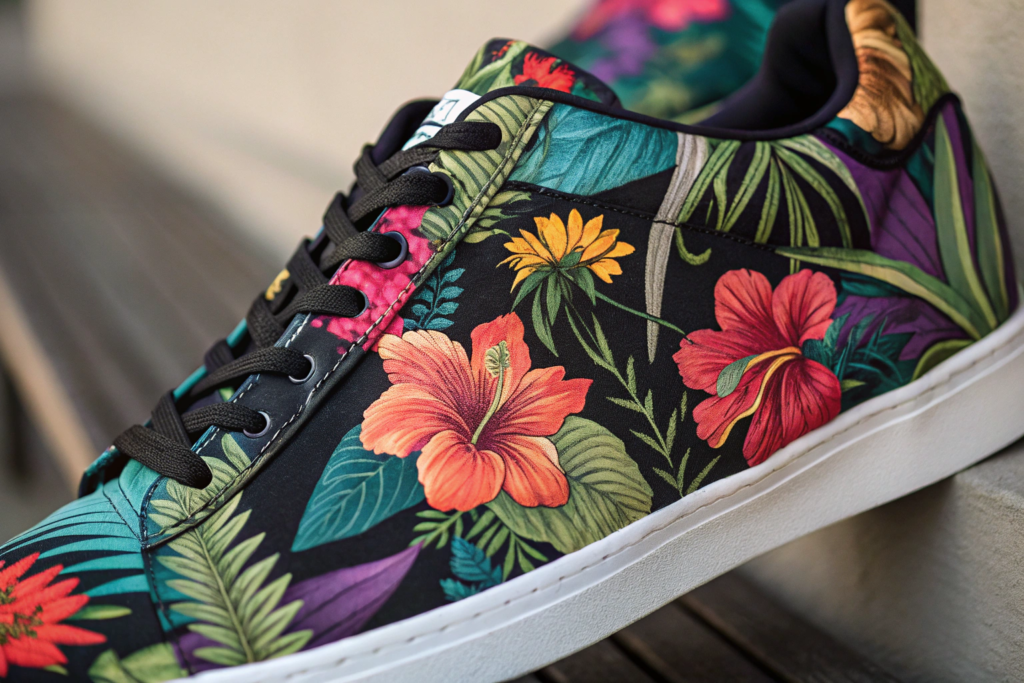
The "Digital Botanica" prints selling fastest combine AI-generated oversized abstract florals with a digital lavender, electric fuchsia, and circuit bloom purple color story printed on a featherweight 90 GSM modal-silk blend. The print captures the uncanny valley of nature, flowers that feel familiar but geometrically impossible, which appeals directly to Gen Z and Millennial consumers who live in a digitally integrated reality.
We invested in an AI design workstation six months ago. Our designer feeds prompts like "a chrysanthemum exploding into a fractal of lavender and indigo pixels" into Midjourney, then refines the output in Adobe Illustrator into a seamless repeat pattern. The result is a print that no competitor can replicate by simply copying a vintage botanical illustration. The AI origin provides a stealth layer of intellectual property protection unique to our custom scarves.
Why does the modal-silk base sell better than polyester at the department store level?
The European department store buyer is phasing out virgin polyester scarves aggressively due to microplastic shedding concerns and the upcoming EU Digital Product Passport requirements. A modal-silk blend is biodegradable, carries a natural sheen, and drapes like water against a silk blouse. The 90 GSM weight is substantial enough to tie elegantly but light enough for summer accessories.
How does digital printing achieve the electric color saturation on natural fibers?
We use a high-viscosity reactive digital ink that bonds chemically with the modal and silk cellulose fibers. The ink penetrates the yarn and becomes part of the material, rather than sitting on the surface like a pigment print. The color saturation after steam fixation is 30% more vibrant than standard pigment digital print, and the hand feel remains silky and dry.
How Does "Modular Duality" Create Two Scarves in a Single SKU?
The European consumer in 2026 is facing economic pressure and seeking value. A single scarf that offers two distinct wearing faces provides a rational "two-for-one" purchasing justification that reduces the psychological barrier to buying at the department store’s premium scarf counter.
"Modular Duality" creates two scarves in one SKU by bonding or weaving two different textile faces together in a reversible construction. One side features a bold print, a Digital Botanica floral or a geometric pattern, while the reverse side is a solid brushed camel, charcoal, or cream matching one accent color from the print. The consumer flips the scarf based on mood or outfit, getting two aesthetic options for a single purchase.
We construct these using a double-faced weaving technique on a jacquard loom for wool-based versions, and a precision lamination process for silk-modal versions. The bonding adhesive is a water-based polyurethane that adds zero stiffness and survives 20-plus dry clean cycles without delamination.
What edge finishing makes the reversible function truly seamless?
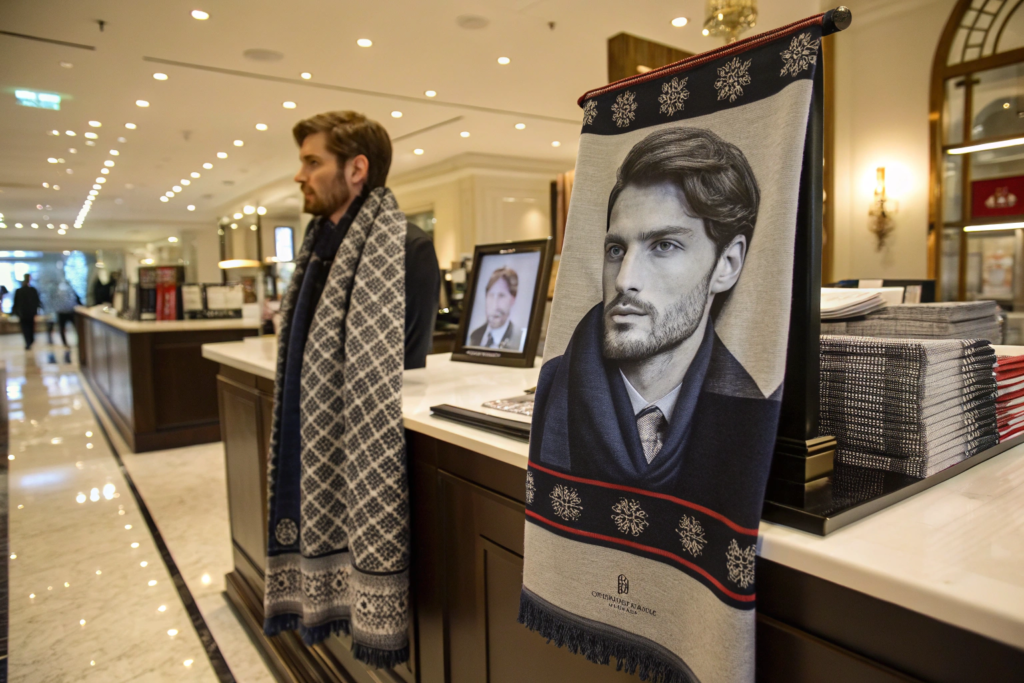
A standard folded edge shows the wrong side of the fabric when the scarf is flipped. We use a hand-rolled, hand-stitched edge with the seam hidden precisely in the join between the two faces. The edge rolls equally cleanly in both directions. The label is a laser-cut organic cotton piece tacked invisibly at one corner with a single tonal thread that can be snipped without damaging the garment.
How is this trend merchandised effectively in the department store display?
We ship these scarves with a custom display card that folds in half, showing the printed face on one side and the solid face on the other. The store visual merchandiser drapes one example on a mannequin showing the printed side and another nearby showing the solid side. The visual merchandising communicates the dual value proposition instantly, driving a higher conversion rate per square foot of scarf counter.
What Specific Labeling and Packaging Do European Department Stores Require for 2026?
A beautiful scarf with the wrong hangtag material or missing carbon footprint data will get rejected at the department store receiving dock in 2026. EU regulations are tightening rapidly, and the buying contract now includes packaging and labeling specifications that carry the same legal weight as the product quality specs.
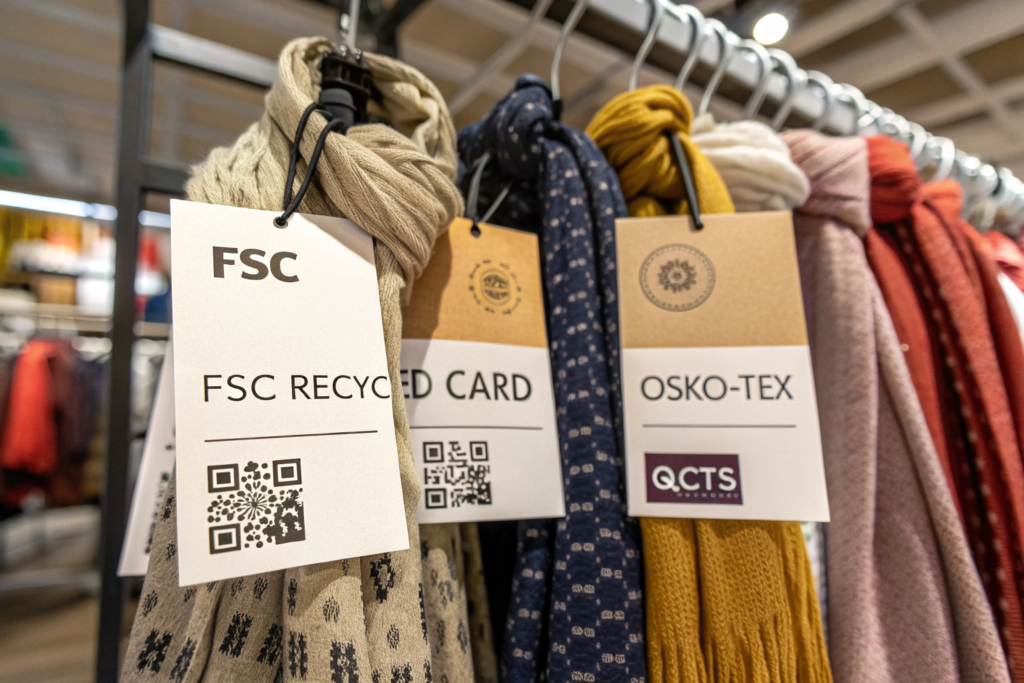
European department stores require scarves to arrive with a swing tag printed on FSC-certified recycled card, listing the full fiber composition breakdown in compliance with EU Textile Regulation 1007/2011, care symbols in international ISO format, an OEKO-TEX or GOTS certification logo, and a QR code linking to a Digital Product Passport that shows the carbon footprint and supply chain map for that specific scarf batch.
The QR code is non-negotiable for the 2026 season. It links to a secure webpage where the end consumer can see the exact sheep farm in New Zealand, the spinning mill location, the dye house certification, and the total kilograms of CO2 equivalent emitted to produce their specific scarf. We generate this passport data for every European accessory order.
Why are recycled polybags now mandatory at the distribution center?
European department store logistics hubs are rejecting cartons that arrive with virgin LDPE polybags. The mandate requires at least 70% post-consumer recycled content in the bag material, printed with a "Recycle with Bags at Large Supermarket" label. We use PCR polybags with a perforated tear strip and a suffocation warning printed in four languages.
What information architecture does the price ticket need?
The price ticket must include the country of origin, the fiber composition in decreasing order of weight, the RN or CA number of the responsible economic operator, and a barcode in EAN-13 format. All this text must be in the official language of the destination country, so German for KaDeWe, French for Galeries Lafayette. We maintain a localization template for eight European markets and switch the ticket file accordingly for each department store destination.
Conclusion
The 2026 scarf wall in a European department store is a carefully curated mix of regenerative naturals, AI-aided maximalist prints, and clever reversible constructions that deliver value. The common thread across all three trends is an uncompromising demand for sustainable material sourcing and transparent digital labeling. The scarf is no longer just a cold-weather accessory. It is a vehicle for the store’s environmental and technological narrative.
Our Zhejiang factory is deeply integrated into these three trends. We stock regenerative wool certified to ZQ standards, modal-silk bases that print digital botanicas with explosive vibrancy, and double-faced constructions that reverse cleanly. Our labeling team manages the country-specific ticket files and QR passport generation that European distribution centers now mandate.
If you are a department store buyer or a brand selling into European department stores and need scarves that match the 2026 trend book exactly, contact our Business Director, Elaine. She will send you a trend sample kit with Quiet Regeneration swatches, Digital Botanica print proofs, and a Modular Duality reversible sample. Write to her at elaine@fumaoclothing.com. Let’s fill your scarf counter with product that sells through in weeks, not seasons.




