You place a bulk order for 10,000 Christmas-themed hair clips in August. The shipment arrives in October. You sell through 6,000 units during the holiday rush. January hits, and the remaining 4,000 pieces become toxic inventory, dead capital sitting on a warehouse shelf accruing storage fees. You slash the price to below cost, dump them on a clearance site, and still lose money. The seasonal accessory cycle punishes optimism. Every unit left after December 26th is a direct subtraction from your annual profit.
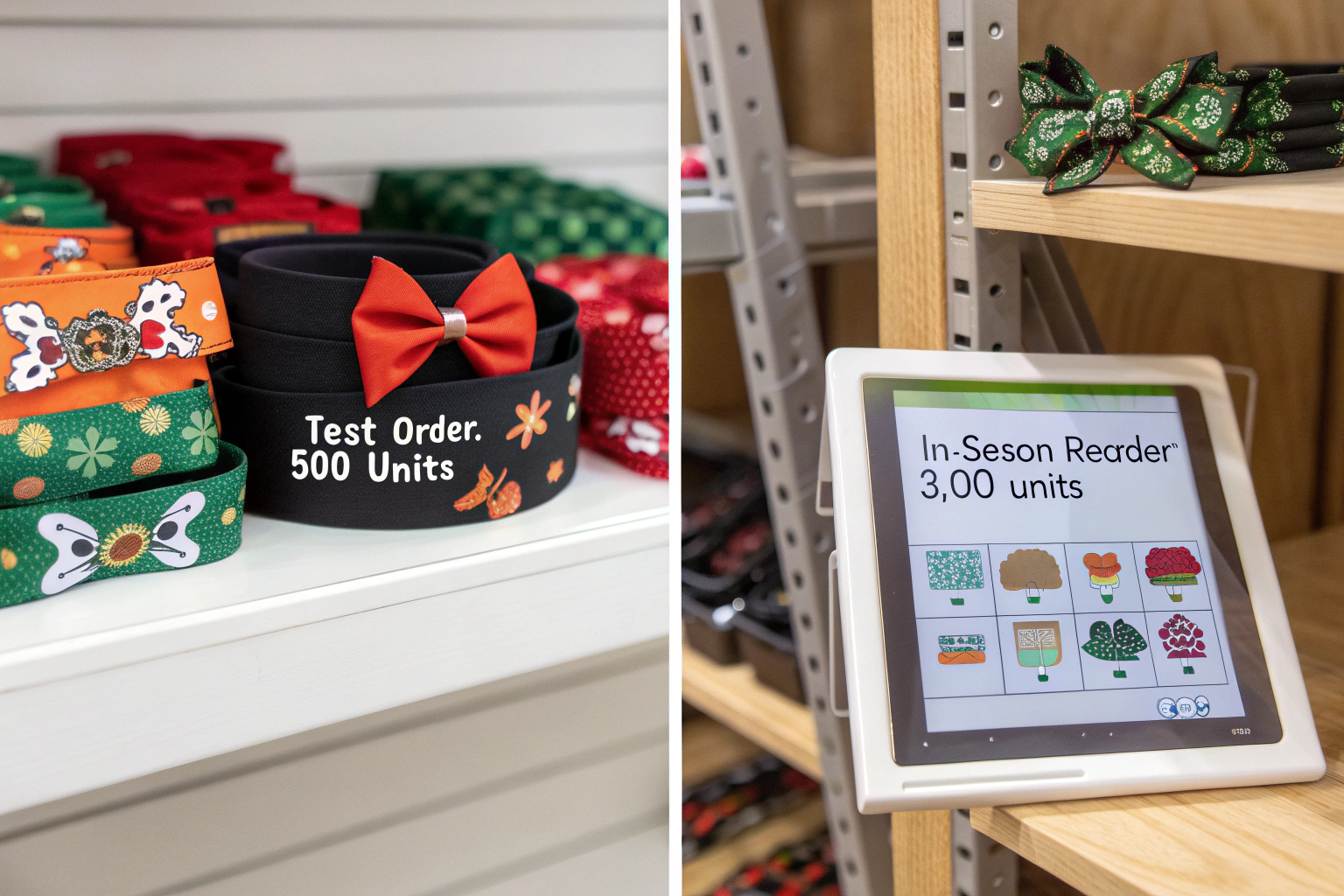
The best way to source seasonal accessories without overstocking is to split your buy into a small pre-season test order of 500 to 1,000 units, a larger in-season reorder of 3,000 to 5,000 units triggered by real sell-through data, and a flexible evergreen carryover component within the design that allows any leftover stock to be remarketed into the next non-holiday season without looking like stale clearance merchandise.
This is not about ordering less. It is about ordering smarter, with a factory partner that can turn a reorder in 15 days instead of 60, and with a design approach that plants an escape hatch in every seasonal SKU. I want to show you exactly how we structure seasonal production runs, how we design "evergreen escape" details into holiday product, and how our rapid replenishment system lets you chase a hot seller without drowning in leftover stock.
Why Is a Test-and-Reorder Model Safer Than a Single Bulk Seasonal Buy?
A single bulk purchase order placed six months before the season is a bet. You are betting that the candy cane stripe pattern will outsell the snowflake pattern. You are betting that the influencer you hired will actually drive traffic. You are betting that the economy will not dip in November. If any of those bets fail, the inventory sits.
A test-and-reorder model reduces seasonal risk by deploying a small initial batch of 500 to 1,000 units per SKU into the market at the start of the seasonal selling window, then using the first two weeks of point-of-sale data to identify clear winners. The factory holds pre-cut raw material and reserved production capacity to turn a reorder of the winning SKUs within 15 calendar days, shipping directly to the retailer’s distribution center while the season is still active.
We reserve "capacity blocks" for our seasonal accessory clients. A block is a pre-allocated number of production hours on a specific assembly line during the critical November 1 through December 10 window. The client pays a small reservation fee, roughly 5% of the block value, to secure the hours. When POS data shows a specific Christmas hair clip selling at 3x the velocity of other SKUs, the reorder fires, and the reserved capacity block activates immediately.

How fast can a seasonal reorder realistically ship?
With pre-cut fabric and reserved capacity, we ship a 3,000-unit reorder of a winning seasonal SKU within 12 to 15 calendar days from the reorder confirmation. The raw materials are already in our war chest, cut panels are staged flat, and the screen-printing screens for the seasonal print are archived and ready to mount. This speed allows a retailer to restock a selling accessory while Halloween or Christmas traffic is still peaking.
What is the minimum cost of the capacity reservation?
A reservation fee for a 3,000-unit block typically costs $300 to $500, fully credited toward the production invoice when the reorder fires. If the reorder never fires, the reservation fee is not refunded, but the client avoids a $6,000 inventory write-down on dead stock. The math heavily favors the reservation model for any seasonal SKU with uncertain sell-through.
What "Evergreen Escape" Design Details Let Seasonal Stock Cross Seasons?
A hair clip shaped like a pumpkin is useless on November 1st. A hair band with a glittery "Happy New Year" text is toxic on January 2nd. The design itself traps the inventory in a time prison. But a few strategic design choices can build a bridge from the seasonal shelf to the everyday shelf.
"Evergreen escape" design details are subtle seasonal references that fade into the background when the holiday passes. A hair claw in a deep oxblood red with a subtle metallic snowflake etching works as a Christmas accessory. Remove the etching, or let it be a subtle abstract texture, and the same oxblood red claw becomes a Valentine’s Day and early spring accessory with zero markdown.
We consult with our brand clients during the design phase on "seasonal signal strength." A design that screams Christmas has a signal strength of 10. It will sell fast but die hard. A design with a signal strength of 3 to 4, an icy pastel colorway with a subtle pearl finish rather than a Santa face, sells during the holiday but also transitions smoothly into winter wedding season. We stock these transitional colorways in our acetate and dye libraries specifically to help clients build the escape hatch.

What specific motifs carry over from Halloween into general autumn?
A tortoiseshell hair claw with a subtle orange resin streak reads as Halloween when merchandised next to candy corn, but reads as general fall fashion when placed next to a burgundy scarf in November. A solid matte black claw with a tiny laser-etched spider web detail functions as a Halloween accessory. The laser etch is a surface effect that can be excluded on a subsequent autumn accessories reorder, using the identical mold.
How does packaging enable a seasonal-to-evergreen pivot?
A Christmas hair clip blister card printed with "Holiday 2026 Collection" anchors it to a specific season. We stock a standard, unbranded white card with interchangeable paper belly bands. The client prints a "Christmas Magic" belly band for the seasonal push and a "Winter Wonders" belly band for the January transitional period. The product inside is identical. Only the cheap paper band changes. This packaging swap costs pennies per unit and saves the stock from the clearance bin.
How Can a Factory’s Raw Material Buffer Reduce Your Lead Time Risk?
A seasonal reorder only works if the fabric, dye, and components are available instantly. If the factory must reorder the special glitter yarn from a mill that takes 30 days, the reorder misses the season entirely. The buffer must physically exist in the factory before the test order ships.
Our seasonal raw material buffer stocks the specific yarns, acetate sheets, and metal components that seasonal designs require, including metallic Lurex yarns for holiday sparkle, deep crimson and emerald acetate blanks, and gold-plated snap clips, at a level sufficient to cover a 5,000-unit reorder without placing a single upstream purchase order. This buffer eliminates the 30-day raw material procurement delay and collapses the reorder timeline to pure production speed.
We begin building this seasonal buffer in July, well before the client’s test order ships. We analyze the previous year’s seasonal sales data with the client, predict the raw materials most likely to reorder, and purchase them into our physical inventory. If the client’s holly berry green acetate is not a standard stock color, we run a special dye lot in August and hold the sheets in our climate-controlled acetate room.

What is the financial risk of holding seasonal raw materials?
A buffer costs money. We share the carrying cost transparently with the client. If the client commits to the capacity block, we absorb 50% of the buffer raw material cost. If the reorder never fires, we absorb the full carrying cost and gradually absorb the seasonal materials into other projects or sell them at cost to our material supplier network. The client’s exposure is limited to the capacity reservation fee.
Which seasonal trims are most critical to stockpile?
Metallic gold and silver Lurex thread for holiday hair ties, red and green matte acetate sheets in 3mm thickness, and gold-plated alligator clips with a smooth, shiny finish. These three item categories account for 70% of seasonal accessory raw material demand. We maintain a 5,000-unit buffer of each in our designated seasonal stock zone from September through November.
What Data Points Should Trigger a Seasonal Reorder Decision?
Waiting until the warehouse is empty to reorder is too late. The reorder must fire while the first wave of stock is still selling at full price, not after it hits clearance. The data trigger must be based on sell-through velocity, not inventory level.
The key data point that should trigger a seasonal reorder is a sell-through rate exceeding 25 units per SKU per day for three consecutive days during a peak seasonal traffic period, combined with an inventory-on-hand position below 14 days of supply at that velocity. This trigger fires when the product is clearly a winner but before the remaining stock drops below a safe buffer to cover the 15-day production and shipping gap.
Our clients connect their Shopify or retail POS data to our shared inventory dashboard. The dashboard turns red when a SKU hits the trigger threshold. Our project manager receives the alert simultaneously and immediately sends a reorder confirmation request. The entire trigger-to-action sequence completes within 4 hours.

How do we handle reorder data for a multi-SKU seasonal collection?
If an 8-SKU holiday collection includes snowflake clips, candy cane clips, reindeer clips, and gingerbread clips, and only the snowflake clips hit the 25-unit-per-day threshold, the reorder fires for snowflake clips only. We do not pressure the client to reorder the other 7 SKUs. The data decides. This discipline prevents the client from "intuitively" reordering the slow movers out of misplaced optimism.
What if the reorder sells out quickly too?
If the first reorder of 3,000 units sells out in five days, a second reorder may still be possible if the season has sufficient runway. We check the remaining calendar until the seasonal selling cliff, typically December 18th for Christmas. If there are 10-plus days remaining, a second rush reorder of 2,000 units can ship via air freight and arrive in 7 days.
Conclusion
Seasonal accessory sourcing is a data game disguised as a design game. The brands that win do not have the most accurate crystal ball. They have the fastest test-and-reorder cycle, the most subtle evergreen escape hatches in their seasonal designs, and a factory partner that physically holds the buffer raw materials to turn a hot seller restock in 15 days. The losers are the brands that commit 100% of their seasonal open-to-buy six months before the season starts.
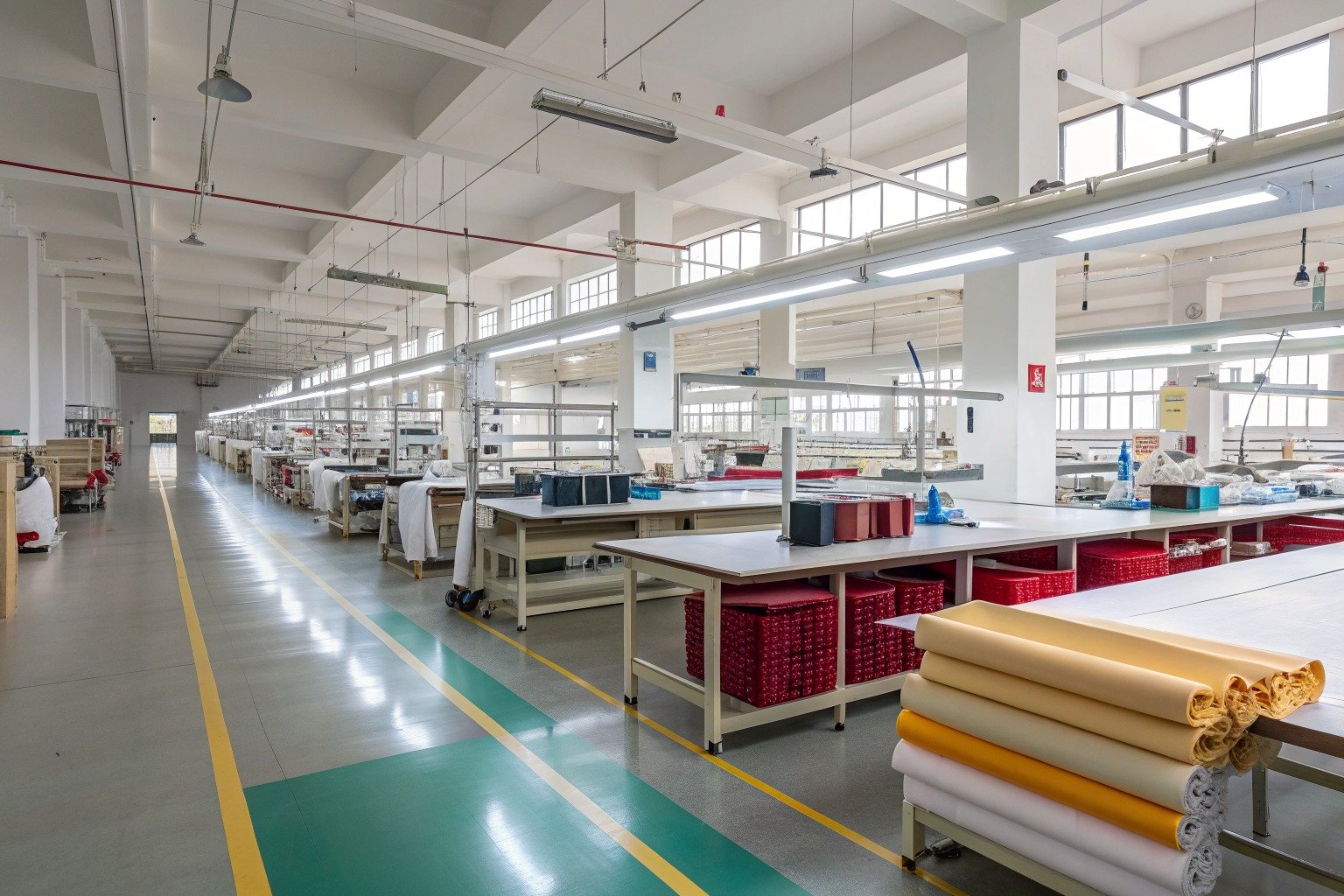
Our Zhejiang facility is built for this seasonal cadence. We run test orders for 500 units in September, hold acetate buffers in holiday red and metallic gold, and reserve capacity blocks for November restock weeks. Our design team actively helps you architect the evergreen escape details that keep your leftover stock out of the clearance bin.
If you are planning a seasonal accessory collection and want to test a smarter sourcing model this year, contact our Business Director, Elaine. She will walk you through the capacity block reservation process, the raw material buffer list, and how to set up the POS data trigger for your reorder. Write to her at elaine@fumaoclothing.com. Let’s make sure your leftover stock after the holiday is zero.