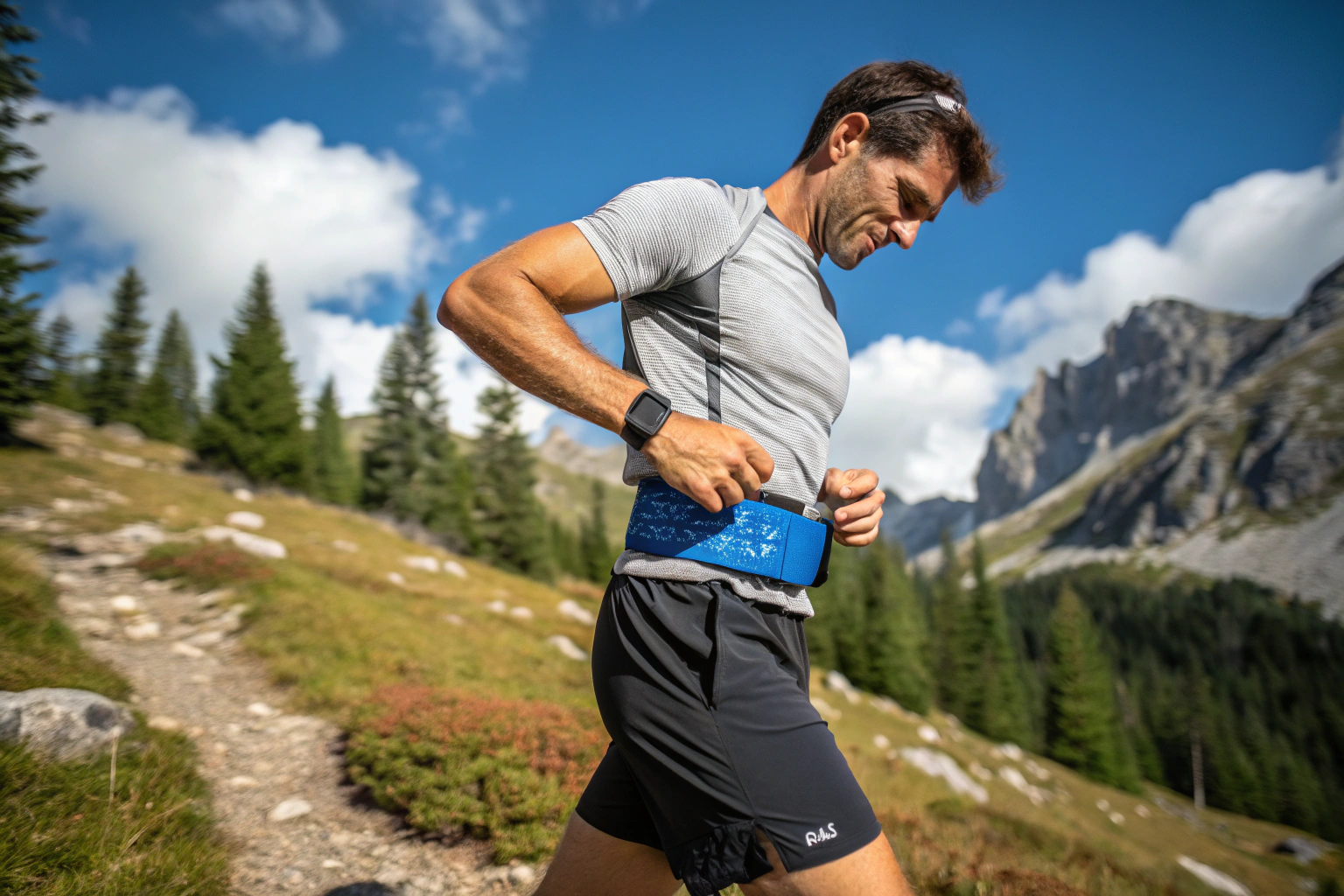
You find a stretchy, colorful silicone belt at a trail running expo. It has a low-profile buckle that lays flat under a hydration vest. The brand logo is embossed cleanly into the strap. You flip the belt over, and the "Made in China" label sits next to a brand name you recognize as a premium outdoor label. You track down the factory, send an inquiry about custom silicone belts for your own outdoor brand, and the reply comes back, "MOQ 5,000 units per color, 60-day lead time, we do not do embossed logos under 10,000 units." The door slams shut. The factory is set up for mass-market promotional belts, not the technical, branded belt that outdoor consumers demand.
Yes, our factory produces custom silicone belts for outdoor brands starting at a 500-unit minimum per design, with full-color Pantone matching, debossed or embossed logo personalization, and an aluminum or reinforced nylon buckle system designed to withstand saltwater, sweat, and extreme temperature swings from minus 20 to 120 degrees Fahrenheit. We stock the specific silicone compounds that outdoor brands require for flexibility and skin safety.
Silicone is not a single material. It is a family of polymers with wildly different properties depending on the curing process and filler content. A cheap promotional silicone belt feels sticky, collects lint, and yellows after three months of UV exposure. An outdoor-grade silicone belt feels dry and smooth, resists UV degradation for years, and maintains its elasticity after thousands of stretch cycles. I want to explain exactly how we formulate, mold, and finish silicone belts for the technical outdoor market.
What Silicone Compounds Are Safe for Prolonged Skin Contact During Sweat?
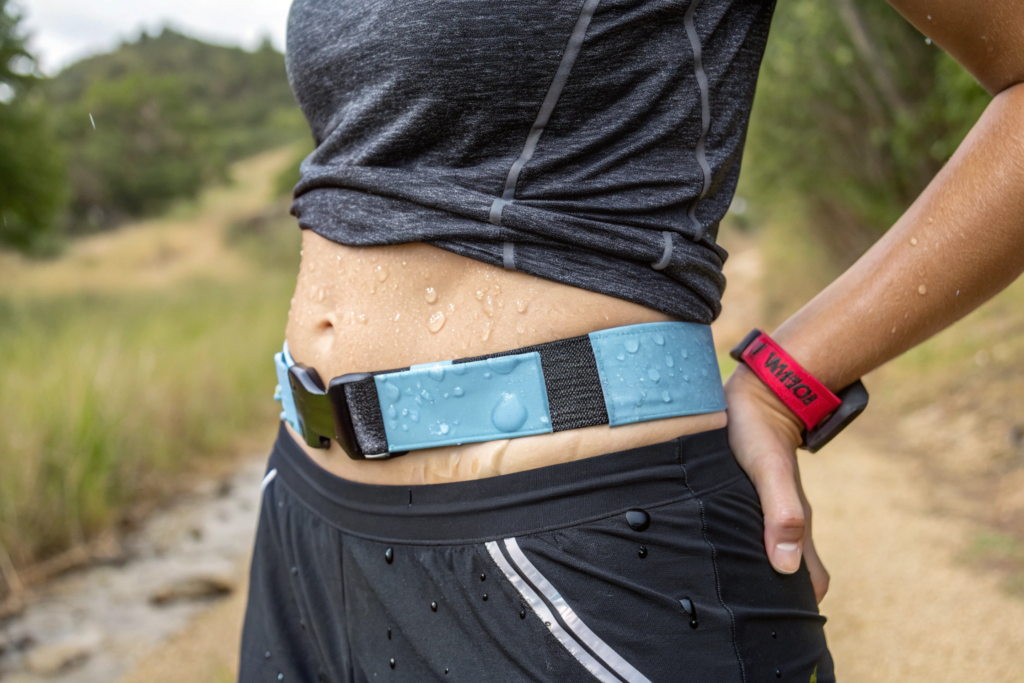
A belt that wraps tightly around a runner’s waist or a hiker’s hips sits directly against sweaty skin for hours. Cheap silicone leaches plasticizers and unreacted siloxane oligomers into the sweat, causing contact dermatitis and a mysterious rash that the user blames on a new laundry detergent. The outdoor consumer will immediately return a belt that irritates their skin after one sweaty trail run.
The silicone compound safe for prolonged sweaty skin contact is a platinum-cured, medical-grade liquid silicone rubber with a Shore A durometer of 40 to 50, containing zero peroxide byproducts, zero phthalate plasticizers, and zero BPA. This compound passes ISO 10993-5 and ISO 10993-10 testing for cytotoxicity and skin irritation, making it safe for continuous wear during multi-day ultramarathons or week-long backpacking trips.
We use a two-part addition-cure LSR system from a supplier certified under USP Class VI and ISO 10993. The base polymer and the crosslinker mix at a precise 1:1 ratio inside an injection molding barrel, catalyzed by a platinum complex. The curing reaction produces no volatile organic compounds. The finished belt is baked in a post-cure oven at 200 degrees Celsius for four hours to drive off any residual volatile siloxanes.
How does the platinum-cured system differ from a cheaper peroxide-cured system?
Peroxide-cured silicone is cheaper and faster to produce, but it leaves acidic decomposition products trapped in the rubber matrix. When sweat penetrates the belt surface, these acidic residues leach out and irritate the skin. The belt also develops a strong chemical smell over time. A platinum-cured silicone belt has neutral pH, zero odor, and remains skin-safe for years of continuous wear.
What durometer range provides the best balance of grip and stretch?
Shore A 40 provides a soft, supple feel that stretches easily but may slip under heavy load. Shore A 50 provides a firmer grip with less stretch. For a running belt that must hold a race bib or a small gel flask, we recommend Shore A 45, a sweet spot that provides sufficient tension to stay put during downhill running without constricting the diaphragm during deep breathing.
How Do You Achieve a Non-Stick, Lint-Free Finish on a Silicone Strap?
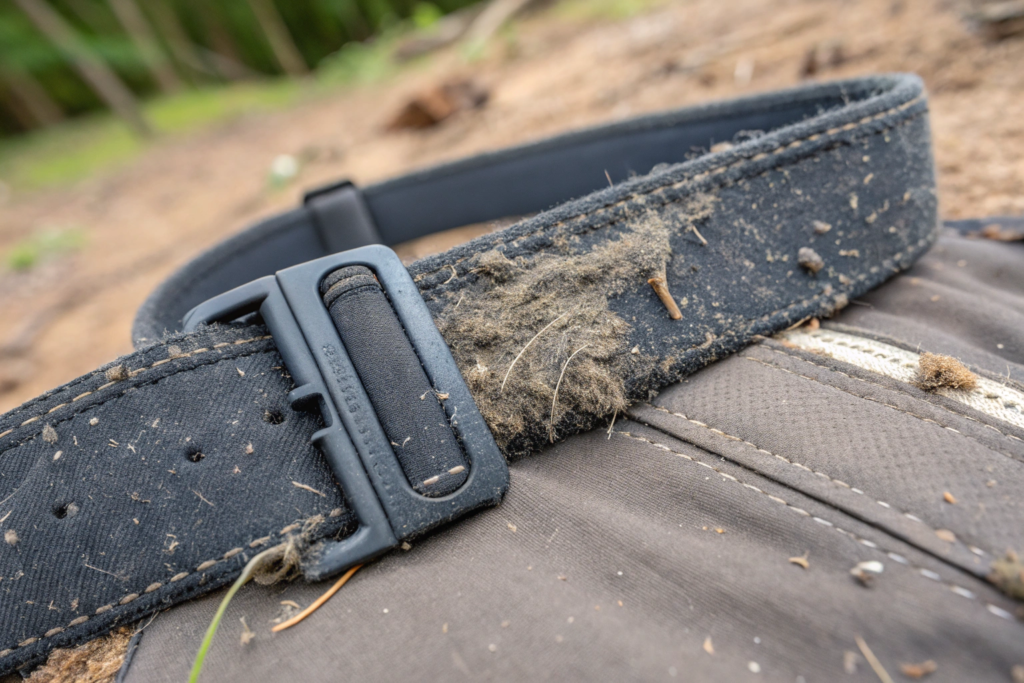
A raw silicone surface is inherently tacky. Dust, pet hair, and trail debris stick to it like a magnet. The user’s shirt pills cling to the belt surface, creating a fuzzy, dirty appearance after two wears. An outdoor belt must repel lint and dirt with a dry, smooth surface texture that slides cleanly under a backpack hip belt.
We achieve a non-stick, lint-free finish by applying a micro-texture pattern directly into the mold cavity surface and by coating the cured belt with a thin, cross-linked silicone topcoat with a very low coefficient of friction. The micro-texture breaks the continuous flat surface that creates suction against clothing, while the topcoat fills any microscopic pores where lint fibers can anchor.
The mold cavity is laser-engraved with a subtle geometric pattern, a fine crosshatch or a honeycomb array at 0.5-millimeter intervals. This texture transfers to the belt surface during injection molding. The texture is shallow enough to be visually imperceptible but deep enough to prevent the smooth, sticky continuous plane that attracts lint.
Can we adjust the texture to match the brand’s aesthetic?
Yes. Some outdoor brands want a matte, suede-like feel with a very fine texture. Others want a visible geometric ridge pattern that matches their brand’s design language. We provide a texture sample swatch book showing six standard finishes, from a smooth satin matte to a deep pebble grain. The brand selects a finish, and we laser-engrave the corresponding pattern into their dedicated mold cavity.
Does the silicone topcoat affect the embossed logo clarity?
The topcoat is applied extremely thin, at about 15 to 20 microns, via a precision spray system. It fills the microscopic surface pores without bridging across the deeper embossed logo channels. The logo remains crisp and readable, and the topcoat actually protects the embossed edges from rounding over during repeated stretching.
What Buckle Systems Withstand Saltwater, Sweat, and Freezing Temperatures?
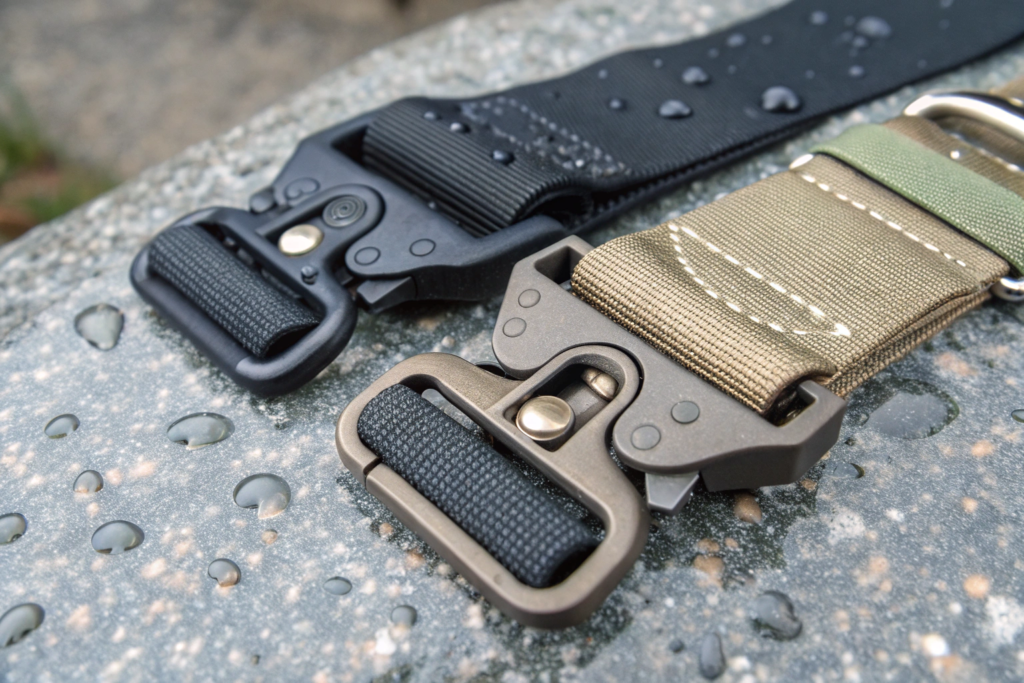
The buckle is the failure point on most belts. A cheap plated steel buckle rusts after one sweaty summer run and stains the belt an ugly orange. A plastic buckle turns brittle and shatters at minus 10 degrees Fahrenheit when the user cinches the belt tight before a winter hike. The buckle must be functionally indestructible.
The buckle systems that withstand harsh outdoor conditions are either marine-grade 316L stainless steel with a PVD coating for the premium segment, or a glass-fiber-reinforced nylon 6 blended with a cold-impact modifier for the lightweight segment. Both materials survive 1,000-hour salt spray tests without pitting and retain full impact strength at minus 40 degrees Fahrenheit.
We source our metal buckles from a certified marine hardware supplier. The 316L stainless steel buckle is investment cast, then finished with a physical vapor deposition coating in matte black, gunmetal, or a brushed nickel tone. The PVD layer is 3 microns thick, completely impervious to sweat and saltwater, and will not chip or peel.
How does the nylon buckle differ from a standard acetal buckle?
Standard acetal buckles are stiff and brittle in extreme cold. A glass-fiber-reinforced nylon 6 with a cold-impact modifier retains its flexibility and impact resistance down to minus 40 degrees. This material is used in ski binding components and avalanche safety gear, so it is massively overqualified for a belt buckle.
How is the buckle attached securely to the silicone strap?
We overmold the buckle pin directly into the silicone strap end, creating a chemical and mechanical bond that cannot pull out. The strap end is wrapped around the buckle crossbar and vulcanized under heat, fusing the silicone to itself through the buckle loop. This eliminates stitching or rivets that can corrode or abrade the skin.
What Customization Options Exist for Outdoor Brand Logos and Patterns?
An outdoor brand’s logo is its most guarded asset. The logo on the belt must be perfectly registered, durable, and integrated into the strap in a way that reflects the brand’s premium positioning. A blurry, off-center pad print is unacceptable.
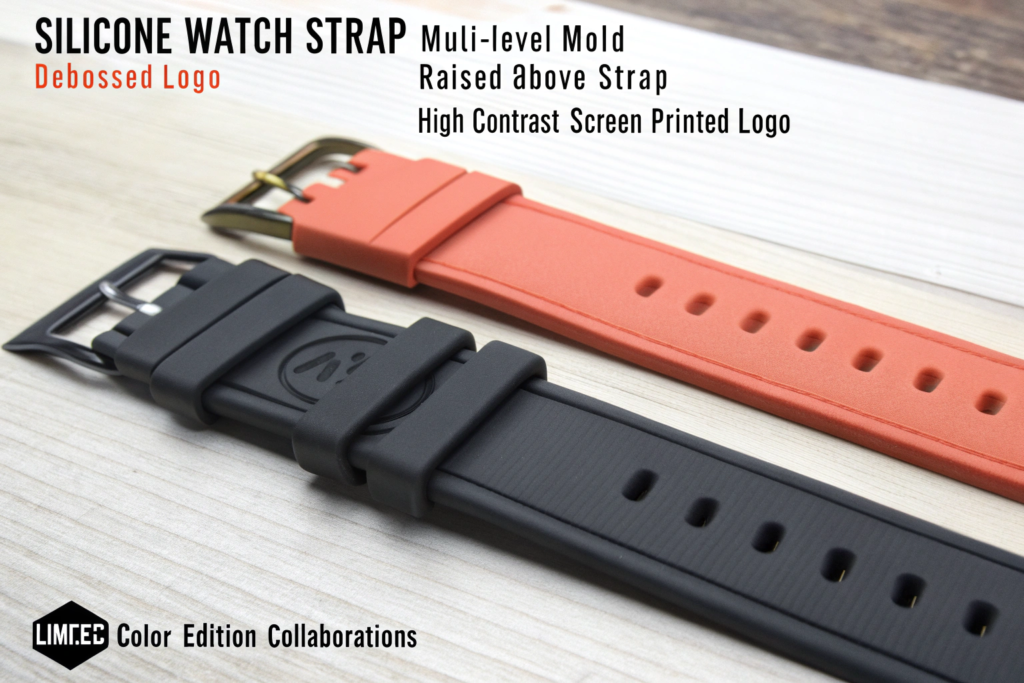
Customization options include a debossed logo molded directly into the silicone strap during the injection cycle for a tonal, textured look, an embossed logo using a multi-level mold cavity to raise the brand mark above the strap surface, a high-contrast screen-printed logo using a flexible silicone ink that bonds covalently with the strap, and a multi-color printed pattern for limited-edition collaborations.
The debossed logo is the most popular choice for outdoor brands. It creates a recessed, tactile brand mark that cannot scratch off, fade, or peel. The deboss depth is precisely 0.5 millimeters, deep enough to cast a shadow and remain legible but shallow enough to not trap dirt.
How do we ensure logo registration on a multi-color printed belt?
Our screen-printing station uses a laser alignment jig. The belt is loaded onto a mandrel that locks the buckle in a fixed position. A laser dot projects onto the strap at the exact center of the print area. The operator aligns the screen to the laser dot before each print strike. Registration accuracy is within 0.5 millimeters across a 5,000-unit production run.
Can we match the belt color precisely to a brand’s Pantone specification?
Silicone is pigmented with masterbatch colorants dispersed in a silicone carrier. We weigh each batch of raw pigment to 0.01-gram precision against the LSR base. The mixed compound is molded into a color chip, cured, and compared to the Pantone TCX reference swatch under a D65 daylight lamp. We adjust the pigment ratio in 0.5% increments until the Delta E color difference is below 1.0.
Conclusion
Custom silicone belts for outdoor brands require a level of material science, molding precision, and finishing discipline that mass-market promotional product factories simply do not possess. The silicone must be platinum-cured and skin-safe. The surface must have a micro-texture to repel lint. The buckle must survive salt spray and sub-zero impact. The logo must be debossed into the strap, not printed on with ink that cracks.
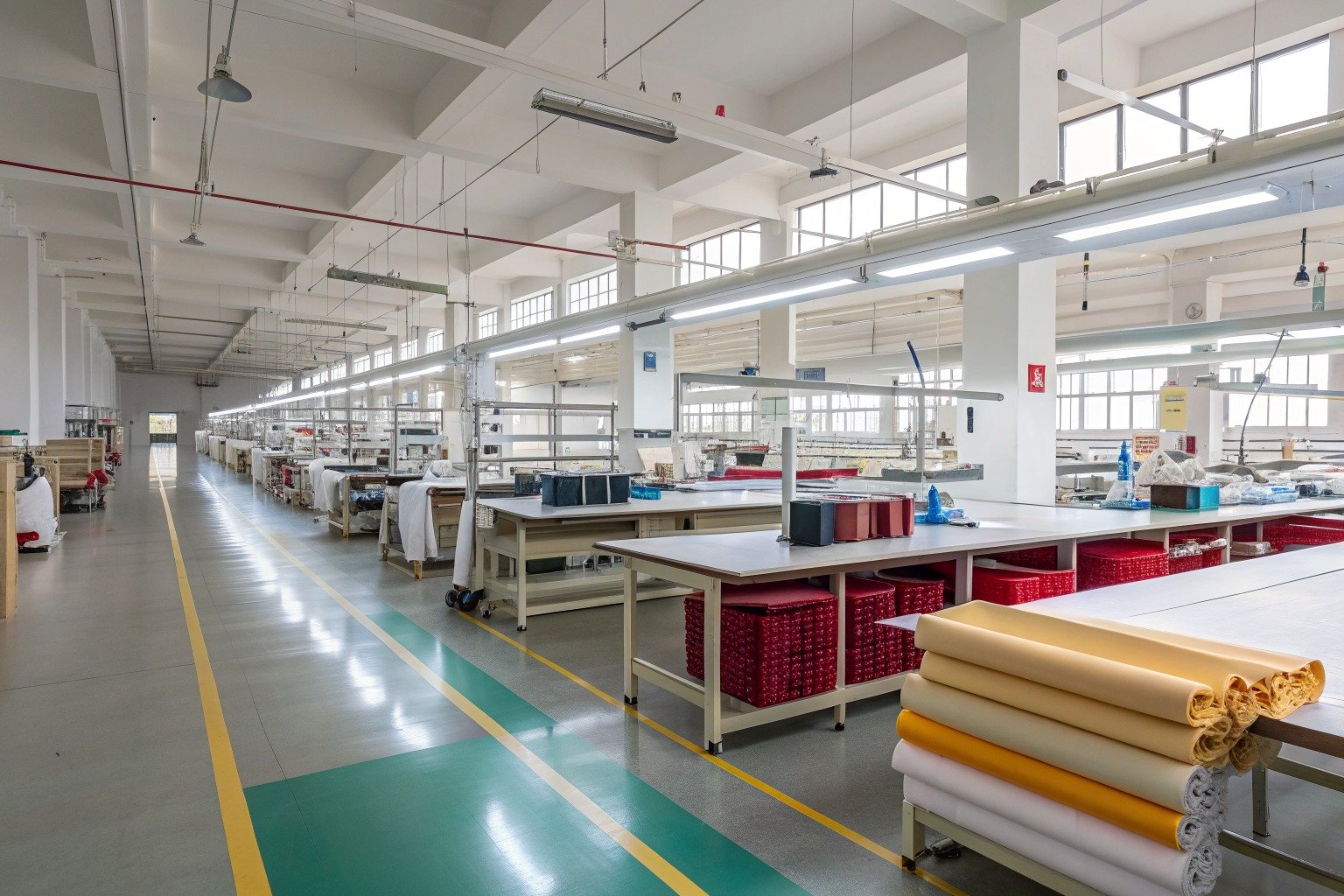
Our Zhejiang factory runs a dedicated LSR injection molding line that produces these technical silicone belts for trail running brands, hiking gear labels, and outdoor lifestyle companies across North America and Europe. We maintain the ISO 10993 certifications, the Pantone color matching lab, and the 316L stainless buckle inventory needed to serve this demanding market.
If your outdoor brand needs a custom silicone belt that can survive a 100-mile ultra, a saltwater fishing trip, or a winter ascent, do not settle for a generic promo product. Contact our Business Director, Elaine. She will send you our silicone sample swatch book, our buckle material datasheets, and a debossed logo proof of your brand mark within one week. Write to her at elaine@fumaoclothing.com. Let’s build a belt that your customers will wear through every adventure.