You verify a factory’s own design team before signing a contract by requesting three specific deliverables before any money moves: a dated original design portfolio showing technical flat sketches with measurement callouts, a live screen-share demonstration of their CAD software where they modify a buckle shape in real time, and a single rapid-fire concept sketch of your product idea completed within 24 hours of your inquiry. A genuine design team delivers all three without hesitation. A fake design team stalls, sends stock photos, or asks for a "development fee" before showing any capability.
A factory that cannot produce an original design is a factory that will copy your competitor’s product, your own product, and anyone else’s. You lose your differentiation. I want to show you exactly what proof points separate a legitimate industrial design department from a cut-and-paste operation, and how to spot the fakes in a single video call.
What Original Design Portfolio Samples Prove Real Creative Capability?
A portfolio full of glossy product photos stolen from shopify stores is worthless. The product photos prove the factory can manufacture an existing item, not that they designed it. You need to see the raw, unpolished technical documents that precede the shiny retail photo.
An original design portfolio that proves real creative capability contains dated pencil sketches or digital ideation boards, flat technical drawings with stitch type, measurement, and material callouts, and photos of rough 3D-printed prototypes or hand-carved wooden molds in a raw, unpainted state. These three layers show the full design process from idea to physical prototype, not just the final polished catalog shot.
I keep a binder in my office labeled "Design Evolution." It shows the original concept sketch of a hair claw we designed three years ago, the first clay model, the 3D-printed nylon prototype with visible layer lines, the mold trial shots with flash still attached, and the final production sample. When a buyer flips through this binder on a video call, they understand we can create from scratch, not just copy from a photo.
How should the technical flat sketches demonstrate measurement knowledge?
A real flat sketch has arrow callouts showing the spring coil diameter in millimeters, the acetate sheet thickness, the polish grit specification, and the gap tolerance between the upper and lower jaw. A fake sketch shows a pretty outline with no numbers. The numbers prove the designer understands material constraints and manufacturing feasibility, critical for any custom hair clip project.
Do mood boards and trend research matter for a factory’s credibility?
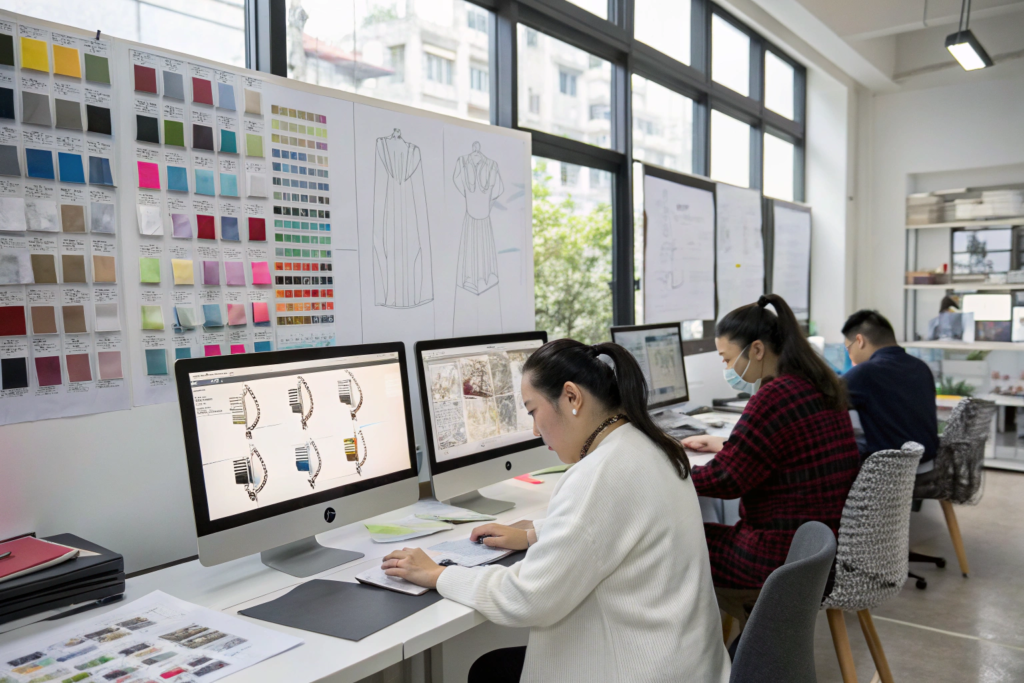
Yes, because they show the team is plugged into the fashion calendar. Ask the design team to share the trend forecast board for the upcoming season. A real team shows original tear sheets, Pantone palette selections with TCX codes, and material swatches from their own library. A fake team shows a Pinterest board screenshot. If they cannot articulate why "digital lavender" is trending and how it applies to accessories, they are not designers.
Can the Design Team Modify a CAD Model Live During a Video Call?
The most powerful truth test is a live screen share. You name a change to an existing product, and you watch the designer’s cursor move. A real designer opens the native CAD file, clicks the feature tree, and modifies the geometry. A fake designer fumbles, says the CAD specialist is "off today," or pastes a stock image into a PowerPoint slide.
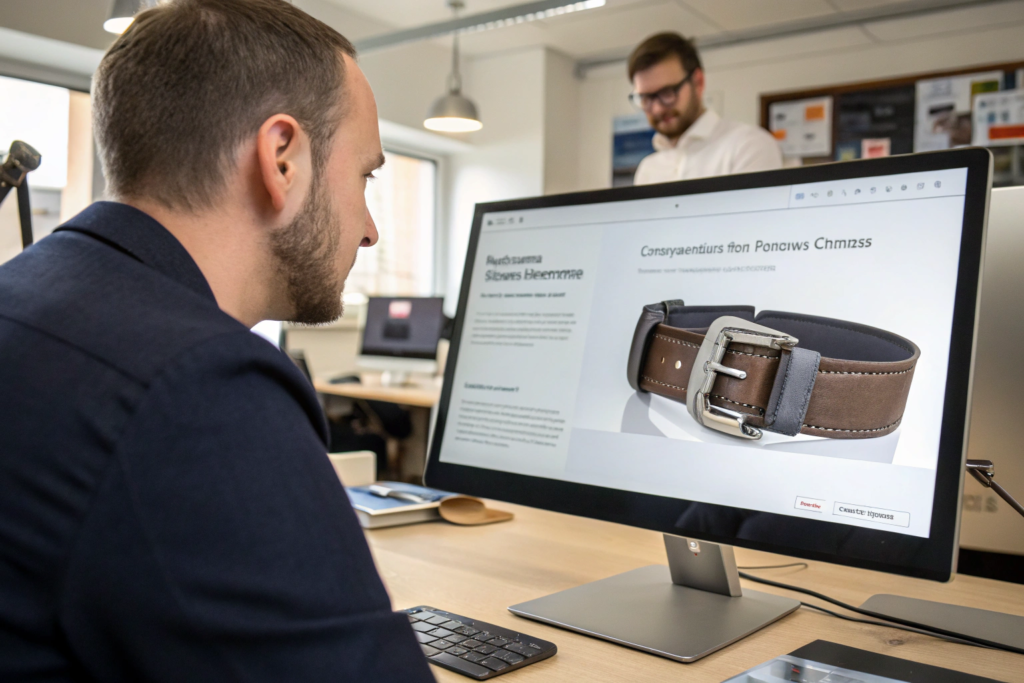
A design team proves their capability by accepting a live CAD modification challenge. You ask them to widen a hair clip jaw by 5 millimeters, change a buckle finish from polished gold to matte nickel, or add an additional stitch line to a belt strap edge. The designer opens SolidWorks, Rhino, or Clo3D, edits the parametric feature, and renders a quick updated preview within 15 minutes of the request.
I do this demo for potential clients frequently. The buyer says, "Can you round the corners on that rectangular buckle and show it in gunmetal?" I share my screen, open the buckle part file, apply a 2mm fillet radius to the edge, swap the material appearance to gunmetal, and render a shaded preview in under ten minutes. The buyer sees the geometry change in real time. This level of transparency closes more contracts than any glossy brochure.
What specific software programs should a legitimate factory use?
A legitimate industrial design team working on accessories uses a parametric solid modeling program like SolidWorks or Fusion 360 for hard goods like buckles and clips, and a fashion-specific program like Clo3D or Browzwear for soft goods like caps, scarves, and fabric belts. They use Adobe Illustrator or CorelDRAW for print repeats and packaging dielines. If a designer claims to do all 3D work in Photoshop, they are not a 3D designer.
How does live rendering demonstrate material knowledge?
Watching a designer assign a material to the 3D model reveals their understanding of manufacturing. They should click "polished brass" and the rendered model shows a warm, reflective yellow metal with a slight mirror effect. They should click "matte acetate" and the model turns to a low-sheen, slightly translucent solid with visible flow lines. The software library must contain custom scanned materials from their actual supplier mills, not just default chrome and plastic presets.
Did the Factory Provide a Free Concept Sketch of Your Idea Within 24 Hours?
Before you pay a cent in development fees, ask the factory to produce one original sketch based on a rough description or a mood board reference you provide. Offer no money. This is a courtship demonstration, and serious manufacturers who want a long-term partnership will do it freely.
A factory’s ability to provide a free original concept sketch within 24 hours is the strongest pre-contract trust signal. It proves the design team has bandwidth, creative energy, and a genuine interest in your project. The sketch should be a novel interpretation of your brief, not a trace of a photo you provided, and should include material notes in the margin.
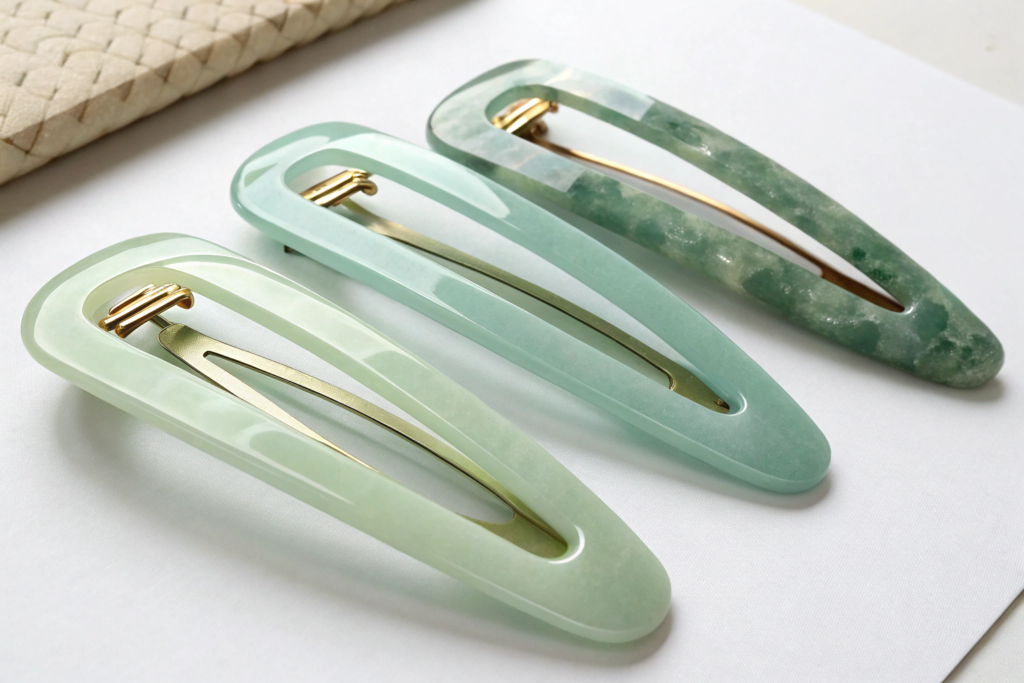
Three days ago, a boutique brand owner from California sent us a photo of a vintage 1970s hair clip she found at a flea market. She said, "I want a modern version of this feeling, in a pale translucent sea glass green." Our designer sent her three distinct concept sketches within 18 hours. One sketch exaggerated the curve for a sleeker modern look. Another kept the retro proportion but lightened the material thickness. The third introduced a cutout detail. We did not ask for money. We asked for a reaction.
What if the factory demands a design fee before the first sketch?
Demanding a design fee before demonstrating any capability is a red flag. It signals either a lack of confidence in their creative ability or a business model that profits from pre-production fees rather than production volume. Walk away unless the factory has an established reputation with verified brand references.
How does the concept sketch demonstrate manufacturing feasibility?
Look at the margin notes on the sketch. A legitimate designer writes material suggestions like "Suggested 120GSM cotton-modal for the headband," or "Acetate thickness 3mm at jaw hinge." These notes prove the designer is thinking about production, not just drawing a pretty picture on an iPad. Ask the designer to explain why they chose 3mm over 2.5mm for the hair accessory. A real specialist answers with grip strength and brittleness trade-off logic. A fake designer says "it looked good."
What Physical Prototype Library Reveals True Development Experience?
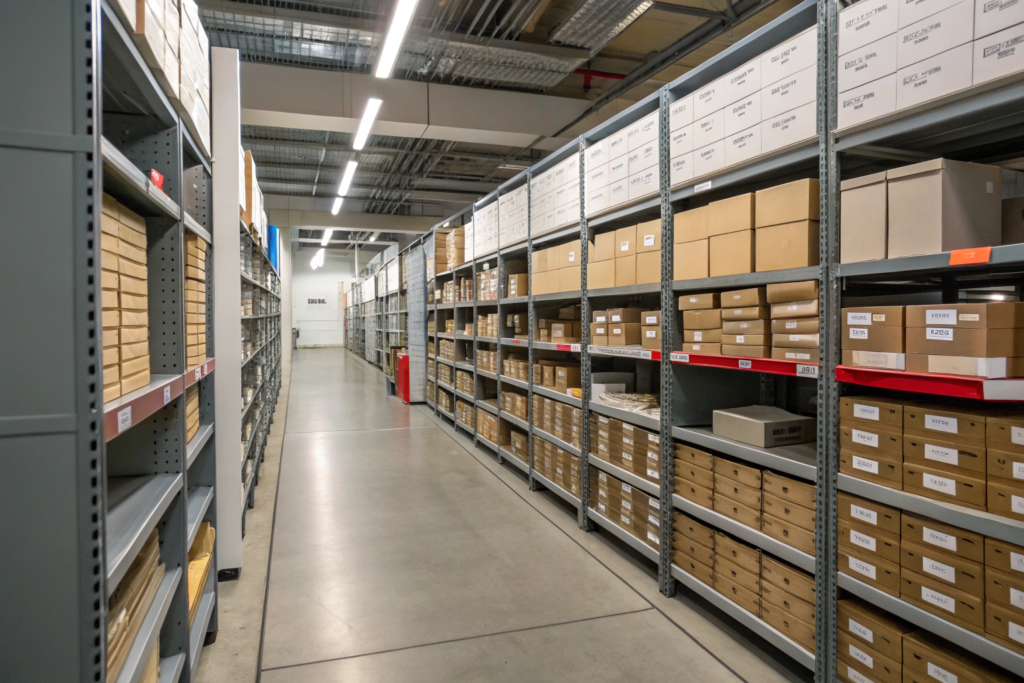
A factory that has developed hundreds of original products has a physical archive of those development attempts, the successes, the failures, and the iterations in between. This library is the accumulation of years of solving specific accessory design problems.
The physical prototype library reveals true development experience through the volume and variety of 3D-printed resin prototypes, hand-carved wax models for metal castings, and acetate block tests in various color mixes. A library holding 200-plus distinct prototype models proves the team has solved clamping force issues, ergonomic curves, and plating adhesion problems across a wide range of styles.
I walk buyers over to our prototype shelf on video calls. It is an open shelf, not a locked cabinet. The buyer sees the graveyard of broken earring backs, the off-color acetate blocks where the marbling went wrong, and the successful prototypes with QC approval stickers. This honesty builds a deeper trust than a shelf of only perfect samples.
How can we check if a prototype matches a claimed past client?
Ask the factory to point to a prototype that shipped for a specific type of client, such as a supermarket or boutique chain. They should say, "This hair claw was developed for a German supermarket private label, and here is the final production version." If the prototype area has no organizational labels, no customer tags, just a dusty pile of random half-clips, the "design team" has likely never shipped an original design.
What role do 3D-printed nylon masters play in the development sequence?
For a new custom acetate claw clip, the master pattern is a 3D-printed nylon model that fits perfectly into the acetate blank. This master is then hand-polished and used as the reference for the compression mold cavity. Ask to see a set of masters. A real factory has dozens, each labeled with the SKU and the date of the first mold trial. This physical evidence is impossible to fake without actually developing the product.
Conclusion
Verifying a factory’s design team is about demanding to see the messy, unpolished evidence of creative work, the technical sketches with callouts, the live CAD demos, the free concept sketch in 24 hours, and the physical prototype library of both failures and successes. A factory that proudly shows its design process and invites you into the CAD file during a live call is a genuine creative partner. A factory that hides behind receptionists and stock photos is a copy shop.
Our design team in Zhejiang is ready for your live verification. We show our dated sketch binders, share our CAD screens, and deliver free concept sketches because we want you to feel the difference between a real industrial design capability and a cut-and-paste operation before you commit a dollar.
If you have a hair clip, belt, or scarf concept and want to test our design team’s capability, contact our Business Director, Elaine. She will arrange a live video design session where you brief our lead designer directly and receive concept sketches within 24 hours. Write to her at elaine@fumaoclothing.com. Let’s prove we can create your next bestseller.