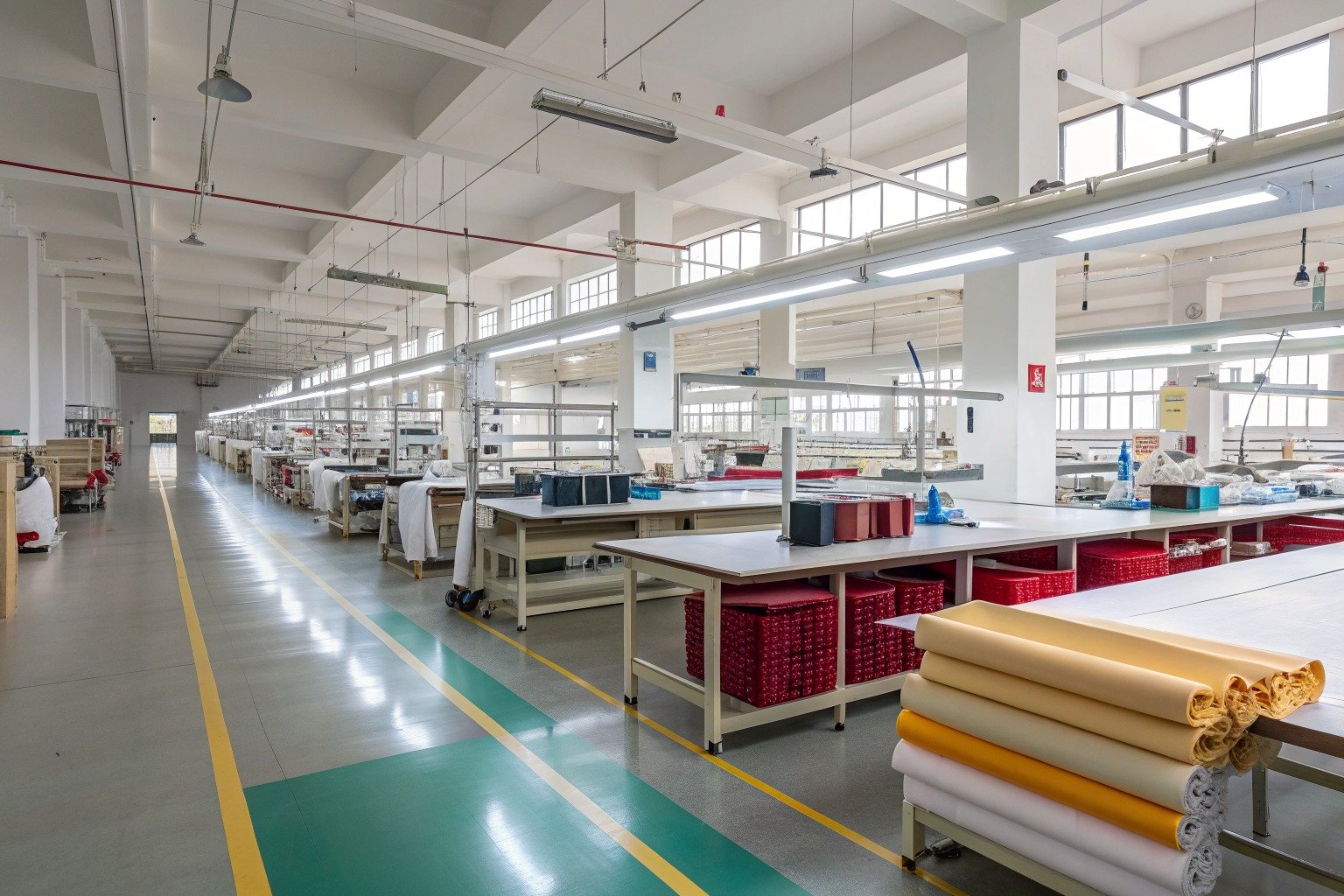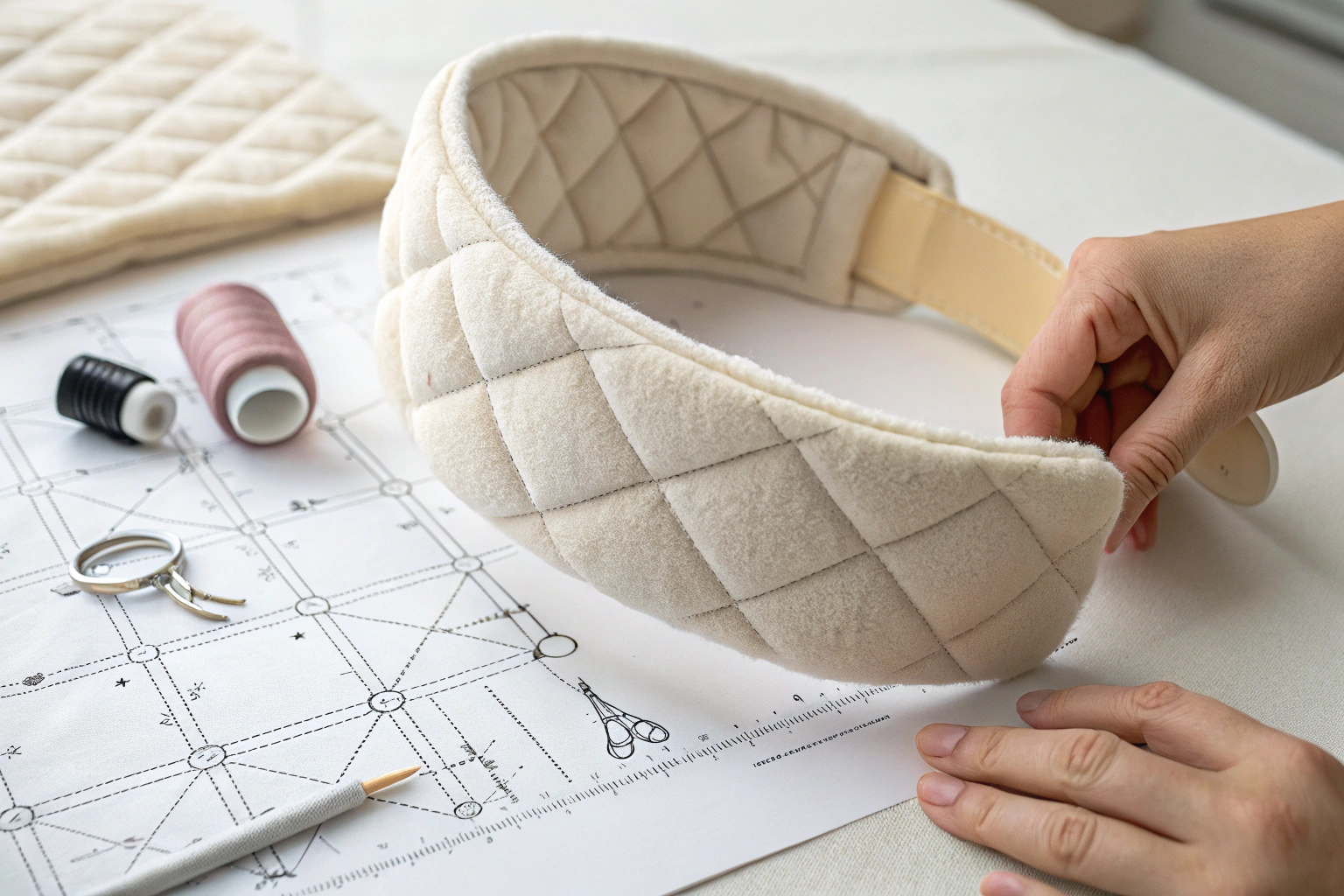
I received a sample request two months ago from a brand owner who designs accessories for women undergoing chemotherapy. She needed a headband that was not just a fashion piece but a functional comfort product. The headband had to be completely seam-free on the inside, with no hard edges, no exposed elastic, and a specific, gentle pressure that would hold the band in place without causing a headache. She had already been turned down by two factories that told her their standard production line could not handle the padding and the internal finishing she needed. She came to me asking if we could do it. I told her that we have a dedicated section of our sample room specifically for padded and comfort-engineered hair accessories. She received her first prototype three weeks later, and it was exactly what she had envisioned.
You get a Chinese hair band factory to produce padded headbands by finding a partner that has a dedicated handwork and padding section, not by asking a standard, high-speed elastic-headband factory to add foam to their line. A padded headband is a fundamentally different product from a simple knitted or elasticated hair band. It requires a multi-layer construction, a pattern-making process that accounts for the volume of the padding, and specific manual finishing techniques to insert the foam or fiberfill and close the band cleanly. The factory must have sewing technicians who are experienced in handling thick, compressible materials and finishing them without puckered seams or visible closures. I will explain exactly how to qualify a factory for this type of work, how to brief them on the internal construction and padding specifications, and how to manage the sampling and QC process for a product that is judged as much by its feel as by its appearance.
What Capabilities Distinguish a Padded Headband Factory from a Standard One?
A standard hair band factory is optimized for speed and stretch. The production line is built around materials that are inherently elastic, like knitted polyester-spandex tubes or woven elastic bands, and the construction methods involve cutting, fusing, or stitching a simple loop. There is no internal volume to manage, no multiple layers to align, and no need for a soft, seam-free interior finish. A padded headband factory operates under an entirely different set of constraints. The raw materials are not elastic. They are often woven cottons, silks, or technical performance fabrics. The shape is created not by a simple tube but by a pattern, and the volume comes from an inserted core. The machinery and the skills required are fundamentally different.
Why Is a Multi-Layer Construction a Completely Different Manufacturing Process?
A padded headband is constructed in layers. The top layer is the fashion fabric, which is typically a non-stretch woven like a printed cotton, a silk charmeuse, or a velvet. The bottom layer, which sits against the head, is often a soft, moisture-wicking material like a bamboo cotton jersey or a microfiber fleece. The padding itself is a third, independent material, which can be a soft, open-cell polyurethane foam, a polyester fiberfill, or a silicone gel strip. These three layers are cut to different shapes, aligned, and joined.
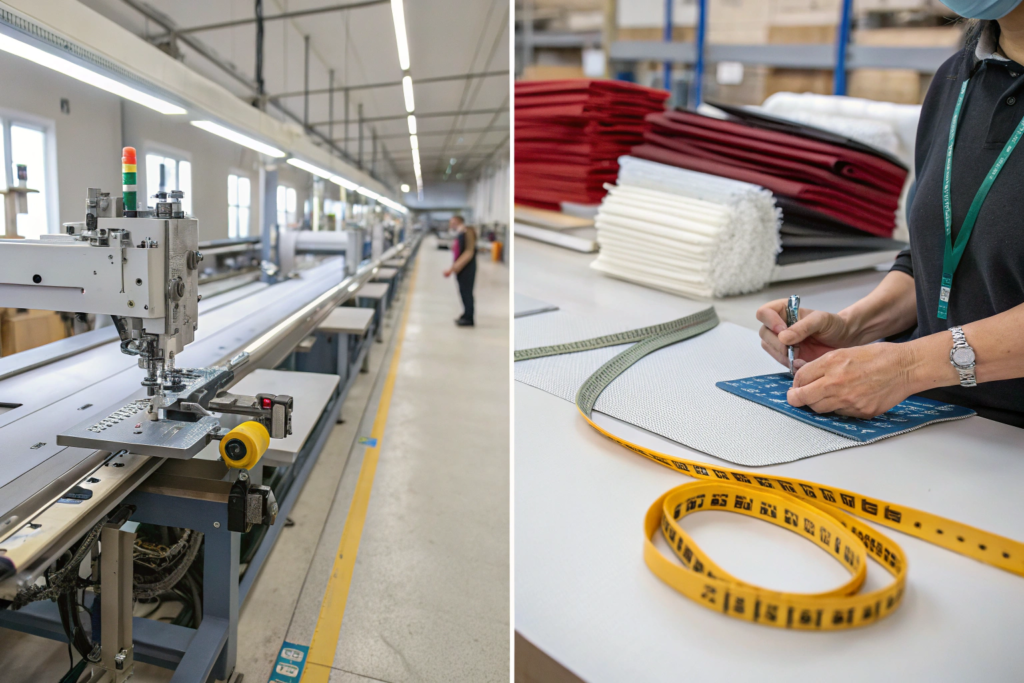
This multi-layer construction demands a different set of skills than producing an elasticated band. The fashion fabric must be cut on the correct grain to prevent twisting. The padding must be precisely cut with a die or a pattern to ensure the band has a consistent volume and tapers smoothly at the ends. Crucially, the assembly method must account for the fact that the outer fabric travels a longer path around the padded curve than the inner lining. Our pattern makers apply a specific "turn of cloth" calculation to the pattern dimensions, ensuring the finished headband curves smoothly and hugs the head rather than sitting flat and twisted. The sewing itself is done on a single-needle lockstitch machine, not a high-speed overlocker typically used for elastic, and the operator must use a compensating presser foot to feed the thick, layered assembly evenly.
What Specialized Sewing Machines Handle Thick, Compressible Materials?
The standard 4-thread overlock machine that finishes the edge of a knit elastic headband is useless for constructing a padded woven headband. The primary machine is a compound feed, or walking foot, industrial sewing machine. It has a built-in mechanism where the presser foot and the feed dogs move together, gripping the material from both the top and the bottom and advancing it in perfect synchronization. This prevents the layers of fabric and foam from shifting or stretching relative to each other, which is the primary cause of puckered, twisted seams on padded products. The operator can precisely control the stitching through a combined thickness of up to 6 or 7 millimeters, top-stitching the perimeter smoothly. We also use a post-bed machine for the final closure, if the headband is turned through and finished, to allow the small, curved piece to be rotated freely under the needle. These machines are a sizable investment and are only present in a factory that is set up for the structured accessory and small leather goods work, not in a standard hair band factory. This dedicated setup is part of our specialized process for custom hair accessories at AceAccessory.
How Should You Specify the Internal Padding and Fabric Layers?
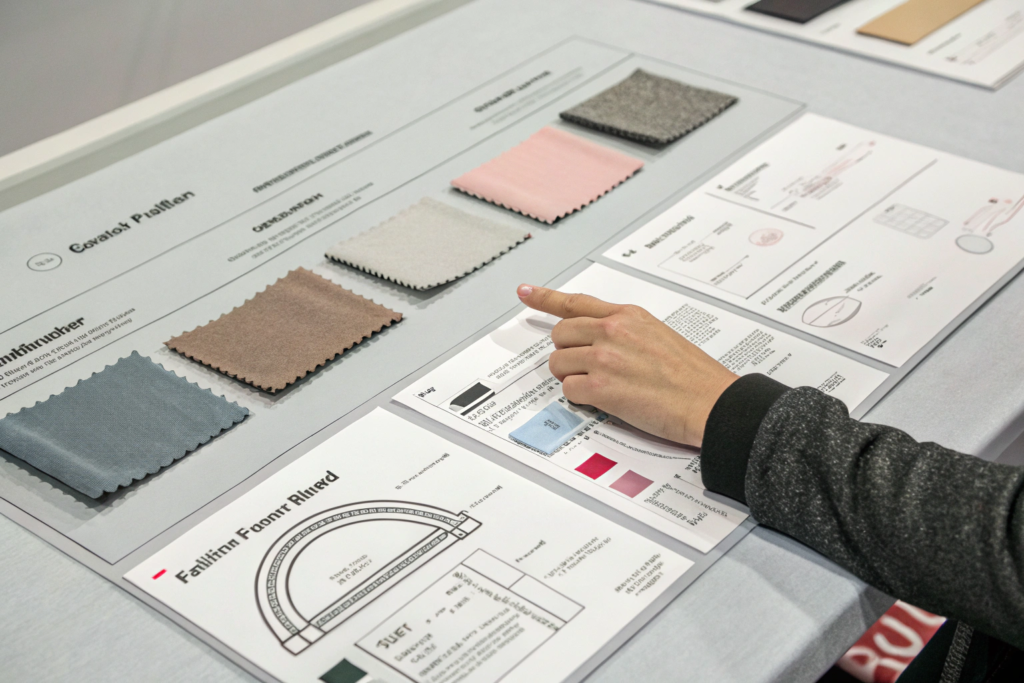
The most critical step you can take to ensure a successful padded headband sample is to be ruthlessly specific about the internal components that the customer never sees. The performance and the comfort of the final product are almost entirely determined by these hidden choices. A vague brief that says "add some padding for comfort" will be interpreted by the factory’s sample room in the cheapest, easiest way, which may involve a single layer of thin, stiff foam that collapses within a week, or an unsecured filling that bunches up in the wash. The specification must be a deliberate, multi-part engineering choice.
What Are the Best Foam, Fiberfill, and Gel Options for Comfort Headbands?
The choice of padding material dictates the headband’s comfort, its recovery after stretching, and its washability. The three standard options each serve a different functional purpose. Soft, open-cell polyurethane foam is the volume leader for fashion and casual padded headbands. It provides a uniform, resilient cushion that returns to its original shape. The key specification is its density and thickness. For a headband, a foam of around 2 to 4 millimeters thick with a medium density provides a comfortable, non-bulky cushion. The foam is die-cut to the exact shape of the headband, tapering at the ends. A high-quality foam should be specified as washable and should not crumble or yellow after repeated cycles.
Polyester fiberfill is used when the desired aesthetic is a softer, more casual, pillowy look, similar to a scrunchie. It is not a uniform sheet but a loose filling that is blown into a stitched channel or tube. The key specification is the amount of fill, measured in grams, and the size of the stitched channels. A channeled headband, stitched in a repeating diamond or linear pattern, creates a quilted texture that evenly distributes the fiberfill and prevents it from migrating or bunching up in the wash. The third option is a silicone gel strip. This is a premium, functional choice for an active, non-slip padded headband. A thin, soft strip of medical-grade silicone gel is inserted into a sleeve on the inner face of the headband. The gel provides a gentle, high-friction grip against the skin, holding the headband securely and comfortably in place during vigorous activity. Each of these padding types requires a specific construction method to enclose it cleanly, and our sample room is equipped to handle all three. The choice of padding also interacts with the outer fabric, and you can learn more about these material interactions from resources focused on textile material science.
How Do You Brief a Factory on a "Seamless" Interior Finish for Sensitive Skin?
A padded headband that is marketed for sensitive skin, medical use, or extended wear must have its interior entirely free of any hard points, raised seams, or exposed thread knots that could rub against the skin. This "seamless" specification is the single most technically demanding aspect of the construction. The technique used is an "invisible slip-stitch" closure. The headband is assembled inside out, with all major structural seams hidden within the padding layers. A small opening is left in one internal seam. The entire band is then turned right-side out through this opening, so the clean, seam-free outside is now on the exterior, and all raw edges are concealed inside. The padding core is then inserted through the opening and positioned. Finally, a skilled sewer closes the opening by hand using a fine needle and a blind slip-stitch that catches only a few threads of the folded fabric edges. The resulting seam is nearly invisible and perfectly smooth to the touch.
This manual finishing process is impossible to automate on a high-speed line and is entirely dependent on the skill and patience of the sewer. When you brief the factory on this requirement, you should explicitly request the "invisible slip-stitch" closure. A factory that is comfortable with this technique will understand the term immediately and can provide a sample for your approval. A factory that seems confused or resistant is likely not set up for this level of manual hand-finishing.
How Do You QC a Padded Headband for Comfort, Washability, and Durability?
A padded headband that passes a visual QC inspection can still fail catastrophically the first time it is worn or washed. The internal components pose specific quality risks that a flat, single-layer product does not have. Your QC protocol must specifically test for the failure modes unique to padded construction. The inspection is a combination of standardized dimensional checks and specific, hands-on physical tests designed to simulate the wear and care the product will experience.
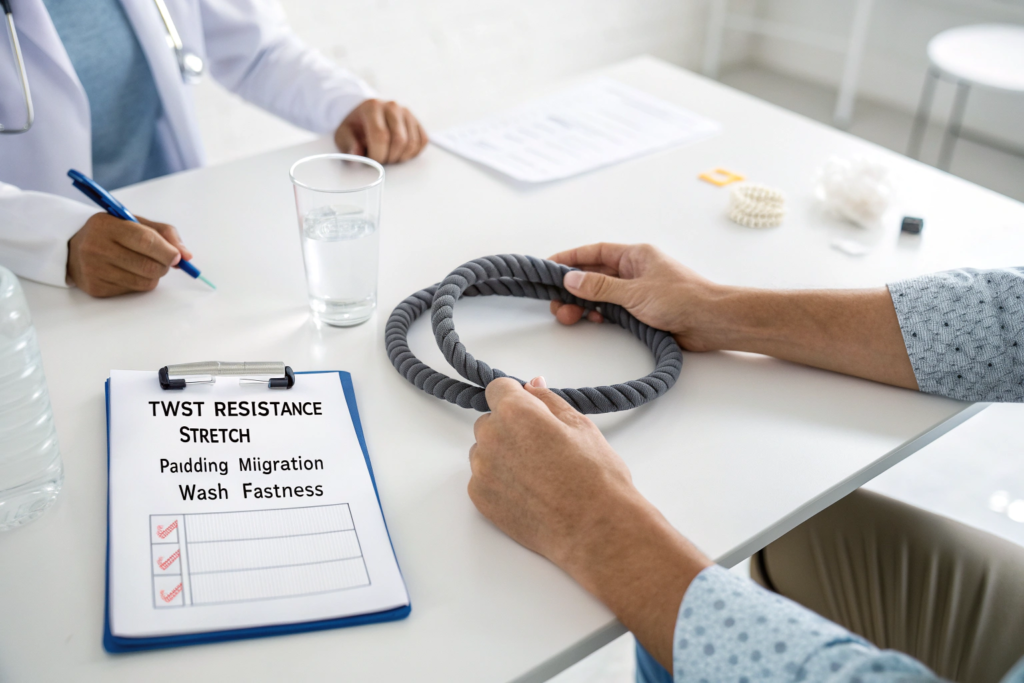
What Is a "Twist Test" and Why Is It the Most Critical Padded Band Check?
The most common failure of a poorly constructed padded headband is twisting. The headband is a curved, cylindrical form. If the pattern was not correctly compensated for the internal volume, or if the layers were not fed through the sewing machine in perfect alignment, the headband will have an internal torque. It will naturally twist into a figure-eight shape when laid flat, and it will not sit flat and comfortably against the head. The QC inspection for padded headbands includes a mandatory "twist test." The inspector holds the headband at each end, stretches it very gently to simulate wearing tension, and then lays it flat on the inspection table. A properly constructed headband will lie perfectly flat in a smooth, relaxed curve. A band that twists, flips over, or resists being laid flat has failed the test and is a structural reject. The root cause is then traced back to the pattern cutting or the sewing alignment.
How Do You Test for Padding Migration and Shape Retention After Washing?
Padding migration is the defect where the internal foam or fiberfill shifts, bunches up into a lump, or permanently collapses after washing. The QC test is a simulated use and care cycle. A sample of headbands from the production lot is machine-washed and dried according to the care label instructions. After the cycle, the inspector visually checks for any lumps, hard spots, or empty, deflated sections. The band is laid flat and measured against an unwashed reference sample to check for any unacceptable shrinkage of the outer fabric. The band is then cut open with a seam ripper, and the internal padding is inspected. The foam should still be intact, uniformly shaped, and not disintegrated. The fiberfill should still be evenly distributed within its stitched channels and not balled up in a corner. Only when the product passes all of these tests is the lot released. This focus on the internal, functional quality is the hallmark of a factory that understands comfort-engineered products. It is a key part of our commitment to delivering quality in every order.
Conclusion
Getting a Chinese hair band factory to produce a genuine, high-quality padded headband is a process of finding a partner who understands that the product is fundamentally different from an elasticated accessory. It requires the right multi-layer pattern-making skills, the walking-foot sewing machines to handle thick, compressible materials, and the manual stitching expertise to create a seamless, skin-friendly interior. The specification is the key to unlocking this quality. A detailed brief that names the specific internal padding material, its density and shape, and the invisible closure technique will immediately separate a capable factory from one that will simply put a piece of foam inside a folded tube.
The true test of the product is not just how it looks in a polybag, but how it feels on the head and how it survives its first wash. A factory that integrates the twist test and the wash-and-migration test into its standard QC protocol is a factory that takes ownership of the product’s functional promise, not just its cosmetic appearance.
If your brand is developing a line of padded headbands, whether for fashion, active performance, or sensitive skin comfort, and you need a factory partner that is technically set up for this specialized construction, contact our Business Director Elaine at elaine@fumaoclothing.com. Tell her about your target customer, the specific comfort features you want to engineer, and your target retail price point. She can coordinate a development sample with your choice of padding, fabric, and closure technique, and provide a full test report on its twist, stretch, and washability. Let us build a headband that feels as good as it looks.