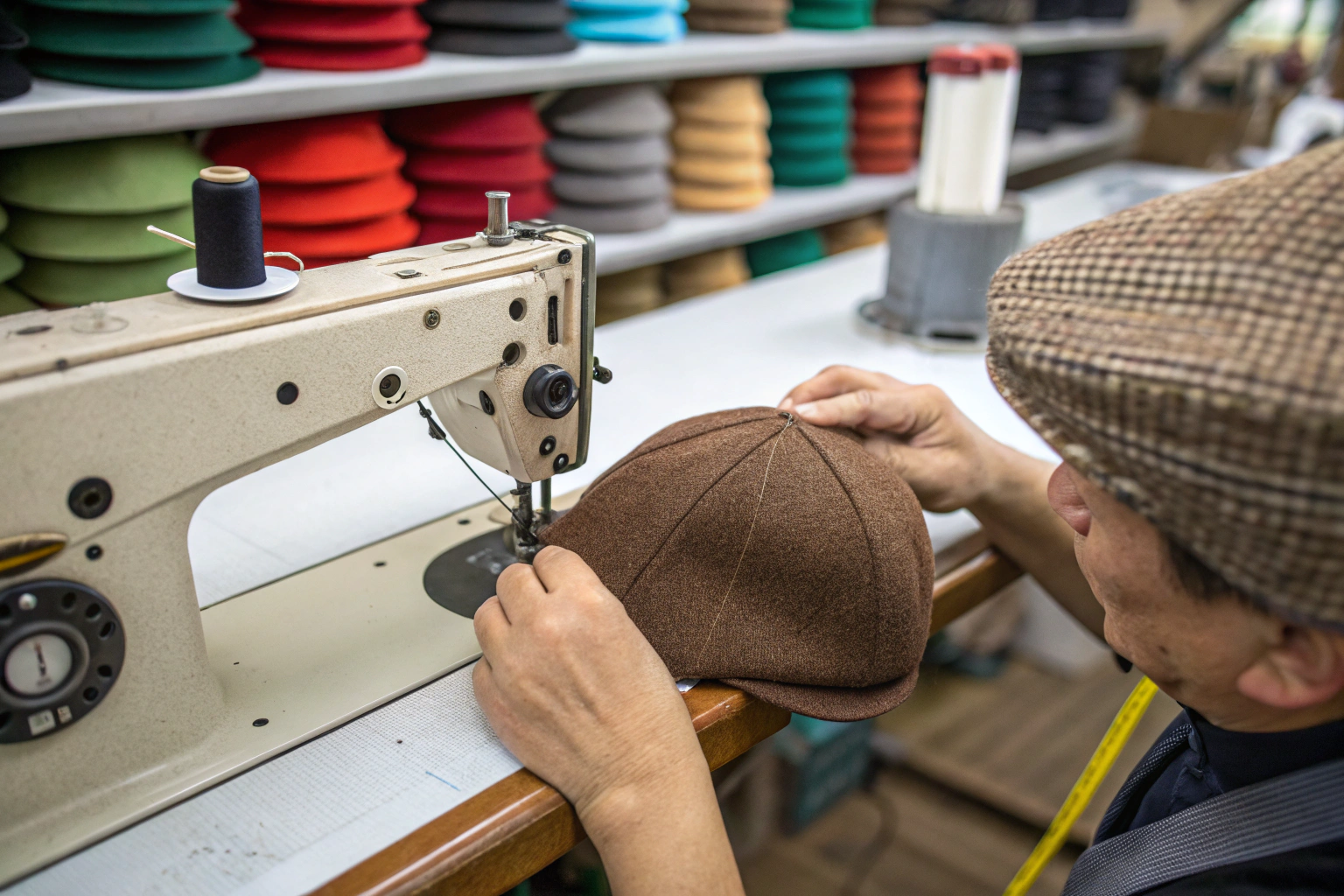
You finally found the perfect vintage-inspired newsboy cap design for your fall collection. You have the sketches ready. You have the fabric swatches from Italy sitting on your desk. You even have purchase orders from two major boutiques waiting to be fulfilled. But when you email six different knit hat manufacturers in China, three of them send back confused responses asking if you mean a baseball cap. Two of them send you photos of slouchy beanies instead. And the last one says they can do it but their sample looks like a deflated balloon sitting on someone’s head. That feeling of frustration is real. You are not just trying to find a sewing machine. You are trying to find a team that understands the structural DNA of a classic newsboy cap.
To successfully produce newsboy caps with a Chinese knit hat manufacturer, you must partner with a factory that has specific flat cap blocking equipment, understands eight-panel construction techniques, and maintains a separate cut-and-sew department for woven fabrics distinct from their knit beanie production line.
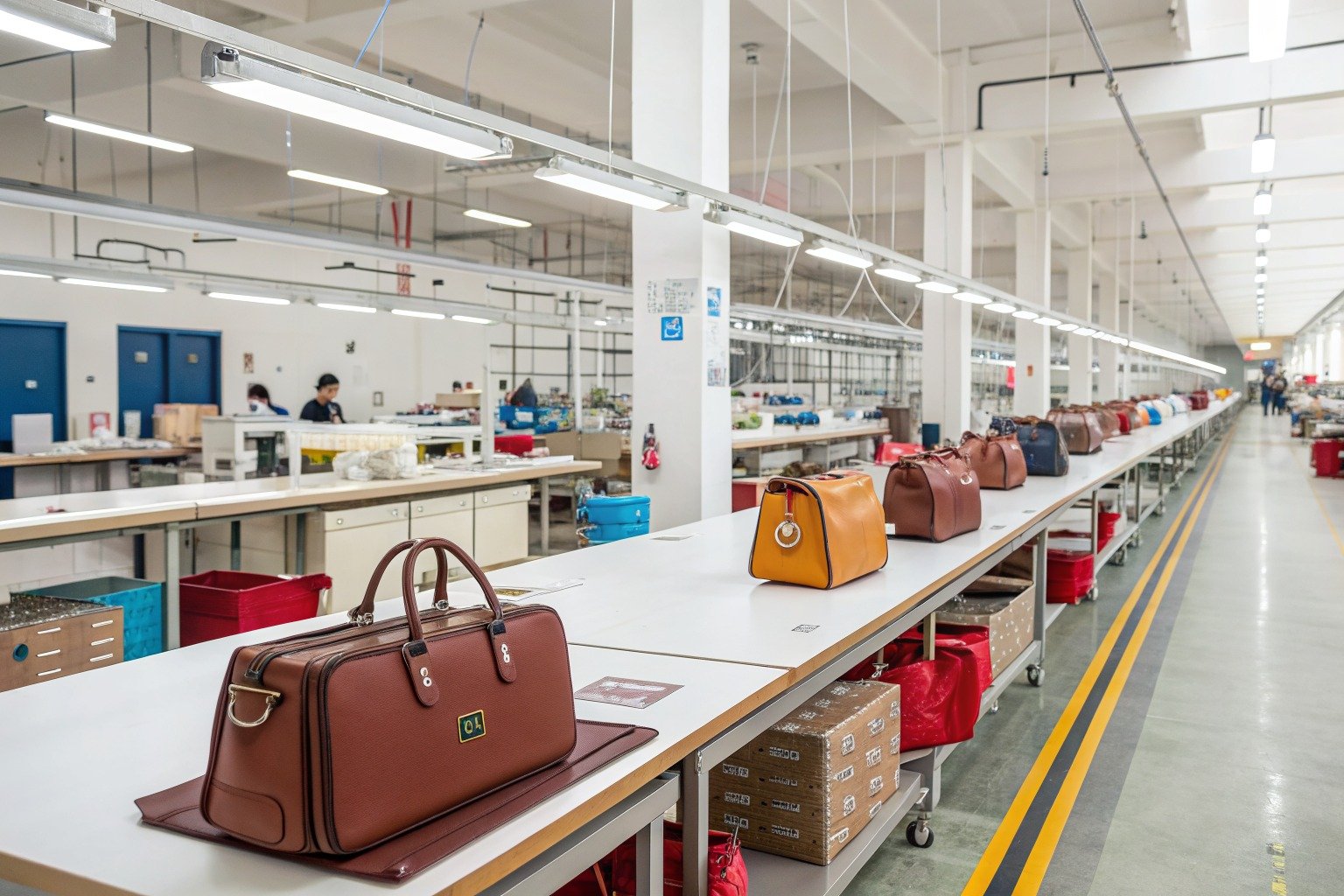
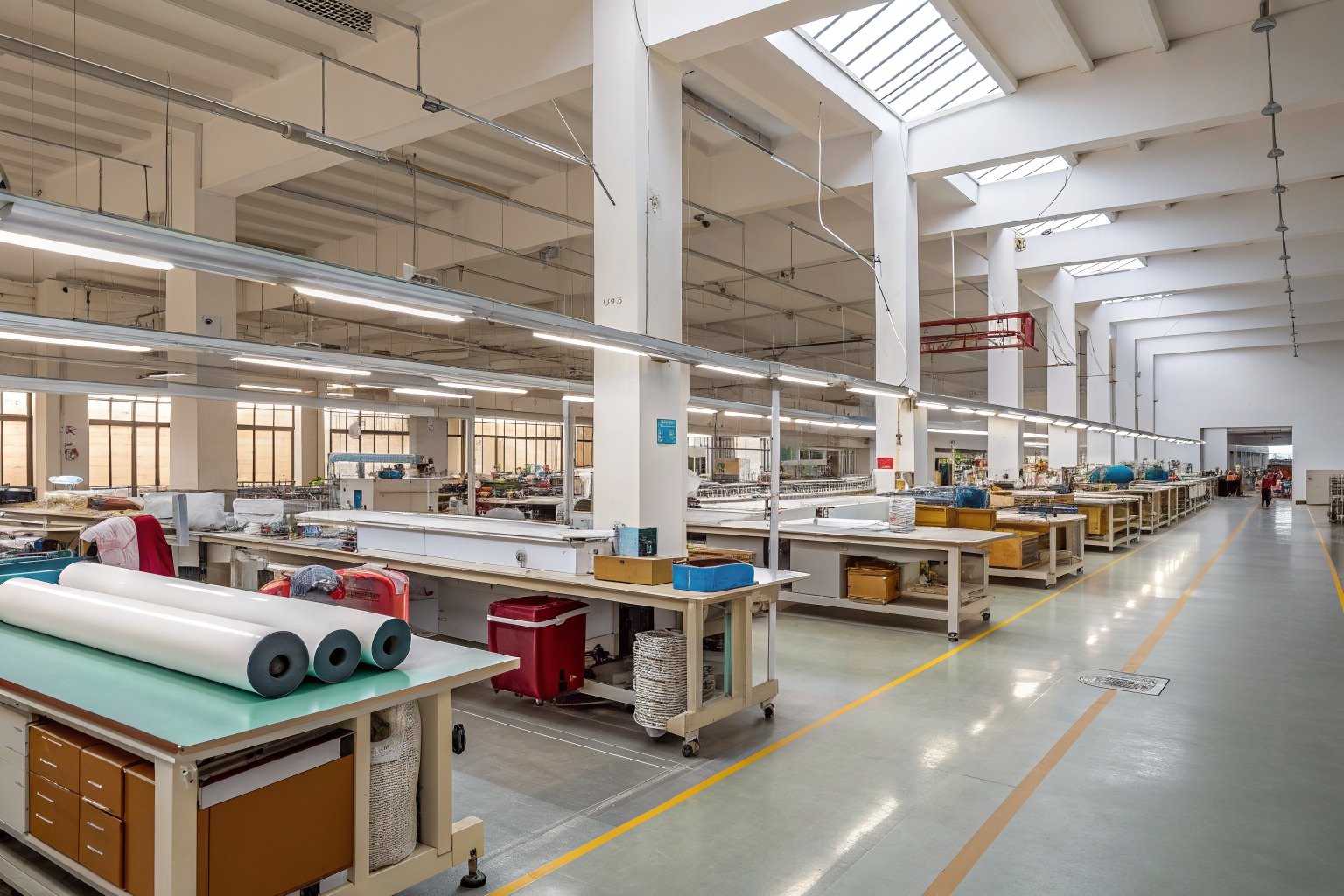
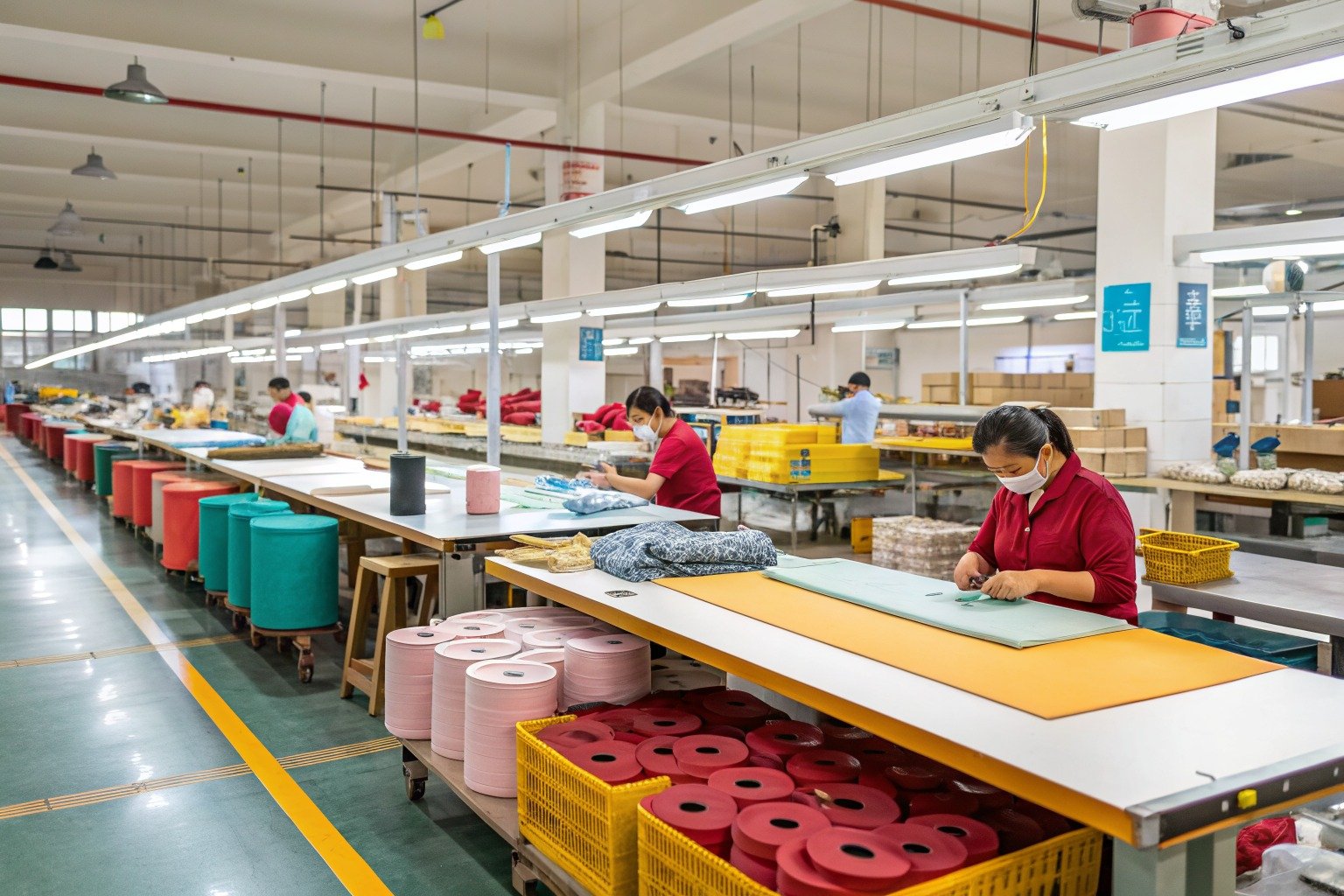
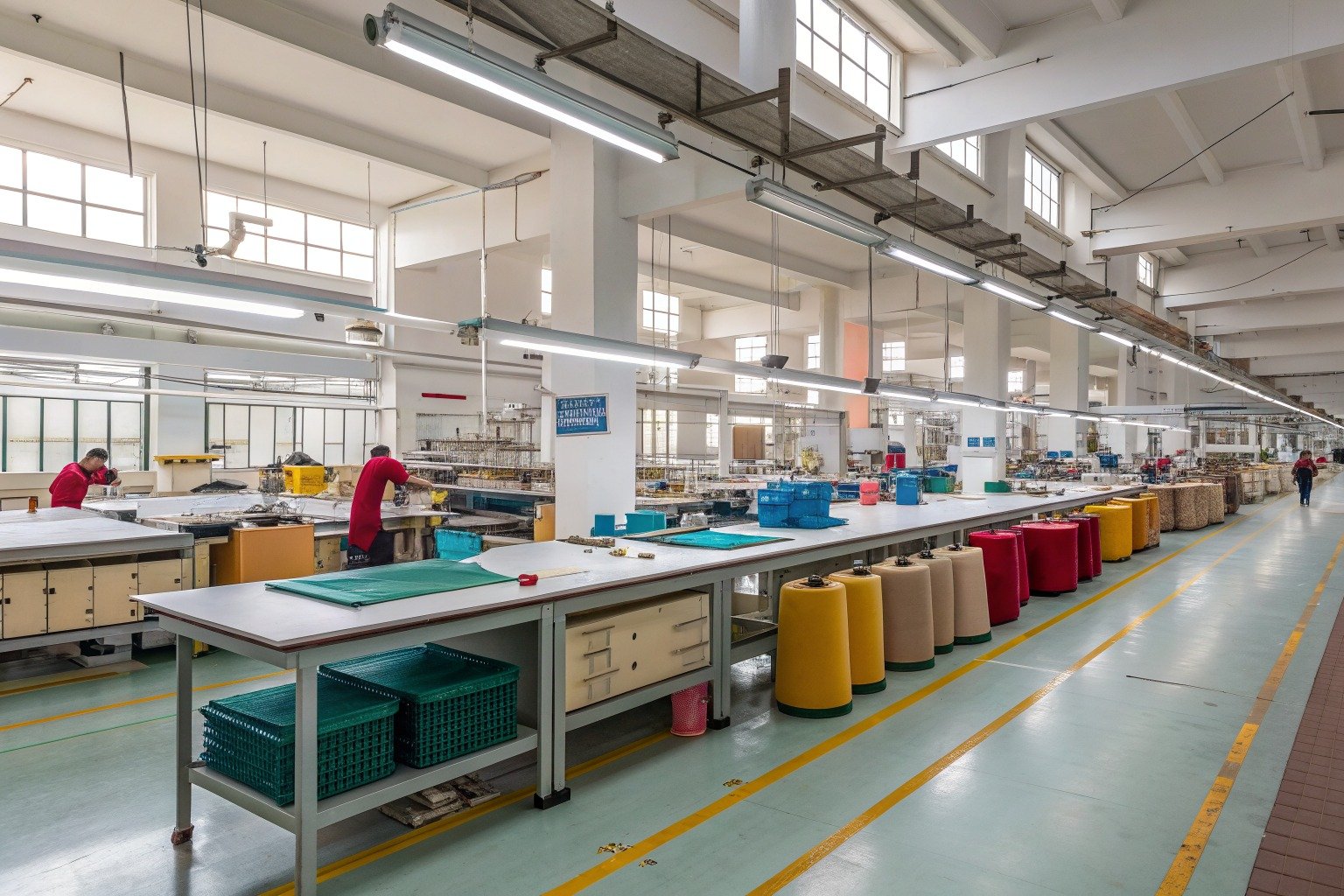
I have been in the accessories manufacturing business in Zhejiang for years. I have watched the newsboy cap trend cycle come and go and come back again with shows like Peaky Blinders and the general return of heritage menswear. Let me walk you through exactly how we handle this tricky product category at AceAccessory. I will show you why a standard beanie factory will fail and what you need to look for to get that perfect structured crown.
Why Do Most Knit Hat Factories Struggle with Newsboy Caps?
This is the first hurdle Ron faces when he asks his usual beanie supplier about newsboy caps. He gets a blank stare or an overconfident "Yes, we can do it." The reality is that a newsboy cap is not a knit hat. It is a structured cut-and-sew cap that shares more DNA with a tailored blazer than a slouchy winter beanie. The machinery required is completely different.
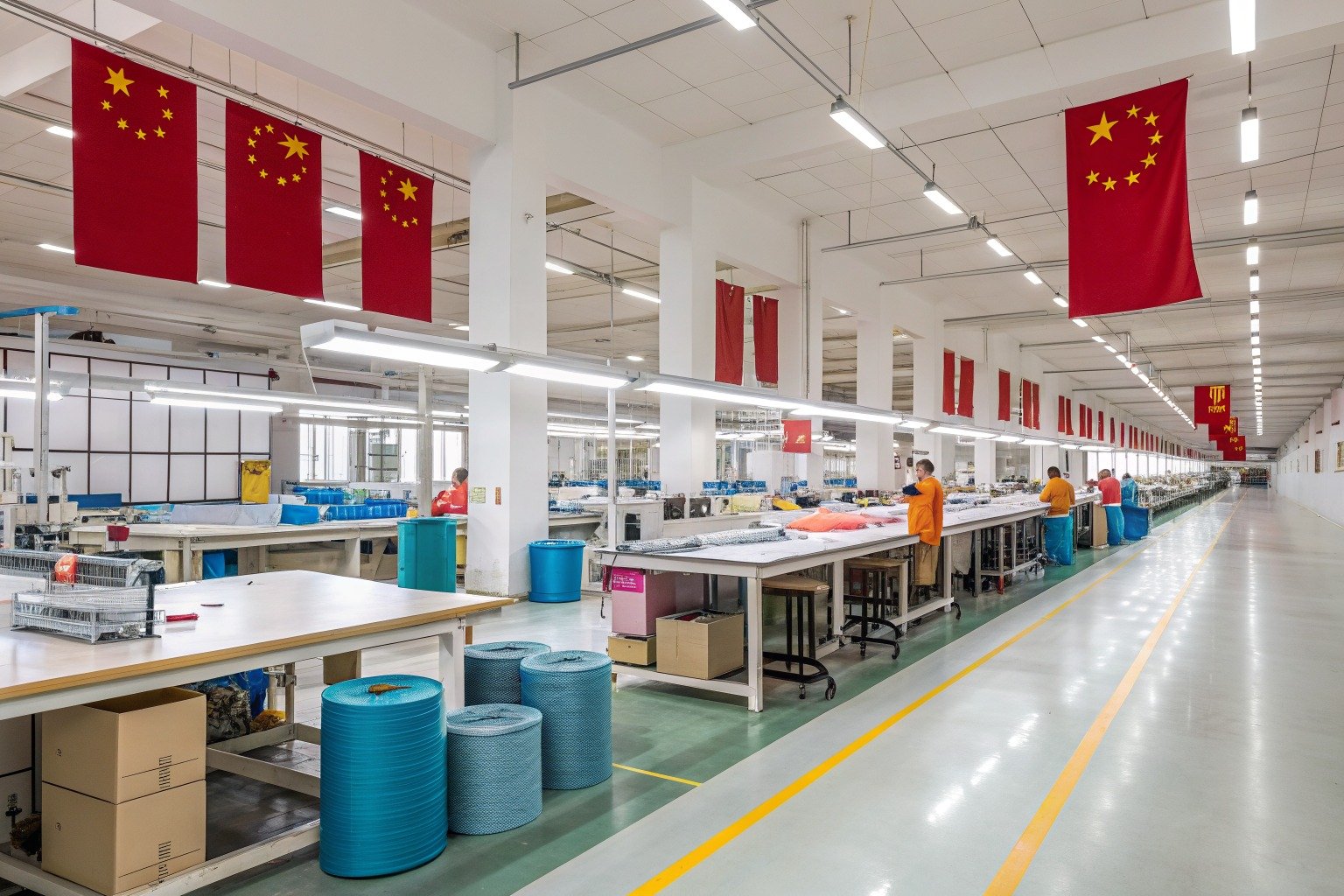
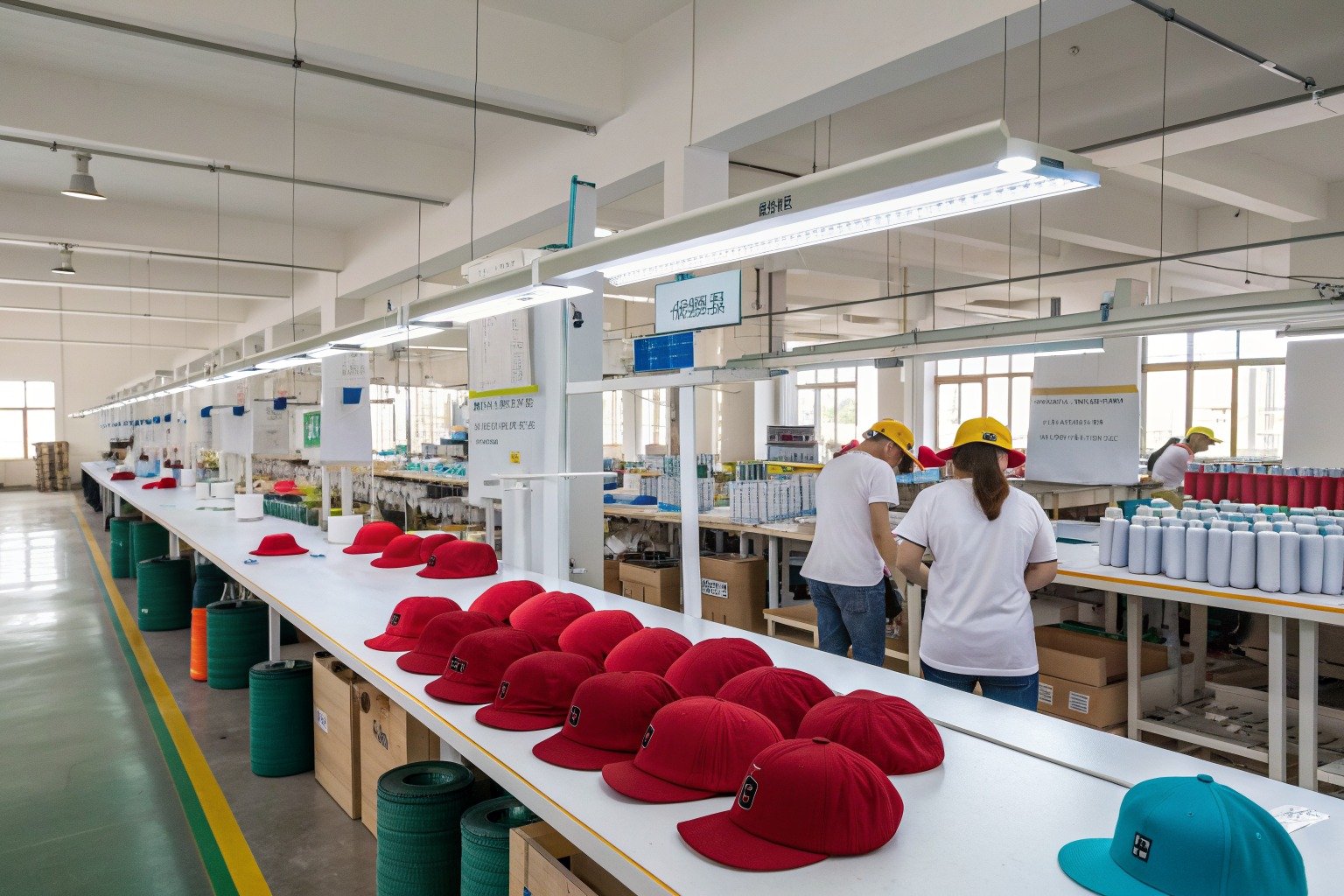
Most knit hat factories in China are set up for circular knitting machines. They make tubes of fabric on automated looms and then sew the tops shut. That process is fast and cheap for beanies. A newsboy cap requires a flatbed sewing machine, a heavy-duty blind stitch machine for the brim attachment, and most importantly, a hydraulic blocking machine to shape the crown. If the factory does not own a hat block in the specific shape and size you need, you will end up with a wrinkled mess.
At Shanghai Fumao, we learned this lesson early on. We tried to make a small run of newsboy caps on our general apparel sewing line years ago. The seam allowances were wrong. The brim curled up after two days of wear. We had to scrap the entire batch and invest in dedicated headwear tooling. That is why I can tell you with confidence that you need to find a supplier who treats headwear as a distinct category, not just an extension of their scarf and glove business.
What Specific Equipment Does a Newsboy Cap Factory Need?
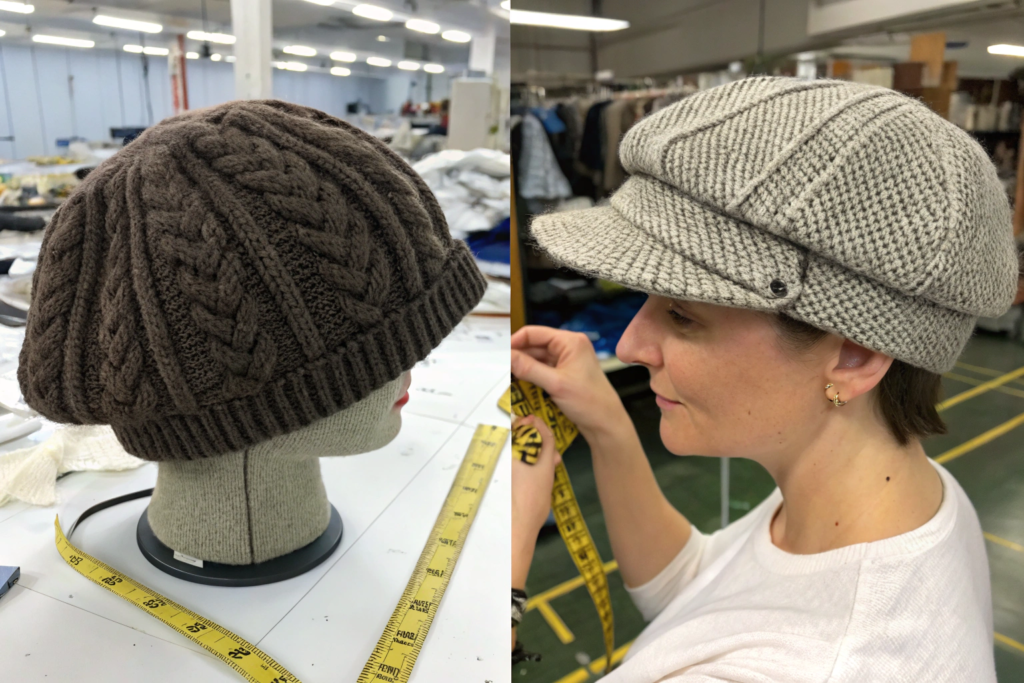
When you are vetting a factory on a video call, do not just ask if they make caps. Ask them to show you the blocking machine. This is the non-negotiable piece of equipment for any structured flat cap or newsboy cap.
The blocking machine uses steam and pressure to mold the fabric panels over a wooden or aluminum form. This is what gives the crown that distinct puffy yet firm silhouette. Without this step, the eight panels will collapse and look like a sad shower cap. A proper factory will have multiple block sizes and shapes. They will have a block for the classic full crown, a block for a slimmer ivy cap profile, and blocks for different head circumferences.
You should also look for a walking foot sewing machine. This is different from the high-speed lockstitch machines used for t-shirts. A walking foot machine feeds the thick tweed or wool blend fabric evenly from both top and bottom. It prevents the panels from shifting and puckering at the seams. If you see a standard domestic looking sewing machine in the video, run away. That factory is set up for lightweight scarves, not structured headwear construction.
How Do Material Requirements Differ from Standard Beanies?
This is where many projects go sideways. A buyer like Ron sources a beautiful heavy tweed fabric or a waxed cotton. He sends it to the factory. The factory tries to cut it with the same dies they use for thin jersey knit. The result is frayed edges and broken needles.
Newsboy caps require woven fabrics with body. Wool blends, tweeds, heavy linen, and even leather. These materials do not stretch like the acrylic yarn used for beanies. Therefore, the pattern making process is entirely different. You need to add wearing ease into the head circumference measurement. A knit hat stretches to fit. A woven newsboy cap must be cut precisely to the right size with a comfortable amount of space inside.
We also have to manage the interfacing and lining. A quality newsboy cap has a structured brim insert. That insert is often made of buckram or plastic canvas. It needs to be cut precisely and sewn inside the fabric brim. Then we add a sweatband. This is usually a grosgrain ribbon or a leather strip. A beanie factory does not stock grosgrain ribbon or leather sweatbands. They stock yarn cones. That inventory difference tells you everything you need to know about their true capabilities.
How to Communicate Design Specifications for a Structured Cap?
You might think you speak English and the factory speaks English, so communication is easy. But when it comes to the specific geometry of a newsboy cap, language is only 10% of the battle. The other 90% is the technical drawing. Ron wants efficiency. He wants the sample to be right the first time. The only way to achieve that is to speak the universal language of measurements.
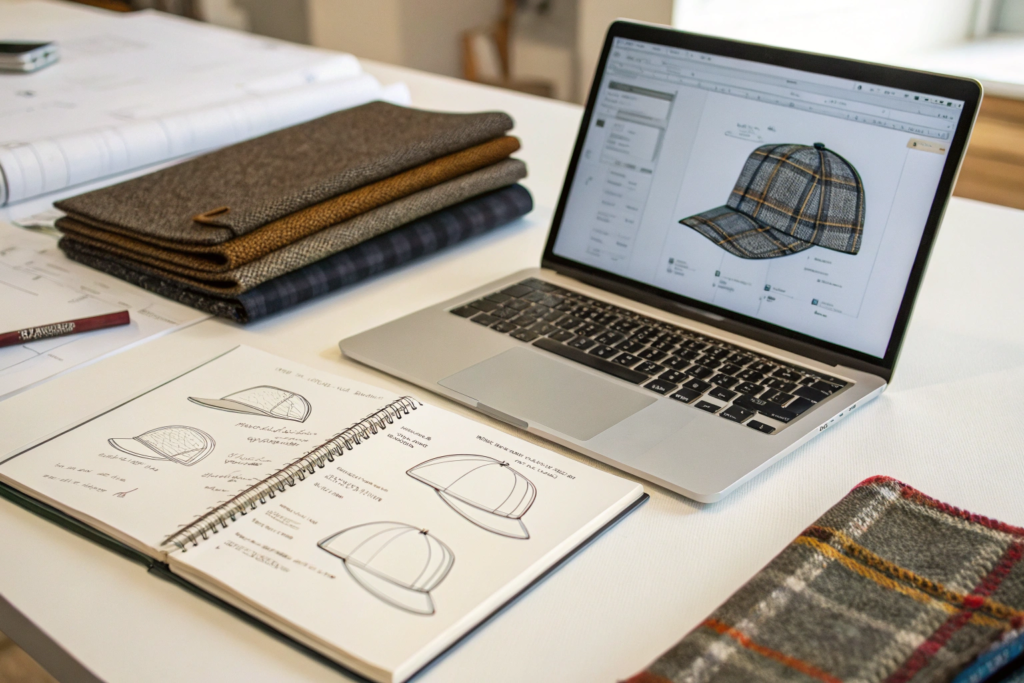
I always tell my project managers at AceAccessory: "If it is not on the tech pack, it does not exist." You cannot assume the factory knows you want a 2.5-inch brim or a sewn-down front peak. Every single curve and angle must be documented. This is where our design team steps in to translate your mood board photo into a technical specification sheet that the pattern maker can use.
We often work from a client’s vintage sample. They ship us their favorite worn-in cap from a trip to London. Our team carefully deconstructs it. We measure the seam allowance on each of the eight panels. We measure the angle of the brim attachment. We scan the sweatband and document the stitching density. This reverse engineering process is the only way to replicate a specific fit and feel. It is detailed work, but it prevents the heartbreak of opening a box of samples that look nothing like the original.
What Are the Critical Measurement Points for a Perfect Fit?
Do not just send an email that says "Size L/XL." That is not enough for a structured cap. A half-inch difference in crown height changes the entire look from a classic 1920s profile to a modern dad cap.
You need to define at least these key points in your initial inquiry:
| Measurement Point | Why It Matters | Common Mistake |
|---|---|---|
| Crown Height | Defines the volume of the top of the cap | Too tall looks costume; too short looks squashed |
| Brim Length | The protrusion from the forehead | Too long flops down; too short looks like a yarmulke |
| Brim Curve | The arc of the visor | Flat brim is modern; deep curve is vintage |
| Head Opening Circumference | The band that sits on your head | Wovens do not stretch; must be exact to size chart |
| Button Placement | The center top detail | Misaligned button ruins the symmetry of the 8 panels |
I recently worked with a client on a waxed cotton newsboy cap. Their original sample had a crown height of 3.5 inches. It looked flat. We bumped it up to 4.25 inches based on the block we had in the factory. The difference was night and day. The cap suddenly had that proper "pancake" look on the head. That is the kind of expertise you are paying for when you work with a specialized accessories manufacturer.
How to Specify the Internal Construction and Sweatband?
The outside of the cap gets all the attention, but the inside is where the comfort and longevity live. A cheap cap uses a cardboard brim insert. It gets wet in the rain and warps permanently. A quality cap uses a plastic brim insert that can withstand a light shower and keep its shape.
You need to specify the sweatband material. Is it cotton twill? Is it faux leather? Is it a branded polyester ribbon with your logo woven in? This detail matters for the end user experience. We also discuss the lining. For winter caps, we might use a quilted satin lining for warmth. For summer linen caps, we might use a breathable cotton mesh. These choices affect the cost and the minimum order quantity.
You also need to address the closure. Most newsboy caps are elasticized in the back. But some vintage reproductions use a leather strap and buckle closure. If you want the strap and buckle, you need to source the hardware. At Shanghai Fumao, we have a hardware library with hundreds of buckle options. We can send you photos and let you choose the exact antique brass finish that matches your brand aesthetic. This is the level of detail that separates a generic import from a branded accessory.
How to Navigate Minimum Order Quantities for Niche Hat Styles?
This is the conversation that stops most small brands in their tracks. Ron runs a boutique brand. He does not need 10,000 units of one color. He needs 500 units total, split across maybe four colorways and two sizes. The big factories in the north of China often have a minimum order quantity or MOQ of 2,000 pieces per color. That is a dealbreaker.
The reason for high MOQs is setup time. Changing the thread color on eight different machines and resetting the blocking forms takes labor. The factory wants to amortize that labor over a huge run. But at AceAccessory, we understand the US and European market. We know that small to medium brands need flexibility. We have structured our Zhejiang facility to handle lower volume, high mix production.
We do this by cross-training our workforce. A single operator might work on a batch of tweed newsboy caps in the morning and then switch to a batch of waxed cotton ivy caps in the afternoon. Because our production runs are organized by product family, not by one single massive order, we can accommodate the buyer who needs variety. This means you can test the market with a smaller investment.
How to Manage Fabric Sourcing and Stock for Small Runs?
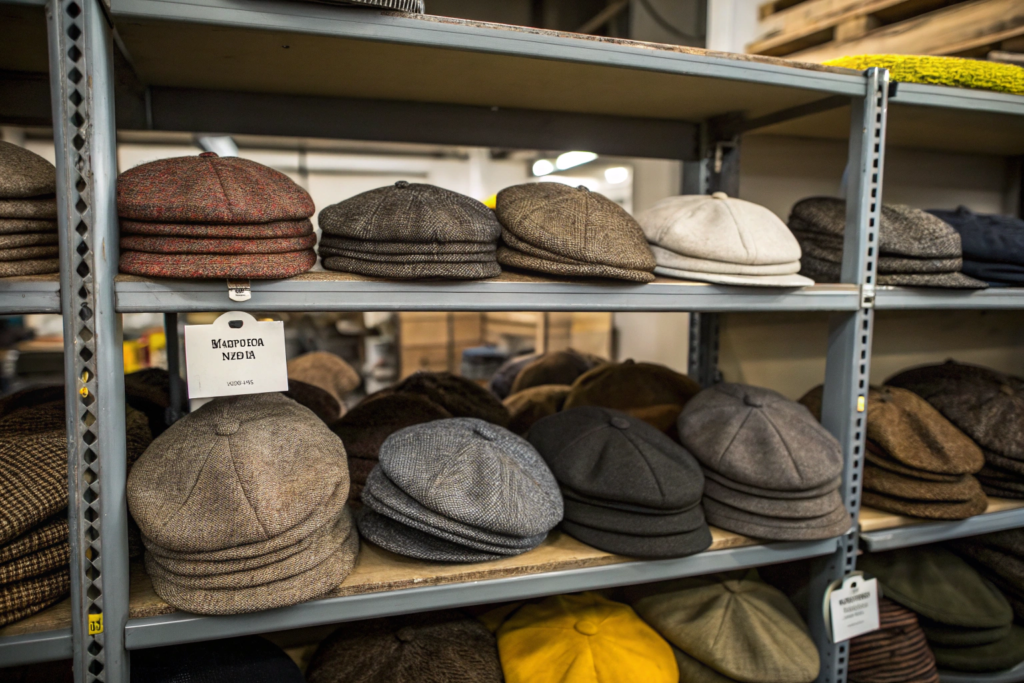
The biggest challenge with small runs is not the sewing. It is the fabric. If you want a specific Italian wool blend, the mill might have a minimum order of 500 meters. That amount of fabric could make 2,000 caps. But you only want 300 caps. You are stuck with deadstock fabric and a drained budget.
We solve this problem in two ways. First, we offer a curated selection of in-house stock fabrics. Because we produce for various clients, we often have access to high-quality overstock from previous large orders. We can offer you these fabrics with zero minimum purchase. You just pay for what you cut. This is a huge advantage for a developing brand.
Second, we can help you engineer the pattern to use fabric more efficiently. The eight-panel construction of a newsboy cap is actually quite forgiving for small fabric lengths. If you are willing to mix and match panels or use a contrast fabric for the underbrim, we can stretch a small amount of material further. This is where an experienced pattern maker saves you money. They know how to nest the pattern pieces on a small cut of fabric to minimize waste.
What Is a Realistic Production Timeline for Custom Newsboy Caps?
Patience is a virtue, but in retail, timing is a requirement. Ron wants to know if he can get these caps in time for the Fall/Winter delivery window. A realistic timeline from final sample approval to ex-factory shipment is usually 35 to 45 days for a first order of this complexity.
The timeline breaks down like this: 7 to 10 days for fabric cutting and panel preparation. The panels need to be fused with interfacing and stacked. Then 10 to 14 days for sewing and assembly. The eight-panel crown requires precise stitching and pressing after every seam. You cannot rush this. Then 3 to 5 days for blocking and shaping. The caps need to sit on the blocks to cool and set their shape. Finally, 5 to 7 days for attaching sweatbands, sewing on buttons, trimming threads, and final quality inspection.
Rush orders are possible, but they introduce risk. I always advise clients to add a two-week buffer for the unexpected. A typhoon might close the port for a day. A shipment of brass buttons might get delayed in customs. A good factory tells you the bad news early so you can manage your own inventory planning on the other side of the ocean.
How to Ensure Quality Consistency Across All Eight Panels?
The symmetry of a newsboy cap is its most defining feature. If those eight seams do not meet perfectly at the center button, the whole hat looks crooked. It looks cheap. Your customer will put it on, look in the mirror, and see that the top button is sitting off-center over their left ear. That is a return waiting to happen.
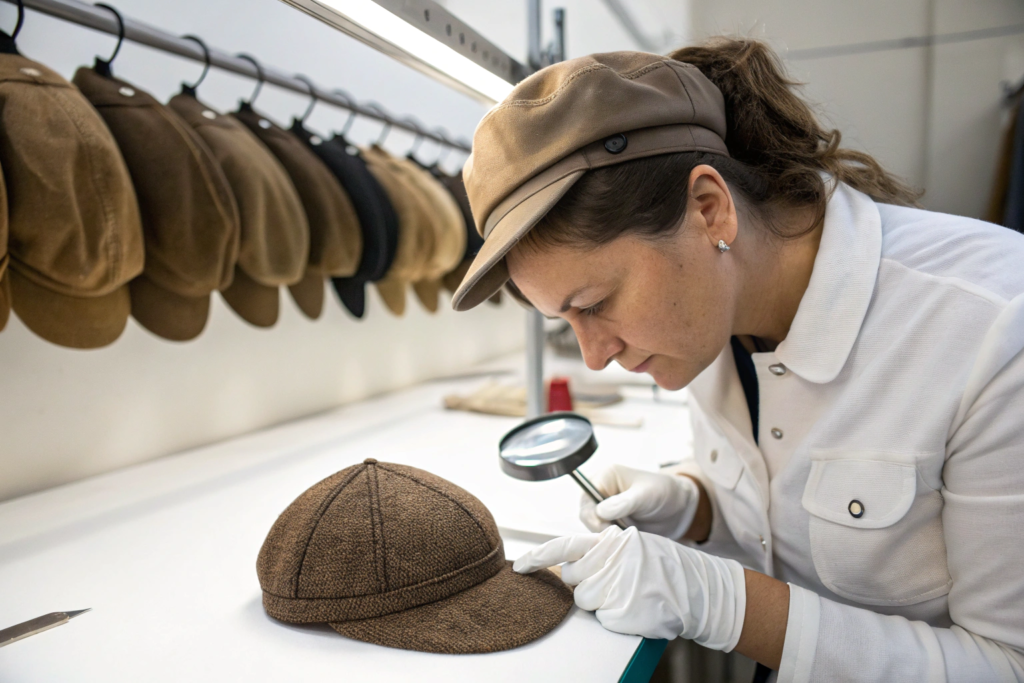
Quality control for this style is more intensive than for a simple beanie. A beanie just needs to be free of holes. A newsboy cap needs to be architecturally sound. At AceAccessory, we implement a specific QC checklist just for structured caps. We check the drape of the brim. We check the torque of the crown. We check the security of the button. These are not subjective fashion opinions. These are measurable pass/fail criteria.
I recall a shipment we did for a UK heritage brand. They had a very strict tolerance for seam alignment: less than 2mm deviation at the center point. Our QC team inspected 600 caps and rejected 15 of them because the button was just slightly off-axis. The client never saw those 15 caps. They only saw 585 perfect units. That is the value of having your own QC team on the ground in Zhejiang.
What Are the Most Common Defects in Cut-and-Sew Caps?
Knowing what can go wrong helps you ask the right questions during the vetting process. Here are the specific failure points for newsboy caps.
First, puckered seams. This happens when the sewing machine tension is too tight on a heavy tweed fabric. The seam looks gathered and wavy instead of lying flat. A skilled mechanic adjusts the tension for each fabric weight. Second, a wavy brim. This occurs when the brim insert is not cut cleanly or is too thin for the fabric. The plastic edge creates a visible ridge line across the visor. Third, a tilted crown. This happens when the panels are not sewn with the grain line in the same direction. One panel stretches slightly more than the other, causing the hat to lean to one side.
We train our sewing operators to spot these issues before the cap goes to the finishing department. We use a standardized work instruction with photos of good and bad examples. This visual aid removes the language barrier. The worker sees the picture of the puckered seam with a red X and knows to adjust the machine. This system helps us maintain a high first-pass yield rate, which keeps your costs down and delivery times short.
How to Test the Durability of the Brim and Button?
The brim takes a beating. It gets grabbed, bent, stuffed in pockets, and sat on. The button on top gets snagged on coat hooks and car headliners. If these components fail, the cap is trash.
We perform a simple but effective test in our lab. The "Brim Flex Test." We manually flex the brim back and forth 50 times. The plastic insert should return to its original curve without cracking or creasing. The fabric covering the brim should not separate from the insert. This test simulates a few months of daily wear and tear.
For the button, we use a pull test. We attach a small spring scale to the button and pull upward with a force of 5 kilograms. The button should not pop off. The thread should not break. If it does, we change the thread type to a bonded nylon thread that is much stronger than standard cotton thread. These small material upgrades cost fractions of a penny per unit but save you from expensive product returns and negative reviews online.
Conclusion
Getting a Chinese knit hat manufacturer to successfully produce newsboy caps is entirely possible. But it requires a shift in mindset from buying a commodity to developing a product. You cannot just send a photo and hope for the best. You need to verify the equipment, define the measurements with precision, negotiate a realistic production scale, and enforce a strict quality standard on those eight beautiful panels.
A newsboy cap is a statement piece. It requires a factory that respects the tailoring tradition behind it. It requires a team that understands the difference between a soft knit beanie and a structured woven crown. At Shanghai Fumao, we have invested in the blocking equipment, the skilled sewers, and the project management systems to handle this niche properly.
We do not just make hats. We solve the specific problems that come with complex accessory categories. Whether you are reviving a vintage newsboy silhouette or creating a modern hybrid with technical fabric, our factory in Zhejiang is ready to support your vision from sketch to shipping container.
If you are ready to develop a newsboy cap collection that actually looks and fits the way you imagined it, let’s talk specifics. I invite you to reach out to our Business Director, Elaine. She can coordinate a video tour of our headwear department and walk you through our existing block library to see what shapes we have on hand.
You can email her directly at: elaine@fumaoclothing.com. We look forward to helping you build a cap that your customers will want to wear every single day.