You found a supplier on Alibaba offering knit beanies for $0.85 per unit. The sample they sent looked decent. The price was irresistible. You ordered 5,000 units for a winter promotion. The shipment arrived. You opened the first carton. The hats looked… off. Some were noticeably smaller than the sample. Some had loose, loopy stitches. Some had an odd, chemical smell. You pulled one over your head. The seam at the crown was bulky and lumpy, pressing uncomfortably against your scalp. You realized, with a sinking feeling, that you had just purchased 5,000 units of disappointment. You did not just buy cheap hats. You bought a masterclass in the hidden defects of low-cost knitwear.
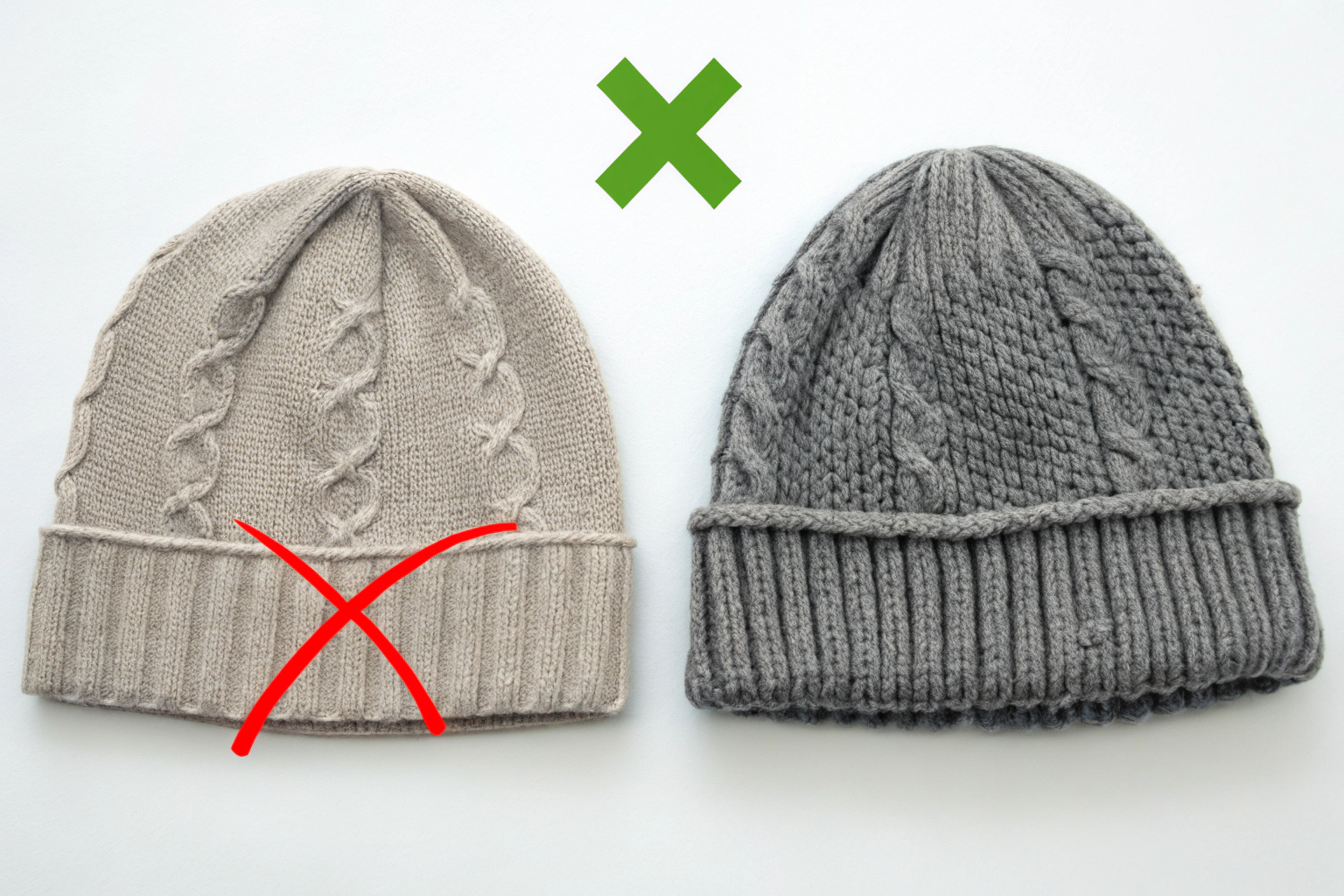
The most common quality issues with cheap knit hats are inconsistent sizing due to poor gauge control, twisted or bulky crown seams from rushed finishing, rapid pilling and fabric degradation from low-quality yarns, and poor elasticity leading to stretched-out, misshapen hats after minimal wear. These issues stem from a combination of inferior materials, unskilled labor, and the absence of systematic quality control.
I manage Shanghai Fumao in Zhejiang, and we manufacture high-quality knit hats for brands that cannot afford these kinds of quality failures. I have seen the full spectrum of what can go wrong in knit hat production. Understanding these common defects will help you specify your requirements and evaluate your supplier's samples with a more critical eye. Let me show you exactly what to look for.
Why Is Inconsistent Sizing the Number One Complaint with Cheap Knit Hats?
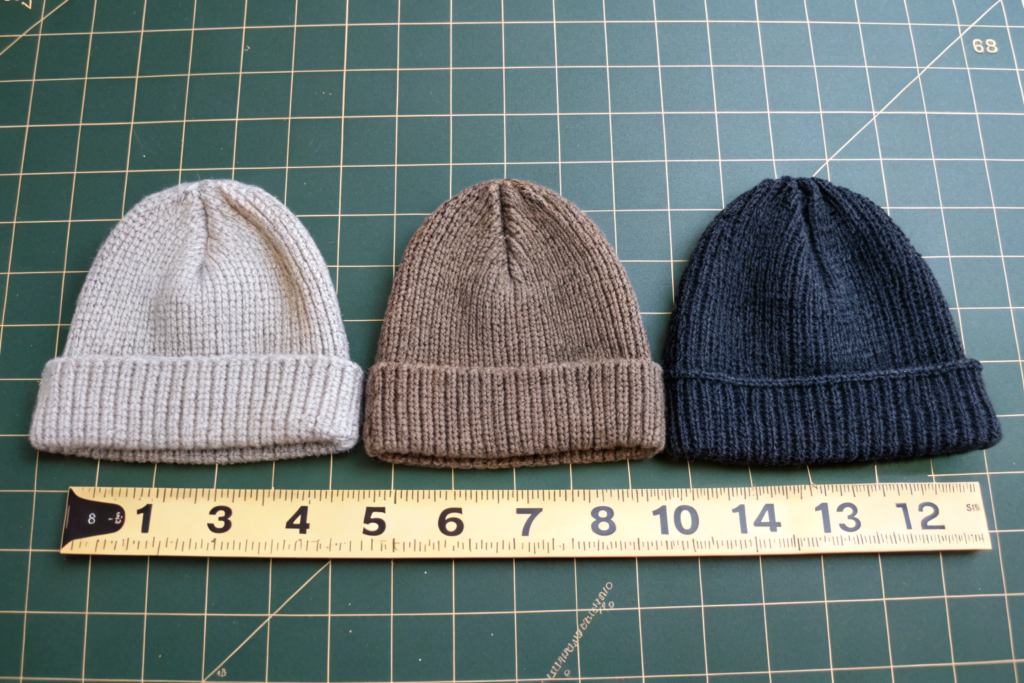
A knit hat that is supposed to be "One Size Fits Most" should fit a standard adult head, roughly 55 to 61 centimeters in circumference. A hat that is too small is unwearable. A hat that is too large slides down over the eyes. Cheap knit hats are notorious for wild size variations, even within the same batch. This is the number one source of customer complaints and returns.
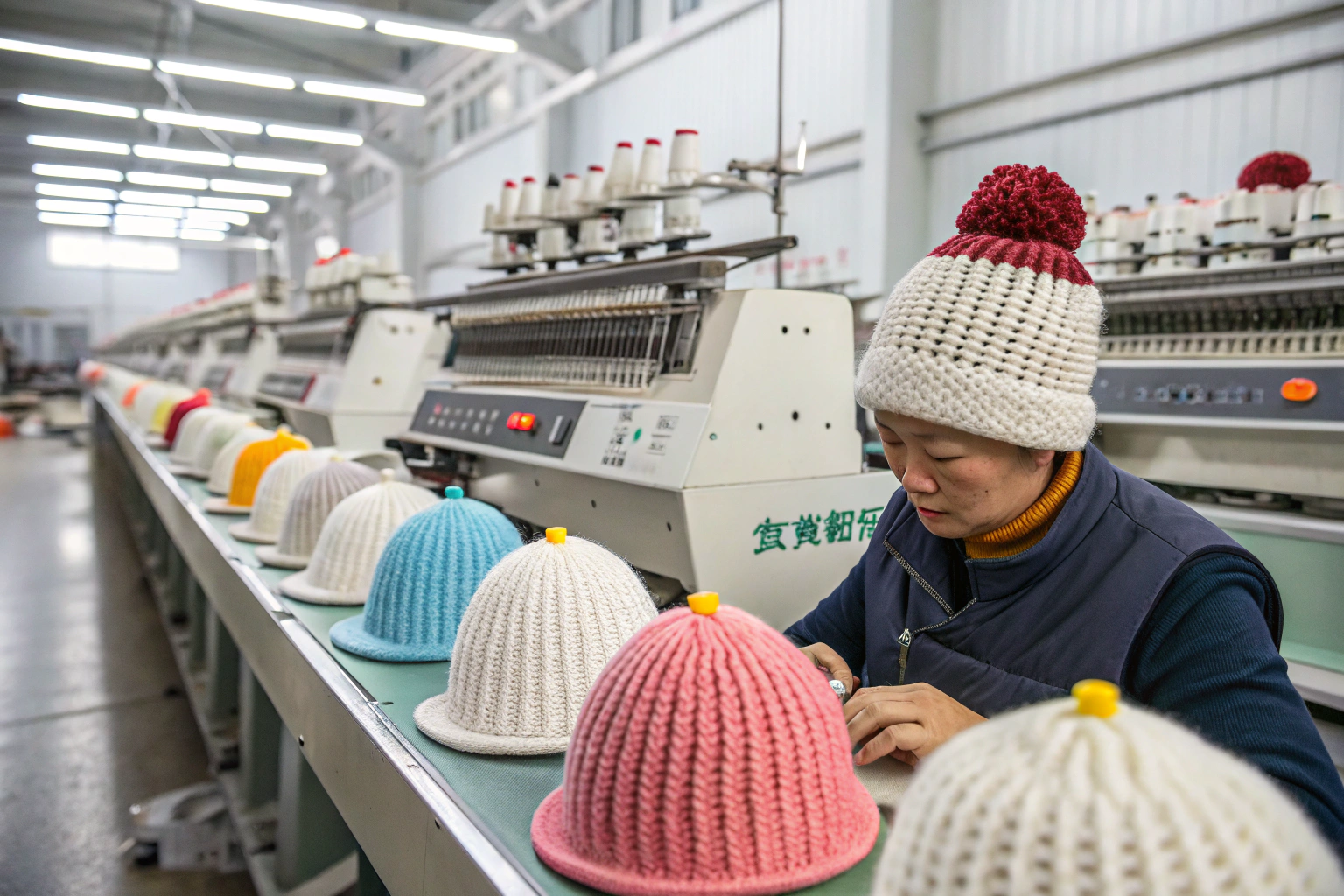
The root cause is poor control over the knitting gauge. Gauge is the number of stitches per inch. It determines the size and density of the fabric. A knitting machine must be precisely calibrated to maintain a consistent gauge. The yarn tension must be uniform. In a low-cost factory, machines may be poorly maintained, and operators may not check gauge frequently. The result is that some hats come off the machine tighter and smaller, while others come off looser and larger. There is no consistency.
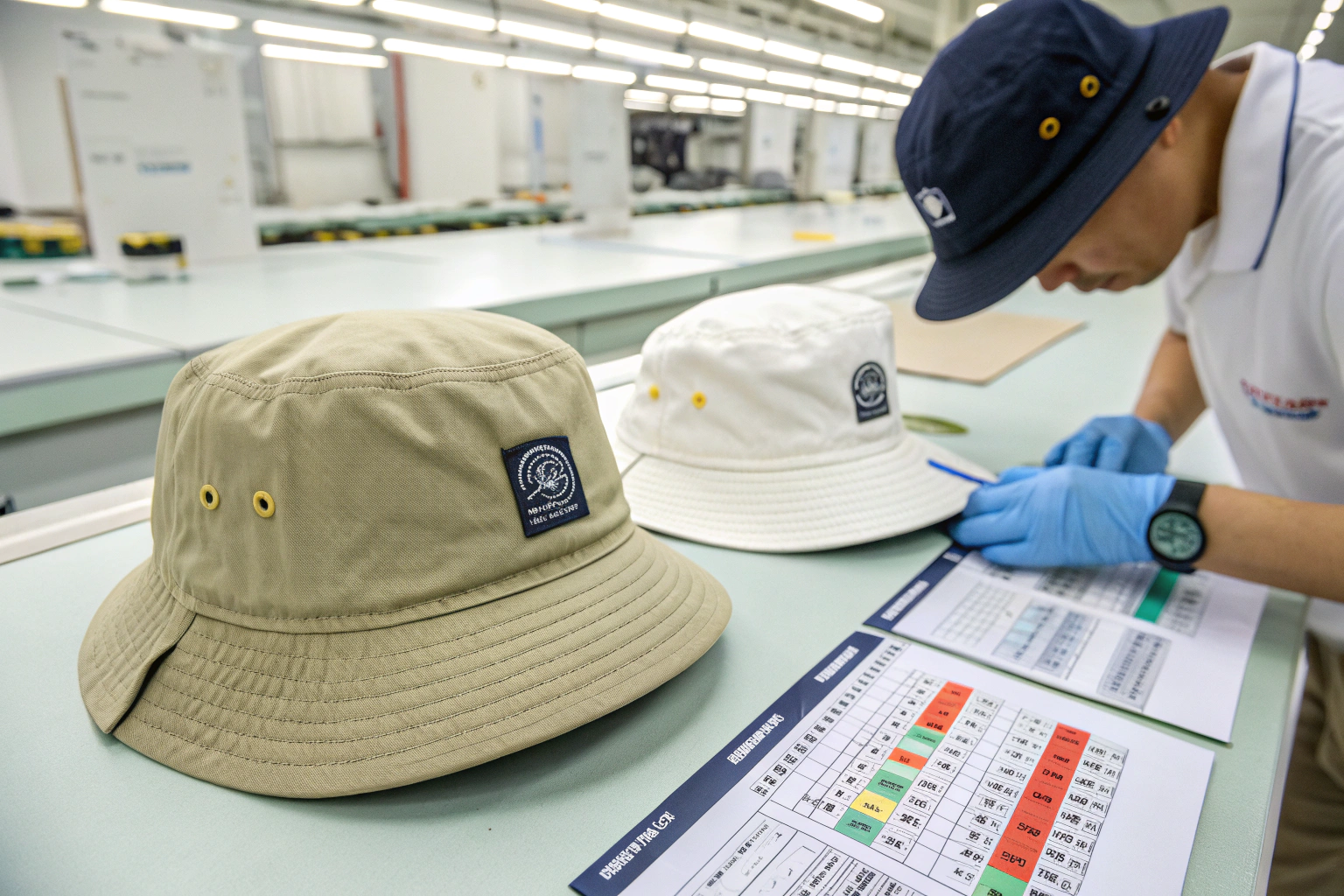
At Shanghai Fumao, gauge control is a fundamental discipline. We use standardized gauge swatches at the start of every shift. Our QC team measures the relaxed and stretched dimensions of a sample of hats from every production batch against a strict tolerance. A hat that is outside the tolerance is rejected. This knitting gauge control and its impact on size consistency in beanies is the difference between a professional product and a gamble.
How Does Yarn Type and Quality Affect Dimensional Stability?
The yarn itself plays a major role in how a hat holds its size over time. Cheap knit hats often use low-grade acrylic yarn. This yarn has poor recovery. It stretches out easily and does not spring back to its original shape. The hat that fit perfectly on day one becomes a loose, slouchy mess after a week of wear. Higher-quality yarns, such as a good acrylic, a wool blend, or a cotton with elastane, have much better recovery. They maintain their shape and fit over the life of the product. The yarn is not just about softness. It is a structural component. This impact of yarn quality on knit hat stretch recovery and shape retention is a hidden cost of cheap materials.
What Are the Correct Tolerances for Beanie Measurements?
You should specify tolerances in your purchase order. A common and realistic tolerance for the relaxed width of a knit beanie is plus or minus 1 centimeter. For the stretched width, the tolerance is plus or minus 1.5 centimeters because the act of stretching introduces a small human variable. If a factory cannot meet these tolerances consistently, they do not have control over their knitting process. We provide our clients with a measurement chart and our guaranteed tolerances. This specifying measurement tolerances for knit hat quality control sets a clear, objective standard.
What Causes the Bulky, Uncomfortable Crown Seam in Cheap Hats?
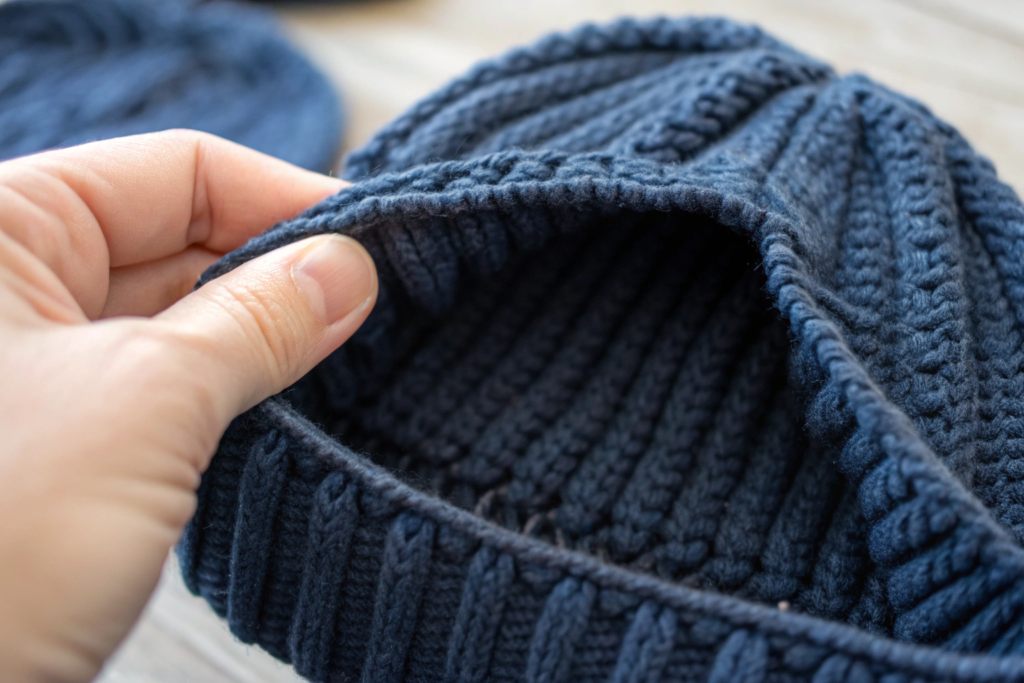
Turn a cheap knit hat inside out and look at the very top, the crown. You will often find a thick, twisted, and knotted mess of yarn where the top of the hat was closed. This is the crown seam, and it is a hallmark of low-quality finishing. When you wear the hat, this hard, lumpy knot presses directly against the top of your head. It is uncomfortable and leaves a mark.
The proper way to finish the crown of a knit hat is with a technique called grafting or Kitchener stitch. This is a hand-sewing technique that joins the live stitches at the top of the hat seamlessly, creating a smooth, flat, and virtually invisible closure. It is more time-consuming and requires skilled labor. Cheap factories avoid this. They simply gather the top of the hat with a thread and pull it tight, creating the bulky knot, or they sew a crude seam that creates a rigid ridge.
At AceAccessory, grafting is our standard crown finish for premium beanies. We also use a clean, flat-seam linking machine for certain styles. The comfort of the wearer is a priority. This crown finishing techniques grafting versus gathered seam for beanie comfort is a detail that distinguishes a quality hat.
How Can You Specify a Comfortable Crown Finish?
You must specify the finishing method in your tech pack. The language to use is "Crown to be finished with flat linking seam" or "Crown to be finished with hand-grafted seamless closure." Do not leave this critical detail to the factory's discretion. A factory that is capable of high-quality finishing will understand these terms and quote accordingly. A factory that only knows the bulky gathered method will either be confused or will promise something they cannot deliver. This specifying crown finish in knit hat tech packs to ensure comfort is a essential part of product development.
What Other Seam Issues Are Common in Low-Quality Knit Hats?
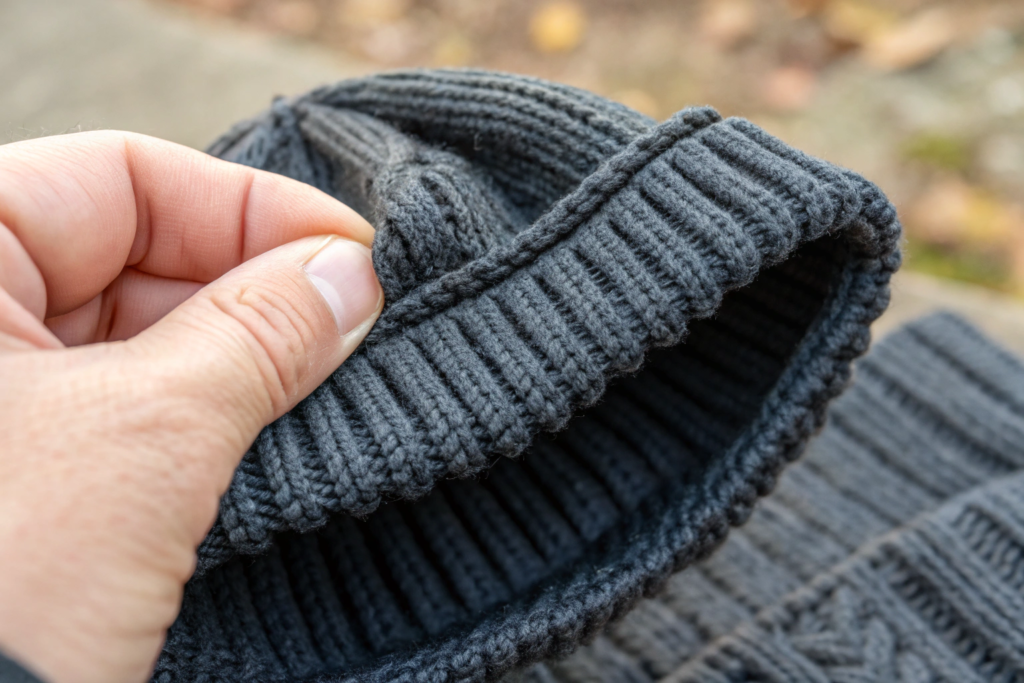
Beyond the crown, look at any other seams, such as the seam joining the cuff to the body of the hat. Cheap hats often have seams that are puckered, wavy, or uneven. The stitching may be loose, with visible gaps. The thread may not match the hat color. These are signs of poorly maintained sewing machines, incorrect thread tension, and unskilled operators. A quality hat has seams that are flat, smooth, and virtually invisible from the outside. This common seam defects in knitwear and their causes is a quick visual indicator of overall quality.
Why Does Cheap Acrylic Yarn Pill and Fade So Quickly?
You wear a brand new black beanie for a day. You take it off and notice small, fuzzy grey or black balls all over the surface. The hat already looks old and worn. This is pilling. It is the formation of small, tangled balls of fiber on the surface of the fabric. It is caused by abrasion during normal wear. All yarns will pill to some extent, but cheap acrylic yarns pill excessively and rapidly.
The reason is the fiber itself. Low-grade acrylic is made from short, weak fibers. These fibers easily break and work their way to the surface, where they tangle with other broken fibers to form pills. Higher-quality yarns use longer, stronger fibers that are less prone to breaking. They may also be treated with an anti-pill finish. The dye in cheap yarns is also often of poor quality, leading to rapid fading, especially after washing or exposure to sunlight. This causes of pilling and fading in low grade acrylic knit hats is a direct result of material choice.
How Can You Test for Pilling Resistance on a Sample?
You can perform a simple manual test. Take the sample hat and rub the fabric firmly against itself, or against a piece of denim, for about thirty seconds. Observe the surface. A high-quality, anti-pill yarn will show minimal or no pilling. A cheap yarn will show immediate and significant fuzzing and pilling. This is a quick and revealing test you can do at your own desk. There are also standardized laboratory tests for pilling, such as the Martindale abrasion test, which we can arrange for clients who require certified results. This simple manual pilling test for evaluating knitwear samples is a valuable screening tool.
What Are the Signs of Poor Colorfastness in Knit Hats?
Colorfastness is the ability of the dye to resist fading or bleeding. A cheap hat might leave dye on your hands or forehead when you sweat. It might bleed color onto other clothes in the wash. You can perform a simple crocking test. Take a clean, dry white cloth. Rub it firmly against the surface of the hat, especially in a dark-colored area. If any color transfers to the white cloth, the colorfastness is poor. A wet crocking test, using a damp white cloth, is even more revealing. A quality hat should not transfer color under these conditions. This testing for colorfastness and crocking in dyed knit accessories is a critical quality check.
How Does Poor Elasticity Ruin the Fit of a Cuffed Beanie?
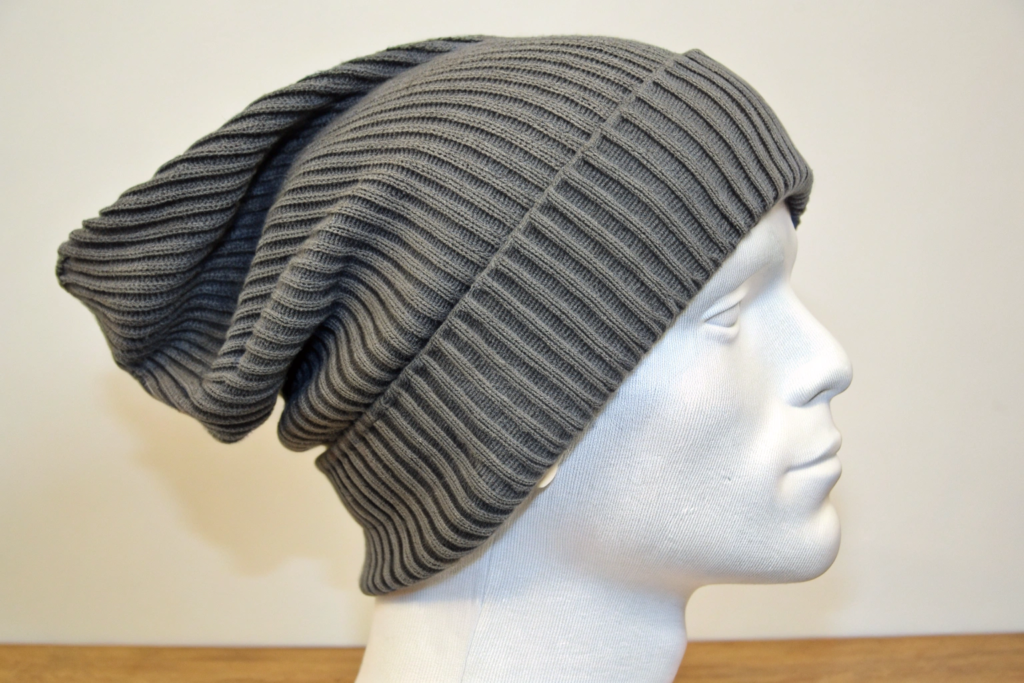
The cuff of a beanie serves a critical function. It should grip the head gently and keep the hat in place. It also contributes to the overall silhouette. A cuff that has lost its elasticity is useless. It becomes a loose, floppy ring of fabric that does nothing.
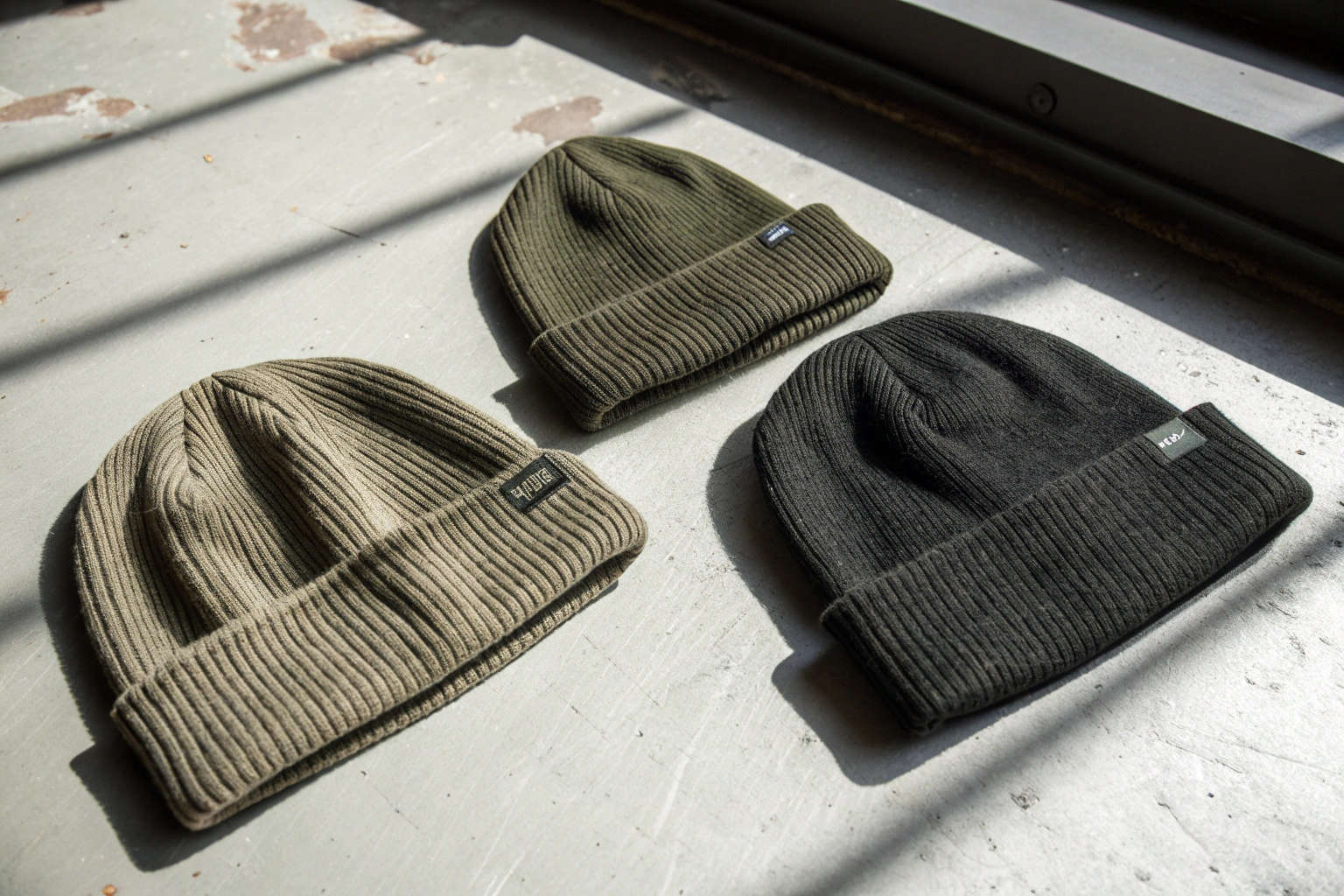
Elasticity in a knit cuff comes from two sources. The first is the knit structure itself. A ribbed knit, such as a 1x1 or 2x2 rib, is inherently stretchy and has good recovery. The second source is the inclusion of a small percentage of spandex or elastane in the yarn. This elastic fiber acts like a spring, helping the cuff snap back to its original shape. Cheap hats often use a 100% acrylic yarn with no spandex, and the ribbing may be knitted loosely. The result is a cuff that stretches out quickly and never recovers.
At AceAccessory, we use a yarn with a small percentage of spandex for our cuffed beanies. The spandex is invisible, but its effect on fit and longevity is profound. This importance of spandex and rib knit structure for beanie cuff elasticity is a key engineering detail for a hat that fits well and lasts.
What Is the Ideal Yarn Composition for a Durable Cuff?
For a beanie that will be worn and washed repeatedly, we recommend a yarn blend that includes a small amount of spandex. A common and effective blend is 95% Acrylic and 5% Spandex. This provides the warmth, softness, and cost-effectiveness of acrylic, with the essential recovery properties of spandex. The spandex is typically core-spun, meaning it is wrapped in acrylic fibers, so it is not exposed and does not affect the hand feel. This recommended yarn blends with spandex for durable and elastic knit accessories is our standard for premium cuffed styles.
How Does Washing and Drying Affect Hat Elasticity?
Heat is the enemy of spandex. A beanie with spandex that is washed in hot water and dried in a hot dryer will lose its elasticity much faster. The care label must instruct the consumer to wash in cold water and lay flat to dry. This preserves the life of the spandex and the shape of the hat. We provide care labels with clear, accurate instructions. Educating the consumer on proper care is part of delivering a quality product. This impact of washing and drying heat on spandex elasticity in knit hats is important information for the end user.
Conclusion
The low price of a cheap knit hat is a powerful temptation, but it almost always conceals a host of quality compromises that will ultimately cost you more in returns, customer service, and brand damage. Inconsistent sizing, uncomfortable seams, rapid pilling and fading, and loss of elasticity are not random defects. They are the predictable outcomes of using inferior materials, unskilled labor, and a production process devoid of quality control.
A quality knit hat, like those we manufacture at AceAccessory, is the result of deliberate choices. Choosing better yarns. Maintaining precise gauge control. Using skilled finishing techniques like grafting. Engineering cuffs with spandex for lasting fit. These choices add a small amount to the unit cost, but they deliver an exponentially better product and a vastly better customer experience.
The next time you evaluate a knit hat sample, look beyond the color and the general shape. Turn it inside out. Stretch it. Rub it. Measure it. Look for the details I have described. These details tell the true story of the hat's quality.
If you are sourcing knit hats and want a manufacturing partner who understands and controls these critical quality factors, I encourage you to contact our Business Director, Elaine. She can provide samples that demonstrate our quality standards and discuss our production processes. You can email Elaine at: elaine@fumaoclothing.com. Let us help you build a knit hat program that your customers will love, not return.