You place an order for 2,000 knit beanies from a new supplier in China. The sample fit perfectly. The price was right. The production was on time. You open the first carton at your warehouse in California and pull out a beanie. It looks great. You pull it over your head. It barely covers your ears. You grab another one. It is so tight it leaves a red mark on your forehead. You grab a third. It is so loose it slides down over your eyes. You realize with a sinking feeling that the 2,000 beanies in your warehouse are not one size. They are a random assortment of sizes that will generate returns and complaints. You are not just dealing with a quality issue. You are dealing with a fundamental manufacturing failure.
To avoid sizing issues when ordering knit hats from Asia, you must provide a detailed tech pack with exact flat lay measurements and stretch tolerance, require a pre-production sample measured against a calibrated head form, and specify the use of a knit gauge swatch to ensure consistent tension throughout the production run.
I run AceAccessory in Zhejiang, and we manufacture thousands of knit hats every month for clients in North America and Europe. Sizing consistency is one of the most common pain points I hear about from buyers who have been burned by other suppliers. A knit hat is deceptively simple. It stretches. It should be easy. But the very stretchiness that makes a beanie comfortable is what makes it difficult to manufacture consistently. Let me explain how we control sizing at our factory so you can avoid this expensive problem.
Why Is Knit Hat Sizing More Complex Than Woven Hat Sizing?
A woven baseball cap is cut from a stable, non-stretch fabric. The pattern pieces are cut with a metal die. The dimensions of the finished cap are highly predictable. A knit beanie is entirely different. It is constructed from yarn that is looped together. The fabric has inherent stretch and recovery properties. The size of the finished beanie depends not only on the number of stitches but on the tension at which those stitches were knitted.
This tension is called the gauge. Gauge is measured in stitches per inch. A beanie knitted with a tight gauge will be smaller and denser. A beanie knitted with a loose gauge will be larger and more open. Even if the knitting machine is programmed with the exact same number of stitches, a variation in yarn tension will produce a different sized hat. This is the core challenge of knit hat sizing. The factory must control the gauge consistently across every hat in the production run.
At AceAccessory, we use a standardized gauge swatch process. Before starting a production run, the knitting machine operator knits a small test swatch. The swatch is measured against the approved gauge standard. If the gauge is off, the machine tension is adjusted until the swatch matches the standard. This process is repeated at the start of every shift and after any yarn change. This knit hat gauge control and tension consistency in manufacturing is the foundation of reliable sizing.
How Does Yarn Type Affect Finished Hat Dimensions?
The yarn itself is a major variable. Different yarn fibers have different stretch and recovery characteristics. Acrylic yarn, which is common in value-priced beanies, has good elasticity. Wool yarn has natural crimp and excellent recovery. Cotton yarn has very little stretch and tends to grow or stretch out with wear. Blended yarns behave somewhere in between.
A beanie pattern that works perfectly for an acrylic yarn will not produce the same size hat when knitted in a cotton blend yarn. The cotton blend hat will likely be smaller because the yarn has less inherent stretch. If the factory simply changes the yarn without adjusting the machine settings, the sizing will be wrong.
We maintain a library of approved yarn specifications. For each yarn type we use, we have documented the optimal machine settings to achieve the target finished dimensions. When a client requests a specific yarn, we do not guess at the settings. We refer to our library and produce a first article sample for approval. This yarn type impact on knit hat sizing and dimension stability is accounted for in our production planning.
What Is the Difference Between Relaxed and Stretched Measurements?
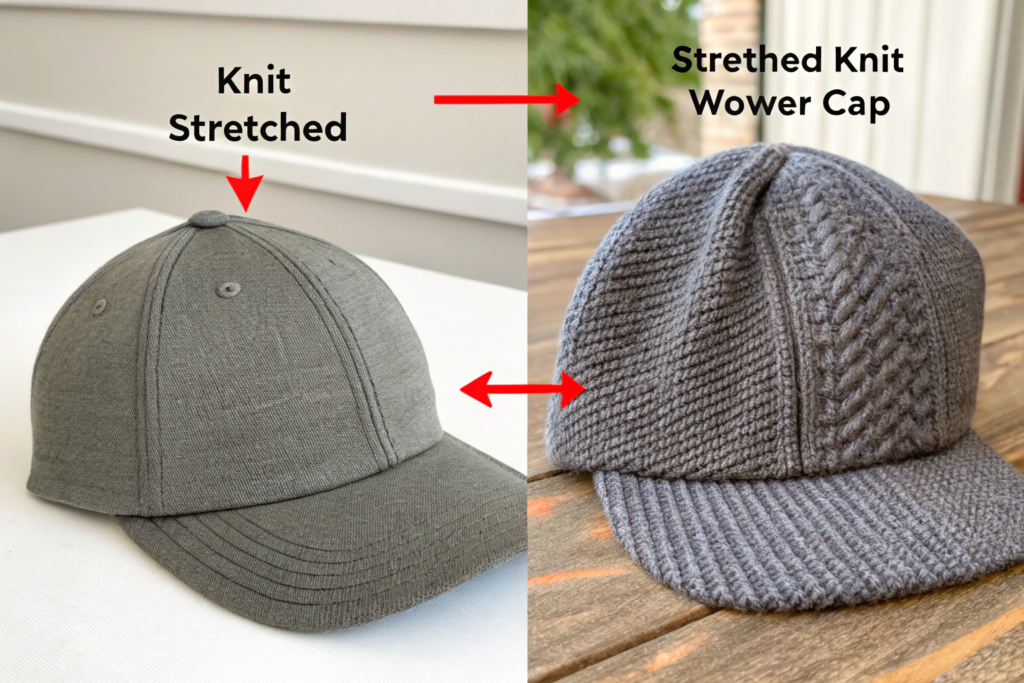
This is the single most important concept for communicating knit hat size requirements. You cannot simply say "Make a hat that fits an adult head." You must specify the dimensions in both the relaxed state and the stretched state.
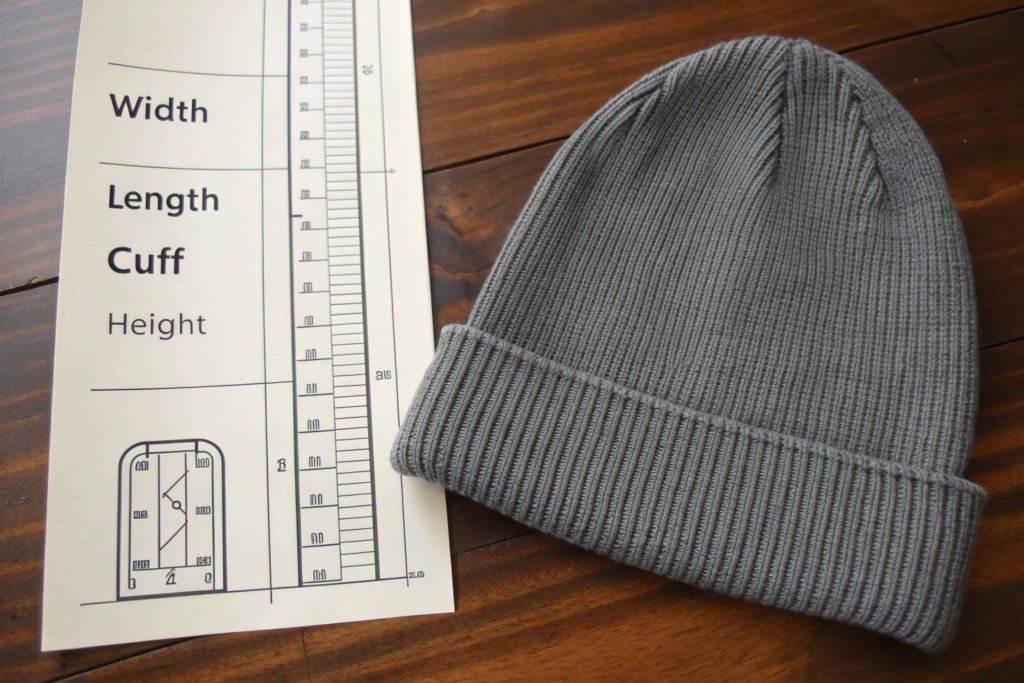
The relaxed measurement is the width and length of the hat lying flat on a table with no tension applied. This tells you the basic size of the hat. The stretched measurement is the maximum width and length the hat can achieve when pulled firmly. This tells you the fit range. A standard adult beanie might have a relaxed width of 23 centimeters and a stretched width of 30 centimeters. The stretch percentage is calculated from these two numbers.
At Shanghai Fumao, our tech pack for every knit hat includes both relaxed and stretched measurements with clear tolerances. For example, "Relaxed Width: 23cm (+/- 1cm). Stretched Width: 30cm (+/- 1.5cm)." The QC inspector checks both measurements on every sample and on random production samples. A hat that meets the relaxed measurement but fails the stretched measurement is still a sizing failure. This relaxed versus stretched measurement specification for knit accessories is essential for avoiding surprises.
How Do You Specify the Correct Size for a "One Size Fits Most" Beanie?
The vast majority of fashion beanies are sold as "One Size Fits Most." This is a retail convention, not a manufacturing specification. "One Size" means the hat is designed to fit a specific range of head circumferences, typically from 55 centimeters to 61 centimeters. It does not mean the hat will fit every human head on the planet.
To achieve this fit range, the beanie must have sufficient stretch. The stretched width must be large enough to accommodate a 61 centimeter head circumference without excessive tightness. The relaxed width must be small enough that the hat does not look baggy and oversized on a 55 centimeter head. This is a balancing act.
We have developed standard "One Size" specifications based on years of production for the US and European markets. Our standard adult beanie has a relaxed width of 22 to 24 centimeters and a stretched width of 30 to 32 centimeters. The length from crown to brim edge is typically 26 to 28 centimeters. These dimensions have been tested and validated across thousands of customer wear tests. When a client requests "One Size," we use these proven specifications unless the client provides alternative measurements. This one size fits most beanie standard dimension specification eliminates guesswork from the ordering process.
How Do You Specify Sizes for Kids and Toddler Beanies?
Kids sizing is even more critical than adult sizing. A beanie that is too small is uncomfortable and unwearable. A beanie that is too large slides down over the eyes and becomes a safety hazard. You cannot simply guess at kids sizes.
We maintain a standard size chart for kids beanies based on age ranges. Toddler size is designed for head circumferences of 48 to 52 centimeters. The relaxed width is typically 18 to 20 centimeters. Kids size is designed for head circumferences of 52 to 55 centimeters. The relaxed width is typically 20 to 22 centimeters. Youth size bridges the gap between kids and adult.
When a client orders kids beanies, we always confirm the target age range. We provide the corresponding dimensions for approval. We also recommend a slightly softer, more flexible yarn for kids beanies to ensure comfort. The sizing must be paired with appropriate material selection. This toddler and kids knit hat size chart and specifications ensures the product is safe and comfortable for its intended user.
What About Slouchy or Oversized Beanie Styles?
The slouchy beanie trend adds another layer of complexity. A slouchy beanie is intentionally longer than a standard beanie. The extra length creates the "slouch" or drape at the back of the head. But the width dimensions must still fit the head correctly. A common mistake is to simply make the hat longer without adjusting the width. The result is a hat that is both too long and too tight, or a hat that is too long and too loose.
The specification for a slouchy beanie includes an increased length measurement, typically 30 to 35 centimeters or more, while maintaining the standard adult width measurements. The fabric weight and drape also affect the slouch. A heavier, denser knit will hold its shape and create a structured slouch. A lighter, more fluid knit will drape more softly.
We work with clients to define the desired slouch aesthetic. We provide samples with different length options and different fabric weights. The client chooses the combination that achieves the desired look. This slouchy and oversized beanie measurement and proportion guidance ensures the finished product matches the trend aesthetic the client is targeting.
What Documentation Prevents Sizing Disputes with the Factory?
A sizing dispute occurs when the factory and the buyer have different expectations about what "correct" means. The only way to prevent this is with clear, written, and approved documentation. A verbal agreement or a vague email is not sufficient. You need a tech pack and an approved pre-production sample.
The tech pack is a document that contains all the technical specifications for the hat. It includes a flat sketch with measurement callouts. It includes a table of measurements for each size, with both relaxed and stretched values and acceptable tolerances. It includes the yarn specification. It includes the stitch type or knit structure. It includes the gauge requirement. This document is the single source of truth for the production run.
At Shanghai Fumao, we create a tech pack for every new style based on the client’s initial request. We send this tech pack to the client for review and approval before we cut the first sample. Any changes to the specifications must be documented in a revised tech pack. This disciplined approach ensures that everyone is working from the same playbook. This knit hat tech pack documentation and approval process is the contract that defines the product.

How Is a Pre-Production Sample Used to Lock In Sizing?
The pre-production sample or PP sample is the physical embodiment of the approved tech pack. It is the hat that you have approved in your hands, measured, and signed off on. This sample becomes the "gold seal" standard for the bulk production run.
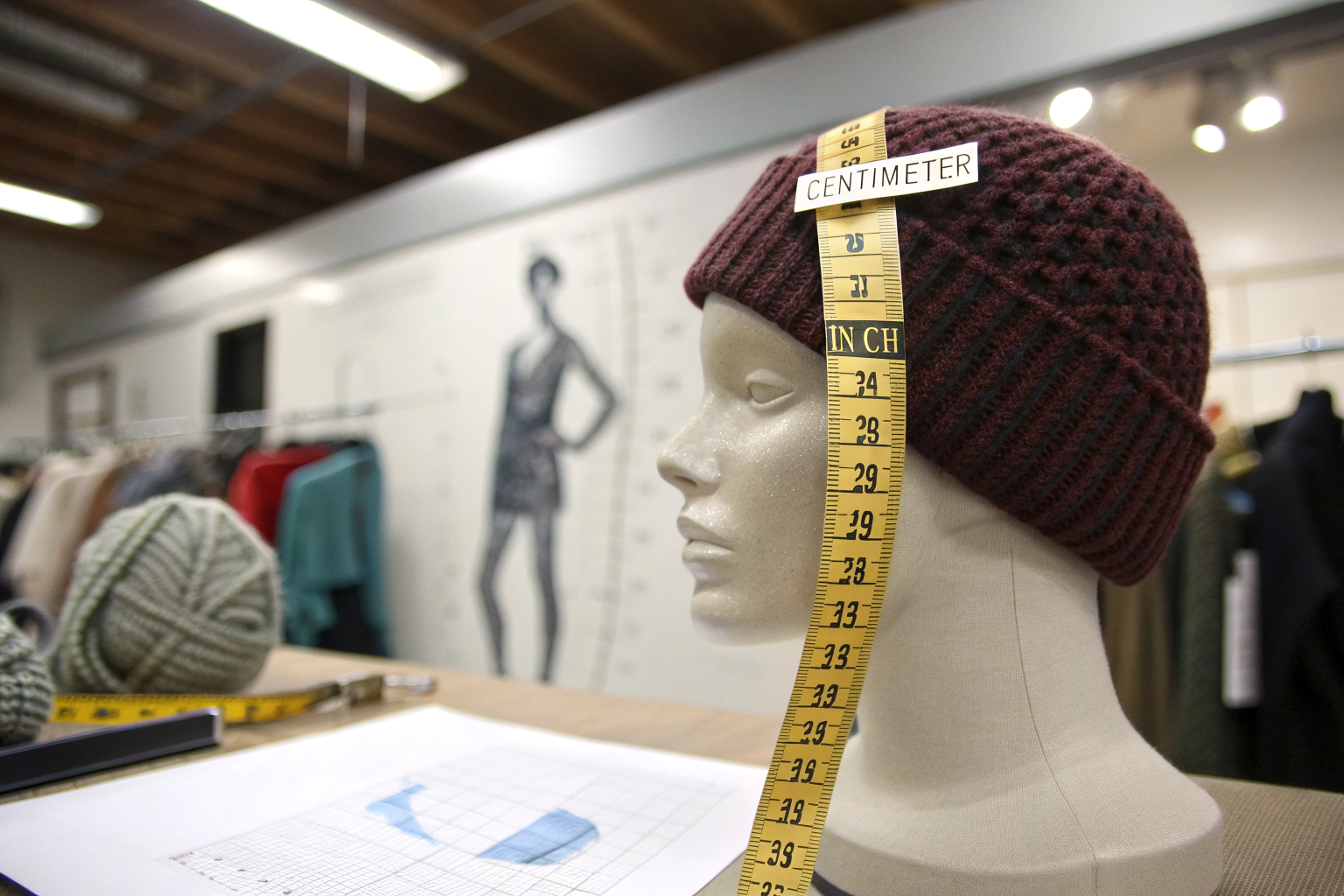
When we produce the PP sample at AceAccessory, we measure it meticulously against the tech pack. We photograph it on a mannequin head. We ship it to the client with a measurement report. The client measures the sample upon receipt. If the measurements are within the agreed tolerances, the client approves the sample in writing. We file this approved sample and the approval email.
During bulk production, our QC team pulls random samples from the line. They measure these samples against the approved PP sample and the tech pack. Any deviation outside the tolerance triggers a line stop and corrective action. The bulk production must match the approved PP sample, not just the numbers on the tech pack. This pre production sample approval and bulk production measurement standard is the physical reference that prevents sizing drift.
What Tolerances Are Realistic for Knit Hat Measurements?
Perfection is not possible in any manufacturing process. There will always be some variation. The key is to define an acceptable tolerance range. A tolerance that is too tight is unrealistic and will result in excessive rejects. A tolerance that is too loose will result in inconsistent sizing that the customer will notice.
For knit hats, we recommend a tolerance of plus or minus one centimeter for relaxed width and relaxed length measurements. For stretched width, where the measurement is taken under tension, the tolerance is slightly wider at plus or minus one and a half centimeters. The human hand applying the stretch introduces a small variable.
These tolerances are based on industry standards and our own production data. They allow for normal variation in yarn tension and human measurement without compromising the fit of the hat. We clearly state these tolerances in our tech pack. A measurement that falls within the tolerance range is considered acceptable. This realistic measurement tolerances for knit hat production sets fair expectations for both the factory and the buyer.
How Do You Verify Sizing Consistency Across a Large Order?
The PP sample was perfect. The first carton off the line looked good. But how do you know that all 2,000 beanies in the order are the same size? You need a statistical sampling and inspection process.
At Shanghai Fumao, we use the Acceptable Quality Limit or AQL sampling method for final inspection. For an order of 2,000 units, the standard sample size is 125 units. These 125 beanies are randomly selected from different cartons throughout the production lot. Each beanie is measured for relaxed width, relaxed length, and stretched width. The measurements are recorded on an inspection report.
If the number of beanies with measurements outside the tolerance range exceeds the AQL limit, the entire lot fails inspection. The lot is then 100% inspected, meaning every single beanie is measured and sorted. The defective units are removed or reworked. This process ensures that the shipment you receive meets the statistical quality level you expect. This AQL sampling inspection for knit hat sizing consistency is the standard method for verifying large production runs.
What Role Does the Knitting Machine Operator Play in Sizing?
The operator is the most important variable in sizing consistency. An experienced operator knows how to monitor the machine and the yarn. They can feel when the tension is off. They know when to check the gauge swatch. They take pride in producing consistent work.
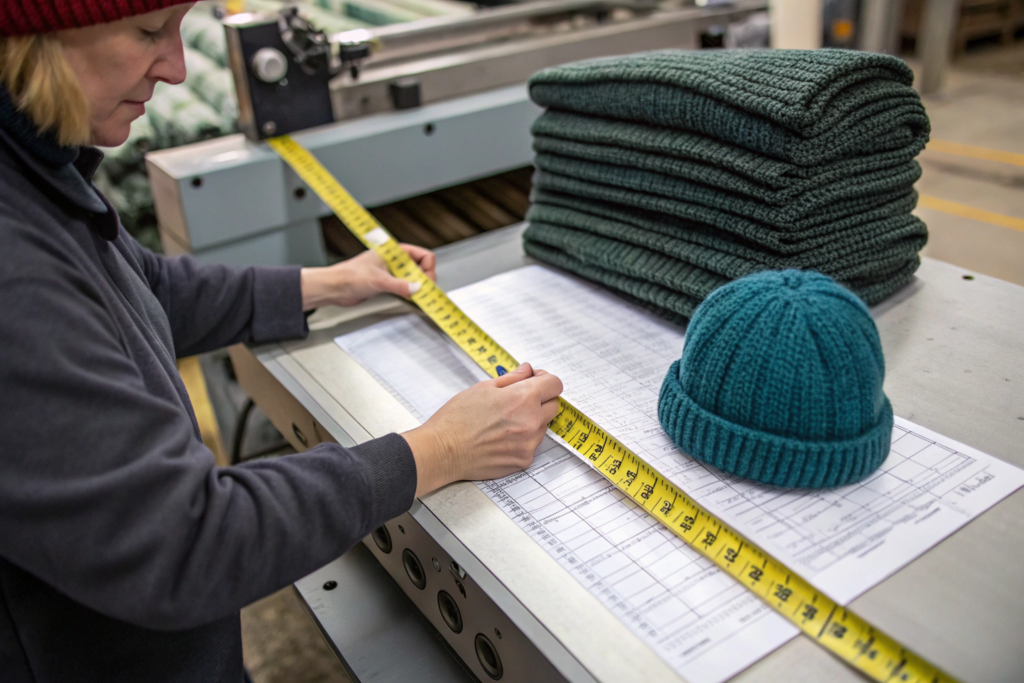
At AceAccessory, our knitting operators are trained on sizing standards as part of their core job function. They are not just running a machine. They are responsible for the quality of the output. They have a measuring tape at their workstation. They check the first piece off the machine at the start of every shift. They check randomly throughout the day.
If an operator detects a sizing drift, they stop the machine and notify the supervisor. The supervisor checks the machine settings and the yarn feed. The problem is corrected immediately, not after 500 defective beanies have been produced. This operator-level quality ownership is a key differentiator between a professional factory and a low-cost workshop. This knitting machine operator training and in process sizing control prevents large batches of defective goods from ever being made.
How Does Washing and Steaming Affect Final Dimensions?
Knit fabric relaxes and changes dimension when it is washed or steamed. A beanie measured immediately after knitting may shrink slightly after the first wash. This is a characteristic of knit textiles, not a defect. But it must be accounted for in the production process.
At AceAccessory, we steam press every knit hat as part of the finishing process. The steam relaxes the fibers and sets the shape. The hats are then allowed to cool and dry completely on flat tables. The final QC measurement is taken after this steaming and cooling process. This ensures that the measurement reflects the hat the customer will receive, not the hat fresh off the knitting machine.
We also advise clients on care label instructions. A beanie that is machine washed and dried on high heat will shrink more than a beanie that is hand washed and laid flat to dry. The customer must be given accurate care instructions to maintain the size of the hat. We provide standard care label text based on the yarn content. This post production steaming and wash effect on knit hat dimensions is part of our commitment to delivering a stable, reliable product.
Conclusion
Avoiding sizing issues when ordering knit hats from Asia is entirely possible with the right preparation and the right factory partner. The key is to move beyond vague descriptions like "standard adult size" and embrace precise, documented specifications. You need a tech pack that defines relaxed and stretched measurements with realistic tolerances. You need a pre-production sample that is measured, approved, and used as the physical standard for bulk production. You need a factory that controls gauge, trains its operators, and performs statistical sampling inspections.
The cheapest supplier on Alibaba is unlikely to have these systems in place. They are likely cutting corners on training, documentation, and quality control to achieve their low price. The sizing inconsistency you experience is the hidden cost of that low price. A professional factory like AceAccessory charges a fair price that includes the cost of these essential quality systems. The result is a shipment of beanies that fit your customers correctly, generate positive reviews, and build your brand reputation.
If you have been burned by sizing issues in the past and want to work with a knit hat manufacturer that treats sizing as a science, not a guessing game, I encourage you to contact our Business Director, Elaine. She can provide you with our standard measurement charts and explain our quality control process in detail. You can email Elaine at: elaine@fumaoclothing.com. Let us help you get the fit right on your next knit hat order.