You are reviewing the numbers from your last shipment of premium knotted headbands. You ordered 5,000 units. Your warehouse team pulled 150 units for a quality spot check. They found twelve headbands with issues. The knot was slightly off-center on five of them. The fabric had a small snag on four of them. The glue showed slightly on three of them. That is an 8% defect rate. Your competitor, who sells a similar product at a similar price, brags about their 99% customer satisfaction rate. You do the math. An 8% defect rate means 400 unhappy customers for every 5,000 units sold. That is 400 negative reviews waiting to happen. You need to know if this defect rate is normal, or if you are accepting substandard quality from your supplier.
The average acceptable defect rate for premium headbands from a quality-focused Chinese factory is between 1.5% and 2.5% under standard AQL 2.5 inspection for major defects. World-class factories like AceAccessory consistently achieve defect rates below 1.5% through integrated inline quality control, skilled labor retention, and a culture of operator-level quality ownership.
I manage Shanghai Fumao in Zhejiang, and headbands are a core part of our daily production. I track our defect data obsessively. It is the most honest measure of our manufacturing capability. An 8% defect rate is not normal. It is a sign of a factory that has either abandoned quality control or never had it. Let me explain what a realistic, premium-level defect rate looks like and how it is achieved.
What Is the Industry Standard Defect Rate for Premium Fashion Headbands?
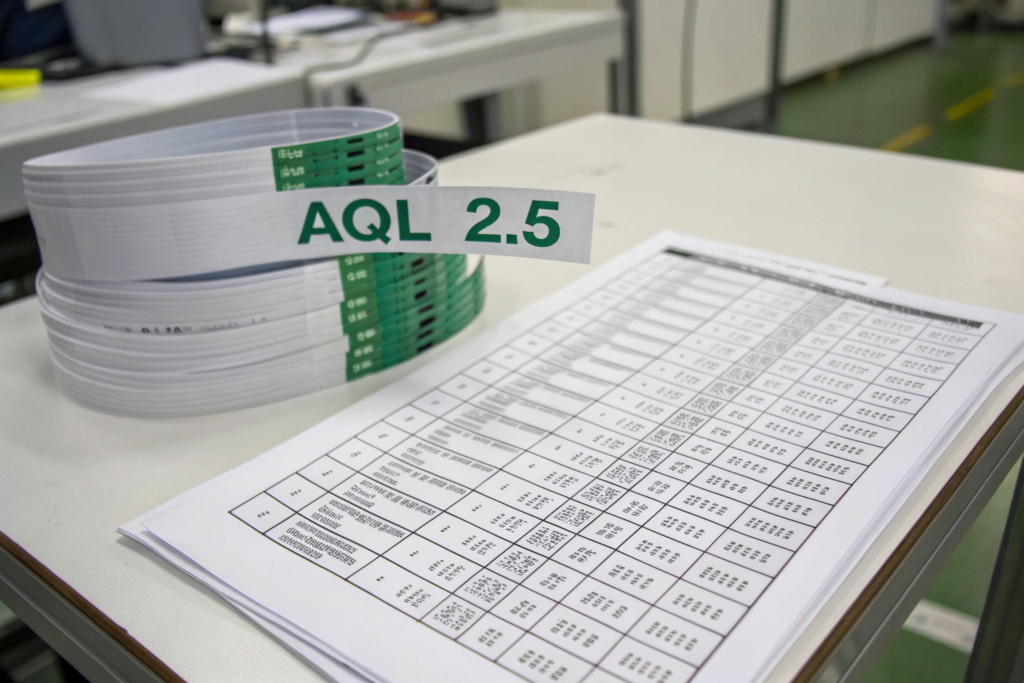
There is a formal, internationally recognized standard for defining acceptable quality levels in manufactured goods. It is called AQL, which stands for Acceptable Quality Limit. For fashion accessories like premium headbands, the most commonly applied standard is AQL 2.5 for major defects.
A major defect is a flaw that would likely result in a customer return or complaint. For a headband, this includes visible glue residue, off-center knots, broken stitching, inconsistent sizing, or color mismatches. A minor defect is a cosmetic flaw that might be noticeable upon close inspection but is unlikely to cause a return, such as a tiny, loose thread inside the band. Under AQL 2.5, a batch of 5,000 headbands would be sampled at 200 units. The lot would pass inspection if no more than 10 major defects are found. This translates to a 5% defect rate at the inspection sample level, which statistically correlates to a roughly 2.5% defect rate in the overall lot.
This is the baseline standard for a professional factory. A factory consistently delivering defect rates significantly higher than this is not meeting industry norms. At AceAccessory, our internal target is stricter. We aim for AQL 1.5 or better, which translates to a defect rate below 1.5%. This AQL 2.5 standard for major defects in fashion accessory manufacturing is the benchmark you should use to evaluate your supplier’s performance.
How Does AQL Sampling Work in a Real Factory Inspection?
The AQL system is a statistical sampling method. You do not inspect every single headband in a 5,000-unit order. That would be prohibitively time-consuming and expensive. Instead, you inspect a randomly selected, statistically valid sample.
The sample size is determined by the lot size and the inspection level. For a lot of 5,000 units, the standard sample size under General Inspection Level II is 200 units. The inspector randomly selects 200 headbands from different cartons throughout the shipment. Each headband is inspected against a checklist of known defects. The number of defects found is tallied. If the number of major defects found is 10 or fewer, the lot passes. If the number is 11 or more, the lot fails. A failed lot means the factory must 100% inspect and rework the entire order.
This is the objective, data-driven method we use at AceAccessory. It removes subjectivity from the quality decision. It provides a clear pass or fail outcome. This how AQL sampling inspection works for imported headbands is the professional standard for quality verification.
What Is the Difference Between Major and Minor Defects in Headbands?
Understanding the distinction between major and minor defects is critical for setting realistic expectations with your supplier. Not all flaws are created equal.
A major defect renders the headband unsellable at full price or is likely to cause a customer return. Examples for premium headbands include a knot that is visibly off-center by more than 5mm, exposed glue on the visible surface of the band, a broken or non-functional elastic, a seam that is unraveling, or a color that is significantly different from the approved sample. These are the defects that matter most.
A minor defect is a slight imperfection that does not affect the usability or the overall appearance from a normal viewing distance. Examples include a single stray thread inside the band, a slight variation in the texture of the fabric, or a minor scuff on the underside of an acrylic band. While we strive to minimize all defects, the AQL standard allows for a higher tolerance for minor defects. This classification of major versus minor defects for fabric headband inspection provides a clear framework for quality assessment.
How Do Premium Factories Achieve Defect Rates Below 2%?
A defect rate below 2% does not happen by accident. It is the result of deliberate systems and a specific factory culture. Factories that achieve this level of quality do not rely solely on a final inspection to catch defects. They build quality into every step of the process.
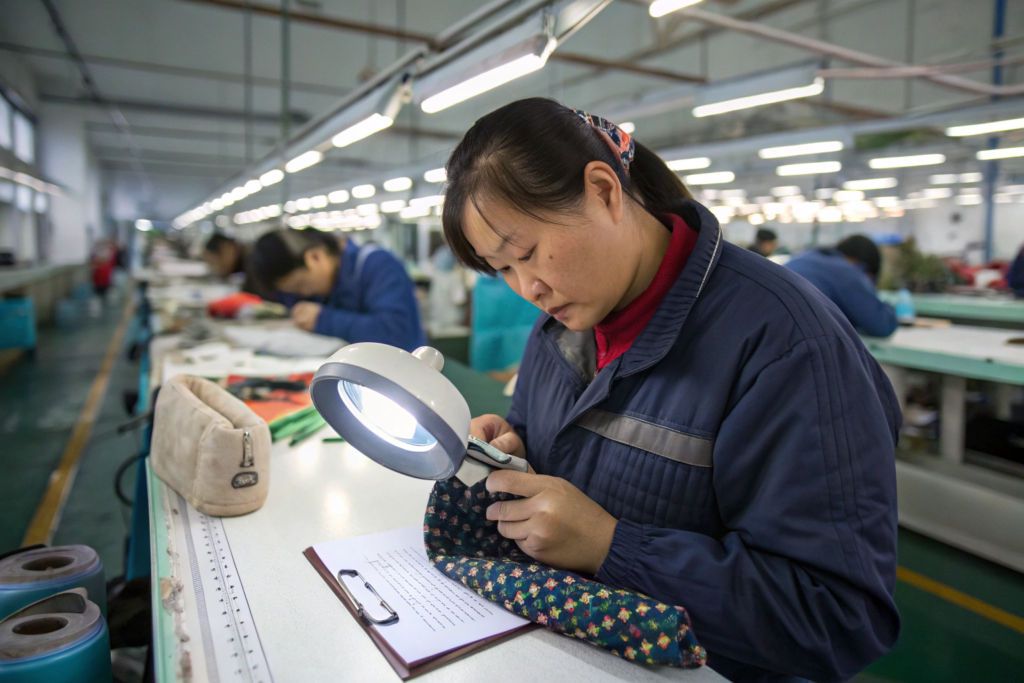
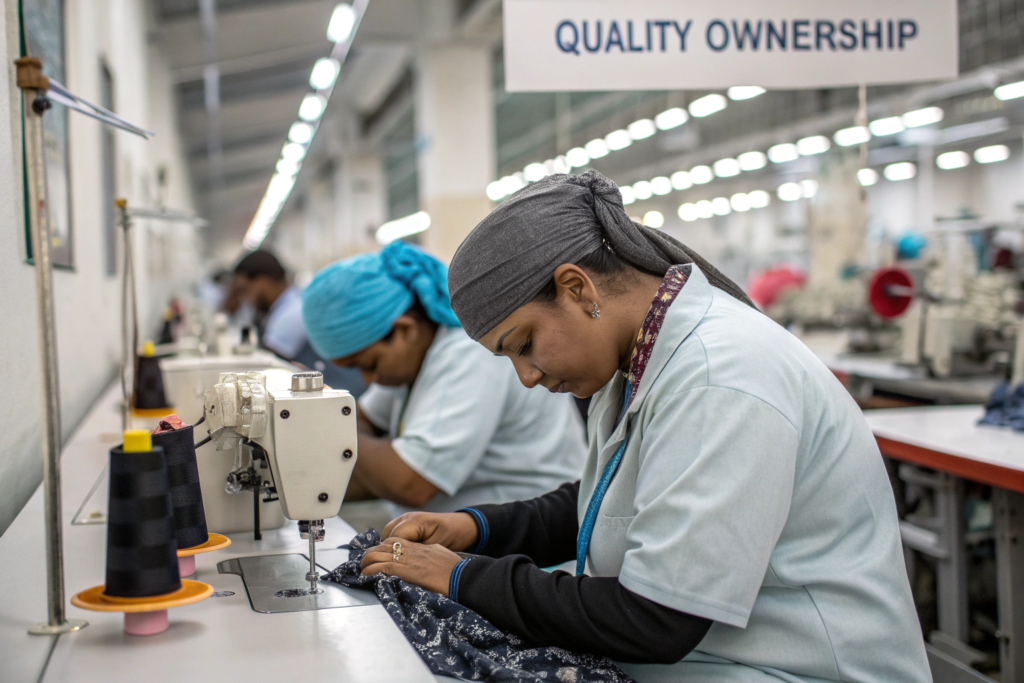
The most effective strategy is inline quality control. Instead of waiting until 5,000 headbands are finished and then inspecting a sample, quality checks are performed at each stage of production. The fabric is inspected when it arrives at the factory. The cutting is inspected before sewing. The sewing operator checks her own work before passing the piece to the next station. The supervisor spot-checks pieces throughout the day. This "quality at the source" approach catches defects immediately, when they are easiest and cheapest to fix. It prevents a small problem from becoming a large batch of defective goods.
At Shanghai Fumao, our production line is organized around inline QC stations. An operator’s performance is measured not just on speed, but on first-pass quality yield. This inline quality control methods for achieving low defect rates in manufacturing is the foundation of our quality system.
What Role Does Worker Training and Retention Play?
A premium headband involves skilled handwork. Tying a perfect, consistent knot. Wrapping fabric smoothly around an acrylic core without wrinkles. These are skills that take time and practice to master. A factory with high worker turnover will never achieve a low defect rate.
New workers make mistakes. They are learning. It takes weeks or months for a sewer or a hand-finisher to reach full proficiency. A factory that invests in training and, more importantly, retains its skilled workers, has a massive quality advantage. The experienced workers not only produce fewer defects themselves, they also catch defects made by others. They have a trained eye for what "good" looks like.
We are proud of the low turnover rate at AceAccessory. Many of our skilled headband makers have been with us for five, ten, or even fifteen years. Their experience is built into every headband we ship. This impact of skilled labor retention on product quality and defect rates is a key differentiator that is invisible on a price quote but very visible in the final product.
How Do You Control Defects in Fabric-Wrapped Acrylic Bands?
Fabric-wrapped headbands present specific defect challenges. The primary defects are glue showing at the edges or seams, fabric wrinkling or bubbling, and the fabric ends fraying.
Controlling these defects requires precise processes. The glue must be applied in a controlled, consistent amount using a jig or a template. The fabric must be stretched and smoothed with a specific technique. The cut ends of the fabric must be sealed, either by folding under, using a fray-check liquid, or hiding them under a separate component.
Our production team has developed standardized work instructions for each style of wrapped headband. The instructions include photos of the correct and incorrect way to apply glue and smooth the fabric. The supervisor uses these visual standards to train new operators and to audit the line. This process control for fabric wrapped acrylic headband assembly is how we achieve consistency across thousands of units.
How Should You Specify and Verify the Acceptable Defect Rate?
You cannot simply assume your supplier will deliver a low defect rate. You must specify the acceptable quality level in your purchase order or contract. This makes the expectation explicit and legally enforceable.
The specification should state: "Final inspection shall be performed to AQL 2.5, General Inspection Level II. Major defects shall not exceed 10 per 200 units sampled." This single sentence defines the quality standard for the entire order. It tells the factory exactly what you expect. It provides a clear basis for rejecting a shipment that fails to meet the standard.
At Shanghai Fumao, we welcome this specification. It aligns our internal standards with the client’s expectations. It removes any ambiguity. We provide the AQL inspection report with every shipment as a standard part of our documentation package. This specifying AQL quality standards in purchase orders for imported goods is a best practice for professional sourcing.
Should You Use a Third-Party Inspection Company?
For a new supplier relationship, or for a very large or critical order, using a third-party inspection company is a wise investment. Companies like SGS, Bureau Veritas, Intertek, and QIMA provide independent inspection services in China.
You hire the inspection company. You provide them with your product specifications and your approved sample. They send an inspector to the factory. The inspector pulls the random sample according to AQL standards. They perform the inspection independently and send you a detailed report with photos. This provides an objective, unbiased assessment of the quality before you authorize the final payment and shipment.
We fully support and cooperate with third-party inspections at AceAccessory. We see it as a validation of our own quality systems. A clean third-party inspection report builds trust with a new client faster than any sales pitch we could make. This benefits of third party pre shipment inspection for China imports is a valuable tool for managing quality risk.
What Documentation Should You Request to Verify Quality?
Beyond the final inspection report, a professional factory should be able to provide other documentation that demonstrates a systematic approach to quality.
You can request the inline QC check sheets. These are the records kept by the line supervisors showing their spot checks throughout production. You can request photos or videos of the production process. A factory that is proud of its quality will be transparent. A factory that refuses to provide these details may have something to hide.
We provide our clients with a weekly production update that includes photos of the goods in process. We are happy to share our QC procedures and records. This quality documentation and transparency from Chinese manufacturers is a sign of a mature, professional operation.
Conclusion
The average defect rate for premium headbands from a quality-focused Chinese factory is not 8% or even 5%. It is between 1.5% and 2.5%, as defined by the internationally recognized AQL 2.5 standard. World-class factories consistently operate at the lower end of this range, achieving defect rates below 1.5% through disciplined inline quality control, investment in skilled labor, and a culture that values precision.
Accepting a higher defect rate is a false economy. The immediate savings on the unit price are quickly consumed by the operational costs of processing returns and the strategic costs of damaged brand reputation and lost customer lifetime value. The true cost of a headband is its total cost of ownership, and a low defect rate is the most powerful driver of a low total cost.
At Shanghai Fumao, we do not just manufacture headbands. We manufacture them to a rigorous, data-driven quality standard. We track our defect rates daily. We investigate every failure. We continuously improve our processes. We do this because we know that our clients’ success depends on the consistent quality of every single unit that leaves our factory.
If you are sourcing premium headbands and want a manufacturing partner who treats quality as a measurable, manageable metric, I encourage you to contact our Business Director, Elaine. She can share sample AQL reports and discuss our quality control systems in detail. You can email Elaine at: elaine@fumaoclothing.com. Let us help you achieve the low defect rate that your brand deserves.