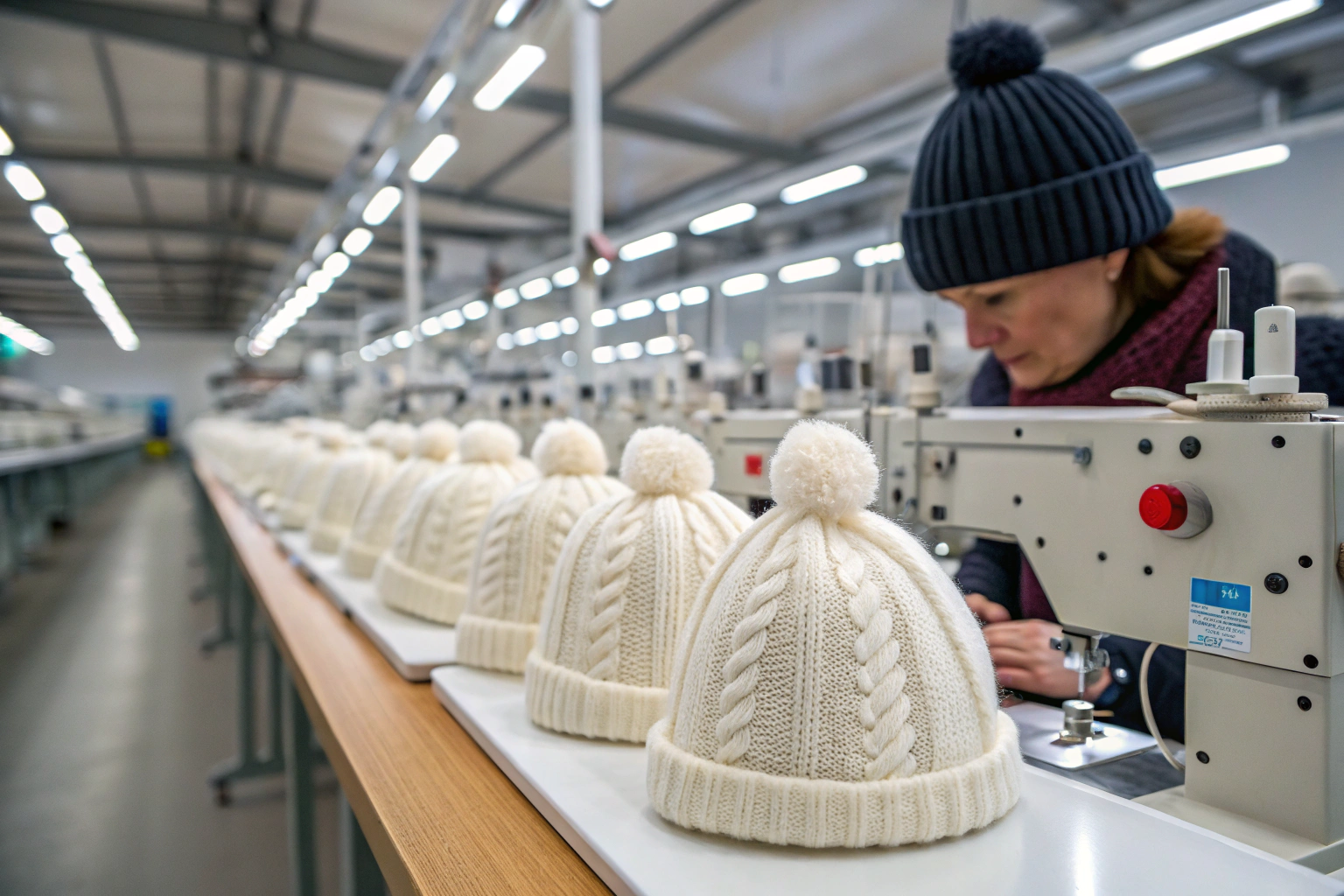
I have been manufacturing knit beanies for over 15 years. In that time, I have made thousands of beanies with pom-poms. They are a classic. They are fun. They sell. I remember a client who came to me after a bad experience. She had ordered beanies from a supplier online. The beanies arrived. The pom-poms were falling off. The knitting was loose. She was stuck with 1,000 defective beanies. That experience taught me that finding a reliable supplier is not easy. But it is possible. Today, I want to share how to find a reliable supplier for knit beanies with pom-poms.
To find a reliable supplier for knit beanies with pom-poms, focus on knit quality, pom-pom attachment, material quality, and communication. Ask for samples. Check the knit. Is it tight and even? Are there loose threads? Check the pom-pom. Is it securely attached? Does it match the color? Check the material. Is it soft? Is it the claimed blend? Check the communication. Do they respond quickly? Do they answer questions clearly? A reliable supplier will provide samples. They will be transparent. They will stand behind their product. At Shanghai Fumao, we have been making knit beanies for years. We know what buyers look for.
You might be thinking, "I can find beanies on Alibaba. Why do I need a special supplier?" The difference is reliability. A cheap beanie may look good in a photo. But in person, the knit may be loose. The pom-pom may fall off. The material may be scratchy. At Shanghai Fumao, we have the quality and reliability you need. Let me walk you through the process.
What Should You Look for in Knit Quality?
The knit is the foundation of the beanie. A poor knit will unravel. A good knit will last. I have learned to inspect the knit carefully.
When evaluating knit quality, look for tight, even stitches. The knit should be consistent. No loose threads. No holes. The edges should be clean. The ribbing should be elastic. Stretch the beanie. It should return to shape. Check the inside. The yarn should not have knots or joins. A high-quality knit will not pill or fade. It will hold its shape after washing. Ask for a sample. Feel it. Stretch it. Wash it. This is the only way to know.
I want to share a story about knit quality. A client received a sample. The knit looked good. But when she stretched it, the stitches separated. She could see light through the gaps. The knit was too loose. She rejected the sample. The supplier corrected the tension. The final product was good.
What Is the Best Knit for Beanies?
Rib knit is the most common. It is elastic, hugging the body with a gentle, springy give that moves seamlessly with every stretch and bend. It fits well, contouring to curves and providing a snug, comfortable embrace that feels like a second skin. Cable knit adds texture, its intricate, twisted patterns weaving a tactile story across the fabric—each ridge and valley inviting the fingers to trace their path. It is thicker and warmer, a cozy blanket woven into every thread, perfect for bracing against crisp breezes and chilly evenings.
How Do You Test Knit Durability?
Stretch the beanie. It should return to shape. Rub the surface. It should not pill. Wash it. It should not shrink or fade. We provide knit testing for our clients.
How Do You Evaluate Pom-Pom Attachment?
The pom-pom is the star. But if it falls off, the customer is unhappy. I have learned to test the attachment.
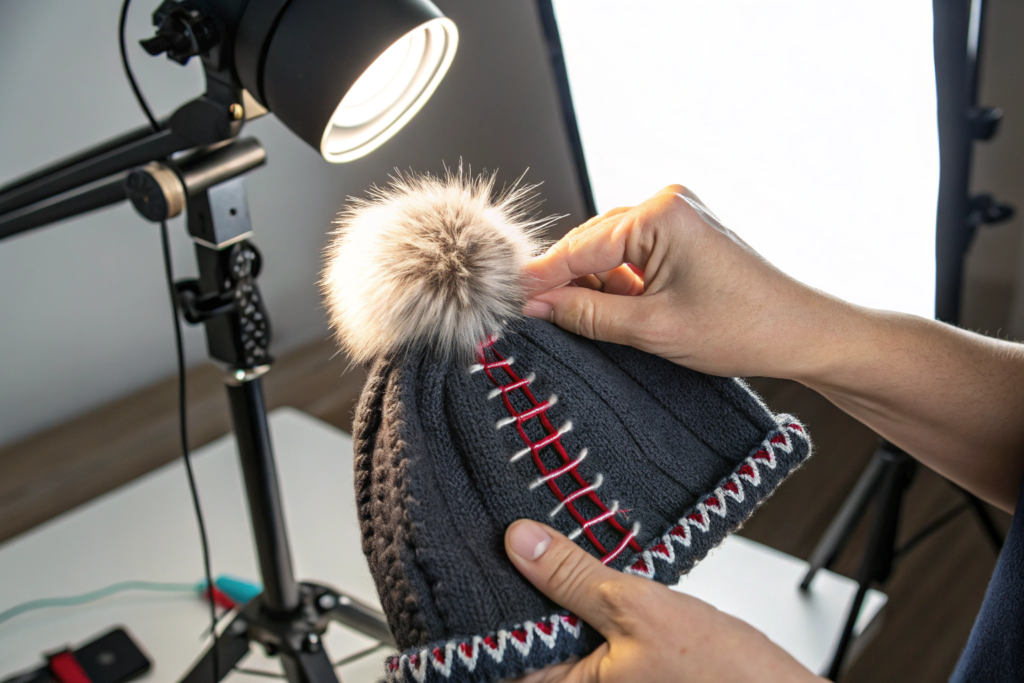
When evaluating pom-pom attachment, look for strong stitching. The pom-pom should be sewn through the beanie. Multiple stitches. The thread should be strong. The pom-pom should not be glued. Glue can fail. Pull the pom-pom. It should not come loose. Shake the beanie. The pom-pom should not wobble. Also check the pom-pom itself. Is it full? Are there bald spots? Is it the right size? A good pom-pom is dense and round.
I want to share a story about pom-pom attachment. A client ordered beanies with glued pom-poms. The glue failed in cold weather. The pom-poms fell off. Customers returned them. The client lost money. Now, she only orders sewn pom-poms.
What Is the Best Way to Attach a Pom-Pom?
Sewing is the superior choice. The pom-pom, a fluffy cloud of vibrant yarn, should be carefully sewn through the beanie using strong, durable thread that glimmers subtly in the light. Each stitch must be meticulously hidden, woven into the fabric’s seams like a secret, ensuring a smooth, unbroken surface that feels soft and seamless to the touch. Some suppliers, in their thoughtful craftsmanship, incorporate a small, unobtrusive button on the inside of the beanie. This clever addition allows the pom-pom, with its cheerful, tufted top, to snap securely into place, yet easily detach for gentle washing.
How Do You Test Pom-Pom Durability?
Pull the pom-pom. It should hold. Tug it. Shake it. Wash the beanie. The pom-pom should stay attached. We provide pom-pom testing.
How Do You Assess Material Quality?
The material affects the feel, the warmth, and the durability. I have learned to specify the yarn.
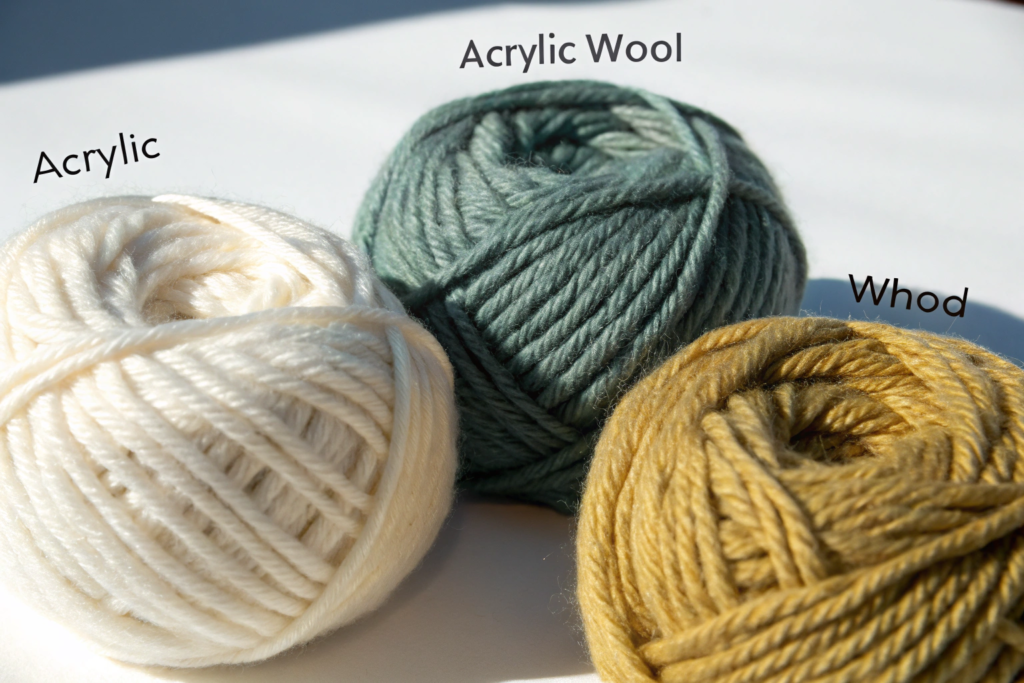
When assessing material quality, look at the yarn composition. Acrylic is affordable. It is soft. It is easy to care for. It is not as warm as wool. Wool is warm. It is breathable. It can be itchy. Merino wool is soft. It is not itchy. Wool-acrylic blends combine the warmth of wool with the softness of acrylic. A 50/50 blend is common. The yarn should be smooth. No slubs. No thick spots. The color should be consistent. No fading.
I want to share a story about material quality. A client ordered acrylic beanies. They were soft. They were affordable. But they were not warm enough for a cold winter. She switched to a wool-acrylic blend. The beanies were warmer. Customers were happier.
What Is the Best Material for Knit Beanies?
For affordability, acrylic. Crisp, lightweight, and budget-friendly, acrylic yarns offer a vibrant palette of colors that pop with energy, perfect for quick-knitted scarves or playful blankets that bring a cheerful spark to any room. For warmth, wool. Rich and plush, wool fibers trap heat like a cozy hug, their natural lanolin lending a soft, almost velvety texture that feels luxurious against the skin on chilly winter days. For a balance, wool-acrylic blend. A harmonious marriage of wool’s warmth and acrylic’s durability, these blends strike the ideal chord—offering the comforting embrace of wool without its tendency to pill, and the easy care of acrylic without sacrificing too much coziness, making them a versatile choice for everyday wear and home decor alike. We offer multiple yarn options.
How Do You Test Material Quality?
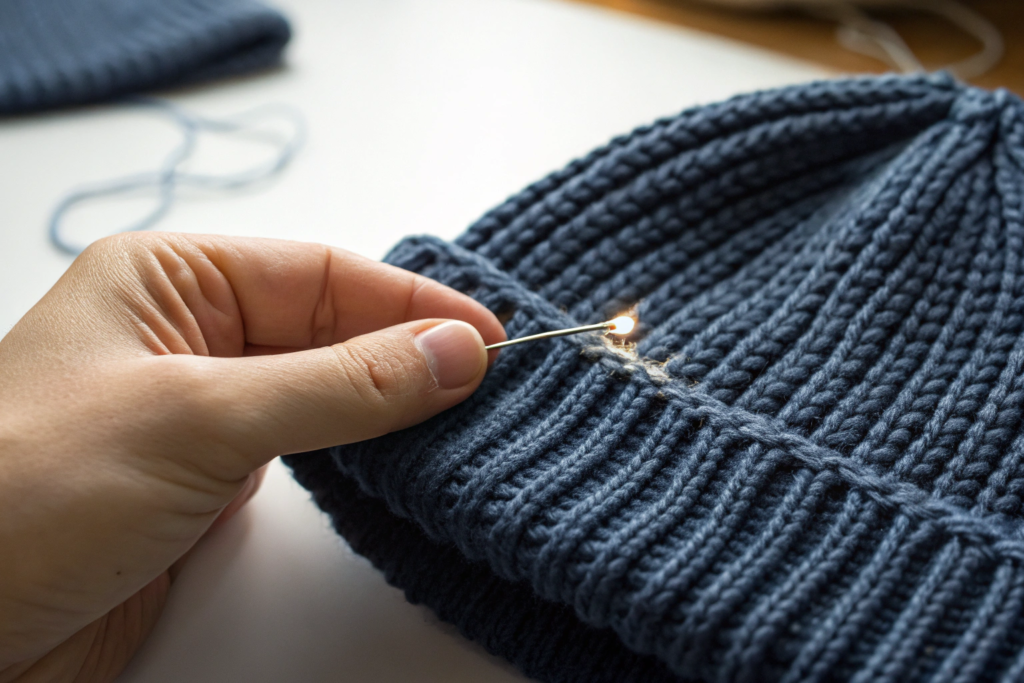
Feel the yarn. Is it soft? Burn a small piece. Acrylic melts. Wool smells like hair. Cotton burns. This is a simple test. We provide yarn testing.
How Do You Communicate with Potential Suppliers?
Communication is a window into reliability. A supplier who responds quickly is likely reliable. A supplier who is vague is likely not. I have learned to test communication early.
When communicating with potential suppliers, ask clear questions. "What is your MOQ?" "What is your lead time?" "Can you send a sample?" "What is the yarn composition?" "How do you attach the pom-pom?" A reliable supplier will answer clearly. They will respond within 24 hours. They will provide a sample. They will be transparent about pricing. If a supplier is slow to respond or vague, move on. Communication problems before the order become bigger problems after the order.
I want to share a story about communication. A buyer contacted three suppliers. One responded in an hour. One responded in a day. One responded in a week. The buyer chose the fast responder. The order went smoothly. The slow responder would have been a problem.

What Questions Should You Ask?
Ask for MOQ. Ask for lead time. Inquire about sample policies—how quickly can they dispatch a physical swatch, and what are the associated costs? Seek details on yarn composition: specify fiber types (e.g., 80% premium merino wool, 20% silk), weight per skein, and any eco-friendly certifications. Ask for pom-pom attachment methods: do they use durable stitching, adhesive dots, or specialized clips? Request specifics on quality control processes—inspections at each production stage, testing for durability under washing and wear, and standards for color consistency. Demand references from satisfied clients, including contact information for potential testimonials. A reputable supplier will respond promptly, providing clear, detailed answers that reflect transparency and commitment to excellence, fostering trust and confidence in their products.
What Are Red Flags?
A slow, dragging response that makes you wait with bated breath, as if the other end of the line is mired in molasses. Vague answers that dance around the truth, leaving you with more questions than clarity, like trying to grasp smoke through your fingers. No samples to touch, to see, to feel—their absence a gaping void where concrete proof should be. Prices that glitter like false promises, too good to be true, whispering of hidden costs and empty pockets, a siren song luring you into a trap.
How Do You Request and Evaluate Samples?
Samples are essential. You cannot judge from photos. I have learned to request samples before ordering.
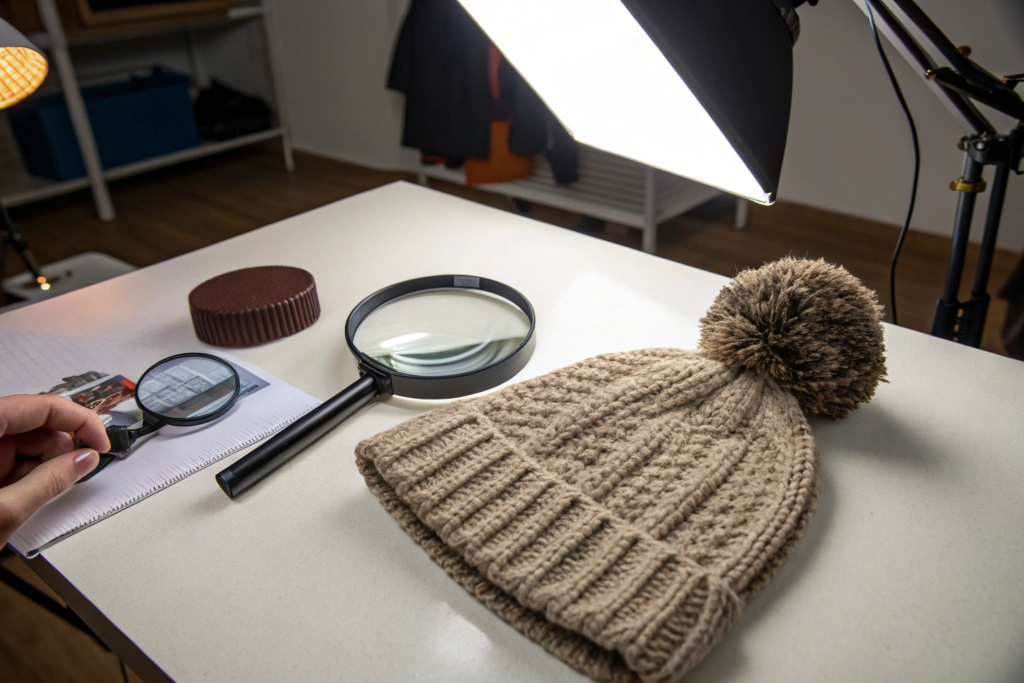
Request a sample before placing a large order. Pay for the sample. It is worth it. When the sample arrives, evaluate it. Check the knit. Is it tight and even? Check the pom-pom. Is it securely attached? Check the material. Is it soft? Is it the claimed blend? Check the fit. Is it the right size? Wash the sample. Does it shrink? Does the color fade? Does the pom-pom stay attached? A good sample leads to a good order. A bad sample saves you from a bad order.
I want to share a story about a sample. A client ordered a sample. It was perfect. She placed a large order. The production matched the sample. She was happy. The sample saved her from risk.
How Many Samples Should You Order?
One sample per style, a single, carefully curated piece that embodies the essence of each design. If your palette boasts multiple hues, request one sample in one color—allowing you to physically engage with the form, the texture, and the tactile quality of the material, to feel its weight in hand and gauge its durability under gentle inspection. For unwavering confidence in color accuracy, however, order a sample in each color; let your eyes feast on the true vibrancy, the subtle undertones, and the precise shade as it catches the light, ensuring that what you see is exactly what you will receive, no surprises, just the perfect match for your vision.
What If the Sample Is Bad?
Reject it outright. Don’t hesitate—ask for a new sample, one that shines with the quality you demand. Remember this: if a supplier falters in crafting a single, exceptional sample, they will inevitably stumble when scaling up to produce good products in bulk.
Their inability to meet even the initial standard is a red flag, a whisper of inconsistency that echoes through every potential batch. Don’t waste your time or resources on such uncertainty. Seek out another supplier, one whose work speaks for itself, whose samples glow with precision and care.
Conclusion
Finding a reliable supplier for knit beanies with pom-poms requires attention to knit quality, pom-pom attachment, material quality, and communication. Request samples. Test them. Ask questions. Trust your instincts.
A good supplier will provide a tight, even knit. They will sew the pom-pom securely. They will use high-quality yarn. They will respond quickly. They will be transparent.
At Shanghai Fumao, we are that supplier. We have the quality. We have the reliability. We are ready to help you. Please contact our Business Director, Elaine, at elaine@fumaoclothing.com to discuss your knit beanie project. We can send you a sample and a quote.