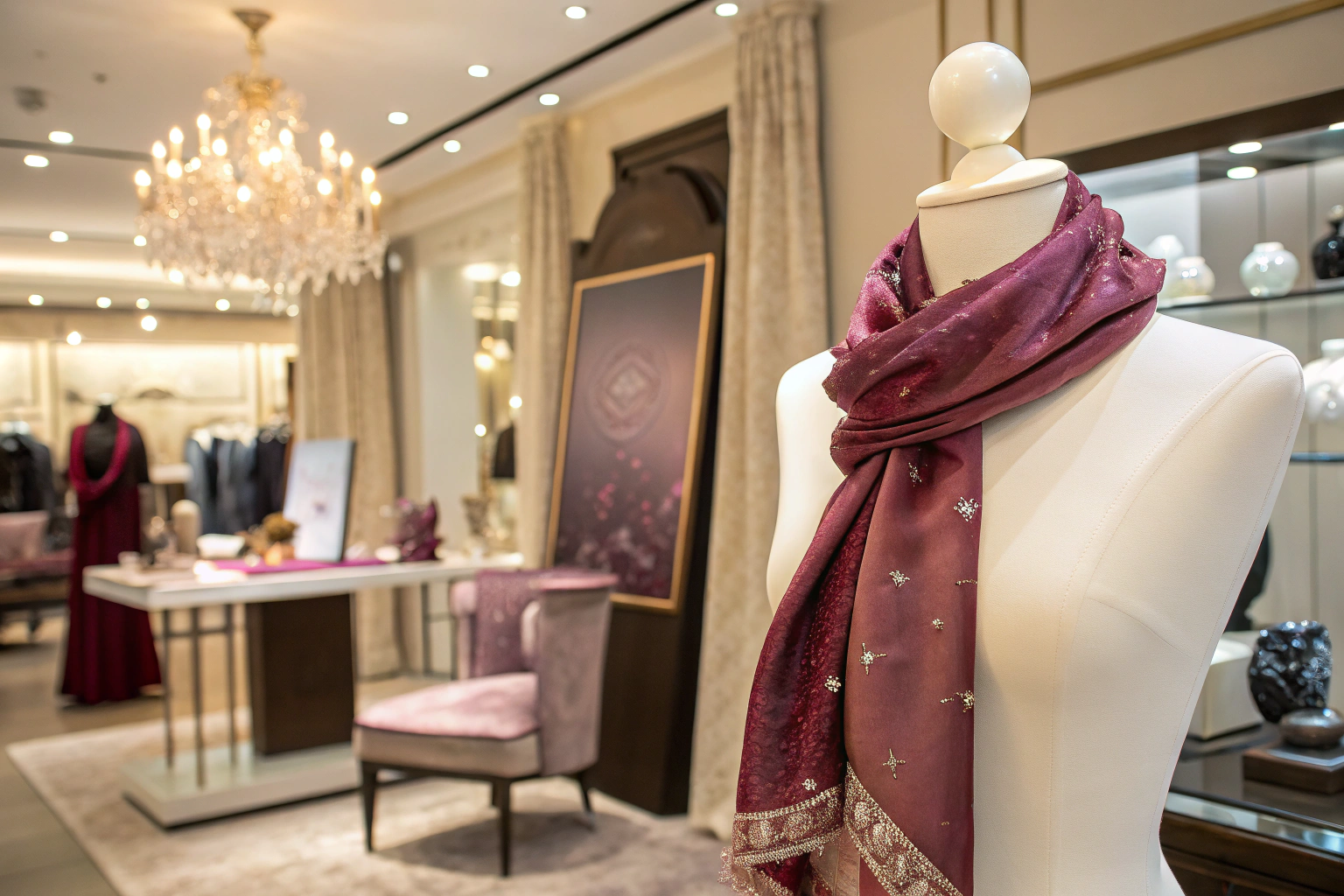
I have been manufacturing scarves for over 15 years. I have worked with luxury boutiques around the world. They have high standards. They want the best. I remember a client who owned a boutique in Paris. She told me, "My customers can tell the difference between a $50 scarf and a $500 scarf. They feel the fabric. They look at the weave. They know." That conversation taught me that sourcing for luxury boutiques is different. You cannot just find any scarf. You need to find the right material. The right construction. The right supplier. Today, I want to share how to source scarves with silk blends for luxury boutiques.
Sourcing scarves with silk blends for luxury boutiques requires focusing on high-quality materials, exceptional craftsmanship, and brand alignment. The best silk blends are silk-cashmere for softness and warmth, silk-wool for texture and drape, and silk-modal for a fluid, eco-friendly option. The silk content should be at least 70% for a true luxury feel. The scarf should be hand-finished or have high-quality machine finishing. The edges should be rolled or hemmed. The print should be sharp and colorfast. The packaging should be premium. A box, a ribbon, a care card. Luxury boutiques also value exclusivity. Limited editions. Custom colors. Unique designs. At Shanghai Fumao, we have produced silk blend scarves for luxury boutiques. We know what they require.
You might be thinking, "I can find silk blend scarves online. Why do I need a special source?" The difference is quality. A luxury boutique customer expects the best. A poorly finished edge will be noticed. A faded print will be returned. A scratchy fabric will be rejected. At AceAccessory, we have the expertise to produce scarves that meet luxury standards. Let me walk you through the process.
What Are the Best Silk Blends for Luxury Scarves?
Not all silk blends are equal. The blend ratio matters. The fiber quality matters. I have tested many blends. The best for luxury scarves are silk-cashmere, silk-wool, and silk-modal.
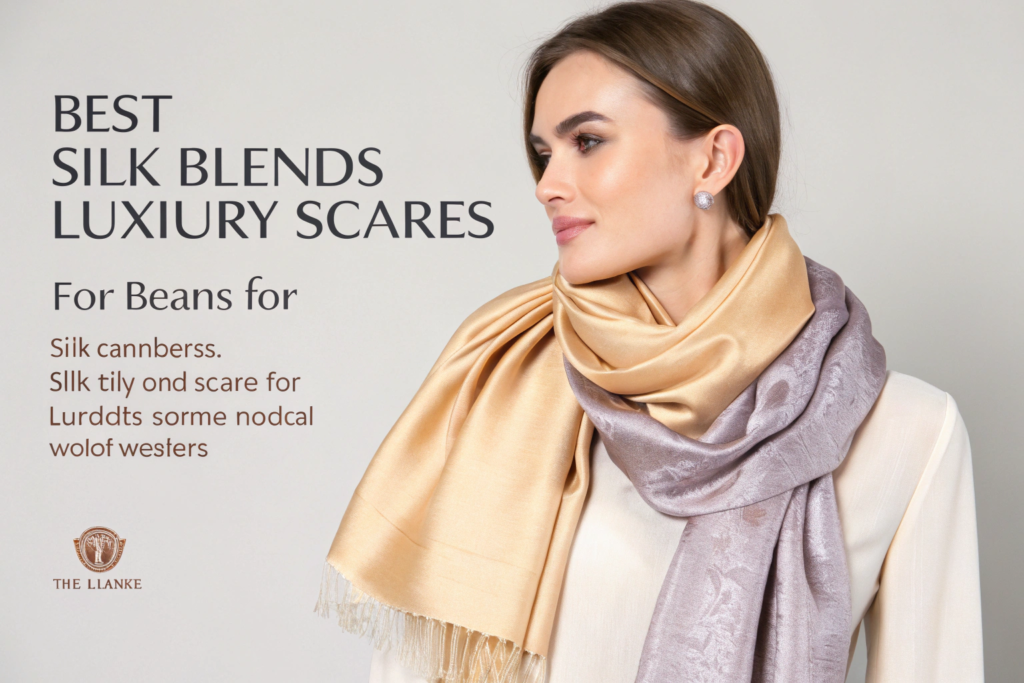
The best silk blends for luxury scarves are silk-cashmere, silk-wool, and silk-modal. Silk-cashmere is the most luxurious. It combines the sheen of silk with the softness and warmth of cashmere. A 70/30 silk-cashmere blend is ideal. It is soft, warm, and drapes beautifully. Silk-wool adds texture. The wool gives the scarf a slight grip. It is ideal for cooler weather. A 70/30 silk-wool blend works well. Silk-modal is fluid and eco-friendly. Modal is made from beech trees. It is soft and breathable. A 50/50 silk-modal blend is lightweight and drapes like liquid. These blends are the choice of luxury brands.
I want to share a story about silk-cashmere. A client wanted a scarf for a luxury brand. We used a 70/30 silk-cashmere blend. The scarf was incredibly soft. It had a beautiful sheen. It was warm but not heavy. The brand sold it for $400. It sold out. The blend was the key.
What Is the Best Silk-Cashmere Ratio?
The best ratio for luxury is 70% silk and 30% cashmere. This provides the sheen of silk and the softness of cashmere. A 90/10 blend is more silk. It is shinier but less soft. A 50/50 blend is more cashmere. It is softer but less sheen. The 70/30 balance is ideal. We offer silk-cashmere scarves in this ratio.
What Is the Best Silk-Wool Ratio?
For silk-wool, 70% silk and 30% wool is a good balance. The silk provides sheen. The wool adds texture and warmth. For a more textured scarf, 50/50 works. For a smoother scarf, 80/20. We help clients choose based on their desired feel. We offer silk-wool scarves in various ratios.
How Do You Ensure High-Quality Printing and Dyeing?
A beautiful fabric is nothing without a beautiful print. Luxury scarves are known for their vibrant, sharp prints. I have seen cheap prints where the colors bleed. The edges are blurry. That is not luxury.
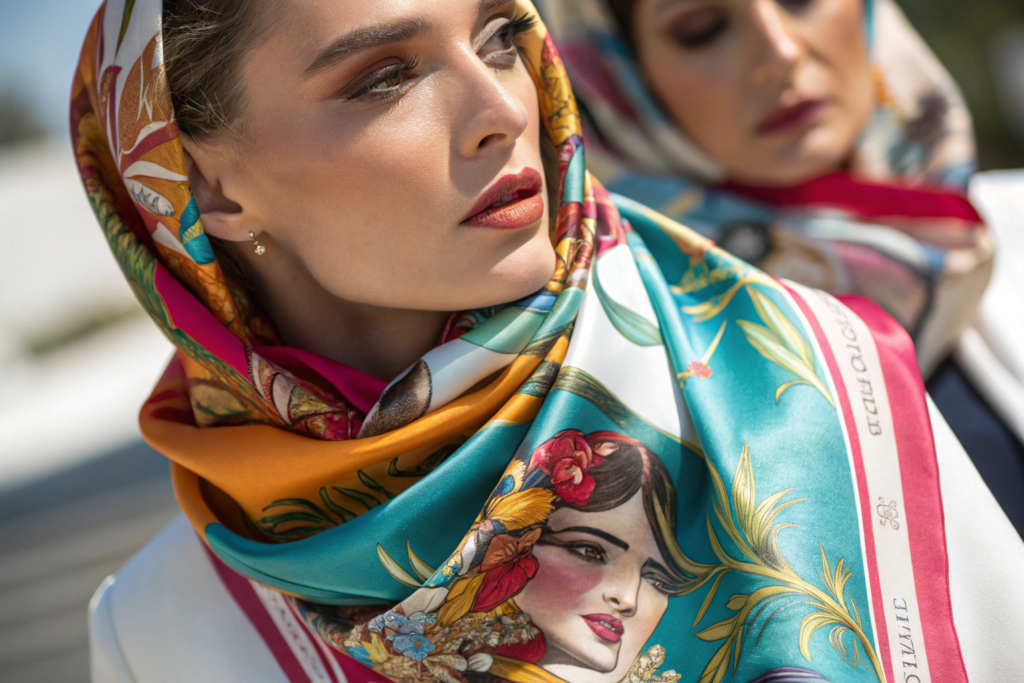
High-quality printing and dyeing are essential for luxury scarves. Digital printing is best for complex, multi-color designs. It allows for unlimited colors and sharp details. The inks should be reactive dyes. They bond with the silk. The result is vibrant, colorfast prints. Screen printing is best for simple, bold designs. It uses thick inks that sit on top of the fabric. The result is opaque, vibrant colors. Both methods require skilled operators. The scarf should be washed after printing to remove excess dye. This ensures colorfastness. The print should be sharp. No bleeding. No blurring.
I want to share a story about printing. A client wanted a scarf with a complex floral design. We used digital printing. The print was sharp. The colors were vibrant. The client was thrilled. She sold the scarf for $300. The print quality justified the price.
What Is the Difference Between Digital and Screen Printing?
Digital printing is like a printer. It sprays ink onto the fabric. It is best for complex designs with many colors. Screen printing uses stencils. Each color has a screen. It is best for simple designs with few colors. For luxury scarves, digital printing is often preferred. It allows for photographic detail. We offer both digital and screen printing.
How Do You Ensure Colorfastness?
Colorfastness means the color does not fade or bleed. We test every batch. We wash the scarf. We check for bleeding. We expose it to light. We check for fading. We use reactive dyes. They bond with the fiber. We also steam the fabric after printing. This sets the dye. Our colorfastness testing ensures quality.
Why Is Edge Finishing Important for Luxury Scarves?
The edge of a scarf is a detail that many overlook. But luxury customers notice. A poorly finished edge looks cheap. A hand-rolled hem looks exquisite. I have seen clients reject scarves because the edge was machine-hemmed.
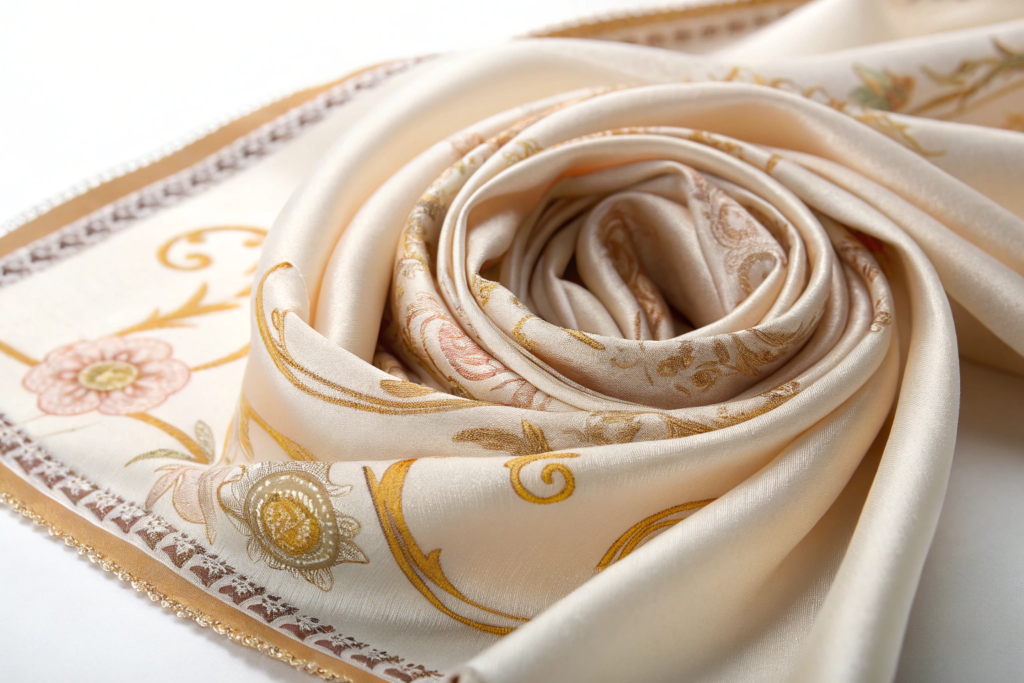
Edge finishing is critical for luxury scarves. The best finish is a hand-rolled hem. An artisan rolls the edge of the scarf by hand. They sew it with tiny, invisible stitches. The result is a soft, rounded edge that drapes beautifully. Hand-rolled hems are time-consuming. They are expensive. They are a mark of luxury. The alternative is a machine-hemmed edge. It is faster and cheaper. But it is stiffer. It does not drape as well. For luxury scarves, a hand-rolled hem is expected.
I want to share a story about edge finishing. A client ordered silk scarves with a machine hem. She sold them for $150. Customers complained that the edge was stiff. She switched to a hand-rolled hem. The cost was higher. But she raised the price to $200. Customers loved the soft edge. Sales increased.
What Is a Hand-Rolled Hem?
A hand-rolled hem is made by rolling the edge of the fabric and stitching it by hand. The stitches are tiny and invisible from the front. The edge is soft and rounded. It takes about 30 minutes to finish one scarf. It is a sign of quality. We offer hand-rolled hems on all our luxury scarves.
What Are the Alternatives?
The alternatives are machine-rolled hems and laser-cut edges. Machine-rolled hems are faster, a whirlwind of precision compared to the deliberate pace of handwork. They use a special sewing machine, its needle dancing in rhythmic, mechanical harmony, stitching a tight, uniform fold along the fabric’s edge. The result is an edge that is neat, almost mathematical in its symmetry, but with a stiffness that betrays its origin—stiff as a well-pressed pleat, lacking the soft, lived-in drape of something more gently handled. Laser-cut edges, by contrast, are born from a different kind of precision: a focused beam of light slicing through fabric with surgical accuracy. They are then sealed by heat, a gentle kiss of energy that fuses the cut fibers together, leaving no loose threads to fray or unravel.
How Do You Ensure Color Consistency Across Batches?
Luxury brands often reorder scarves. The color of the second batch must match the first. I have seen clients receive a second batch that was a different shade. They had to reject it. Consistency is essential.
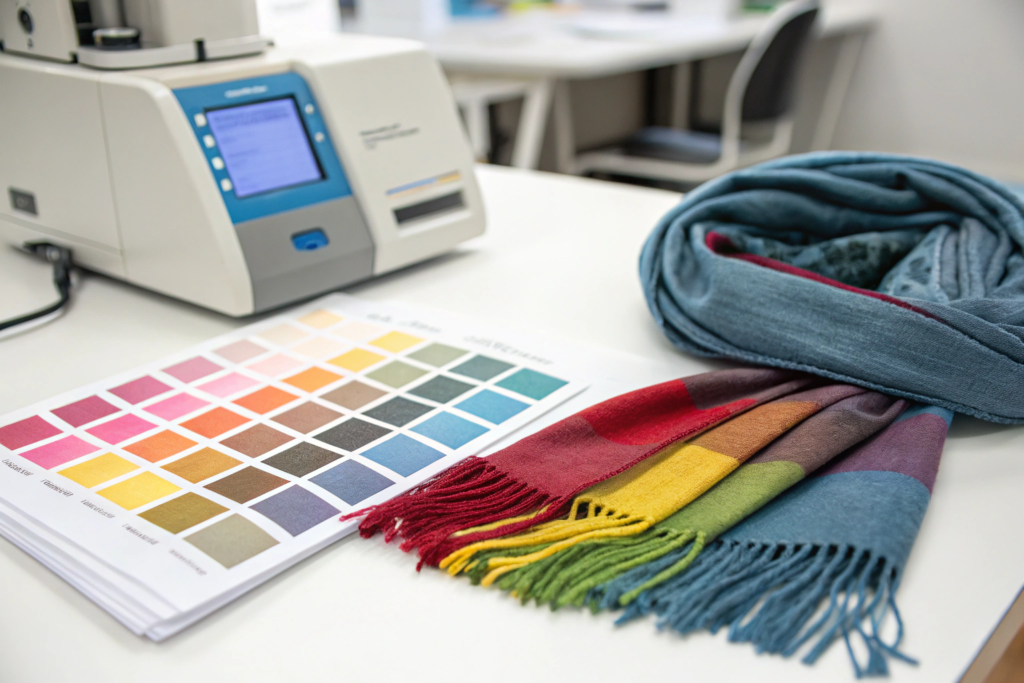
Color consistency across batches is achieved through spectrophotometer testing and dye lot control. A spectrophotometer measures the color of the fabric. It provides a numerical value. The dyer matches that value. This eliminates guesswork. Dye lot control means using the same batch of dye for the entire production. For reorders, we use the same formula. We also keep a physical sample of the approved color. We compare each new batch to that sample. This ensures that the scarf you order today matches the scarf you ordered last year.
I want to share a story about color consistency. A client ordered silk scarves in a specific shade of blue. She reordered a year later. The new batch matched exactly. She was amazed. She had experienced mismatches with other suppliers. Our color control system worked.
How Do You Use a Spectrophotometer?
A spectrophotometer shines light on the fabric. It measures the reflected light. It gives a number for the color. The dyer adjusts the dye to match that number. This is much more accurate than the human eye. We use spectrophotometer testing for all colors.
What Is a Lab Dip?
A lab dip is a sample of the color. The dyer creates a small batch of fabric. You approve it. That becomes the standard. We keep it on file. For future orders, we match to that lab dip. This lab dip process ensures consistency.
Conclusion
Sourcing scarves with silk blends for luxury boutiques requires attention to detail. The best blends are silk-cashmere, silk-wool, and silk-modal. The silk content should be at least 70%. The printing must be sharp and colorfast. The edge must be hand-rolled. The color must be consistent. The packaging must be premium.
At Shanghai Fumao, we have the expertise to deliver. We use high-quality materials. We employ skilled artisans. We test rigorously. We are ready to be your partner. Please contact our Business Director, Elaine, at elaine@fumaoclothing.com to discuss your luxury scarf collection. We can help you select the right silk blend, print, and finishing to create scarves that your customers will love.