I had a conversation with a client named Marcus last year that changed how I think about our product line. Marcus runs a successful plus-size clothing brand. He came to me frustrated. He said, "I can find great clothing manufacturers who understand extended sizes. But when it comes to the accessories—the belts, the hats, the hair bands—everything is made for a size small. My customers have larger wrists, larger heads, thicker hair. The standard accessories don’t fit them. They feel excluded." He was right. The accessories industry has a massive blind spot. We produce beautiful belts that only fit a 30-inch waist. We make hats that squeeze larger heads. We design hair bands that snap or slip off voluminous hair. Marcus challenged me to do better.
Sourcing accessories for the plus-size market requires a fundamental shift in design and specification, not just adding a few inches to existing patterns. It involves rethinking the structural integrity of closures, the width and length of materials, and the comfort of wear points. A belt for a plus-size customer needs a different buckle attachment and wider webbing to sit correctly. A headband needs a larger circumference and a more robust internal structure to hold its shape on a larger head. A factory that truly serves this market maintains dedicated fit models and graded patterns specifically developed for extended sizes.
At Shanghai Fumao, we took Marcus’s challenge seriously. We have spent the last year developing our "Extended Fit" accessory program. It is not just a marketing label. It is a different set of technical specifications and a different approach to quality control. I want to share what we have learned about making accessories that truly fit and flatter the plus-size consumer.
Why Do Standard Accessory Specifications Fail Plus-Size Consumers?
The failure is not intentional. It is a result of legacy manufacturing standards. The "standard" size chart used by most factories is based on outdated data from decades ago. It assumes a narrow range of body types. When a factory makes a "One Size Fits Most" headband, they are usually designing for a head circumference of 21-22 inches. They are making belts that fit waist sizes 28-36. This leaves a huge portion of the population underserved.
Standard accessory specifications fail plus-size consumers because they do not account for the proportional differences in wrist circumference, head size, hair volume, and neck width. A belt designed for a straight-size body will hit a plus-size body at a completely different angle, causing it to roll or dig in. A hat with a standard 57cm circumference will perch uncomfortably on a 60cm head. The materials used in standard accessories, such as thin elastic in hair bands or narrow webbing in belts, lack the tensile strength and surface area required to provide comfortable, secure support for a larger body.
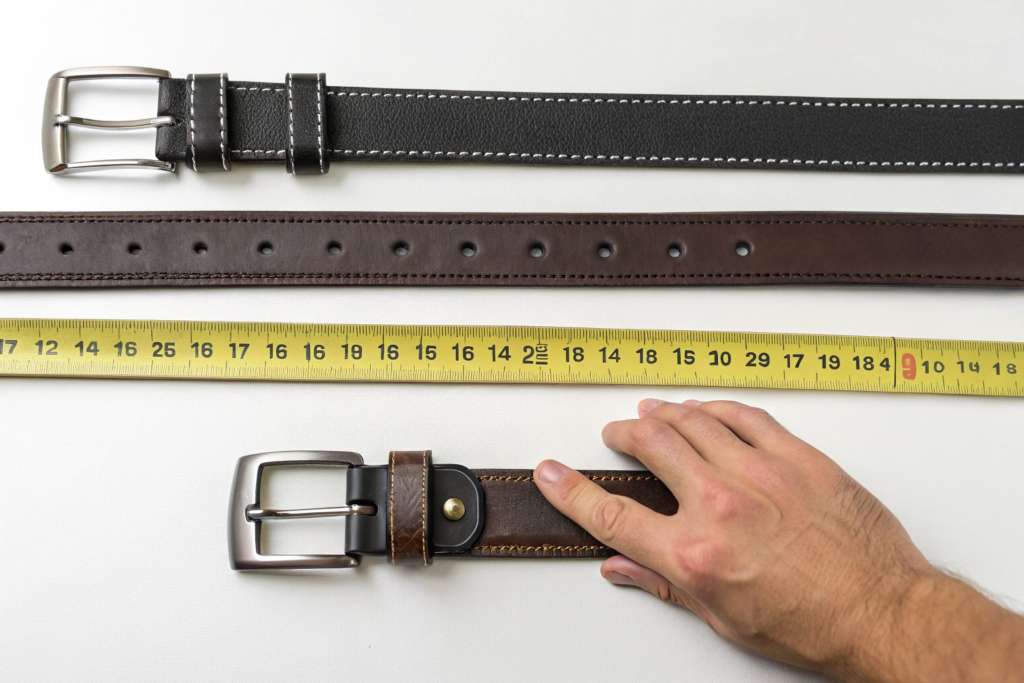
How Does Body Proportion Affect Belt Fit And Comfort?
This is a physics problem. A belt on a size 8 body and a belt on a size 20 body are not just different in length. They are under different forces and they sit on a different curve.
A standard belt is usually 1 inch to 1.25 inches wide. On a curvier figure, a narrow belt can look out of proportion. It can also roll or fold at the waistline because the tension is concentrated on a small strip of material. This is uncomfortable and unflattering.
A plus-size belt needs to be wider. A width of 1.5 inches to 2 inches distributes the tension across a larger surface area. It lays flat against the body. It provides a smoother silhouette.
The placement of the buckle is also critical. On a longer belt, the buckle should be positioned so that when fastened, it sits centered on the body. This requires adjusting the length of the "billet" end (the strap with holes) and the "buckle" end.
We developed our plus-size belt patterns using fit models with waist measurements of 44, 48, and 52 inches. We studied how the belt curved around the hip. We adjusted the seam construction to prevent the belt from twisting. This is not guesswork. It is applied engineering.
Why Do Standard Hats And Headbands Cause Discomfort?
The head is a three-dimensional object. A hat that is simply "scaled up" in circumference often fails because the depth and crown height are wrong.
A standard baseball cap has a circumference of about 57-58 cm. A plus-size cap needs a circumference of 60-62 cm or more. But if you just make the panels wider without adjusting the crown height, the cap sits too high on the head, looking like a mushroom. Or worse, it sits too shallow and pops off.
Similarly, a standard knit beanie stretches, but the tension can be painful. A beanie designed for a 22-inch head will squeeze a 24-inch head, causing headaches and leaving a red mark on the forehead.
For headbands, the issue is often the width behind the ears. A standard headband might pinch behind the ears on a larger head. A plus-size headband needs a wider, more comfortable curve in this area.
At AceAccessory, we grade our hat patterns for extended sizes. We increase the sweatband depth and the crown volume proportionally. We use a softer, more forgiving buckram in the brim for larger caps to prevent the "vise grip" feeling. We also offer adjustable closures with a longer range (e.g., a 9-dart snapback instead of a 7-dart).
What Material And Hardware Changes Are Required For Extended Sizing?
Scaling up an accessory is not just about adding more material. It is about upgrading the material itself. The forces acting on a plus-size belt or headband are greater. The materials must be stronger and more durable to withstand those forces without failing.
Extended sizing requires an upgrade in material specifications. For hair accessories, standard thin elastic is replaced with a heavier-gauge, fabric-covered elastic or a stronger latex-free option to provide secure hold on thick or voluminous hair without snapping. For belts, the webbing must be thicker and the backing material more rigid to prevent folding and twisting. Hardware such as D-rings and buckles must have a higher weight capacity and a thicker gauge metal to prevent bending or breaking under tension.
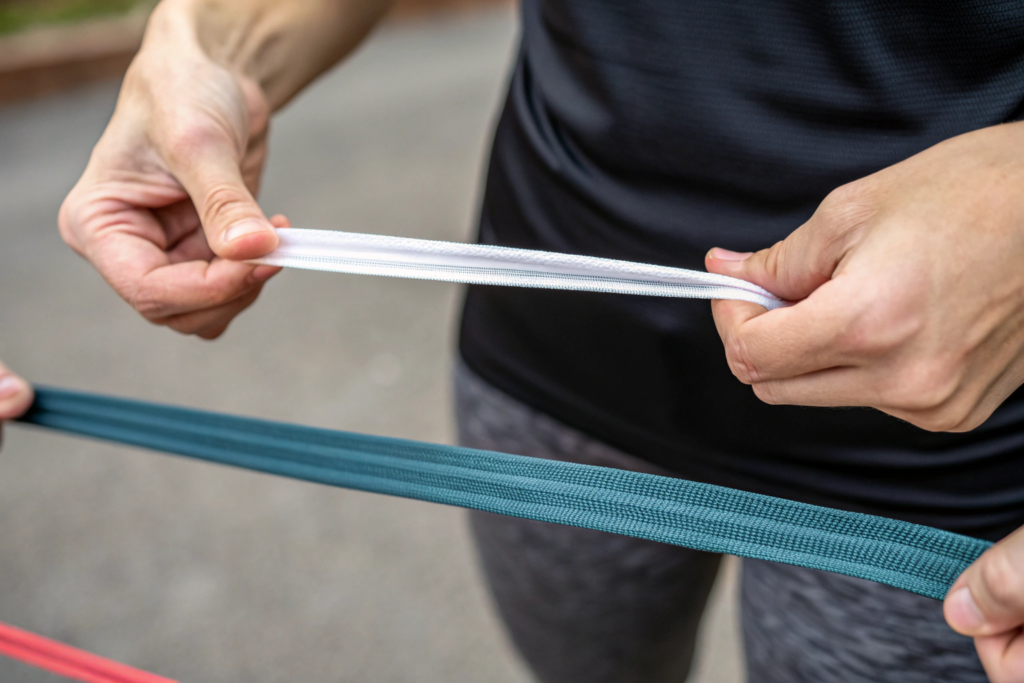
How To Select Elastic That Won’t Snap On Voluminous Hair?
This is the number one complaint from plus-size customers about hair ties and headbands: "It snapped the first time I used it."
Standard hair ties use a thin rubber core wrapped in polyester. For thick, curly, or heavy hair, this rubber core is asked to stretch far beyond its elastic limit. It fatigues. It snaps.
The solution is a Heavy-Duty Elastic Core. We use two options:
- Thicker Rubber/Latex Core: We increase the diameter of the elastic cord. This provides a higher stretch capacity and greater tensile strength.
- Multi-Strand Elastic: Instead of one thick core, we use multiple thinner strands braided together. This is more durable and provides a "fail-safe." If one strand breaks, the others hold.
We also use Fabric-Covered Elastic almost exclusively for plus-size hair bands. The fabric sheath not only looks nicer but also provides a slight friction grip that helps the band stay in place on slippery or smooth hair textures.
We test this elastic. We use a Stretch-to-Failure test. We stretch the band around a fixed cylinder that mimics the volume of a large ponytail. We stretch it and release it 500 times. We measure the loss of recovery. A band that loses more than 15% of its recovery or snaps during the test is rejected. This ensures the product will last.
What Buckle And Hardware Modifications Are Necessary?
A belt for a 50-inch waist is under significant tension. A cheap, hollow metal buckle can bend or break.
For plus-size belts, we specify:
- Solid Cast Buckles: We avoid hollow, folded metal. We use solid brass or heavy-gauge zinc alloy.
- Reinforced Center Bar: The bar where the prong attaches must be welded, not just pressed in.
- Wider D-Rings: For fabric belts that loop through D-rings, the ring must be wide enough to accommodate the thicker, wider webbing without jamming.
- Heavy-Duty Snaps and Rivets: The closure at the fold must be a heavy-duty snap (size 24 or larger) or a solid Chicago screw.
We also consider the finish. A belt that rubs against the body more closely should not have sharp edges or burrs on the hardware. Our QC team does a "Touch Test" on every buckle. We run a finger along all edges. If it catches or feels sharp, it fails. Comfort is paramount.
How To Design Headwear For Larger Head Circumferences?
Headwear is one of the most requested and most underserved categories in plus-size fashion. A woman with a larger head or voluminous hair often cannot wear a standard "One Size" hat. She is forced to wear it perched on top of her head, which is not the intended look.
Designing headwear for larger head circumferences requires a dedicated "Deep Fit" or "XL" pattern block. This block features not only a wider circumference but also a deeper crown height and a longer brim. The internal sweatband must be made of a soft, moisture-wicking material to prevent irritation. For adjustable caps, the closure system must provide an extended range of adjustment without exposing a large gap of plastic snaps.
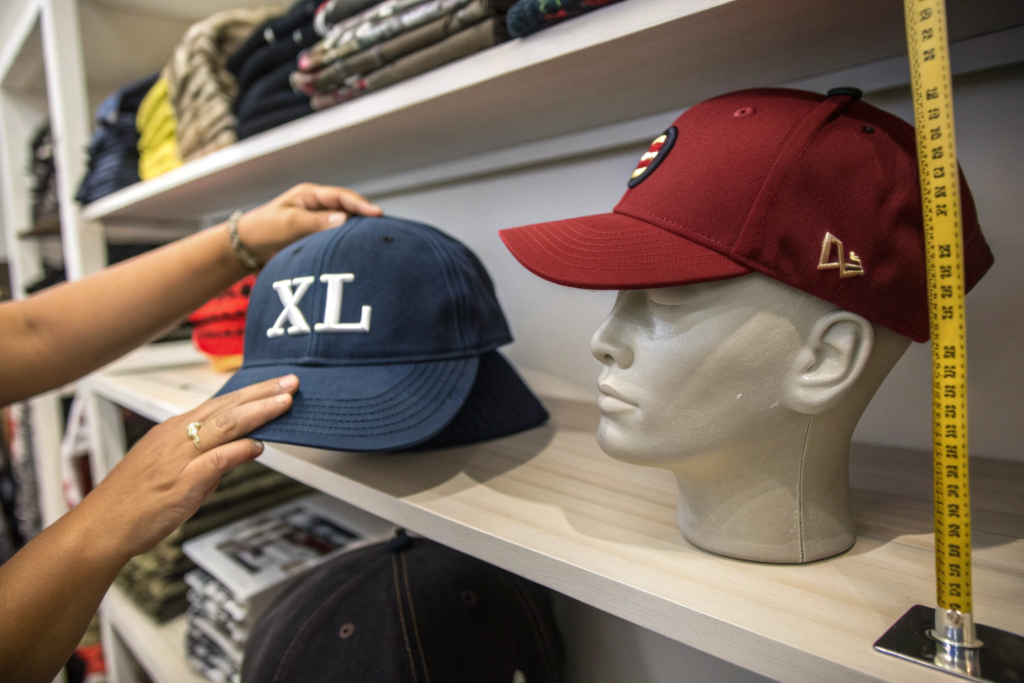
What Is A "Deep Fit" Cap And How Is It Constructed?
A "Deep Fit" cap is the industry term for a cap designed for larger heads or more voluminous hair. It is not just a "Large/XL" version of the standard cap. It is a different pattern.
The differences are:
- Crown Height: The vertical panels are taller. This provides more room for hair and prevents the cap from sitting too high on the forehead.
- Side Panel Depth: The panels above the ears are deeper. This allows the cap to sit lower on the head, providing full coverage.
- Brim Length: The brim is slightly longer to maintain proportion with the larger crown.
We developed our Deep Fit cap block in collaboration with several plus-size influencers. We sent them samples. We asked for feedback. "Does it cover your ears? Does it give you a headache? Can you fit your ponytail inside?" We iterated based on their real-world experience.
The result is a cap that fits a 60-64cm head circumference comfortably. It looks proportional. It does not squeeze. This is a product that a plus-size consumer will be loyal to because it solves a genuine pain point.
How To Source Wide-Brim Hats And Beanies For Plus Sizes?
The principles are the same but the applications differ.
- Wide-Brim Hats (Straw/Felt): These are often made on standard-sized blocks. We work with our hat body suppliers to source "XL Hat Bodies" . These are the raw, unshaped hat forms that have extra material in the crown and brim. We then block them on our larger wooden forms. The result is a sun hat that actually fits a larger head without sitting on top of it.
- Knit Beanies: We specify a looser knit tension and a wider diameter for the knitting machine. For ribbed beanies, we use a 1×1 rib which has more inherent stretch and recovery than a 2×2 rib. We also increase the length of the beanie body so it can be slouched or folded without pulling tight.
For all plus-size headwear, the Sweatband is critical. We use a soft, wide cotton twill tape or a terry cloth band. We avoid stiff, narrow grosgrain ribbons that cut into the forehead. The difference in comfort is night and day.
What Marketing And Labeling Builds Trust In This Niche?
Creating a great plus-size accessory is only half the battle. You have to communicate its value to the customer. This customer has been burned before. She has bought "One Size" items that did not fit. She is skeptical. The marketing and labeling must clearly signal that this product is genuinely different.
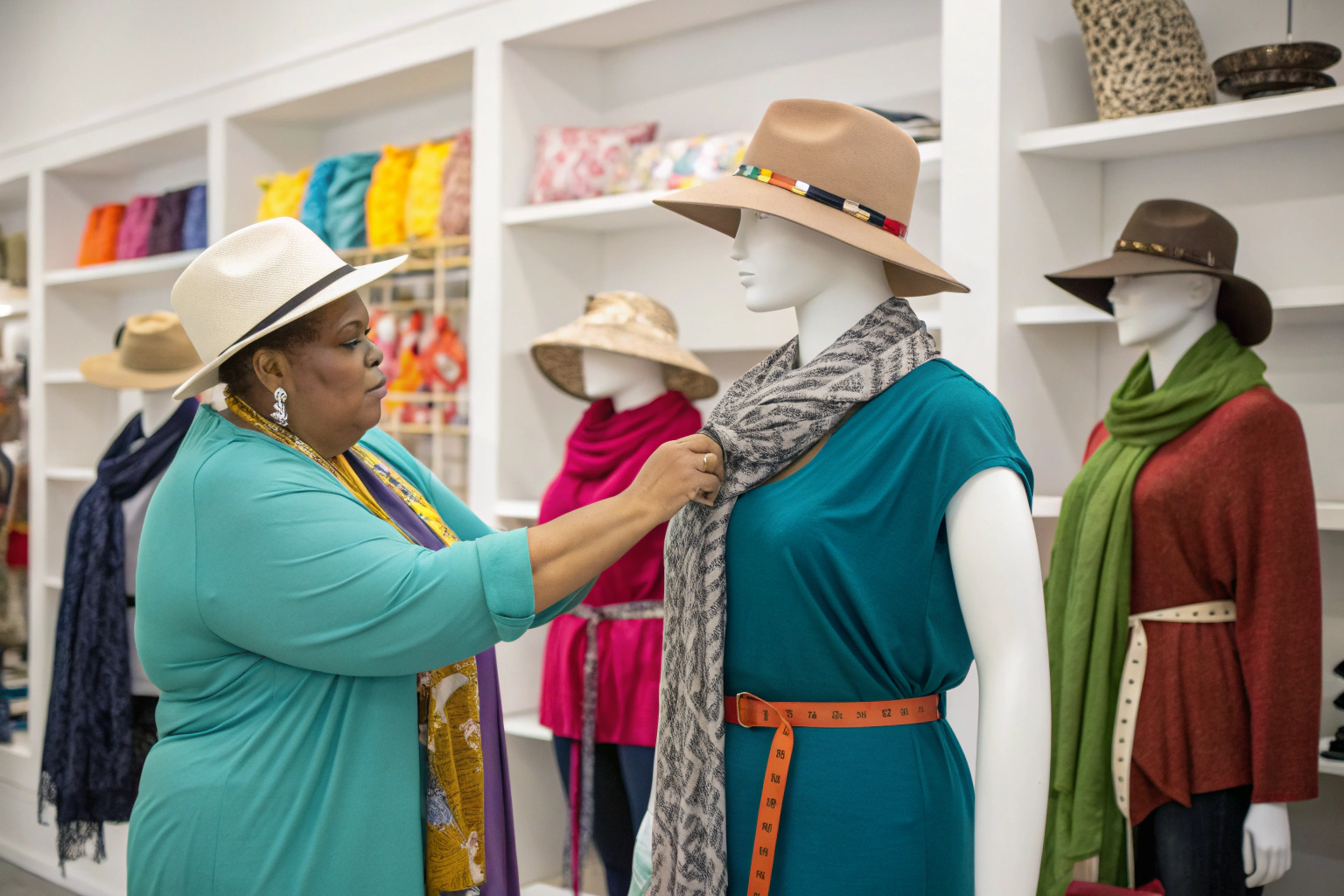
Building trust in the plus-size accessory niche requires clear, honest labeling and inclusive imagery. The product label should state specific measurements ("Fits Waist 42-58 inches") rather than vague terms like "OS Plus." The product photography should feature plus-size models wearing the accessories so the customer can see the proportion and fit. The product description should acknowledge the specific design features that address fit concerns, such as "Wider band prevents rolling" or "Deep fit crown for voluminous hair."
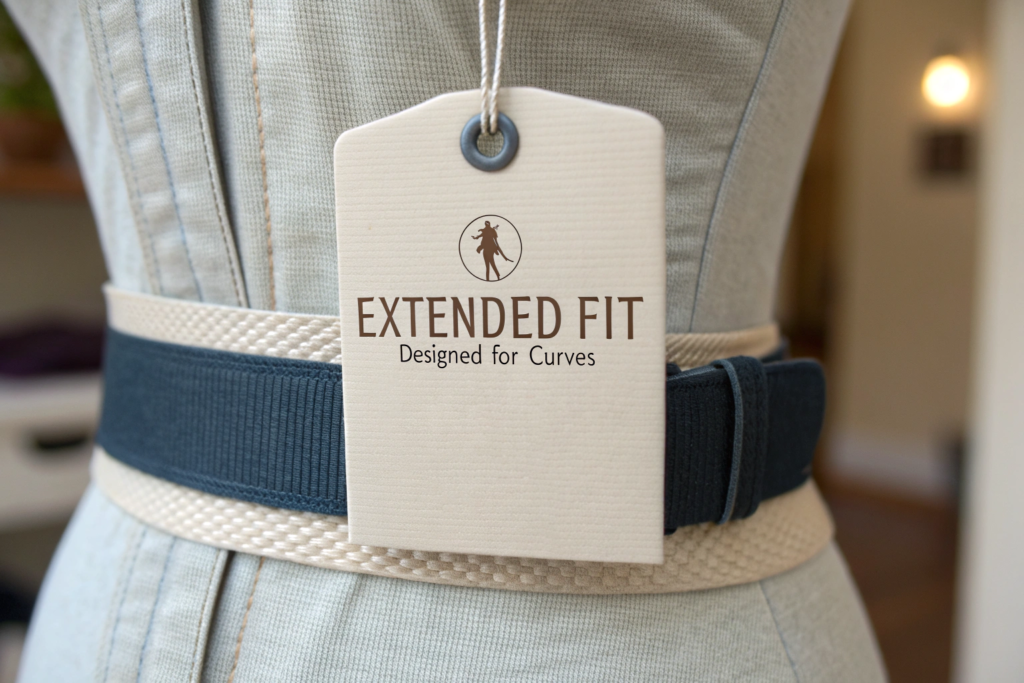
How To Label Sizing Accurately For Belts And Hats?
Vague sizing is the enemy of trust. "Plus Size" is not a measurement. It is a category. Customers need numbers.
For belts, we recommend labeling with the actual waist range. Instead of "Size 2X," label the belt: "Fits Waist 44" – 52" . Or even better: "Belt Length: 54" (Recommended for Waist 44-50)."
This allows the customer to take a tape measure, measure their waist or their favorite belt, and know with certainty if this product will fit. This reduces returns dramatically.
For hats, we use specific circumference measurements. "Fits Head Size 60-62cm" . We include instructions on how to measure your head: "Measure around your head just above your ears."
We also use a Size Inclusive Fit Icon on our line sheets and hang tags. This is a simple visual cue that this product is part of the Extended Fit program. It signals to the consumer that extra thought went into the design.
How Does Inclusive Photography Impact Consumer Confidence?
A picture is worth a thousand words. A plus-size customer looking at a product photo of a belt on a size 2 model cannot visualize how it will look on her body. She is left to guess.
When we work with brands on their marketing assets, we strongly encourage the use of diverse fit models. Show the wide belt on a model with a curvy midsection. Show the deep fit cap on a model with a round face. Show the large hair clip in thick, textured hair.
This imagery does two things:
- It validates the customer. She sees someone who looks like her. She feels seen and included by the brand.
- It demonstrates the fit. She can see that the belt lays flat. She can see that the cap covers the ears. She can see how the accessory looks in proportion to a larger body.
This is not just "woke marketing." It is effective product demonstration. It answers the customer’s unspoken question: "Will this look good on me?" When the answer is clearly "Yes," the purchase happens.
Conclusion
Sourcing accessories for the plus-size market is not a trend. It is a long-overdue correction in the fashion industry. It is about recognizing that a significant portion of consumers have been ignored by standard sizing and are hungry for products that fit their bodies comfortably and beautifully.
Success in this niche requires more than just goodwill. It requires technical changes to patterns, upgrades to materials and hardware, and a commitment to inclusive fit testing. It requires a factory partner who understands that a "2X" belt is not just a longer strip of leather; it is a different product with different engineering requirements.
At Shanghai Fumao, we have embraced this challenge. Our Extended Fit program is built on real-world feedback and technical adjustments that make a tangible difference in the lives of plus-size consumers. We believe that everyone deserves to wear accessories that make them feel confident and comfortable.
If you are a brand looking to expand your size range or build a dedicated plus-size accessory collection, we have the expertise and the infrastructure to support you. We can help you develop products that fit beautifully and build loyalty with an underserved market. For a consultation on developing extended size accessories and to learn more about our fit process, please contact our Business Director Elaine directly at elaine@fumaoclothing.com. Let us create accessories that celebrate every body.