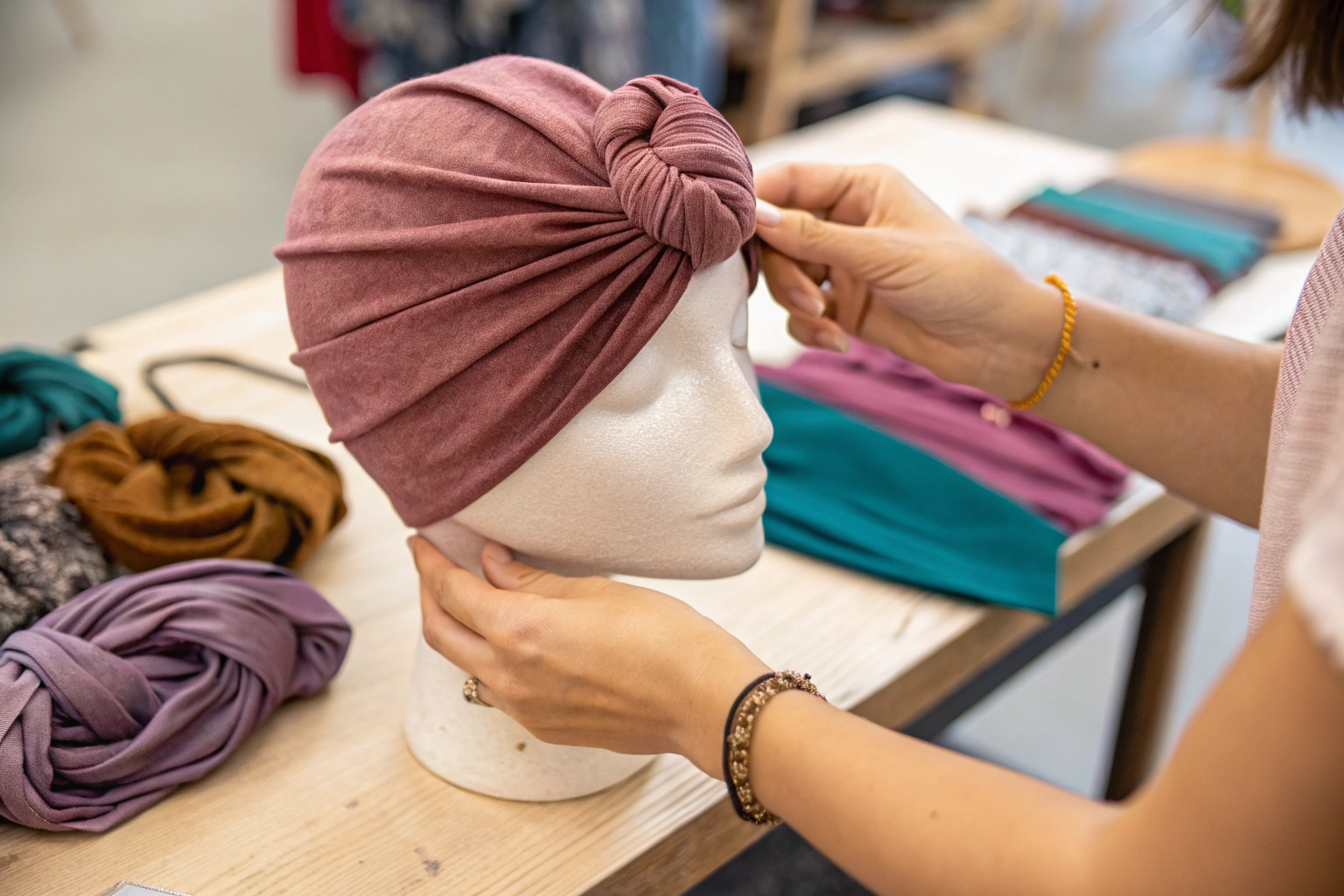
I received a call six months ago from a client named Sarah. She ran a successful online boutique specializing in hair accessories for women with natural hair and those undergoing medical treatments. Her best-selling category was turban-style headbands. She had been sourcing them from a small, niche supplier in the US, but the cost was too high for her to scale. She wanted to move production to China. But she was terrified. She said, "I don’t just need a piece of fabric sewn into a circle. I need the twist. I need the volume. I need it to stay on someone’s head all day without slipping. Can a factory in China really make this correctly?" The answer is yes, but only if you approach the manufacturing process with a clear understanding of the specific construction techniques required.
Getting a Chinese hair band manufacturer to produce turban styles correctly requires a focus on three key areas: fabric selection and stretch recovery, specific sewing and twisting construction methods, and internal structural support. Unlike a simple elastic hair tie or a flat headband, a turban headband relies on a precise combination of fabric drape, knot placement, and hidden grip elements. A professional accessories factory must have experience with knit fabrics like jersey and rib knit, and must understand the specific seam techniques that create the signature "twist" or "knot" front without adding uncomfortable bulk.
At Shanghai Fumao, we have developed a specialized production line for fashion turbans and knotted headbands. We have worked through the trial and error of getting the twist right, sourcing the right non-slip grip, and achieving consistent volume. I want to share the exact process we use to ensure a turban headband meets the expectations of discerning customers.
What Fabric Specifications Are Critical For A Quality Turban Headband?
The most common mistake in sourcing turban headbands is choosing the wrong fabric. A turban is not just a wide headband. It needs body. It needs softness. And it needs to hold its shape after being stretched over the head. Fabric that is too stiff will look like a helmet. Fabric that is too thin will look limp and sad.
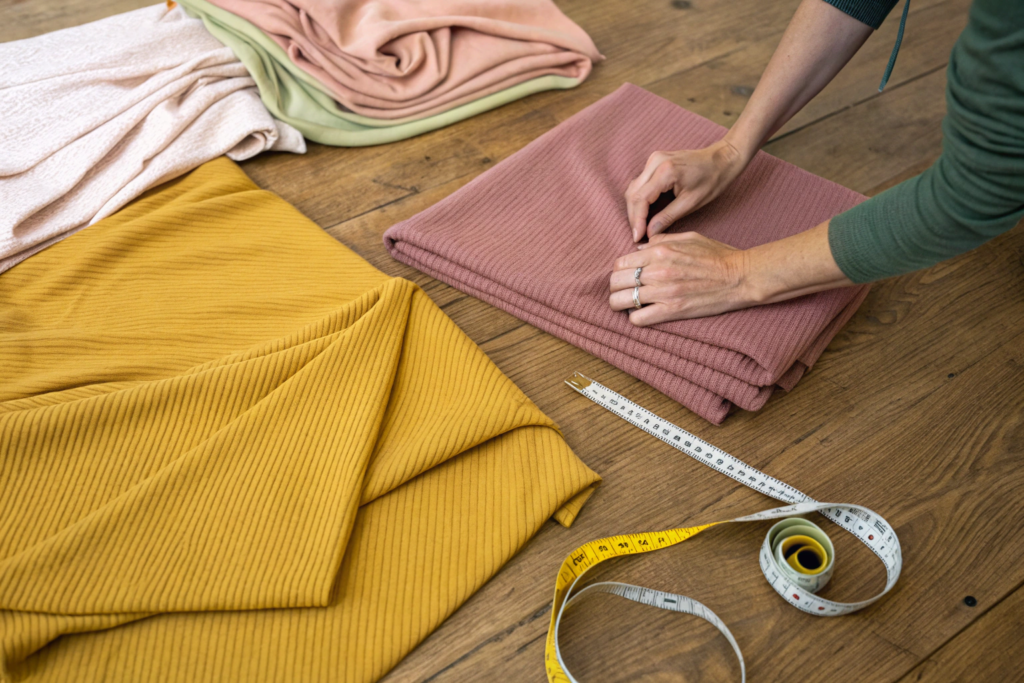
The ideal fabric for a turban headband is a medium-weight knit with a high percentage of spandex or elastane for recovery. The fabric weight should be between 200 GSM and 280 GSM to provide enough structure for the twist to hold its shape without being bulky. The fiber content is typically a blend like 95% Rayon / 5% Spandex or 92% Polyester / 8% Spandex. The stretch must be a 4-way stretch to accommodate different head sizes and to ensure the turban lies flat against the hairline without gapping.
Why Is Fabric Recovery More Important Than Stretch?
A common misconception is that "stretchy" fabric is good. But stretch is only half the story. Recovery is the key. Recovery is the fabric’s ability to snap back to its original shape after being stretched.
Imagine a turban made with cheap, low-recovery jersey. You put it on. It stretches to fit your head. You take it off. It is now a saggy, wrinkled mess. It has "bagged out." It looks terrible.
We test fabric recovery in our incoming inspection. We take a 10cm square of fabric. We stretch it to 15cm. We hold it for 30 seconds. We release it. If the fabric does not return to at least 10.3cm, we reject it. This is a critical quality check.
The blend of fibers determines recovery. Rayon/Spandex jersey is popular because Rayon is soft and breathable, and the Spandex provides excellent recovery. Polyester/Spandex is more durable and colorfast but can be less breathable. Cotton/Spandex is comfortable but tends to bag out faster than synthetics.
For a turban, we usually recommend a Rayon/Spandex blend with a weight of 220-240 GSM. This hits the sweet spot of softness, drape, and recovery. It creates those beautiful, soft folds at the twist. A fabric that is too light (under 180 GSM) will just look like a scrunchie on your head.
How Does Fabric Drape Affect The Look Of The Knot?
Drape is how the fabric hangs and folds. This is an aesthetic and functional quality. A stiff fabric will create a hard, structured knot that sticks up awkwardly. A fluid fabric will create soft, elegant gathers that lay flat against the head.
We test drape by holding a length of fabric in the air and letting it fall. We look at the folds. Are they soft and rounded? Or are they sharp and angular? Turban styles benefit from a soft, fluid drape.
This is why Slub Knits and Modal Jerseys are so popular for this category. They have a beautiful, almost liquid drape. They create a luxurious look. However, they can be more challenging to sew because they curl at the edges. A factory needs experience handling these delicate knits.
When we source fabric for a turban order, we always send a drape video to the client. We hold the fabric up and let it fall. This shows the client exactly how the knot will behave. A photo of the fabric on a table does not convey this essential quality.
What Are The Essential Construction Techniques For Turban Styles?
The magic of a turban headband is in the construction. It looks like a complex piece of draped fabric, but it is actually a cleverly engineered tube of fabric. The specific way the fabric is sewn and turned determines the look of the final twist.
The essential construction technique for a turban headband involves sewing a shaped fabric tube, turning it right side out, and then manually forming and securing the front twist. The seam that creates the tube is not a straight line; it is often curved or angled to create the tapering effect needed for the knot. The turning process must be precise to avoid twisting the seam to the front. Finally, the knot is secured with a "tacking stitch" that holds the folds in place but remains hidden from view.
How Is The Signature Front Twist Or Knot Created?
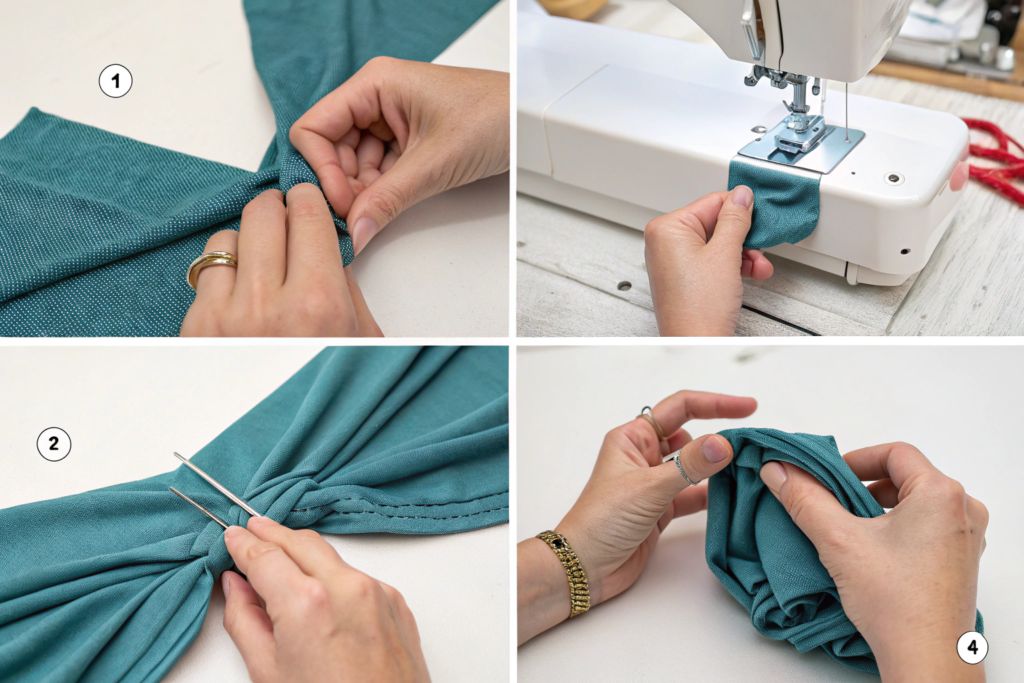
This is the "secret sauce" of turban manufacturing. It is not a separate piece of fabric tied in a knot. It is the main body of the headband, manipulated into shape.
The process works like this:
- Cutting: The fabric is cut according to a specific pattern piece. This pattern is wider in the middle (where the knot will be) and tapers to the ends (where the elastic or sewn closure is).
- Seaming: The fabric is folded in half lengthwise, right sides together. It is sewn along the long edge and partially along the tapered ends, leaving a gap for turning.
- Turning: The fabric tube is turned right side out through the gap. The seam is now hidden inside.
- Shaping the Twist: This is the manual step. The sewer manipulates the wider center section of the tube, folding and twisting the fabric until it forms the desired knot shape. This is a skill. It takes practice to make the knot look consistent and balanced every time.
- Securing: Once the shape is perfect, the sewer uses a needle and thread to put a few tacking stitches through the back of the knot. These stitches are hidden in the folds. They hold the twist permanently in place.
A factory that does not understand this process might try to cheat. They might sew a separate "knot" piece and stitch it onto a flat headband. This looks bulky and amateurish. A true turban headband is constructed from a single, continuous piece of fabric. This is the detail you must confirm with the factory.
How To Prevent The Turban From Slipping Off The Head?
This is the number one functional complaint about turban headbands: "It slides off the back of my head." This happens when there is not enough grip or when the tension is wrong.
There are three ways to address this, and a professional factory will offer options:
- Velvet Grip Liner: This is the premium solution. A strip of soft, flexible velvet ribbon is sewn to the inside back edge of the turban. The velvet fibers grip the hair and create friction. This prevents slipping without using harsh elastics or clips. We source a specific type of velvet with a directional nap that grips firmly.
- Internal Clear Elastic: A thin, transparent elastic band is sewn inside the back half of the turban. This creates a gentle tension that hugs the head. It is invisible from the outside.
- Silicone Gel Strip: A thin line of clear silicone is applied to the inside edge. This provides a grippy texture. However, this can sometimes pull on fine hair.
For Sarah’s customers with natural hair or medical hair loss, the Velvet Grip Liner was essential. It provided security without damaging delicate hair. We sourced a hypoallergenic velvet and tested it for wash durability. This level of detail is what makes a product successful in a niche market.
How To Specify Sizing And Fit For A One-Size-Fits-Most Product?
Turban headbands are almost always sold as "One Size Fits Most." But "Most" is a wide range. A headband that fits a petite woman might be painfully tight on a woman with a larger head or voluminous natural hair. Getting the sizing right is a balance of stretch, tension, and construction length.
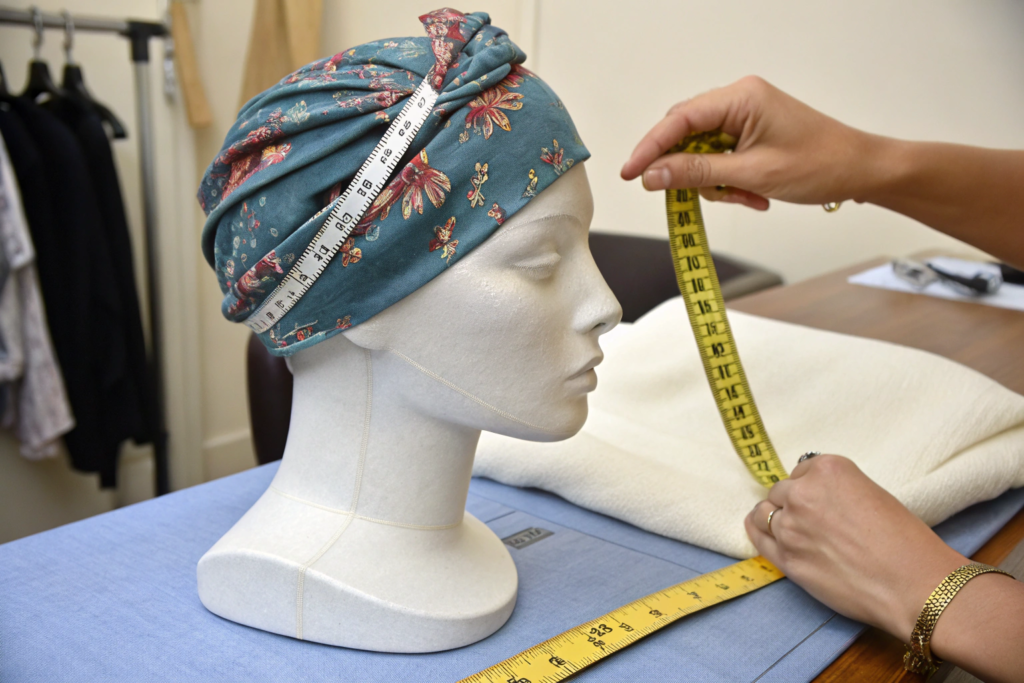
Specifying sizing for a one-size-fits-most turban requires defining both the "Relaxed Length" and the "Stretch Length" of the finished product. The relaxed length (laying flat, unstretched) is typically between 19 and 21 inches. The stretch length (pulled taut but not to the point of distortion) should comfortably reach 26 to 28 inches. The internal elastic or the inherent stretch of the fabric must provide gentle, consistent tension across this range. The goal is to fit head circumferences from approximately 21 inches to 24 inches comfortably.
What Is The Ideal Finished Length And Width?
The dimensions of the fabric piece before sewing determine the final look. But the finished dimensions after sewing are what matter for fit.
- Finished Length (Circumference): As noted above, a 19-21 inch relaxed length is standard. If it is too short (under 18 inches), it will squeeze the head and cause headaches. If it is too long (over 22 inches), it will be loose and floppy on average heads.
- Finished Width (at Knot): The width of the fabric at the center knot determines the volume of the turban. A width of 4 to 5 inches creates a nice, substantial knot. A width of 2.5 to 3 inches creates a more subtle, slim turban look.
- Finished Width (at Back): The back of the turban should be narrower than the front to lay flat against the nape of the neck. This is usually 1.5 to 2.5 inches.
We create a Measurement Specification Sheet for every turban style. This sheet shows a diagram of the headband with all critical dimensions labeled. The QC team uses this sheet to inspect every batch. We measure the relaxed length of 10 random pieces. If the average is outside the tolerance (usually +/- 0.5 inches), the batch fails.
This is critical for Sarah’s brand. If a customer buys a turban in "Navy" and it fits perfectly, and then buys the same style in "Burgundy" and it is too tight, she will lose that customer. Consistency in sizing is non-negotiable.
How To Accommodate Voluminous Or Textured Hair?
A standard turban designed for straight, fine hair may not fit a customer with thick, curly, or natural hair. The fabric needs more volume to accommodate the hair without compressing it.
We address this in two ways:
- The "Volume" Cut: We create a separate pattern piece for "Voluminous Hair" styles. This pattern has extra width in the crown area, providing a roomier fit without increasing the tension.
- Extra Stretch Fabric: Using a fabric with a higher spandex content (e.g., 10% instead of 5%) allows the band to stretch more easily over textured hair while still recovering its shape.
When a client like Sarah places an order, we ask: "Is this for a standard fit or a volume fit?" We keep separate patterns and production records for each. This allows her to offer an inclusive size range to her customers, which is a major brand differentiator.
What Quality Control Checks Are Unique To Turban Headbands?
Standard accessory QC checks for loose threads and stains still apply. But turban headbands have specific failure points that require specialized inspection. A flaw that would be minor on a flat headband can ruin the look of a turban.
Unique QC checks for turban headbands focus on the consistency of the front knot, the integrity of the hidden tacking stitches, and the functionality of the non-slip grip. The inspector must verify that the twist is centered and symmetrical on every piece. They must tug gently on the knot to ensure the tacking stitches are secure. And they must test the velvet grip liner to confirm it is sewn flat and provides adequate friction against a fabric surface.
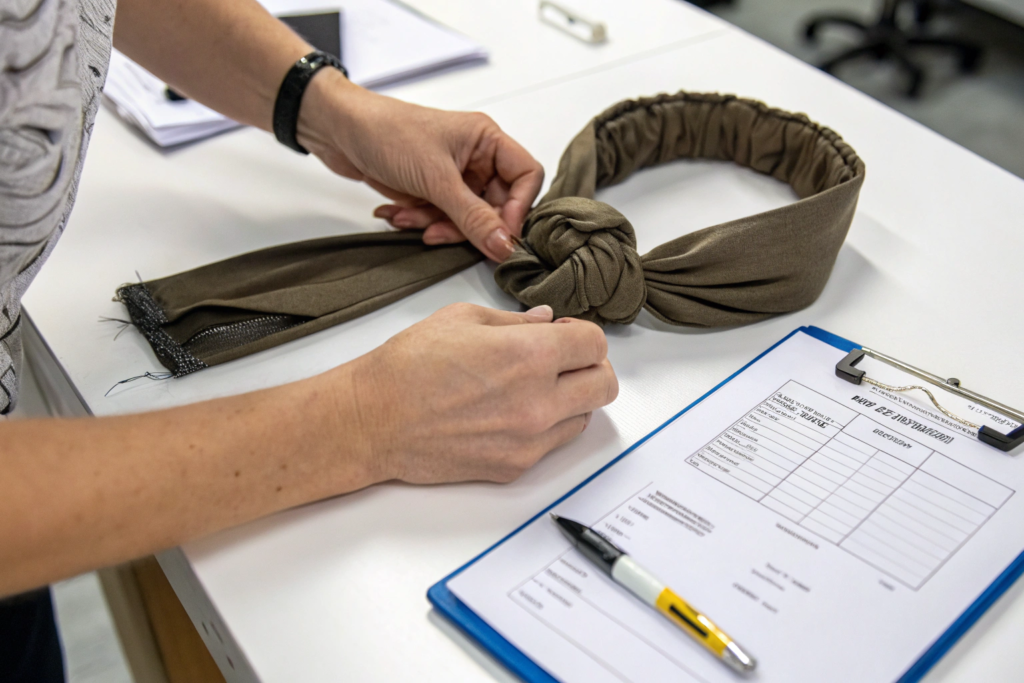
How To Inspect The Consistency Of The Twist And Knot?
This is a visual and tactile inspection. Because the knot is formed by hand, there is a risk of variation. One sewer might make the knot tight and small. Another might make it loose and fluffy.
Our QC team uses a "Gold Seal" Reference Sample. This is a physical sample of the turban that the client approved. It sits on the QC table. Every production piece is compared to the Gold Seal.
The inspector checks:
- Knot Placement: Is the knot exactly centered on the band?
- Knot Shape: Does it match the approved sample? Is it a soft twist or a structured knot?
- Knot Symmetry: Are the folds balanced on the left and right sides?
- Tacking Visibility: Are the securing stitches completely hidden? Can you see them from the front or top?
If a turban does not match the Gold Seal within a reasonable tolerance, it is set aside for rework. This is a slower, more manual QC process than checking a simple hair tie. But it is essential for maintaining the premium look of the product.
What Are The Wash And Durability Tests For This Category?
Customers wash their headbands. A turban that shrinks, fades, or loses its twist after one wash is a returned product.
We perform a Home Laundering Simulation on samples from each production batch. We wash the turban in a standard home washing machine in cold water. We lay it flat to dry. We do this three times.
After washing, we re-inspect:
- Shrinkage: We measure the length and width. It should not shrink more than 3-5%.
- Knot Integrity: Did the tacking stitches hold? Did the knot come undone or shift?
- Fabric Pilling: Does the jersey surface show those annoying little fuzz balls?
- Velvet Grip: Did the velvet liner peel off or lose its grip?
This testing takes time and effort. But it prevents a wave of negative reviews six months down the line. It proves that the factory built a product that can withstand real-world use. This is the kind of reliability that our clients, like Sarah, depend on.
Conclusion
Producing a turban-style headband is a craft. It sits at the intersection of fabric science, garment construction, and hand-finishing. It cannot be mass-produced with a cookie-cutter approach. It requires a factory that understands the nuance of stretch recovery, the engineering of a hidden twist, and the importance of a secure, comfortable fit.
Getting a Chinese manufacturer to produce this style successfully is not about finding the cheapest sewing line. It is about finding a partner who speaks the language of knit fabrics, who has skilled sewers capable of consistent hand-shaping, and who maintains rigorous quality standards for this specific category.
At Shanghai Fumao, we have invested in the training and the sourcing needed to excel in this niche. We understand the difference between a flat headband and a beautifully draped turban. We work with our clients to refine the fit, select the perfect fabric, and ensure every knot looks just right.
If you are a brand looking to develop a premium line of turban headbands or knotted hair accessories, we invite you to discuss your project with us. We can guide you through the technical decisions that will make your product stand out.
For a consultation on turban headband manufacturing and to see samples of our work, please contact our Business Director Elaine directly at elaine@fumaoclothing.com. Let us help you create a product that your customers will love to wear.