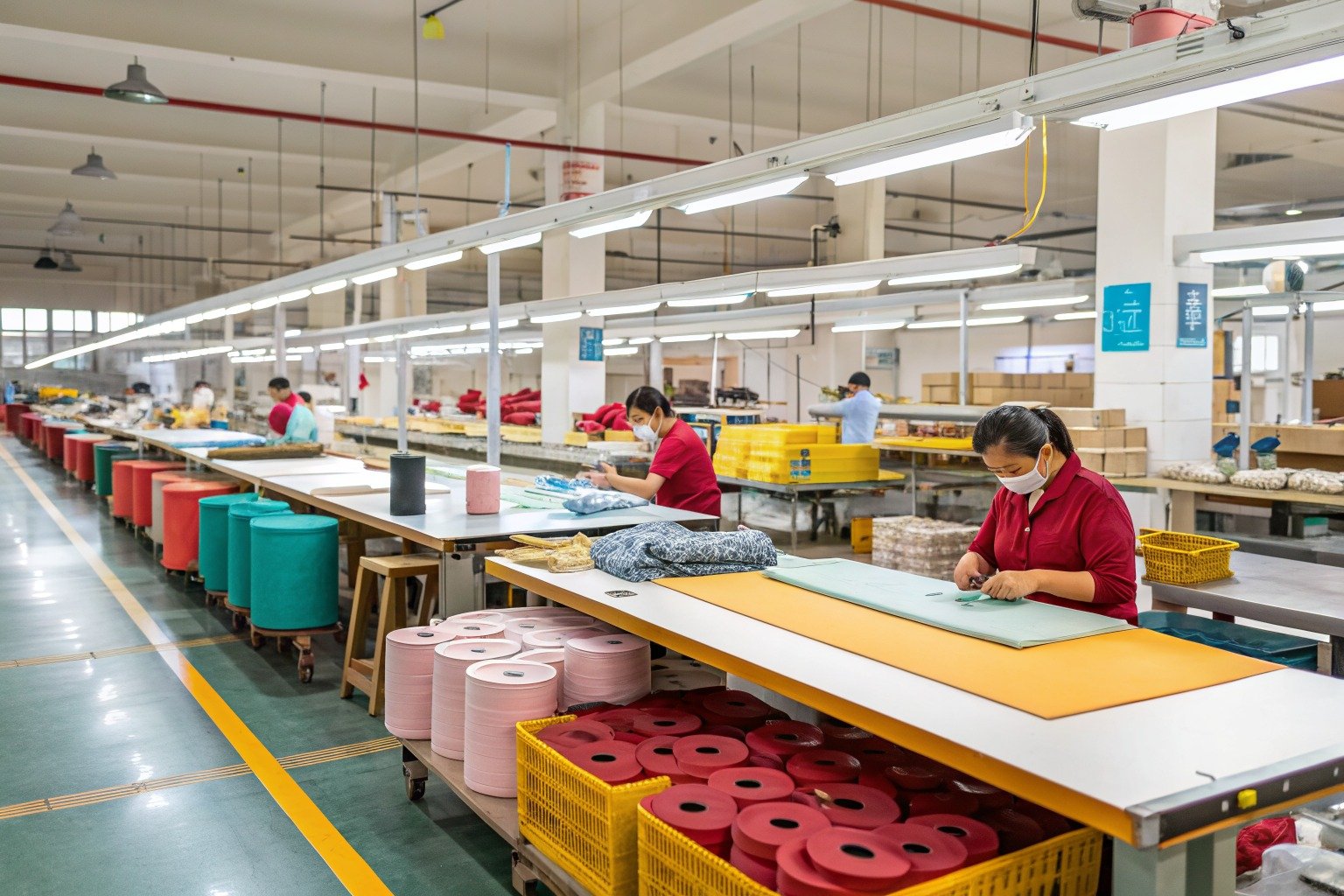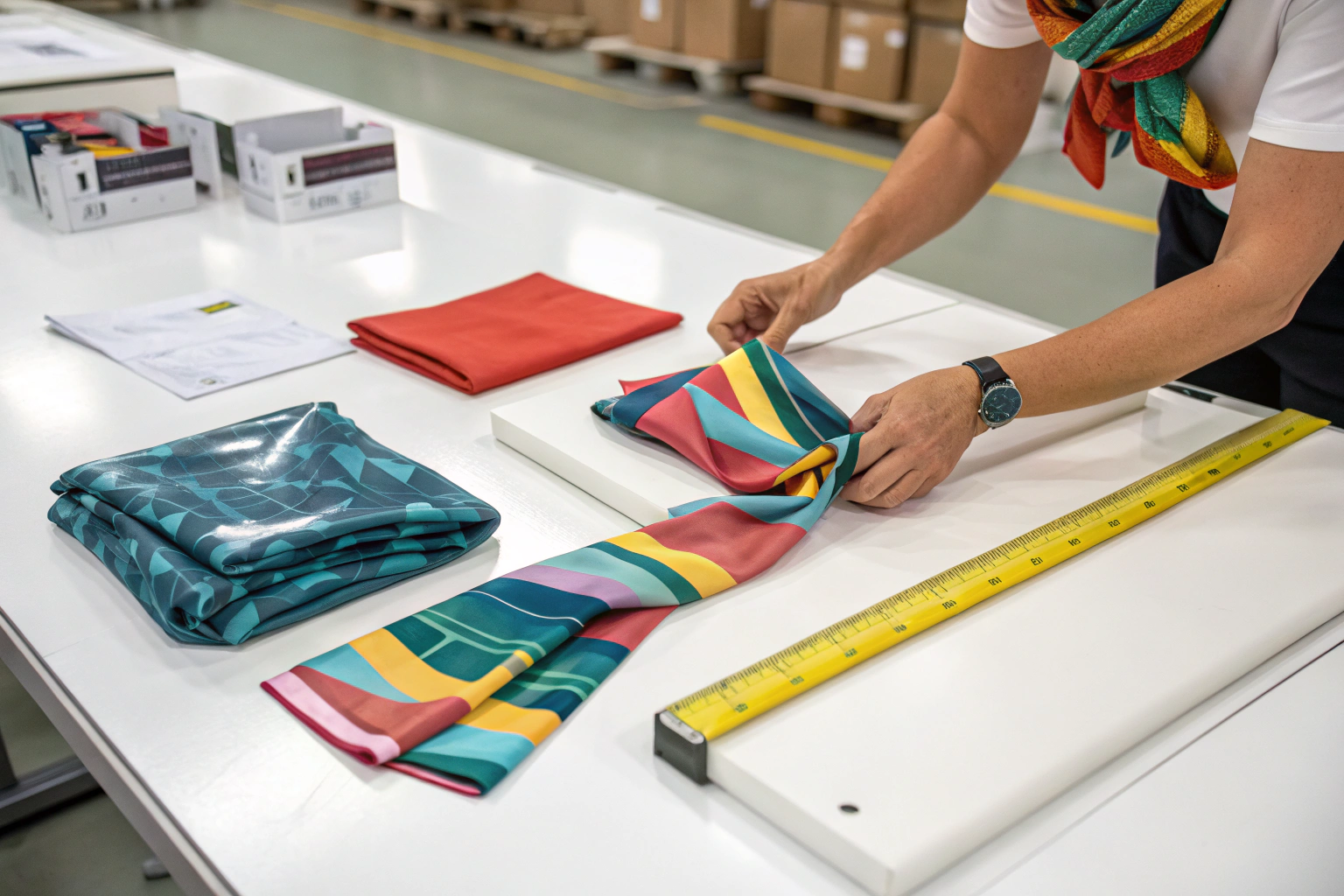
I was walking through our packing department last year when I noticed something that stopped me in my tracks. We were preparing a shipment of 10,000 scarves for a major US retailer. The packing team was doing what they always did: folding each scarf in half, then in half again, and stuffing it into a polybag. The result was a puffy, uneven package. The cartons were only 70% full. We were shipping air. I did the math in my head. That "air" was costing our client thousands of dollars in extra freight. Worse, when those scarves arrived at the retail store, they would take up too much space on the display shelf and look wrinkled and messy. We were not just wasting space. We were damaging the brand’s presentation.
The best folding techniques for scarves to save packaging space are those that prioritize flat, uniform compression while minimizing creasing. The goal is to reduce the volume of the scarf to its absolute minimum without damaging the fabric or creating permanent fold lines. For lightweight scarves, the "Flat Fold and Roll" method is most efficient. For bulkier knits, a "Tri-Fold Compression" technique works best. These methods require a bit more labor at the factory level, but the savings in freight costs and the improvement in retail presentation provide an enormous return on that small investment.
At Shanghai Fumao, we have turned scarf folding into a science. We analyzed different fabrics, different folding patterns, and different packing densities. We found that a few simple, repeatable techniques can reduce carton volume by 20-30%. That is a direct boost to our clients’ profit margins. I want to share these techniques with you.
Why Does Efficient Scarf Folding Impact Total Landed Cost?
When you are sourcing accessories from China, the price per unit is only part of the story. The landed cost—the total cost to get that scarf to your warehouse door—is what matters. And a huge component of landed cost is freight. Ocean freight is calculated by volume (cubic meters or CBM), not just weight. The more space your scarves take up, the more you pay.
Efficient scarf folding directly reduces the volume of each carton, which in turn reduces the total CBM of the shipment. A reduction in CBM translates to a lower freight bill. Furthermore, compact folding allows for more units per carton, reducing the number of cartons handled and the associated per-carton fees. For lightweight items like scarves, where freight can be a significant percentage of the total cost, optimizing fold efficiency is one of the most effective ways to improve margin without negotiating a lower factory price.
How Does Volume Reduction Translate To Freight Savings?
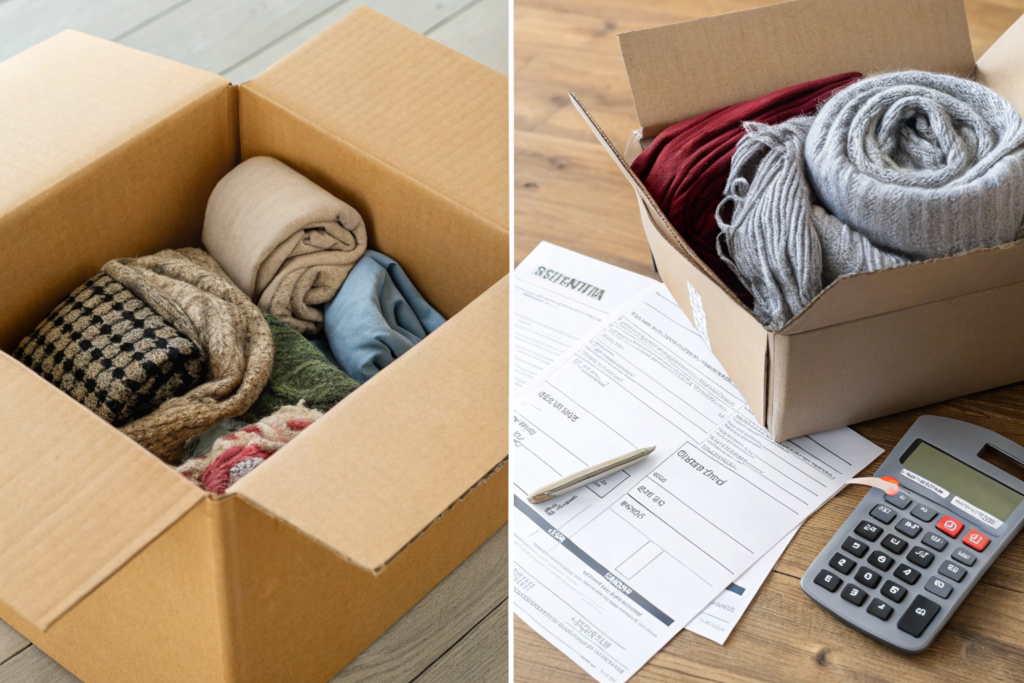
Let us look at a real example from our shipping data. We compared two identical orders of 5,000 standard polyester fashion scarves.
- Old Method (Basic Half-Fold): The 5,000 scarves required 11.5 CBM of container space.
- New Method (Flat Fold & Roll): The 5,000 scarves required 8.2 CBM of container space.
That is a reduction of 3.3 CBM. At an average LCL (Less than Container Load) freight rate of $120 per CBM, that is a savings of nearly $400 on just the ocean freight portion. It does not include the savings on cartons, pallets, or warehouse handling.
For a full container load (FCL), the savings are even more dramatic. If you can fit more units into a 40-foot container, your per-unit freight cost drops significantly. This allows you to be more competitive on price or to enjoy a healthier margin.
This is why we treat the packing floor as a profit center, not just a cost center. Our packing team leaders are trained on these metrics. They know that how they fold a scarf affects the client’s bottom line.
What Is The Relationship Between Folding And Retail Presentation?
The benefits extend beyond the shipping container. The scarf arrives at a distribution center, is unpacked, and is sent to a retail store. A store associate opens the box. What do they see?
If the scarf was poorly folded, it is a wrinkled mess. The associate has to spend time steaming or folding it before it can go on the shelf. In a busy retail environment, that often does not happen. The scarf goes onto the shelf looking sloppy. The customer perceives it as low quality.
If the scarf was folded using our "Shelf-Ready Fold," it comes out of the polybag looking crisp and neat. It can go directly onto a display table or a shelf hook. The folds are intentional and enhance the look of the product.
This reduces labor for the retailer. It improves the brand’s visual merchandising. And it increases the sell-through rate. Retail buyers notice this. They remember which suppliers provide "shelf-ready" packaging. It is a competitive advantage that leads to reorders.
What Is The Flat Fold And Roll Technique For Lightweight Scarves?
This is our go-to technique for lightweight scarves made from materials like polyester chiffon, georgette, viscose, or silk blends. These fabrics are thin and prone to creasing, but they can be compressed into a very small space.
The Flat Fold and Roll technique involves folding the scarf lengthwise multiple times to create a long, narrow strip, and then tightly rolling that strip into a compact cylinder. This method eliminates all trapped air pockets that cause bulk in traditional folding. The rolling action, rather than sharp creasing, minimizes the appearance of fold lines. When unrolled by the end consumer, the scarf retains its soft drape with only minimal, easily steamed waves.
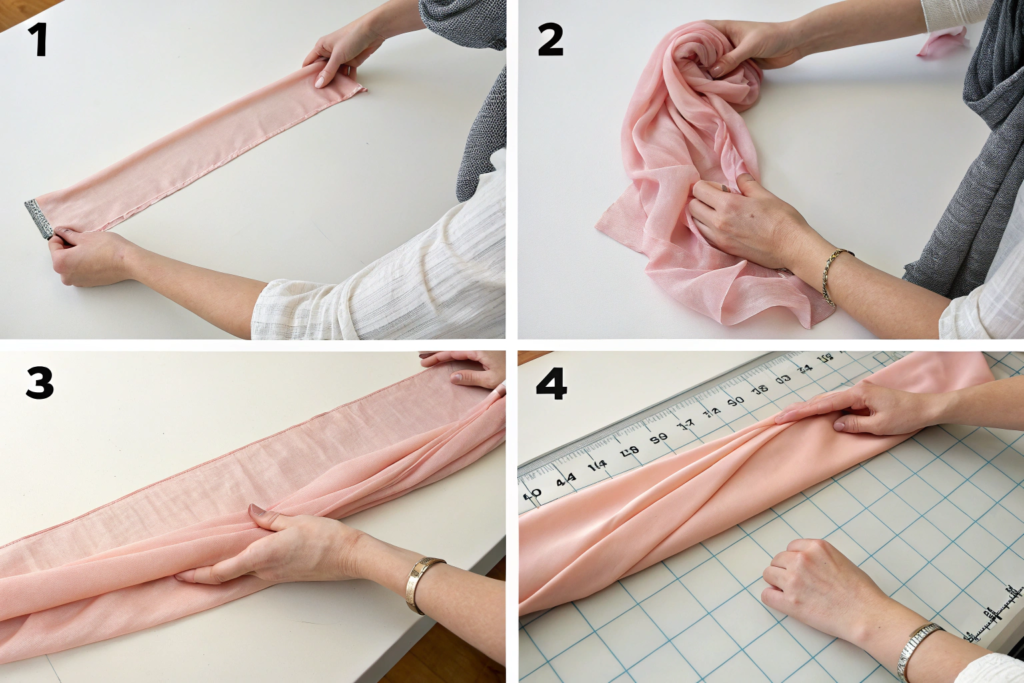
Step-By-Step Guide To The Flat Fold And Roll
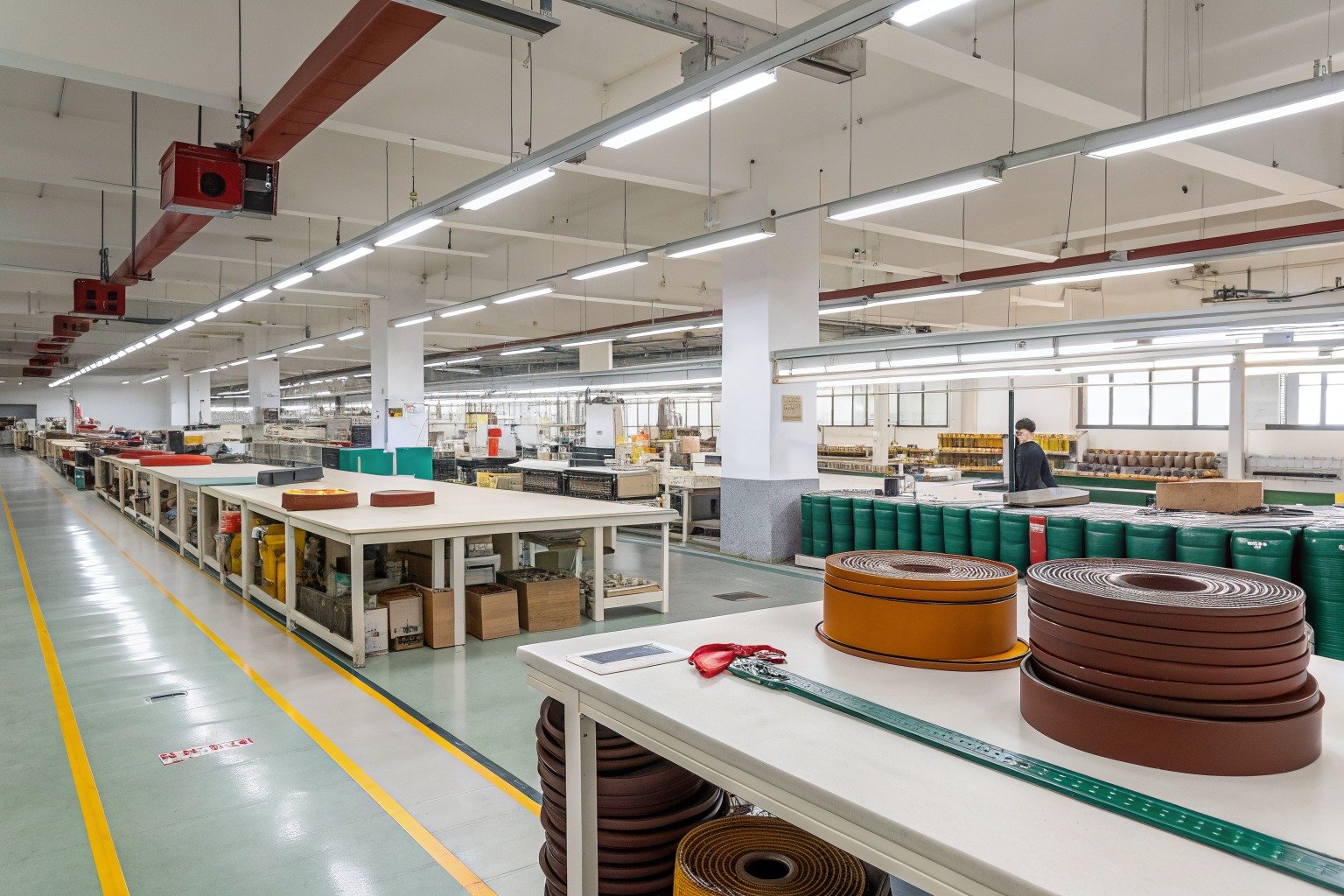
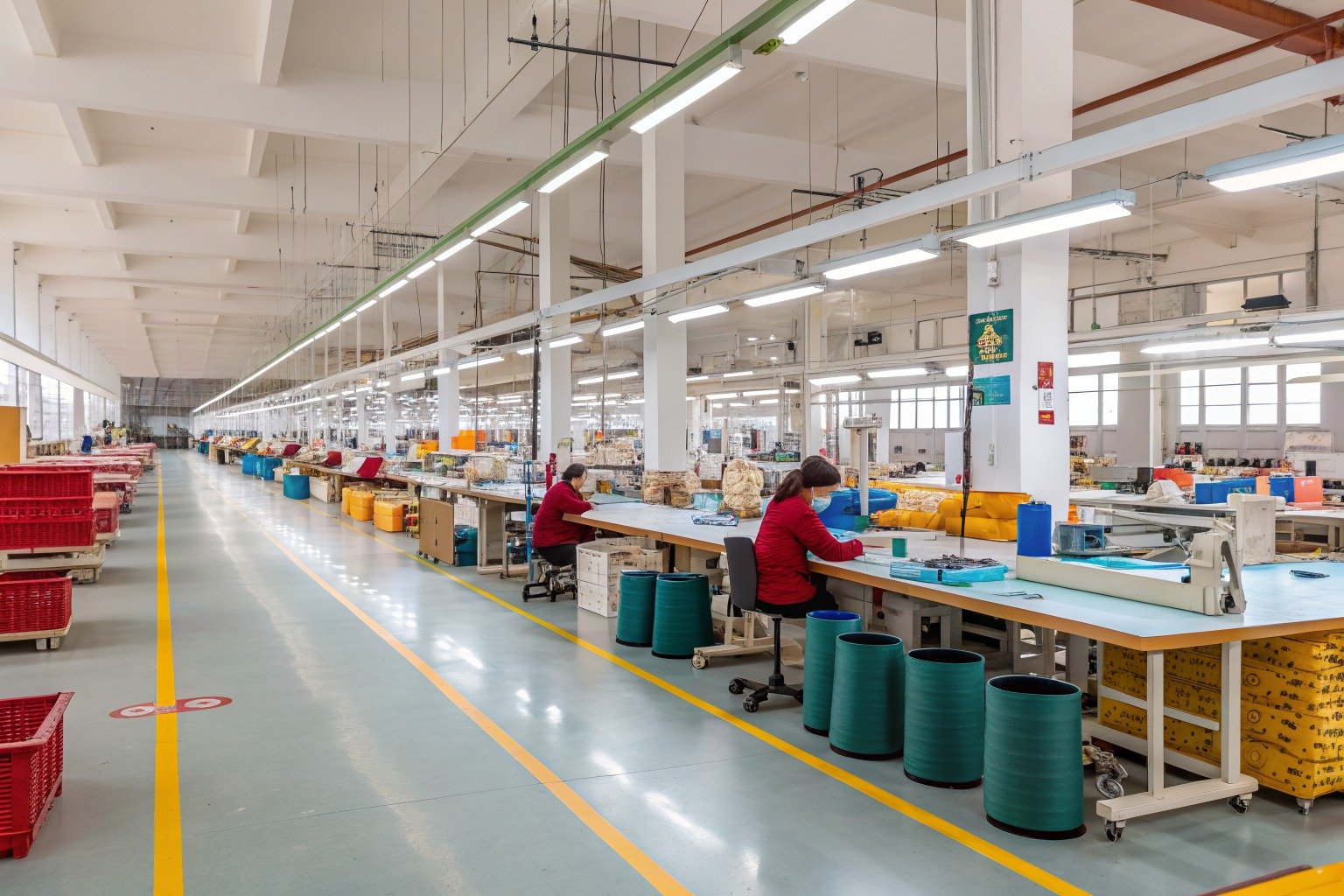
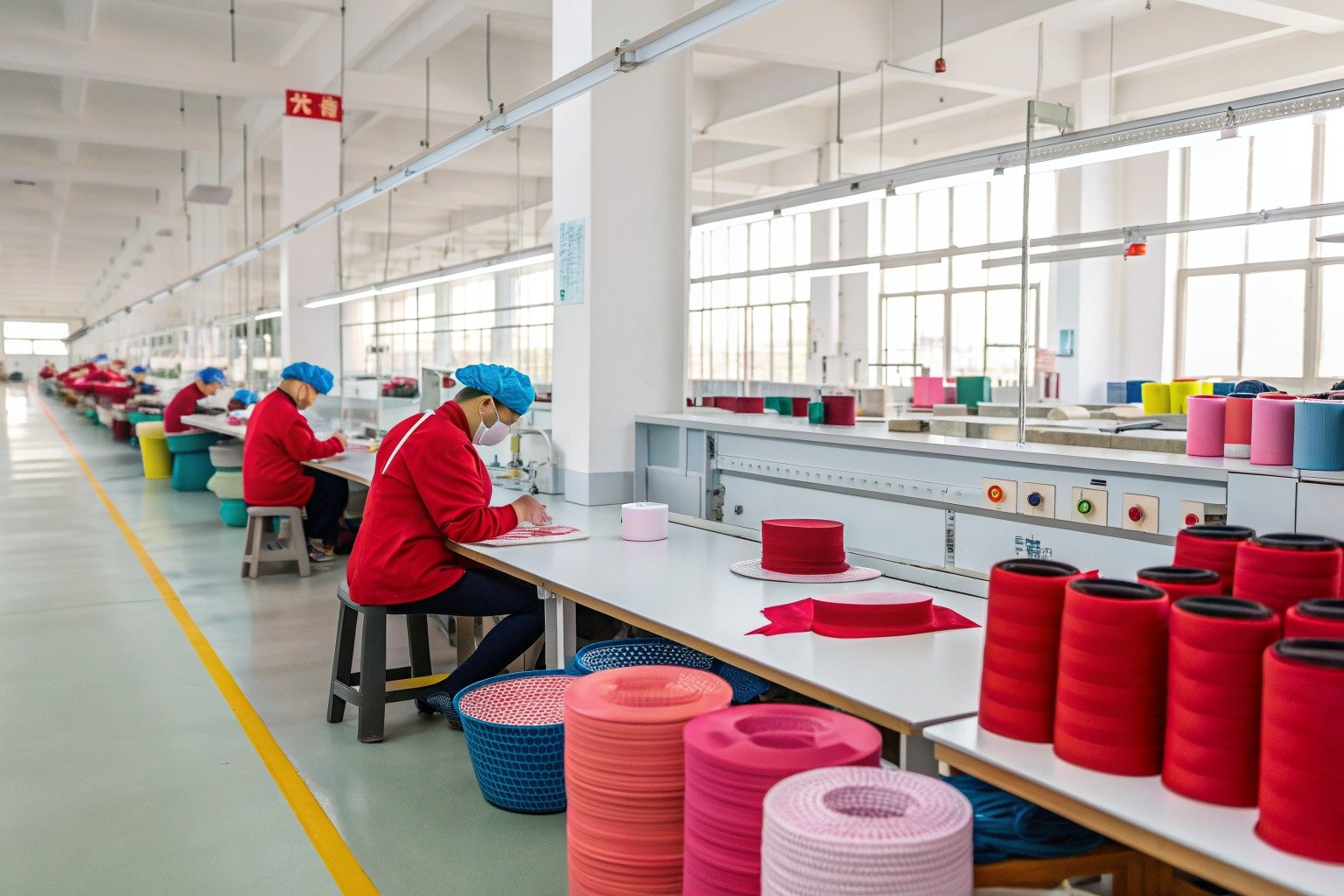
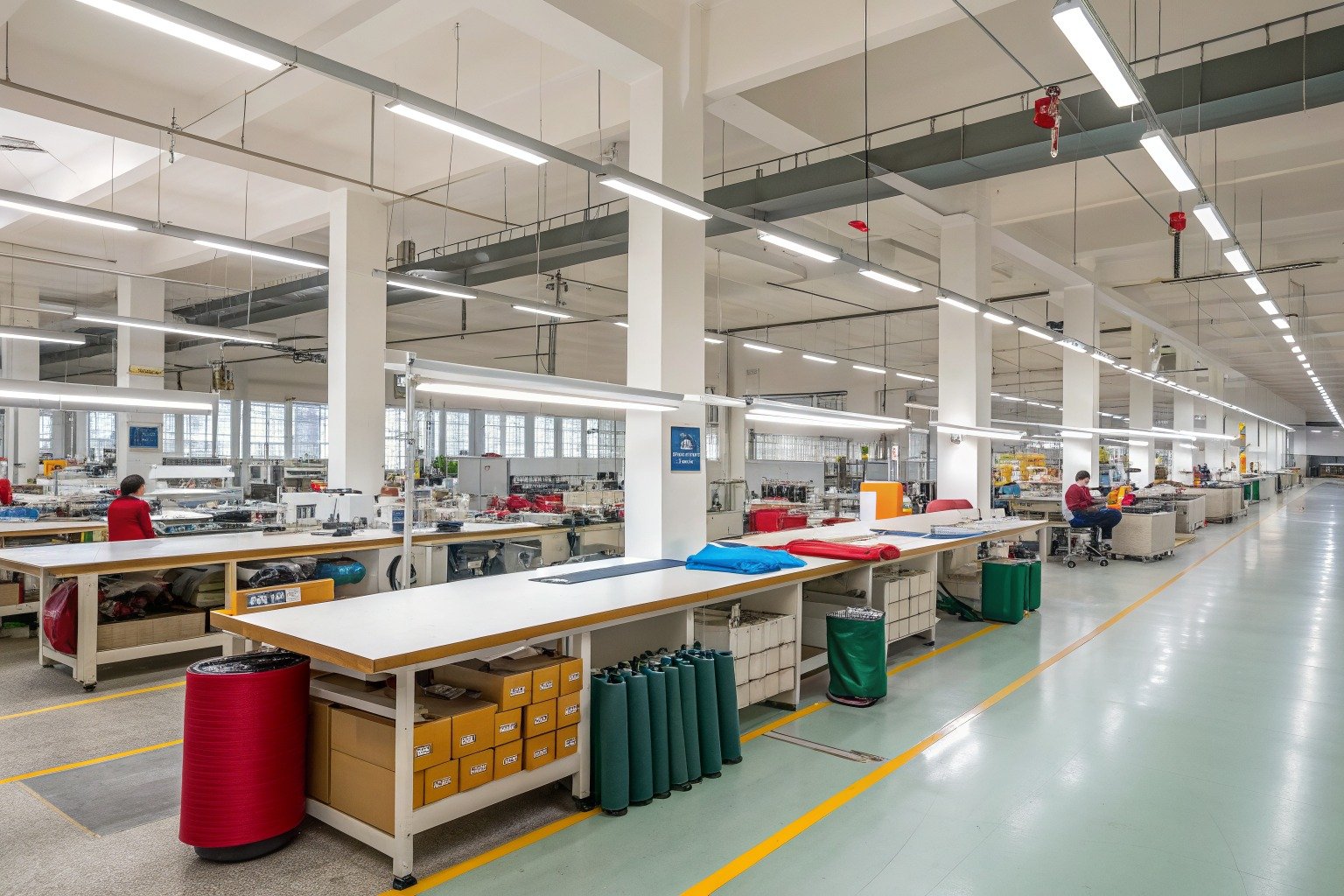
This process requires a flat, clean surface. Our packing team uses large, smooth tables.
- Initial Layout: The scarf is laid completely flat, face down. Any fringe is smoothed out.
- First Lengthwise Fold: Fold one long edge over to meet the center line.
- Second Lengthwise Fold: Fold the other long edge over the first fold, creating a long strip that is one-quarter of the original width. The edges should be aligned neatly.
- Smoothing: The hands run along the length of the strip, pressing out any air and ensuring the layers are flat. This step is crucial. Any trapped air will create bulk in the roll.
- The Roll: Starting at one short end, the strip is rolled tightly and evenly. The hands apply consistent pressure. The roll is kept as compact as possible.
- Securing: The finished roll is secured with a small, clear adhesive sticker or a thin paper band. We avoid rubber bands, which can damage delicate fabrics.
The result is a neat, firm cylinder. This shape is incredibly space-efficient. It can be packed tightly in a carton with very little wasted space. It also creates a satisfying "unboxing" experience for the customer. They unroll the scarf and it is ready to wear.
Which Fabrics Are Best Suited For The Roll Technique?
This technique works best on fabrics with a smooth hand feel and low bulk.
- Excellent Candidates: Polyester Chiffon, Silk Habotai, Viscose Challis, Polyester Georgette.
- Good Candidates: Lightweight Cotton Voile, Modal Blends.
- Not Recommended: Chunky Knits, Heavy Wool, Chenille, Velvet (rolling can crush the pile).
For fabrics that are not suitable for rolling, we use a different technique.
How To Use Tri-Fold Compression For Bulkier Knit Scarves?
You cannot roll a chunky cable-knit scarf. It will look like a football. The material is too thick and springy. It resists compression. For these items, the goal is not to create a tiny cylinder, but to create a flat, uniform rectangle that can be stacked and compressed.
The Tri-Fold Compression technique is ideal for bulky knit scarves, fleece scarves, and blanket scarves. The scarf is folded in thirds lengthwise, creating a neat rectangle. It is then folded in half or thirds crosswise. The key step is the application of firm, even pressure to compress the stack of fabric before it is inserted into the polybag. This compression expels the trapped air between the knit loops and reduces the overall thickness of the package.
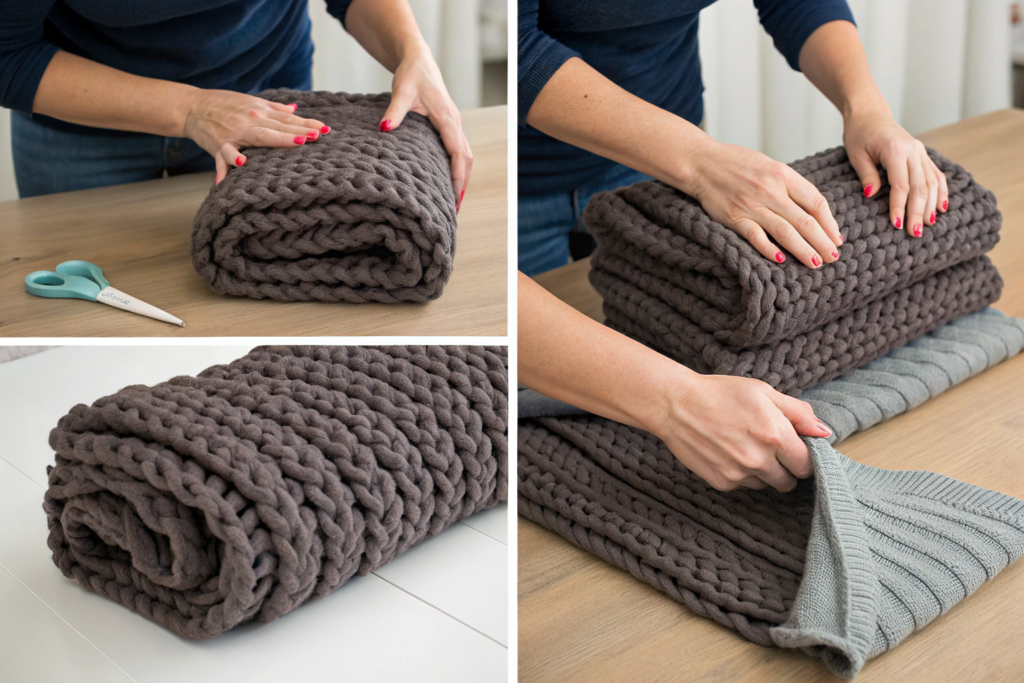
The Process For Achieving Maximum Compression
- Lay Flat: The scarf is laid out flat.
- Tri-Fold Lengthwise: The left third of the scarf is folded over the center. The right third is folded over the left. The scarf is now a long rectangle, one-third of its original width.
- Crosswise Fold: The long rectangle is folded in half, or in thirds, depending on the desired final package size.
- The Compression Press: This is the most important step. The folded scarf is placed on the table. The packer places both palms flat on top of the scarf and applies firm, downward pressure for 5-10 seconds. This forces the air out from between the knitted layers.
- Immediate Bagging: While the scarf is still compressed, it is quickly inserted into a snug-fitting polybag. The polybag holds the compression.
For very high-volume orders, we use a simple manual lever press. This is a flat plate attached to a handle. The packer places the folded scarf under the plate and pulls the lever. This applies consistent, heavy pressure without fatiguing the worker. It increases speed and uniformity.
Why Polybag Size Matters For Compression Techniques
The folding technique is only effective if the packaging supports it. If you use a bag that is too large, the scarf will expand inside the bag during transit. You lose all the benefits of the compression.
We use custom-sized polybags for each scarf style. The bag is designed to be snug but not tight. It acts like a girdle, holding the scarf in its compressed state.
The polybag also serves a protective function. By keeping the scarf compressed, it prevents the fabric from shifting and rubbing against itself during the bumpy ocean voyage. This reduces friction and minimizes pilling and wrinkling.
We work with our clients to determine the optimal bag dimensions. We test different sizes. We drop a test carton to simulate shipping vibration. We open it and inspect the scarf. If it has expanded or wrinkled, we adjust the bag size or the fold technique. This is the level of detail that prevents customer complaints.
What Folding Patterns Minimize Wrinkling And Creasing?
Space saving is important, but not at the expense of the product’s appearance. A scarf that arrives with deep, sharp creases looks cheap. The customer has to iron or steam it before wearing. That is a negative brand experience.
Minimizing wrinkling and creasing during space-saving folds requires two strategies: using rounded folds instead of sharp creases, and inserting a cushioning layer of tissue paper. Sharp creases occur when the fabric is pinched flat along a fold line. By introducing a slight curve or "soft fold," the fibers are bent rather than crushed. Acid-free tissue paper placed inside the folds acts as a buffer, preventing the fabric layers from pressing directly against each other and creating friction wrinkles during transit.
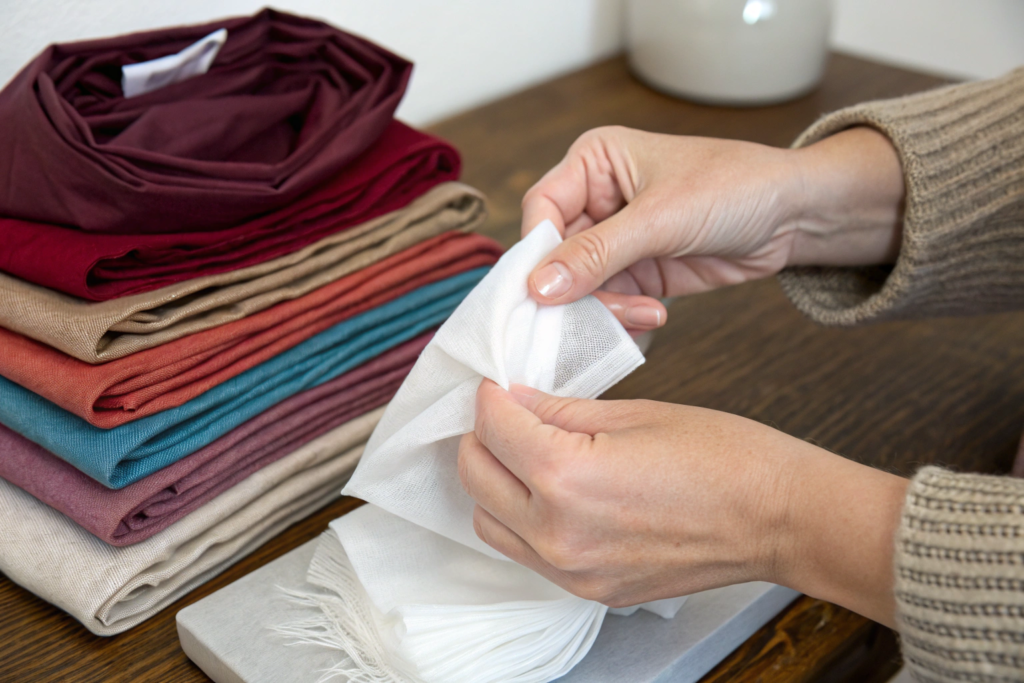
The "Soft Fold" Technique For Delicate Fabrics
This is a modification of the Flat Fold. Instead of creating a sharp, knifed edge with the fold, the packer uses their fingers to create a rounded, rolled edge.
- Traditional Sharp Fold: The fabric is creased flat with a fingernail or tool. The fibers are broken along that line.
- Soft Fold: The fabric is folded over, but a small air pocket is left in the fold. The edge is gently shaped by hand.
This technique is used for premium scarves made of silk, modal, or high-end viscose. It takes an extra few seconds per scarf. But it results in a product that can be taken out of the bag and worn immediately with minimal touch-up.
We combine the Soft Fold with Acid-Free Tissue Paper. We place a single sheet of tissue inside the first fold. This acts as a cushion. It prevents the fabric from rubbing against itself and creating those fine "transit wrinkles."
For rolled scarves, we sometimes use a Tissue Core. The scarf is rolled around a small, soft tube of tissue paper. This prevents the roll from collapsing into a hard, creased mass.
How To Fold Scarves With Fringe Or Tassels?
Fringe is a challenge. It tangles. It gets caught in the fold and creates a bulky, messy lump.
Our technique for fringed scarves:
- Isolate the Fringe: The scarf is laid flat. The fringe is combed straight with a wide-tooth comb or fingers.
- Fold and Protect: The scarf body is folded using the Soft Fold technique. A piece of tissue paper is placed over the folded body.
- Fold Fringe Over Tissue: The fringe is then folded back over the tissue paper. The tissue creates a smooth, slippery barrier. The fringe does not tangle with the scarf body.
- Secure: The package is secured with a paper band that goes around the body of the scarf, not the fringe. The fringe is left free inside the bag to prevent creasing.
This process ensures that when the customer removes the scarf, the fringe falls straight and untangled. It looks like it was just pressed. This attention to detail is what justifies a premium price point.
Conclusion
The way a scarf is folded is not a minor detail. It is a strategic decision that impacts freight costs, warehouse efficiency, retail presentation, and customer satisfaction. It is the final step in the manufacturing process, and it is the first thing the end consumer sees.
By implementing the Flat Fold and Roll technique for lightweight scarves, and the Tri-Fold Compression method for bulkier knits, we have helped our clients save thousands of dollars in shipping costs and significantly improve the unboxing experience for their customers. These techniques require training and discipline on the factory floor, but the return on that investment is immediate and measurable.
At Shanghai Fumao, we do not treat packing as an afterthought. Our team is trained to understand the "why" behind the fold. We know that every inch of carton space saved is money in our client’s pocket. We know that a beautifully presented scarf leads to repeat business.
If you are looking for a manufacturing partner who pays attention to the details from the first stitch to the final fold, we invite you to connect with us. We can help you optimize your packaging and presentation to reduce costs and elevate your brand. For a consultation on custom folding and packing solutions for your scarf collection, please contact our Business Director Elaine directly at elaine@fumaoclothing.com. Let us fold your way to better margins and happier customers.