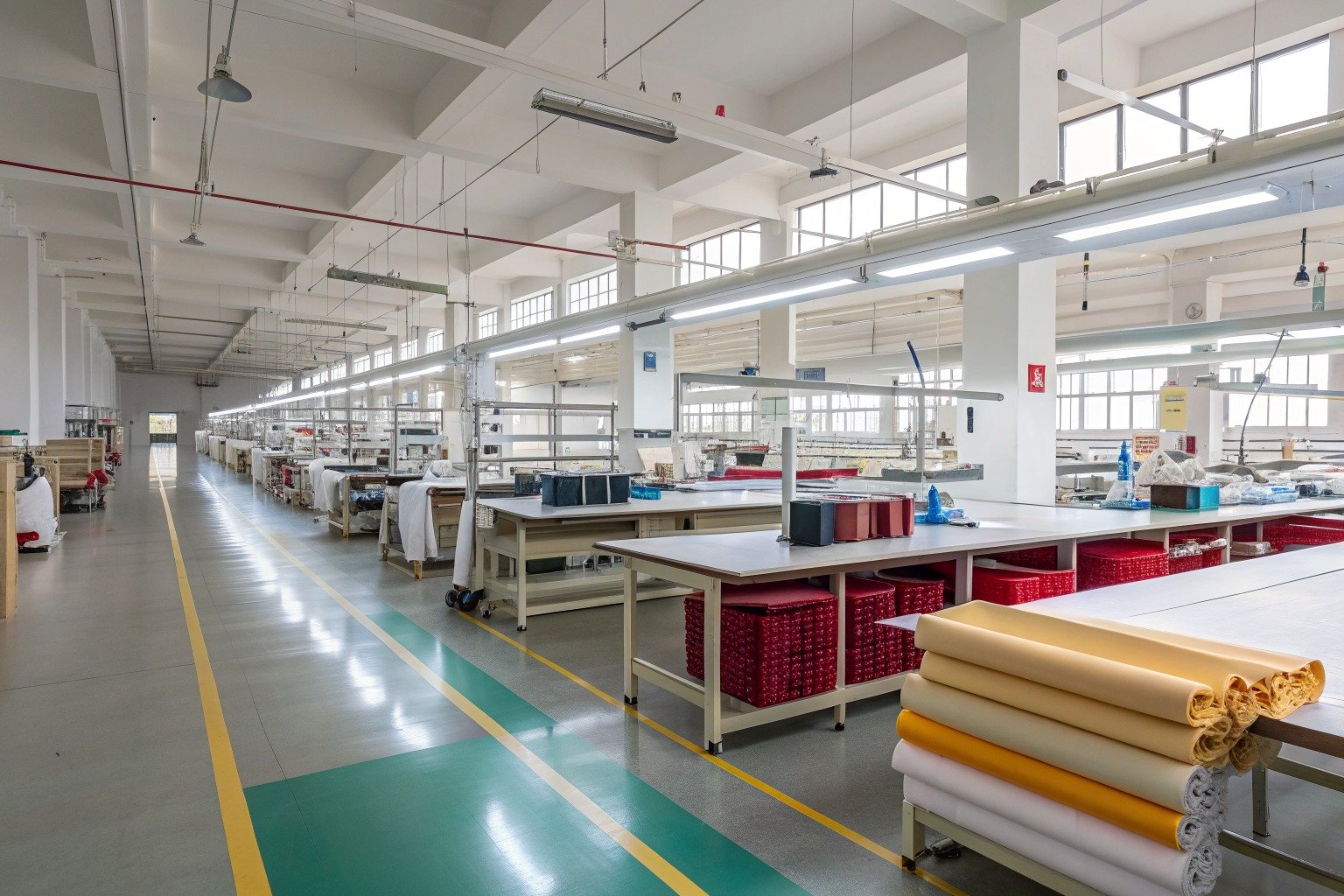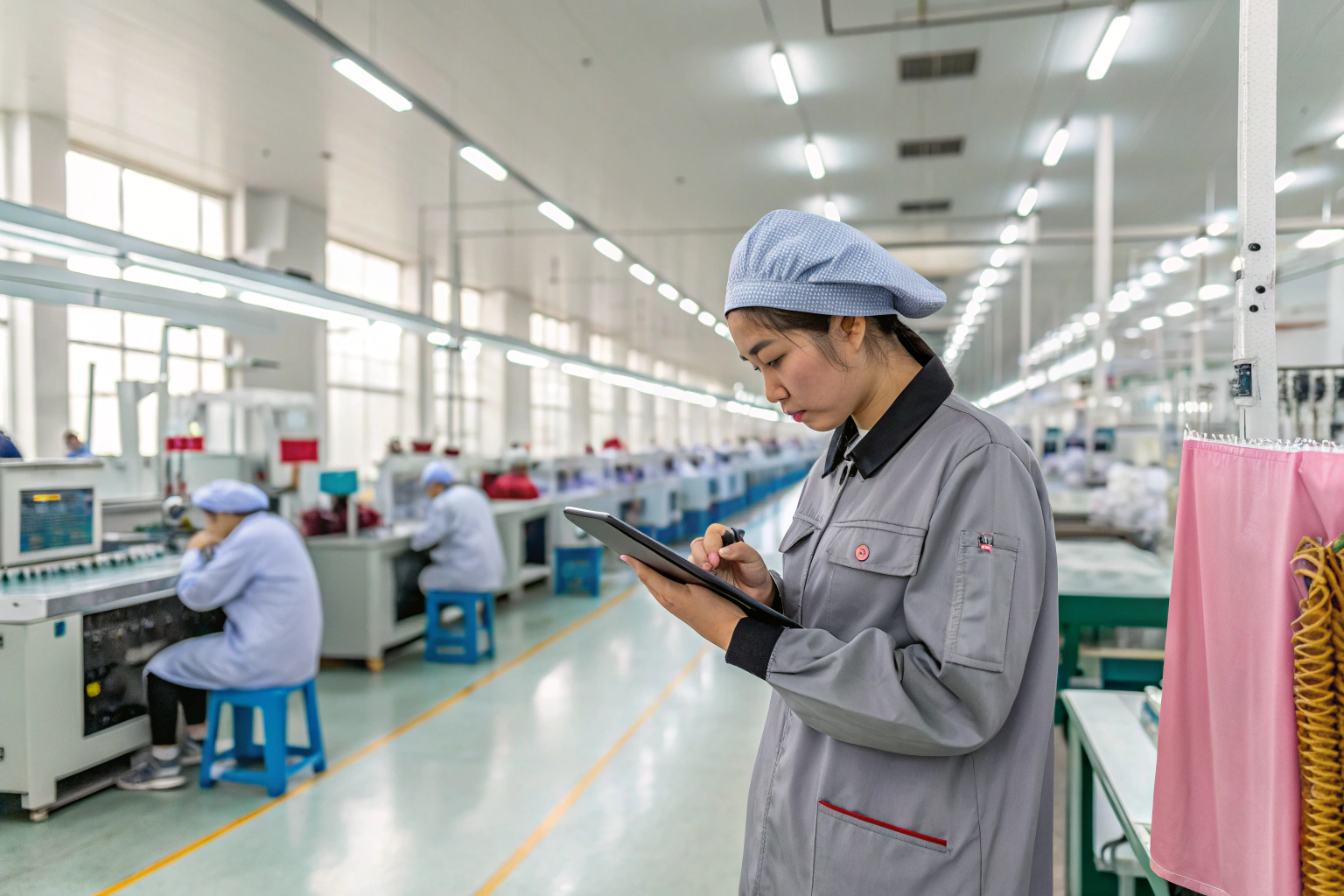
I have been in the fashion accessory manufacturing business for over twenty years, and I have watched Chinese factories transform dramatically. When I started, many factories were small workshops with inconsistent quality. Today, the best factories in China rival anything in the world for quality, consistency, and efficiency. For a buyer like Ron, who needs to trust that every order will meet the same high standards, understanding how a modern factory ensures consistent quality is essential. It is not luck. It is a system.
A modern Chinese factory ensures consistent fashion accessory quality through a combination of systems: a documented Quality Management System (QMS) like ISO 9001, rigorous incoming material inspection, in-process quality control at every production stage, pre-shipment final inspection, traceability systems to track products back to their components, and continuous improvement programs. These systems are supported by skilled workers, modern equipment, and a culture of quality.
At Shanghai Fumao Clothing, we have built our reputation on consistent quality. We have invested in systems, training, and equipment to ensure that every hair band, every clip, every hat, and every scarf meets the same standards. I want to walk you through how we do it, so you can understand what to look for in a quality-focused manufacturing partner.
What Quality Management Systems Do Modern Factories Use?
The foundation of consistent quality is a documented Quality Management System (QMS). A QMS is not just a collection of procedures; it is a way of running the factory that puts quality at the center of every decision. The most recognized QMS standard is ISO 9001, which provides a framework for consistent quality.
ISO 9001 certification requires a factory to document its processes, from material receiving to final shipment. It requires the factory to have a quality policy, defined roles and responsibilities, and a system for tracking and correcting non-conformities. It requires regular internal audits and management reviews. Most importantly, it requires a commitment to continuous improvement. A factory with ISO 9001 certification has proven that it has the systems in place to produce consistent quality.
Beyond ISO 9001, many factories implement additional systems tailored to their specific products. For accessories, this might include systems for tracking supplier quality, managing production equipment calibration, and controlling the production environment. For products with safety requirements, like children’s accessories, the QMS may include specific procedures for material testing and traceability. At Shanghai Fumao Clothing, our QMS is the backbone of our operation. Every employee knows their role in maintaining quality. Every process is documented. Every issue is tracked and addressed.
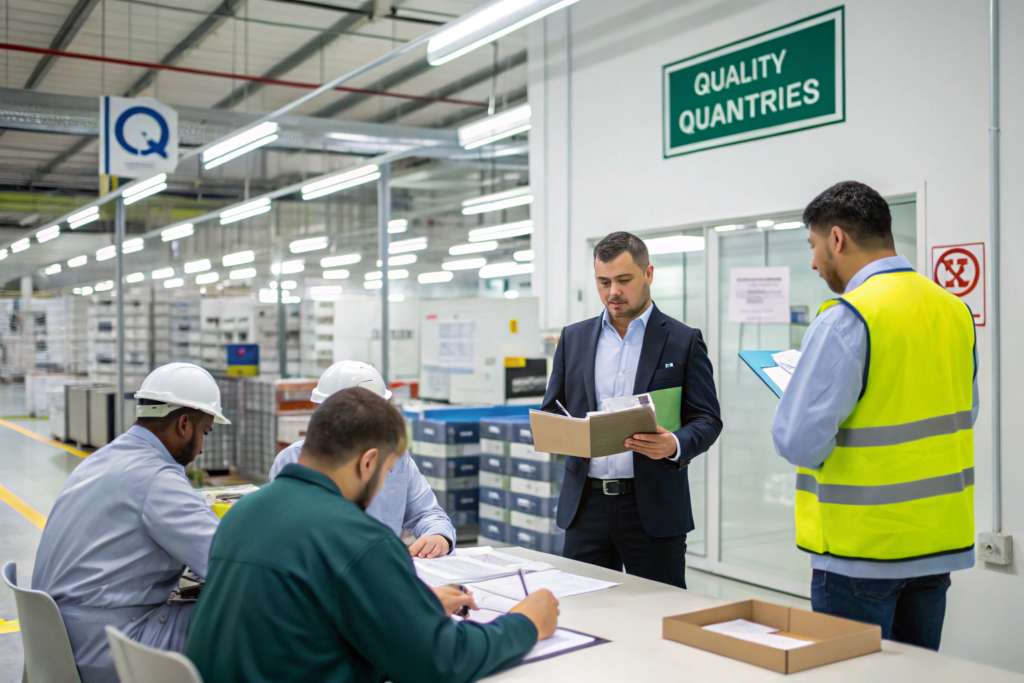
How does ISO 9001 certification translate to better accessories?
ISO 9001 certification translates to better accessories because it creates discipline. When a factory has ISO 9001 certification, it means they have committed to a set of documented processes. For a hair band, this means the material specifications are documented. The cutting process has a defined procedure. The stitching tension is specified. The inspection criteria are clear. When a new order comes in, the factory follows the same documented process. This consistency means that the 1,000th hair band is made the same way as the first. ISO 9001 also requires the factory to track non-conformities. If a batch of fabric is defective, the factory records it, investigates the root cause, and takes corrective action. This prevents the same problem from happening again. For you as a buyer, ISO 9001 certification gives you confidence that the factory has systems in place to deliver consistent quality. It does not guarantee perfection, but it does indicate that the factory takes quality seriously and has the infrastructure to manage it. At Shanghai Fumao Clothing, we are ISO 9001 certified and we live by its principles.
What other quality certifications should I look for?
Depending on your product and market, other certifications may be relevant. For products sold in the US, CPSIA compliance is essential for children’s accessories. A factory that produces children’s products should be able to provide Children’s Product Certificates (CPC) and test reports from CPSC-accepted labs. For the European market, look for factories that understand EN71 toy safety standards and can provide test reports from notified bodies. For social compliance, BSCI (Business Social Compliance Initiative) or Sedex certification indicates that the factory meets standards for working conditions and ethical practices. Many major retailers require these certifications. For environmental responsibility, look for factories with ISO 14001 (environmental management) or factories that use materials certified by GOTS (Global Organic Textile Standard), GRS (Global Recycled Standard), or Oeko-Tex Standard 100. For quality management, ISO 9001 is the most recognized, but some factories also hold industry-specific certifications. At Shanghai Fumao Clothing, we hold ISO 9001, BSCI, and Oeko-Tex certifications, and we maintain CPSIA and EN71 testing capabilities for our children’s product clients.
How Does Incoming Material Inspection Ensure Quality?
Quality starts with materials. No amount of careful production can fix a defective raw material. A modern factory knows this and invests in incoming material inspection. Before any material goes into production, it is inspected against specifications. This catches problems early, before they affect your order.
For fabric accessories like scarves, headbands, and hats, incoming inspection checks color consistency, weave, weight, and any defects like holes or stains. The inspector uses standardized lighting to ensure color matches the approved sample. They measure the fabric weight against specifications. They check the width to ensure it is consistent. For materials like leather or faux leather for belts, they check for surface defects, thickness consistency, and color uniformity. For metal components like clips or buckles, they check for sharp edges, plating quality, and spring tension.
For embellishments like pearls, beads, or appliqués, they check for consistent size, color, and adhesion. For packaging materials, they check for correct printing, dimensions, and strength. At Shanghai Fumao Clothing, we inspect every batch of incoming materials. If a material does not meet our standards, we reject it and work with the supplier to replace it. This upfront investment in quality saves time and money downstream.
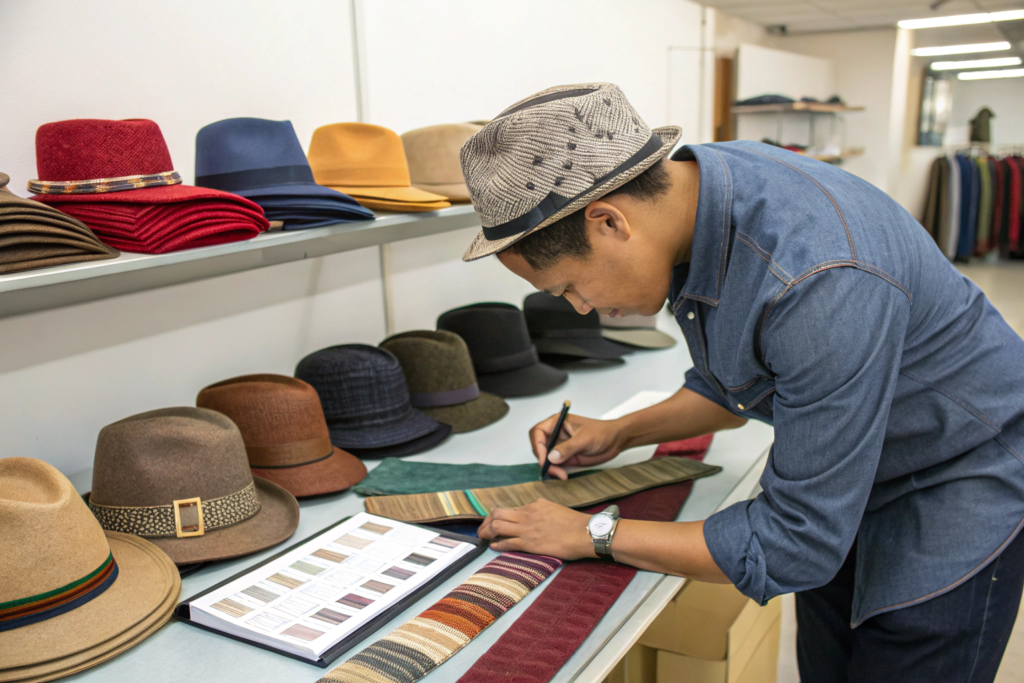
What testing is done on raw materials before production?
Raw material testing goes beyond visual inspection. For materials that will contact the skin, like sweatbands or fabric for headbands, we test for harmful substances. Using an XRF analyzer, we screen for lead and other heavy metals. For fabrics, we may test for azo dyes, formaldehyde, and other restricted chemicals. For metal components, we test for nickel release, which can cause allergic reactions. For materials that will be used in children’s products, we conduct full third-party testing to CPSIA or EN71 standards. For fabrics, we also test for colorfastness. Will the color run when the product gets wet? Will it fade in sunlight? We run wash tests and lightfastness tests to ensure the material will perform in real-world conditions. For elastic components, we test for stretch and recovery. Will the hair band hold its shape after repeated use? We simulate wear to ensure durability. These tests are documented and retained as part of our quality records. For you as a buyer, you can request these test reports to verify that your materials meet your specifications.
How do factories ensure material traceability?
Material traceability is essential for quality control and for recalls if a safety issue is discovered. A modern factory maintains records that link finished products to the batches of materials used. When we receive materials, each batch is assigned a unique lot number. The lot number is recorded in our inventory system. When production begins, the lot number is attached to the work order. As the product moves through cutting, assembly, and finishing, the lot number follows it. When the finished product is packed, the lot number is recorded on the packing list. In the event of a quality issue, we can trace the problem back to the specific batch of material. This allows us to isolate affected products and take corrective action without disrupting the entire order. For children’s products, traceability is required by law. The CPSIA requires tracking labels that allow consumers and regulators to trace the product back to the manufacturer, date of production, and batch. At Shanghai Fumao Clothing, we maintain full traceability for all products, not just those required by law. It is part of our commitment to quality.
What In-Process Quality Control Measures Are Used?
In-process quality control is where consistent quality is built. Instead of waiting until the end to check quality, modern factories inspect at every stage of production. This allows them to catch and correct issues immediately, before they affect hundreds or thousands of products.
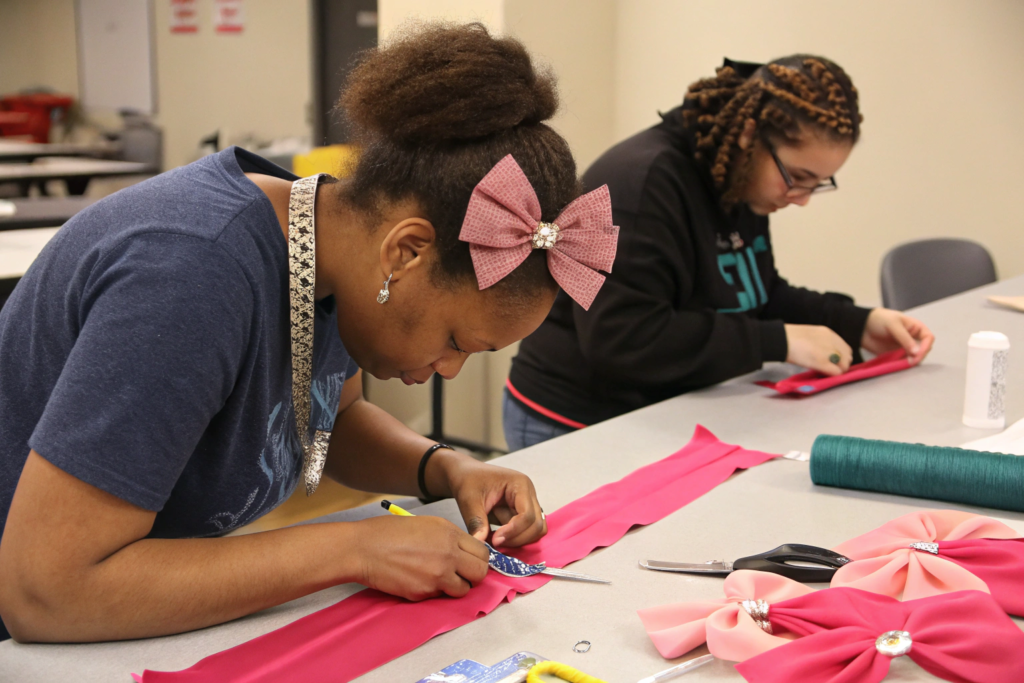
For hair bands, in-process inspection starts with cutting. Are the fabric pieces cut to the correct size? Are there any frayed edges? Next, during assembly, inspectors check the stitching. Is the tension correct? Is the thread color matched? Is the band straight? For elastic bands, they check the stretch. For bands with bows or embellishments, they check the attachment. Is the bow centered? Is the glue applied correctly? For hair clips, in-process inspection checks the spring mechanism. Does it open and close smoothly? Is there any sharp edge? For embellished clips, they check that each pearl or rhinestone is securely attached.
For hats, in-process inspection checks the shaping. Is the crown the correct height? Is the brim the correct width? Is the shape symmetrical? For straw hats, they check the weave for gaps or loose threads. At Shanghai Fumao Clothing, we have dedicated quality inspectors at each stage of production. They are empowered to stop the line if they find a quality issue. This real-time intervention prevents defects from reaching the next stage.
How do factories monitor critical control points?
Critical control points are the stages in production where quality is most at risk. A modern factory identifies these points and implements specific controls. For a hair band with a bow, the attachment point is a critical control point. If the bow is not securely attached, it will fall off. The control might be a specific adhesive with a documented application process, followed by a pull test on a sample from each batch. For a baseball cap, the embroidery is a critical control point. The control is the digitization file, the thread tension, and the hoop alignment. The inspector checks the first cap off the line against the approved sample. For a straw hat, the shaping is a critical control point. The control is the temperature and duration of the steam, and the shape of the hat block. The inspector checks the shape against a template. For each critical control point, the factory documents the control and records the inspection results. This documentation provides evidence that the quality system is working. At Shanghai Fumao Clothing, we map out critical control points for every product type and train our inspectors to monitor them.
What role does worker training play in quality consistency?
Worker training is the human element of quality consistency. Even the best systems fail if the workers do not understand them. A modern factory invests heavily in training. New workers go through a training program that covers safety, quality standards, and production techniques. They work under experienced supervisors until they can demonstrate competence. Ongoing training keeps workers updated on new products, new materials, and new quality requirements. At Shanghai Fumao Clothing, we have a dedicated training department. Our trainers are experienced production workers who have been promoted because of their skill and attention to quality. They work with new hires until they can produce at the same standard as our most experienced workers. We also cross-train workers so they can fill multiple roles. This flexibility allows us to maintain quality even when there are absences or when we need to scale up quickly. For complex products like lace gloves or embroidered hats, we assign only our most experienced workers. Their skill and judgment are irreplaceable. We know that consistent quality requires consistent, skilled people.
How Is Final Inspection Conducted Before Shipment?
Final inspection is the last line of defense. Before any product leaves our factory, it undergoes a final inspection. This inspection verifies that the product meets all specifications and that no defects were introduced in the final stages of production. The inspection is conducted on a statistically significant sample of the finished order.
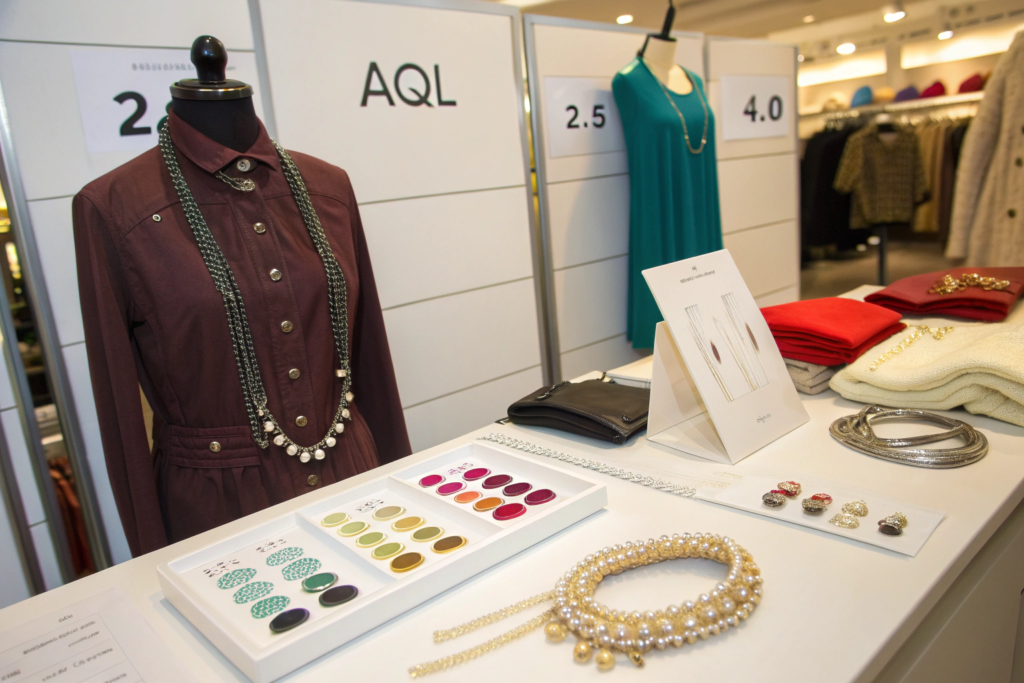
The most common standard for final inspection is AQL (Acceptable Quality Limit). AQL is a statistical sampling method that determines how many defects are acceptable in a given batch. For fashion accessories, a common AQL standard is 2.5 for major defects and 4.0 for minor defects. Major defects are those that affect the product’s function or safety, such as a loose embellishment that could detach, a broken spring, or a sharp edge. Minor defects are those that affect appearance, such as a small stain, a loose thread, or slightly off-color.
The inspector randomly selects a sample from the finished batch. The sample size is determined by the batch size and the AQL standard. Each sample is inspected against a checklist. The checklist includes all specifications: dimensions, color, materials, construction, packaging, and labeling. If the number of defects exceeds the AQL limit, the entire batch is rejected. It is then sorted to remove defective products, or reworked to fix defects, and re-inspected.
What is AQL and how does it apply to accessories?
AQL, or Acceptable Quality Limit, is an industry-standard method for determining whether a batch of products meets quality requirements. It is based on statistical sampling. The principle is that it is not practical to inspect every single product in a large batch. Instead, you inspect a random sample and use the results to predict the quality of the entire batch. The AQL standard defines the maximum number of defective units that is considered acceptable. For fashion accessories, the typical AQL levels are 2.5 for major defects and 4.0 for minor defects. Major defects are those that affect safety or function. For a hair clip, a major defect would be a broken spring or a sharp edge. Minor defects are those that affect appearance but not function. For a hair clip, a minor defect would be a small scratch or a slightly misaligned pearl. For a hat, a major defect would be a cracked brim or a detached sweatband. A minor defect would be a small stain on the inside of the lining. When we inspect a batch, we count the number of major and minor defects. If the count is below the AQL limit, the batch passes. If it exceeds the limit, the batch is rejected and we take corrective action. At Shanghai Fumao Clothing, we follow AQL standards for all orders and provide inspection reports to our clients.
How do factories handle defective products?
A modern factory has a clear process for handling defective products. When a defect is found, whether during in-process inspection or final inspection, the product is marked and set aside. The defect is recorded in the quality management system. The first step is to determine whether the product can be reworked. A hair clip with a loose pearl can have the pearl re-glued. A hat with a small stain might be cleaned. A belt with a misaligned buckle might have the buckle reattached. Reworked products are re-inspected to ensure they meet standards. If the product cannot be reworked, it is scrapped. Scrapped products are recorded and the materials are disposed of. The factory then investigates the root cause of the defect. Was it a material problem? A machine problem? A worker error? Once the root cause is identified, the factory takes corrective action. This might mean rejecting a batch of material, recalibrating a machine, or retraining a worker. The goal is to prevent the same defect from recurring. At Shanghai Fumao Clothing, we track defect rates by product, by material, and by production line. This data drives our continuous improvement efforts.
How Does Continuous Improvement Drive Quality?
Consistent quality is not static. It requires constant improvement. A modern factory has a culture of continuous improvement, where every employee is empowered to identify and solve problems. This is often formalized through programs like Kaizen or PDCA (Plan-Do-Check-Act).
The foundation of continuous improvement is data. We track quality metrics for every order: defect rates, inspection results, customer feedback. We analyze this data to identify trends. If we see that a certain type of defect is recurring, we investigate. We gather a team that includes production workers, quality inspectors, and supervisors. We map the process and identify the root cause. Then we develop a solution. The solution is tested on a small scale. If it works, it is implemented across production. The results are tracked to ensure the solution was effective. This cycle repeats continuously.
Continuous improvement also comes from our clients. When you provide feedback, we take it seriously. If you suggest a change that would improve quality, we incorporate it into our process. If you have a quality issue, we investigate and correct it. Every quality issue is an opportunity to improve.

How do factories use data to improve quality?
Data is the fuel for continuous improvement. A modern factory collects data at every stage: material inspection results, in-process inspection results, final inspection results, defect rates, rework rates, customer returns, and customer feedback. This data is entered into a quality management system where it can be analyzed. We look for patterns. Is there a material that consistently causes problems? Perhaps we need to change suppliers. Is there a production line with higher defect rates? Perhaps we need to retrain the workers or adjust the equipment. Is there a product that consistently has the same defect? Perhaps we need to redesign the product or change the process. We use control charts to monitor quality over time. If a defect rate starts to creep up, we investigate before it becomes a problem. This proactive approach prevents quality issues from reaching you. At Shanghai Fumao Clothing, we review quality data weekly with our production and quality teams. We set targets for improvement and track our progress. We share relevant quality data with our clients so they have visibility into our performance.
What role does customer feedback play in quality systems?
Customer feedback is the most important input to our quality system. You know your market better than we do. When you tell us that a product is not meeting your expectations, we listen. Customer feedback can take many forms: formal inspection reports from third-party inspectors, customer returns, comments from your sales team, or feedback from your end consumers. We treat all feedback seriously. When we receive feedback, we enter it into our quality system. We investigate the root cause. Was it a one-time issue or a systemic problem? We take corrective action. If the feedback reveals a pattern, we adjust our processes. Customer feedback also helps us improve our specifications. Sometimes, we think a product meets the specification, but the specification itself may not be what the market wants. Your feedback helps us refine our specifications to better meet your needs. At Shanghai Fumao Clothing, we view our clients as partners in quality. Your success is our success. We welcome feedback and use it to become better.
Conclusion
A modern Chinese factory ensures consistent fashion accessory quality through a comprehensive system. It starts with a documented Quality Management System like ISO 9001. It includes rigorous incoming material inspection, with testing for safety and performance. It includes in-process quality control at every stage, with inspectors monitoring critical control points. It includes final inspection using AQL sampling to verify quality before shipment. It includes traceability systems to link finished products back to their materials. And it includes continuous improvement programs driven by data and customer feedback.
At Shanghai Fumao Clothing, we have built our factory around these principles. We are ISO 9001 certified. We test every batch of incoming materials. We have quality inspectors at every production stage. We use AQL for final inspection. We maintain full traceability. And we are committed to continuous improvement. We know that consistent quality is not a one-time achievement. It is a daily discipline.
If you are looking for a manufacturing partner who takes quality seriously, let’s talk. Please contact our Business Director, Elaine, directly at elaine@fumaoclothing.com to discuss your project and how we can deliver consistent quality for your accessories.