I have been in the fashion accessory business for over twenty years, and I have learned that seasonal items like winter gloves and scarves are both an opportunity and a challenge. When demand forecasts are accurate, you sell out and maximize margins. When they are wrong, you are left with excess inventory that eats into profits, or worse, stockouts that disappoint customers and retailers. For a buyer like Ron, who supplies major retailers and online stores, getting the forecast right is essential to business success.
Forecasting demand for seasonal items like winter gloves and scarves requires a combination of historical sales data analysis, trend monitoring, weather pattern analysis, and retailer input. The key is to start early, use multiple data sources, build in flexibility, and plan for both the upside and downside. Successful forecasters use a "base case, best case, worst case" approach and place initial orders conservatively, with built-in reorder capability.
At Shanghai Fumao Clothing, we help our clients navigate seasonal forecasting every year. We see the patterns, the successes, and the mistakes. We have learned that the best forecasts come from a disciplined process that combines data with judgment. I want to share what we have learned so you can improve your demand forecasting for seasonal accessories.
What Historical Data Should I Analyze for Seasonal Forecasting?
Historical sales data is the foundation of any demand forecast. It tells you what happened in previous seasons, which provides a baseline for what might happen in the coming season. But raw numbers are not enough. You need to analyze the data in context to understand the factors that drove past performance.
The first step is to gather sales data for the same product category for at least the past three years. Look at total units sold, by week or by month. Identify the peak selling periods. For winter gloves and scarves, the peak typically begins in October and runs through December, with a possible second peak during January clearance events. Next, calculate year-over-year growth rates. Is the category growing, stable, or declining? This trend will inform your baseline forecast.
Now, factor in external variables. What was the weather like during each of those seasons? A colder-than-average winter likely drove higher sales. A mild winter likely suppressed them. You can obtain historical weather data from sources like the National Oceanic and Atmospheric Administration (NOAA) or local meteorological services. Also, consider marketing activities. Did you run promotions? Did a major retailer feature your products in their holiday catalog? These factors inflated sales. Finally, consider inventory levels. If you ran out of stock in December, your sales numbers for that season do not reflect true demand. They reflect what you had available to sell.

How do I account for weather variability in historical data?
Weather is the single biggest variable for winter accessories. A cold, snowy winter can double sales compared to a mild winter. To account for weather variability, you need to normalize your historical data. Start by obtaining monthly or weekly temperature data for your key markets. For each past season, calculate the average temperature for the peak sales period (typically October through December). You can also track snowfall days or extreme cold events. Then, compare your sales to these weather indicators. You may find a correlation: for every degree below average, sales increased by a certain percentage. You can use this correlation to adjust your baseline forecast. For example, if the long-term weather forecast predicts a colder-than-average winter, you can increase your order accordingly. If it predicts a milder winter, you can reduce it. The challenge is that long-range weather forecasts are not perfectly accurate. The best approach is to build flexibility into your order plan so you can adjust as the season approaches and the weather forecast becomes more reliable. The National Weather Service provides seasonal outlooks that can inform your planning.
What role do retailer sell-through rates play in forecasting?
Sell-through rates—the percentage of inventory that sells during a given period—are one of the most valuable data points for forecasting. They tell you how quickly your products are moving, which helps you gauge demand intensity. For example, if you shipped 10,000 scarves to a retailer in September and they sold 8,000 by mid-November, that is an 80% sell-through rate. This indicates strong demand. You may need to ship additional units to avoid stockouts. Conversely, if the sell-through rate is 20% by mid-November, you are likely overstocked. You may need to plan markdowns or hold inventory for the next season. Retailers typically share sell-through data with their suppliers, either through retailer portals or through periodic reports. If you sell direct to consumers, you have access to your own sell-through data. Use this data to adjust your reorder quantities in real time. For seasonal items, the ability to react to early sell-through data is critical. We work with our clients to establish reorder triggers based on sell-through rates. For example, if sell-through exceeds 40% by the end of October, we trigger a reorder of an additional 20% of the initial order.
How Can Trend Analysis Improve My Forecast?
Historical data tells you what happened. Trend analysis helps you understand what is changing. Fashion accessories are driven by style trends, and these trends can dramatically affect demand. A scarf style that sold well last year may be out of fashion this year. A new color or material may become the must-have item. Incorporating trend analysis into your forecast helps you avoid betting on styles that are declining and capitalize on emerging trends.
The first source of trend data is your own sales. Analyze which styles, colors, and materials sold best last season. Which ones had the highest sell-through rates? Which ones required markdowns? This tells you what your customers prefer. Next, look at broader market trends. Trade shows like MAGIC in Las Vegas or Première Vision in Paris show what manufacturers are producing for the coming season. Fashion forecasting services like WGSN or Trendstop provide professional trend analysis. Social media platforms like Instagram, TikTok, and Pinterest are real-time indicators of what consumers are interested in. Search for winter accessories and see what styles are getting the most engagement.
Finally, talk to your retailers. They have direct insight into what consumers are asking for. Their buyers attend the same trade shows and forecasting sessions you do. They may have specific requests based on their customer base.

What fashion forecasting services should I use?
Professional fashion forecasting services can provide valuable insights for seasonal planning. WGSN (Worth Global Style Network) is the industry leader. They provide comprehensive trend forecasting across fashion, beauty, and lifestyle. Their reports include color forecasts, material trends, silhouette predictions, and consumer behavior analysis. A subscription is expensive but can be worth it for larger brands. For smaller brands, Trendstop offers more affordable trend forecasting services focused on specific categories like accessories. Pantone’s Color of the Year and seasonal color forecasts are widely followed and can inform your color choices for gloves and scarves. For free resources, follow key fashion publications like Vogue Business, Business of Fashion, and Women’s Wear Daily. They often report on emerging trends. Social media listening tools like Brandwatch or even manual searches on Pinterest and Instagram can reveal what consumers are engaging with. Search for terms like "winter scarf trends 2026" or "glove styles" and see what influencers and consumers are posting. At Shanghai Fumao Clothing, we subscribe to multiple forecasting services and share trend insights with our clients to help them make informed decisions.
How do I identify emerging styles before they peak?
Identifying emerging styles before they peak is the key to capturing the highest margins. When a style becomes mainstream, competition increases, and prices drop. The buyers who spot the trend early can secure premium pricing and dominant market share. To spot emerging styles, look at leading indicators rather than lagging indicators. Retail sales data is a lagging indicator; it tells you what already sold. Leading indicators include what is appearing on high-fashion runways. Designers like Chanel, Prada, and Gucci often set trends that trickle down to mass market. Watch their runway shows and note the accessories. Next, look at what influencers are wearing. Influencers with smaller followings (micro-influencers) often adopt new styles before they hit the mainstream. Monitor their posts. Next, look at what is appearing in editorial content. Vogue, Harper’s Bazaar, and other magazines often feature emerging trends in their editorial spreads. Finally, pay attention to what is being shown at trade shows. The latest products from manufacturers are what will be on shelves in the coming season. We attend multiple trade shows each year and share our observations with clients to help them identify emerging styles early.
How Do I Build Flexibility Into My Seasonal Order?
Even the best forecast will be wrong. The key is not to be perfectly accurate; it is to be flexible enough to respond when reality diverges from the forecast. Building flexibility into your seasonal order allows you to capture upside demand without being left with excess inventory when demand is soft.
The most common approach to building flexibility is the "chunking" strategy. Instead of placing one large order for the entire season, place a smaller initial order followed by reorders based on early sell-through. For example, if you forecast 10,000 units, place an initial order for 5,000. After you see how those sell in October and November, place additional orders for the remaining 5,000 in two or three increments. This approach requires a factory that can accommodate reorders with short lead times. Not all factories can do this, especially during peak season when their capacity is fully booked. You need to choose a manufacturing partner who can hold production slots for you.
Another approach is to order in waves. Place a larger initial order for core styles that you are confident will sell. For trend-driven styles that are more uncertain, place smaller initial orders with the ability to reorder quickly. This limits your downside risk while preserving upside potential. Finally, consider air freight as a contingency. If you need to replenish quickly, air freight costs more but allows you to respond to demand in days rather than weeks. For seasonal items, the cost of air freight may be worth it to avoid stockouts.

How do I negotiate reorder capability with my factory?
Negotiating reorder capability is a critical part of your manufacturing agreement, especially for seasonal items. The key is to communicate your needs early. When you first discuss the order with your factory, tell them you expect to place reorders based on early sell-through. Ask them to reserve production capacity for you. A good factory will be willing to hold slots for a committed client. You may need to pay a deposit to secure that capacity. Also, discuss lead times for reorders. A standard lead time for a reorder might be 60 days. For seasonal items, you need faster. Negotiate a 30-day or even 21-day lead time for reorders. This may require the factory to keep raw materials in stock or to prioritize your production. You may need to pay a premium for this flexibility, but it is often worth it. Another strategy is to order key components in advance. For example, you can order the yarn for scarves early and store it at the factory. When you need a reorder, the factory can start production immediately without waiting for materials. At Shanghai Fumao Clothing, we work with clients to develop reorder strategies that balance speed and cost. We are accustomed to holding capacity for our best clients and can accommodate reorders with lead times as short as 21 days for certain products.
What is the "base case, best case, worst case" approach?
The "base case, best case, worst case" approach is a disciplined method for planning seasonal orders. It acknowledges uncertainty and creates a framework for decision-making. Start by developing three scenarios. The base case is your most likely forecast, based on historical data, trend analysis, and current conditions. This is the quantity you expect to sell. The best case is an optimistic scenario. What if the weather is very cold? What if a celebrity is seen wearing your product? What if a major retailer features you in their catalog? This scenario might be 20% to 30% higher than base case. The worst case is a pessimistic scenario. What if the winter is mild? What if a competitor launches a similar product at a lower price? This scenario might be 20% to 30% lower than base case. Once you have the three scenarios, you can plan your orders accordingly. Place an initial order that covers your base case, or slightly below it. Reserve the ability to place additional orders to reach the best case if demand materializes. Plan for the worst case by ensuring you have markdown plans or the ability to carry inventory to the next season. This approach limits your downside while allowing you to capture upside.
How Do I Use Retailer Input to Refine My Forecast?
Your retailers have valuable information that can refine your forecast. They know their customers. They have access to real-time sales data. They have their own forecasting models. Incorporating retailer input into your planning process helps you align your production with their expectations and avoid both stockouts and excess inventory.
The most important input is the retailer’s initial purchase order. This is their commitment. It is a hard data point. However, it is not the full picture. Many retailers place initial orders conservatively and plan to reorder based on sell-through. Ask your retailer contact about their reorder intentions. What sell-through rate would trigger a reorder? How quickly can they place reorders? Another valuable input is the retailer’s promotional calendar. Will your product be featured in a holiday catalog? Will it be in a special display? These promotions will drive additional demand that you need to plan for.
Finally, ask your retailer about their inventory levels. Are they planning to carry more inventory this year? Less? Are they consolidating vendors? This context helps you understand whether their order represents their total demand or just a portion.
What questions should I ask my retail buyers?
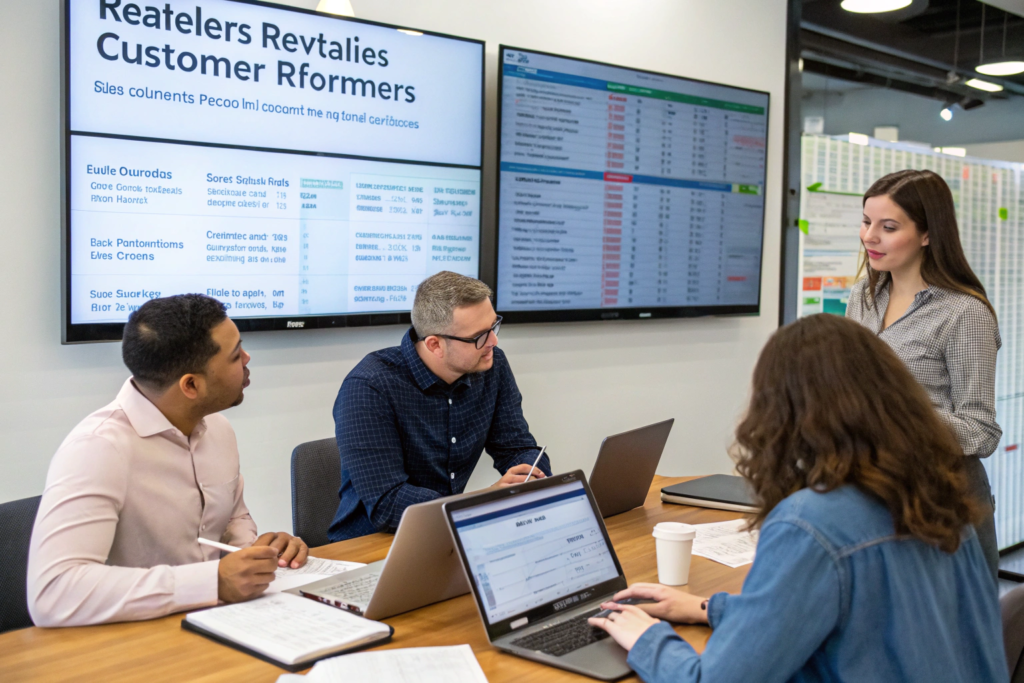
Asking the right questions helps you extract valuable forecasting intelligence from your retail buyers. Start with their expectations for the season. What is their overall sales forecast for the category? What is their growth target? Next, ask about their inventory strategy. Are they planning to increase or decrease inventory levels? How do they plan to manage markdowns? This tells you whether their initial order is conservative or aggressive. Next, ask about their promotional plans. Will your product be featured in any catalogs, emails, or in-store displays? When will these promotions run? What is the expected lift from each promotion? This helps you plan for demand spikes. Next, ask about their reorder process. What is the lead time for reorders? What sell-through rate triggers a reorder? What is the minimum reorder quantity? Finally, ask about competitive positioning. Are there new competitors in the category? Is there any pricing pressure? Understanding the competitive landscape helps you assess demand risk. We encourage our clients to have these conversations early and often. The information you gather should be incorporated into your forecast model.
How do I align my production schedule with retailer delivery windows?
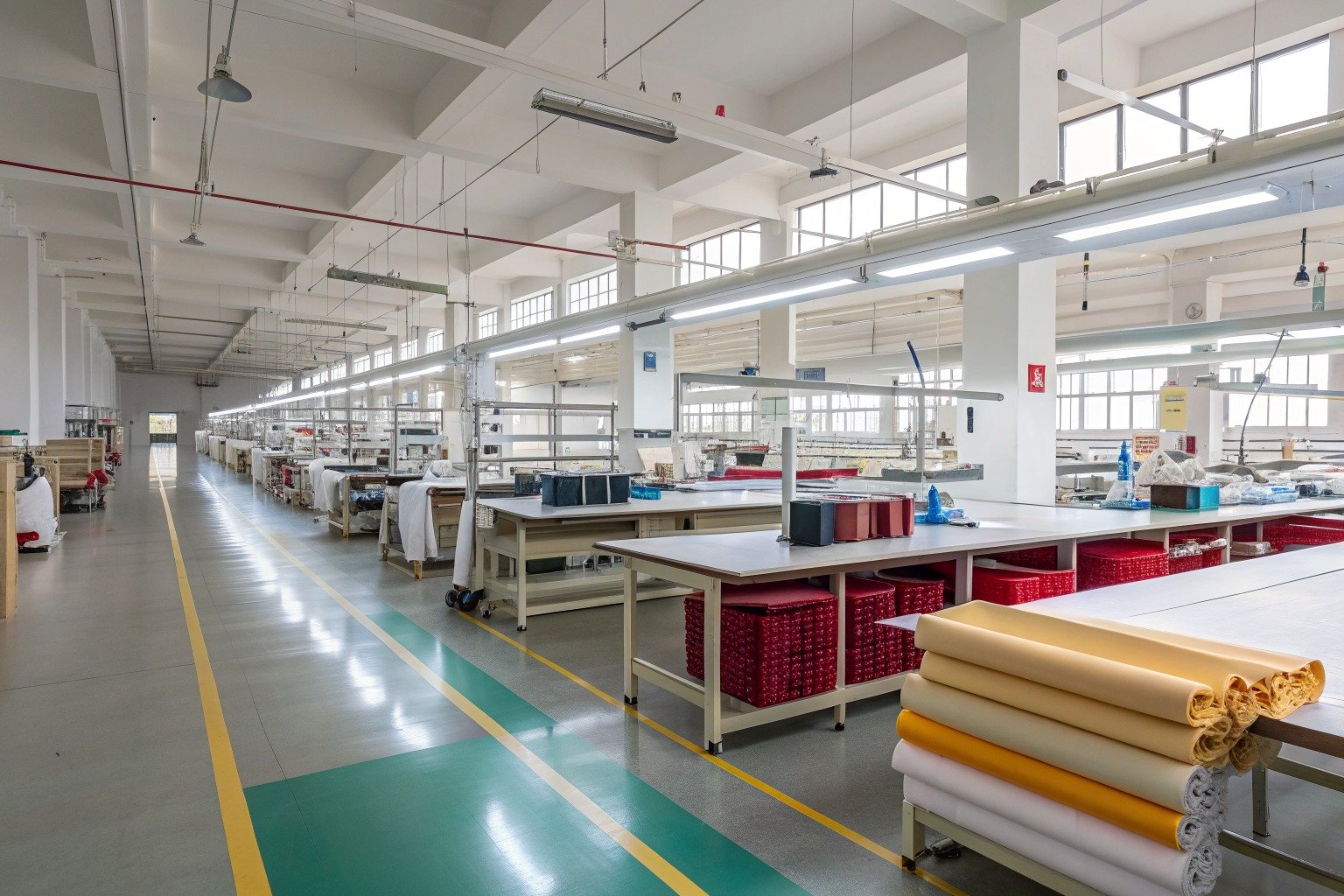
Retailers have specific delivery windows for seasonal items. For winter gloves and scarves, the window is typically August through October for delivery to stores, and September through November for e-commerce fulfillment. Missing these windows can mean having product that arrives too late for the season. To align your production schedule with retailer delivery windows, work backwards. Start with the retailer’s required in-stock date. For example, if the product must be in stores by October 1, subtract shipping time. Ocean freight from China to the US takes 3 to 5 weeks. Add customs clearance time, typically 1 to 2 weeks. Add production lead time, which for scarves and gloves is typically 4 to 8 weeks depending on complexity. This means you may need to start production in June or July to hit an October 1 in-stock date. For reorders, the timeline is tighter. You may need to use air freight to meet a November delivery. Build this timeline into your forecast and production planning. Communicate clearly with your factory about your delivery deadlines. At Shanghai Fumao Clothing, we work with clients to create detailed production schedules that align with their retailer delivery windows. We know that missing a delivery window can mean the difference between a successful season and a disaster.
Conclusion
Forecasting demand for seasonal items like winter gloves and scarves is both an art and a science. It requires analyzing historical sales data, accounting for weather variability, monitoring fashion trends, and incorporating retailer input. The best forecasts use a disciplined approach: start with a baseline from historical data, adjust for trends and weather, place an initial order conservatively, and build in the flexibility to reorder based on early sell-through. The "base case, best case, worst case" framework helps you plan for uncertainty.
At Shanghai Fumao Clothing, we have helped clients navigate seasonal forecasting for over twenty years. We understand the patterns, the lead times, and the challenges. We work with you to develop production plans that allow for reorders, hold capacity during peak season, and align with your retailer delivery windows. Our goal is to help you capture the upside of seasonal demand without being left with excess inventory.
If you are planning your winter accessories collection and want a manufacturing partner who understands seasonal forecasting, let’s talk. Please contact our Business Director, Elaine, directly at elaine@fumaoclothing.com to discuss your forecast and how we can support your seasonal planning.