I have been in the fashion accessory manufacturing business for over twenty years, and if there is one question I hear more than any other, it is about MOQ. Minimum Order Quantity. For a buyer like Ron, who is balancing cash flow, warehouse space, and the need to test new styles, getting the MOQ right is critical. Order too few, and the unit cost is too high. Order too many, and you are stuck with inventory that may not sell. The answer is never a single number. It depends on many factors.
The typical MOQ for custom hair band production ranges from 500 to 3,000 pieces per design, depending on the complexity of the product and the materials involved. A simple elastic hair band with a basic fabric wrap might have a lower MOQ around 500 pieces. A more complex design with custom-printed fabric, metal hardware, or intricate embellishments like pearls or bows will typically require a higher MOQ, often starting at 1,000 to 2,000 pieces, to make the setup costs and material sourcing economically viable.
At Shanghai Fumao Clothing, we understand that every client is different. Some are large retailers placing orders for thousands of units across multiple SKUs. Others are boutique brands testing a new collection with smaller quantities. We have built our production system to be flexible, offering different MOQ tiers based on the type of customization and the client’s needs. We believe that the right MOQ is the one that makes sense for your business, and we work with you to find that sweet spot.
What Factors Determine the MOQ for Custom Hair Bands?
MOQ is not an arbitrary number that factories pull out of thin air. It is a calculation based on real costs and production constraints. Understanding these factors helps you see why MOQs exist and how you might work within them or find ways to reduce them. The goal is to align your business needs with the factory’s operational realities.
The primary factor is material sourcing. Fabrics, elastics, and hardware like metal clips or decorative elements all come in minimum purchase quantities from suppliers. If a specific velvet fabric only comes in rolls of 100 meters, and your hair band uses 0.2 meters per unit, the factory needs to commit to at least 500 units just to use that roll. The second factor is production setup. Cutting patterns, setting up sewing machines, and creating jigs for assembly all take time. A factory needs to spread that setup cost across enough units to make the order profitable. The third factor is labor efficiency. Workers become faster and more consistent once they are in a rhythm. A very small order never reaches that efficient flow state.
Other factors include the complexity of the design, the number of colors or styles, and the type of customization. A simple one-color, one-size elastic band is much easier to produce in small quantities than a multi-component design with custom packaging.
How does material sourcing affect minimum order quantities?
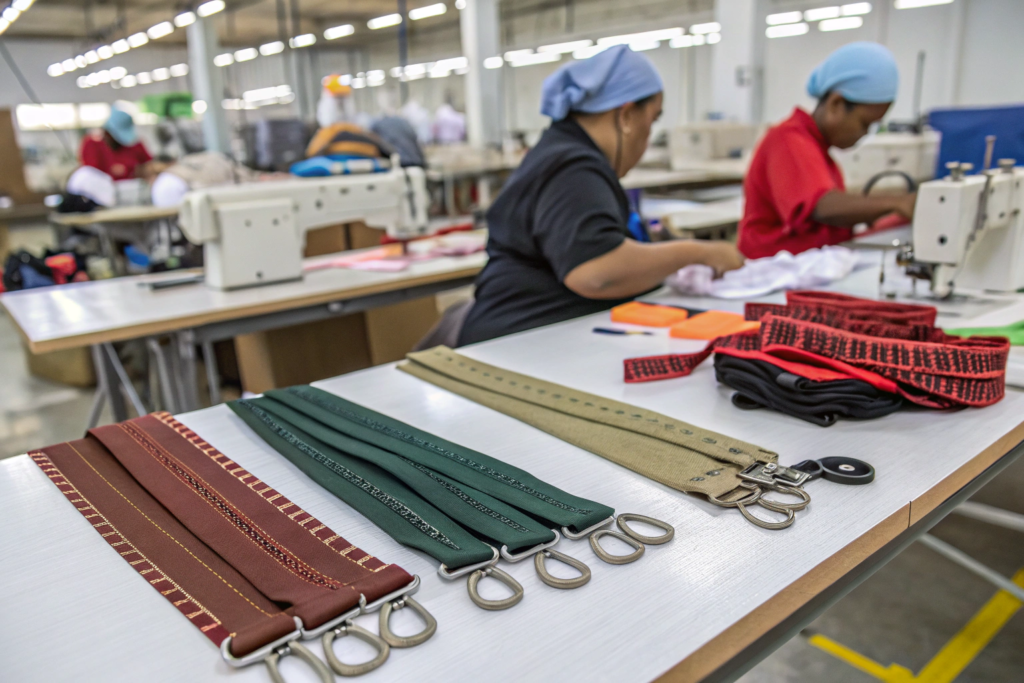
Material sourcing is often the biggest driver of MOQ. When we source fabric for your custom hair bands, we are buying from suppliers who have their own minimums. A specialty velvet might have a minimum of 50 meters. A custom-printed ribbon with your logo might have a minimum of 200 meters. A specific metal charm for a hair band might come in packs of 500. We have to aggregate these supplier minimums to determine the smallest production run that makes sense. This is why using standard, in-stock materials can significantly lower your MOQ. We maintain a large library of commonly used fabrics, elastics, and trims that are always in stock. If you choose a design using these existing materials, we can often offer a much lower MOQ, sometimes as low as 300 pieces, because we are not ordering materials specifically for your order. For more information on textile sourcing, resources like Sourcing Journal provide excellent industry insights into supply chain dynamics.
Why does design complexity influence MOQ?
A simple hair band is a single piece of fabric wrapped around a stretch elastic base. A complex hair band might involve multiple fabric layers, hand-sewn bows, attached pearls, and custom metal hardware. Each additional element adds steps to the production process. Each new step requires a different worker or a different machine setup. With a complex design, the setup time becomes a larger percentage of the total production time. If the order is too small, the factory spends more time setting up than actually producing, which drives up the per-unit cost. This is why factories often set higher MOQs for complex designs. They need enough volume to justify the time spent on training workers for that specific design and setting up the production line. However, we understand that some of the most beautiful, marketable hair bands are the complex ones. We work with clients to find the balance, sometimes suggesting small simplifications that reduce setup time without compromising the look and feel of the final product.
Can I Get Lower MOQs for Sample Orders or Small Test Runs?
Yes, absolutely. One of the most common scenarios we see is a client who wants to test a new design before committing to a large production run. They may be a small boutique launching a new collection, or a large retailer wanting to gauge customer reaction before placing a massive order. For these situations, we have processes in place to accommodate smaller quantities.
Sample orders are treated differently than bulk production orders. The goal is not to maximize efficiency but to prove the design. We use our sample room, which is set up for small-batch work, to produce anywhere from a few pieces to a few dozen. This allows you to see the actual product, check the fit, and test the durability before making a larger commitment. The per-unit cost for samples is higher because we are not using the efficiencies of mass production, but that is a small price to pay for the confidence it provides.
For small test runs, sometimes called pilot runs, we can often work with MOQs as low as 300 to 500 pieces, especially if the design uses standard materials. This allows you to launch a product, see how it sells, and then reorder in larger quantities once you have data.
What is the difference between sample MOQ and bulk production MOQ?
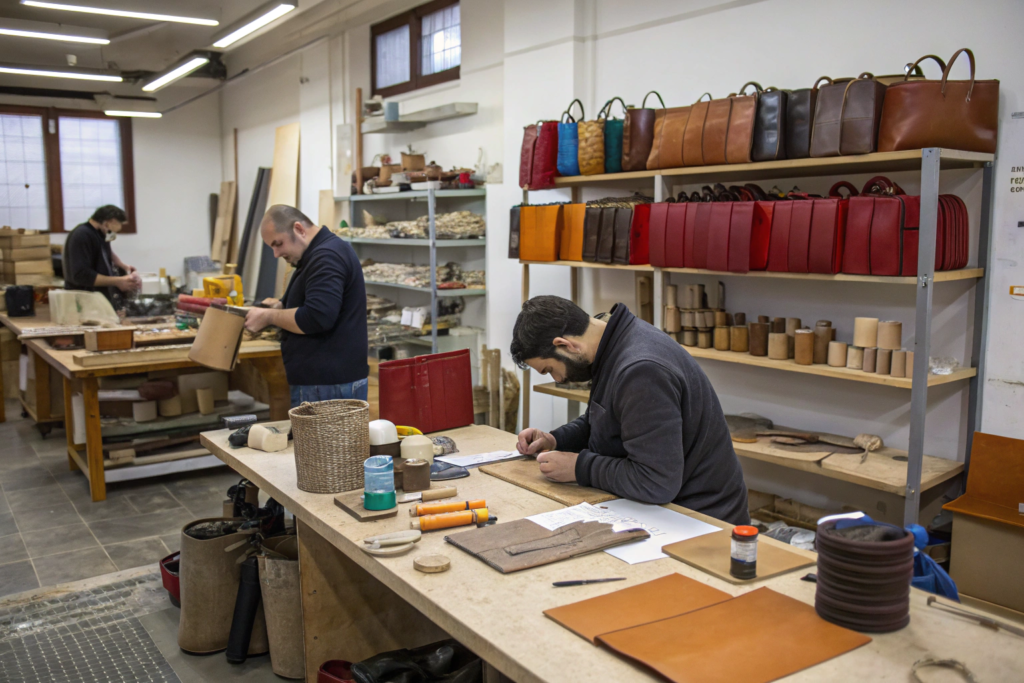
The distinction between sample MOQ and bulk production MOQ is important. Sample MOQ is typically very low, often just 1 to 10 pieces per design. These samples are made in our sample room, not on the main production line. They are used for design approval, fit testing, and sometimes for photo shoots or sales presentations. The cost is higher per piece because it is handcrafted work. Bulk production MOQ is the minimum quantity we can produce efficiently on our main production line. This is where we can offer competitive pricing. The bulk MOQ covers the cost of material purchasing, machine setup, and production line staffing. Once you have approved the sample, we can discuss the bulk MOQ for that specific design. We are transparent about these numbers and will explain exactly what drives them. For a detailed guide on the sampling process, the Fashion Institute of Technology (FIT) offers educational resources on product development that many of our clients find helpful.
How can I test a new hair band design without a large commitment?
Testing a new design without a large commitment is a smart business strategy, and we have several ways to help you do it. The first is our sample service. You can order a small number of samples, perhaps 5 to 10 pieces, to put on your website, show to potential buyers, or use for influencer marketing. If the response is positive, you can place a larger order. The second option is a pilot production run. This is a small bulk order, typically 300 to 500 pieces, that we produce using our standard production processes. This gives you actual inventory to sell while still keeping your initial investment low. The third option is to participate in our "designer program" where we produce small batches of multiple designs. This allows you to test several styles at once. We have designed our production system to be flexible because we know that the best way to find a winner is to test multiple ideas in the market. Shanghai Fumao Clothing is committed to helping you innovate without taking on excessive inventory risk.
How Do Different Hair Band Materials Impact MOQ?
The materials you choose for your hair bands have a direct impact on the minimum order quantity a factory can offer. Some materials are readily available in small quantities, while others require bulk purchasing. Understanding this relationship helps you make informed choices that balance design goals with practical production constraints.
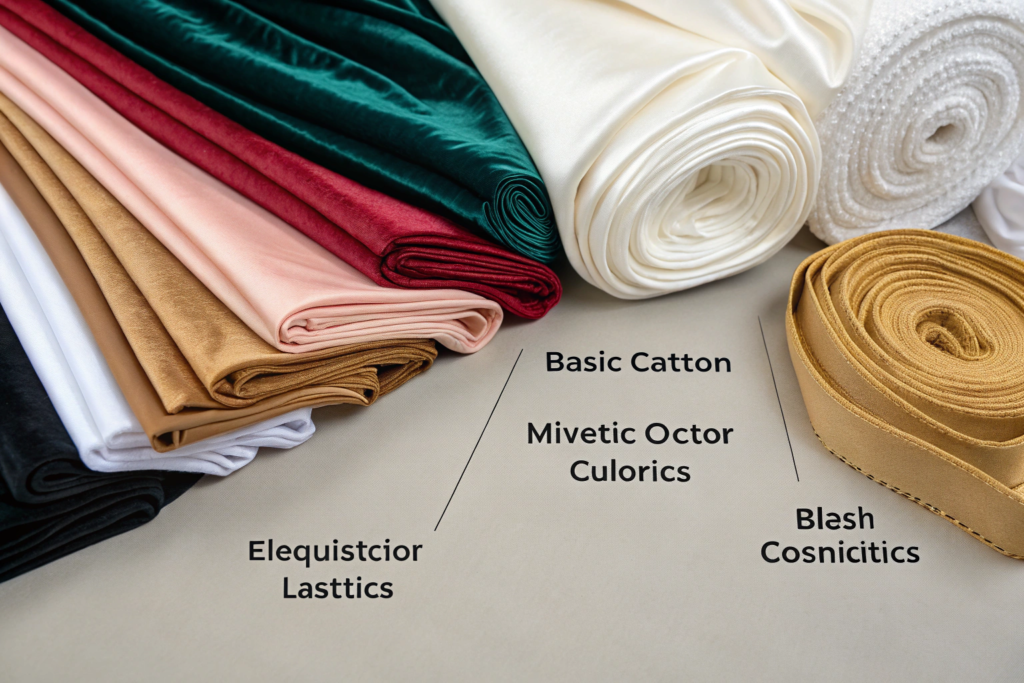
Fabric is the biggest variable. If you choose a standard fabric that we keep in stock, such as basic cotton, velvet, or satin in common colors, the MOQ can be lower because we already have the material on hand. If you choose a specialty fabric that we need to order, such as a specific designer print or a unique textured material, the MOQ will be driven by the fabric supplier’s minimums. The same applies to elastics. Standard white or black elastic is always in stock. Colored elastic, or elastic with specific width requirements, may need to be ordered in larger quantities.
Hardware like metal clips, charms, or decorative elements also have minimums. If you are adding a custom metal logo charm, the manufacturer of that charm will have a minimum order quantity, often 500 to 1,000 pieces. This then becomes the baseline for your hair band order.
What materials typically have the lowest MOQs?
Materials that are considered "commodity" items typically have the lowest MOQs. These are standard materials that fabric and trim suppliers keep in stock for immediate purchase. Basic cotton fabrics in solid colors are a good example. We can often buy these in small quantities, sometimes as little as 10 meters. Basic satin ribbon in standard widths is another. Standard black and white elastic in common widths is almost always available in small quantities. If your design uses these standard, readily available materials, we can often offer MOQs as low as 300 to 500 pieces. This is a great option for clients who want to test a new style or who are working with a limited budget. We maintain an inventory of these popular materials specifically to support smaller orders. For insights into which materials are trending in the market, publications like Textile World provide industry overviews that can inform your material selection.
How can custom materials affect my order minimum?
Custom materials are the biggest driver of higher MOQs. A custom fabric printed with your exclusive pattern or logo requires a minimum run from the textile printer. That minimum can range from 200 meters to 1,000 meters or more, depending on the complexity of the printing process. Custom metal hardware, like a branded charm or a unique clip, requires a mold to be created. The mold cost alone can be several hundred dollars, and the manufacturer will have a minimum order for the pieces themselves. Custom elastic with your brand name woven into it is another example; the weaving process requires a significant setup and minimum order. When you choose custom materials, you are essentially creating a proprietary product that no other buyer has. That exclusivity comes with the requirement of ordering enough volume to make the custom production viable. We are always happy to discuss these options and help you calculate whether the investment in custom materials makes sense for your business goals.
How Can I Negotiate MOQ with a Factory?
Negotiating MOQ is a normal part of the buyer-supplier relationship. Factories want your business, and they are often willing to be flexible if you understand their constraints and approach the conversation constructively. The key is to be transparent about your needs and to see the factory as a partner, not an adversary.
The best time to discuss MOQ is early in the conversation, before you have invested too much time in a specific design. Be honest about your projected sales volumes and your budget. If you are a smaller brand, say so. Many factories, including ours, have programs specifically designed to support smaller businesses. Also, consider offering concessions in other areas. If you need a lower MOQ, perhaps you can accept a longer lead time, allowing the factory to fit your order in during a slower period. Or perhaps you can agree to pay a slightly higher unit price to offset the setup costs.
Another effective strategy is to consolidate orders. Instead of ordering 300 pieces of five different designs, consider ordering 500 pieces of three designs. The factory can often offer better terms on a larger total order, even if the per-design MOQ is lower.

What concessions can I offer to get a lower MOQ?
If you are asking a factory to go below their standard MOQ, it helps to offer something in return. One common concession is to accept a longer production lead time. This allows the factory to fit your smaller order into gaps in their schedule, rather than dedicating a production line exclusively to your order. Another concession is to accept a slightly higher unit price. The factory still needs to cover their setup costs; if you are ordering fewer units, paying a higher price per unit helps them achieve that. You can also offer to pay a sample or setup fee upfront. This covers the cost of cutting patterns and programming machines, and many factories will waive or reduce this fee for larger orders but may require it for smaller ones. Finally, committing to a future reorder can help. If you are testing a design and promise that you will place a larger order if it sells well, a factory may be more willing to accommodate a small initial run. At Shanghai Fumao Clothing, we value long-term relationships and are often willing to work with clients who show potential for future growth.
How do I build a long-term relationship to improve MOQ terms?
Building a long-term relationship with a factory is the best way to improve your MOQ terms over time. When a factory knows you are reliable, pays on time, and will continue to place orders, they become more flexible. They are willing to accommodate a smaller initial order because they trust that the business will grow. To build this relationship, communicate clearly and consistently. Provide accurate forecasts. Pay your invoices on time, every time. Visit the factory or have regular video calls to build personal connections. When issues arise, work collaboratively to solve them rather than placing blame. Over time, you become a valued partner, not just another customer. This status often comes with perks: more flexible MOQs, priority scheduling during busy seasons, and better access to new materials and designs. This is the kind of partnership we aim to build with every client who walks through our doors.
Conclusion
Understanding MOQ for custom hair band production is about understanding the balance between your business needs and the factory’s operational realities. There is no single "typical" number. It depends on the materials you choose, the complexity of your design, and the type of order you are placing. Sample orders can be as small as a few pieces. Small test runs can be 300 to 500 pieces. Larger custom orders with unique materials typically start at 1,000 to 3,000 pieces.
At Shanghai Fumao Clothing, we have designed our production system to be flexible. We work with clients of all sizes, from emerging brands launching their first collection to major retailers placing orders in the tens of thousands. We are transparent about our MOQs and will explain exactly what drives them for your specific project. Our goal is to help you find the right quantity for your business, whether that is a small test run to validate a new idea or a large production order for your best-selling style.
If you are ready to discuss your custom hair band project, I invite you to reach out. Let us help you navigate the MOQ question and find a solution that works for your business. Please contact our Business Director, Elaine, directly at elaine@fumaoclothing.com to start the conversation.