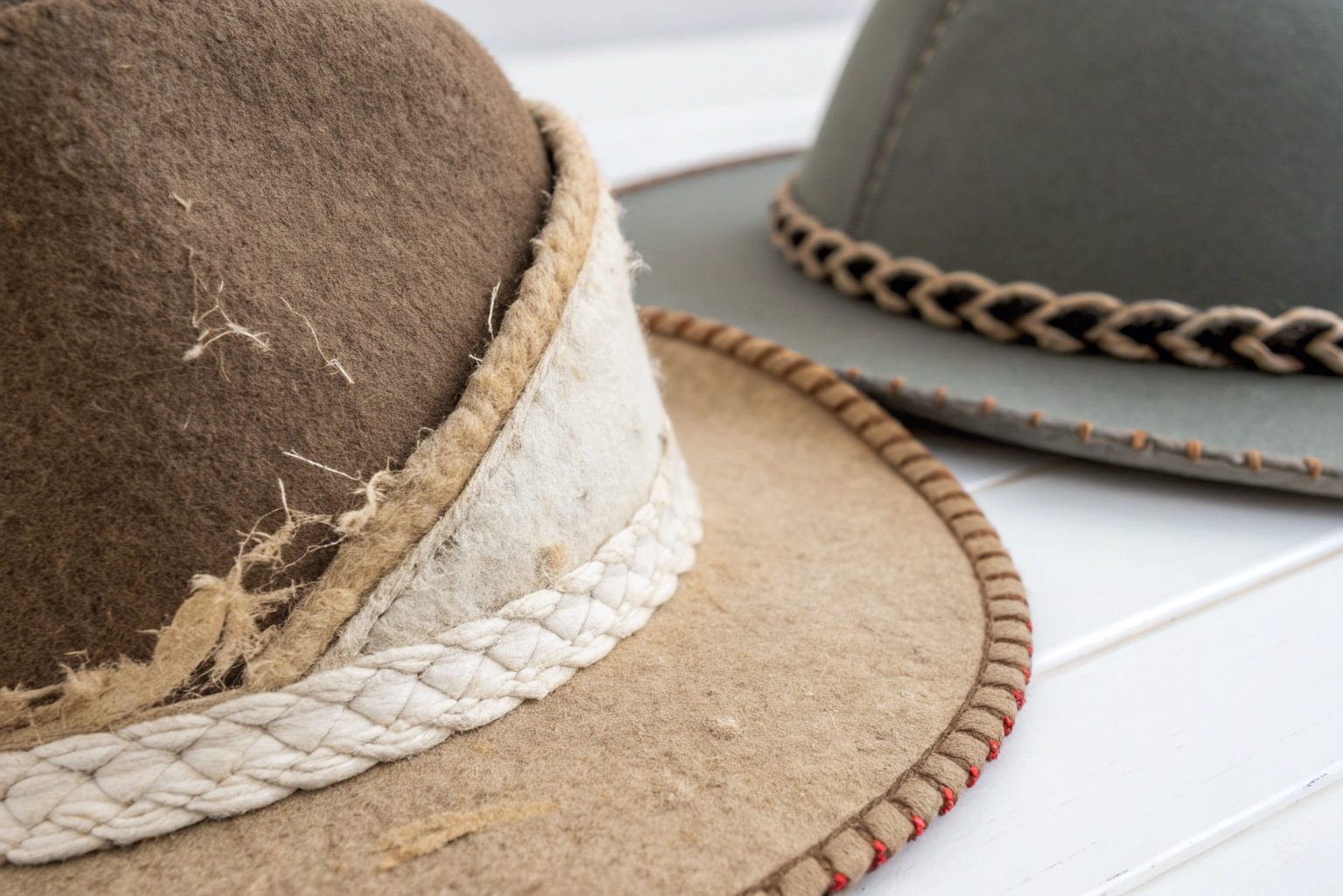
I’ve been making hats for decades, and I can tell you that the edge of a felt hat is one of its most vulnerable areas. It’s the part that gets the most handling, the most friction, and the most exposure to the elements. An unfinished or poorly finished edge will, over time, begin to fray, crumble, and lose its shape. It’s the first place a hat starts to look old and worn.
This is why edge finishing is not just a cosmetic detail. It’s a crucial part of the hat’s construction that directly impacts its durability and longevity. A well-finished edge will protect the felt from damage, maintain the hat’s shape, and ensure that it looks beautiful for years. A poor finish will lead to premature wear and a disappointed customer.
At Shanghai Fumao Clothing, we take edge finishing very seriously. We have skilled artisans who specialize in different finishing techniques, and we work with our clients to choose the best option for their design and budget. In this post, I’ll walk you through the best edge-finishing options for felt hats to prevent crumbling.
Why Do Felt Hat Edges Crumble?
Before we discuss the solutions, it’s important to understand the problem. Why do felt hat edges crumble in the first place? Felt is a non-woven fabric made from compressed fibers (usually wool, fur, or a blend). The edge of a cut piece of felt is essentially a mass of these fibers with nothing holding them together. They are vulnerable to being pulled, rubbed, and broken.
Over time, with normal wear and handling, these exposed fibers will start to loosen and break. The edge becomes fuzzy, then frayed, and eventually, sections can crumble away. This is accelerated by moisture, friction (from hands, collars, etc.), and the natural oils from your skin. A proper edge finish seals these fibers, protecting them from the damage that causes crumbling. For more on felt properties, resources like the Hat Blockers and Makers Association are excellent.
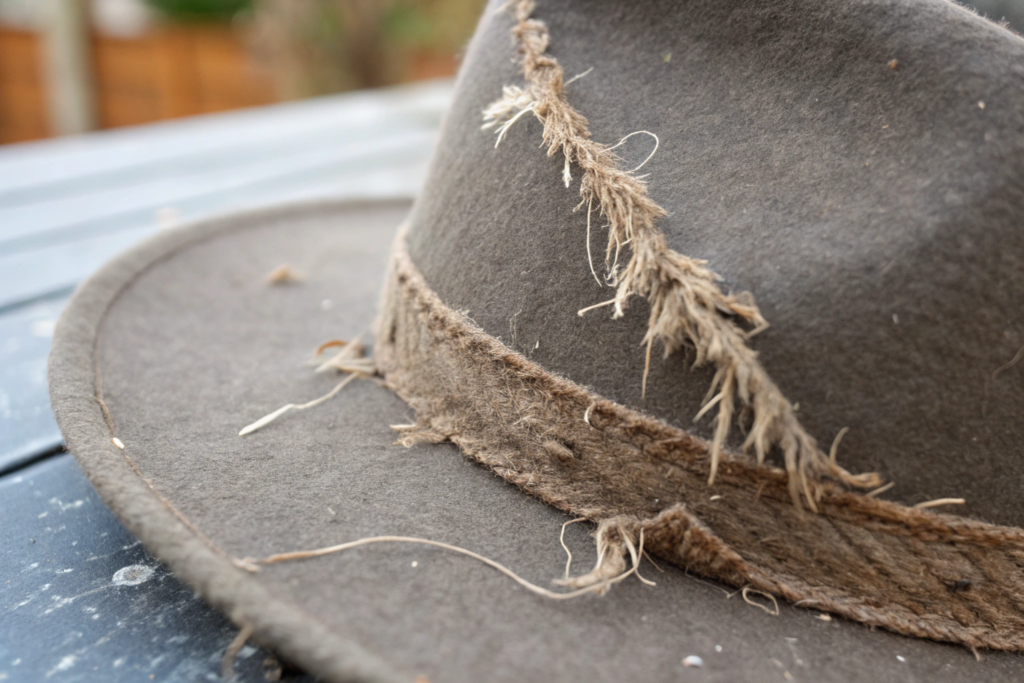
What causes the edge of a felt hat to fray and deteriorate?
Several factors contribute to edge deterioration:
- Friction: Constant rubbing against hands, clothing, and surfaces is the primary cause. The brim edge is particularly vulnerable.
- Moisture: Rain, sweat, and humidity can weaken the fibers and make them more prone to breaking.
- Oils: Natural oils from your skin can transfer to the felt and, over time, can break down the fibers.
- Age: Even without wear, the fibers can eventually become brittle and weak.
- Poor Quality Felt: Lower-quality felt with shorter, weaker fibers will be more prone to crumbling.
A good edge finish acts as a shield, protecting the delicate felt fibers from all of these damaging factors.
Why is edge finishing not just cosmetic but functional?
This is a critical distinction. Some might see edge finishing as a purely decorative detail, like choosing a ribbon color. But it is fundamentally a functional element.
- Protection: The primary function is to seal and protect the cut edge of the felt. It prevents fibers from loosening and unraveling.
- Durability: A good finish adds significant durability to the brim, allowing it to withstand years of handling without showing wear.
- Shape Retention: Some finishes, like bound edges, can also help the brim maintain its intended shape and prevent it from becoming floppy or distorted.
- Comfort: A smoothly finished edge is more comfortable against the skin and less likely to catch on hair or clothing.
So, while the aesthetic is important, the functional role of edge finishing is paramount. A high-quality finished felt hat is an investment in durability.
What Is A Bound Edge?
A bound edge is one of the most classic, elegant, and durable finishes for a felt hat. It involves wrapping the raw edge of the brim with a strip of fabric (usually ribbon) and stitching it in place. The binding completely encases the felt edge, providing excellent protection and a very clean, finished look.
This is a traditional technique that requires skill to execute neatly, especially on curved brims. The binding must be applied smoothly and evenly, with the stitching invisible or neatly done. It’s a mark of quality craftsmanship. For more on hat-making techniques, books by authors like Rebecca Burgess are wonderful resources.
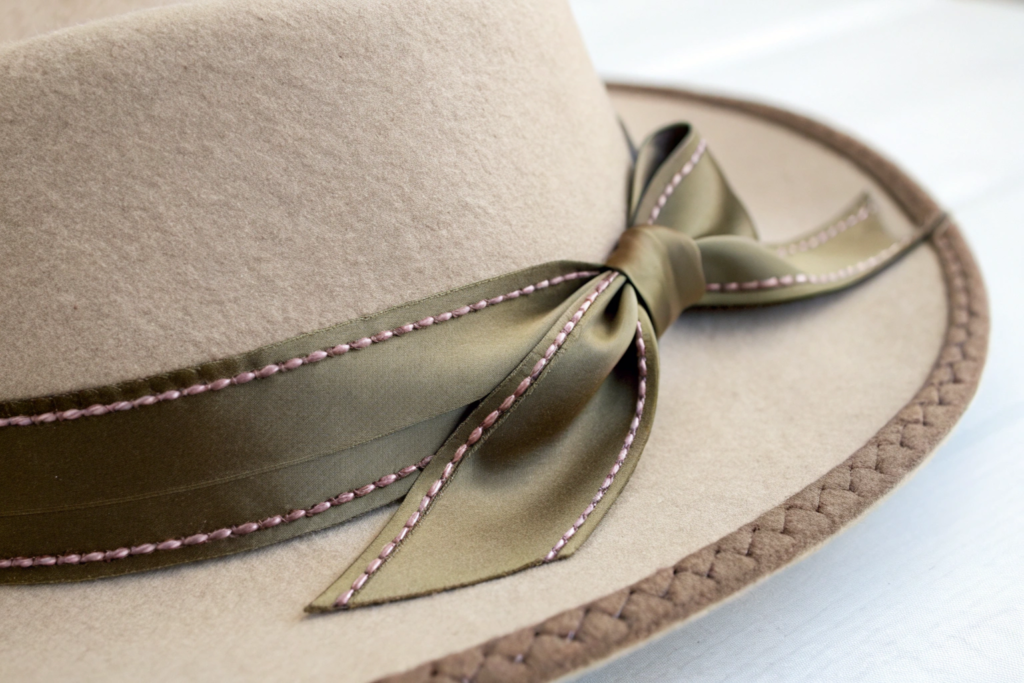
What materials are used for bound edges?
The most common material for binding is ribbon. The choice of ribbon can dramatically affect the hat’s style.
- Satin Ribbon: Creates a smooth, glossy, and elegant finish. Often used on more formal or dressy hats. It can be matched to the hat color or used as a contrasting accent.
- Grosgrain Ribbon: Has a ribbed texture and is very durable. It’s a classic choice for many hat styles and offers a slightly more casual, textured look.
- Cotton or Linen Tape: For a more natural, rustic, or casual look, a simple cotton or linen tape can be used.
- Leather or Suede Binding: For a very unique, high-end, and edgy look, a thin strip of leather or suede can be used as binding. This is a premium option.
The binding can be matched to the hat’s color for a subtle, seamless look, or it can be in a contrasting color to create a striking design element.
How is a bound edge applied?
The process of applying a bound edge is skilled handwork. It is usually done by a skilled artisan.
- Preparation: The ribbon or tape is cut to the correct length, with extra allowance for overlap. It may be folded and pressed to create a crisp edge.
- Pinning and Basting: The binding is carefully pinned around the entire brim edge, ensuring it is centered and smooth. It may be hand-basted with a temporary stitch to hold it in place.
- Stitching: The binding is then sewn in place. This can be done by machine, with a very neat, even stitch close to the edge of the binding. For the highest quality, it can be hand-sewn with an invisible stitch, which is incredibly time-consuming and labor-intensive.
- Finishing: The ends of the binding are neatly joined, often with an invisible overlap or a small bow or other decorative detail at the back.
A well-applied bound edge is a thing of beauty and will protect the hat for decades.
What Is A Sewn Edge?
A sewn edge is another classic and durable finish. In this technique, the raw edge of the felt is not covered with another material. Instead, a line of stitching is sewn very close to the edge, running all the way around the brim. This stitching compresses the felt fibers and prevents them from loosening and fraying.
This finish is simpler and often less expensive than a bound edge, but it still provides excellent protection when done correctly. It has a clean, understated look that can be very stylish. The stitching itself can be a decorative element, especially if a contrasting thread color is used.
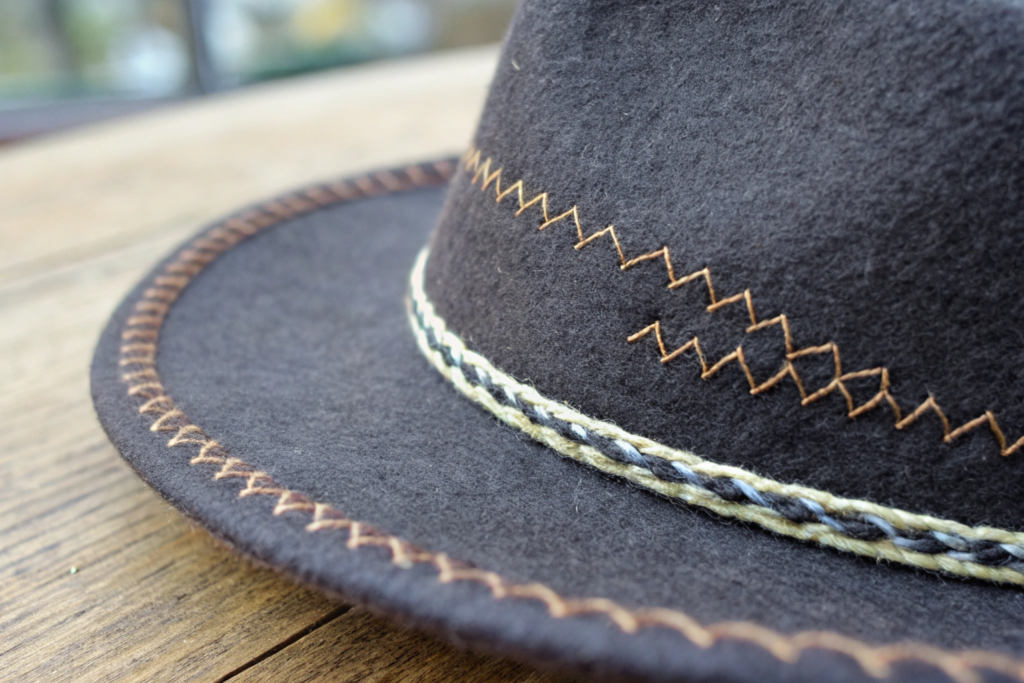
What types of stitching are used for sewn edges?
The most common stitch for a sewn edge is a simple, straight stitch, sewn very close to the edge (usually 1-3mm in). The stitch length and thread tension must be carefully set to avoid puckering the felt.
- Single Stitch Line: A single, neat line of stitching is the most classic and understated option.
- Double Stitch Line: Two parallel lines of stitching can be used for a more decorative or substantial look. This is often seen on more rugged or outdoorsy hat styles.
- Decorative Stitches: Some hats may use a decorative stitch, like a zig-zag or a more complex pattern, but this is less common on traditional felt hats.
The thread color is an important design choice. A matching thread creates a subtle, almost invisible finish. A contrasting thread makes the stitching a prominent design feature.
How does stitching prevent the felt from crumbling?
The stitching works by physically compressing the fibers at the very edge of the felt. The thread pulls the fibers together, creating a dense, compact edge that is much more resistant to abrasion and unraveling.
Think of it like the hem on a piece of woven fabric. The stitching prevents the individual threads from pulling out. Similarly, the stitching on a felt edge prevents the individual fibers from loosening and breaking. It creates a mechanical barrier that holds everything in place.
A sewn edge is an excellent, functional finish. It’s less labor-intensive than a bound edge but still provides great durability. A sewn-edge felt hat is a classic and reliable choice.
What About Edge Treatments Like Paint Or Shellac?
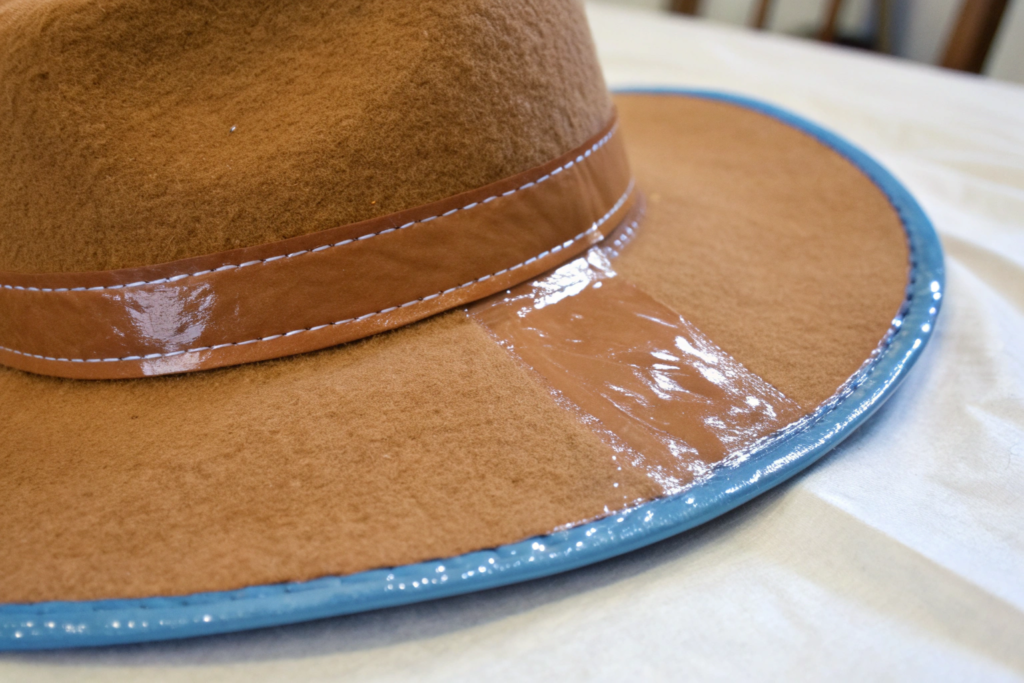
For some hat styles, particularly those with a more casual or rugged aesthetic, a painted or shellacked edge is used. This involves applying a coating directly to the raw felt edge to seal and stiffen it. This is a common finish on less expensive hats, but it can also be done well on higher-end styles for a specific look.
This type of finish is purely functional at its most basic level, but it can also be decorative. The coating creates a hard, durable edge that resists fraying. However, it can be less flexible than a bound or sewn edge and may be more prone to chipping or cracking over time.
What is edge paint and how is it applied?
Edge paint is a specially formulated flexible coating, often made from polyurethane or acrylic. It is designed to adhere to the felt fibers and create a durable, protective layer. It is applied to the raw edge, usually in multiple thin coats.
The application process:
- Preparation: The edge may be lightly sanded or trimmed to ensure it is even.
- Application: A thin coat of edge paint is applied with a small brush or applicator.
- Drying: The coat is allowed to dry completely.
- Sanding (Optional): For a very smooth finish, the dried coat may be lightly sanded.
- Repeat: Multiple thin coats are applied to build up a durable, even finish.
The result is a smooth, sealed edge that can be left clear or colored to match or contrast with the hat. It’s a faster, less expensive finish than binding or sewing.
What are the pros and cons of a painted edge?
Pros:
- Cost-Effective: It is generally the least expensive edge-finishing option.
- Quick Application: It can be applied relatively quickly, especially compared to hand-sewn binding.
- Seals the Edge Well: When applied correctly, it creates a good seal that protects against moisture and fraying.
- Color Options: Edge paint can be tinted to any color, offering design flexibility.
Cons:
- Less Flexible: The painted edge can be less flexible than a bound or sewn edge. Over time, with repeated flexing, it may be prone to cracking or chipping.
- Can Look Less Premium: A thick or poorly applied painted edge can look cheap compared to the craftsmanship of a bound edge.
- Wear Over Time: The paint can eventually wear off with heavy use, requiring reapplication.
For many casual hats and for customers on a budget, a painted edge is a perfectly acceptable and durable option. For a premium, heirloom-quality hat, a bound or sewn edge is usually preferred.
Conclusion
Choosing the right edge finish for a felt hat is a critical decision that affects both its style and its longevity. A bound edge, using ribbon or other materials, offers the ultimate in protection and a classic, elegant look, but it is the most labor-intensive and expensive option. A sewn edge provides excellent durability with a clean, understated aesthetic at a moderate cost. A painted edge is a cost-effective solution that seals the felt well, but it may be less flexible and durable over the very long term.
At Shanghai Fumao Clothing, we have the expertise to execute all of these edge-finishing techniques to the highest standard. Our skilled artisans can create a beautifully bound edge with satin or grosgrain ribbon, a precise sewn edge with perfectly even stitching, or a smooth, durable painted edge. We work with our clients to understand their design vision and budget, and we recommend the best finish for their specific hat.
If you’re developing a line of felt hats and want to ensure they are finished to the highest quality, let’s talk. Please contact our Business Director, Elaine, at elaine@fumaoclothing.com. We’ll help you create hats with edges that stay beautiful for years to come.