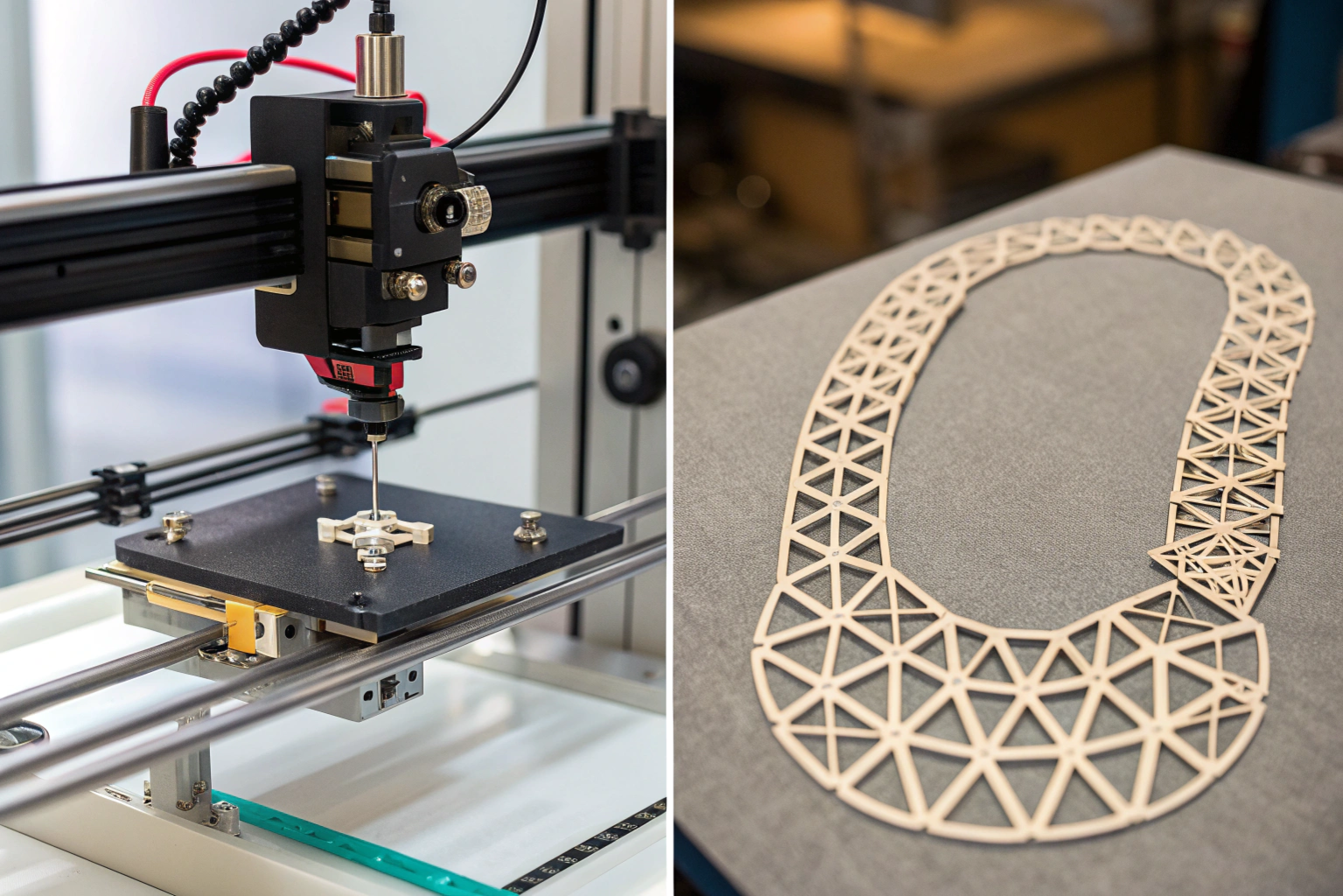
I’ve been in this industry for decades, and I’ve seen many technological advances come and go. But few have excited me as much as the potential of 3D printing. This technology is not just a novelty; it’s a genuine revolution in how we can design and manufacture fashion accessories. It opens up possibilities that were simply impossible with traditional methods.
For buyers like Ron, who are always looking for ways to differentiate their product lines, 3D printing offers a powerful tool. It allows for the creation of complex, intricate, and highly customized designs that would be prohibitively expensive or impossible to produce with conventional techniques like injection molding or casting. It also enables rapid prototyping and on-demand production, reducing waste and inventory risk.
At Shanghai Fumao Clothing, we have been exploring and investing in 3D printing technology for years. We’ve integrated it into our design and prototyping process, and we’re now offering 3D-printed accessories to our clients. In this post, I’ll share how you can utilize 3D printing to innovate your fashion accessory line.
What Is 3D Printing And How Does It Apply To Accessories?
Before we dive into the applications, it’s important to understand what 3D printing is and how it works. 3D printing, also known as additive manufacturing, is a process of creating a three-dimensional object by building it up layer by layer from a digital file. This is the opposite of subtractive manufacturing (like carving from a block) or formative manufacturing (like injection molding).
For fashion accessories, this means you can design something on a computer and then "print" it directly in a variety of materials. The design freedom is immense. You are no longer constrained by the limitations of molds, tooling, or traditional crafting techniques. For a comprehensive overview, resources like Additive Manufacturing magazine are excellent.
What are the different 3D printing technologies used for accessories?
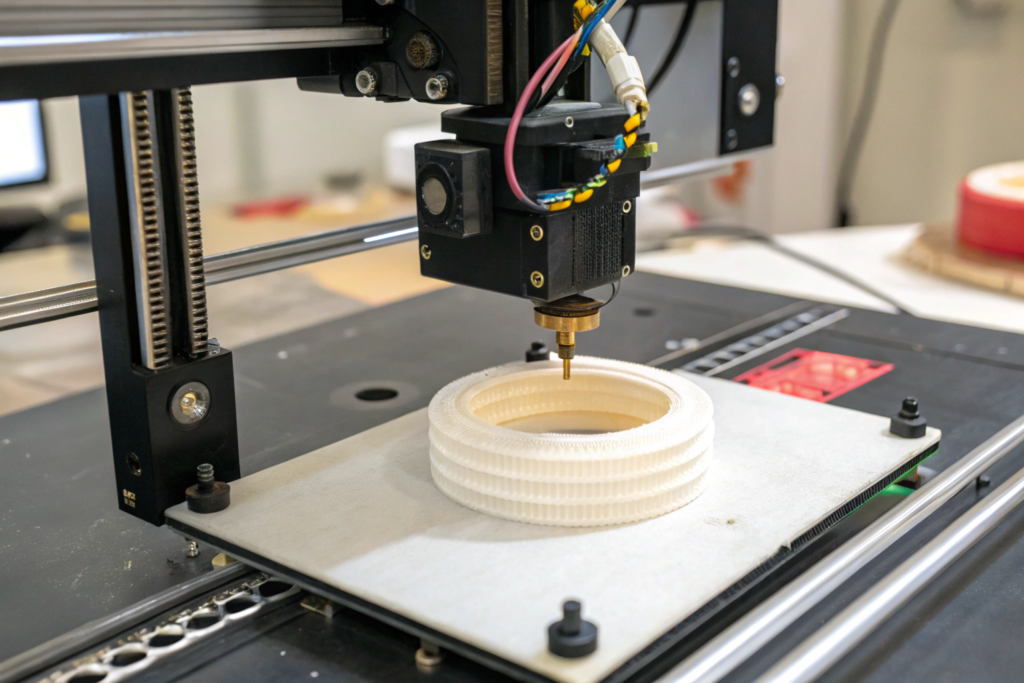
Several 3D printing technologies are relevant for fashion accessories, each with its own strengths and ideal applications:
- Stereolithography (SLA): Uses a laser to cure liquid resin into solid plastic. It produces parts with very high detail and a smooth surface finish. Ideal for intricate jewelry, detailed pendants, and prototypes.
- Selective Laser Sintering (SLS): Uses a laser to fuse powdered material (usually nylon) into solid objects. It produces strong, durable parts and doesn’t require support structures, allowing for complex geometries. Great for durable accessories like belt buckles, bag charms, and eyewear.
- Fused Deposition Modeling (FDM): The most common and accessible technology. It melts and extrudes a plastic filament (like PLA or ABS) to build up the object. It’s less detailed than SLA or SLS but is excellent for rapid prototyping and creating larger, less detailed items.
- Multi Jet Fusion (MJF): Similar to SLS but uses an inkjet array to apply fusing and detailing agents to a bed of nylon powder, which is then fused by a heating element. It produces strong, consistent parts with good surface finish.
- Direct Metal Laser Sintering (DMLS): Uses a laser to fuse metal powder (like stainless steel, titanium, or even precious metals) into solid metal objects. This is the technology for printing metal accessories like rings, cufflinks, and buckle components.
The choice of technology depends on the desired material, detail, strength, and budget.
What materials can be used for 3D-printed accessories?
The range of materials for 3D printing is constantly expanding. For fashion accessories, the most relevant include:
- Plastics (Nylon, PLA, ABS, Resin): These are the most common. They are lightweight, can be produced in various colors, and are suitable for a huge range of accessories.
- Metals (Stainless Steel, Titanium, Brass, Silver, Gold): Metal 3D printing allows for the creation of intricate, custom jewelry and metal components that would be impossible to cast.
- Flexible Materials (TPU, TPE): These rubber-like materials can be used to print flexible accessories like watch bands, bracelets, or components that need to bend.
- Wood-Like and Other Composite Filaments: Filaments infused with wood, metal, or other particles can create unique textures and finishes.
- Wax: 3D-printed wax patterns are commonly used in the lost-wax casting process to create custom jewelry in precious metals.
This material versatility makes 3D printing applicable to almost any type of fashion accessory.
How Can 3D Printing Enable Unprecedented Design Complexity?
The most exciting aspect of 3D printing for fashion is the liberation from traditional design constraints. With conventional methods, the design is limited by what can be molded, cast, or carved. With 3D printing, complexity comes for free. You can create geometries that are simply impossible to achieve any other way.
This opens up a whole new aesthetic for accessories. Designs can be inspired by natural forms, mathematical structures, or pure imagination. For more on generative and computational design, resources like WIRED and Dezeen often feature cutting-edge examples.
What are lattice structures and how are they used?
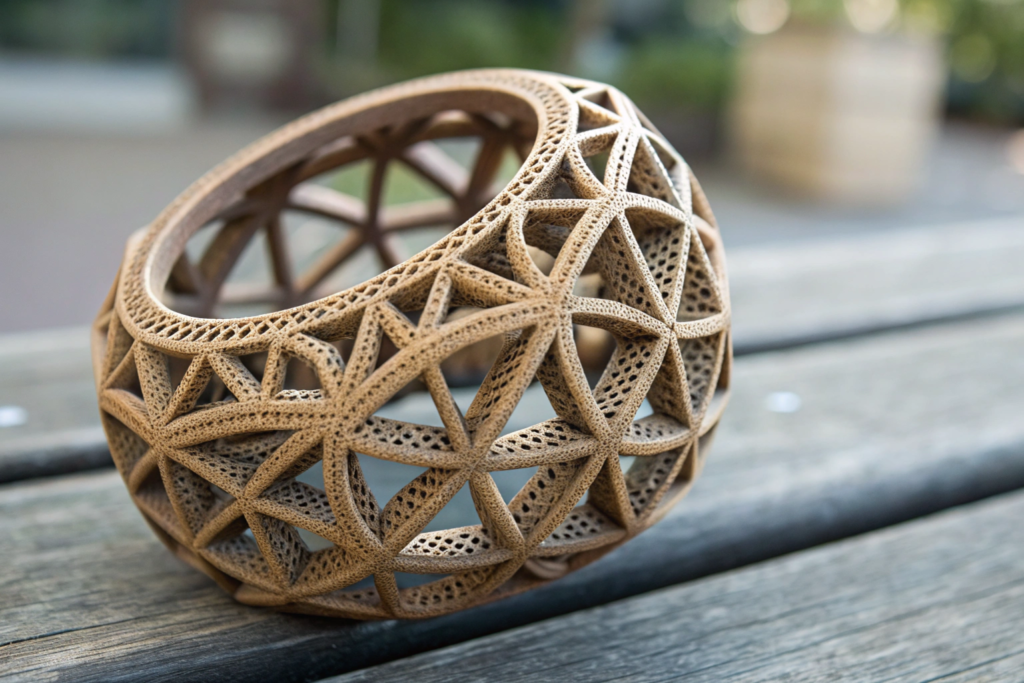
Lattice structures are a perfect example of 3D printing’s unique capabilities. These are open, grid-like frameworks that can be incredibly strong while being extremely lightweight. They can be designed with varying densities to control flexibility and weight.
In accessories, lattice structures can be used to create:
- Lightweight Statement Pieces: Large necklaces or earrings that look substantial but are actually very light and comfortable to wear.
- Unique Textural Effects: The open framework creates a distinctive, modern, and eye-catching texture.
- Flexible Components: Lattices can be engineered to be flexible, allowing for the creation of articulated or bendable structures without the need for hinges.
A 3D-printed necklace with a lattice structure is a stunning example of form meeting function.
How can 3D printing create interlocking and moving parts without assembly?
One of the most magical capabilities of 3D printing is the ability to print fully assembled mechanisms in a single build. This is possible because the printer builds the object layer by layer, and unsupported material (like the gap between a ball and a socket) can be left empty.
This means you can print:
- Interlocking Rings and Chains: Print a chain where the links are already interlocked, impossible to achieve with traditional casting without assembly.
- Hinges and Clasps: Print a bracelet with an integrated hinge and clasp, ready to use right off the build plate.
- Moving Parts: Create accessories with rotating or sliding elements that are fully functional as printed.
This capability opens up incredible possibilities for creating complex, functional, and novel accessory designs with minimal post-processing.
How Does 3D Printing Facilitate Customization And Personalization?
In today’s market, personalization is a huge trend. Consumers want products that are uniquely theirs. 3D printing is the perfect technology to deliver on this desire. Because each item is built from a digital file, there is no cost penalty for making each one different. This enables mass customization—creating unique products at scale.
For brands, this is a powerful way to engage customers and create a premium, personalized experience. For more on mass customization, resources like the Journal of Product Innovation Management have published many studies.
How can customers be involved in the design process?
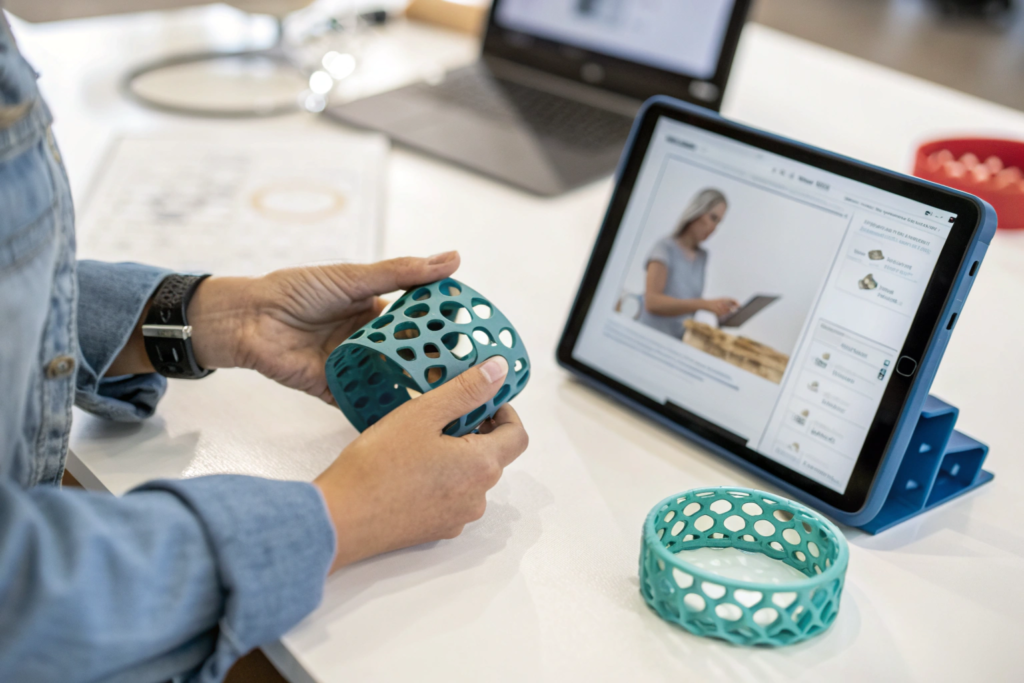
3D printing allows for several levels of customer involvement:
- Customized Text and Initials: This is the simplest form. Customers can choose a base design and then add their name, initials, or a short message. The digital file is modified for each order.
- Parametric Design: Customers can adjust parameters of a design to their preference. For example, they could choose the size of a ring, the length of a pendant, or the curvature of a bracelet from a range of options.
- Choice of Elements: Customers could select from a library of design elements (e.g., different charms, different gemstone settings, different textures) to create their own unique combination.
- Full Custom Design: For a premium price, customers could work with a designer to create a completely unique, one-off piece. The 3D file is created just for them, and the piece is printed on demand.
This level of customization creates a deep emotional connection with the product and makes it truly one-of-a-kind.
What is the potential for on-demand and made-to-order production?
3D printing is inherently an on-demand technology. You don’t need to hold inventory. You print an item only after it has been ordered. This has huge implications for accessory brands:
- Zero Inventory Risk: No capital tied up in unsold stock. No risk of being left with obsolete products.
- No Minimum Order Quantities: You can offer a huge variety of designs without having to commit to large production runs. You can even offer a single, one-off design.
- Reduced Waste: You only produce what is actually sold, eliminating the waste of overproduction.
- Agility: You can quickly respond to trends. If a particular design starts trending on social media, you can start printing and shipping it immediately.
For a brand, this model offers incredible flexibility and reduces financial risk. It’s a completely different way of thinking about production and inventory.
How Can 3D Printing Be Integrated With Traditional Manufacturing?
3D printing doesn’t have to replace traditional manufacturing. In fact, some of the most exciting innovations come from combining the two. You can use 3D printing to create components that are then incorporated into traditionally made products, or you can use it to create masters for traditional casting processes.
This hybrid approach allows you to leverage the strengths of both technologies: the design freedom of 3D printing and the material properties, craftsmanship, and scalability of traditional methods. At our factory, we specialize in this kind of integrated approach. For more on hybrid manufacturing, publications like Modern Machine Shop cover these topics.
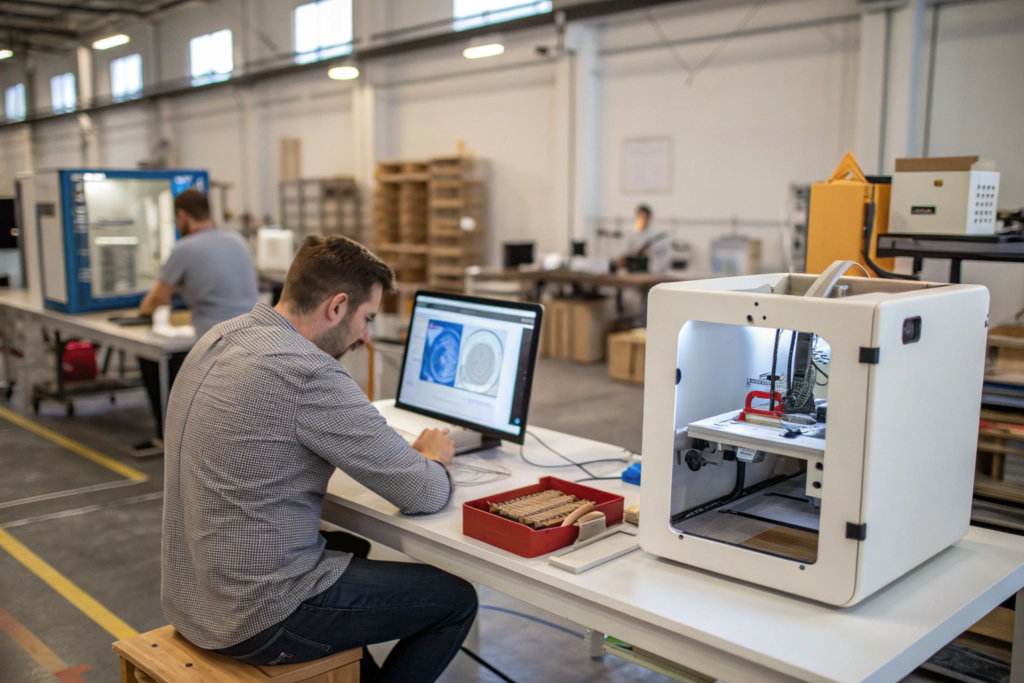
How can 3D printing be used for prototyping before mass production?
This is one of the most valuable and widely adopted uses of 3D printing. Before committing to expensive tooling for injection molding or casting, you can print a prototype to evaluate the design.
- Form and Fit: A 3D-printed prototype allows you to hold the design in your hand, check its proportions, and test its fit (e.g., does a ring fit? does a hair clip open and close properly?).
- Design Iteration: You can quickly and cheaply make multiple design iterations, refining the design based on feedback. This is much faster and cheaper than modifying a mold.
- Market Testing: You can even use 3D-printed prototypes for limited market testing or photo shoots before committing to full-scale production.
- Communication Tool: A physical prototype is a much better communication tool than a 2D drawing or a 3D render when discussing a design with clients, manufacturers, or other stakeholders.
Using 3D printing for prototyping de-risks the product development process and leads to better final products. A 3D-printed prototype of a new belt buckle can save weeks of development time and thousands of dollars in tooling costs.
How can 3D-printed components be combined with traditional materials?
This is where things get really interesting for high-end, design-driven accessories. Imagine:
- A 3D-printed, intricately detailed polymer or metal buckle on a beautifully hand-tooled leather belt strap.
- A 3D-printed, lightweight lattice-structured hair clip adorned with hand-set crystals.
- A 3D-printed metal pendant combined with a traditional silk cord.
- 3D-printed custom end caps for a hand-knitted scarf.
This combination of cutting-edge digital fabrication and traditional craftsmanship creates pieces that are truly unique and speak to a sophisticated, design-conscious consumer. It allows you to offer the "wow" factor of impossible geometries alongside the timeless appeal of classic materials and techniques.
Conclusion
3D printing technology is not a futuristic fantasy; it’s a practical and powerful tool for innovating fashion accessories today. It offers unprecedented design freedom, enabling the creation of complex geometries like lattice structures and fully assembled mechanisms. It empowers mass customization and on-demand production, allowing brands to offer personalized products with zero inventory risk. And it can be seamlessly integrated with traditional manufacturing methods for prototyping and creating hybrid pieces that combine the best of both worlds.
At Shanghai Fumao Clothing, we have fully embraced 3D printing. Our factory in Zhejiang is equipped with SLA, SLS, and metal 3D printers. We use them for rapid prototyping, for creating custom components, and for producing finished accessories. Our design team is skilled in creating designs specifically for additive manufacturing. We can help you explore the potential of this technology and bring your most ambitious ideas to life.
If you’re ready to explore how 3D printing can revolutionize your accessory line, let’s talk. Please contact our Business Director, Elaine, at elaine@fumaoclothing.com. We’ll help you create the future of fashion.