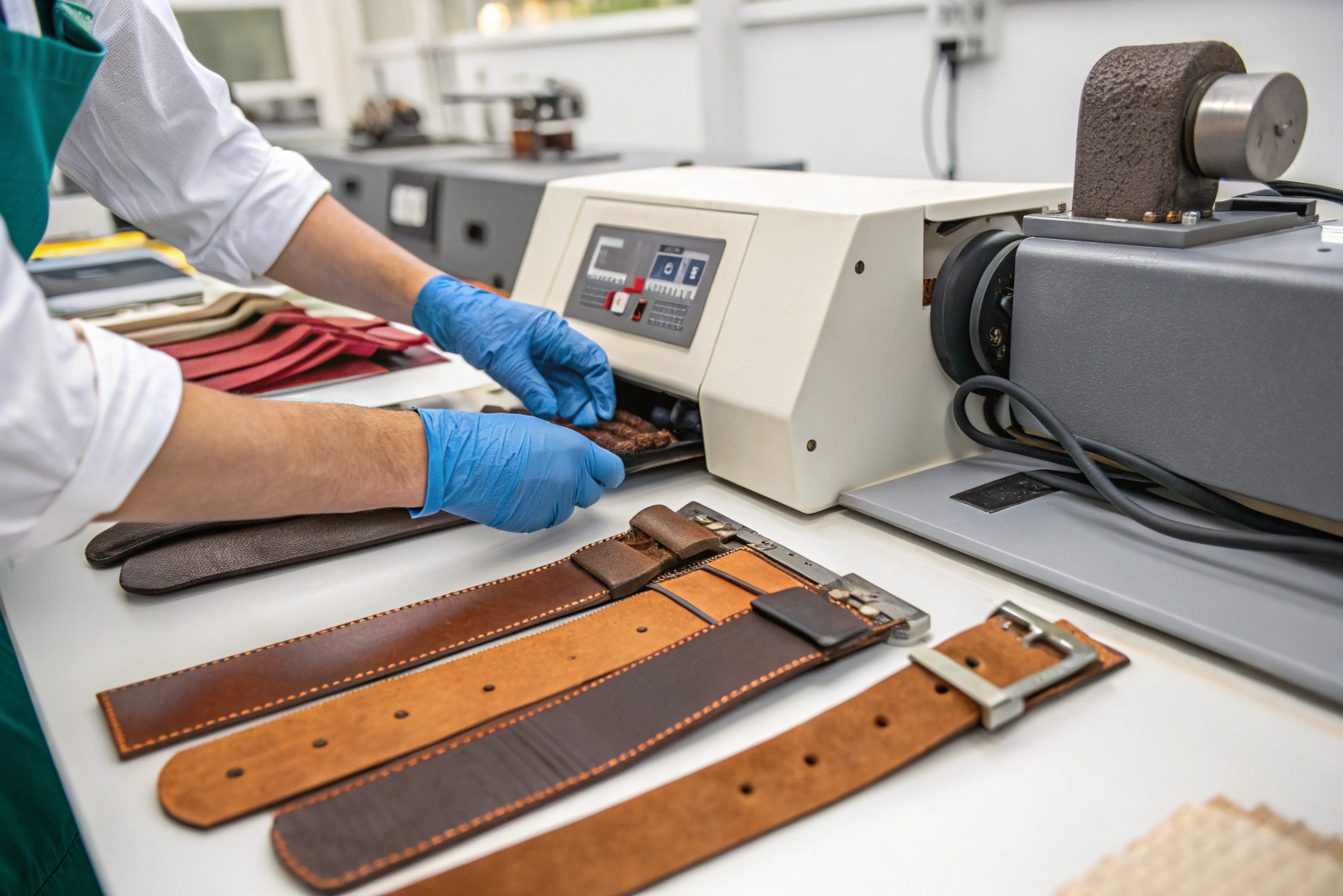
I’ve been working with leather for decades, and I can tell you that a belt takes a tremendous amount of abuse. It’s rubbed against clothing, against chair seats, against car seats, and against countertops, day after day, year after year. The single most important factor determining how long a belt will look good and perform well is its resistance to this constant abrasion. A belt that wears through or looks scuffed and faded after a few months is a failed product.
This is why abrasion resistance testing is absolutely critical for any brand selling leather belts. You cannot rely on a supplier’s word alone. You need to know, with data, that the leather you are using will stand up to real-world use. The tests are designed to simulate years of wear in a matter of hours, giving you confidence in your product’s durability.
At Shanghai Fumao Clothing, we have a rigorous quality control process that includes extensive abrasion testing on every batch of leather we use for belts. We work with standardized testing methods to ensure consistency and reliability. In this post, I’ll walk you through the most important tests for abrasion resistance in belt leather, what they measure, and why they matter.
Why Is Abrasion Resistance Critical For Belts?
Before we dive into the tests, it’s important to understand why abrasion resistance is so critical for belts. A belt is not like a scarf or a hat that has only occasional contact with other surfaces. A belt is in constant, moving contact with clothing and other objects. This continuous friction is what causes wear.
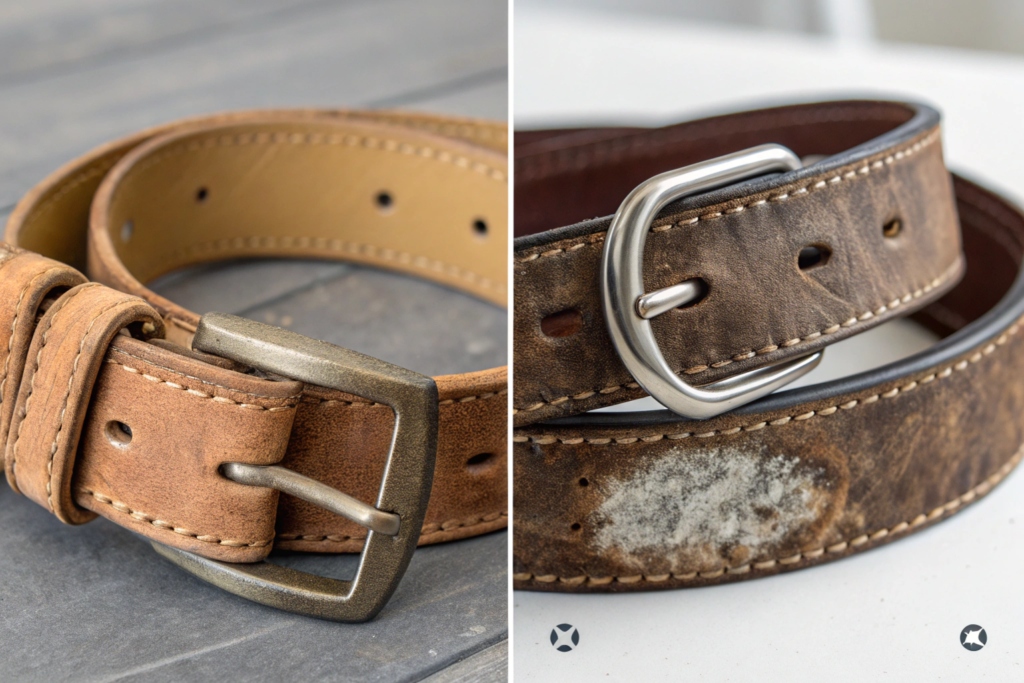
The areas of a belt that are most vulnerable to abrasion are the edges (which rub against chair arms and car seats), the top surface (especially around the buckle area where it’s constantly flexed and rubbed), and the holes (where the buckle tongue goes through). A belt with poor abrasion resistance will quickly show signs of wear in these areas, looking old and worn long before its time. For more on leather properties, organizations like the International Union of Leather Technologists and Chemists Societies (IULTCS) set global standards.
What happens to leather when it abrades?
When leather is subjected to repeated abrasion, several things happen:
- Surface Finish Wear: The topcoat and any applied finish (like paint or dye) are the first to go. This can lead to color loss, fading, and a dull, uneven appearance.
- Fiber Breakdown: As the abrasion continues, the surface fibers of the leather itself start to break down. This can lead to a fuzzy, suede-like appearance (called "napping") on what should be a smooth surface.
- Scuffing and Marring: The surface can become scuffed and marked, with visible scratches and areas of damage.
- Edge Wear: The edges of the belt, which are often finished with a separate edge paint, can become chipped, cracked, and worn.
- Loss of Structural Integrity: In extreme cases, severe abrasion can actually thin the leather and weaken it, leading to potential breakage.
Good abrasion resistance means the leather can withstand this friction for a long time before these signs of wear appear.
How does abrasion resistance relate to customer satisfaction?
Directly and powerfully. A belt that looks good after months or years of regular use is a testament to quality. It reinforces the customer’s positive perception of your brand. They feel they made a smart investment.
Conversely, a belt that quickly looks scuffed and worn leads to disappointment. The customer feels they wasted their money. They are unlikely to buy from your brand again, and they may even leave negative reviews that deter other potential customers. For a product like a belt, which is often a mid-priced item, durability is a key part of the value proposition. A high-quality leather belt that passes rigorous abrasion tests is an investment in customer loyalty.
What Is The Martindale Abrasion Test?
The Martindale test is one of the most widely used and recognized methods for testing the abrasion resistance of textiles and leather. It’s named after the inventor of the machine and is standardized under ISO 12947 and ASTM D4966. For leather specifically, there is also ISO 17704 and IULTCS/IUP 48. This test is the workhorse of abrasion testing in our lab.
The Martindale test simulates the kind of flat, rubbing abrasion that a belt surface would experience against clothing. It’s an excellent indicator of how the leather’s surface finish and top grain will hold up over time. For the official standards, you can refer to organizations like ISO and ASTM International.
How does the Martindale test work?
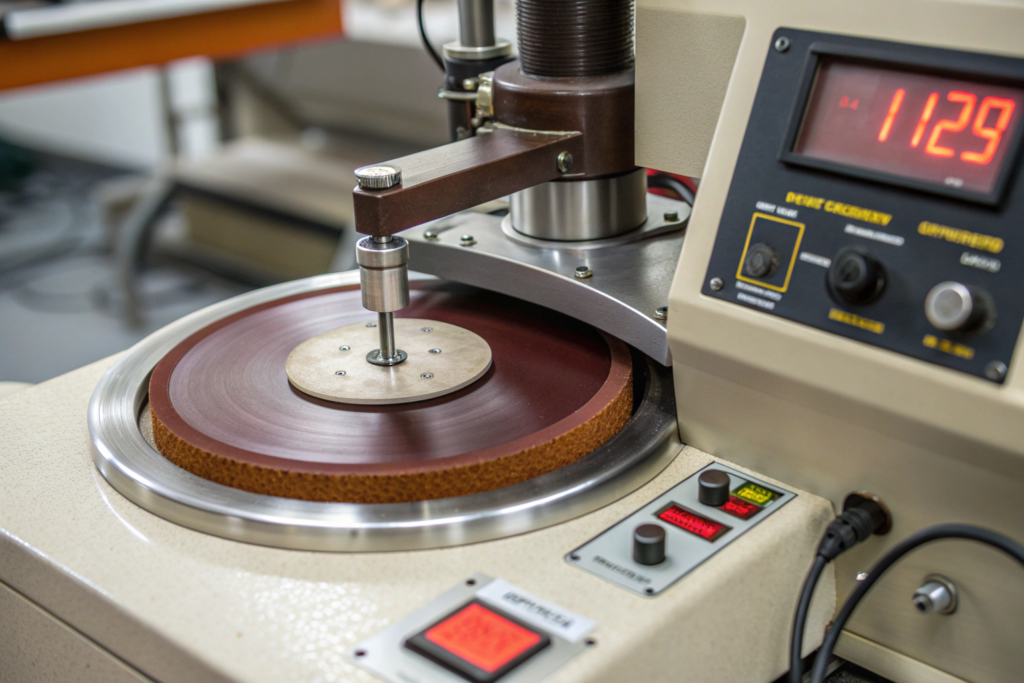
The Martindale tester has a number of circular platforms. A sample of the belt leather is placed on each platform, held flat under a specific tension. A standardized abradant fabric (usually a wool worsted fabric) is attached to a weighted rubbing head that is placed on top of the leather sample.
The machine then moves the rubbing head in a very specific, complex pattern called a Lissajous figure. This pattern ensures that the abrasion comes from all directions, simulating real-world wear more accurately than a simple back-and-forth motion. The test runs for a predetermined number of cycles, or until the sample shows a certain level of wear. The number of cycles a leather can withstand before showing significant wear is a measure of its abrasion resistance.
What do Martindale test results mean for belt leather?
Martindale results are typically reported as the number of cycles to a specific endpoint, such as "break" (when threads break in a textile) or a defined level of surface change. For leather, the endpoint is often when the surface finish shows visible wear or when the color starts to change significantly.
There are general guidelines for what constitutes good abrasion resistance for different applications:
- Light Duty (e.g., occasional use belts): 10,000 – 20,000 cycles
- Medium Duty (e.g., everyday wear belts): 20,000 – 40,000 cycles
- Heavy Duty (e.g., work belts, uniform belts): 40,000+ cycles
For a high-quality, everyday leather belt, we aim for a Martindale result well above 20,000 cycles. This indicates that the leather’s surface finish is durable and will resist scuffing and wear for a long time.
What Is The Taber Abrasion Test?
Another important abrasion test, particularly for heavier materials like leather, is the Taber abrasion test. This test uses a different mechanism and is often used to evaluate the resistance of materials to a more aggressive, grinding type of abrasion. It is standardized under ASTM D3884 and other methods.
The Taber test is particularly useful for assessing the durability of the leather’s surface and any applied coatings, as well as its resistance to edge wear. It’s a more severe test than the Martindale and can be a good differentiator for higher-durability products. For more information, Taber Industries is the source for the equipment and related standards.
How does the Taber test differ from the Martindale?
The key difference is in the type of abrasion and the motion.
- Martindale: Uses a flat, reciprocating motion in a Lissajous pattern. It simulates the kind of flat rubbing against fabric.
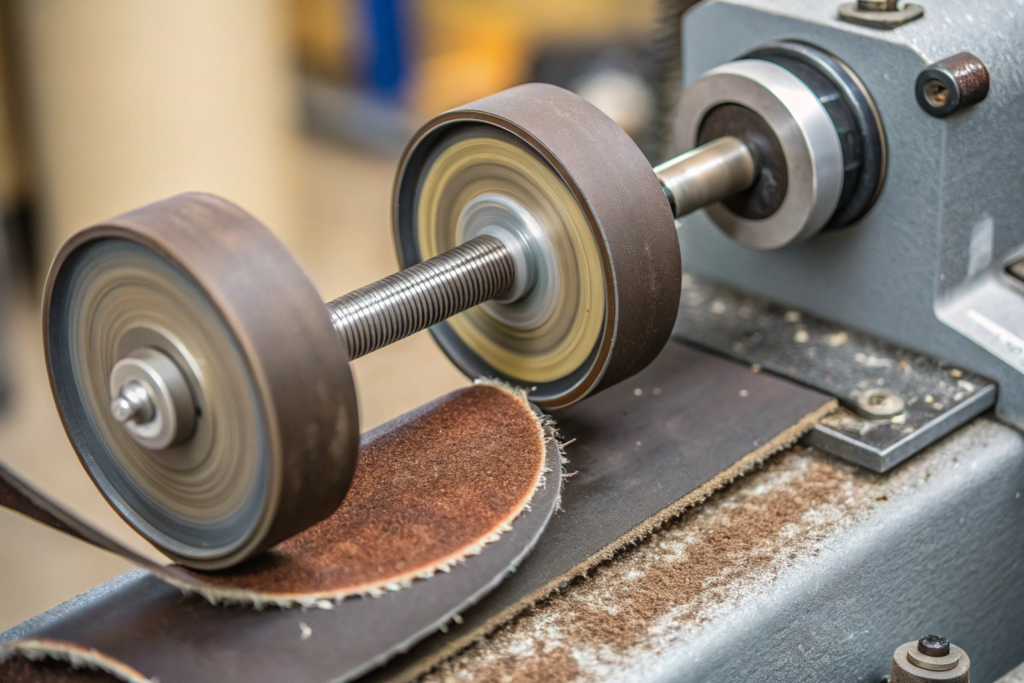
- Taber: Uses two rotating abrasive wheels that press down on a rotating leather sample. The wheels create a circular wear track. This action is more aggressive and simulates a combination of rubbing and scuffing, like what might happen against rough surfaces or from repeated sliding.
The Taber test is often used to measure the weight loss of the sample after a set number of cycles. The sample is weighed before and after the test. The less weight lost, the more abrasion-resistant the material.
What do Taber test results indicate for belt durability?
A Taber test result, usually expressed as a "wear index" (weight loss per 1,000 cycles) or simply the number of cycles to a certain endpoint, gives a very clear picture of the leather’s inherent toughness.
A low wear index (minimal weight loss) indicates a very dense, strong, and durable leather that will resist significant abrasion. This is important for belts that will see heavy use or be subjected to rough conditions. The Taber test can also be used to test the durability of edge coatings by applying it to a specially prepared sample that simulates the belt edge.
For a premium, long-lasting belt, a good Taber result is a key indicator of quality. A leather belt with high Taber test results is built for the long haul.
How Do You Test Edge Abrasion And Flex Resistance?
The flat surface of the belt is one thing, but the edges are often the first place to show wear. The edges are more vulnerable because they are a cut surface, often finished with a separate edge paint or coating. Constant rubbing against chairs and other surfaces can cause this edge finish to chip, crack, or wear away. Testing edge abrasion and flex resistance is therefore crucial.
Similarly, the belt is constantly flexed as you move, sit, and bend. This repeated flexing, especially around the buckle area, can stress the leather and its finish. Specialized tests are needed to simulate these specific conditions. For standards on flex resistance, organizations like ISO and SATRA have relevant test methods.
How do you test the durability of belt edge finishing?
Testing edge finishing durability can be done in a few ways:
- Edge Abrasion Test: A modified version of the Taber or Martindale test can be used where the leather sample is mounted so that the edge is the surface being abraded. This directly tests the edge coating’s resistance to rubbing.
- Bending and Flex Test: A strip of leather with finished edges is repeatedly bent over a mandrel or in a flexing machine. This tests the flexibility and adhesion of the edge coating. If it cracks or flakes off under repeated bending, it will fail in real-world use.
- Impact Test: Sometimes, a simple impact test is used, where a weighted object strikes the edge, to see if the coating chips.
These tests ensure that the edge finish is not just cosmetic but is a durable, integral part of the belt.
What is the flexing test for belt leather?
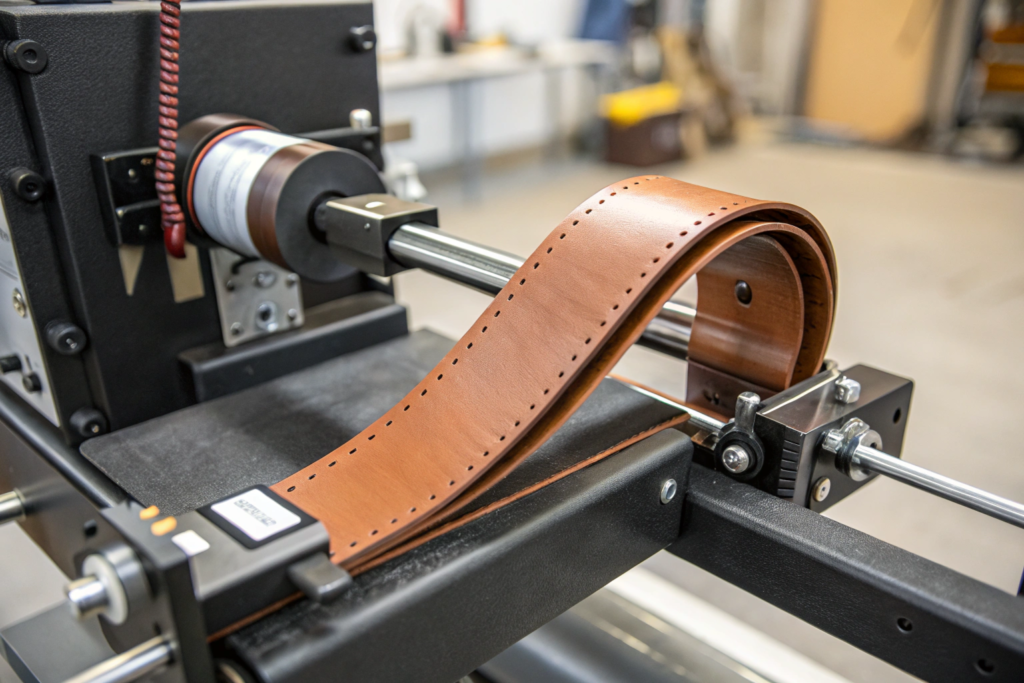
A flexing test simulates the constant bending and unbending that a belt undergoes during normal wear. A sample of the belt leather, often with the buckle area simulated, is clamped into a machine that repeatedly flexes it back and forth at a specific angle and speed.
The test runs for thousands or even hundreds of thousands of cycles. After the test, the sample is examined for:
- Cracking or crazing of the surface finish.
- Delamination of any layers.
- Loss of strength or structural integrity.
This test is critical for the area around the buckle holes and the point where the buckle attaches, as these are high-stress areas. A belt that fails a flex test is likely to fail in real life, leading to a broken belt and a very unhappy customer.
Conclusion
Ensuring the abrasion resistance of belt leather is a multi-faceted process that requires a combination of standardized tests. The Martindale test evaluates the surface’s resistance to flat rubbing against fabric. The Taber test provides a more aggressive measure of the leather’s inherent toughness and resistance to scuffing. And specialized tests for edge finishing and flex resistance address the specific stress points that belts face in daily use. Together, these tests provide a comprehensive picture of a belt’s durability and its ability to withstand years of wear.
At Shanghai Fumao Clothing, we take abrasion resistance seriously. Our factory in Zhejiang is equipped with the necessary testing equipment to perform Martindale, Taber, and flex tests on every batch of leather we use for belts. We don’t just rely on our suppliers’ data; we verify it ourselves. This commitment to testing ensures that the belts we produce for our clients are durable, long-lasting, and will keep their customers satisfied.
If you’re developing a line of leather belts and want to ensure they meet the highest standards of durability, let’s talk. Please contact our Business Director, Elaine, at elaine@fumaoclothing.com. We’ll help you source the right leather and create belts that stand the test of time.