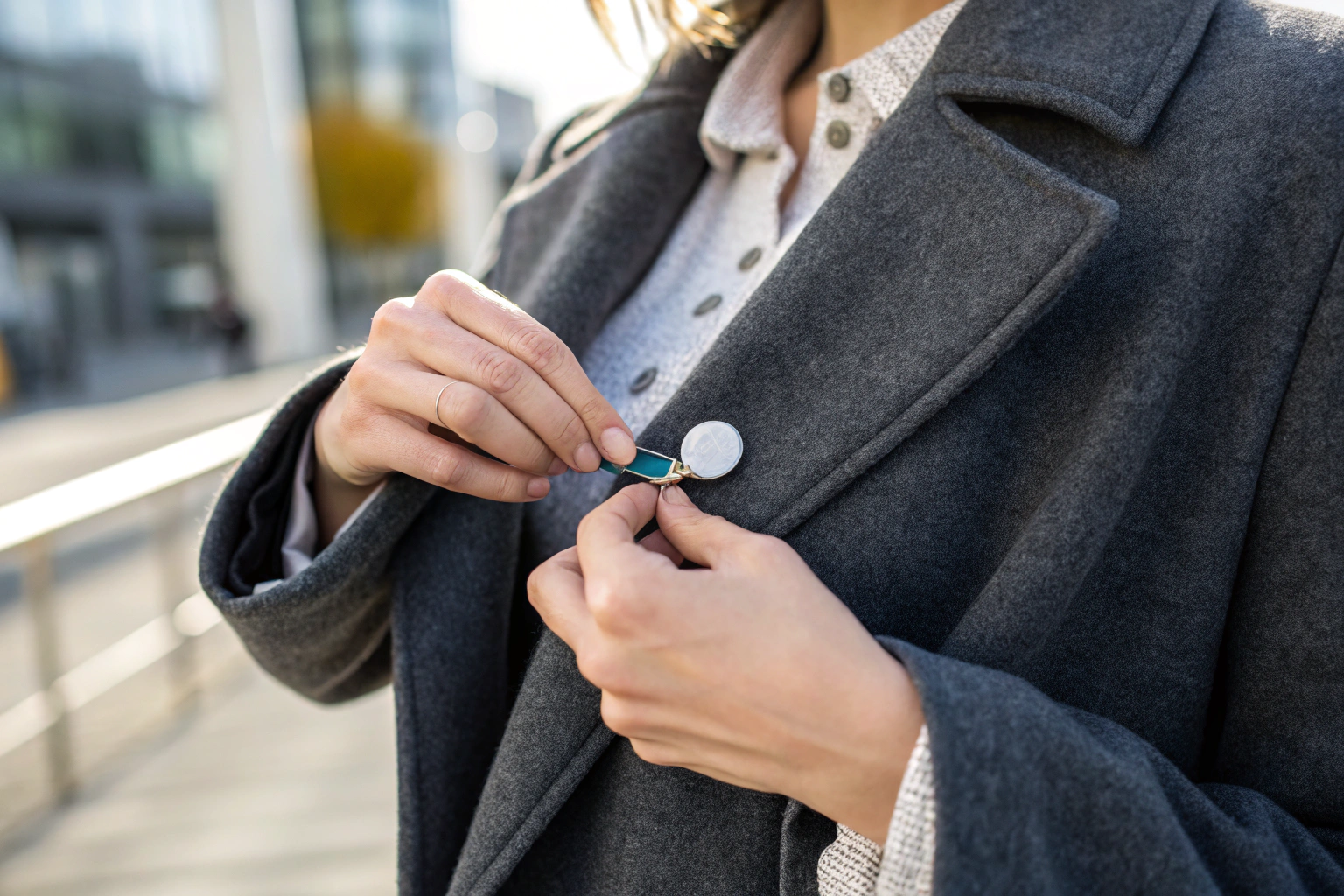
I’ve been making accessories for over twenty years, and if there’s one piece of feedback I’ve heard consistently from buyers like Ron, it’s this: "I love the design, but I’m terrified of losing it." A beautiful brooch is a work of art. But the traditional pin-back system? It has real problems. It can damage delicate fabrics like silk or cashmere. It’s hard for people with arthritis or limited dexterity to fasten. And if that little clasp fails, your beautiful, expensive brooch is gone, lost somewhere on a sidewalk.
That’s why the move towards magnetic backings has been one of the most exciting developments in our industry. For 2026, the innovations in this area are nothing short of revolutionary. We’re not just talking about a simple magnet glued to the back of a pin. We’re talking about engineered systems designed for specific weights, fabric types, and wearing conditions. At Shanghai Fumao Clothing, we’ve been working closely with our design team and suppliers to integrate these new technologies into our brooches, pins, and even some of our heavier scarf clips.
The goal is simple: to make wearing a brooch as easy and worry-free as possible, while ensuring it stays securely in place all day. In this post, I’ll walk you through the four biggest innovations in magnetic backings that are changing the game for designers, retailers, and the end consumer. If you’ve ever hesitated to add brooches to your product line because of concerns about wearability or fabric damage, this information is for you.
How Do Neodymium Magnets Change Brooch Design?
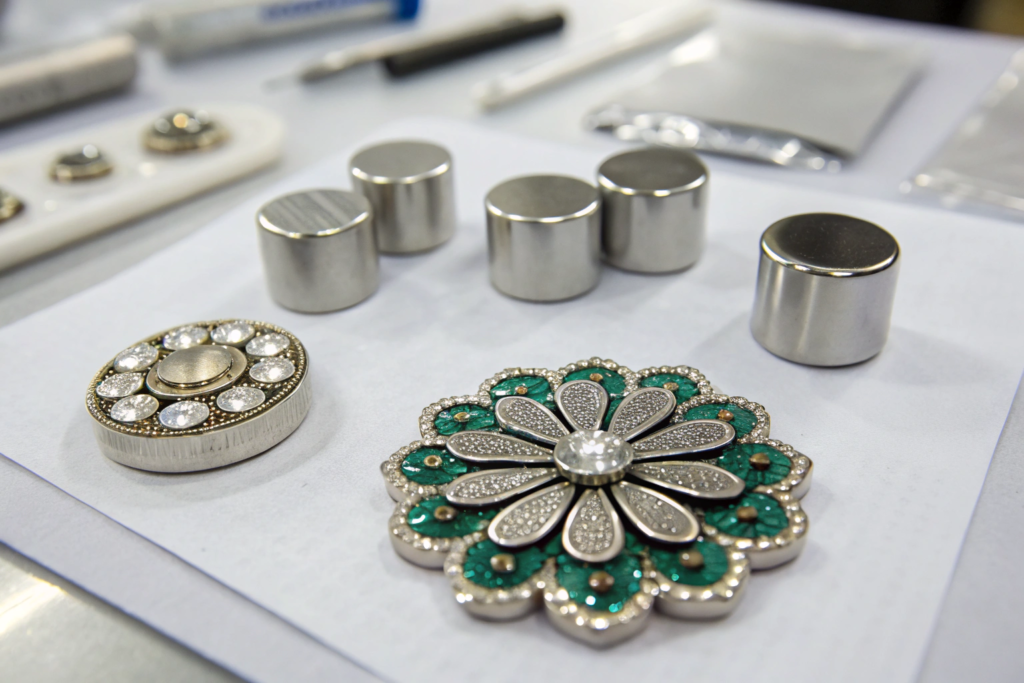
The single biggest innovation driving the magnetic backing revolution is the widespread availability and affordability of neodymium magnets. These are not your ordinary refrigerator magnets. Neodymium is a rare-earth element, and magnets made from it are incredibly powerful for their size. This is the game-changer. It means we can now use a magnet small enough to be discreet and lightweight, yet strong enough to hold a substantial brooch securely through a thick winter coat.
Before neodymium, magnetic backings were mostly a gimmick. The magnets had to be large and heavy to generate any real holding force, which made the brooch itself bulky and uncomfortable to wear. Now, we can design sleek, elegant brooches where the magnetic component is almost invisible. This opens up a world of design possibilities. We can create delicate filigree pieces, lightweight enamel designs, and even cluster brooches with multiple elements, all held in place by a small but mighty neodymium magnet. For a deep dive into the science and applications of these materials, the Rare Earth Technology Alliance provides excellent resources.
What makes neodymium magnets different from regular magnets?
The key difference lies in their magnetic field strength. Neodymium magnets are part of the rare-earth magnet family, and they are the strongest type of permanent magnet commercially available. A neodymium magnet the size of a small button can have a pull force many times greater than a traditional ferrite or ceramic magnet ten times its size. This incredible strength-to-size ratio is what makes them perfect for accessories.
For a brooch, this means the backing magnet, which goes on the inside of the garment, can be very thin and light. It won’t pull or distort the fabric. Yet, it creates a powerful magnetic connection with a matching magnet or a steel plate embedded in the brooch itself. This connection is strong enough to resist the jostling of a busy day. We use different grades of neodymium depending on the weight of the brooch. A heavy, multi-metal brooch needs a stronger magnet than a lightweight resin pin. Our quality control team tests each design to ensure we use the optimal magnet for a secure hold. For technical specifications on magnet grades, the Magnet Distributors and Fabricators Association is a helpful resource.
Can strong magnets damage phones or credit cards?
This is one of the first questions buyers like Ron ask, and it’s a valid concern. Strong magnets can indeed interfere with magnetic strips on old credit cards or affect the compass in some older phones. However, the reality for most modern consumers is that this risk is very low. Most credit cards today use chip technology, not magnetic strips. And modern smartphones, like iPhones and Android devices, use solid-state drives and are generally well-shielded against the small magnets found in accessories.
That said, we take this concern seriously. We design our magnetic systems to contain the magnetic field as much as possible. We also provide clear packaging and care instructions. For example, we might advise keeping the brooch in a separate pocket from wallets with magnetic strips, just to be safe. But in millions of units shipped, we have had virtually no reports of real-world damage. The convenience and security of the magnetic closure far outweighs the minimal risk for the vast majority of consumers. For more information on how magnets interact with electronics, resources like IEEE Spectrum often publish articles on electromagnetic interference and shielding.
What Are The Safety Features In Modern Magnetic Clasps?
Safety is paramount in everything we make, and magnetic backings are no exception. When we started using stronger magnets, we had to think carefully about potential risks, especially for households with children. A small, powerful magnet that detaches from a brooch and is swallowed is a serious medical emergency. It can attract another magnet through intestinal walls and cause life-threatening blockages. This is not something we ever want to think about, which is why our safety protocols are so rigorous.
The good news is that modern magnetic clasp design has evolved to address these risks head-on. It’s not just about making a magnet that’s strong enough to hold a brooch. It’s about engineering the entire system to be safe for its intended user. At our factory in Zhejiang, we follow international safety standards to the letter. We design our clasps so that the magnets are securely housed and cannot be easily removed. We test them rigorously. And we make sure that the holding force is strong enough for daily wear, but not so strong that it poses a different kind of risk. For global safety standards on magnets in toys and accessories, the International Electrotechnical Commission (IEC) is the definitive source.
How do you prevent magnets from detaching and becoming a hazard?
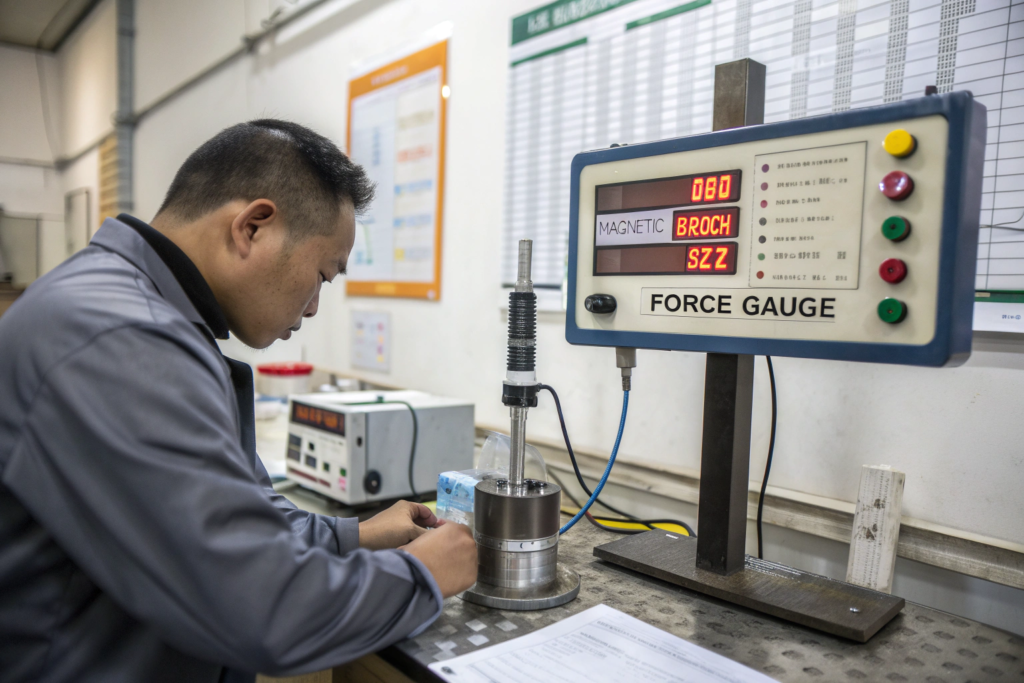
This is the most critical part of our manufacturing process for magnetic brooches. The magnet itself must be permanently secured. We don’t just glue a magnet to the back of a brooch and hope for the best. We use multiple methods to ensure it stays in place forever. For metal brooches, we often create a recessed cavity in the casting. The magnet is placed inside this cavity, and then it’s secured with a high-strength industrial epoxy and sometimes a mechanical retainer, like a crimped ring or a small screw-on plate.
For brooches made of other materials, like resin or wood, we design the housing for the magnet as an integral part of the piece. The magnet is inserted during the manufacturing process and then sealed in. After assembly, every single brooch goes through a pull test. We try to forcefully remove the magnet using a calibrated tool. If the magnet budges or detaches, the brooch fails inspection and is scrapped. This commitment to secure construction is a non-negotiable part of our quality control. It’s how we ensure that the only thing that comes off our brooches is the style.
What are the ASTM standards for magnetic toys and accessories?
For any accessory that could potentially be accessible to children, we look to ASTM F963, the Standard Consumer Safety Specification for Toy Safety in the US. This standard has specific requirements for magnets. It dictates the maximum allowable magnetic flux index for a magnet that could become a small part. In simple terms, it sets a limit on how strong a magnet can be if it’s small enough to be swallowed. Any magnet that exceeds this limit is considered a hazard for children under a certain age.
Our design process takes this into account from day one. If we are developing a brooch for a general audience that might include teenagers, we have to make choices. We either use magnets that are below the ASTM flux index limit, which are generally weaker, or we engineer the brooch so that the magnet compartment is impossible for a child to open without tools. For brooches specifically designed for the adult market, we still follow best practices, but the risk assessment is different. Understanding and applying these standards is a core part of the professional service we offer to protect our clients and their customers. You can review the full scope of ASTM F963 on the ASTM International website.
How Do Magnetic Backings Protect Delicate Fabrics?
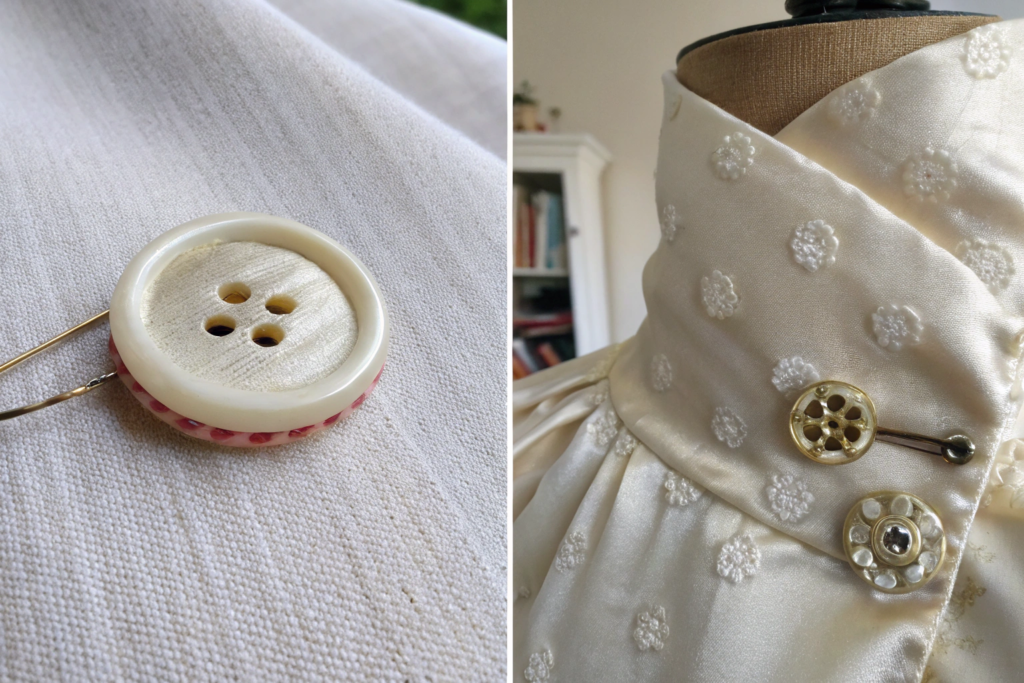
One of the biggest selling points for magnetic brooches, especially among buyers for high-end fashion brands, is fabric protection. Think about the materials we use for coats, blouses, and scarves today. Fine wools, delicate silks, lightweight knits, technical fabrics—these are all easily damaged by a sharp pin. A traditional brooch leaves a permanent hole. Over time, that hole can stretch, fray, and ruin an expensive garment. For the consumer, this is a major deterrent to buying and wearing brooches.
Magnetic backings completely eliminate this problem. There is no pin. There is no sharp point. The brooch attaches through magnetic force, gently clamping the fabric between the decorative front piece and the hidden backing magnet. The fabric is not pierced or damaged in any way. This is a revolutionary benefit for the end user. It means they can move a brooch from a coat to a scarf to a handbag without worrying about leaving a trail of holes. It encourages them to wear brooches more often, on more types of clothing. And that’s good for you, the brand, and for us, the manufacturer. At Shanghai Fumao Clothing, we’ve seen this feature alone drive significant growth in our brooch category.
Will a magnet hold securely on thick winter coats and thin blouses?
This is where the engineering really matters. A one-size-fits-all magnetic backing doesn’t work. The thickness and density of the fabric directly affect the holding power. A magnet pair that works perfectly on a thin silk blouse will likely be too weak to hold through a heavy wool peacoat. Conversely, a magnet system designed for a thick coat would be overkill and might look bulky on a delicate blouse.
Our solution is to offer options. For a given brooch design, we can provide different strengths of backing magnets. For lightweight fabrics, we use a thinner, lower-profile magnet that still provides a secure hold without being too strong. For heavy fabrics, we use a larger, more powerful magnet that can create a strong magnetic field through the extra layers. We guide our clients through this decision. We ask them about the typical garments their customers will wear the brooch on. Then our project managers recommend the right magnetic system. This level of customization ensures the customer has a great experience, no matter what they’re wearing. For information on textile properties and testing, organizations like Textile Exchange provide valuable resources.
Can magnetic closures be used for heavy brooches and scarf clips?
Absolutely. In fact, for heavier brooches and items like decorative scarf clips, magnetic closures are often superior to traditional pins. A heavy brooch with a single pin has a tendency to sag or tilt because all the weight is hanging from one point. A magnetic system, however, distributes the holding force over a wider area. The attraction between the front piece and the back magnet creates a sort of magnetic clamp that holds the entire brooch flat and secure against the fabric.
We use this principle for larger, heavier designs. For example, we make beautiful, multi-strand scarf clips that combine several chains and decorative elements. A pin couldn’t handle that weight without damaging the scarf. But a well-designed magnetic system holds it perfectly in place, allowing the scarf and the clip to drape beautifully. The key is to use multiple magnets or a single large, powerful magnet, and to ensure the back plate is sized appropriately to balance the weight. It’s a perfect example of how modern materials allow us to solve old design problems.
How Do We Customize Magnet Strength For Different Brooch Weights?
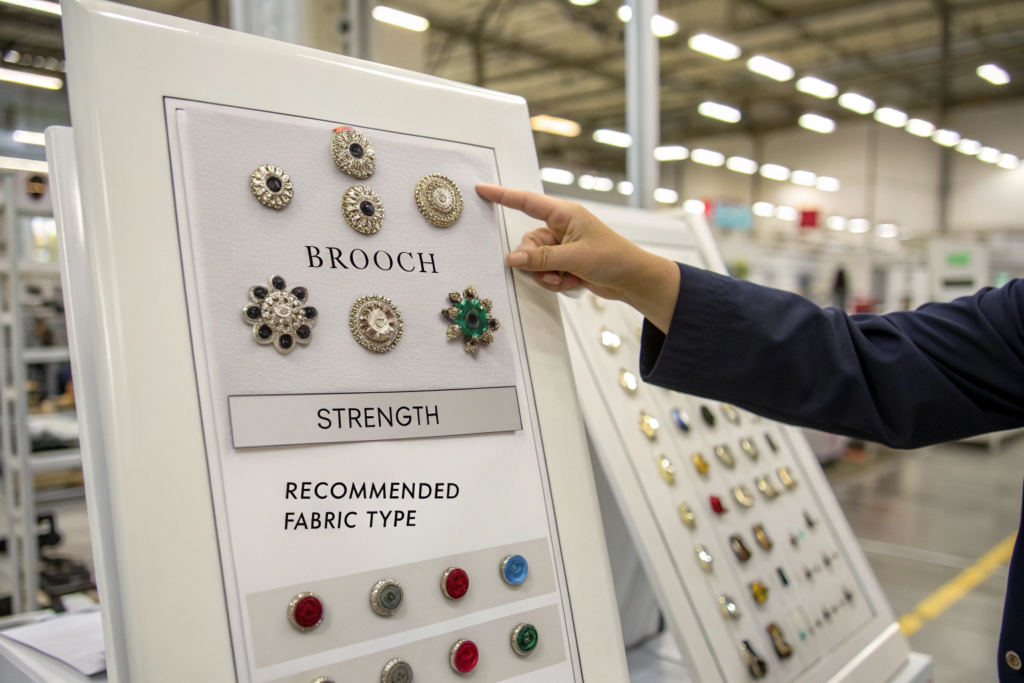
There is no magic formula for magnet strength. The right magnet for a brooch depends on a simple equation: the weight of the brooch plus the thickness of the fabric. A heavier brooch needs a stronger magnet. A thicker fabric needs a stronger magnet to maintain the same level of hold. Our job at the factory is to solve this equation for every single design we produce. We don’t guess. We test.
Our process starts with the brooch design itself. Once we have a prototype, we weigh it. Then we consider the target market and the types of garments it will likely be worn on. Our engineers then select a candidate magnet system. We test this system on various fabric swatches, measuring the pull force required to separate the brooch. We want a secure hold that withstands normal movement, but we don’t want it to be so strong that it’s difficult for the wearer to remove. It’s a balance, and we get it right through careful testing. This technical expertise is a core part of the service we offer to buyers like Ron.
How do you calculate the right magnetic pull for a resin vs. metal pin?
The material of the brooch itself matters less than its total weight. A solid brass brooch will be much heavier than a similar-sized brooch made of lightweight resin or wood. So the first step is always an accurate weight measurement. Once we have the weight, we can calculate the minimum pull force needed to hold it securely on a given fabric. We add a significant safety margin to that minimum to account for accidental bumps or wind.
But material can matter in other ways. If the brooch itself is made of a ferrous metal (a metal that contains iron), it can be attracted to the magnet, which can actually help increase the holding force. In some designs, we use a steel backing plate inside the brooch to enhance the magnetic circuit. For non-magnetic materials like resin, brass, or aluminum, the holding force comes purely from the attraction between the two magnets (the one in the brooch and the one on the back). Our design team takes all these factors into account when specifying the magnet system. For resources on material properties and their interaction with magnetic fields, K&J Magnetics has excellent technical charts and calculators.
Can we offer multiple magnet options for the same brooch design?
Yes, and this is a service that our clients, especially major supermarkets and catalog companies, love. For a single brooch design, we can offer a "wardrobe system." We package the beautiful brooch with a set of two or three different backing magnets. One might be a small, low-profile magnet for thin blouses and shirts. Another might be a larger, more powerful magnet for sweaters and light jackets. And a third might be an extra-strong magnet for heavy winter coats.
This turns a single product into a versatile accessory that works year-round, on any garment. It’s a fantastic selling point and adds tremendous value for the end customer. They don’t have to choose between wearing the brooch on their summer dress or their winter coat. They can do both. We design the backing magnets to be easy to swap out. They might simply attach magnetically to each other, or they might have a small, simple mechanism. It’s another example of how we use innovation to solve real consumer problems and help our clients grow their business.
Conclusion
The evolution of magnetic backings has transformed the humble brooch from a delicate, risky accessory into a versatile, user-friendly wardrobe staple. As we’ve seen, innovations like super-strong neodymium magnets, rigorous safety engineering, fabric-friendly designs, and customizable strength options are driving this change. For the modern consumer, a magnetic brooch is no longer a compromise. It’s an upgrade. It offers security, convenience, and complete peace of mind, protecting both their investment in the accessory and their investment in the clothing it adorns.
At Shanghai Fumao Clothing, we are at the forefront of these innovations. Our factory in Zhejiang combines traditional craftsmanship with the latest magnetic technologies. Our design team and experienced project managers are ready to work with you to create brooches that are not only beautiful but also a joy to wear. We handle all the complexities—from magnet selection and safety testing to quality control and logistics—so you can offer your customers a product that truly stands out.
If you’re ready to explore the possibilities of magnetic brooches for your next collection, or if you have an existing design you’d like to upgrade, let’s talk. Please contact our Business Director, Elaine, at elaine@fumaoclothing.com to start the conversation. We’ll help you create something that’s both beautiful and brilliantly functional.