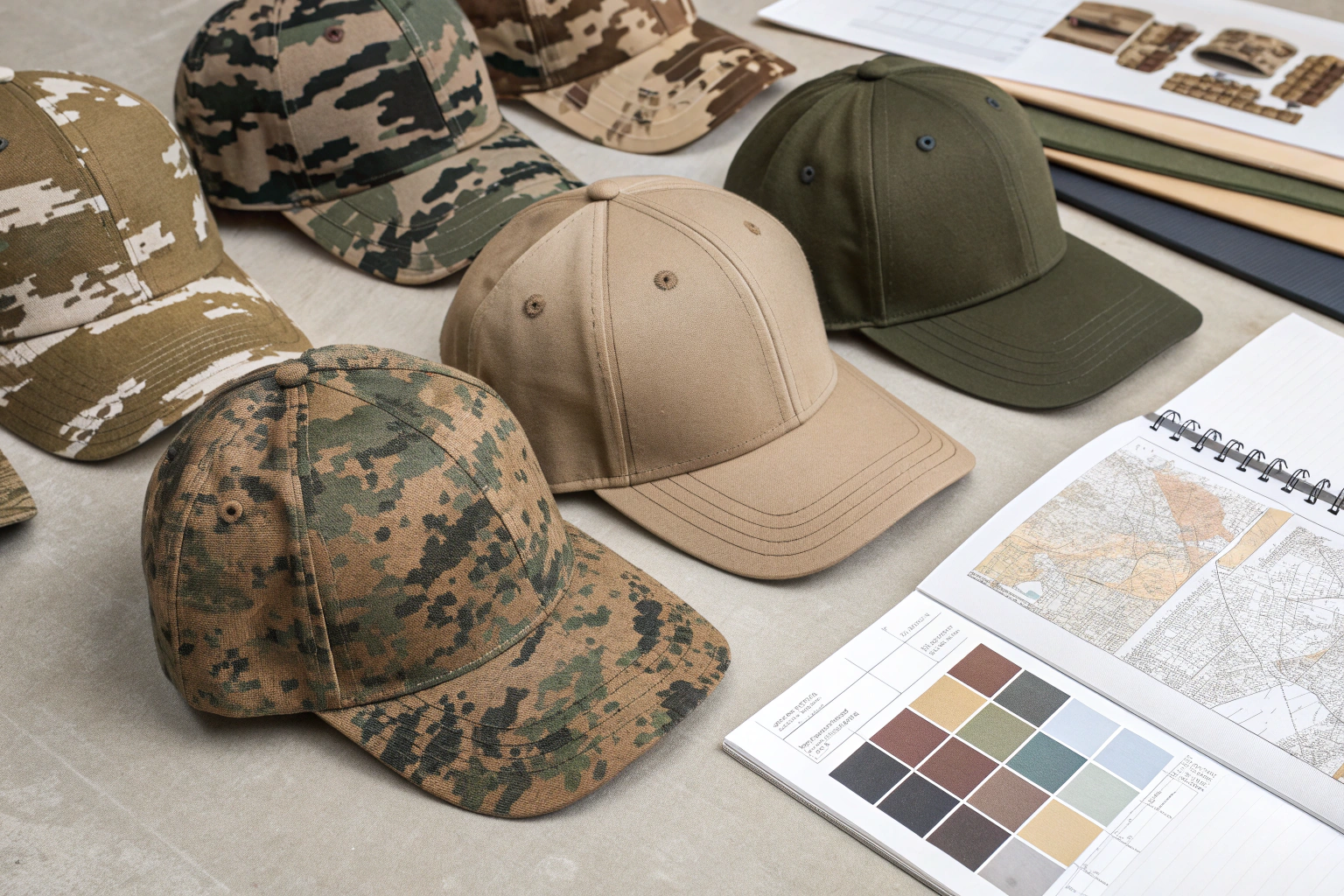
The request lands in my inbox at least once a week. A buyer needs camouflage baseball caps. Sometimes for a hunting brand. Sometimes for a streetwear collection. Sometimes for a corporate event with an outdoor theme. The pattern seems simple. Green and brown splotches. How hard could it be? The truth is much more complicated.
Sourcing baseball caps with camo patterns requires navigating complex print techniques, fabric choices, and pattern copyright issues. Success depends on understanding the difference between woven and printed camouflage, selecting appropriate materials for the cap style, and working with factories that specialize in accurate pattern reproduction.
At AceAccessory, we have produced thousands of camouflage caps for clients ranging from outdoor equipment brands to fashion labels. Each order taught us something new. Camouflage is not one pattern. It is hundreds. The military uses specific registered designs. Fashion brands want unique variations. Getting it right requires technical knowledge that most generalist factories lack. Let me share what we have learned.
What Camouflage Options Exist For Baseball Caps?
The first surprise for most buyers is that camouflage is not a single thing. The pattern can be created in multiple ways. Each method produces different results. Each has different costs and applications. Your choice here affects everything downstream.
How does woven camouflage differ from printed camouflage?
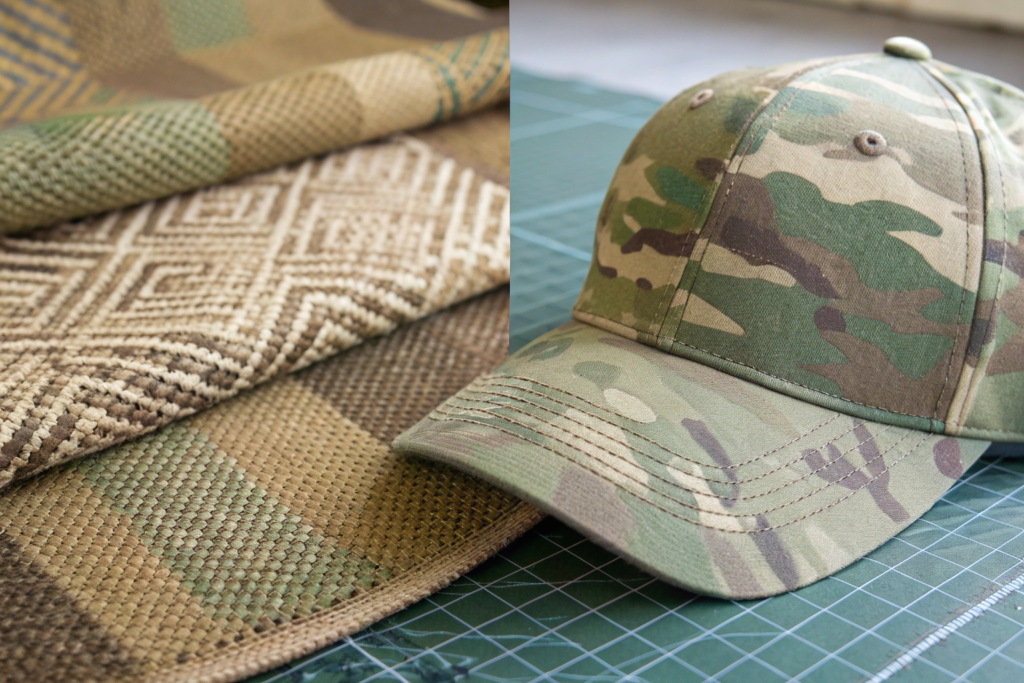
Woven camouflage uses different colored yarns during the weaving process. The pattern is literally built into the fabric. This method produces camouflage that lasts forever. The pattern cannot fade or wash out because it is structural. Military organizations prefer woven camouflage for this reason. The fabric also feels different. You can feel the texture where colors change.
Printed camouflage applies the pattern to finished fabric using ink. This method costs less and allows more color options. You can print any pattern instantly without stocking multiple yarn colors. The downside is durability. Over time and with washing, printed camouflage can fade or crack. For baseball caps, which face sun and sweat, this matters. We help clients choose based on their expected product lifespan. A promotional cap for a one-time event works fine with printing. A premium cap for outdoor enthusiasts needs woven construction. Textile Today offers excellent technical comparisons of these methods. We also reference fabric construction guides when advising clients.
What are the standard camouflage patterns available?
The world of camouflage patterns is vast. Woodland camo remains the most recognized. Green, brown, and black shapes designed for forest environments. Desert camo uses tan and light brown for arid regions. Digital camo uses pixelated blocks instead of organic shapes. This pattern became popular with modern military forces and then crossed into fashion.
Beyond these standards, countless variations exist. Tiger stripe camo has a distinct striped appearance. Multicam uses a complex blend of colors for versatility. Pink camo emerged for fashion and fundraising. Urban camo uses grays and blacks for city environments. Each pattern communicates something different to the customer. A hunting brand needs authentic woodland patterns. A streetwear brand might want digital or abstract variations. We maintain relationships with multiple fabric mills to access this variety. Patterns of camo history provides a fascinating reference library. Shanghai Fumao Clothing keeps a physical archive of pattern samples for client review.
How Do You Ensure Accurate Color Matching In Camouflage?
Color matching challenges multiply with camouflage. You are not matching one color. You are matching four or five simultaneously. The relationship between colors matters as much as the colors themselves. A slightly too dark green changes the whole pattern appearance. This complexity demands specialized equipment and trained eyes.
What lighting conditions matter for camouflage evaluation?
Camouflage exists to deceive the eye. The colors interact differently under various light sources. A cap that looks correct in your office might look wrong in sunlight. This causes real problems when customers receive products.
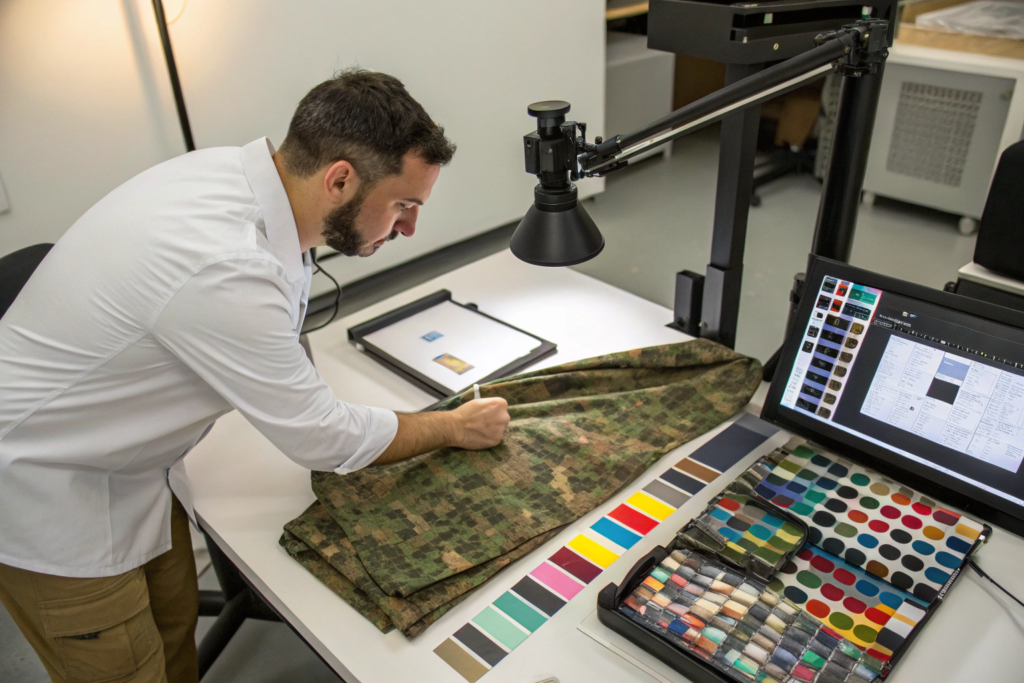
We evaluate camouflage under multiple lighting conditions. Daylight simulation shows how the cap will look outdoors. Store lighting shows how it appears at retail. We use standardized light booths with multiple light sources. This practice, common in textile color assessment, ensures our caps match expectations across environments. When a client approves a sample under our controlled conditions, they know what they will receive. No surprises when the container arrives. We also train our team using color theory resources to understand how colors interact in complex patterns.
How do you manage color variation across different fabric types?
The same camouflage pattern looks different on cotton versus polyester versus wool. Fabric absorbs dye differently. The texture affects how light reflects. A shiny polyester cap reflects more light, making colors appear brighter. A matte cotton cap absorbs light, making colors appear deeper.
We learned this lesson working with a client who wanted matching caps and bags. The caps used cotton twill. The bags used polyester. The same pattern looked like two different products. Now we always produce samples on the actual fabric for each product. We adjust dye formulations to account for material differences. This attention to detail separates professional results from amateur attempts. We maintain separate color standards for each fabric type we use. Textile World frequently publishes articles on dyeing challenges across different materials. See our quality control process here.
What Fabrics Work Best For Camouflage Baseball Caps?
Fabric choice determines everything about a cap. How it feels. How it wears. How it breathes. How the camouflage looks. Different end uses demand different materials. There is no single right answer, only the right answer for your specific customer.
Why is cotton twill the traditional choice for camouflage caps?
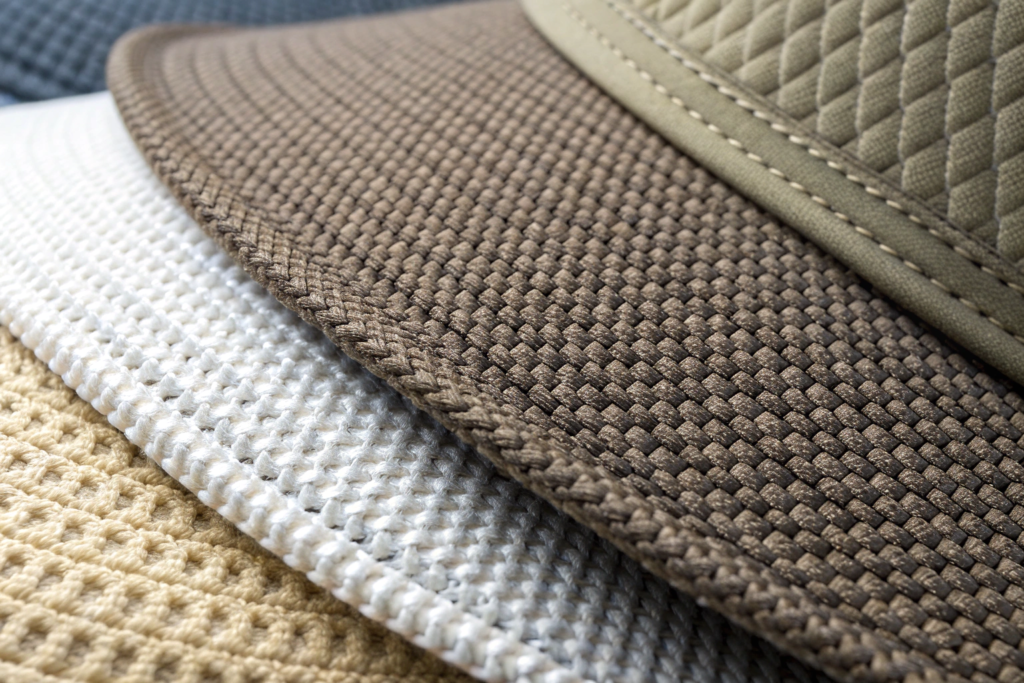
Cotton twill dominates the camouflage cap market for good reasons. It takes dye beautifully. It feels comfortable against skin. It breathes well in warm weather. It softens with wear without losing shape.
The twill weave also enhances camouflage appearance. The diagonal texture adds depth that flat fabrics lack. Colors seem to shift slightly as light hits the raised weave. This effect actually improves the camouflage function. It breaks up the outline more effectively. For hunting and outdoor brands, cotton twill remains the gold standard. We source high-quality cotton from reliable mills and test every batch for shrinkage and colorfastness. Cotton Incorporated provides excellent resources on cotton performance characteristics. We also study fabric durability research to ensure our selections meet client needs.
When should you consider synthetic blends for camouflage?
Cotton has limitations. It absorbs moisture. It dries slowly. It wrinkles. For performance applications, synthetic blends offer advantages. Polyester-cotton blends combine the look of cotton with the durability of polyester. Moisture-wicking properties keep sweat off the forehead. Colors stay brighter longer.
For clients producing caps for fishing, hiking, or military use, we often recommend blends with higher polyester content. These caps perform better in wet conditions. They resist fading from sun exposure. They hold their shape through repeated washing. The camouflage pattern, if woven, remains sharp indefinitely. The trade-off is a slightly different hand feel. Some customers prefer the natural cotton touch. We help clients balance these factors based on their target market. Textile Exchange tracks innovations in synthetic fiber development. Shanghai Fumao Clothing offers sampling in multiple fabric options so clients can feel the difference themselves.
How Do You Handle Custom Camouflage Pattern Development?
Sometimes standard patterns are not enough. Brands want exclusive camouflage. Something unique that becomes their visual signature. Custom development opens possibilities but requires careful execution. The investment pays off in brand differentiation.
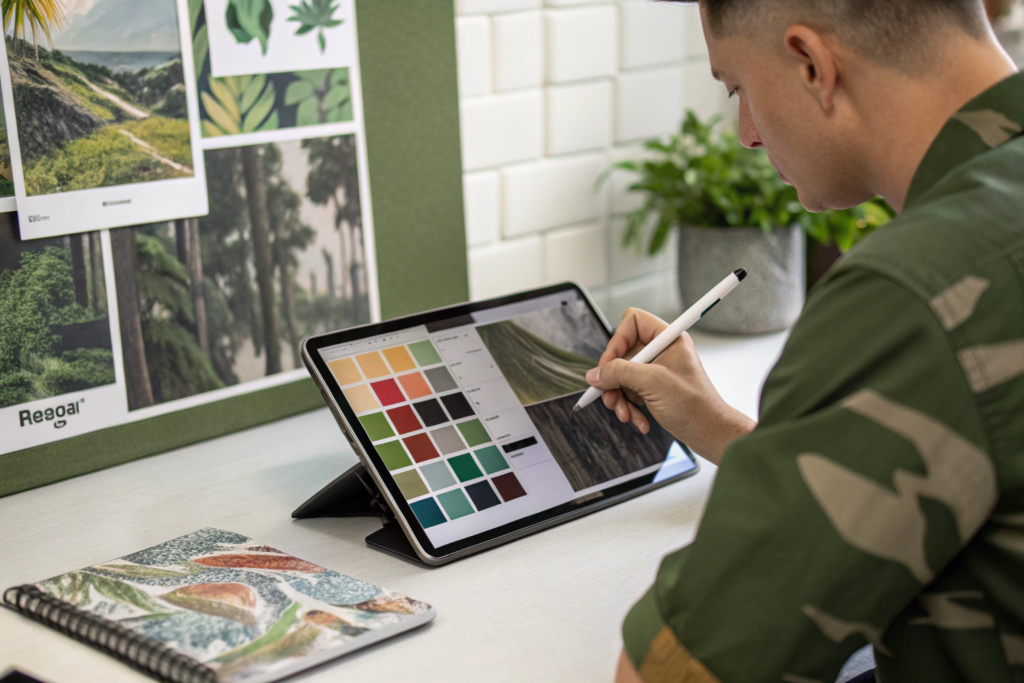
What is the process for creating a proprietary camouflage pattern?
Custom camouflage starts with inspiration. A brand might want patterns based on local terrain. Desert colors of Arizona. Forest tones of the Pacific Northwest. Urban textures of New York. Our design team translates these references into repeatable patterns.
The technical work happens next. We digitize the pattern for weaving or printing. Colors get specified in multiple formats for different production methods. We test the pattern at actual cap scale. A pattern that looks great on a computer screen might look muddy on a curved cap surface. Adjustments follow. Multiple rounds of sampling ensure the final product matches the vision. This process takes time but creates valuable brand assets. For guidance on protecting these designs, World Intellectual Property Organization offers resources on pattern copyright. We also use Adobe Creative Cloud tools to refine patterns before sampling.
How do you protect against pattern copyright infringement?
Camouflage patterns exist in a complex legal space. Military patterns like US Woodland are public domain. Commercial patterns like Multicam are trademarked. Using protected patterns without permission invites lawsuits.
We take this seriously. Before producing any camouflage, we verify pattern ownership. For standard military patterns, we confirm they are free to use. For commercial patterns, we require clients to provide licensing documentation or work with authorized mills. For custom patterns, we document the original design process to establish ownership. This diligence protects our clients from legal headaches. When working with us, you receive products that clear legal hurdles, not create them. We consult resources from International Trademark Association to stay current on pattern protection issues.
What Quality Checks Are Essential For Camouflage Caps?
Camouflage caps demand specialized quality checks. Standard cap inspections miss issues unique to patterned products. Pattern matching across panels matters enormously. A misaligned camouflage pattern looks cheap and wrong. Your customers notice these details even if they cannot articulate them.
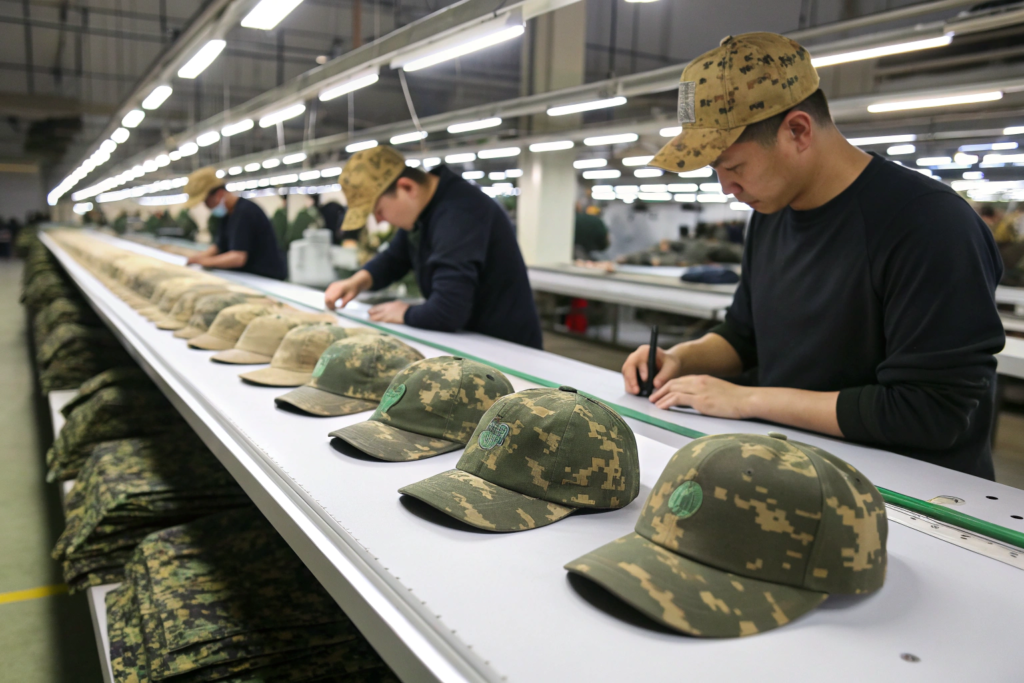
How do you verify pattern alignment across cap panels?
A baseball cap consists of multiple fabric panels sewn together. With solid colors, panel seams are invisible. With camouflage, each seam must align the pattern correctly. A branch shape should continue across the seam. Color boundaries should match up.
This requires careful cutting and sewing. Our production team marks pattern registration points on every panel. Sewing operators align these points before stitching. Inspectors check every cap for pattern continuity. Caps with misaligned patterns get rejected. This attention to detail separates premium caps from promotional giveaways. The difference is obvious to anyone who looks closely. Your customers notice. Your brand reputation depends on these details. We follow quality management standards to ensure consistency across every order.
What colorfastness testing matters for camouflage products?
Camouflage caps face harsh conditions. Sun exposure. Sweat. Rain. Repeated washing. Colors must survive all of it. We test every production batch for colorfastness.
Lightfastness tests simulate months of sun exposure. We confirm that greens stay green and browns stay brown. Crocking tests check whether wet fabric transfers color. A camo cap that bleeds onto a white shirt is a disaster. Washing tests verify pattern integrity after multiple cycles. These tests follow AATCC standards and provide objective data. We share results with clients so they know exactly what they are selling. Transparency builds trust that lasts beyond individual orders. We also reference ISO textile testing standards for international clients with specific requirements.
Conclusion
Sourcing camouflage baseball caps requires specialized knowledge. Pattern types, fabric choices, color matching, and quality checks all differ from solid-color production. The factories that understand these nuances deliver products that perform and impress. Those that treat camouflage as just another print disappoint everyone.
At Shanghai Fumao Clothing, we built our camouflage capabilities over many years. We learned through trial, error, and close partnership with demanding clients. Today, we produce camouflage caps for hunting brands, fashion labels, and corporate programs with equal confidence. The patterns come out right. The colors match. The quality holds up.
If you are planning a camouflage cap project, I invite you to reach out. Let us discuss your pattern needs, your fabric preferences, and your quality expectations. We can show you what real expertise looks like. For new projects and inquiries, please contact our Business Director, Elaine, directly at elaine@fumaoclothing.com. We look forward to helping you create camouflage caps that stand out for all the right reasons.