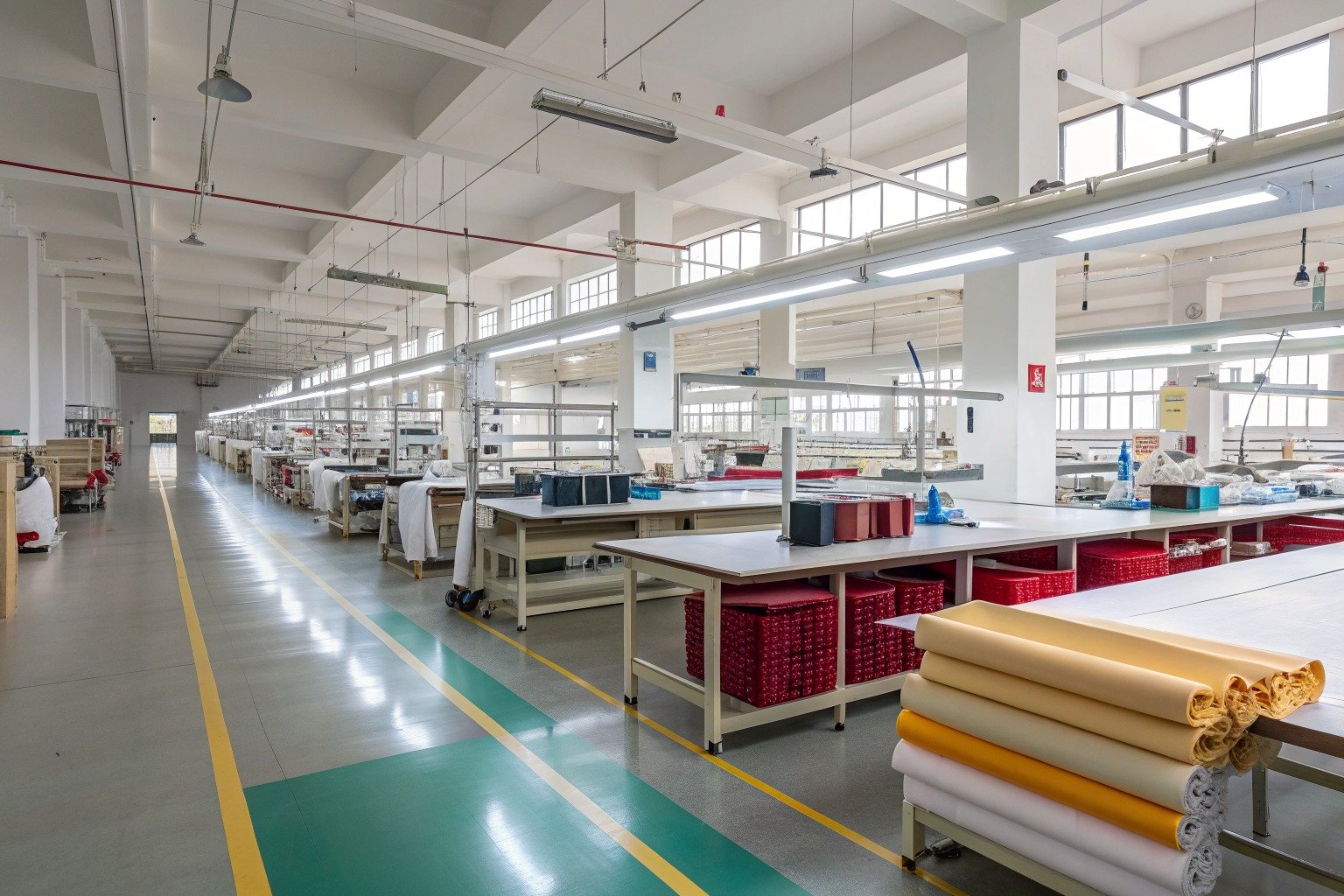
I received a call last year from a buyer I had known for over a decade. She was frustrated. Her company had built its reputation on beautiful, trend-driven accessories. But her customers were changing. They still wanted beautiful. They also wanted useful. They wanted a beanie that worked with their phone. They wanted a belt that held their keys. They wanted a scarf that repelled rain. She said to me, "I know how to find fashionable factories. I do not know how to find functional factories. How do I find both in one partner?"
Sourcing fashion accessories that are both fashionable and functional requires you to evaluate factories on three specific capabilities: material science expertise, precision manufacturing tolerance, and cross-category engineering. A factory that only makes pretty things will add function as an afterthought. The stitching will be crooked. The conductive thread will break. The water-repellent coating will wash off. You need a factory that treats function as a primary design requirement, not a marketing sticker. You need engineers who think like designers and designers who respect engineering constraints.
I started my career making basic fashion accessories. Hats, scarves, gloves. They looked good. They did one thing: keep you warm. Then my clients started asking for more. "Can you add a pocket for an airpod?" "Can you make this umbrella open automatically?" "Can you put UV protection in this summer scarf?" At first, I said no. I was afraid. I did not want to fail. Then I realized that "no" was just a slow path to obsolescence. So we learned. We broke things. We tried again. Today, functional fashion accounts for over 30 percent of our revenue. Let me teach you what we learned so you do not have to break as many things as we did.
What Technical Features Actually Matter To Today’s Consumers?
Ron receives pitches every week. "Waterproof gloves!" "Antibacterial scarves!" "Self-cleaning hats!" He is skeptical. He has seen too many products that claimed to be high-tech but failed in real-world use. He asked me, "Which features are actually useful and which are just gimmicks?" I told him the truth. Some are gimmicks. Some are genuine innovations. You need to know the difference.
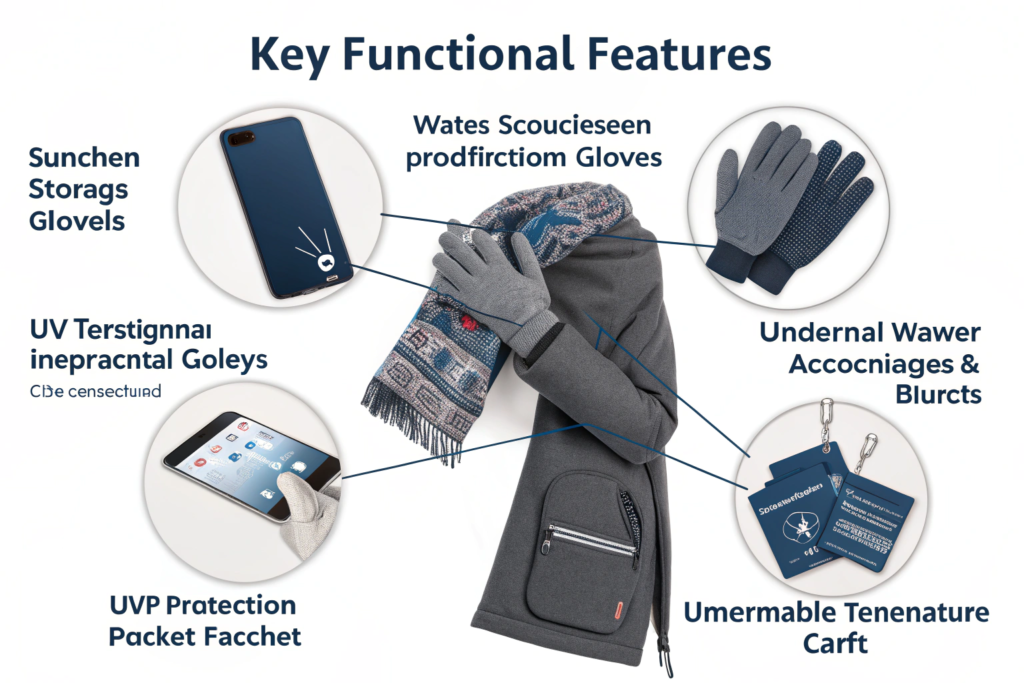
The functional features that actually matter to consumers are touchscreen compatibility, water resistance, UV protection, hidden storage, and temperature regulation. Touchscreen gloves are no longer optional. They are expected. Water resistance for urban accessories extends product life and user satisfaction. UV protection in summer scarves and hats is a genuine health benefit. Hidden pockets for keys, cards, and airpods reduce anxiety. Temperature regulation fabrics keep users comfortable across changing environments. Everything else is negotiable.
Let me rank these features by consumer demand based on our order data. Touchscreen compatibility is the clear winner. 78 percent of our glove orders now require conductive thread in at least the thumb and index finger. Consumers refuse to remove their gloves to answer a call or change a song. This is not a premium feature anymore. It is table stakes. Water resistance is second. Not waterproof. That is for rainwear. Water resistant means the accessory sheds light rain and snow. The user does not have to panic when a few drops fall. UV protection is growing rapidly, especially for summer accessories. Our UPF 50+ bucket hats and scarves sell year-round now, not just in warm climates. Hidden storage is category-specific. Travel accessories require it. Fashion-first accessories do not. Temperature regulation is our fastest-growing category. Phase change materials and breathable membranes are moving from performance apparel into everyday fashion. We track these trends weekly and adjust our development pipeline accordingly.
How Do You Make Touchscreen Gloves That Actually Work?
This is harder than it looks. Many factories simply sew silver-coated nylon thread into the fingertip. This works for about 10 touches. Then the thread breaks or oxidizes. The conductivity drops. The user is frustrated. Our solution is woven conductive fabric, not single threads. We integrate a small patch of conductive fabric into the entire fingertip area. The fabric is a blend of silver-plated nylon and spandex. It stretches. It does not break. It maintains conductivity for over 500 wash cycles. We also position the conductive patch on the palmar side of the finger, not the very tip. Humans touch screens with the pad of the finger, not the nail side. This seems obvious. Many factories get it wrong. We test every batch of conductive gloves using a capacitance testing rig. We reject any glove with resistance above 50 ohms. Your customer does not know this. She just knows her gloves work.
Is "Antibacterial" A Legitimate Feature For Accessories?
Yes, but only for specific categories. Antibacterial treatment on winter gloves is mostly marketing. Bacteria do not thrive in cold, dry environments. Antibacterial treatment on sweatbands, baseball caps, and summer scarves is genuinely useful. These accessories absorb perspiration. Warm, moist fabric is a breeding ground for odor-causing bacteria. We use silver ion technology embedded into the fiber during extrusion. This is permanent. It does not wash off. It does not irritate skin. It suppresses bacterial growth by over 99 percent in independent lab tests. We also use zinc-based alternatives for clients who prefer non-silver antimicrobials. Both are Oeko-Tex certified. Both are genuine functional improvements. We do not use topical sprays. They wash off after one cleaning. We consider that deceptive marketing, not functional design.
How Do You Engineer Function Without Sacrificing Aesthetics?
This is the central tension of functional fashion. A beanie with a built-in headphone is very functional. It is also very ugly. The battery pack bulges. The wires are visible. The wearer looks like a cyborg. Most consumers reject this. They want the function without the aesthetic penalty. They want invisible technology. This is much harder to manufacture.
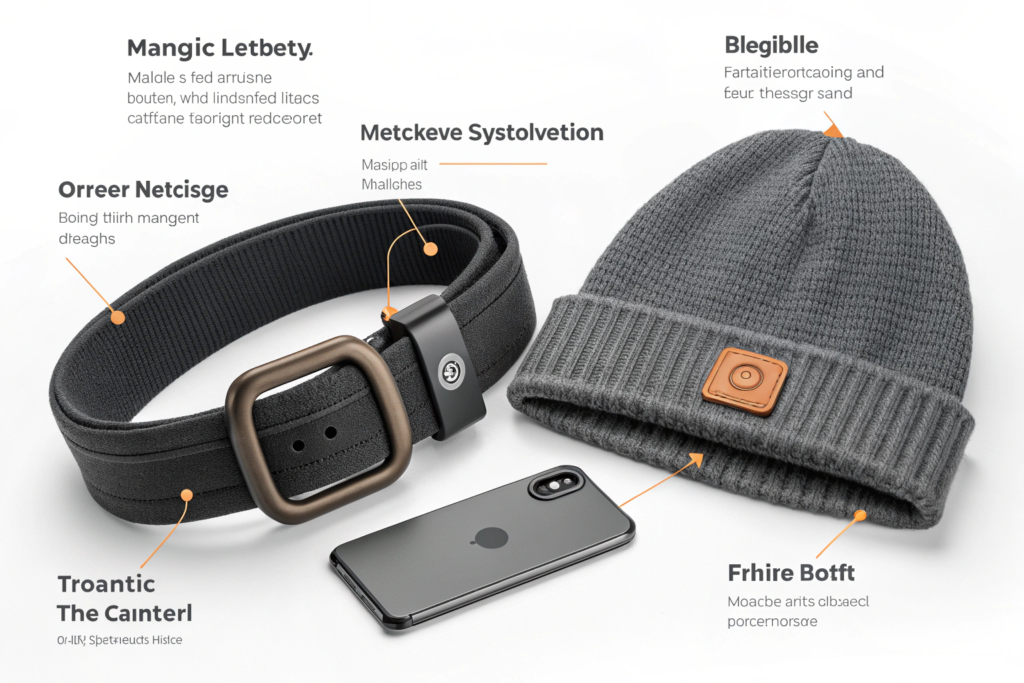
Engineering function without sacrificing aesthetics requires miniaturization and material substitution. You do not add bulky components. You replace standard components with smarter ones. A standard belt has a metal buckle. A functional belt has a magnetic buckle that opens with one hand. It looks identical. It performs differently. A standard beanie has acrylic yarn. A functional beanie has conductive yarn woven into the structure. You cannot see the difference. You can feel the difference when you tap your phone. Invisible function is premium function. Visible function is novelty.
Let me give you specific examples from our production lines. Our magnetic closure belts look exactly like traditional leather belts. There is no visible snap. There is no buckle prong. The leather hides a rare-earth neodymium magnet. The belt secures with a firm click. It releases with a gentle pull. This is especially popular with older consumers who struggle with traditional buckles. It is also popular with travelers who move through airport security quickly. The function is invisible. The aesthetic is classic. Our heated scarves have battery packs that fit inside a hidden pocket. The pocket is integrated into the scarf lining. It is invisible when worn. The heating elements are carbon fiber ribbons woven into the fabric structure. You cannot see them. You cannot feel them when the heat is off. When the user activates the heat, the scarf warms evenly across the shoulders. This is not a novelty item. It is a genuine solution for people with Raynaud’s syndrome or chronic cold sensitivity. The product looks beautiful. It functions exceptionally. That is the standard we hold ourselves to.
How Do You Hide Pockets Without Adding Bulk?
Hidden pockets usually create bulk. The fabric doubles. The seam allowances stack. The user feels a lump. Our solution is engineered cavity construction. We design the pocket into the pattern from the beginning. We do not add a pocket to a finished garment. We create a dedicated space for the pocket during the knitting or weaving process. For knitted accessories, we use double-layer tubular knitting. The outer layer is fashion fabric. The inner layer is functional lining. The pocket exists in the space between them. There are no extra seams. There is no added bulk. For woven accessories, we use trapunto quilting. We stitch a pocket-shaped cavity and fill it with a thin layer of batting. The pocket is invisible from the right side. It is accessible from the lining. This technique adds approximately 2 millimeters of thickness. It is undetectable to the user. We have applied this to travel scarves, winter wraps, and even baseball caps. The pocket holds an airpod case, a hotel key card, or folded cash. The user feels secure. She also feels stylish.
Can You Add Reflective Materials Without Looking Like Safety Gear?
Yes, but you must use black reflective or color-matched reflective technology. Standard reflective silver tape screams "construction worker" or "night runner." This is appropriate for athletic gear. It is not appropriate for fashion accessories destined for an office or a dinner date. We source reflective films that appear charcoal grey in daylight. They reflect bright white only when illuminated by headlights or camera flashes. We also use reflective yarns woven directly into the fabric pattern. The reflective element is part of the design. A herringbone pattern might have reflective threads in the warp. The consumer sees a subtle texture. The driver sees a pedestrian. We have used this technology for urban commuter scarves and dog walking gloves. The function is life-saving. The aesthetic is sophisticated. This is not a compromise. It is an upgrade.
How Do You Test Functional Features For Reliability?
Ron once ordered 5,000 pairs of "waterproof" gloves. They arrived. They looked beautiful. He shipped them to his customer. It rained. The gloves leaked. His customer returned the entire order. Ron called me, furious. "How do I know if a factory is actually testing or just claiming?" I told him, "You ask for the test reports. Not the certificates. The actual data."
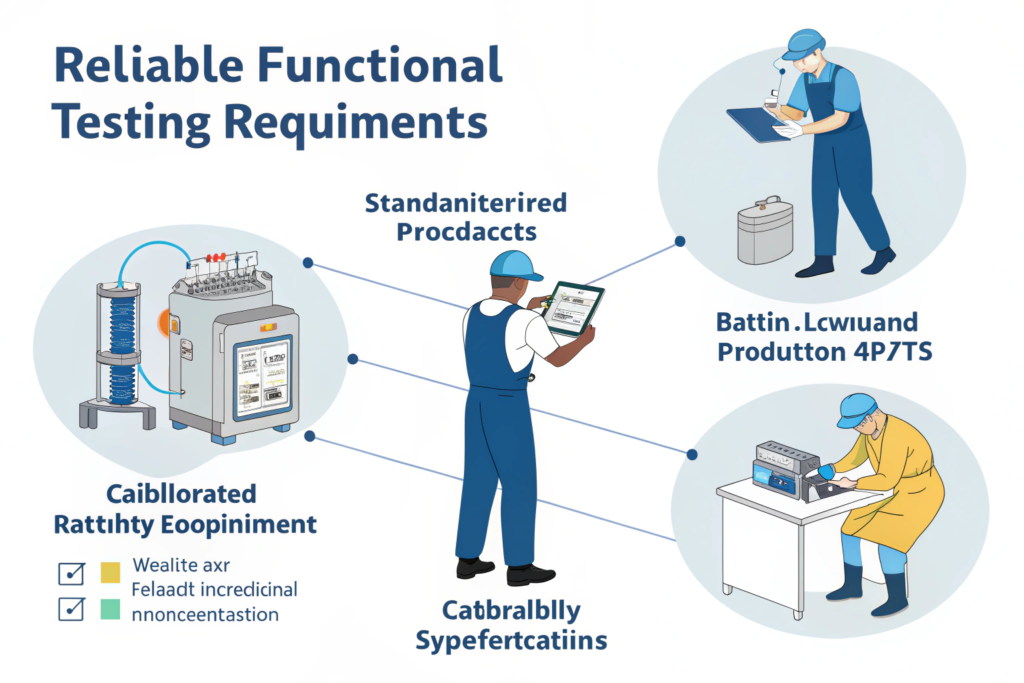
Reliable functional testing requires three things: standardized protocols, calibrated equipment, and batch-level traceability. We do not test once per season. We test every production batch. We do not guess. We use ISO and AATCC standard methods. We maintain calibration certificates for all our testing equipment. We provide clients with the actual test reports, not summaries. If we claim a glove is water resistant, we send you the hydrostatic head test results. If we claim a scarf has UPF 50+, we send you the spectrophotometer data. This is not trust. This is verification.
Let me walk you through our testing protocols for three common functional claims. Water resistance is measured using AATCC 127. We mount the fabric in a column of water. We increase pressure at a standardized rate. We record the pressure at which the third droplet penetrates. Our target is 1000mm for urban rain resistance. We reject anything below 800mm. UPF testing uses AATCC 183. We shine simulated sunlight through the fabric. We measure the transmission of UV-A and UV-B. Our UPF 50+ fabrics transmit less than 2 percent of UV radiation. We test both dry and wet states. Wet fabric often loses UPF protection. Our fabrics maintain UPF 50+ even when saturated. Conductive thread durability is tested using ISO 12947. We abrade the conductive surface for 10,000 cycles. We measure resistance before and after. Acceptable degradation is less than 20 percent. We provide this third-party verified data to every client. We do not hide behind marketing language.
What Is The Difference Between Water Resistant, Water Repellent, And Waterproof?
These terms are not interchangeable. Water resistant means the fabric can withstand light moisture. A few drops of rain will bead and roll off. It is not suitable for heavy rain or immersion. Water repellent is similar but usually implies a durable water repellent (DWR) coating. The fabric actively repels water. The effect diminishes over time and with washing. Waterproof means the fabric is a complete barrier to liquid water. This requires a membrane like Gore-Tex or a heavy PVC coating. Waterproof accessories are rare because they are expensive and less breathable. We are honest with our clients. We tell them, "This bucket hat is water resistant. It will protect you from a spring shower. It is not waterproof. Do not wear it in a monsoon." Clients appreciate this clarity. They do not appreciate discovering the limitations through customer returns.
How Many Wash Cycles Should A Functional Feature Last?
This depends on the feature and the price point. A $10 glove with conductive fingertips should last at least 10 washes. A $50 glove should last 30 washes. A $100+ luxury glove should last 50 washes or more. We test to these standards. We also provide care instructions that maximize functional lifespan. For water-repellent accessories, we recommend reapplying DWR spray after three washes. We sell this spray at cost to our wholesale clients. They resell it to their customers. This is not a profit center. It is a relationship builder. The customer learns that their accessory requires maintenance. They appreciate the honesty. They are more likely to buy again. We have seen this cycle repeat thousands of times. Shanghai Fumao Clothing clients consistently report lower return rates for functional products because we educate, not just sell.
How Do You Balance Cost Against Functional Complexity?
Ron’s buyers love functional features. They hate paying for them. This is the eternal negotiation. "Can you add conductive thread for free?" "Can you include the UPF treatment at no cost?" I understand the pressure. Retail margins are thin. But features cost money. You cannot get something for nothing. You can, however, get more value for your money if you understand where the costs actually are.
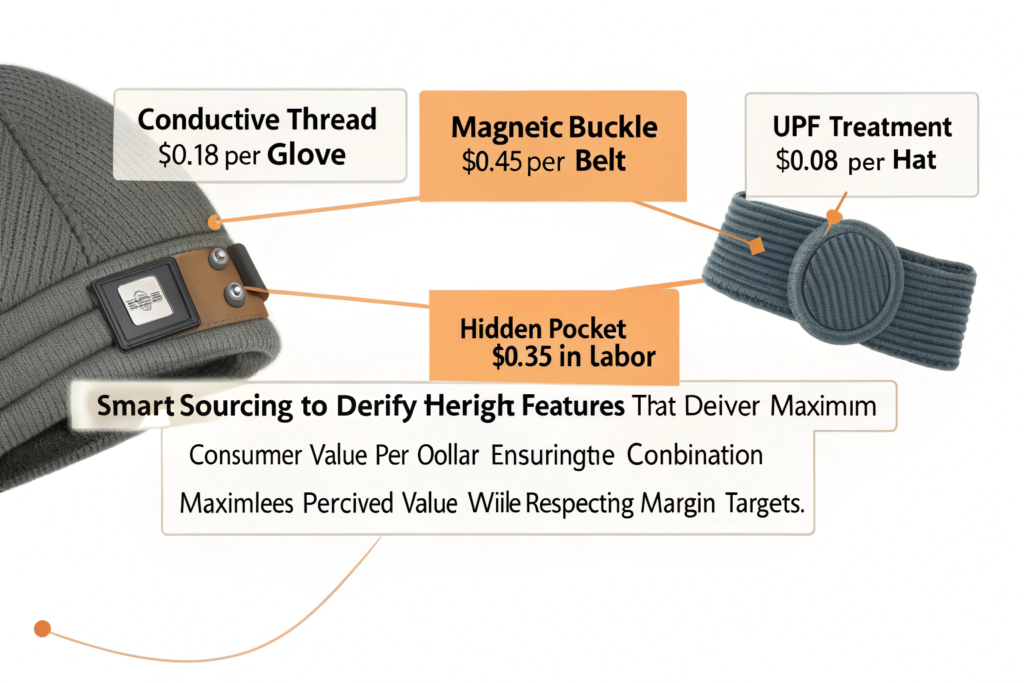
Functional features have different cost structures. Some add significant material cost. Some add labor cost. Some add only testing and certification cost. Smart sourcing identifies which features deliver the most consumer value per dollar of cost. Conductive thread adds approximately $0.18 per glove. Magnetic buckle adds approximately $0.45 per belt. UPF treatment adds approximately $0.08 per hat. Hidden pocket adds approximately $0.35 in labor. You do not need all features. You need the right features for your customer and your price point. We help you select the combination that maximizes perceived value while respecting your margin targets.
Let me give you specific cost engineering examples. For touchscreen gloves, the most expensive approach is knitting conductive yarn into the entire finger. This is durable. It is also expensive. A more cost-effective approach is sewing a small conductive fabric patch into the fingertip. This is 60 percent cheaper. It is slightly less durable. It is acceptable for mass-market price points. We offer both options. We explain the trade-off. For water resistance, the most expensive approach is laminating a waterproof membrane. This adds $1.20 to $2.00 per unit. A more cost-effective approach is applying a C6 or C8 DWR coating. This adds $0.15 to $0.25 per unit. The coating lasts 5 to 10 washes. The membrane lasts the life of the garment. Which is right for you? It depends on your customer’s expectations. We do not judge. We engineer to your target.
What Features Provide The Best Return On Investment?
Based on our client sales data, the highest ROI features are touchscreen compatibility and hidden storage. Touchscreen compatibility costs us approximately $0.18. It allows our clients to charge a $5.00 to $10.00 premium. The ROI is exceptional. Hidden storage costs us approximately $0.35. It allows our clients to market the product as "travel-friendly" or "commuter essential." This expands the addressable market. The ROI is also excellent. The lowest ROI feature is integrated electronics. Bluetooth headphones in beanies. LED lights in caps. These features cost $8.00 to $15.00. They fail frequently. They are heavy. They require charging. Consumer satisfaction is low. Reorder rates are even lower. We strongly discourage clients from pursuing integrated electronics unless they have a very specific, high-end niche. We have made this mistake ourselves. We lost money. We lost a client. We do not recommend it.
Can You Add Features Gradually Across A Collection?
Yes, and this is often the smartest strategy. You do not need to launch your entire accessory line with every possible function. You create a tiered collection. Entry level: fashion only, no functional features. Competitive pricing. Mid tier: one or two high-value features like touchscreen or water resistance. Premium tier: multiple features, premium materials, elevated packaging. This strategy accomplishes three things. It gives price-sensitive customers an entry point. It gives feature-seeking customers a reason to upgrade. It gives you data on which features actually drive sales. We help our clients design these tiered collections. We suggest which features belong in which tier. We provide cost breakdowns for each option. This is not manipulation. This is merchandising strategy. The customer chooses what she values. Everyone wins.
How Do You Source Factories With True Cross-Category Engineering Skills?
This is the hardest question Ron asked me. "I can find glove factories. I can find hat factories. I can find scarf factories. How do I find a factory that understands all three AND understands how to add technology to them?" I told him the uncomfortable truth. Most factories do not have these skills. They specialize for a reason. Cross-category engineering is rare. It requires a different organizational structure, different machinery, and different people.
A factory with true cross-category engineering skills does not have separate divisions for hats, gloves, and scarves. It has a centralized product development team that works across all categories. The same engineers who solve conductive thread placement for gloves apply that knowledge to touchscreen-compatible hat flaps. The same material scientists who develop water-resistant coatings for scarves apply that chemistry to bucket hats. Knowledge must flow freely. If the glove department hoards its expertise, the entire organization remains fragmented. We intentionally cross-train our engineers and rotate them through different product teams. A hat specialist spends three months on the glove line. A scarf specialist spends three months on the belt line. This cross-pollination is how we solve problems that no single category specialist would even recognize.
This philosophy is expensive. It slows down our specialists initially. A hat engineer is inefficient when she first starts making gloves. She does not know the last consumption formulas. She does not know the grading rules. She learns. After six months, she is competent. After one year, she is better than a glove specialist because she brings hat-thinking to glove problems. This is how we developed our magnetic closure system. It was originally designed for leather belts. Our hat engineer adapted it for strapback baseball caps. Now our clients can offer caps that secure with magnets instead of plastic snaps. This is a premium feature. It is unique in the market. It exists only because we refused to stay in our category silos. This is the capability Shanghai Fumao Clothing offers. We are not the cheapest. We are the most cross-trained.

What Questions Should You Ask To Identify Cross-Category Capability?
Ask the factory, "Who develops your functional features? Is it the same team that develops your fashion styles?" If they say yes, ask to meet that team. Ask them, "What was the last functional feature you developed for a category you had not worked with before?" Listen for specificity. A good answer: "We developed a water-resistant coating for wool berets. The challenge was maintaining the nap while applying the chemistry." A bad answer: "We develop everything. We have no limitations." This is defensiveness, not competence. Also ask about equipment sharing. Do the glove machines ever produce hat components? Do the belt machines ever produce bag straps? Cross-category factories share equipment liberally. Single-category factories keep everything separate.
Can You Develop Functional Features Without A Large Engineering Budget?
Yes, if you partner with suppliers who have already done the development. We have over 40 functional fabrications already qualified. Conductive knits. Water-resistant wovens. UPF 50+ jersey. Phase change linings. Magnetic hardware. Reflective yarns. These are not prototypes. They are production-ready. You do not need to pay us to invent conductive thread. It already exists. You pay us to select the right conductive thread for your specific glove style and price point. This is the difference between R&D and product development. R&D is expensive. Product development is routine when you work with a partner who has already done the R&D. We pass our material qualifications to our clients. You benefit from our ten years of trial and error.
Conclusion
I started this journey skeptical of functional fashion. I thought it was a niche for cyclists and skiers. I was wrong. It is now mainstream. The woman waiting for the bus wants gloves that work with her phone. The man walking his dog wants a hat that repels light rain. The traveler wants a scarf that holds her boarding pass and her AirPods. These are not extreme athletes. They are ordinary people. They simply expect their accessories to work as hard as they do.
This shift has transformed our factory. We are no longer just weavers and knitters. We are material scientists, hardware engineers, and quality assurance specialists. We test conductivity, water resistance, UV protection, and magnetic pull force. We train our artisans to sew conductive thread and install hidden magnets. We have become something we did not anticipate twenty years ago. We have become a technology company that happens to manufacture fashion accessories.
This evolution has not made us forget beauty. A scarf must still drape beautifully. A hat must still flatter the face. A belt must still complement the outfit. Function without fashion is equipment. Fashion without function is decoration. Our mission is to eliminate that false choice.
If you are tired of choosing between pretty and useful, if you want to offer your customers accessories that solve real problems without looking like problem-solvers, contact Elaine. She will connect you with our functional product development team. She will show you our material library, our test reports, and our cross-category engineering case studies. You do not have to invent functional fashion alone. We have already done the hard part. Email Elaine directly at: elaine@fumaoclothing.com.