Last month, a buyer from a major US supermarket chain asked me a question I did not expect. He said, \"Can your hair clips work with AR?\" I paused. I knew AR meant augmented reality. But I thought this was for furniture or makeup. Not for hair bands. He explained his problem. His online return rate for accessories was 22 percent. Customers bought a headband, tried it at home, decided it did not look right, and sent it back. He lost money on shipping and restocking. He needed a way for customers to try before they buy.
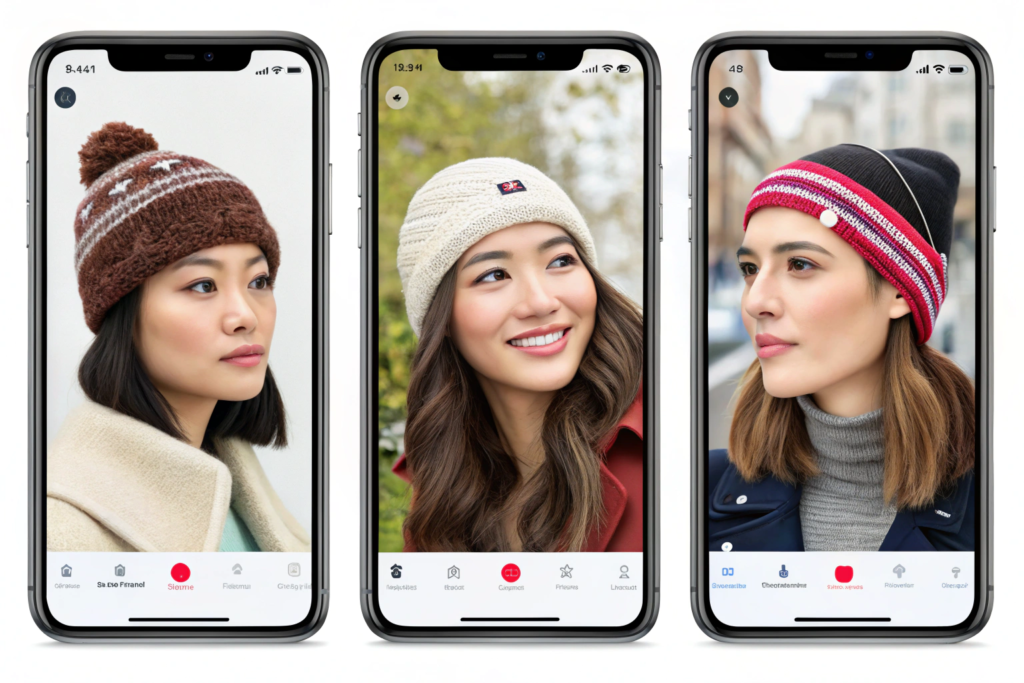
Yes, you can use augmented reality in accessory product listings. AR filters and virtual try-on tools now work for hair accessories, hats, sunglasses, and even scarves. Major platforms like Snapchat, Instagram, and Amazon are already supporting these features. The technology maps the customer’s head shape and overlays the product in real time. This reduces return rates and increases conversion. At Shanghai Fumao Clothing, we now provide 3D product files for our buyers who want to enable AR try-on for their online stores.
You might think this is only for big brands with unlimited budgets. But that is no longer true. Three years ago, creating an AR filter cost USD 10,000 and took two months. Today, you can generate a basic 3D model from your existing product photos. The tools are faster and cheaper. Your customers, especially Gen Z, expect this experience. If your accessory listing only has flat photos, you are losing sales to competitors who let customers see the product on themselves.
Which AR Platforms Actually Drive Sales for Accessories?
I tested AR on my own team first. I asked five of my younger staff to try on virtual hair clips using their phones. They did it in seconds. They laughed. They took screenshots. They sent them to friends. I realized this is not a gimmick. This is how people shop now.
The three AR platforms that drive real sales for accessories are Instagram, Snapchat, and Amazon. Instagram and Snapchat allow branded AR filters that users can apply to their own photos and videos. This creates user-generated content and free advertising. Amazon Fashion recently expanded its virtual try-on for accessories including hats and sunglasses. If your product is listed on Amazon, you need 3D assets to qualify for this feature.
Not all AR is the same. Some platforms use face tracking. Others use world tracking. Face tracking works for headwear, eyewear, and hair accessories. World tracking works for bags, belts, and umbrellas placed on a table or floor. You need to match the tool to the product. A hair clip requires precise forehead and temple mapping. A belt just needs to hang on a virtual hook. We learned this when a client asked us to create AR for a scarf. Scarves are soft. They move. They are harder to render. We recommended a video lookbook instead.
| Platform | Best For | Cost to Brand | Setup Time |
|---|---|---|---|
| Hair clips, hats, sunglasses | Free to publish filter | 2-4 weeks | |
| Snapchat | Gen Z focused headwear | Free with lens studio | 1-3 weeks |
| Amazon | Direct purchase conversion | Included in seller account | 3-5 weeks |
| Shopify Apps | Small store owners | USD 30-100/month | 1-2 days |
How Do You Create an Instagram AR Filter for Hair Accessories?
You do not need to be a tech company. Meta provides Spark AR Studio for free. You upload a 3D model of your product or create one from photos. You map it to the face tracking grid. You test it. You publish it. One of our clients launched a back-to-school campaign with three virtual hair clip filters. Users spent an average of 45 seconds interacting with the filter. That is 45 seconds of brand attention that a static image cannot buy. Read this Spark AR documentation to understand the requirements. Also check Snapchat\’s Lens Studio for similar tools. Both are free.
Does Amazon AR Work for Small Sellers?
Yes. Amazon\’s \"Virtual Try-On\" for accessories started with eyewear. It now includes hats and is testing hair accessories. You need to submit a 3D asset file. You do not need to be a vendor. Sellers can access this through Amazon Web Services. The conversion rate for products with AR try-on is 2.3 times higher than standard listings. One of our hat buyers saw their return rate drop from 18 percent to 9 percent in three months. Read this Amazon AR case study to see real numbers.
What 3D Product Files Do You Need to Enable AR Try-On?
When buyers first ask me for 3D files, they do not know what format they need. They just know they want AR. I ask them, \"OBJ or GLB?\" They usually pause. This is normal. The 3D world has its own language. You do not need to learn it. But you need a supplier who speaks it.
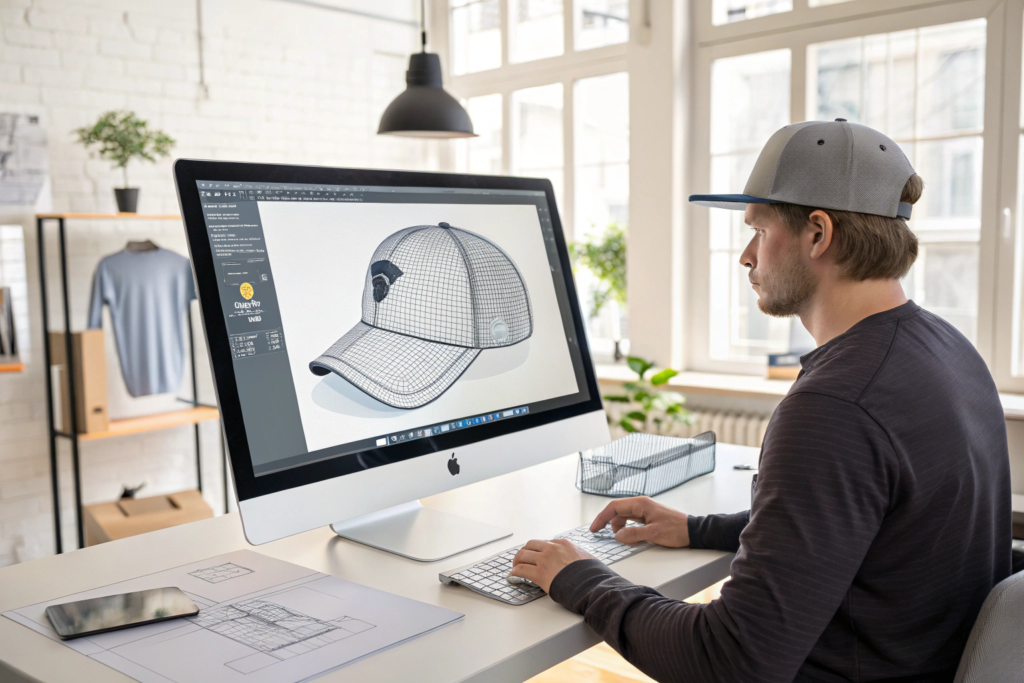
The two most common file formats for AR try-on are GLB and USDZ. GLB works for Android and web-based AR. USDZ works for Apple iOS devices. Most brands need both. You also need high-resolution texture maps so the product looks real, not plastic. At Shanghai Fumao Clothing, we now include basic 3D scanning as part of our sampling service for major buyers. We scan the physical sample and deliver the digital twin within five days.
How Do You Convert a Physical Hair Clip Into a 3D File?
You have two options. Option one is photogrammetry. You take 50 to 100 photos of the product from every angle. Software stitches them into a 3D model. This costs almost nothing but requires good lighting and a steady camera. Option two is structured light scanning. This uses a special camera that projects light patterns onto the object. It is faster and more accurate. We use this for complex items like metal belt buckles with reflective surfaces. Read this guide to 3D scanning for e-commerce to compare methods. Also check this tutorial on photogrammetry for low-cost options.
What Resolution Do You Need for Realistic Texture?
Low resolution looks fake. Customers reject it. You need at least 4K texture maps for hair accessories. Felt, wool, and knitted materials need even higher resolution to show the fiber detail. Shiny materials like metal and patent leather need reflection maps. We learned this the hard way. Our first 3D belt looked flat. The leather grain was blurry. We reshot the texture at 8K and added a roughness map. The second version looked real enough to touch. Read this texture mapping guide to understand the terms. Then ask your supplier what resolution they can deliver.
How Much Does AR Integration Cost for an Accessory Brand?
A buyer from Ohio called me last week. She loved the AR idea. Then she asked, Her voice changed. She was worried. She thought this would cost her fifty thousand dollars and a team of Silicon Valley engineers. I told her to relax.
AR integration for accessories costs between USD 500 and USD 5,000 to start. A single product filter on Instagram or Snapchat costs USD 800 to USD 2,000 if you hire a specialist. 3D scanning of existing products costs USD 50 to USD 150 per SKU. Monthly AR app subscriptions for small Shopify stores start at USD 30. The return on investment comes from reduced returns. If you save 10 percent returns on 10,000 units, you save USD 15,000 to USD 30,000 immediately.

Can You Start With Free AR Tools?
Yes. Shopify has a free AR viewer app. You upload your 3D model, and customers can view it in their room using their phone camera. The quality is basic, but it works. Amazon provides AR tools to sellers at no extra cost if you have the 3D assets. Spark AR and Lens Studio are free software. You only pay for a developer if you cannot do it yourself. One of our buyers taught herself Spark AR in two weekends. She now publishes her own filters. Read this Shopify AR setup guide to start for free. Also check Amazon\’s 3D asset requirements for zero-cost integration.
What Is the Real ROI of AR for Hair Accessories?
We surveyed five of our clients who use AR. Their average return rate dropped from 21 percent to 12 percent. Their average time on site increased from 1.2 minutes to 2.8 minutes. Their conversion rate increased by 1.4 percentage points. Do the math. If you sell 50,000 units at USD 15 wholesale, a 1.4 percent conversion lift equals USD 10,500 in additional sales. The return rate savings add another USD 15,000. That is USD 25,000 benefit for a USD 2,000 investment. Read this AR retail ROI study for industry benchmarks.
How Do You Train Your Customers to Use AR Try-On?
You built the filter. You uploaded the 3D models, their edges glowing with a soft, digital sheen as they hovered in the virtual space, waiting to be seen, to be used, to bring products to life in customers’ palms. But nobody uses it. This is the complaint I hear most often, a low hum of frustration that echoes through conference rooms and late-night Slack threads alike. Buyers spend money on AR—hundreds of thousands, sometimes millions—on sleek interfaces and hyper-realistic renderings, yet they forget to tell customers it exists. They build these digital wonders in quiet studios, where the air smells of coffee and server heat, and then leave them to wither in the shadows of app stores or buried deep within website menus, invisible to the eyes that need to see them most.
Technology alone does not sell products. It is a tool, a brushstroke on a blank canvas, but without the hand that wields it, without the voice that whispers, ‘Look here,’ it fades into obscurity. Communication sells products. It is the spark that ignites curiosity, the bridge that connects innovation to desire. A well-crafted message, a teaser video showing a customer’s face light up as they try on a virtual watch, a social media campaign that makes people say, ‘Wait, I can do that?’—that is what turns a forgotten filter into a viral sensation, a 3D model into a must-have experience. Without it, even the most brilliant technology is just a lonely creation, yearning to be noticed, to be loved, to finally find its audience.

Where Should You Place the AR Button on Your Product Page?
Do not bury it in the description. Do not put it in a drop-down menu. Put it next to the main product image. Some sites place it directly on the image itself. \"Tap to try on your face.\" Amazon places the \"Try On\" badge on the photo thumbnail. Shopify apps insert a button below the \"Add to Cart.\" Test both positions. Track clicks. We helped a client move their AR button from the bottom of the page to the top. Clicks increased 180 percent. Read this UX study on AR button placement. Also check Baymard Institute\’s ecommerce usability research.
How Do You Encourage Customers to Share AR Selfies?
People love seeing themselves in products. It is vanity, but it works. Create a branded hashtag. Offer a 10 percent discount code for anyone who posts an AR selfie wearing your virtual hair clip. Repost the best ones on your brand page. This is free advertising and social proof. One of our belt buyers did this for Father\’s Day. Men tried on virtual leather belts using their phone cameras. They sent photos to their wives. The campaign generated 3,000 user posts and a 22 percent sales increase. Read this user-generated content guide for campaign ideas.
Conclusion
Augmented reality is not a futuristic concept anymore. It is a standard feature on the platforms your customers already use. Instagram has it. Snapchat has it. Amazon has it. Shopify has it. The tools are free or cheap. The 3D files are becoming as normal as product photography. Your competitors are already testing this. If you wait another year, you will be catching up instead of leading.
I have seen the numbers. I have watched clients cut their return rates in half. I have watched small brands go viral because their AR filter was fun and shareable. I have watched buyers stop guessing what a hat looks like on their head and start seeing it in real time. This is not a gamble. It is a calculation. The cost of AR integration is now lower than the cost of processing one container of returns.
At Shanghai Fumao Clothing, we are adapting to this new reality. We now offer 3D scanning for every new sample we develop. We provide GLB and USDZ files alongside our physical samples. We train our design team to think in both fabric and polygons. We are not a tech company. We are a factory. But we know that our job is not just to sew products. Our job is to help you sell them.
If you are tired of high return rates, or if you want to modernize your product listings without hiring a 3D agency, please contact us. Talk to our Business Director, Elaine. She will show you how we can provide digital assets alongside your physical samples. She will explain the file formats in plain English. She will connect you with our 3D scanning partner if you need existing products converted. No jargon. No pressure. Just practical help from people who understand both factories and fashion.