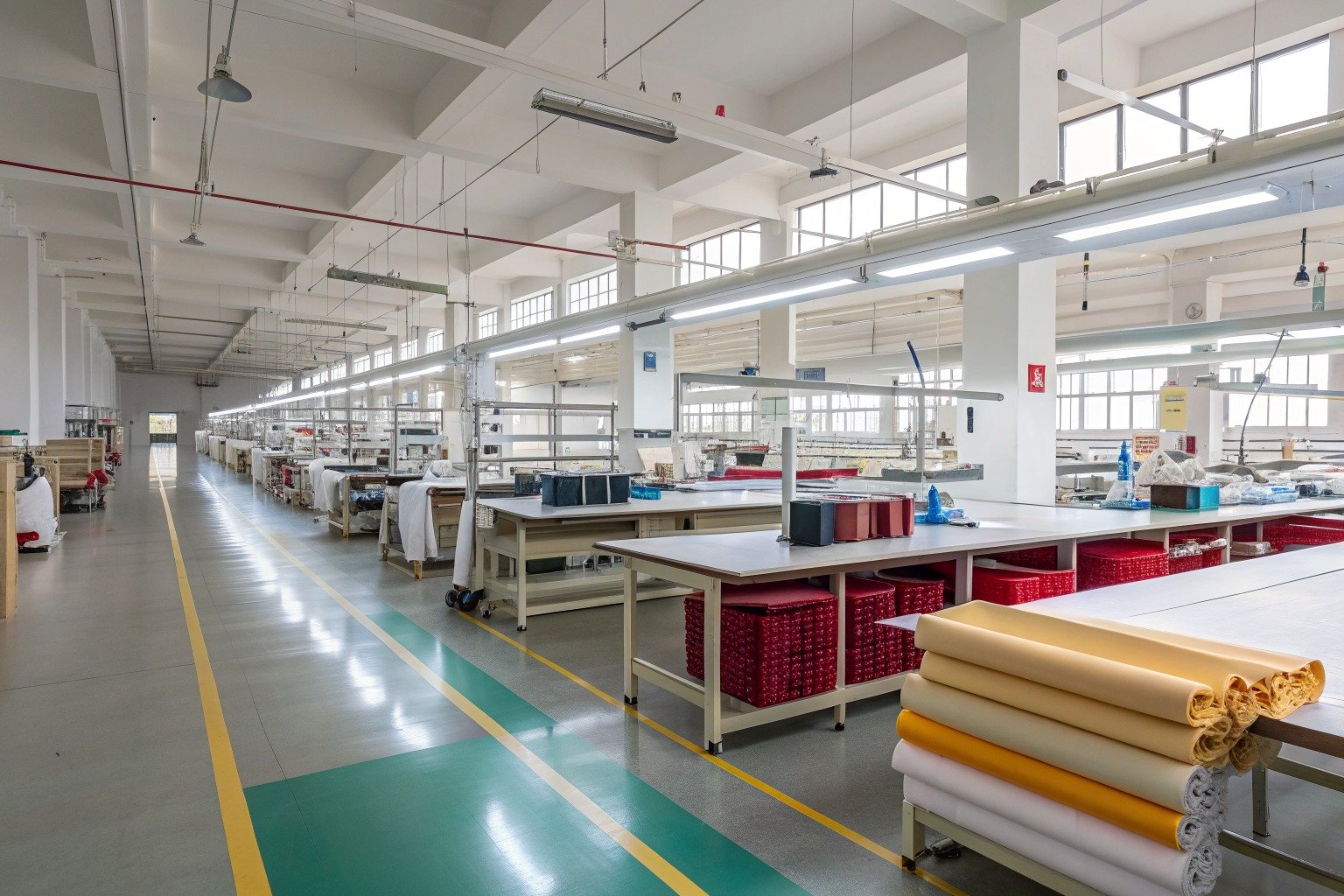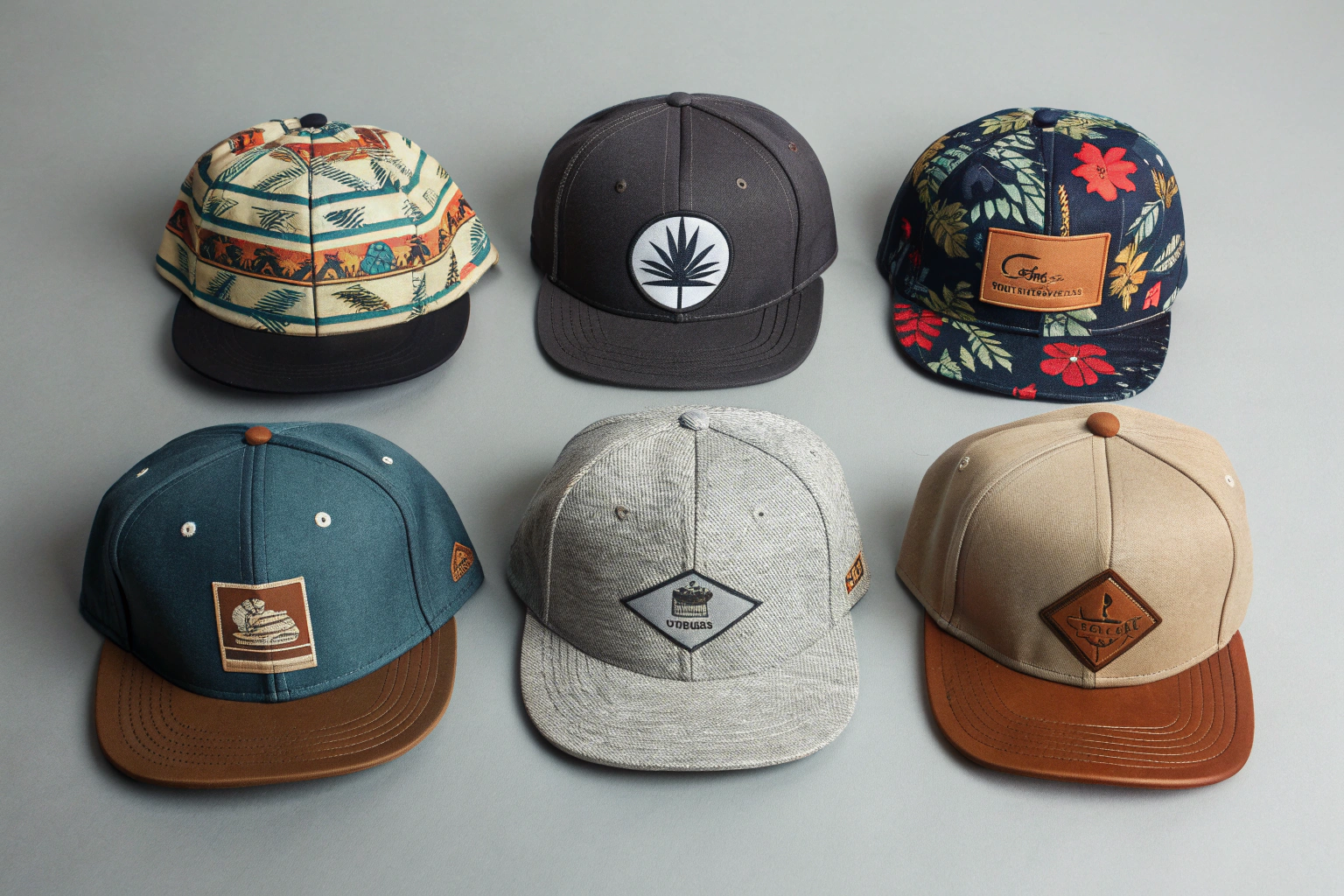
Walk into any store or scroll through any online marketplace, and you’ll see caps—thousands of them. What makes one cap chosen over another? Often, it’s the logo and branding. As a factory producing caps for brands ranging from startup streetwear labels to major supermarket chains, we see a constant stream of branding requests. The most common challenge buyers face isn’t a lack of options, but choosing the right technique that balances visual impact, brand identity, durability, and cost-effectiveness for their specific order volume and target market.
The most common and effective logo and branding techniques for caps can be categorized by method: embroidery, printing, patches, and direct fabric integration. Each technique serves a different purpose, aesthetic, and price point. Embroidery remains the king of perceived quality and durability, while printing offers full-color complexity and patches provide vintage flair and flexibility. The "best" technique is the one that aligns perfectly with your brand’s budget, aesthetic, and functional requirements.
Why Is Embroidery The Most Popular Branding Technique For Caps?
For decades, embroidery has been the go-to method for cap branding, and for good reason. It conveys a sense of permanence, quality, and tradition. When a consumer sees an embroidered logo, they associate it with durability and legitimacy. It’s a technique that works equally well for a corporate logo, a sports team emblem, or a fashion brand’s icon.
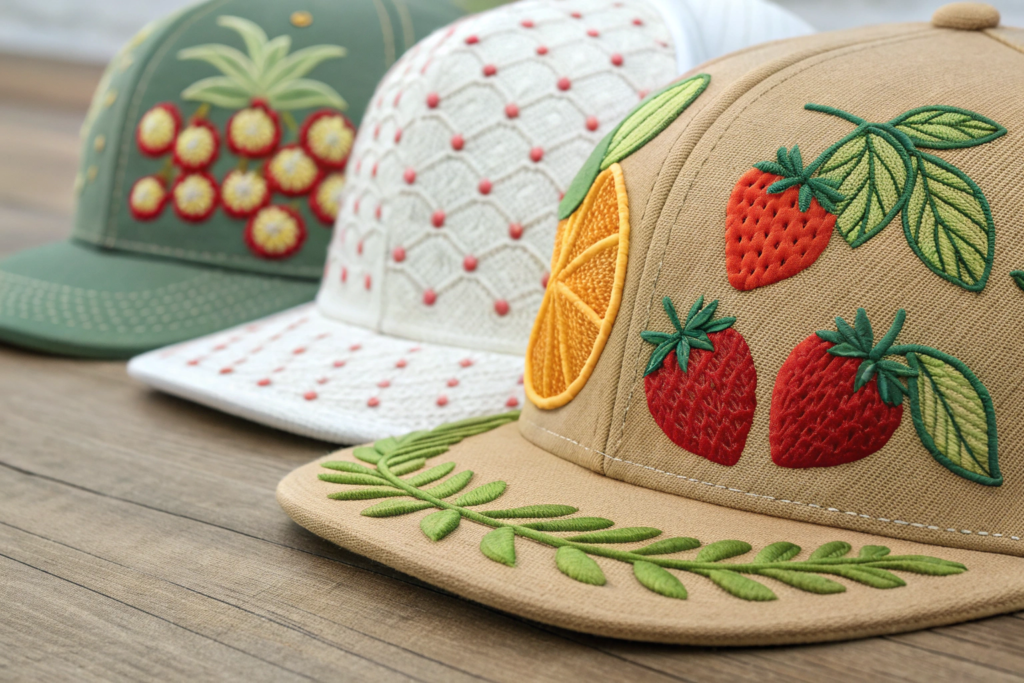
Embroidery involves stitching thread directly onto the cap’s fabric, creating a textured, raised design. Its popularity stems from its professional finish and excellent longevity, surviving countless washes and wears.
What Are The Different Types of Cap Embroidery?
Not all embroidery is the same. The most common subtypes are:
- Flat (Satin Stitch) Embroidery: The standard. It uses closely spaced stitches to create a smooth, solid fill area. Ideal for clean logos, text, and shapes with defined borders. It’s cost-effective for medium to high volumes and is the workhorse of the cap industry.
- 3D Puff Embroidery: Uses a foam underlay beneath the stitches to create a raised, dimensional effect. Extremely popular for making simple logos or numbers pop on the front panel. It adds a tactile, premium feel often used in athletic and streetwear branding.
- Chenille Embroidery: Uses a thick, fuzzy yarn for a vintage, textured look. It’s less common for small logos but is iconic for large, bold lettering on collegiate-style caps or fashion beanies. It requires specialized machines and is typically higher cost.
The choice depends on your desired aesthetic. A factory like Shanghai Fumao Clothing can produce samples of your logo in each style so you can feel and see the difference firsthand.
How Does Embroidery Impact Cost and Durability?
Embroidery cost is primarily driven by stitch count (more stitches = longer machine time) and the number of thread colors. A complex, multi-color logo will cost more than a simple one-color design. However, this investment pays off in durability. High-quality embroidery, executed with proper tension and stable backing, will outlast the cap itself. It won’t crack or fade like prints can. For brands, this means a lower rate of customer returns due to branding failure and a product that maintains its professional look over time—a key consideration for brand reputation.
What Are The Advantages Of Printed Logos On Caps?
While embroidery is classic, printing offers a different set of advantages, primarily unlimited color and detail. If your logo involves photorealistic images, gradients, or intricate artwork that would be impossible or prohibitively expensive to embroider, printing is your solution.
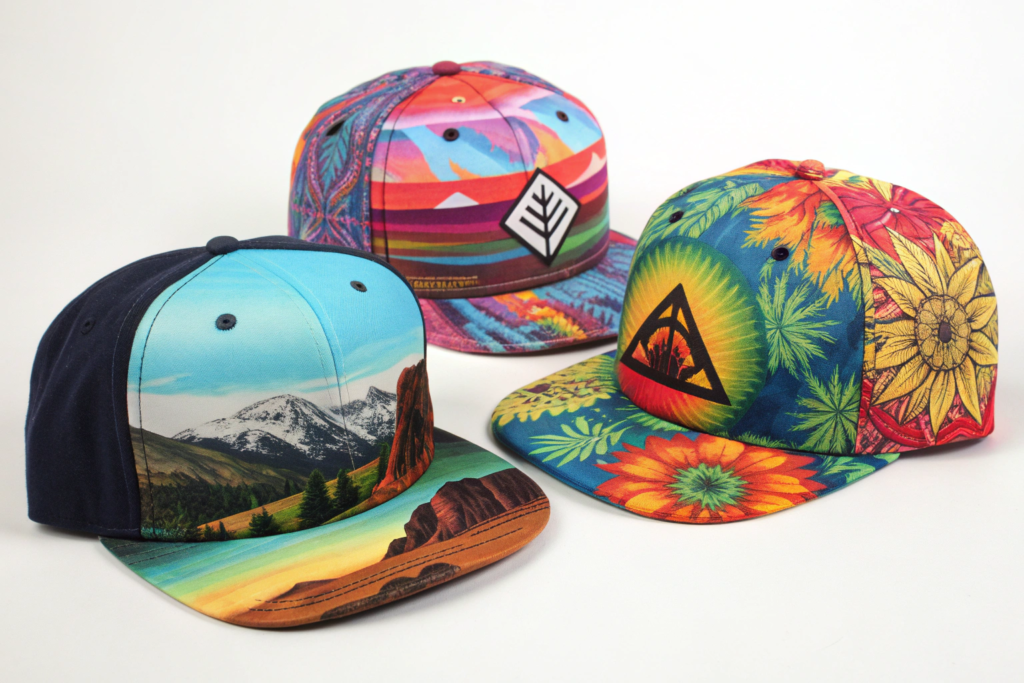
Printing techniques transfer ink directly onto the cap’s surface. They allow for full-color process reproduction, making them ideal for artistic graphics and detailed designs.
What Are The Common Printing Methods Used?
- Screen Printing: The most common method for simple, bold designs with limited colors (usually under 6). It layers ink through fine mesh screens. It’s cost-effective for large orders but can feel stiff if a heavy ink deposit is used.
- Digital Printing (DTG – Direct to Garment): Like an inkjet printer for fabric. It excels at complex, full-color graphics with no color limits and doesn’t require screens, making it economical for low-quantity, high-detail orders. The feel is typically softer than screen print.
- Sublimation Printing: Used primarily on polyester caps. The design is printed onto transfer paper with special dyes and then heat-pressed, causing the dye to gasify and bond with the fibers. The result is a vibrant, all-over print that won’t crack or peel, as the color becomes part of the fabric itself.
Choosing the right method depends on your design complexity, fabric content, and order quantity. We guide our clients through this decision based on their specific artwork files.
When Should You Choose Printing Over Embroidery?
Choose printing when:
- Your design has photographic detail, gradients, or more than 6 colors.
- You need a softer hand-feel on the cap’s front (important for unstructured caps).
- You are producing a limited run or test batch where embroidery setup costs would be too high.
- You want an all-over patterned cap (via sublimation).
The main trade-off can be longevity; lower-quality prints may crack over time, though modern inks and techniques have vastly improved durability.
How Do Patches and Labels Offer Branding Flexibility?
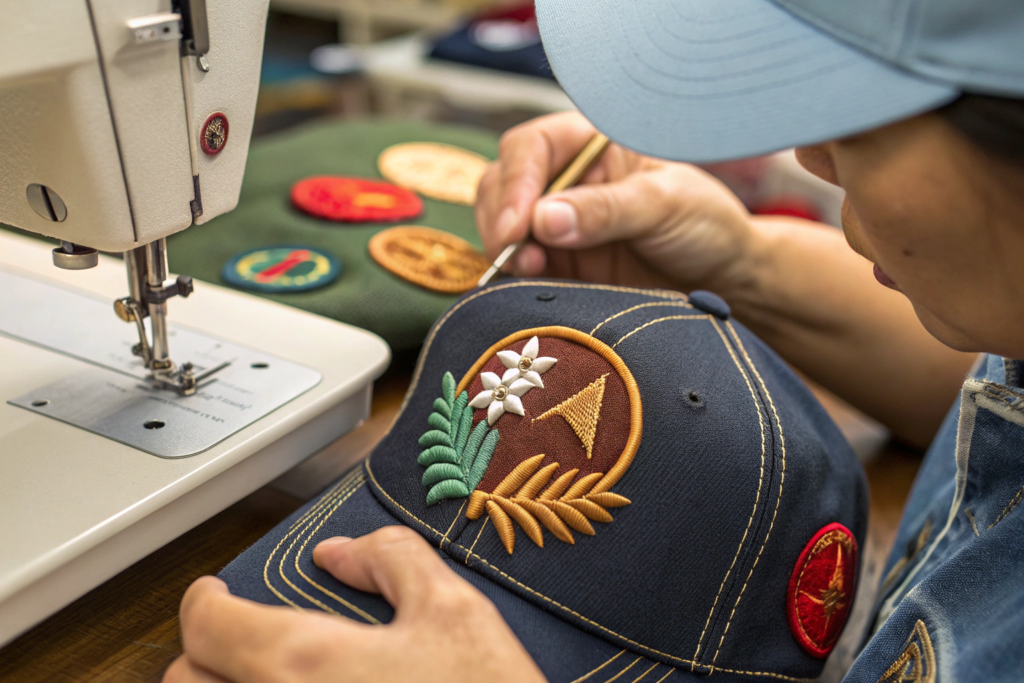
Patches and labels offer a unique blend of vintage charm, high perceived value, and logistical flexibility. They are not sewn directly into the cap fabric during its main construction; instead, they are created separately and then attached. This opens up a world of possibilities.
This technique is perfect for brands looking for a handmade, custom, or retro aesthetic. It also solves production challenges by decoupling the branding process from the cap sewing line.
What Types of Patches Are Most Effective for Caps?
- Embroidered Patches: These are patches that are embroidered onto a fabric base (like twill or felt) and then cut out. They are then sewn or heat-sealed onto the cap. This allows for incredibly dense, complex embroidery that would be difficult to execute directly on a curved cap panel. The raised border (merrow edge) adds a classic, finished look.
- Woven Labels: Made on a jacquard loom, these labels have a thin, flat profile with incredible detail for small text and fine lines. They are often sewn inside the cap for brand identification or on the back for a subtle exterior tag.
- Leather/Vegan Leather Patches: These offer a rustic, premium, or heritage feel. They can be debossed (pressed in), hot stamped (foiled), or laser-engraved. Common on trucker hats and high-fashion caps.
Patches allow you to create a single, perfect version of your logo on a flat surface, ensuring consistency. They can also be stocked and applied to different cap styles later, offering inventory flexibility.
Why Might A Brand Choose a Patch For Their Cap?
Patches are ideal for:
- Achieving a Specific Vintage or Artisanal Vibe.
- Branding Difficult Materials: Putting an embroidered patch on a straw hat or a knit beanie where direct embroidery is problematic.
- Simplifying Production: Manufacturing patches in bulk and applying them to various products (caps, bags, jackets) as needed.
- Enabling Customization: Offering removable Velcro-backed patches so customers can customize their caps.
The application method (sewing vs. heat-seal) is crucial for durability and should be discussed with your manufacturer. At Shanghai Fumao Clothing, we manage the entire patch sourcing and application process seamlessly.
What Are The Subtle Branding Techniques For A Discreet Look?
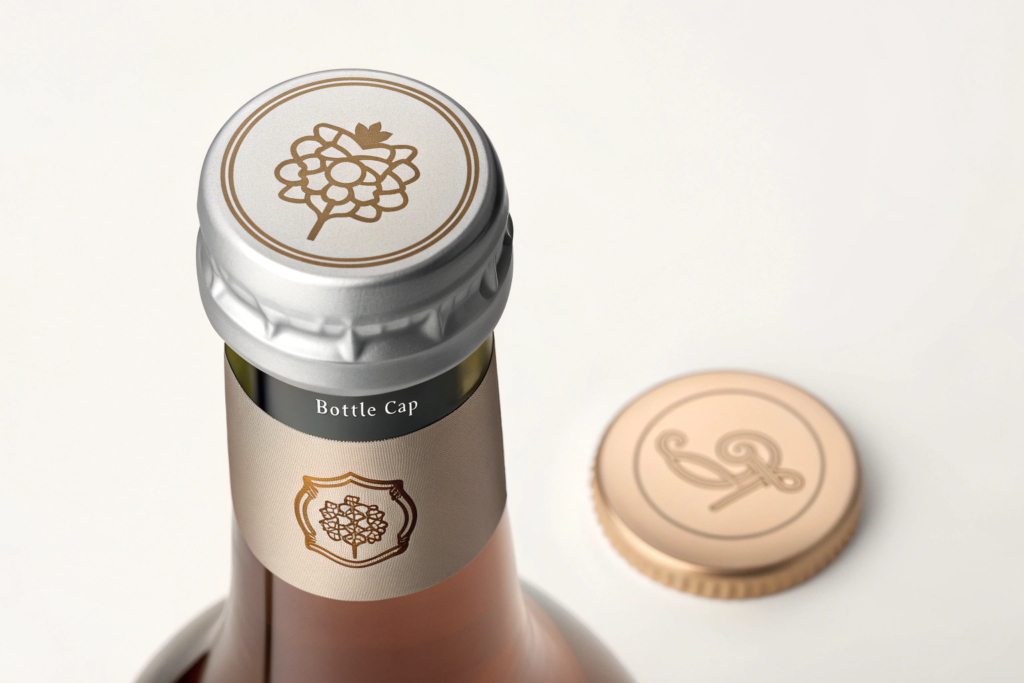
Not all branding needs to be front and center. For luxury brands, minimalist labels, or secondary branding, subtle techniques are key. These are the details that a consumer discovers, reinforcing a sense of quality and attention to detail.
These techniques are often found on the inside of the cap, on the closure, or in small, tonal applications on the exterior.
Where Are Interior Labels and Embroidery Used?
The interior of a cap is prime real estate for discreet branding. Common techniques include:
- Printed Care Labels: Standard for size, material, and care instructions.
- Woven Brand Labels: A small, elegant label sewn into the side seam, often containing just the brand name or logo in a tonal thread.
- Embroidery on the Sweatband: A small, often tonal, logo embroidered directly onto the inner sweatband fabric. This is a hallmark of higher-end caps and a technique we execute with precision to ensure comfort isn’t compromised.
What About Branding on Closures and Undervisors?
These are "discovery" details that delight customers:
- Stamped or Engraved Metal Buckles/Sliders: On the adjustable strap, a tiny logo can be stamped into the metal.
- Embroidery on the Undervisor: The underside of the visor is a cool, hidden spot for a tonal or contrasting embroidered logo or message.
- Printed Tag on the Closure Strap: A small printed brand tag on the back strap.
These subtle touches require meticulous execution but add tremendous perceived value and brand cohesion, turning a simple cap into a considered product. They are a sign of a factory’s commitment to comprehensive quality control.
Conclusion
The landscape of cap branding is rich with options, each with its own strengths. The most common techniques—embroidery, printing, and patches—are popular because they reliably meet specific brand needs for visibility, quality, cost, and style. The secret to successful sourcing is not just picking a technique, but matching it strategically to your brand identity, budget, and quality expectations.
The final look and feel of your branded cap are a direct result of your manufacturer’s expertise. A great factory partner will advise you on the best technique for your design, provide impeccable samples, and ensure consistent execution across your entire order.
Ready to brand your perfect cap? Shanghai Fumao Clothing has the expertise in all these common techniques—and the uncommon ones—to guide you from concept to finished product. We’ll help you choose the right branding method to make your mark. Contact our Business Director, Elaine, at elaine@fumaoclothing.com to start your cap project today.