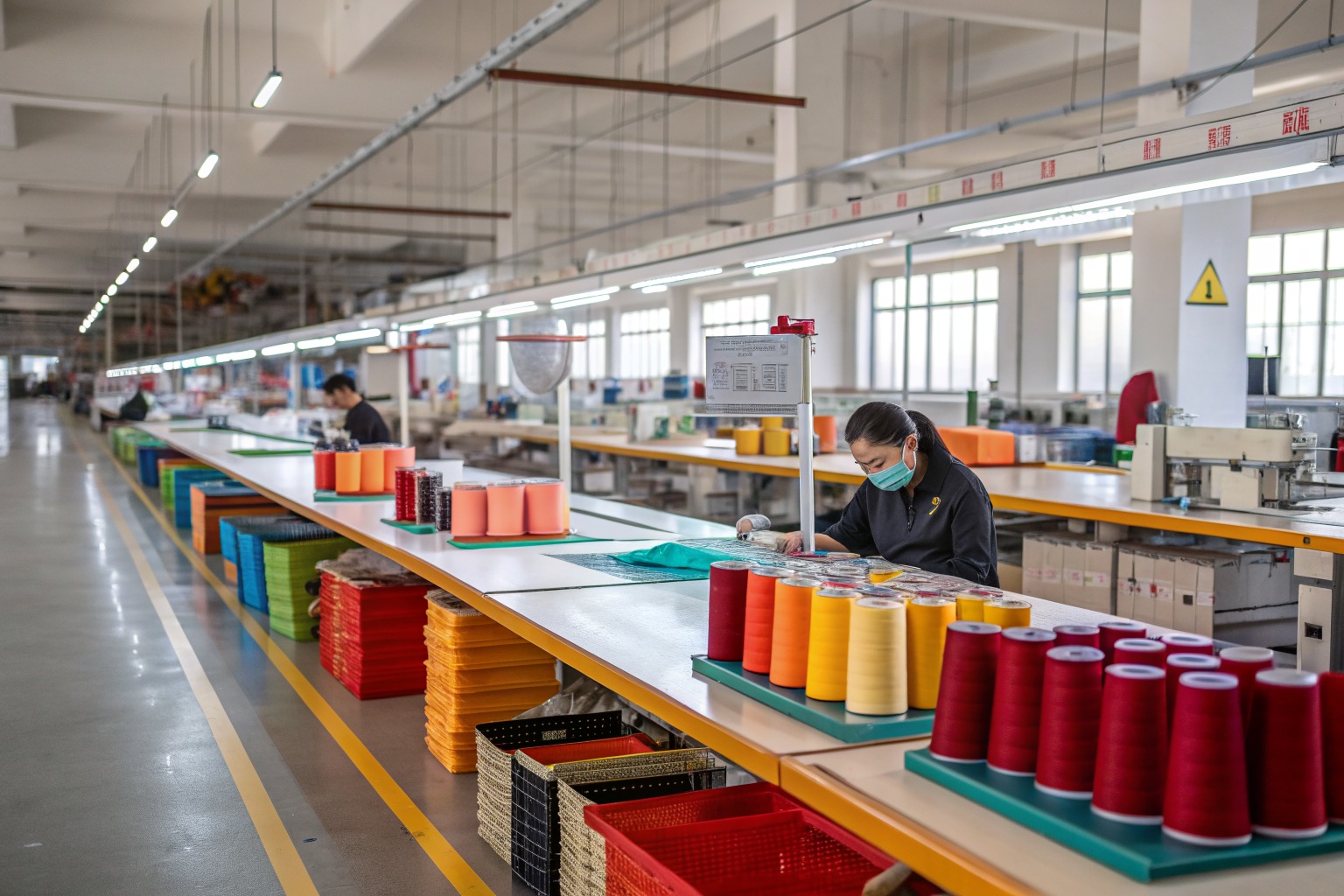
As an accessory manufacturer, I see retailers and brands constantly battling high return rates, especially for items like hats and hair accessories where fit and style are personal. You invest in inventory, ship products, only to have a significant portion come back because they "didn’t look right." This eats into profits and frustrates customers. Virtual Try-On (VTO) technology is no longer a futuristic gimmick; it’s a practical solution to this very real business problem, and it directly influences how we develop products today.
Virtual Try-On uses augmented reality (AR) to let customers visualize how a hat, headband, or hair clip will look on their own face and head shape through their smartphone or computer camera. It bridges the gap between online shopping and the in-store fitting room, reducing uncertainty and boosting confidence in purchase decisions. For brands, this means higher conversion rates, lower returns, and richer data on customer preferences.
Implementing VTO effectively requires more than just software; it requires high-quality 3D product assets and a strategic partnership with your manufacturer from the design phase. Let’s explore how this technology can be integrated into your accessory business.
What Are the Core Technologies Behind Virtual Try-On for Accessories?
The magic of seeing a beanie on your head through your phone screen relies on sophisticated but now accessible technology. If you think this requires a huge tech team, think again. The underlying frameworks have become democratized, allowing brands of all sizes to offer this experience. Understanding the basics helps you choose the right solution and communicate effectively with both tech providers and manufacturers like us.
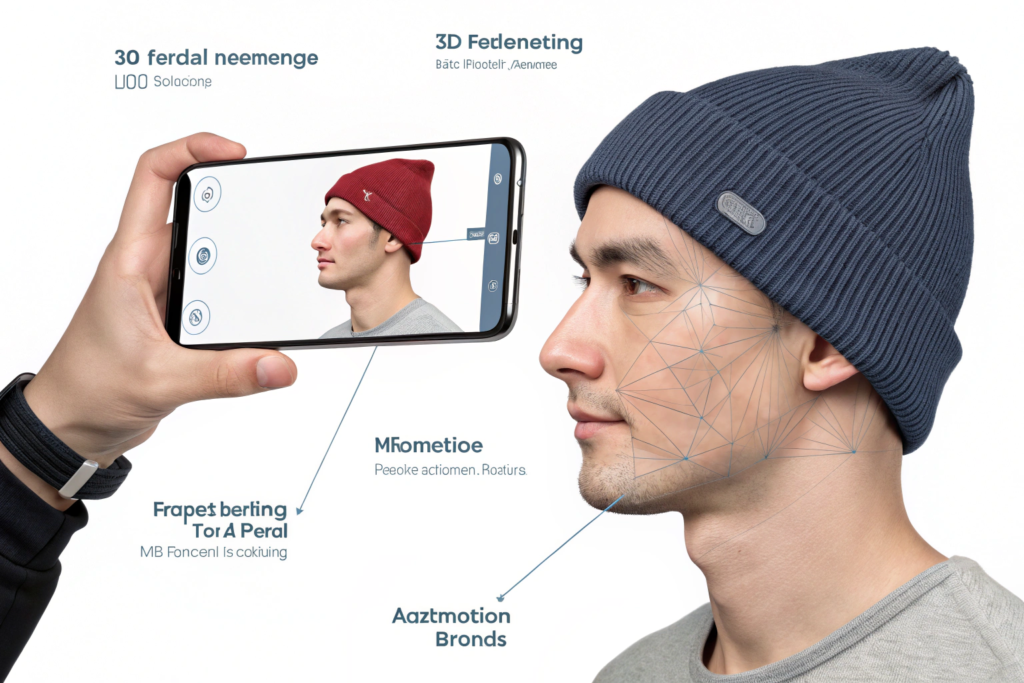
At its heart, VTO for accessories combines 3D modeling, facial/head mapping, and AR rendering. The software detects key points on the user’s face and head, then anchors a realistic 3D model of the product to those points in real-time, adjusting for perspective, lighting, and even hair.
How Does Augmented Reality Anchor a Hat to a User’s Head?
Augmented Reality (AR) overlays digital content onto the real world. For hats, the software first uses the device’s camera to map the user’s head. It doesn’t just find the face; it estimates the skull’s curvature and volume. Advanced algorithms then place the 3D hat model with correct spatial awareness. This means if you tilt your head, the hat tilts with you. The model must have physics properties so a slouchy knit cap drapes naturally, while a structured baseball cap maintains its rigid form. This realistic anchoring is crucial for user trust. We create the precise 3D models with accurate dimensions, textures, and material properties (like how a straw hat vs. a wool beret should fall) to feed into these AR platforms. Leaders in mobile AR like Apple’s ARKit and Google’s ARCore provide the foundational tools developers use.
Why is High-Fidelity 3D Modeling Critical for Product Visualization?
The saying "garbage in, garbage out" applies perfectly here. A low-quality, blocky 3D model will look fake and deter customers. High-fidelity modeling captures every detail: the texture of a ribbed knit on a winter hat, the gloss of a hair clip’s enamel, the woven pattern of a headband. We create these models using professional 3D scanning of our physical samples or building them from CAD files used in production. This ensures the virtual product is a perfect digital twin. This level of detail not only enhances the try-on experience but also serves other purposes, like generating marketing imagery or presentations for wholesale buyers, reducing the need for costly photoshoots for every color variant. The importance of quality 3D assets is a focus for industry groups like the 3D Commerce Alliance.
How Can VTO Drive Sales and Reduce Returns for Your Store?
The direct business case for VTO is compelling. It tackles two of the biggest e-commerce challenges: converting hesitant browsers and minimizing post-purchase returns. For accessories, where fit and style are subjective, the impact is even more pronounced. This technology turns a passive product page into an interactive experience, engaging customers longer and providing the confidence needed to click "buy."
VTO acts as a powerful decision-making tool. It reduces the cognitive load on the customer by answering the critical question, "Will this suit me?" in real-time. This leads to more satisfied customers who receive what they expected, which naturally translates into fewer returns and positive reviews.

Can Virtual Try-On Actually Increase Conversion Rates?
Absolutely. By reducing purchase anxiety, VTO directly influences the decision at the point of sale. Data from various platforms shows that product pages with AR experiences see significantly higher engagement times and conversion lifts. When a customer can "try" five different baseball caps in minutes from their couch, they are more likely to find one they love and complete the purchase. It also encourages cross-selling; after trying a hat, the software might suggest matching hair clips or a scarf. This interactive experience is far more persuasive than static images. The measurable impact of AR on commerce is well-documented by research from firms like Gartner.
What Is the Direct Impact on Return Rates for Hats and Hair Items?
Returns are costly—you lose the sale, pay for shipping, and often cannot resell the item as new. Hats are frequently returned due to size or style mismatch. VTO addresses this pre-purchase. A customer who has virtually tried a slouchy knit hat and seen how it complements their face shape is far less likely to send it back. This not only saves direct costs but also improves inventory forecasting and reduces waste. For us as manufacturers, lower return rates for our clients mean more stable, predictable reorders and a healthier overall partnership. Understanding the full cost of returns is essential for any e-commerce business, a topic often covered by industry analysts.
What Do Manufacturers Need to Provide for Effective VTO Integration?
For brands eager to adopt this technology, the first hurdle is often creating the digital assets. This is where the manufacturer-supplier relationship becomes critical. A factory that understands the technical requirements can be your greatest asset, turning the VTO project from a burden into a smooth, value-added service. This is just as important as mastering efficient production and logistics.
To enable a realistic try-on, we need to provide accurate, detailed digital twins of the physical products. This goes beyond a simple photo. It requires data and collaboration from the very beginning of the product development cycle.
How Are 3D Product Assets Created from Physical Samples?
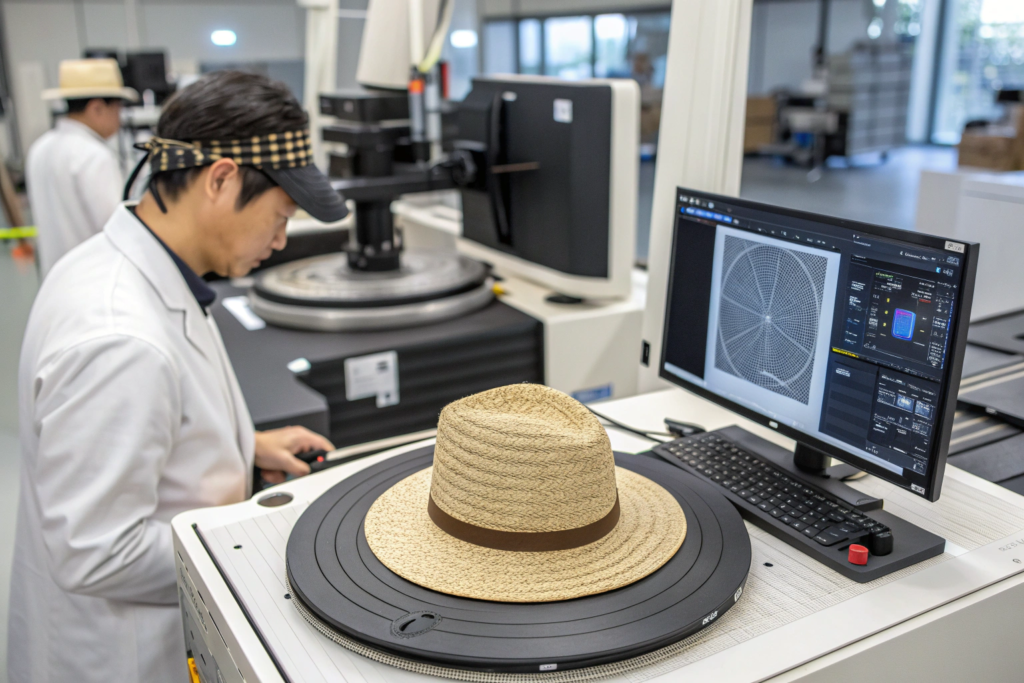
The process starts with our physical sample. We use high-resolution 3D scanners to capture the product’s exact geometry. For items with complex textures like a cable-knit beanie or a braided leather headband, multiple scans and detailed photography for texture mapping are required. Our design team then refines the digital model, ensuring colors match Pantone references and materials look authentic—the sheen of a satin hair scrunchie, the matte feel of a cotton cap. These models are then exported into standard file formats (like gITF or USDZ) compatible with major VTO platforms. Providing this service streamlines the process for our clients, who would otherwise have to find and brief a separate 3D studio. The demand for such digital product creation is reshaping supply chains.
Why Are Accurate Size and Specification Sheets Vital?
A beautiful 3D model is useless if it’s the wrong size. The virtual hat must scale correctly to the user’s head dimensions. This requires precise product specs: not just "one-size," but the actual inner circumference of a hat, the width of a headband, the length of a hair clip. We provide these detailed technical specification sheets for every item, which are used to program the scaling logic in the VTO software. For example, our cloth hats come in precise S, M, L measurements based on industry standards. This accuracy ensures the virtual try-on is truthful, preventing a situation where a virtual hat fits but the physical one doesn’t—which would destroy trust. Resources like ASTM International provide size standards that inform our specs and are part of our commitment to quality control.
How to Start Implementing VTO with Your Accessory Product Line?
Starting may seem daunting, but a phased approach makes it manageable and cost-effective. You don’t need to digitize your entire catalog at once. The key is to start with best-selling or high-return items to maximize ROI and learn from the process. Partnering with a forward-thinking manufacturer like Shanghai Fumao Clothing from the outset can simplify every step.
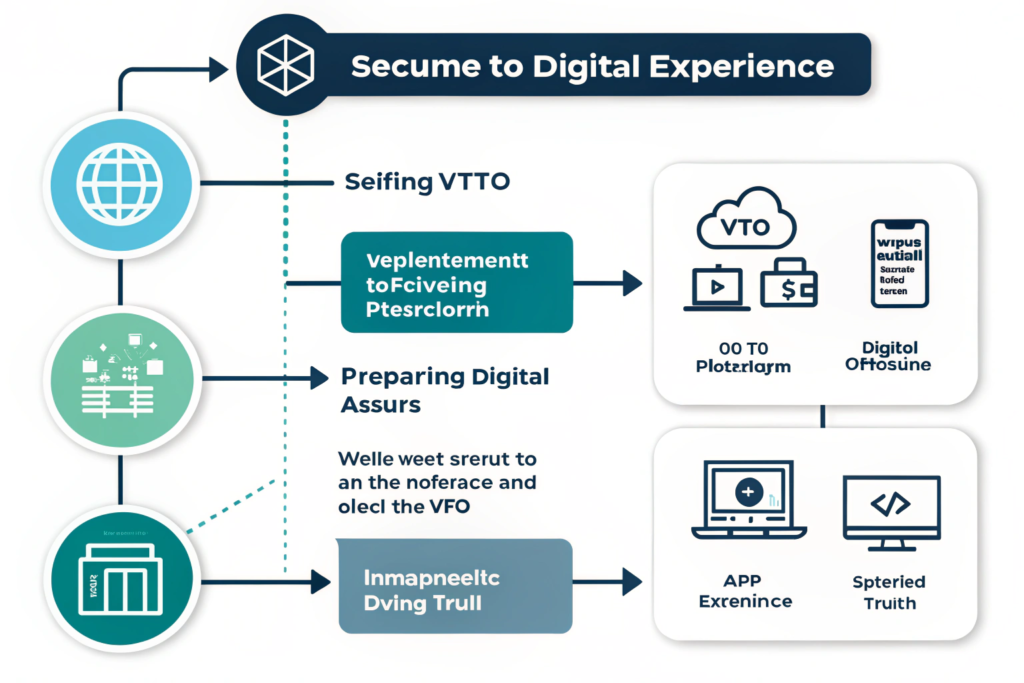
The implementation path involves selecting a VTO platform, preparing your digital assets, and integrating the experience into your website or app. Your manufacturer’s role is to be the source of truth for the physical product data that fuels this digital experience.
Which Products Should You Prioritize for Virtual Try-On?
Focus on categories where fit and visual impact are the primary purchase drivers. Hats (baseball caps, beanies, sun hats) are the obvious first choice due to size and style concerns. Next, consider prominent hair accessories like wide headbands, large bows, or decorative clips that frame the face. Items like simple hair elastics or small bobby pins offer less VTO value. Start with your top 10-20 bestsellers or new seasonal launches where you want to make a big splash. This targeted approach allows you to measure impact clearly. We can help identify which items in our collection, from elegant shawls (draped virtually) to statement belts, are most suitable based on their visual complexity and customer decision factors.
What Are the Integration Options for E-commerce Platforms?
There are several paths. You can use standalone SaaS VTO platforms (like Zeekit, Vue.ai, or those built into Shopify AR) that offer plugins for major e-commerce systems. These often have manageable monthly fees. Alternatively, you can work with a development agency to build a more custom solution. The common requirement from all will be your 3D product models. We deliver the finalized, optimized 3D files that you can then upload to your chosen platform. Ensuring these files are created to the platform’s specifications from the start avoids costly revisions. Exploring the capabilities of your current e-commerce platform is the first technical step.
Conclusion
Virtual Try-On technology represents a significant leap forward for online accessory retail. It solves tangible business problems—high return rates and low conversion—by enhancing customer confidence and engagement. The technology is now mature, accessible, and proven to deliver ROI.
Successfully implementing VTO is a collaborative effort. It requires the high-fidelity 3D assets that can only come from a manufacturer with meticulous attention to detail and command of product specs. It’s a perfect example of how modern manufacturing isn’t just about physical production but about enabling the entire digital customer journey. This aligns with our core mission at Shanghai Fumao Clothing to be more than just a factory, but a true design and development partner.
If you are looking to future-proof your accessory line, reduce operational costs from returns, and offer a cutting-edge shopping experience, integrating Virtual Try-On is a strategic move. Shanghai Fumao Clothing is equipped to be your partner in this journey, providing the precision-crafted products and the detailed digital assets you need to succeed. Contact our Business Director, Elaine, at elaine@fumaoclothing.com to discuss how we can help you digitize your best-selling hats and accessories for the new era of e-commerce.