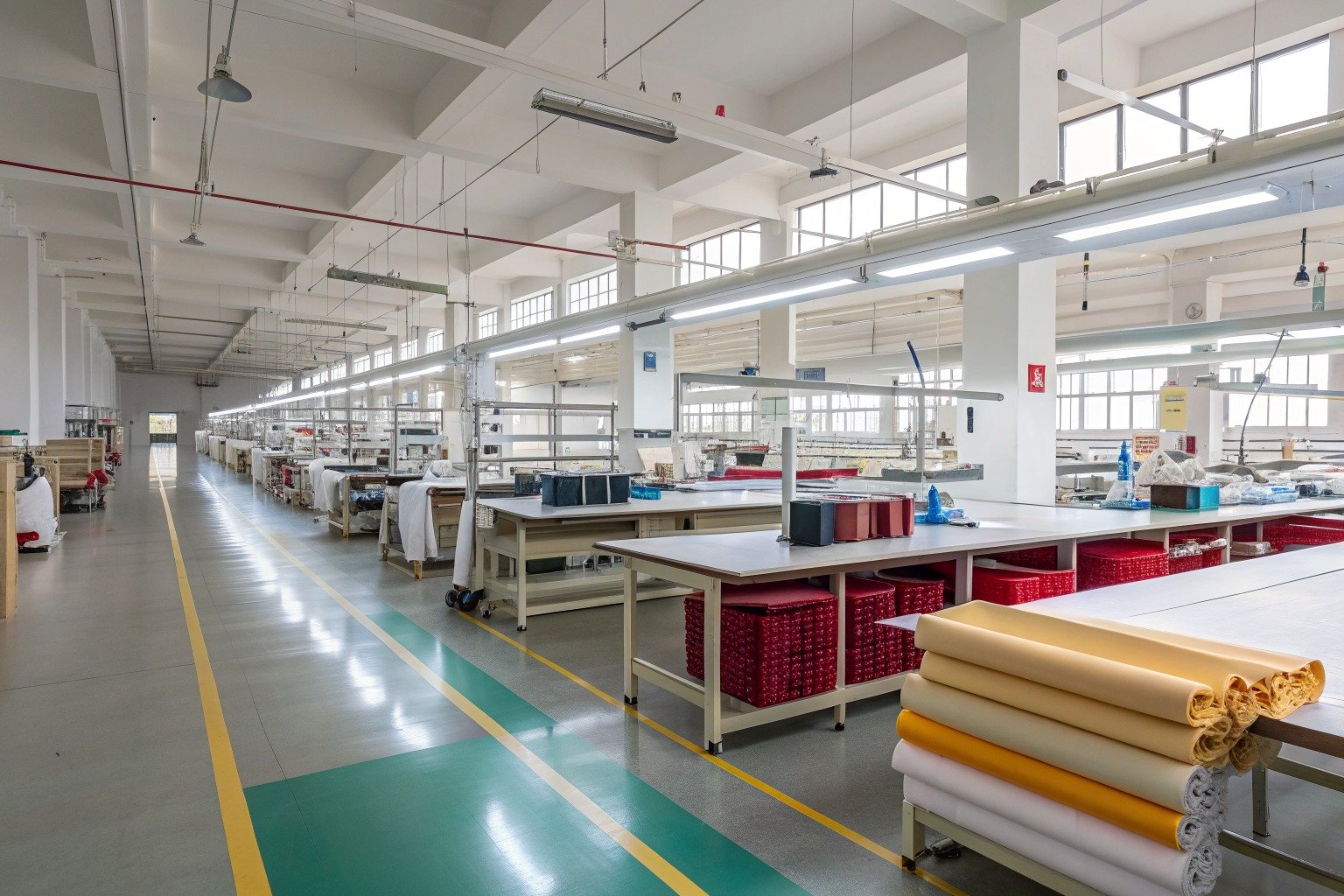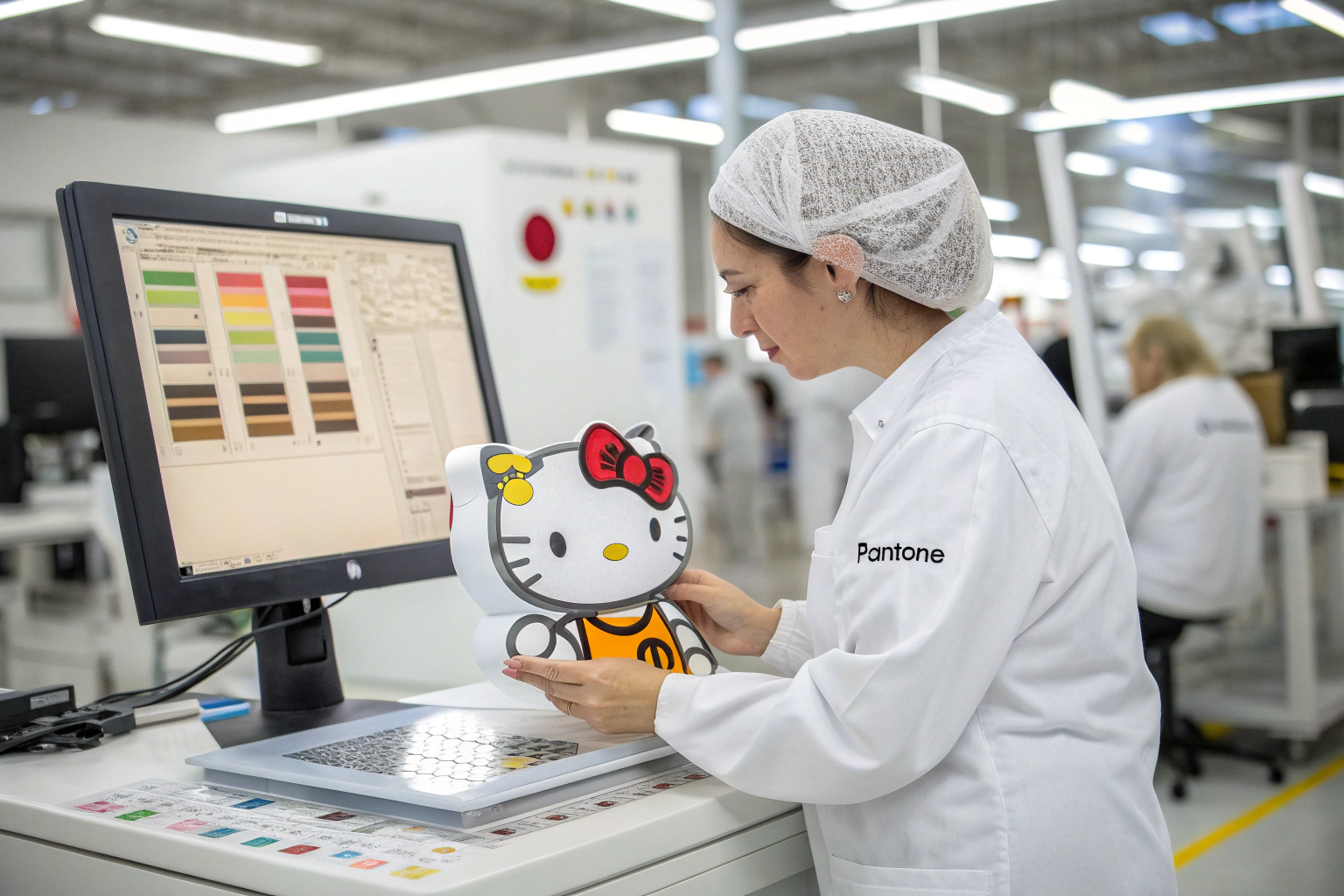
You land a licensing deal with a major entertainment studio. Your brand now has the right to produce hair clips shaped like a globally recognized cartoon cat. You are ecstatic. Then the studio sends over the 40-page "Style Guide and Compliance Manual." Every dimension of the cat’s ears, the exact Pantone pink of the bow, the minimum pupil diameter relative to the eyeball, all specified to a tenth of a millimeter. The factory you used for generic floral hair clips takes one look at the document and goes silent. They cannot hold a tolerance tighter than "close enough." You realize licensed character production is not about making a hair accessory. It is about reproducing a legally protected, mathematically precise piece of intellectual property that must look identical to the animated character on screen, every single time.
US importers prefer our factory for licensed character accessories because we operate a dedicated "IP Compliance Production Cell" with a closed-loop quality system that locks every dimension of a character’s face, from ear curvature to eye spacing, against a studio-approved digital golden sample, not a physical sample that drifts over time. We also enforce a zero-leakage security protocol that prevents a single unlicensed clip from entering the grey market, which is the nightmare scenario that keeps brand protection lawyers awake at night.
Licensed character production is a different business from commodity accessory production. It requires a forensic attention to shape accuracy, a legal understanding of intellectual property protection, and a factory culture that treats a 0.5-millimeter deviation on a cartoon nose as a rejectable defect. I want to walk you through exactly how we achieve the color matching, the anti-counterfeit packaging, and the physical security that make US licensors and their licensees trust our facility in Zhejiang with their most valuable intangible assets.
How Do You Achieve Exact Pantone Color Matching on Character Faces?
A generic floral hair clip can be "coral" or "light pink." If the batch is half a shade too dark, the consumer does not notice and the brand does not care. A licensed cartoon cat has a specific, legally defined "Princess Pink" that appears in every frame of the animated series. If the hair clip is half a shade too warm, the child looks at it and says, "That’s not the cat." The licensing studio sends a formal notice of non-compliance and demands a recall.
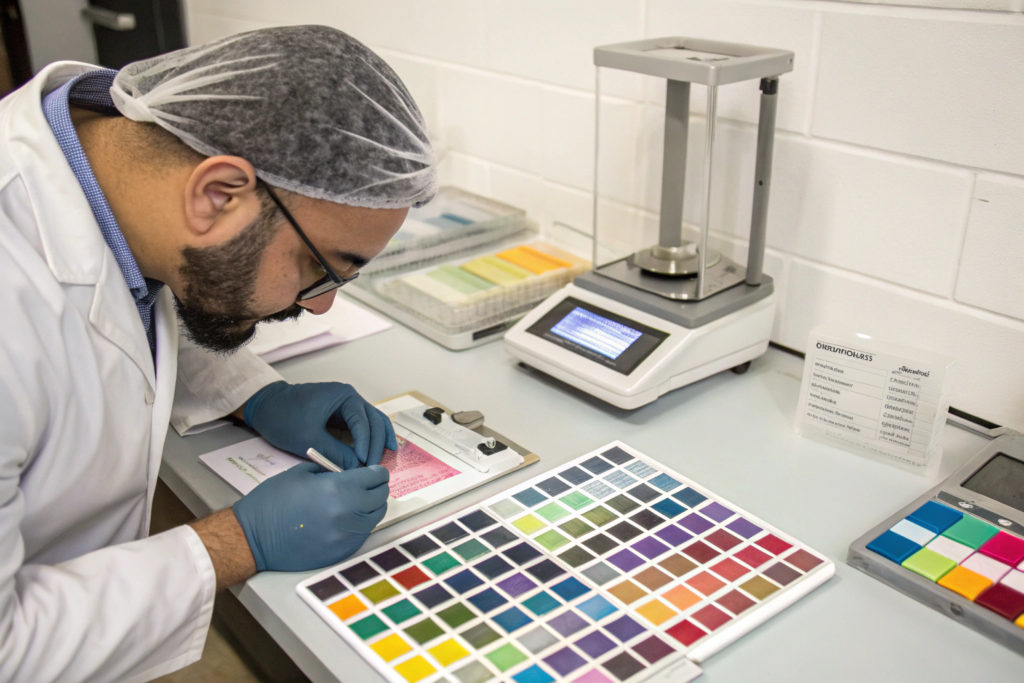
We achieve exact Pantone color matching on character faces by using a closed-loop digital color management system. We do not mix pigments by eye. We weigh pigment masterbatch powders on a precision scale to 0.01 grams against the virgin acetate or enamel base. We mold a color chip, measure it under a spectrophotometer, compare the Delta E value against the studio’s approved Pantone TCX reference swatch, and adjust the pigment ratio in 0.5% increments until the Delta E is below 1.0. Only then do we release the pigment batch for production.
The studio provides a physical "master standard" swatch book, signed and dated by their brand assurance team. We keep this swatch book in a locked, humidity-controlled cabinet, only accessible by the QC manager. Every single production batch is measured against this master before the first clip is molded. The spectrophotometer reading is automatically logged into a digital batch record with a time and date stamp, creating an unalterable audit trail.
Why does a visual check fail for licensed character colors?
The human eye is a terrible color measurement instrument. It adapts to ambient light color temperature, it fatigues, and it is influenced by surrounding colors. A pink cheek might look "correct" to a tired QC inspector at 4 PM under warm fluorescent lights but look distinctly too orange the next morning under daylight. A spectrophotometer removes human subjectivity by measuring the precise spectral reflectance curve of the clip surface and calculating a numerical Delta E against the studio master, which ensures that the pink on the hair clip matches the pink on the screen character.
How do you maintain color consistency between acetate, paint, and enamel on the same character?
A character clip often mixes materials. The face is printed on acetate, the hair bow is painted enamel, and the eyes are pad-printed. We create a "master color harmony panel" where all three materials are mounted side-by-side and measured as a unified visual field. The individual material recipes are adjusted slightly so the perceived color, not just the raw spectrophotometer reading, is harmonized across the different surface gloss levels.
What Is a "Digital Golden Sample" and Why Does It Replace Physical Samples?
A physical golden sample is a single hair clip that the licensor signs, dates, and returns to the factory. The factory locks it in a safe. Over the course of a three-year production license, the factory QC team compares every batch to this single physical clip. The problem is that physical samples degrade. Acetate absorbs moisture, colors fade minutely under ambient light, and the spring tension relaxes. Year three batch number one is being compared to a golden sample that no longer accurately represents the licensor’s intent.
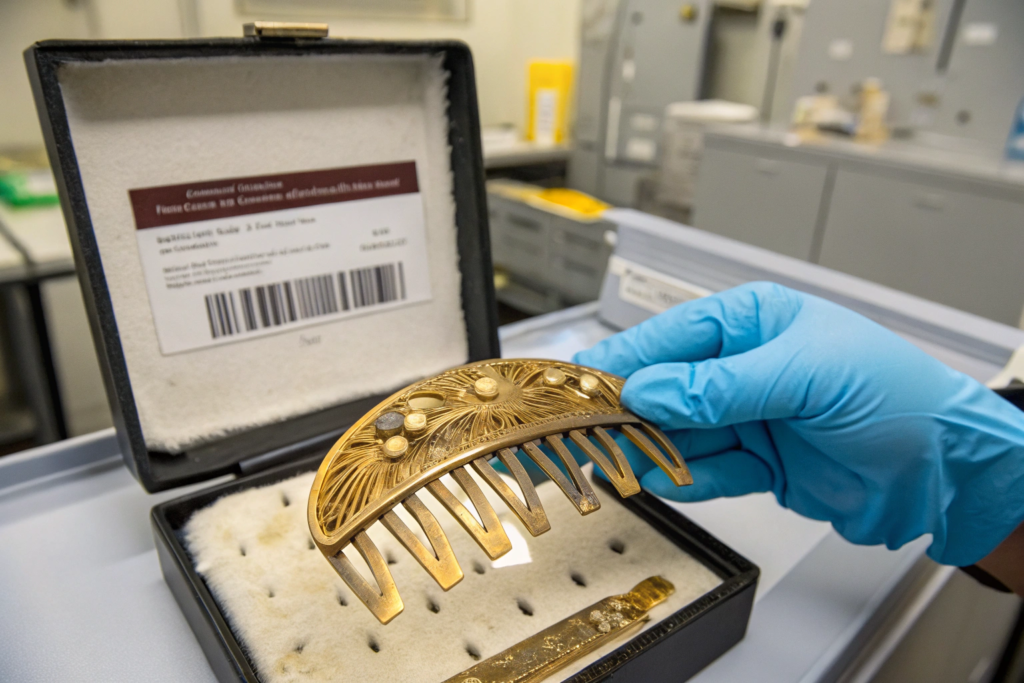
A digital golden sample is a high-resolution 3D scan of the licensor-approved physical sample, captured immediately after signature. The scan records the exact XYZ coordinates of every feature point on the character’s face, the precise surface texture mapping, and the spectral reflectance data of every color region. Every new production batch is compared against this immutable digital master using an automated optical inspection system that overlays the production clip’s scan onto the golden sample’s scan and highlights any dimensional or color deviation in real time.
We invested in this 3D scanning technology after a studio audit flagged a slight "ear drift" in a popular rabbit character hair clip. Over 12 months of production, the left ear had gradually stretched 0.7 millimeters longer due to incremental wear in the injection mold cavity. The physical golden sample had also stretched slightly, so the QC team never caught the drift. A digital golden sample would have caught it on batch number two.
How does the automated optical inspection system work in practice?
Every 50th clip is pulled from the production line by a robotic arm and placed onto a rotary scanner. A ring of eight high-resolution cameras captures the clip from every angle. The resulting 3D point cloud is automatically aligned to the digital golden sample. The software generates a "heat map" overlay showing areas of deviation in green, yellow, and red. A yellow warning triggers a manual check. A red deviation stops the line and locks the mold for inspection.
Can the digital golden sample be shared securely with the licensor?
Yes, we send the licensor an encrypted, read-only copy of the digital golden sample file. The licensor’s brand assurance team can open the file in a standard viewer and verify that the factory’s current production batch matches the original approved sample, without having to wait for a physical shipment.
How Do You Prevent Unauthorized Clips from Leaking Out the Back Door?
A factory producing generic belts does not worry about theft. The product has value, but a stolen belt on a street market is a minor annoyance. A factory producing a globally recognizable cartoon character has a massive counterfeiting incentive. A worker who smuggles 200 unlicensed clips out of the factory in a lunchbox can sell them on Taobao or to a street vendor, where they will be sold as "genuine factory extras," damaging the brand and violating the licensing agreement.
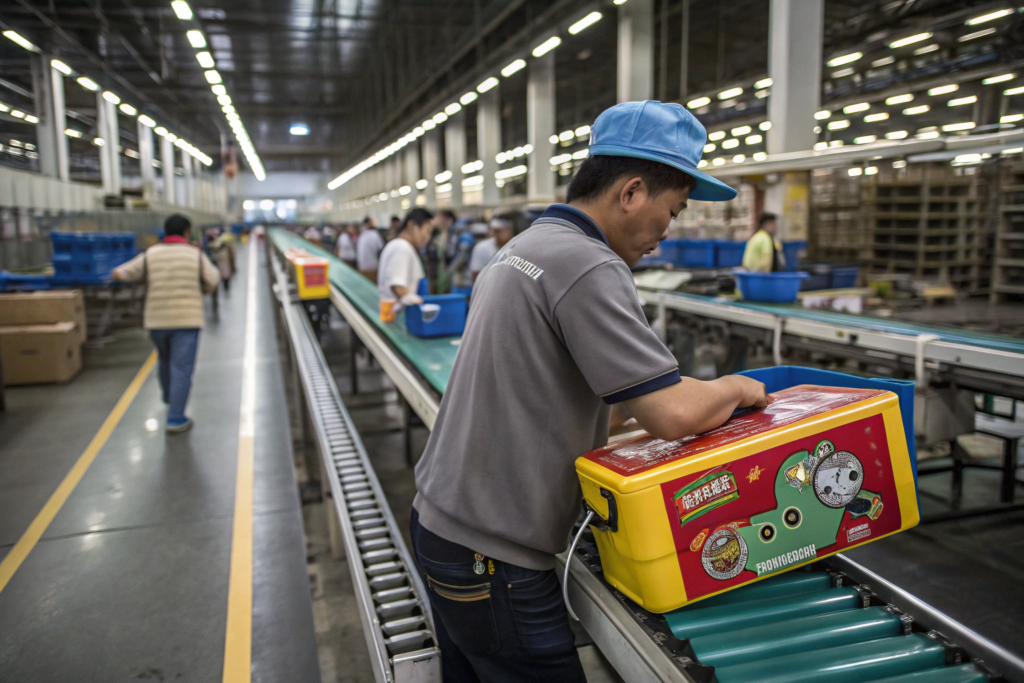
We prevent unauthorized product leakage with a three-tier physical security system: a dedicated, access-controlled production zone with biometric fingerprint entry, a daily "in-out" component count reconciliation where the number of molded components released at the start of a shift must match the number of finished clips plus the number of QC rejects at the end of the shift to within a tolerance of zero, and a metal detection exit gate that all personnel must pass through, which detects any metal spring component embedded in a clip and triggers an alarm.
The production zone is a locked, windowless room within the main factory. Only 12 authorized personnel have fingerprint access. Their entry and exit times are logged automatically. No smartphones are allowed inside. A CCTV camera with 90-day recording retention covers every workstation. The component reconciliation count is performed by the production line leader and verified by a separate security supervisor, both of whom sign a daily reconciliation log.
What happens to the QC reject clips in a licensed production run?
Reject clips are not simply tossed into a waste bin where they could be fished out. Rejects are placed into a locked, clear acrylic "Reject Bin" that has a one-way insertion slot. At the end of each shift, the bin is unlocked by the security supervisor and the QC manager simultaneously, both using separate keys. The rejects are counted, photographed, and physically destroyed by a hydraulic press. The destruction is video recorded, and the video is archived for the licensor’s audit.
How do you verify that no unauthorized mold exists?
A common counterfeiting technique is a factory producing an "extra" mold cavity, running a night shift, and selling those clips out the back door. We combat this by registering each mold cavity with its serial number laser-engraved on the steel. The licensor’s brand protection team can visit at any time, unannounced, and count the physical mold cavities on the tool rack. The number must match the number declared in the original tooling contract. Any duplicate cavity is a breach of contract.
What Packaging and Holographic Labels Deter Counterfeiters?
The clip itself might be perfectly authentic, but a counterfeiter can buy a generic clip, place it inside a fake branded packaging card, and sell it as a licensed product. The packaging is often the weakest link in the anti-counterfeit chain.
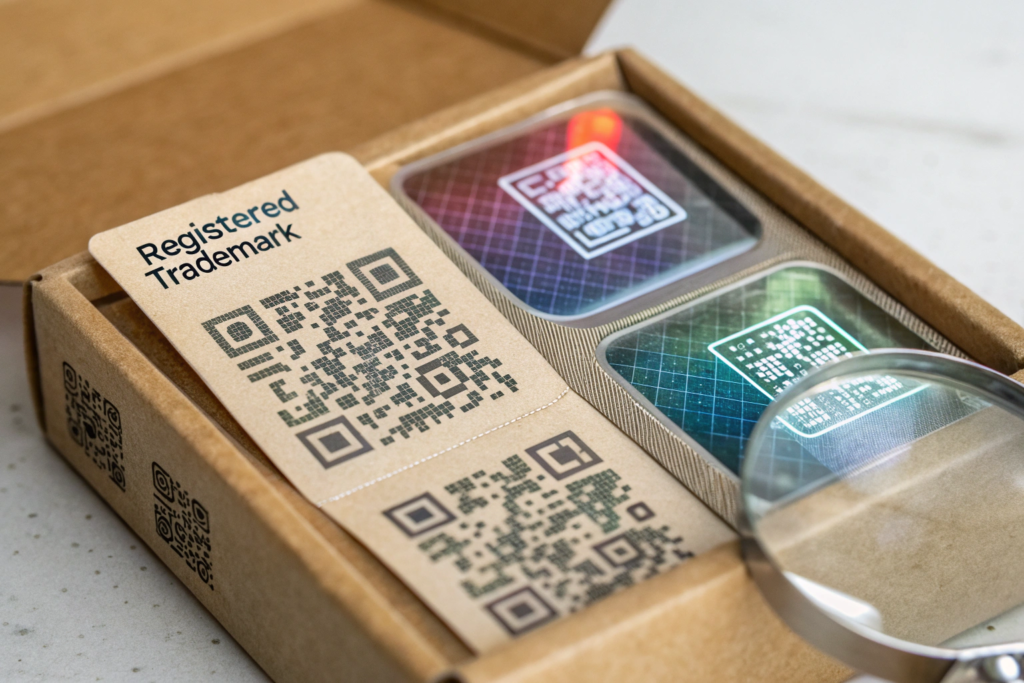
We integrate three anti-counterfeit features into the packaging: a holographic tamper-evident sticker with the licensor’s registered trademark that shifts between two different character images when tilted, a unique QR code on each hangtag that links to a blockchain-based product authentication page showing the clip’s production date and factory origin, and a micro-printed text line on the cardboard insert, readable only under a magnifying glass, that states the license number and the territory of sale.
The holographic sticker is produced by a certified security printer, the same type that prints banknote holograms. It is applied to the sealed polybag joint. If a counterfeiter attempts to peel off the sticker to reuse it, the hologram self-destructs into a checkerboard pattern of silver flakes that cannot be reassembled.
How does the blockchain QR code work for a consumer?
The consumer scans the QR code with their phone. It opens a secure webpage hosted by the licensing studio, not the factory. The page displays a message: "This is an authentic [Character Name] hair clip, manufactured at a licensed facility in Zhejiang, China, on [Date]. Product ID: 2405-01827." If the same code is scanned a second time, the page shows a warning that the product ID has already been authenticated, alerting the consumer to a possible counterfeit using a recycled code.
Why is micro-printing effective against counterfeiters?
Counterfeiters use standard desktop printers that cannot reproduce text smaller than 5 points legibly. Our micro-printed line is 1.5 points, visible only under a jeweler’s loupe. A counterfeit insert card will show a solid, smudged line under magnification, while the genuine insert shows crisp, sharp letters. This is a low-cost, high-deterrence feature that is well-established in the security printing industry.
Conclusion
US importers choose our factory for licensed character accessories because we treat intellectual property as a physical asset that must be protected with dimensional precision, chemical color management, biometric security zones, and anti-counterfeit packaging. The licensing studio’s brand is worth billions. A 0.7-millimeter ear drift or a single box of unauthorized clips on a street market can trigger a license termination. Our systems prevent those failures.
Our Zhejiang facility houses the dedicated IP Compliance Production Cell, the 3D scanning golden sample laboratory, the biometric access-controlled production zone, and the certified security printing press for holographic labels. We currently produce licensed character hair clips, belts, and fabric accessories for multiple major US entertainment properties.
If your brand holds a character license and needs a factory partner that understands the precision and security requirements, contact our Business Director, Elaine. She will arrange a confidential discussion and, subject to a Non-Disclosure Agreement, a virtual tour of our IP Compliance Cell and digital golden sample system. Write to her at elaine@fumaoclothing.com. Let’s protect your character’s image with the same care we protect our own reputation.