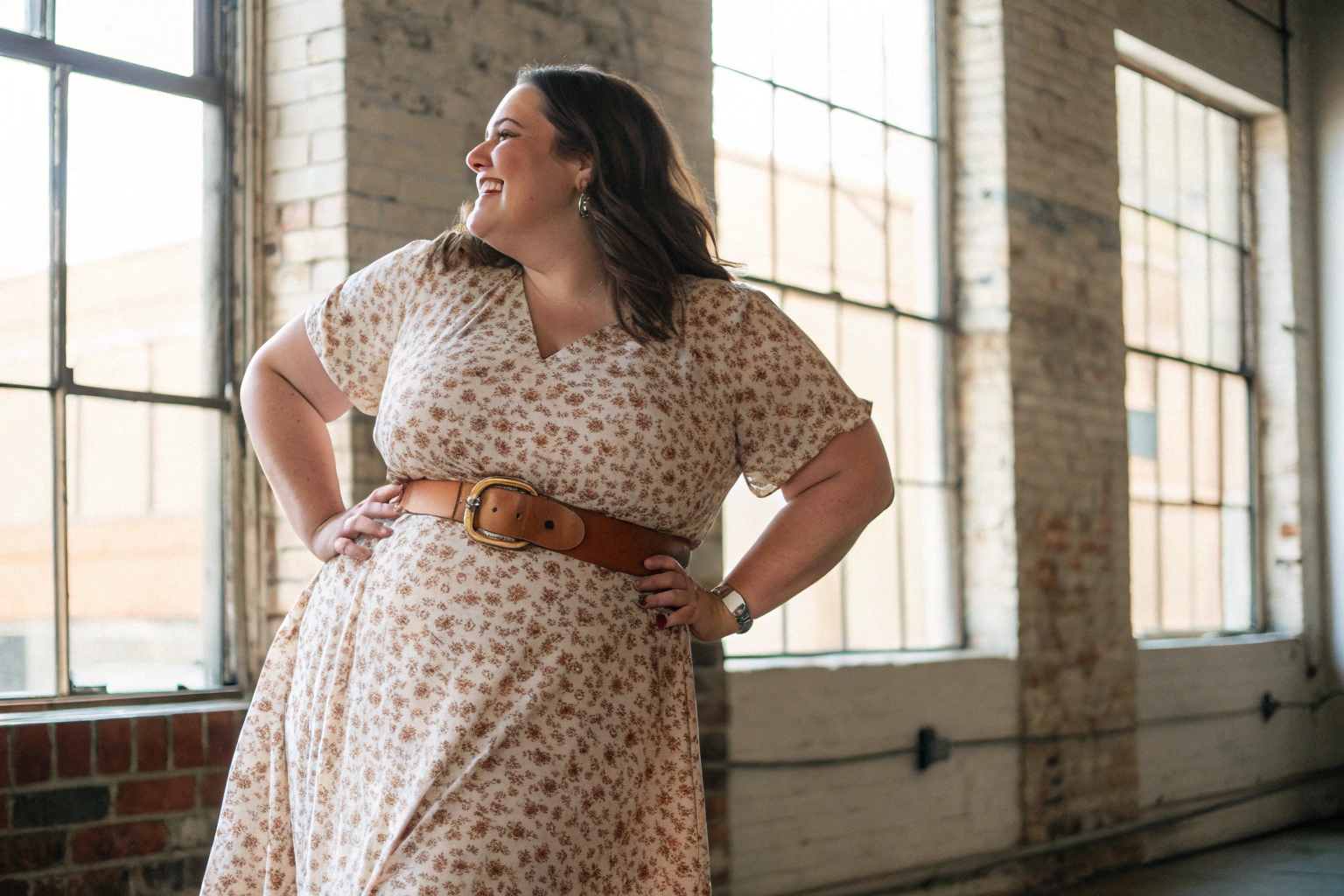
You are a designer for a plus-size women’s brand. You place a production order for 5,000 belts in your new collection. The belts arrive, and you immediately see the problem. The standard 40-millimeter strap width looks proportionally too narrow on a size 22 body. The buckle sits awkwardly at the waist, drawing attention to the stomach rather than defining the waistline. The stiff, unbending leather refuses to curve around a full hip. The belt was designed on a size 8 dress form, scaled up proportionally, and the result is a product that does not fit, flatter, or function for the customer who will actually wear it. Plus-size belt design is not about making standard belts longer. It is about re-engineering the proportions, the structural support, and the visual architecture from the ground up.
The 2026 belt trends for plus-size fashion brands center on three core design principles: an "engineered contour" strap that is pre-curved on an anatomical arc to wrap smoothly around a fuller waist without gaping or buckling; a wider, statement-scale strap width of 45 to 65 millimeters that maintains visual proportion and actually defines the waist rather than cutting across it; and a stretch-elastic integrated panel hidden within the back of the belt, often in a wider 60-millimeter format, that provides all-day comfort and micro-adjustability without visible elastic gathering.
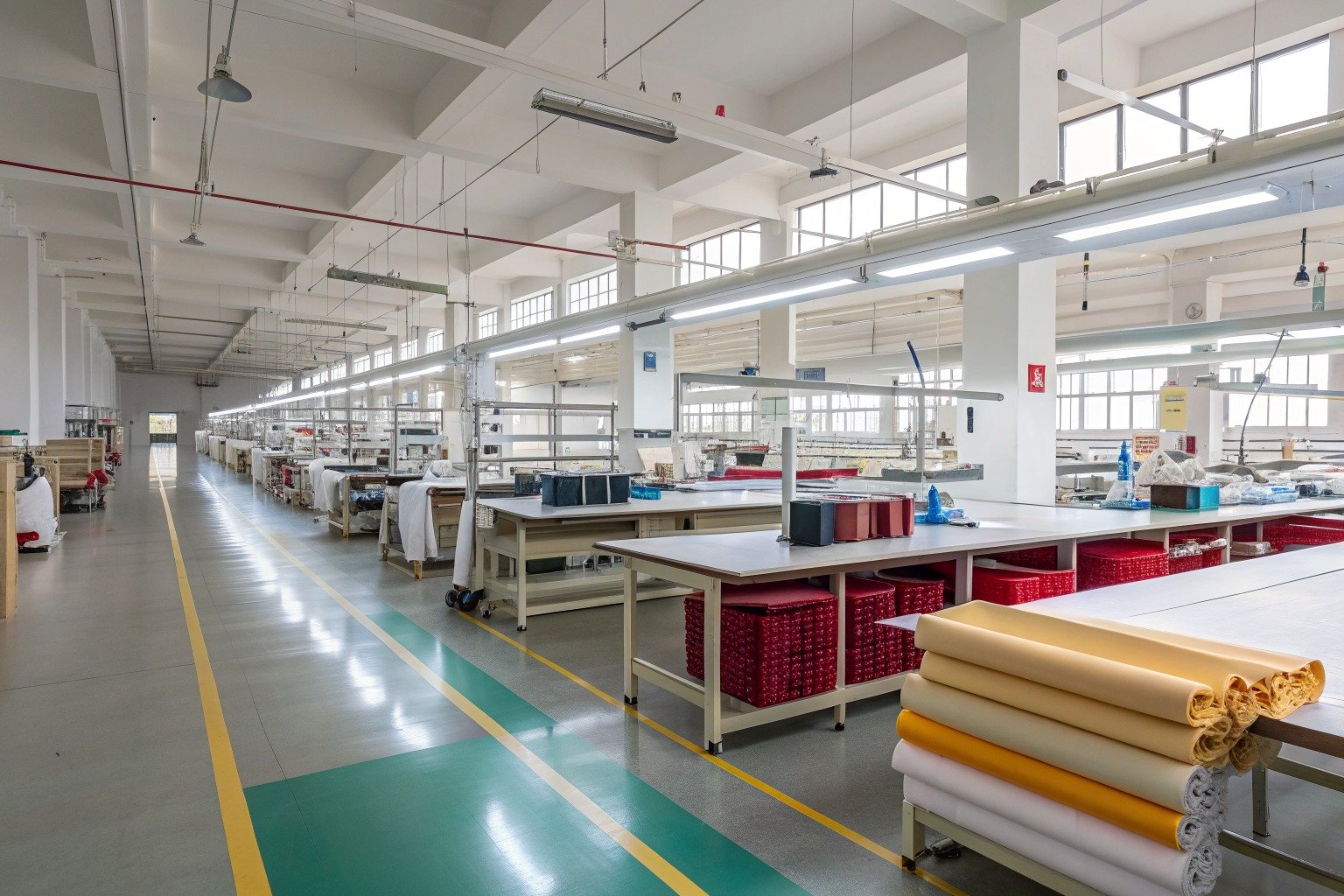
A well-designed plus-size belt does not just fit a larger body. It actively reshapes the silhouette, provides genuine comfort for all-day wear, and uses visual design principles, proportion, hardware placement, color blocking, to create the most flattering line possible. I want to break down the specific construction methods, materials, and fitting logic we use in our Zhejiang facility to produce belts that plus-size customers love to wear, not belts they tolerate because nothing else fits.
What Is an Engineered Contour Belt and Why Does It Eliminate Waist Gaping?
A standard straight belt is cut from a flat strip of leather or fabric. When wrapped around a size 24 waist, the outer edge of the strap must travel a longer distance than the inner edge against the body. The straight belt cannot accommodate this curvature differential, so the outer edge puckers and gaps away from the body. The gap is not a fit issue the wearer can solve by tightening the belt. It is a geometric impossibility built into the straight-cut pattern.
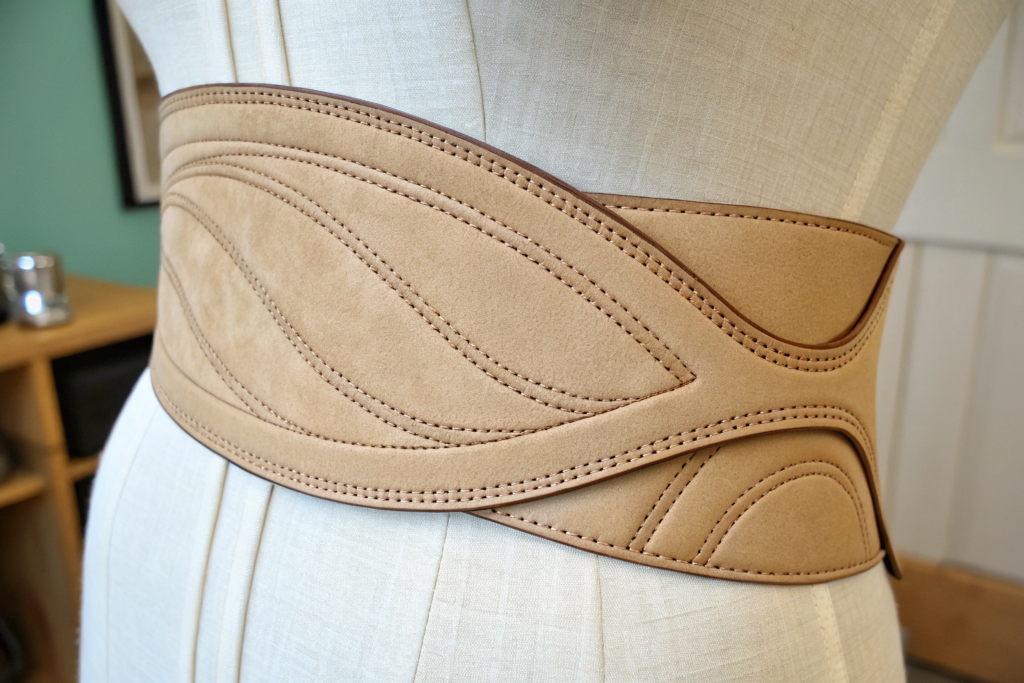
An engineered contour belt is cut on a curved pattern that matches the natural arc of a fuller waist and hip. The pattern is shaped like a gentle crescent, with the bottom edge of the strap slightly shorter than the top edge. When wrapped around the body, the curved strap follows the three-dimensional contour of the waist without the outer-edge gaping that a straight strap creates. The contour is designed into the cutting die, not achieved by steaming or stretching a straight strap after production.
Our pattern maker developed three contour curve profiles based on anthropometric data for plus-size body shapes. A "gentle curve" profile suits an apple-shaped body with a fuller waist and less hip-to-waist differential. A "moderate curve" profile suits an hourglass shape with a 10- to 15-inch waist-to-hip differential. A "deep curve" profile suits a pear-shaped body with a fuller hip and defined waist. Our custom belt design service offers all three curve profiles, and we help brands select the right profile for their target customer demographic.
How is the contour curve tested for fit on a plus-size dress form?
We use a set of Alvanon plus-size dress forms in sizes 18, 22, and 26. The prototype belt is wrapped around the dress form at the natural waist. The QC inspector slides a 2-millimeter-thick plastic gauge between the belt and the dress form along the entire strap length. Any gap wider than 2 millimeters is a failure. The pattern is adjusted, a new prototype is cut, and the test is repeated. A straight belt on a size 26 form typically shows an 8- to 12-millimeter gap at the outer edges. Our contour belt shows zero gaps.
Does the contour curve affect how the belt sits when laid flat on a retail shelf?
A contour-cut belt does not lie perfectly flat like a straight belt. It has a subtle, built-in curve. On a retail hangtag, this curve signals to the plus-size customer that this belt was designed for her body, not just sized up. Some brands highlight this design feature on the hangtag with phrasing like "Anatomically contoured for a gap-free fit." The curved flat-lay is a feature, not a flaw.
Why Are Wider Strap Widths, 45mm and Above, Critical for Visual Proportion?
A standard belt strap is 30 to 35 millimeters wide. On a size 8 body with a 28-inch waist, that strap occupies roughly 5% of the visible waist area. On a size 22 body with a 44-inch waist, the same 35-millimeter strap occupies roughly 3% of the visible waist area. The belt visually shrinks as the body size increases. The customer perceives it as too narrow, too flimsy, and not substantial enough to create a defined waistline.
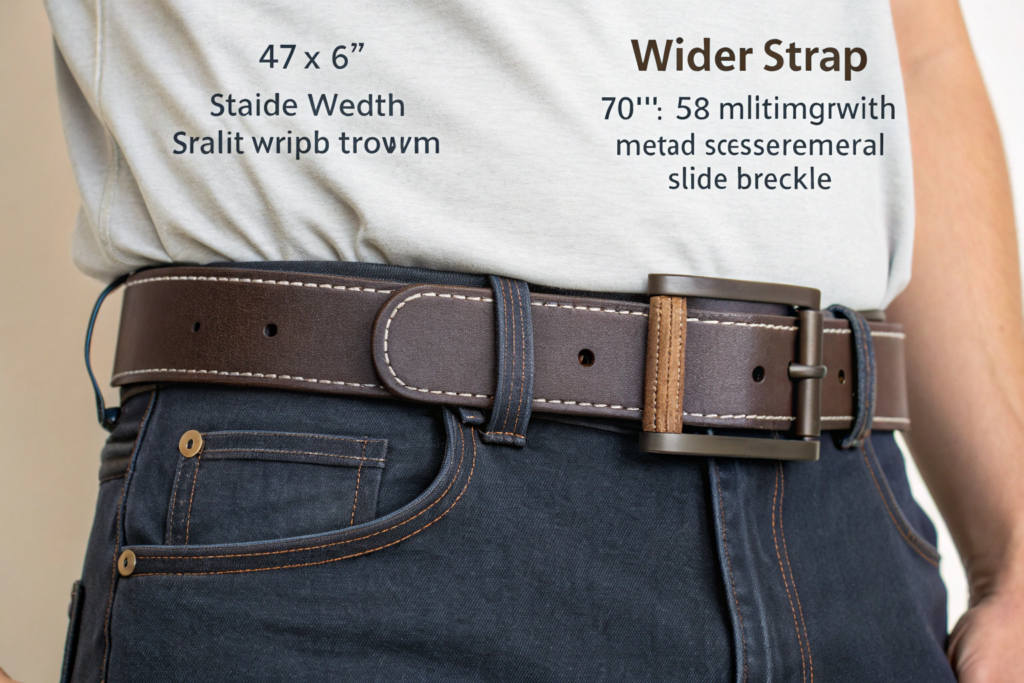
A wider strap width of 45 to 65 millimeters restores the proportional visual weight of the belt on a larger body. The wider strap also provides a larger canvas for the buckle, preventing the buckle from looking disproportionately large on the wider strap or disproportionately small on a narrow strap. A 60-millimeter strap with a 70-millimeter buckle creates a balanced, intentional design statement that frames the waist rather than bisecting it.
We produce plus-size belts in four standard strap widths: 45 millimeters for a tailored, office-wear look; 55 millimeters for an everyday statement belt; 65 millimeters for a dramatic, fashion-forward waist-cincher; and 80 millimeters for an elasticized back panel belt that provides shapewear-level support. The wider straps require a heavier-weight leather, typically 2.0 to 2.5 millimeters thick, to prevent the strap from folding or rolling at the edges under tension.
How does the wider strap affect the buckle selection?
A wider strap requires a proportionally wider buckle. The buckle width should be approximately 10 to 15 millimeters wider than the strap. A 55-millimeter strap pairs with a 65- to 70-millimeter buckle. A 65-millimeter strap pairs with a 75- to 80-millimeter buckle. We stock plus-size belt hardware in these larger dimensions, including center-bar buckles, D-ring buckles, and statement oval buckles, all cast in zinc alloy with electroplated finishes.
What is the relationship between strap width and the "waist-cinching" effect?
A wider strap distributes the cinching pressure across a larger surface area, creating a smoother, more comfortable waist definition without the "muffin top" effect of a narrow strap that digs in sharply. A 60-millimeter strap acts like a gentle corset panel, smoothing the transition from torso to hip. This is the functional reason that plus-size customers consistently prefer wider belts.
How Does a Hidden Stretch Panel Provide Comfort Without Visible Elastic?
A standard leather belt has no stretch. The wearer selects a hole, and the belt fits at that exact circumference. But the human body changes circumference throughout the day. After a meal, the waist expands by 2 to 4 centimeters. A non-stretch belt becomes uncomfortably tight. The wearer loosens it a hole, but then the belt is too loose when standing. The hidden stretch panel solves this by providing silent, automatic micro-adjustment.
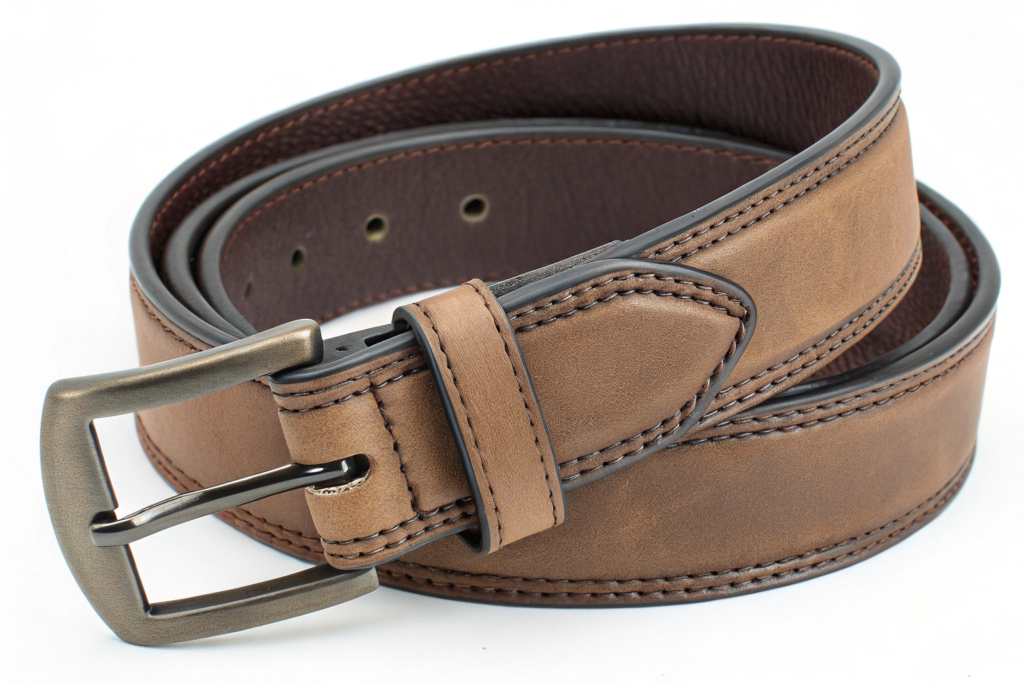
A hidden stretch panel is a 60- to 80-millimeter-wide section of high-retention elastic, encased in the same leather or fabric as the strap exterior, sewn into the back of the belt. The panel stretches up to 5 centimeters and contracts back silently. From the outside, the back of the belt looks identical to the front, with no visible elastic gathering. The wearer experiences a belt that breathes with her body throughout the day.
We construct the hidden stretch panel by skiving the leather ends to a thin 0.5-millimeter edge, overlapping them with the elastic core, and stitching them together with a flat zigzag stitch that allows the elastic to stretch without breaking the thread. A soft, brushed tricot lining covers the elastic on the interior, preventing any rubber-to-skin contact. The panel is engineered for 50,000 stretch cycles without loss of tension.
How is the stretch panel tested for tension consistency across the size range?
The elastic core is specified with a specific modulus, pounds of tension per inch of stretch, that is calibrated for the plus-size body. Too much tension, and the belt feels tight and restrictive. Too little tension, and the belt does not return to its original position. We test the stretch panel on an Instron tensile tester, cycling it 10,000 times and measuring the tension at 3 centimeters of extension. The tension must fall within a 10% tolerance band of the specification.
Does the stretch panel extend the size range of a single belt?
Yes, a belt with a 5-centimeter stretch panel effectively covers a three-hole range instead of a single-hole fit. This reduces the number of SKUs a brand must produce to cover the full size range, and it increases the customer’s confidence in purchasing online because the belt adapts to her exact measurement. The stretch belt technology we use is adapted from athletic wear and engineered for the durability requirements of a daily-wear accessory.
What Buckle Placement and Design Principles Are Most Flattering?
The center-front buckle on a standard belt sits directly over the navel. On a plus-size body, this placement can draw the eye to the stomach rather than the waist. Strategic buckle placement, a slightly offset position, or a asymmetric buckle design redirects the visual focus to the narrowest point of the torso, which is typically slightly above the navel.
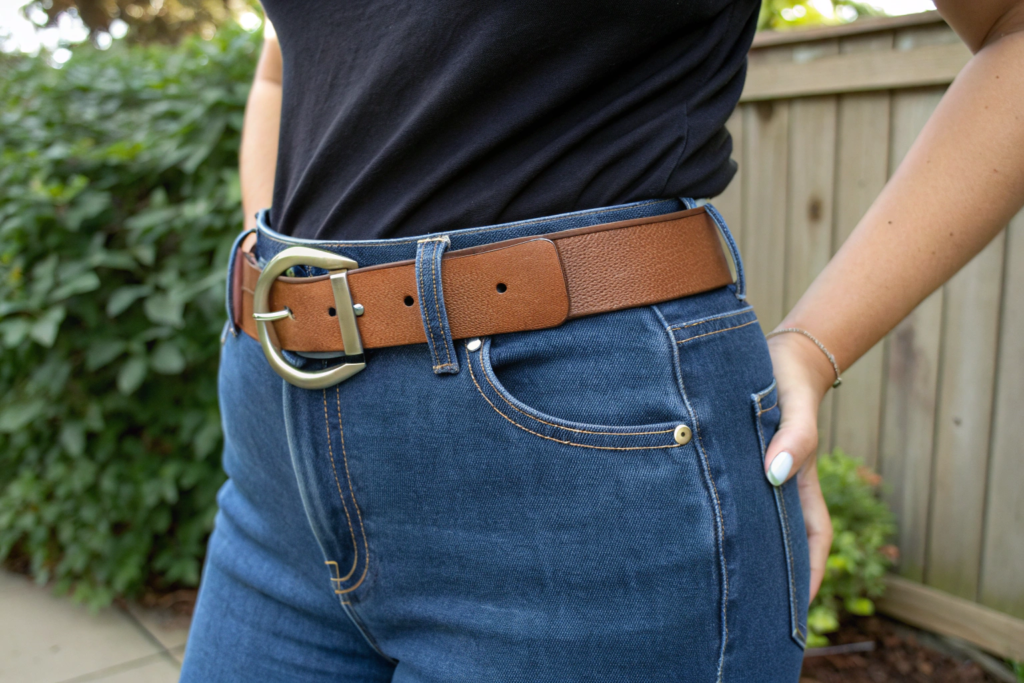
The most flattering buckle placement for a plus-size belt is a slight off-center position, 5 to 8 centimeters to the left or right of the center front. An asymmetric placement creates a diagonal visual line across the waist, which the eye reads as more dynamic and slimming than a straight horizontal line. The buckle itself should have a vertical orientation, an oval or elongated rectangle placed vertically, to create a lengthening line through the torso.
We produce buckle styles specifically designed for vertical orientation on plus-size belts. A tall, narrow oval buckle, 80 millimeters tall by 50 millimeters wide, creates a strong vertical line that elongates the torso visually. The buckle prong is offset to the upper third of the oval, drawing the eye upward. This is a design technique borrowed from plus-size fashion principles that prioritize vertical lines and asymmetry.
How does the buckle finish affect the perceived size of the buckle?
A shiny, high-polish buckle reflects light and appears visually larger and more prominent. A matte, brushed, or darkened finish absorbs light and appears visually smaller and more subtle. For a plus-size belt where the buckle is already proportionally larger, a matte or antique finish is often more flattering because it reduces the visual weight of the hardware.
What is the "floating buckle" design and why does it work well?
A floating buckle is not sewn directly to the strap end. It is mounted on a separate leather tab that is riveted to the strap. This construction allows the buckle to sit slightly forward from the body, creating a subtle shadow line that separates the hardware from the torso. The visual separation prevents the "buckle sitting on stomach" look and creates a more dimensional, architectural silhouette. This is a design detail we frequently recommend for plus-size fashion accessories.
Conclusion
A 2026 plus-size belt is not a standard belt with extra inches. It is a proportionally re-engineered accessory with a contoured strap curve that eliminates waist gaping, a wider 45- to 65-millimeter strap that restores visual balance on a fuller figure, a hidden back stretch panel that provides all-day comfort through automatic micro-adjustment, and a strategically placed, vertically oriented buckle that elongates the torso. These four design elements together create a belt that fits, flatters, and functions for the plus-size customer who has been underserved by scaled-up standard designs.
Our Zhejiang facility produces these engineered plus-size belts for brands across North America and Europe. We stock the contoured cutting dies in three curve profiles, the 45- to 65-millimeter strap blanks, the hidden stretch panel components, and the vertically oriented buckle hardware. Our plus-size dress forms in sizes 18 through 26 are used for every prototype fitting before a design is released to bulk production.
If your brand is developing a plus-size belt collection and needs a factory that understands the engineering behind the fit, contact our Business Director, Elaine. She will send you a sample set of our three contour profiles, a stretch panel demonstration video, and our buckle style catalog with vertical orientation options. Write to her at elaine@fumaoclothing.com. Let’s design belts that celebrate curves, not constrain them.