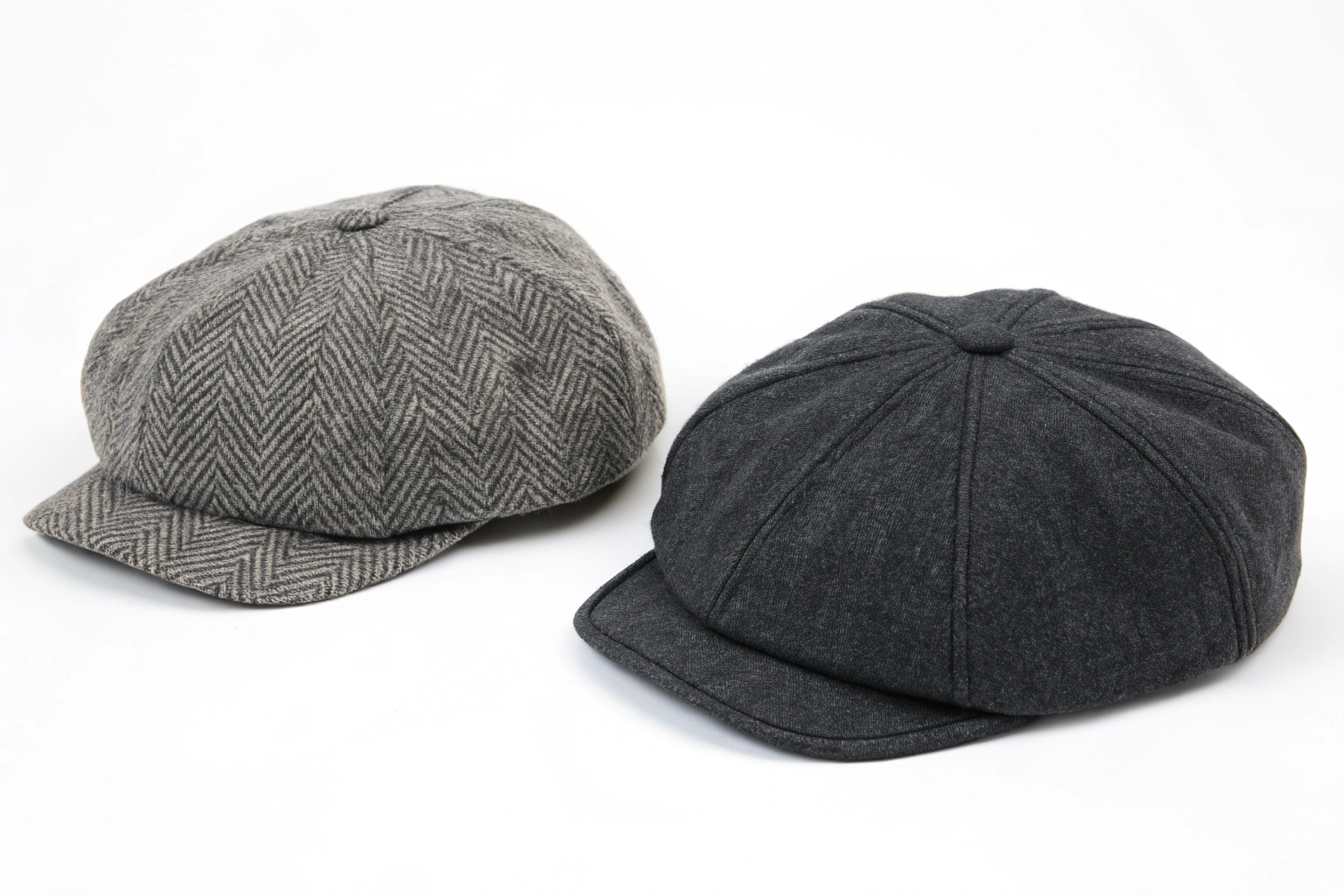
A buyer from a European menswear brand once stormed into our showroom with two caps in his hands. He had received 3,000 units of what his purchase order called an "ivy cap." The factory delivered newsboy caps. He was furious. His customer base wanted the sleek, minimal profile worn by the characters in a popular period drama. What they received was the puffier, paneled silhouette associated with 1920s paperboys. He had to discount the entire shipment by 40% just to clear the inventory. He asked me why factories keep confusing these two styles. I told him the truth. Many factories do not understand the difference themselves.
The primary difference between a newsboy cap and an ivy cap lies in the crown construction. A newsboy cap has an eight-panel crown that is full, round, and voluminous, with a covered button where the panels converge at the top center. An ivy cap has a flat or one-piece crown with minimal volume, often styled with a sleek, close-to-the-head silhouette. The newsboy cap is fuller and more casual. The ivy cap is sleeker and more tailored.
At Shanghai Fumao, we cut and sew both styles for brands across North America and Europe. I can tell you from our cutting table exactly how the patterns, the construction, and the finished look differ. Let me break this down so you never order the wrong cap again.
What Are the Structural Differences in Crown Construction?
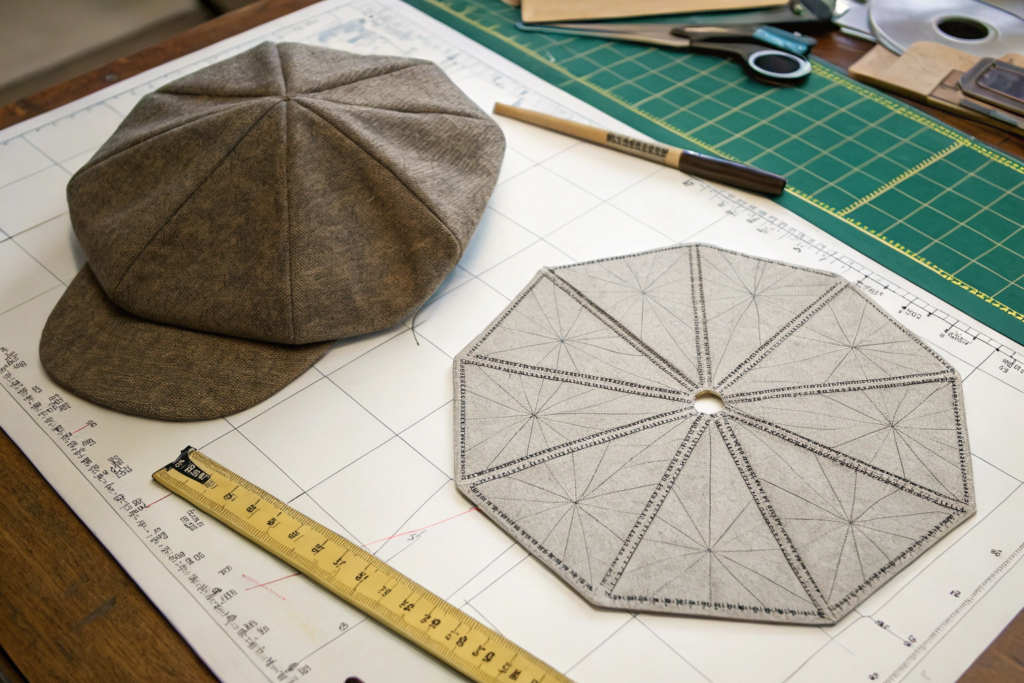
The crown is where the two caps part ways. If you learn nothing else, learn this. The newsboy cap crown is made of eight separate fabric panels sewn together. The ivy cap crown is typically made of one piece of fabric, sometimes with small darts at the sides, but fundamentally a single piece. This single construction difference dictates everything about how each cap looks and feels on the head.
When I walk through our sample room and see crown pieces on the cutting table, I can identify the cap style in one second just by counting the panels. Eight panels mean newsboy. One panel means ivy. The pattern pieces do not lie.
Why Does the Eight-Panel Crown Define the Newsboy Cap?
The eight-panel crown is the defining feature of the newsboy cap. The panels radiate from a central point on top of the head, usually covered by a fabric-wrapped button. This paneled construction creates volume. The cap has body. It sits on the head with a slight puffiness, a rounded silhouette that stands up and away from the skull.
The panels are sewn together with topstitching on both sides of each seam. This visible stitching is part of the cap’s aesthetic. It adds texture and visual interest. The button at the center is functional in the sense that it covers the convergence point of eight seams, but it is also a signature design element. A newsboy cap without a covered top button looks incomplete. This is why we always match the button fabric to the cap body fabric, or use a contrasting fabric as a deliberate design accent. Understanding newsboy cap pattern construction reveals why this style requires more fabric, more sewing time, and more skilled labor than an ivy cap.
How Does the One-Piece Crown Create the Ivy Cap’s Sleek Profile?
The ivy cap crown, sometimes called a flat cap crown, is essentially a single piece of fabric shaped to cover the top of the head. Darts at the sides, usually two or four small tucks, create the subtle shaping that curves the crown around the head. There are no visible seams across the top. The surface is clean and unbroken.
This one-piece construction lies close to the head. It does not have the volume or the puffiness of a newsboy cap. The profile is low and sleek. The cap can be worn almost like a closely fitted helmet, which is how it gained popularity in the Ivy League campuses of the mid-20th century. The clean surface also makes the ivy cap an excellent canvas for a single bold fabric pattern, like a large-scale plaid or a windowpane check, because the pattern is not interrupted by panel seams. If you are sourcing classic men’s hat patterns, the distinction between panel count is your most reliable identifier.
What Are the Historical Origins That Shaped Each Cap Style?
The two caps come from different worlds. The newsboy cap has working-class origins. The ivy cap has leisure-class origins. Knowing these histories does not change how you manufacture the caps, but it changes how you sell them. A brand story rooted in authentic history sells more caps than a brand story about fabric weight.
I encourage every brand buyer I work with to include this history in their product descriptions and marketing materials. When a customer understands that their cap connects them to a century of cultural history, the cap becomes more than an accessory. It becomes a piece of heritage they want to own.
How Did the Newsboy Cap Emerge from Working-Class Culture?
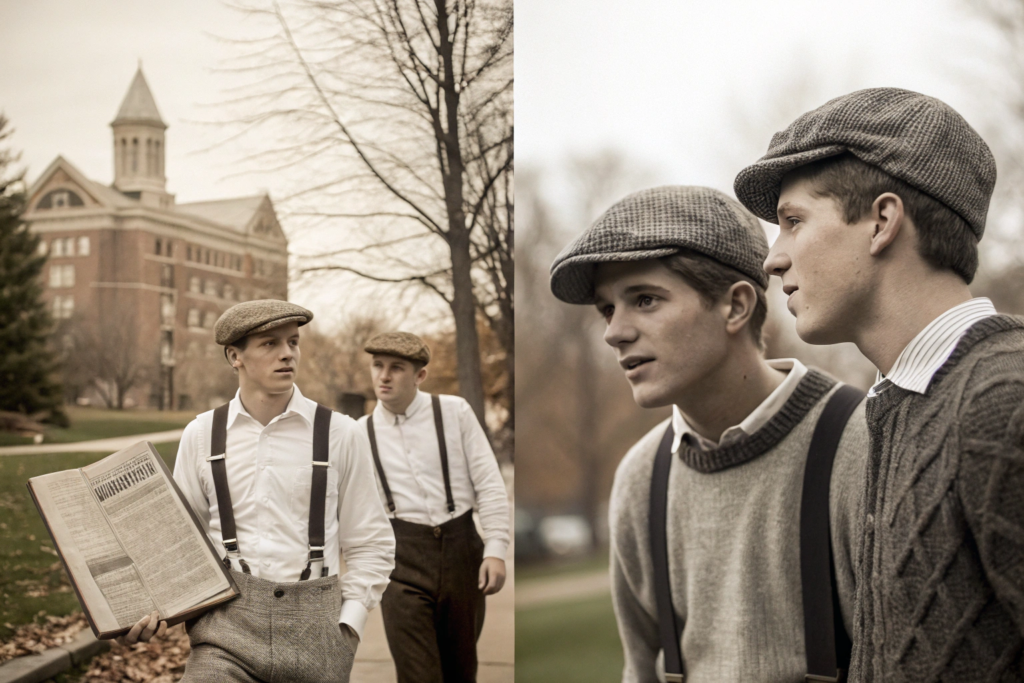
The newsboy cap, also called a baker boy cap, an eight-quarter cap, or a Gatsby cap, originated in the late 19th and early 20th centuries as affordable headwear for working-class men and boys. Newspaper sellers, dock workers, and factory laborers wore them. The cap was cheap to produce from fabric scraps, warm enough for outdoor work, and unstructured enough to be stuffed in a pocket when not worn.
The voluminous shape was not a fashion choice. It was a byproduct of the paneled construction made from whatever fabric was available, often wool tweed offcuts from suit manufacturing. The caps were practical, not stylish. The style then migrated upward through the social classes, adopted by golfers and country gentlemen who appreciated the comfort and the casual elegance. The newsboy cap’s journey from street to country club is one of the great democratizations in fashion history. If you are interested in historical headwear and its cultural significance, the newsboy cap is a rich subject.
Why Is the Ivy Cap Associated with Academic and Golf Culture?
The ivy cap, also known as a flat cap, a driving cap, or a golf cap, has its own distinct history. While it also has working-class roots in the British Isles, its modern identity was shaped by its adoption on Ivy League college campuses in the 1950s and 1960s. Students wore them as part of the preppy, East Coast academic uniform. The clean, uncluttered silhouette matched the minimalist aesthetic of the Ivy style.
Golfers also adopted the ivy cap heavily. Its close fit stayed secure during a swing. Its clean front panel provided shade without obstructing the view of the ball. Legendary golfers wore them on the course, cementing the ivy cap as a symbol of leisurely, genteel sport. The cap’s association with both academic intelligence and athletic leisure gives it a unique cultural position. It signals taste without signaling effort. If you are building a brand story around heritage menswear, the ivy cap’s dual identity is powerful marketing material.
How Do Brim Styles and Attachment Methods Differ?
The crown gets most of the attention, but the brim is where the two caps diverge in ways that affect wearability. The brim style, the attachment method, and the snap closure all contribute to the cap’s overall character and how it sits on the wearer’s head.
A newsboy cap brim is typically wider, deeper, and more dramatically curved. It is a statement brim. An ivy cap brim is narrower, shallower, and often sits closer to the forehead. It is a subtle brim. The choice between them affects not just the look but also the function. A deeper brim provides more sun protection. A shallower brim provides a wider field of vision, which is why golfers historically preferred it.
What Defines the Classic Newsboy Cap Brim?
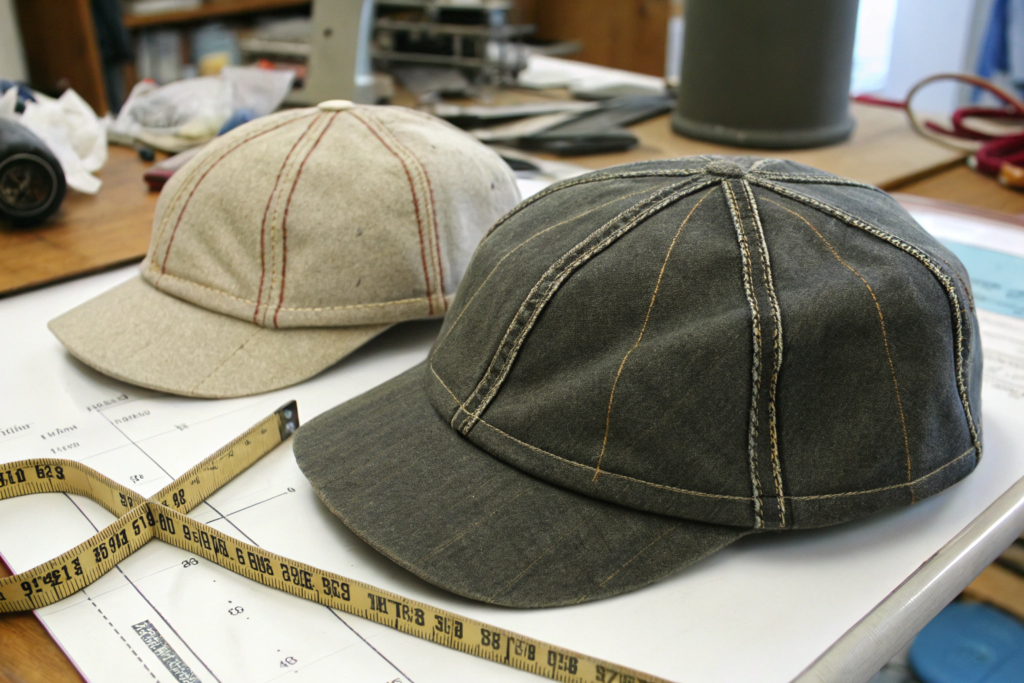
The newsboy cap brim is usually a separate pattern piece, sewn directly to the front of the crown. It is often wider, measuring 5.5 to 6.5 centimeters from the fold to the edge. The curve is more pronounced, and the brim has a snap or a sewn-down attachment at the front. Some styles have a snap that allows the brim to be worn up or down.
The brim on a newsboy cap is part of its casual, slightly rebellious character. When the brim is snapped up, the cap has a jaunty, carefree attitude. When it is snapped down, it provides practical shade. This versatility is part of the newsboy cap’s enduring appeal. The brim is usually topstitched for structure and may have a contrast facing underneath that shows when the brim is turned up. Understanding cap brim construction methods helps you specify the exact brim style your customer expects.
How Does the Ivy Cap Brim Create a Cleaner Front Profile?
The ivy cap brim is typically narrower, around 4.5 to 5.5 centimeters deep, and attached more flush with the crown. The attachment can be a blind seam, meaning the stitching is hidden inside the cap rather than visible from the outside. This creates a cleaner, more refined front profile.
The ivy cap brim is usually sewn down permanently. It does not have a snap. The brim is designed to sit close to the forehead, creating a continuous line from the crown to the brim edge. This sleek integration is what gives the ivy cap its tailored, intellectual appearance. Some modern ivy caps incorporate a subtle internal stiffener to help the brim hold its shape without appearing rigid. The goal is structure that feels effortless. For brands targeting a modern minimalist menswear aesthetic, the ivy cap’s clean brim is a key selling point.
What Fabric and Material Choices Suit Each Cap Style?
The eight-panel newsboy crown and the one-piece ivy crown demand different things from fabric. A fabric that works beautifully on a newsboy cap might drape poorly on an ivy cap, and vice versa. Understanding these material affinities will guide your collection development.
Heavier, more textured fabrics love the newsboy silhouette. The multiple panels and the volume give the fabric room to express its character. Lighter, smoother fabrics love the ivy silhouette. The single-piece crown showcases the fabric’s surface without interruption. Choose the wrong fabric for the style, and the cap will fight its own construction.
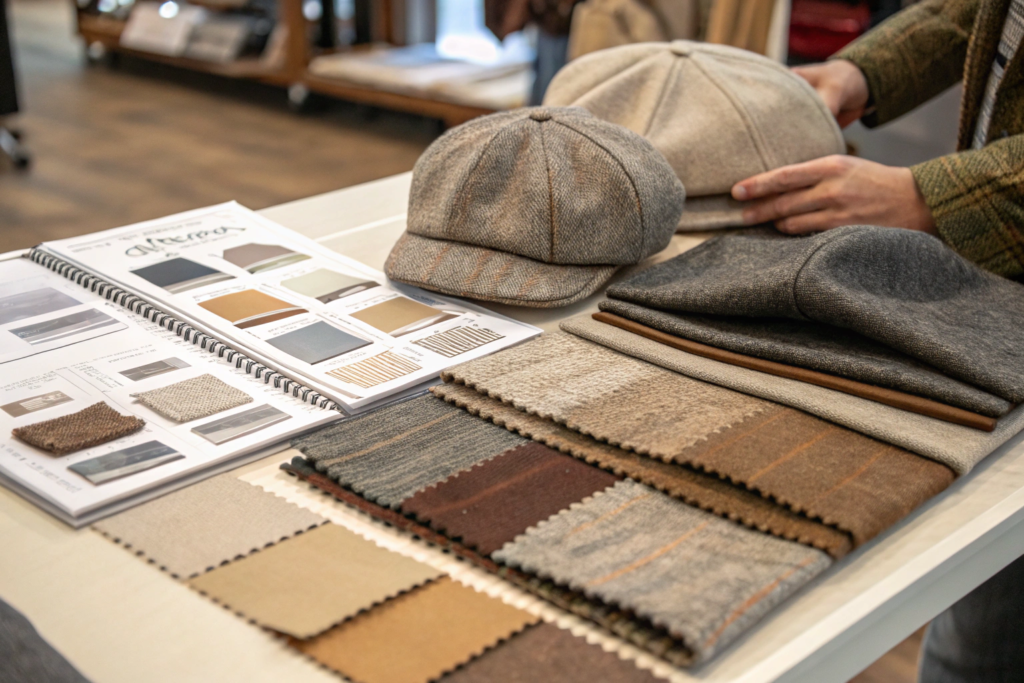
Which Fabrics Best Suit the Voluminous Newsboy Silhouette?
Wool tweed is the classic newsboy cap fabric and still the best-selling choice. The texture, the warmth, and the natural drape of tweed work perfectly with the eight-panel construction. Herringbone, houndstooth, and donegal tweed are all traditional patterns that look at home on a newsboy cap. The panel seams break up the pattern in a way that adds visual complexity.
Heavy linen and cotton-linen blends work well for warm-weather newsboy caps. The fabric must have enough body to hold the paneled shape. A fabric that is too limp will cause the crown to collapse into a shapeless sack. We typically use a mid-weight fusible interfacing on each panel to add structure without adding stiffness. The interfacing must be compatible with the face fabric in terms of shrinkage and heat tolerance. A newsboy cap made from a fabric with no body will disappoint the wearer. It will not have the characteristic puffiness that defines the style. If you are selecting fabric for structured hats, prioritize body and texture over drape and softness.
What Materials Complement the Sleek Ivy Cap Profile?
Smooth wool flannel, fine cotton twill, and lightweight cashmere blends are ideal for ivy caps. These fabrics have a refined surface that shows well on the unbroken crown. A large-scale glen plaid or a subtle birdseye pattern reads beautifully on an ivy cap because the pattern is not interrupted by seams.
Performance fabrics are also entering the ivy cap category. Water-resistant cotton blends and technical microfibers appeal to the modern consumer who wants the classic look with modern functionality. These fabrics are typically lighter than traditional tweed, so the cap structure relies more on the interfacing and the precise cut of the single crown piece. We use a lightweight woven interfacing for ivy caps to maintain the shape without adding detectable weight. The goal is a cap that feels almost weightless on the head but holds its crisp, tailored shape all day. Professional fabric selection for headwear manufacturing considers both the aesthetic and the structural requirements of each cap style.
Conclusion
The difference between a newsboy cap and an ivy cap is structural, historical, and aesthetic. A newsboy cap features an eight-panel crown with visible topstitching, a covered center button, a full rounded silhouette, and a wider snap brim. It emerged from working-class culture and carries a casual, heritage-rich character. An ivy cap features a single-piece crown with minimal seaming, a sleek close-to-the-head profile, and a narrower sewn-down brim. It rose to prominence through Ivy League campus culture and golf fashion, carrying an intellectual, tailored character.
Mistaking one for the other in a purchase order is a costly error. The two caps look different, feel different on the head, and appeal to different customers. A buyer who orders an ivy cap and receives a newsboy cap is holding inventory that their customer did not want. The customer knows the difference, even if the purchase order writer did not.
At Shanghai Fumao, we cut and sew both styles with equal expertise. Our pattern room has master blocks for newsboy caps and ivy caps, ready to be adapted to your brand’s specifications. Our fabric sourcing team can guide you toward materials that suit your chosen style. Our QC team inspects each cap against style-specific criteria, from the button security on newsboy caps to the brim integration on ivy caps.
If you are developing a cap collection and you want to make sure your purchase order language matches the cap you actually want, please email our Business Director Elaine at elaine@fumaoclothing.com. Send her your reference images and your target specifications. She will confirm the correct cap style, provide a detailed quotation, and ensure your production sample matches your vision exactly. A cap is not just a cap. The details define the difference.