

I remember a tense negotiation a few years ago with a buyer from a major German department store. We had agreed on the designs for a line of hair claws and scarves . The price was right. The samples were beautiful. I thought the deal was closed. Then, as he was about to sign the contract, he put his pen down and asked, "Where is your OEKO-TEX certification? And I need to see your BSCI audit report from the last 12 months. If you don’t have these, the compliance team will reject the entire line." I was caught off guard. At that time, I didn’t fully grasp that for the European market, a beautiful product and a competitive price are merely the entry ticket. The real decision is made based on a stack of certifications. I promised him I would get them. I spent the next three months overhauling our material sourcing and factory auditing processes. When I sent him the certificates, he not only signed the original deal but doubled the order quantity. If you are like Ron and you are looking to expand into the European market, you must understand that certifications are not a bureaucratic hassle. They are the keys to the castle. The fear of having your entire collection rejected by a retail buyer’s compliance department, not because of your design or price, but because of a missing piece of paper, is very real and entirely avoidable.
The top three quality certifications for European accessory buyers are OEKO-TEX Standard 100, which certifies that every component of a product is free from harmful chemicals; a valid BSCI or SMETA social compliance audit, which proves ethical labor practices and safe working conditions throughout the supply chain; and the Global Recycled Standard (GRS), which provides third-party verification of recycled content and responsible production processes. These three certifications form a "Triple Lock" on product safety, ethical manufacturing, and sustainability claims. Without them, your brand is effectively locked out of the vast majority of European retail channels.
I run AceAccessory in Zhejiang Province. I have navigated the complex world of European compliance and I know firsthand that it is a different standard than the US market. The European consumer is highly educated on product safety and sustainability, and the retailers respond to this demand by placing strict, verifiable requirements on their suppliers. A vague promise of "high quality" or an "eco-friendly" hangtag is not enough. They demand independent, third-party, documented proof. Let me walk you through the three non-negotiable certifications you need to sell accessories in Europe and explain exactly what each one verifies and why it is essential for your business.
Why Is OEKO-TEX Standard 100 the Baseline for Skin-Contact Accessories?
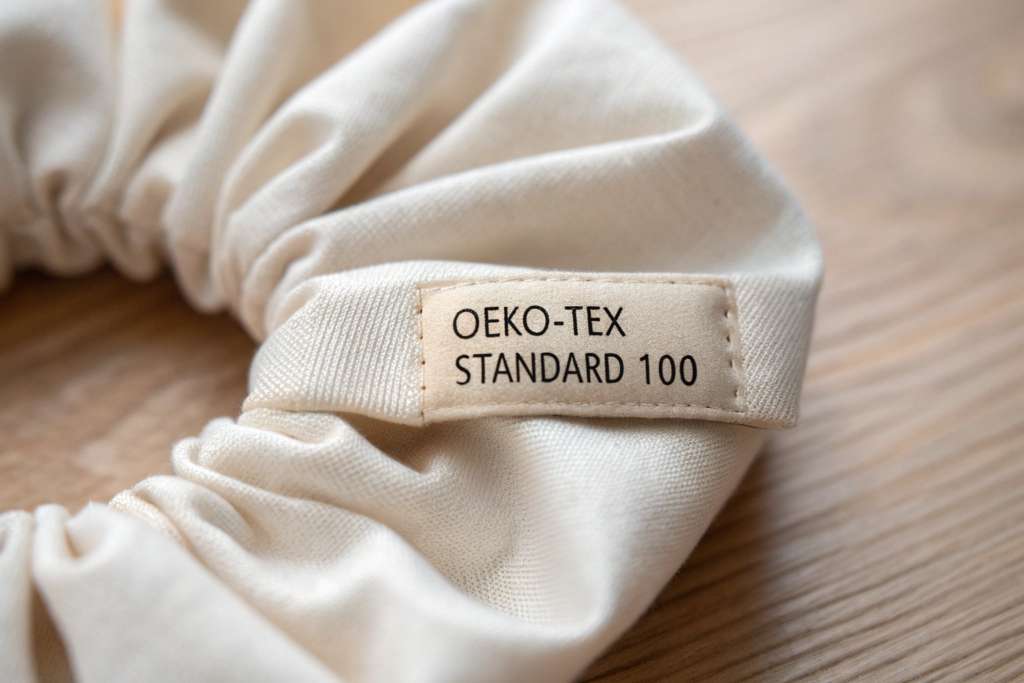
OEKO-TEX Standard 100 is the world’s most recognized and trusted label for textile safety. For any accessory that touches the skin—scrunchies , headbands , scarves , beanies —this certification is the absolute baseline requirement for entering the European market. It is not a "nice-to-have" marketing tool; it is a hard requirement listed in the vendor manuals of retailers from Berlin to Barcelona.
What OEKO-TEX Standard 100 Actually Tests:
This is not a simple check for lead. The testing criteria are exhaustive and are updated annually based on the latest scientific research. The lab tests for over 100 harmful substances that are regulated or suspected to be harmful to human health. This includes:
- Heavy Metals: Lead, Cadmium, Mercury, Chromium VI, etc.
- Formaldehyde and Other Aldehydes: Used in fabric finishing and known to be carcinogenic and skin-sensitizing.
- Pesticides: Including chlorinated phenols like PCP.
- Phthalates: Plasticizers used in PVC and prints, known endocrine disruptors.
- Azo Dyes: Dyes that can break down into carcinogenic aromatic amines.
- PFAS (Per- and Polyfluorinated Substances): The "forever chemicals" used in water-repellent treatments.
The "Product Class" System:
The standard has four product classes based on the intensity of skin contact. For fashion accessories, the class matters:
- Product Class I: For babies and toddlers (under 3 years). The strictest limits. Required for any toddler or infant hair accessories.
- Product Class II: For items with direct and prolonged skin contact. This is the class for your hair claws, headbands, and scrunchies.
- Product Class III: For items with no or minimal skin contact (e.g., an outerwear jacket).
- Product Class IV: For decoration materials (e.g., upholstery).
For a European accessory buyer, seeing an OEKO-TEX Class II certificate means they can be confident that the product is chemically safe for its intended use. The label on the product communicates this directly to the consumer, building instant trust. At AceAccessory, our core line of skin-contact accessories is OEKO-TEX Standard 100 certified. This is a fundamental part of our compliance infrastructure .
Does the Certification Cover Every Component, Including the Elastic and Metal?
This is a crucial detail and a common trap. A naive factory might get the cotton fabric certified and claim the whole product is OEKO-TEX. This is not valid. The certification must cover Every Single Component that goes into the finished accessory.
For a simple elastic hair band , the certifying lab will test:
- The outer fabric (e.g., the cotton or polyester cover).
- The inner elastic core.
- The thread used to sew the seam.
- The glue used to bond the ends of the elastic together.
- Any printed logo or label.
For a metal hair clip , they will test:
- The base metal of the clip body.
- The nickel, copper, and final plating layers.
- Any paint or lacquer applied to the surface.
- The spring mechanism.
- The adhesive on any decorative rhinestones.
All of these components must pass the strict chemical limits. If a supplier shows you an OEKO-TEX certificate, you must check the scope of the certificate. Does it list all the components of your specific product? A legitimate certificate will have a detailed product description in the appendix.
At AceAccessory, when we develop a new product for the European market, we send a fully assembled "Gold Seal" sample to the testing lab. We do not test just the fabric. We test the finished product exactly as it would be worn by the consumer. This is the only way to guarantee full compliance and to provide a certificate that will satisfy a European retail buyer’s compliance audit.
How Does OEKO-TEX Differ from the EU’s REACH Regulation?
This is a common point of confusion. They are related but fundamentally different in scope and legal standing.
- EU REACH Regulation (Registration, Evaluation, Authorisation and Restriction of Chemicals): This is a Horizontal Legislation. It is a broad, legally binding regulation that applies to all products sold in the EU, not just textiles. It regulates chemicals in general and includes a "Candidate List" of Substances of Very High Concern (SVHCs). It is the law.
- OEKO-TEX Standard 100: This is a Voluntary, Third-Party Certification Standard. It is a testing and certification system developed by independent research institutes. It is not a law, but a standard that a manufacturer voluntarily meets.
The Relationship in Practice:
OEKO-TEX is a very effective tool for demonstrating REACH compliance, but it goes significantly Beyond REACH. The OEKO-TEX criteria list is more comprehensive and restrictive than the REACH SVHC list for textile applications. It is proactively updated more frequently. For a European retail buyer, an OEKO-TEX certificate is considered the gold standard of evidence that a product meets and exceeds the chemical safety requirements of REACH for textile goods. It simplifies the compliance process enormously. Instead of the buyer’s legal team spending weeks auditing individual test reports against the REACH list, they can simply accept a valid, current OEKO-TEX certificate. This is why it is the de facto market standard.
Why Is a BSCI or SMETA Social Audit Non-Negotiable for EU Retailers?
If OEKO-TEX is about the safety of the product, the Social Compliance Audit is about the dignity and safety of the people who made it. For the European consumer and the European retailer, this is not a secondary concern. It is an issue of fundamental ethics and brand reputation. A single exposé of a supplier using child labor or operating in an unsafe fire-trap of a building can destroy a brand’s reputation in the European market overnight.
The two most widely recognized social audit standards in Europe are:
- BSCI (Business Social Compliance Initiative): Developed by the Foreign Trade Association (now amfori), this is the most common standard used by European retailers.
- SMETA (Sedex Members Ethical Trade Audit): Developed by the Supplier Ethical Data Exchange, this 4-pillar audit is widely recognized, particularly in the UK and Northern Europe.
A valid BSCI or SMETA audit report verifies that a factory meets fundamental standards across a range of categories:
- No Child Labor or Forced Labor: Strict age verification.
- Fair Wages and Working Hours: Legal minimum wage compliance.
- Health and Safety: Fire safety, emergency exits, adequate lighting, ventilation, and access to clean drinking water and toilets.
- Freedom of Association: The right for workers to form or join trade unions.
- No Discrimination or Harsh Treatment.
- Environmental Compliance: Basic waste management and legal environmental permits.
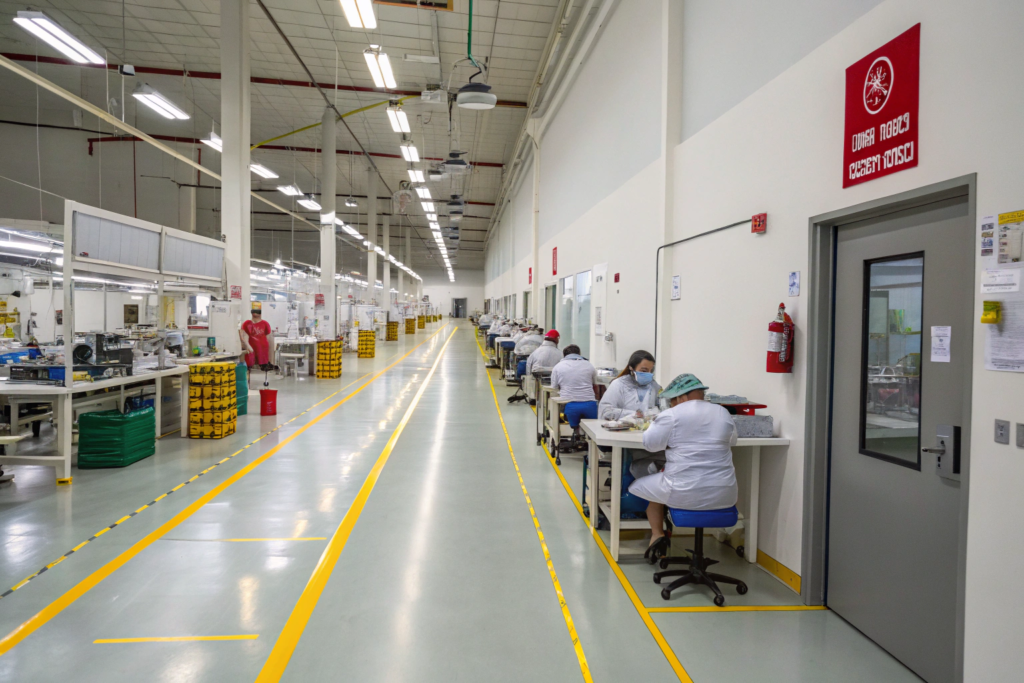
A European buyer will almost always require a valid BSCI or SMETA audit report with a passing grade Before they will place their first order. The report must be current—typically no older than 12 months. At AceAccessory, we maintain a valid, passing BSCI audit report. We provide this proactively to all our European clients. It is a non-negotiable part of our ethical manufacturing commitment .
What Is the Difference Between a "2-Pillar" and a "4-Pillar" SMETA Audit?
This is a technical distinction that matters to your buyer’s compliance team. SMETA is the most common audit methodology used, and it comes in two versions.
- SMETA 2-Pillar Audit: Covers Labor Standards and Health & Safety. This is the minimum requirement for most retailers. It verifies that the factory is legally compliant and provides a safe working environment.
- SMETA 4-Pillar Audit: Covers the two pillars above, plus Environmental Assessment (basic evaluation of environmental impact and legal permits) and Business Ethics (evaluation of bribery, corruption, and fair business practice). This is the more comprehensive, gold-standard audit. It is increasingly required by premium and luxury European brands.
The Audit Process:
The audit is conducted by an independent, accredited third-party firm (like SGS, Bureau Veritas, or Intertek). The auditor spends one or more full days at the factory, with physical access to all areas. The audit typically includes:
- Opening Meeting: With factory management.
- Facility Walkthrough: A thorough physical inspection of the production floor, warehouse, dormitories (if any), and all safety systems.
- Document Review: An exhaustive check of payroll records, time cards, personnel files (age verification), and legal permits.
- Confidential Worker Interviews: The auditor speaks to a randomly selected group of workers, in private and without management present. This is the most powerful part of the audit for uncovering hidden issues.
- Closing Meeting: A summary of findings.
A passing audit does not mean "zero findings." It means any findings are minor, non-critical, and have a documented corrective action plan. A "Zero Tolerance" finding (e.g., evidence of child labor, blocked fire exits during working hours) is an immediate failure and will blacklist the factory. At AceAccessory, we welcome these rigorous audits. They validate our commitment to our workforce and our operations.
Can an Unaudited Factory Legally Sell to European Department Stores?
This is a simple, hard question. The answer is: Functionally, No. There is no single EU law that says "you must have a BSCI audit to sell a scarf to a store." However, the combination of legal and commercial realities makes it effectively impossible.
The Legal Lever: The EU Corporate Sustainability Due Diligence Directive (CSDDD).
This is a powerful, emerging regulation that requires large companies operating in the EU to conduct thorough environmental and human rights due diligence across their entire global supply chain. For a large European department store, simply trusting a supplier’s verbal assurance is no longer a legal defense. They must have Evidence of Due Diligence. An independent, third-party audit like a BSCI or SMETA report is the standard form of that evidence.
The Commercial Lever: The Retailer’s Vendor Code of Conduct.
Every major European retailer—from Galeries Lafayette to Zalando—has a published Vendor Code of Conduct. Signing this document is a condition of becoming a supplier. These codes universally mandate compliance with social and ethical standards and typically Reserve the Right to Audit. In practice, they will require a valid, recent, independent audit report as a condition of onboarding.
Trying to sell to these accounts without a valid audit is like trying to open a bank account without an ID. The door is politely but firmly closed. The audit is not a burden; it is the key that opens the door to the vast and lucrative European retail market.
How Does the Global Recycled Standard (GRS) Verify Sustainability Claims?
European consumers and regulators are suffering from "Greenwashing Fatigue." They have been burned by vague, unsubstantiated claims of "eco-friendly" and "sustainable" too many times. They now demand Proof. The Global Recycled Standard (GRS) is the most powerful and recognized tool for providing that proof for recycled materials.
The GRS is a comprehensive, international, voluntary standard that sets requirements for third-party certification of:
- Recycled Content: It verifies the exact percentage of pre-consumer and post-consumer recycled material in a product.
- Chain of Custody: It tracks the recycled material from the recycler to the final product, ensuring the material you claim is actually in the product you sell.
- Social and Environmental Practices: Crucially, it extends to the processing and manufacturing stages, requiring compliance with social and environmental criteria for the facilities involved in making the GRS-certified product.
- Chemical Restrictions: It includes restrictions on harmful chemicals used in the processing of GRS products, aligning with OEKO-TEX principles.
For a scrunchie or a beanie labeled as "Made with Recycled Polyester," a GRS certificate is the definitive proof that the claim is true. A buyer can look at the certificate, look at the unique transaction certificate number, and trace the recycled polyester back to the specific batch of plastic bottles it came from.
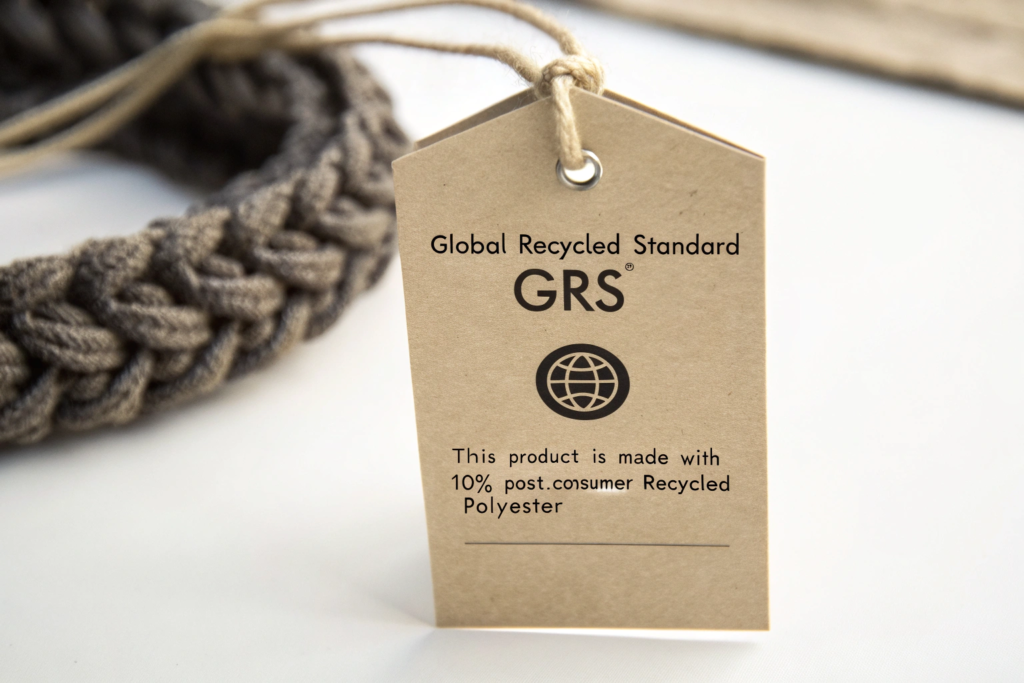
At AceAccessory, our recycled product lines are GRS-certified. This allows our clients to use the GRS logo on their hangtags and marketing materials—a powerful, globally recognized symbol of verified sustainability that resonates deeply with the European consumer.
What Is the Difference Between a GRS Certificate and a "Recycled" Hangtag?
A hangtag that simply says "Recycled" without a GRS logo is a Self-Declared Claim. It is based on trust. A GRS certificate is a Third-Party Verified Claim. It is based on audited evidence. This is the difference between a note from your mom and a bank statement.
The Chain of Custody Audit:
The real power of the GRS is the Chain of Custody (CoC) certification. This is not a one-time product test. It is an audit of the entire supply chain.
- The Recycler: The facility that collects and processes the plastic bottles into polyester chips is audited and GRS-certified.
- The Yarn Spinner: The facility that melts the chips and extrudes the polyester yarn is audited and GRS-certified.
- The Fabric Knitter: The facility that knits the fabric from the yarn is audited and GRS-certified.
- The Garment Maker (AceAccessory): Our facility is audited and GRS-certified to ensure we properly segregate, handle, and label the GRS materials.
- The Transaction Certificates (TCs): At each step of this chain, a Transaction Certificate is issued, documenting the specific volume of certified material that was sold and purchased. These TCs provide a complete, auditable paper trail from the bottle to the finished beanie.
This rigorous system is what makes the GRS label so powerful and so trusted. At AceAccessory, we manage the collection and verification of all upstream TCs and issue our own TCs to our clients. This provides the final, crucial link in the chain, allowing your brand to make a legitimate, certified recycled content claim.
Does GRS Certification Also Cover Social and Environmental Processing Standards?
Yes, and this is a critical advantage of the GRS over simpler "recycled content" tests. It is a holistic standard. It recognizes that a truly sustainable product cannot be made from recycled materials in a sweatshop that pollutes the local river.
The GRS Social & Environmental Requirements (for processing facilities):
- Social Policy: The facility must have a written social policy that aligns with the core ILO (International Labour Organization) conventions. This includes prohibitions on child labor, forced labor, and discrimination.
- Working Conditions: Compliance with health and safety regulations, provision of clean drinking water and sanitary facilities.
- Wastewater Treatment: Facilities with wet-processing (like dyeing) must have a functioning wastewater treatment system and maintain pH and temperature logs.
- Chemical Management: A strict Restricted Substances List must be adhered to, and chemicals must be properly stored and handled.
This means that when a European buyer sees the GRS logo, they know that the sustainability claim is verified not just in the product’s material content, but also in the ethical and environmental practices of the factory that made it. It is a powerful, all-in-one certification. At AceAccessory, our GRS certification complements our OEKO-TEX and BSCI certifications, forming a complete, interlocking system of product and process integrity.
Conclusion
Navigating the European market requires a fundamental understanding that quality, for the European consumer and retailer, is defined by far more than just the look and feel of a product. It is defined by a trinity of verified assurances that together form a "Triple Lock" on a brand’s integrity. The OEKO-TEX Standard 100 guarantees chemical safety for the wearer. The BSCI or SMETA social audit guarantees the ethical dignity and safety of the maker. And the Global Recycled Standard guarantees the verifiable truth of sustainability claims, backed by a transparent chain of custody.
These three certifications are not bureaucratic hoops to jump through. They are the strategic keys that unlock the vast, wealthy, and deeply values-driven European retail landscape. A supplier who possesses them is a low-risk, high-trust partner. A supplier who does not is effectively invisible to the compliance departments of major European buyers. They are the new price of entry.
If you are ready to prepare your brand for the rigorous standards of the European market, we can provide you with our valid, current certification documents for your compliance file. Contact our Business Director, Elaine. She can provide copies of our OEKO-TEX, BSCI, and GRS certificates for your buyer’s review. Email Elaine at: elaine@fumaoclothing.com




