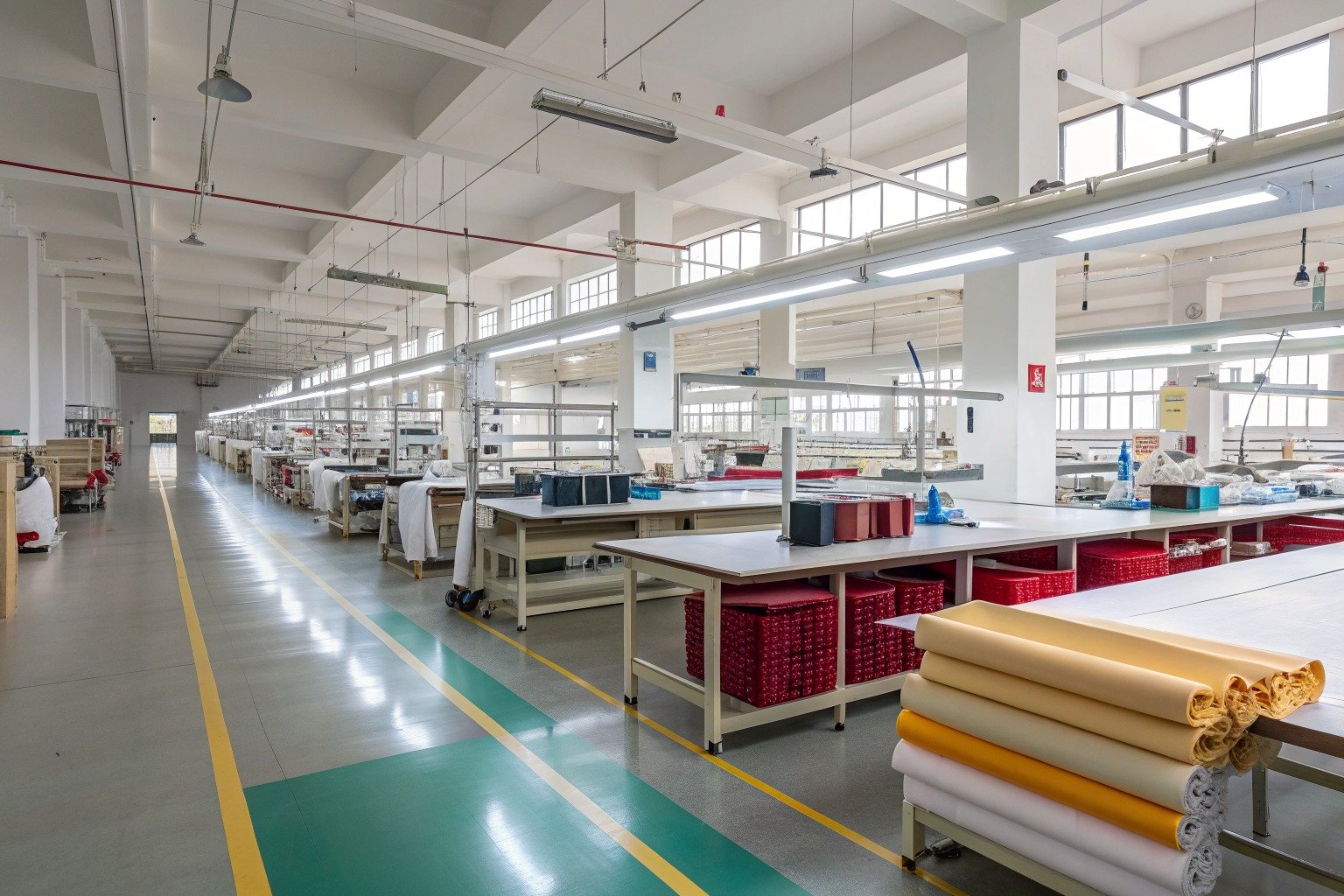
You have probably been through the cycle before. Enthusiastic emails during the sampling phase, followed by radio silence after the deposit clears. A delayed shipment here, a quality issue there, and suddenly you find yourself back scrolling through Alibaba, starting from zero with someone new. Every switch to a different factory means fresh sampling costs, new communication patterns, and the risk of receiving a container that does not match the pre-production samples you approved. Over the years, I have met many buyers who tell me they spend nearly 30% of their working year just managing supplier transitions. That sunk time represents lost opportunities to grow their actual business.
The clients who work with AceAccessory for five years, seven years, sometimes over a decade, stay because we treat their business like a renewable resource, not a single transaction. Consistent professional project management, design capability that grows with their brand, production quality that makes their own quality control checks into a formality, and clear logistics handling to the final mile. These are not just promises we make on a website banner. They are daily habits practiced by our team in Zhejiang, which I can explain in detail here.
I am going to walk you through the specific things we do that make a client decide to stop searching for new suppliers and start reinvesting that time into building their own brand. These are not secrets. They are repeatable processes you should demand from any serious manufacturing partner you choose to work with.
What Makes Professional Project Management a Key to Long-Term Sourcing Relationships?
I recall a phone call with a client named Mark who has been with us for eight years now. He told me, "My previous factory had great samples, but every single production run had a surprise." That word, surprise, is deadly in the import business. A surprise means a color that drifted off by two shades. It means a shipment that did not make the cut-off date for the vessel. A great project manager exists to eliminate surprises. They are the human firewall between production reality and your inbox, translating factory floor developments into clear, early, actionable updates for you.

How Does a Dedicated Project Manager Prevent Order Mistakes?
You cannot fix a problem you do not know about until it is too late. The single greatest source of peace of mind our clients report is this principle: the earlier a factory admits an issue and proposes a fix, the lower the cost and delay for everyone. A dedicated project manager who works on a commission or bonus tied to clean, on-time orders has a strong personal incentive to catch and solve those issues upstream.
Imagine a batch of metal belt buckles arrives from the plating subcontractor and shows a slight color variation compared to the approved standard. A transactional factory might ship them anyway, hoping you will not notice or thinking they can negotiate a discount after the fact. A professional project manager immediately puts the production line on hold, takes high-resolution photos under standardized lighting, sends you an email with the comparison, and presents two options: proceed with a 7% cosmetic discount, or wait five days for a re-plated batch at full original cost. You get to make the call with complete information. That is the difference between someone who simply passes messages along and someone who owns the outcome of your order.
Beyond communication, a project manager maintains the production file that tracks every specification change across multiple reorders. You might change the inner lining material for your winter beanies three years into the partnership. A skilled project manager updates the master tech pack immediately and highlights that change in the next pre-production sample tag so no department misses it. This systematic approach to order tracking is what a serious supply chain management process looks like in a factory setting, applied daily to fashion accessories.
What Communication Cadence Should You Expect from a Reliable Partner?
Regular updates should never be something you have to beg for. The project management rhythm we use is straightforward and calendar-driven, and it has eliminated 90% of the "just checking in" emails from our client base. When you work with a factory over many years, you do not want unread message anxiety. You want the confidence of knowing exactly when the next update will land in your inbox.
Here is a sample of a communication schedule a buyer can expect during a standard 45-day production cycle:
| Stage | Update Type | Timing | Content |
|---|---|---|---|
| Raw Material Sourcing | Photo update with tracking numbers | Day 3-5 | Fabric rolls, metal components arrival photos |
| Pre-Production Sample | Detailed PDF report with tagged photos | Day 7-10 | Measurements, color check under standard light |
| Mass Production Start | Short video message from PM | Day 12-15 | 30-second walk-through of the cutting or molding line |
| Mid-Production Inspection | Formal QC checklist and photos | Day 25-28 | AQL sampling results, critical defect log |
| Final Packing | Container loading plan and pallet photos | Day 40-43 | Final carton counts, shipping mark verification |
If the supplier you currently work with cannot provide this rhythm, ask them directly whether they can structure communication this way. Some will adapt quickly. Others will reveal that they do not actually have a single person assigned only to your account. If an order issue arises and you need to speak to someone who already knows the full history of your project, a good project manager at a reliable factory can reference your order history instantly without putting you on hold to search old emails.
How Does In-House Design Capability Strengthen Your Brand Over Time?
A brand that stays stagnant in accessories gets delisted faster than you think. I started witnessing this pressure around 2018, when the speed of trend cycles compressed dramatically because of social media platforms like TikTok and Instagram. A straw hat silhouette can trend globally for six weeks and then become a clearance item overnight. If your factory cannot develop new variations based on a trend sketch within two to three weeks, you miss your window entirely. Our clients stay with us for years in part because our in-house design team functions as a silent, dedicated development arm they cannot afford to hire full-time on their own payroll.

Can a Factory Design Team Replace My Own Designer?
Some of our longest-standing partners are small to mid-sized brands in America and Europe that have a strong brand vision but cannot afford a salaried designer sitting in their office. The design director at their company is actually our head of development in Zhejiang, collaborating with them through scheduled video calls and shared digital boards.
This arrangement works only when the factory design team has genuine fashion sensitivity, not just technical drawing ability. A technician can put your logo on an existing hair clip model. A real designer, even one based at a factory, will ask you about your customer’s age, their shopping habits, the stores they browse, and the price point they find aspirational before suggesting any shapes or materials. They will create a seasonal accessory collection proposal that aligns with broader fashion trends, not just another set of copies. This allows you to stay relevant in your market without the overhead of a full-time creative hire, creating a powerful incentive to remain with the same factory year after year simply because the design support is so embedded in your workflow that switching would mean effectively pausing your product development for a whole season.
A factory with this design depth can also better integrate with broader fashion industry calendars. A partner that follows the seasonal pulse can help you time your launches to key wholesale or holiday buying windows by researching upcoming collection trends and material directions that correspond to major fashion trend forecasting signals months before those styles reach saturation on consumer social media.
When Does Faster Sample Turnaround Actually Win You Orders?
Speed in accessories is not just about being first. It is about being the brand that a retail buyer remembers as reliable when they need to fill a last-minute shelf gap. I remember a buyer from a French boutique chain who needed 600 units of a redesigned velvet scrunchie set in three specific jewel tones to complete a holiday window display. The window was for a campaign they were running in partnership with a makeup line, and the merchandising deadline could not move.
Our team received the Pantone references and the modified packaging brief on a Monday. By Wednesday, our in-house sample studio had cut, stitched, and finished four different scrunchie prototypes. The buyer approved one set with minor packaging adjustments. Production of 600 units began on Friday. The finished goods were handed over to the forwarder twelve days later and the boutique chain met its installation deadline with room to spare. That buyer has since reordered consistently because she now treats our development team as a safety net for her most critical brand moments. A factory that can consistently win on time-to-market gives you the confidence to say yes to retail opportunities that your competitors with slower supply chains have to decline.
How Do Consistent Quality Control Systems Reduce Long-Term Sourcing Costs?
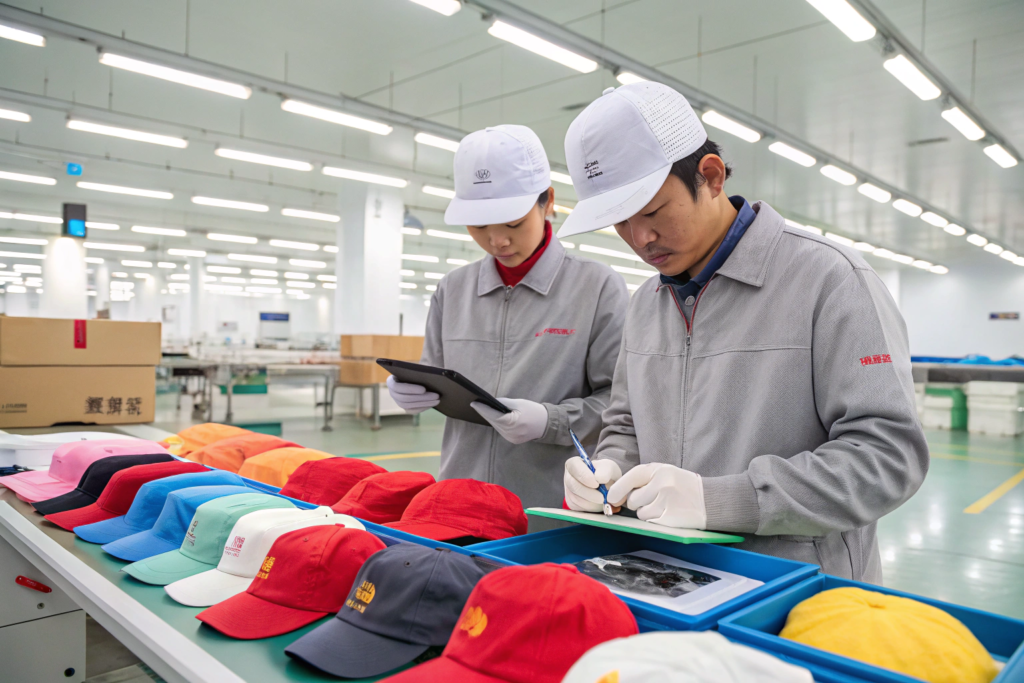
I view quality control not as a cost center but as an insurance policy that pays dividends over multiple years. A buyer who switches factories every two years typically pays a hidden tax: the cost of inconsistent quality, which manifests as return processing fees, disappointed wholesale accounts, and star ratings on their online store that gradually erode trust. The clients who stay with us simply stop budgeting for these problems because a stable QC system makes product quality boring and predictable, which is exactly what you want when you are managing a growing brand.
What Does a Multi-Stage QC Process Actually Look Like?
A single final inspection before shipping is not quality control. It is a gamble disguised as due diligence. A defective batch that is discovered at the final inspection point, when the container is already booked, presents you with two terrible options: ship defective goods and deal with chargebacks, or miss your delivery window and lose your placement. A true QC system works upstream so that by the time a product reaches the final check, passing is almost a formality.
Here is how we break down the inspection gates so that there is never a single terrifying "pass or fail" moment. Each checkpoint catches and fixes a narrow category of issues early, when the volume of affected units is small:
| Inspection Gate | Timing | Sample Size | Focus |
|---|---|---|---|
| Incoming Material Check | Before cutting/molding | 10% of material rolls or component cartons | Color consistency, material weight, plating adhesion |
| First Piece Approval | Start of each production line | First 3-5 finished pieces | Stitching tension, dimensional accuracy, assembly |
| Inline Inspection | During production at 30% completion | 50-80 random pieces | Consistent output across shifts, worker technique |
| Final AQL Inspection | 100% packed in cartons | AQL 2.5 Level II sample | Full visual, functional, and packaging check against spec |
This multi-gate process is built on what serious factory teams develop when they adopt quality management system principles that go beyond industry minimums, and it ultimately protects your brand from the hidden costs of inconsistency, such as loss of wholesale trust or poor stockist reorder rates.
How Can You Verify a Factory’s QC Claims Before Visiting?
You do not always need a plane ticket to assess whether a factory’s quality control is real or a PowerPoint illusion. There are things you can request remotely that reveal true capability. The most informative document you can ask for is a raw, unproduced copy of a dated internal QC inspection report from a real order, ideally with product photos embedded in the report. A real report has handwriting notes from inspectors, circled defects on printed photo pages, and measurement deviations recorded with exact values, not just "pass" checkmarks.
A second verification method is to send them a golden sample with a deliberately inserted, non-obvious defect. For example, on a hair clip sample, attach a spring that is slightly weaker than your specified tolerance allows. Do not mention the defect. A factory with a strong incoming material inspection and first-piece approval gate should catch this deviation and send you a photo note saying the spring tension is out of spec and asking whether you intentionally specified this tension or whether it should be corrected. If they send back a production sample that blindly replicates your flawed golden sample, you know their QC process is just visual, not dimensional.
You should also ask your factory directly whether they follow specific AQL sampling standards for accessories. A factory that can discuss AQL 2.5 for major defects versus AQL 4.0 for minor defects without hesitation has clearly trained their inspectors properly. You can verify these standards independently by reviewing the AQL inspection guidelines that most professional third-party inspection firms reference.
Why Does Transparent Logistics Support Build Importer Confidence?
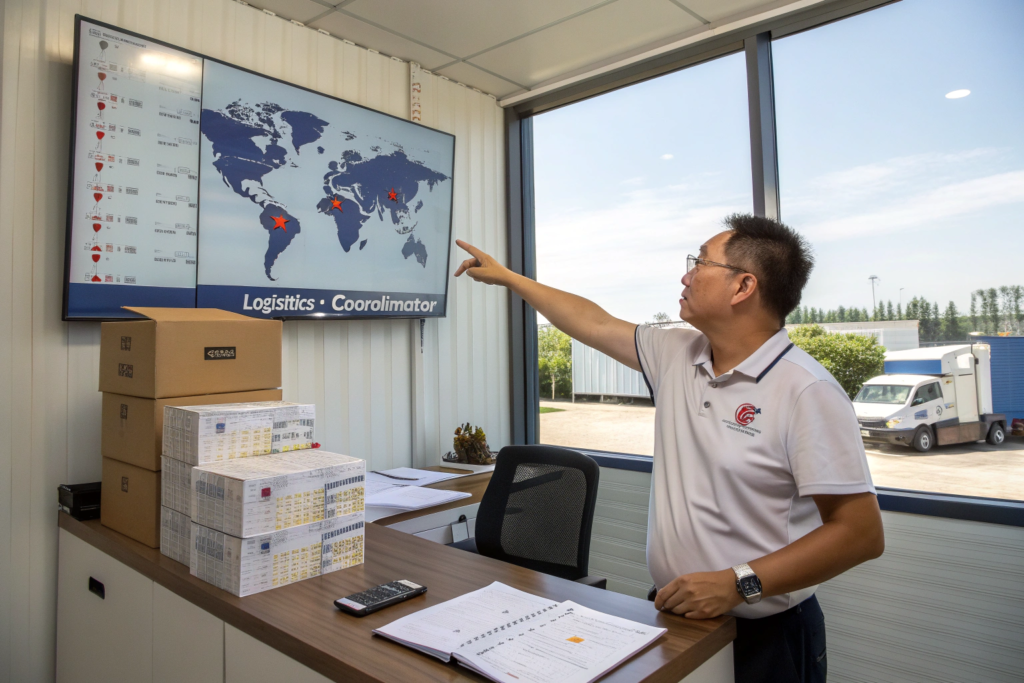
I learned early in my career that for an American importer, the anxiety does not end when the container leaves our factory gate. It ends when the goods clear customs and arrive undamaged at their warehouse or fulfillment center. A surprisingly common reason clients stay with us for many years sounds mundane but is deeply emotional: they simply trust the logistics chain to not turn into a costly crisis. They know the documents will be correct, the container will be properly stuffed, and there will be a real person monitoring the shipment status from departure to arrival, providing answers when the tracking information online gets delayed or unclear.
How Should a Factory Handle Customs Documentation and HTS Coding?
Customs clearance is not an add-on service. It is an integrated part of manufacturing for export. One of the most damaging things an inexperienced supplier can do to an importer is guess the Harmonized Tariff Schedule code for a complex fashion accessory. If a composite material scarf with metallic thread is coded incorrectly as a basic woven scarf, US Customs and Border Protection can issue a rate advance and a penalty notice months after the shipment has already been delivered, leaving you with an unexpected bill of potentially thousands of dollars that wipes out your margin on the entire order.
A factory that supports long-term sourcing relationships assigns correct HTS codes at the product development stage, not at the shipping document preparation stage. Every product we quote to a new client includes a proposed HTS heading so the buyer’s customs broker can verify the classification before a single purchase order is signed. This pre-clearing of codes eliminates the panic of finding out at the port of entry that a belt with a metal buckle faces a different duty rate than a belt with a plastic buckle. You should always cross-reference these codes independently, and I recommend you use the Harmonized Tariff Schedule search tool available from the US International Trade Commission to validate any product classification your supplier provides before your goods are shipped.
A serious supplier should also help you navigate the paperwork for countries with new import controls. For instance, if you are expanding your distribution to include online sales to Central Asia, Eastern Europe, or other regions where specific certificate of origin requirements are strictly enforced, your factory should generate these documents accurately and quickly as part of the standard export service, not treat it as an extra favor. When this runs smoothly over multiple cycles, your internal logistics overhead drops significantly.
What Should You Expect from a Factory’s Shipping Schedule Reliability?
I measure shipping schedule reliability not by the promised date, but by the update frequency when circumstances change. Even the best factory in China cannot control a typhoon closing a port for two days or a vessel skipping a scheduled call because of lane consolidation. What we can control is how quickly we tell you about the change and what rebooking options we present. When your factory consistently provides early warnings for delays, even if those delays are beyond their control, you can update your sales team, manage your inventory expectations, and maintain your own credibility with your customers. That kind of proactive service builds the confidence that keeps a sourcing relationship healthy over many years.
Here is a practical framework for understanding what different levels of logistics reliability look like and how to identify a supplier category before you commit to a major seasonal order:
| Reliability Level | Update Speed on Delay | Booking Confirmation | Document Accuracy |
|---|---|---|---|
| Professional | Within 6 hours of known change | Electronic booking confirmation shared immediately | Pre-submitted to broker 72 hrs before arrival |
| Average | 1-2 days after change | Verbal confirmation, formal document delayed | Documents provided on day of vessel arrival |
| Risky | Only when directly asked | Cannot provide verifiable booking number | Documents contain errors requiring revision and re-submission |
To make this work, you need a dedicated point person who knows your typical shipping lanes. Our most satisfied clients often develop a direct line of communication with the logistics coordinator attached to their account, so that when a shipment is in transit, they are not sending a generic email to an info address and hoping someone answers. Messages go to one person who can open the forwarding agent’s portal in sixty seconds and give a real status, not a guess. This level of service is what you should expect from any factory that claims to offer comprehensive logistics support as part of their manufacturing package.
Conclusion
There is a quiet value in a sourcing relationship that just works, year after year, without drama. When you no longer lose sleep worrying about whether the production batch will match the sample, when you know your project manager will flag an issue before it becomes a crisis, when your logistics documents are clean and your packaging arrives intact, you free up energy to do what you actually need to do: sell products and build a brand.
The clients who have partnered with our Zhejiang factory for five, seven, or eight years are not staying out of habit. They stay because the reliability we deliver is difficult to replicate and painfully costly to replace. Professional project management catches deviations before they ship. In-house design support keeps their collection fresh and trend-responsive. Layered quality control systems make product quality predictable, not luck-based. Transparent logistics and accurate customs documentation remove the anxiety from the final mile. These are not slogans. They are the daily rhythm of a factory run by experienced people who understand that a container arriving perfectly is the bare minimum, not an extraordinary achievement.
If you are tired of restarting the supplier search every year and ready to build a sourcing partnership that compounds in value with every shipment, I would welcome the chance to discuss your specific production needs.
Reach out to our Business Director Elaine directly at elaine@fumaoclothing.com and tell her a bit about your product line and the challenges you want to solve. She can walk you through how we work, share a development proposal tailored to your category, and most importantly, put you in direct contact with the project manager who would handle your account personally. Let us build something that lasts longer than a single shipping season.