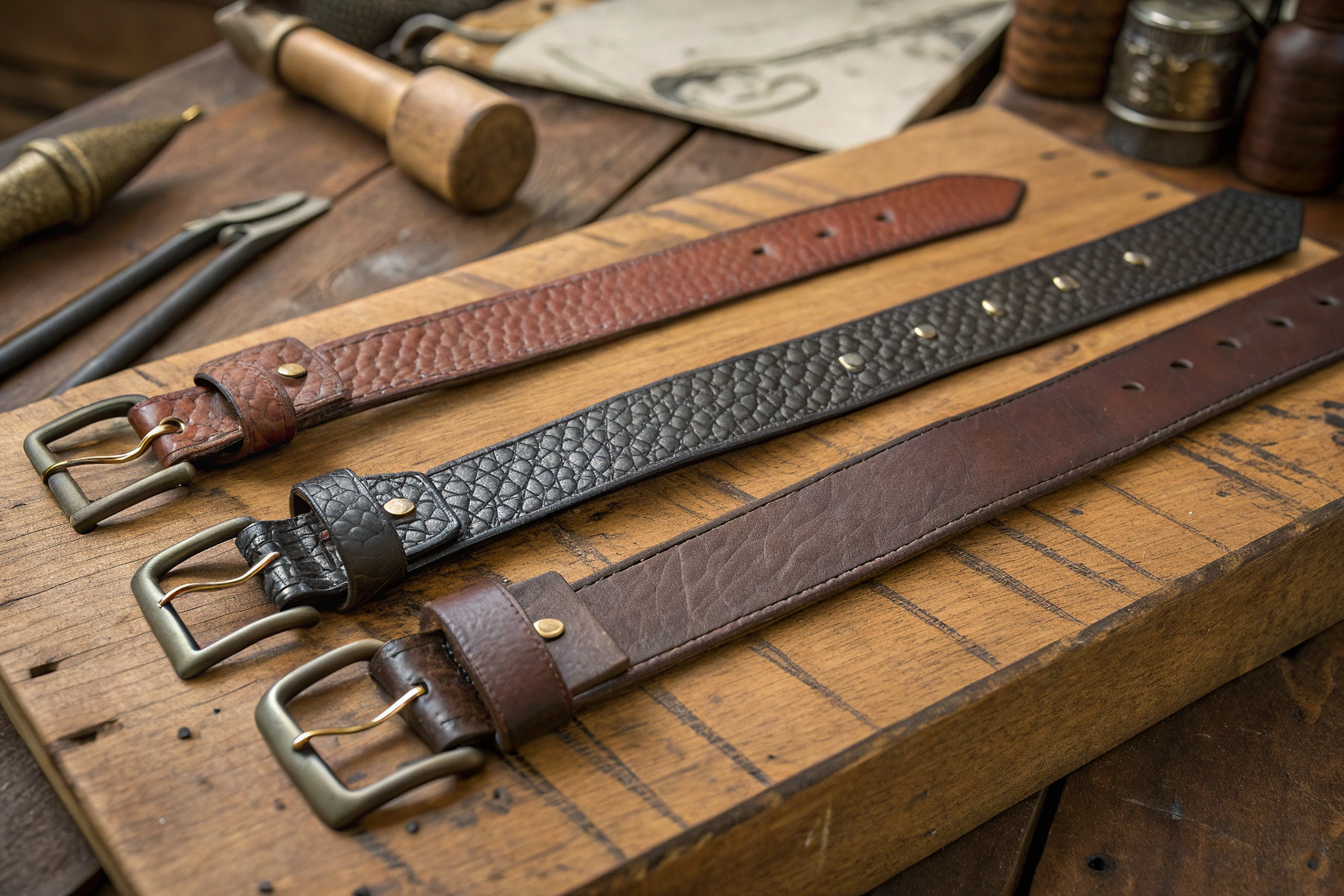
You designed the perfect buckle. You found a factory that can produce it. Now you are staring at a leather swatch card with fifteen different options. The supplier is using terms like "genuine leather," "top grain," "full grain," and "bonded leather." The prices vary by 200%. You want a belt that will look great on the rack, feel substantial in the customer’s hand, and not fall apart after six months of wear. But you are not a leather expert. You are a brand owner trying to make a smart material decision that balances quality, cost, and the aesthetic your customer expects. Choose wrong, and you are dealing with peeling finishes, cracking leather, and returns.
The top belt leather types for 2026 balancing durability and style are full-grain vegetable-tanned leather for heritage and patina development, top-grain pull-up leather for rich color and scratch resistance, and premium bonded leather as a cost-effective alternative for fashion-forward, non-structural applications where consistent finish is prioritized over extreme longevity.
I run Shanghai Fumao in Zhejiang, and our belt division processes thousands of square feet of leather every month. We work with clients ranging from rugged workwear brands to minimalist fashion labels. The leather you choose is the single biggest determinant of your belt’s cost, durability, and aesthetic. Let me walk you through the specific leather types that are driving the 2026 market so you can specify your next production run with confidence.
Why Is Full-Grain Vegetable-Tanned Leather the Heritage Choice for 2026?
Full-grain leather is the outermost layer of the animal hide. It has not been sanded or buffed to remove imperfections. It retains the natural grain pattern, including the tiny pores and unique markings of the animal. This is leather in its most honest, durable form. For 2026, as consumers continue to shift away from disposable fashion toward "buy it for life" purchases, full-grain vegetable-tanned leather is experiencing a major resurgence.
Vegetable tanning is an ancient process that uses natural tannins found in tree bark, leaves, and fruits. It is a slow process, taking weeks or even months, compared to the hours required for modern chrome tanning. The result is a leather that is firm, develops a rich patina over time, and has a distinctive, earthy scent. It is not a leather for someone who wants a perfectly uniform, blemish-free belt. It is a leather for someone who appreciates the story of the material.
At Shanghai Fumao, we source full-grain vegetable-tanned leather from a specialist tannery. The hides are thicker and require more skill to cut and finish. The belt edges must be burnished, not simply painted. The cost per belt is higher, but the perceived value and longevity are unmatched. This full grain vegetable tanned leather characteristics and sourcing for belts is the premium tier of our offering.
How Does Full-Grain Leather Develop a Patina Over Time?
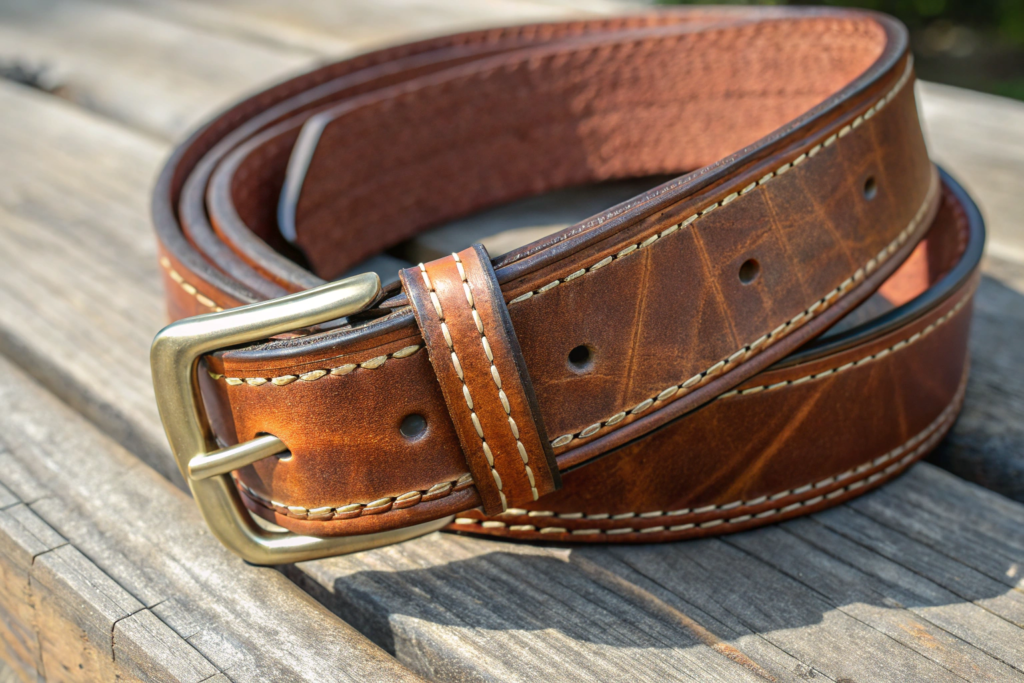
The patina is the unique sheen and darkening that occurs on full-grain vegetable-tanned leather with use and exposure to light and the oils from the wearer’s hands. It is not a defect. It is the primary selling point.
A belt worn daily for a year will look completely different from a brand new belt of the same leather. The areas of high contact, around the buckle holes and where the belt loops sit, will darken and become glossy. The color will deepen and become richer. This transformation tells the story of the wearer’s life. It is deeply personal and impossible to fake.
This characteristic appeals to the heritage and workwear market. Brands that market authenticity and craftsmanship choose full-grain vegetable-tanned leather specifically for this patina development. We educate our clients on this characteristic so they can, in turn, educate their customers. A customer who understands the patina will cherish the belt. A customer who expects it to look brand new forever will be disappointed. This leather patina development and customer education for heritage belts is part of the brand storytelling.
What Are the Sourcing and Cost Considerations for Full-Grain?
Full-grain vegetable-tanned leather is the most expensive category of leather suitable for belts. The hides themselves cost more. The yield, the usable area of the hide, is lower because natural scars and blemishes cannot be sanded away. The cutting process is more labor-intensive as the cutter must work around these natural markings.
The minimum order quantities for custom colors can be high. Vegetable tanning is often done in smaller batches than chrome tanning. A specific shade of cognac or mahogany may require a hide order of several hundred square feet.
We work with clients to navigate these sourcing realities. We offer a curated selection of stock full-grain colors that are available with lower minimums. For custom colors, we are transparent about the lead time and the hide commitment required. This cost and sourcing minimums for full grain vegetable tanned leather belts is essential information for realistic product planning.
What Makes Top-Grain Pull-Up Leather the Versatile Performer?
Top-grain leather is full-grain leather that has had the very top surface lightly sanded or buffed to remove imperfections. It is then finished with a pigment or dye and often embossed with a uniform grain pattern. It is slightly less expensive and more uniform in appearance than full-grain, but still very durable. For 2026, the standout in the top-grain category is pull-up leather.
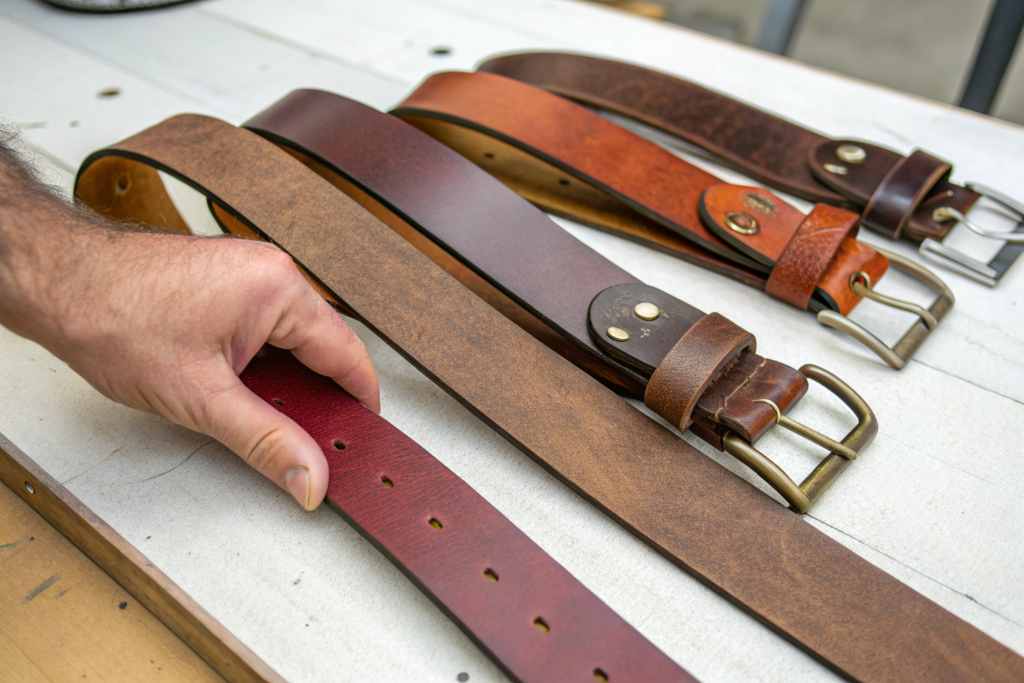
Pull-up leather is characterized by its heavy oil and wax infusion. When the leather is flexed or pulled, the oils and waxes migrate, causing the color to lighten dramatically in the stressed area. This creates a beautiful, lived-in, vintage effect immediately. It is the leather equivalent of a perfectly worn-in pair of jeans. It offers the aesthetic of patina without the months of waiting.
This leather is incredibly forgiving. Light scratches can often be rubbed out with a thumb, as the friction warms the waxes and allows them to reflow. It is a favorite for casual and everyday belts. It offers a rich, tactile hand feel and excellent durability. At AceAccessory, our pull-up leather belts are among our best-selling styles for men’s and women’s casual wear. This top grain pull up leather properties and scratch resistance for belts makes it a smart choice for high-volume fashion programs.
How Does the Pull-Up Effect Differ from Distressed Leather?
This is a common point of confusion. Distressed leather is artificially aged through mechanical or chemical processes to create a worn look. The effect is static. It looks the same on day one as it does on day 100.
Pull-up leather is dynamic. The color shift occurs in response to use. The areas that are flexed during buckling and unbuckling will develop a unique, lighter character. The areas that remain flat will retain the original deeper color. This creates a natural, personalized distressed look that evolves over time.
This dynamic quality is a key trend for 2026. Consumers are seeking products that show honest wear and become more beautiful with age. Pull-up leather delivers this in a way that static distressed finishes cannot. We recommend this leather to brands that want a product with built-in character and storytelling potential. This pull up leather versus static distressed leather comparison helps brands choose the right aesthetic for their target market.
What Finishes and Edge Treatments Work Best with Pull-Up Leather?
The heavy wax and oil content of pull-up leather requires specific finishing techniques. Traditional edge painting, where a layer of colored paint is applied to the cut edge of the belt, can sometimes have adhesion issues on very oily leathers.
The preferred finish for a premium pull-up belt is a burnished edge. The cut edge is sanded smooth, then rubbed vigorously with a natural gum, such as tragacanth, and a wooden burnishing tool. The friction melts the edge fibers and the gum, creating a hard, smooth, sealed edge that blends seamlessly with the leather color. This is a more labor-intensive process, but it results in a far superior and more durable finish.
For a more fashion-forward look, a contrasting edge paint can be used, but the edge must be properly prepared with a primer to ensure adhesion. Our production team in Zhejiang is skilled in both burnishing and edge painting for pull-up leathers. This edge finishing techniques for pull up and oily leather belts is a detail that separates a premium product from a generic one.
Why Is Premium Bonded Leather a Viable Option for Fashion Belts in 2026?
The term "bonded leather" often carries a negative connotation, and for good reason. Low-quality bonded leather is essentially leather dust glued to a fabric backing. It peels, it cracks, and it fails quickly. However, there is a category of premium bonded leather that is engineered for specific fashion applications and performs admirably within its intended use case.
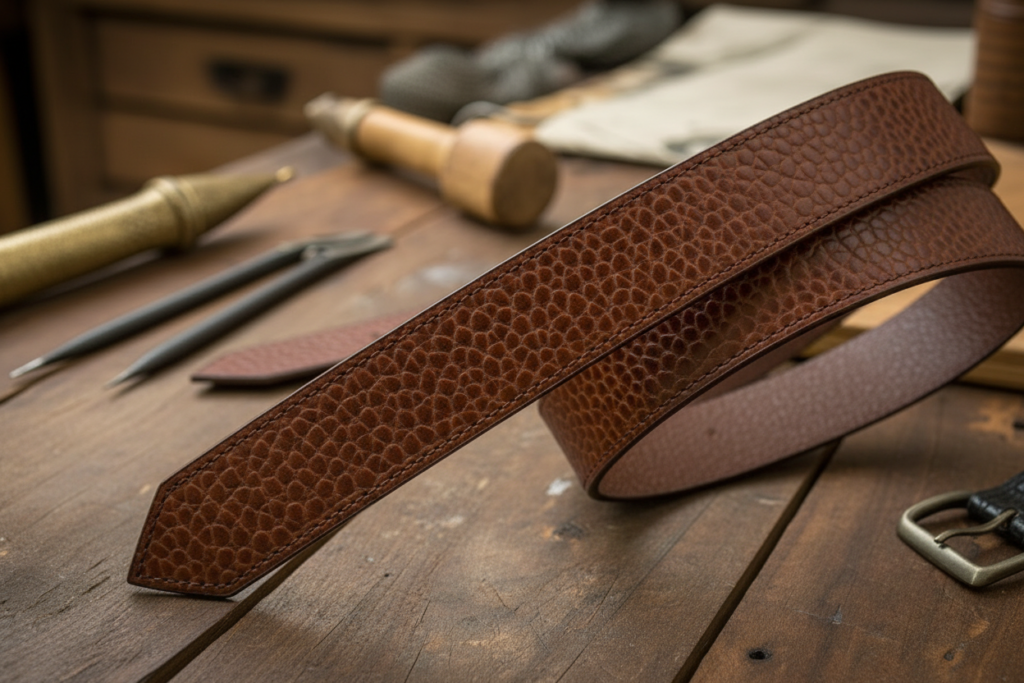
Premium bonded leather is made from a higher percentage of genuine leather fibers, combined with high-quality polyurethane binders, and backed with a strong, flexible textile. It is manufactured in consistent, wide rolls with no natural defects. The surface is perfectly uniform. The color is exactly the same from batch to batch. It can be embossed with any grain pattern, from crocodile to ostrich, with perfect repeatability.
For a fashion brand that needs a specific, vibrant color, a unique embossed texture, and a lower price point, premium bonded leather is a legitimate material choice. It is not a belt that will be passed down to the next generation. But it is a belt that will look great for the season or two it is worn and offer the customer excellent value. At AceAccessory, we are transparent about the use of bonded leather and we only source the premium grade that meets our performance standards. This premium bonded leather specifications and performance for fashion belts is a cost-effective option for specific market segments.
How Do You Identify and Avoid Low-Quality Bonded Leather?
You need to be able to tell the difference between the premium grade and the junk. The simplest test is the fold test. Take a swatch and fold it tightly, grain side out. Observe the crease.
Low-quality bonded leather will show immediate cracking or a white, powdery appearance at the fold line. The surface coating is thin and brittle. Premium bonded leather will crease but will not crack or show significant stress whitening. The PU binder is more flexible and durable.
Also, inspect the backing. A premium bonded leather will have a sturdy, woven fabric backing. A cheap bonded leather will have a thin, paper-like backing or a loose, fuzzy backing. We provide swatches to our clients and encourage them to perform this simple fold test. It is a quick way to assess the basic quality of the material. This fold test and visual inspection for bonded leather quality is a essential skill for any belt buyer.
For Which Belt Styles Is Bonded Leather Best Suited?
Bonded leather is not suitable for every belt style. It is not ideal for a heavy-duty work belt that will be subjected to constant tension and abrasion. It is not ideal for a belt with a removable buckle where the leather is constantly being folded back and forth.
It is best suited for fashion belts that are worn occasionally, not daily. It is excellent for skinny belts, women’s fashion belts, and belts with elaborate embossed textures that would be prohibitively expensive in genuine leather. It is also a good choice for belts that are part of a larger outfit ensemble, where the belt is an accessory, not a workhorse.
We guide our clients toward the appropriate material based on the intended use and the brand’s positioning. We do not recommend bonded leather for a brand that markets durability and longevity. We do recommend it for a brand that markets trend-driven, affordable fashion. This appropriate applications and limitations of bonded leather in belt manufacturing ensures the right material is used for the right product.
How Do You Specify the Correct Leather Thickness for Your Belt?
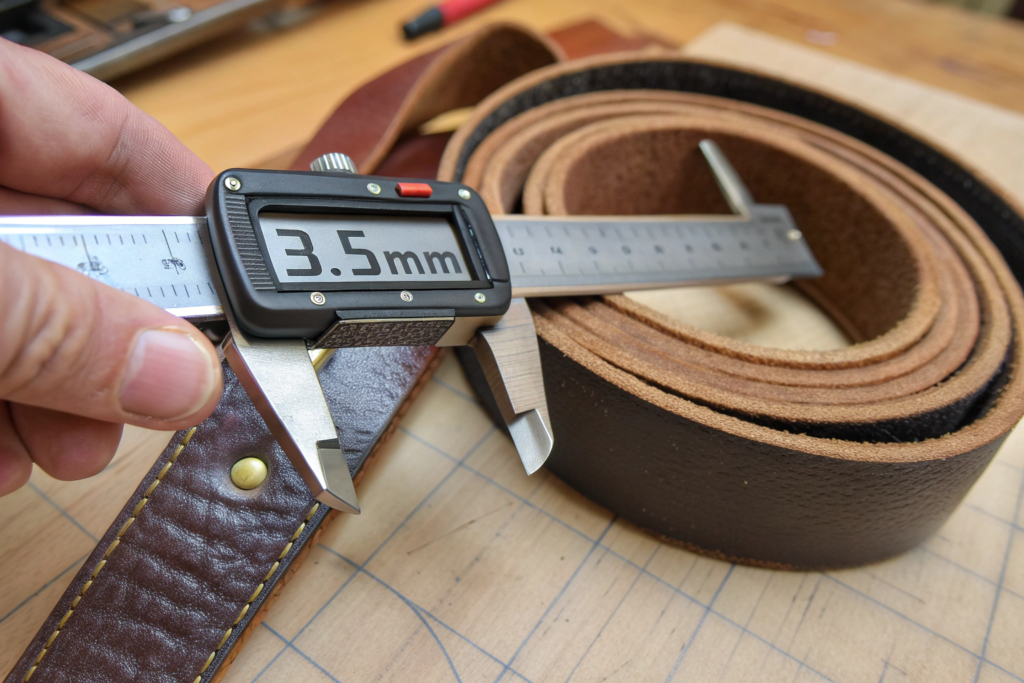
Leather thickness is measured in millimeters or in ounces. One ounce of leather is approximately 0.4 millimeters thick. The thickness you specify has a direct impact on the belt’s durability, its flexibility, and the type of buckle that can be used.
A heavy-duty work belt or a classic men’s dress belt typically uses leather that is 3.5 to 4.0 millimeters thick, or 9 to 10 ounces. This is a substantial piece of leather that will support a heavy buckle and withstand years of daily tension. A fashion belt or a women’s skinny belt typically uses leather that is 2.0 to 2.5 millimeters thick, or 5 to 6 ounces. This is lighter, more flexible, and drapes better on the body.
At Shanghai Fumao, we specify the leather thickness on every tech pack. We measure the incoming leather hides with a thickness gauge to ensure they meet the specification. A belt that is too thin for its intended use will stretch and deform. A belt that is too thick will be uncomfortable and difficult to buckle. This leather thickness measurement in ounces and millimeters for belt construction is a critical engineering specification.
What Is the Relationship Between Leather Thickness and Stretch?
All leather will stretch slightly under tension. This is a natural property of the material. The amount of stretch is inversely related to the thickness. A thin, 2mm leather belt will stretch more noticeably over time than a thick, 4mm leather belt.
This stretch must be accounted for in the sizing. A belt that is cut to exactly the waist measurement in thin leather will become too long after a few months of wear as the leather stretches and the holes elongate. We advise clients to build in a small allowance for this expected stretch, particularly for thinner leathers.
Excessive stretch, however, is a sign of poor-quality leather or leather that has been split too thin from a loose-fibered hide. Our material selection process rejects hides that exhibit excessive looseness or stretchiness. This leather stretch characteristics and sizing allowance for belts ensures the belt maintains its fit over its useful life.
How Does Leather Thickness Affect the Buckle and Hardware Selection?
The thickness of the leather dictates the size of the buckle loop, or the center bar where the leather is folded and stitched. A thick, 4mm leather strap requires a buckle with a correspondingly tall loop. If the loop is too short, the leather will not fit through.
The thickness also affects the type of snaps or rivets that can be used. The post length of the hardware must be sufficient to penetrate the full thickness of the folded leather and still have enough length to be clinched or capped securely. Using a snap with a post that is too short for the leather thickness is a common cause of hardware failure.
Our production team matches the hardware to the specified leather thickness. We test the assembly on a pre-production sample to ensure a proper fit. This buckle and hardware compatibility with leather thickness specifications is a detail that ensures the belt is assembled securely and functions correctly.
Conclusion
Selecting the right leather for your 2026 belt collection is a strategic decision that defines your product’s position in the market. Full-grain vegetable-tanned leather anchors the heritage and "buy it for life" segment with its authenticity and evolving patina. Top-grain pull-up leather serves the broad casual and everyday market with its durability, dynamic color, and forgiving surface. Premium bonded leather provides a viable, cost-effective option for trend-driven fashion belts where consistency and texture are paramount.
The key is not to view one leather type as universally "best." The key is to match the specific leather to the specific brand story, price point, and customer expectation. A well-made bonded leather fashion belt is a better product for its intended customer than a poorly made full-grain belt that misses the market on price or aesthetic. Understanding the properties, the costs, and the appropriate applications of each leather type empowers you to make informed, profitable sourcing decisions.
At Shanghai Fumao, we do not just manufacture belts. We consult with our clients on material selection. We provide swatches, explain the performance characteristics, and guide you toward the leather that will make your belt program successful. Our experience across the full spectrum of leather qualities allows us to offer unbiased, practical advice.
If you are developing a belt collection and need guidance on leather selection, I invite you to contact our Business Director, Elaine. She can send you a current swatch card of our 2026 leather offerings and discuss the specific requirements of your project. You can email Elaine at: elaine@fumaoclothing.com. Let us help you choose the leather that will define your belts for the coming season.