You found a supplier on Alibaba for acrylic knotted headbands. The price is excellent. The sample photos look identical to the premium brand you are trying to match. You place an order for 3,000 units in six colors. The shipment arrives. You open the first carton. The headbands look fine. You give one to your assistant to test. She wears it for two hours at her desk. She takes it off. There is a visible crease mark where the knot was tied. You bend the acrylic band slightly to adjust it. It snaps clean in half. You grab another one. The seam where the fabric covers the band is already unraveling. You realize with horror that 3,000 units of defective inventory just landed in your warehouse. You did not just buy headbands. You bought a quality control education the hard way.
For acrylic hair bands, you must request and document five core quality tests: a tensile strength and flexibility test to prevent snapping, an adhesion test for fabric-to-acrylic bonding, a colorfastness and crocking test to prevent dye transfer, a dimensional stability test to ensure consistent sizing, and a sharp edge and burr inspection to ensure consumer safety.
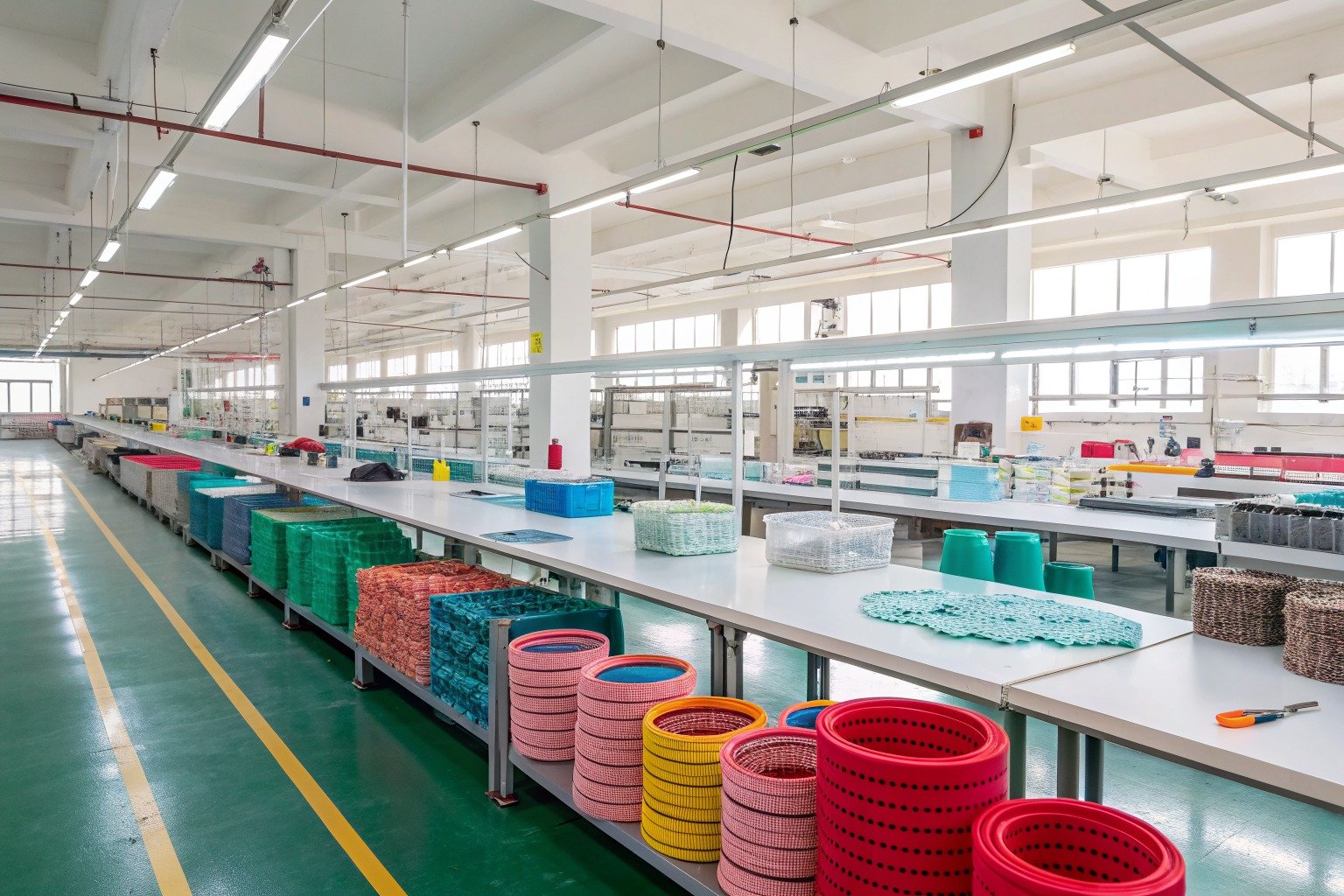
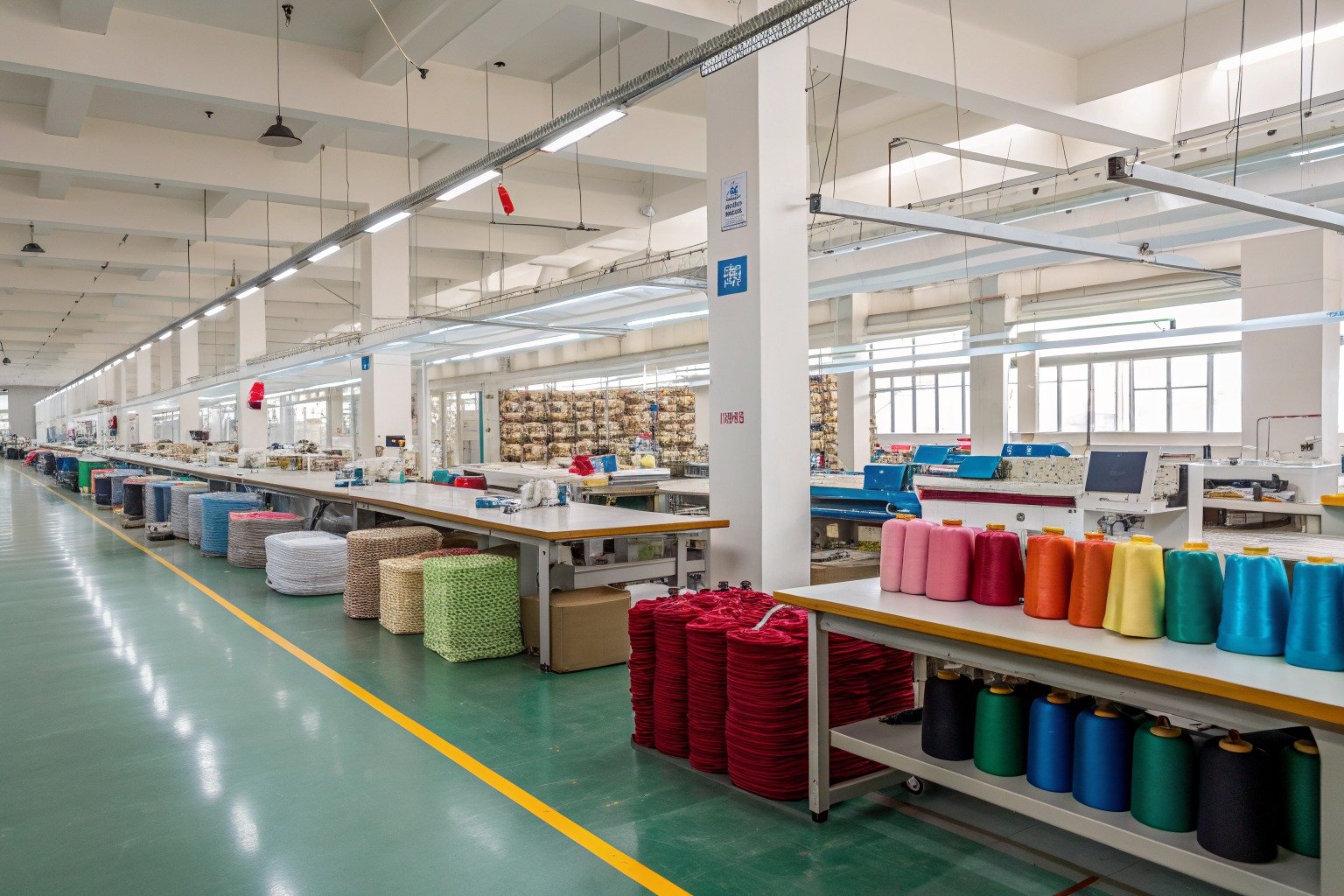
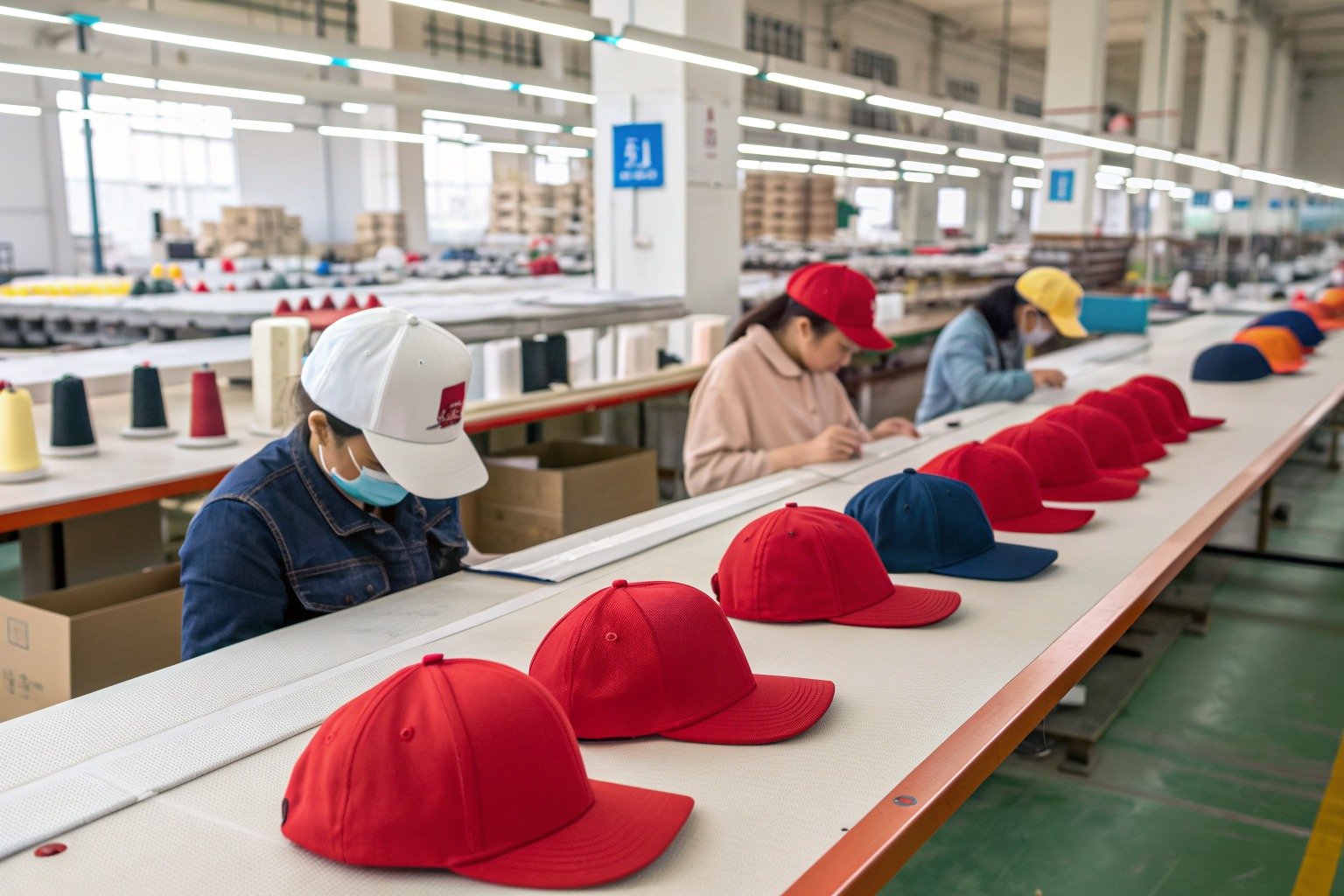
I run Shanghai Fumao in Zhejiang, and we manufacture thousands of acrylic hair bands every month. Acrylic is a beautiful material for headbands. It is glossy, takes color beautifully, and can be molded into elegant shapes. But it is also a material that requires careful quality control. Cheap acrylic or poor bonding techniques will result in the failures you just experienced. Let me walk you through the specific tests we perform on every batch so you can specify these requirements to your supplier and avoid the costly surprise of defective goods.
Why Is Tensile Strength and Flexibility Testing Critical for Acrylic Hair Bands?
An acrylic hair band is not a static display piece. It is worn. It is stretched to fit over the head. It is flexed slightly during wear. It is removed and placed in a purse. It must withstand these everyday stresses without cracking or snapping. The material property that determines this durability is tensile strength and flexibility.
Low-quality acrylic, or acrylic that has been molded with incorrect temperatures, becomes brittle. It looks fine sitting in the carton. It feels hard and solid. But the first time it is flexed, it snaps. This is the number one field failure for acrylic accessories. The customer is stretching it to put it on, it breaks in her hands, and she is immediately on social media posting a negative review.
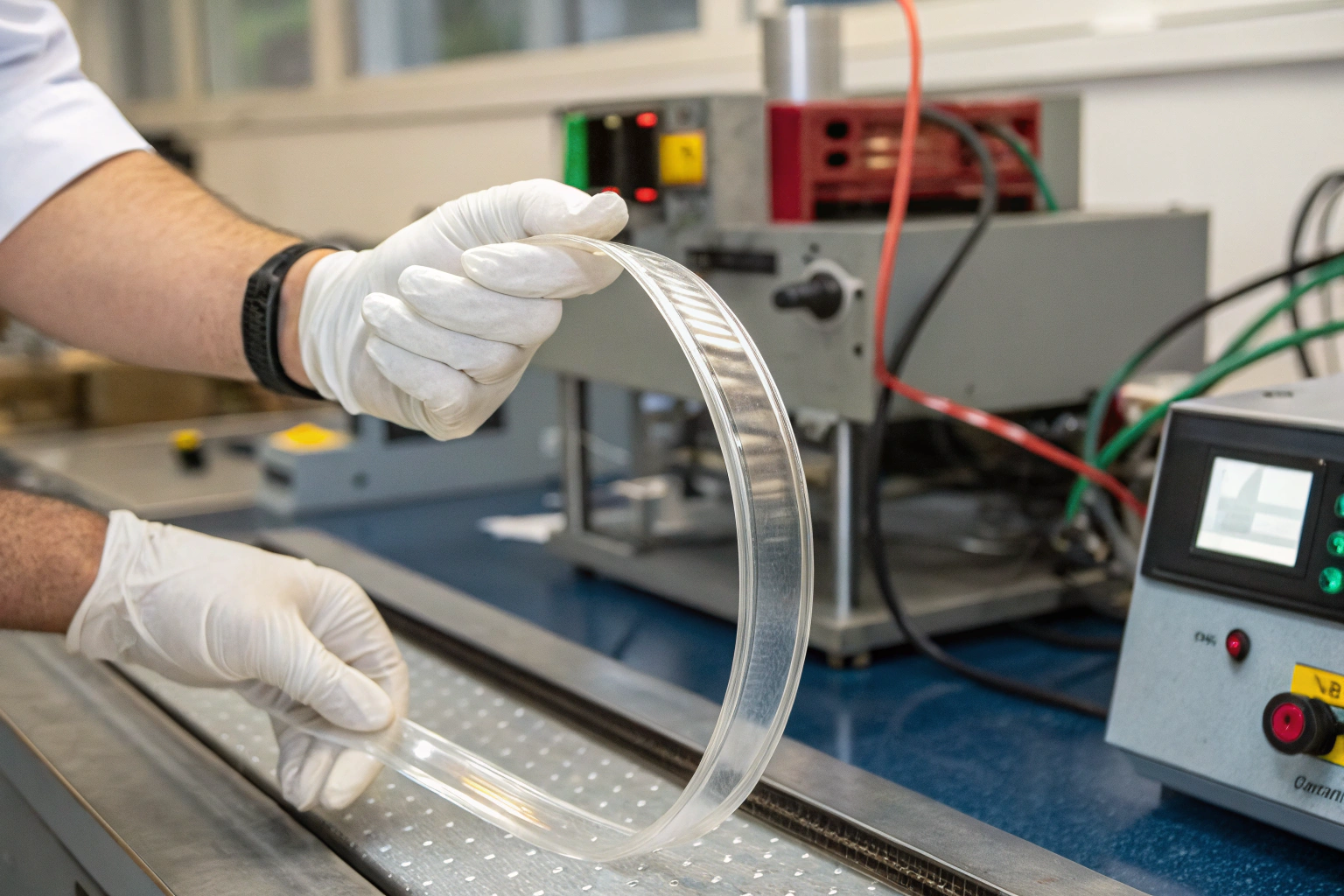
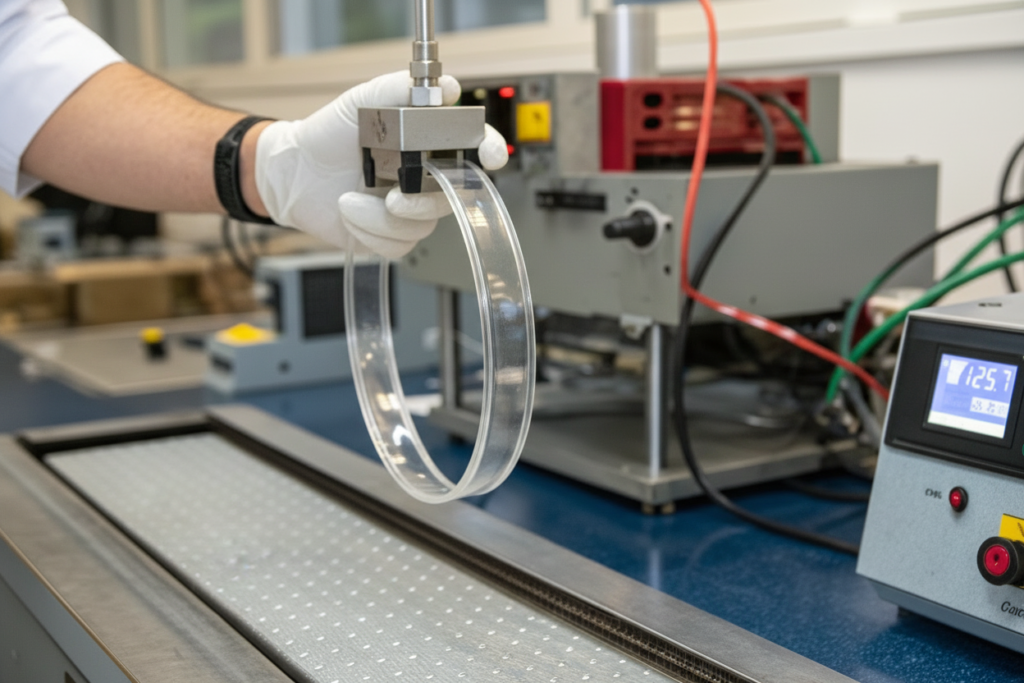
At Shanghai Fumao, we perform a standardized flex test on every production batch. We take a random sample of headbands. We place them in a fixture that flexes the band to a specified angle, simulating the stretch of putting it on an adult head. We cycle the flex a set number of times. We then inspect the bands for cracks, stress whitening, or breakage. A batch that fails this test is rejected before it ever leaves our factory. This tensile strength and flexibility testing for acrylic hair accessories is a non-negotiable quality gate.
How Is a Simple Manual Flex Test Performed?
You do not need a laboratory to get a basic sense of the material quality. A simple manual test can reveal brittleness.
Hold the hair band at both ends. Gently and slowly flex it inward as if you were putting it on a head. Observe the material. Does it bend smoothly? Or does it resist and then suddenly show a white stress mark? That white mark, called crazing, is a sign of imminent failure. A quality acrylic band should flex smoothly without stress whitening under normal hand pressure.
Also, inspect the band after flexing it back to its original shape. Does it return to its original curve? Or does it stay slightly deformed? A band that permanently deforms easily will become loose and fall off the head after a few wears. This simple manual flex test for acrylic headband durability can be performed on a pre-production sample to screen for obvious material defects.
What Is the Acceptable Flex Range for a Standard Acrylic Band?
You need a quantifiable standard to give to your factory. Saying "make it strong" is not a specification. Saying "must withstand 50 flex cycles at 15 degrees deflection without cracking" is a specification.
Based on our production data, a standard adult acrylic hair band should be able to flex inward by at least 15 to 20 degrees from its resting position repeatedly without failure. This simulates the normal range of motion during wear and removal. The band should also be able to be stretched open to a width of at least 15 centimeters without snapping.
We document these requirements in our internal quality standards. When a client asks about durability, we can point to these specific, measurable criteria. This provides a clear pass/fail standard for our QC team and a clear expectation for the client. This quantifiable flex range specification for acrylic hair bands removes subjectivity from the quality assessment.
How Do You Test the Adhesion of Fabric to Acrylic on Covered Bands?
Many popular acrylic headbands are covered with fabric, velvet, satin, or printed polyester. The fabric is glued to the acrylic core. The quality of this bond is what determines whether the headband looks pristine after one wear or looks like a peeling mess after one week in a handbag.
The primary failure mode is delamination. The fabric begins to lift at the edges, particularly at the ends of the band where it rests behind the ears. Once it starts, the peeling continues. The headband looks cheap and damaged. The customer is dissatisfied.
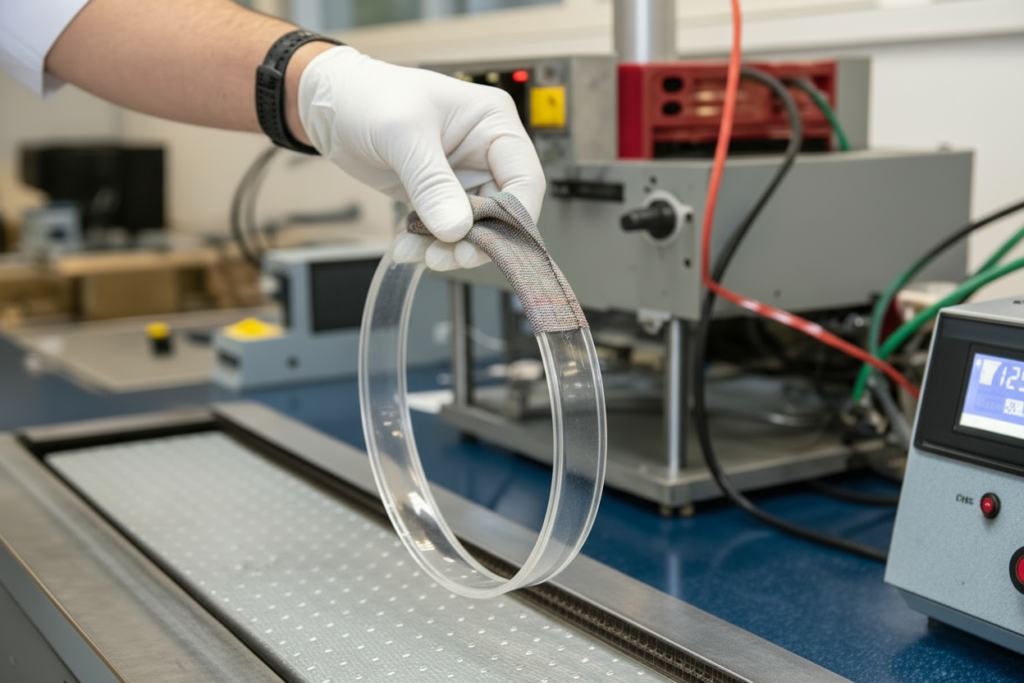
At Shanghai Fumao, we test the adhesion bond on every fabric-covered style. We use a simple but effective peel test. We take a sample from the production line. We attempt to lift the edge of the fabric with a fingernail. The fabric should not lift easily. If it does, the batch is rejected. We also perform a more formal test where a calibrated force is applied to peel the fabric. The bond must withstand a specified minimum force. This fabric to acrylic adhesion testing for covered headbands is essential for any fabric-wrapped style.
What Causes Fabric to Peel Away from the Acrylic Core?
Understanding the root cause helps you ask the right questions of your supplier. Peeling is almost always caused by one of two things. Poor surface preparation or incorrect adhesive selection.
Acrylic is a smooth, non-porous plastic. Glue does not stick to it naturally. The surface must be slightly abraded or treated with a primer to create a mechanical or chemical bond. A factory that skips this surface preparation step will have adhesion failures. The second cause is using a cheap, general-purpose adhesive instead of a specialized plastic-bonding adhesive. The cheap glue dries hard and brittle. It cracks and releases the fabric.
We use a two-part process. The acrylic core is lightly sanded in the bonding area. A flexible, industrial-grade adhesive specifically formulated for plastics and textiles is applied. The fabric is pressed onto the core under controlled pressure. This process yields a bond that withstands normal use and even moderate abuse. This root cause analysis of fabric delamination on acrylic accessories informs our rigorous manufacturing process.
How Do You Test the Durability of the Bond Over Time?
A headband that looks perfect on day one but peels after a month of use is still a quality failure. The bond must be durable over the expected life of the product.
We use an accelerated aging test. The finished headbands are placed in a controlled environment chamber that cycles through heat and humidity. This simulates the conditions of being worn against warm skin and hair, and being stored in a bathroom. After the aging cycle, the peel test is performed again. The bond strength should not have degraded significantly.
We also perform a simple "purse test" in our office. Samples are thrown into a handbag with keys and a phone and carried around for a week. This real-world simulation reveals edge lifting that might not show up in a laboratory test. This accelerated aging and real world simulation for accessory durability provides a more complete picture of long-term quality.
Why Is Colorfastness and Crocking a Major Concern for Acrylic Bands?
Acrylic headbands are often dyed in vibrant, saturated colors. That beautiful jewel tone or neon bright is a key selling point. But if that color transfers onto the customer’s blonde hair, her white blouse collar, or her fingertips, you have a disaster. Color transfer, known as crocking, is a common and serious defect in dyed accessories.
The dye must be fully fixed into the acrylic material. Cheap or poorly processed acrylic will leach color, especially when exposed to moisture, such as light rain, humidity, or hair product. The customer removes the headband and finds a colored stain on her hairline. This is a return, a refund, and a lost customer.
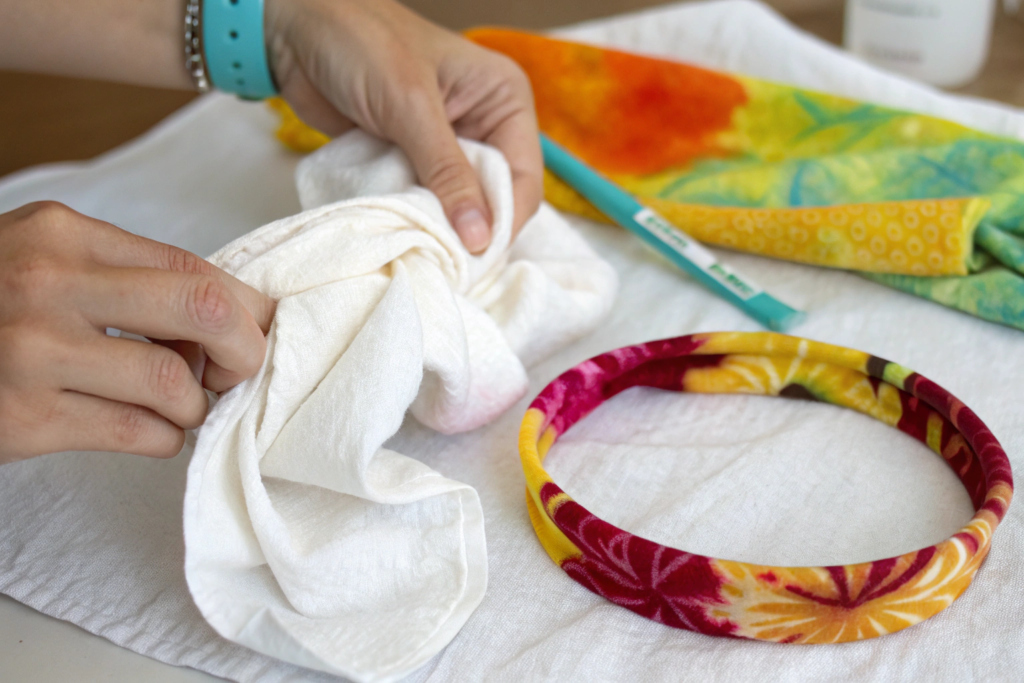
At Shanghai Fumao, we perform a crocking test on every colored acrylic band. A standardized white cotton cloth is rubbed against the surface of the band under a specified pressure for a set number of cycles. The cloth is then examined for color transfer. Any visible transfer above a very slight trace is a failure. We also perform a wet crocking test using a cloth dampened with water or synthetic perspiration. This colorfastness and crocking test for dyed acrylic and fabric headbands is a critical safety and quality check.
How Do You Test for Colorfastness on Fabric-Covered Bands?
Fabric-covered bands present a double risk. Both the fabric and the underlying acrylic could potentially transfer color. The fabric is the primary concern.
We test the fabric for colorfastness to both dry and wet rubbing. The same crocking test method is used on the fabric surface. Additionally, for bands that might be worn during exercise or in humid climates, we test colorfastness to perspiration. A fabric sample is soaked in a simulated perspiration solution and then evaluated for color change and staining.
These tests are based on standard textile testing methods, such as those from AATCC, the American Association of Textile Chemists and Colorists. We provide the test reports to clients who require them for their own quality assurance documentation. This AATCC colorfastness testing standards for textile headbands provides an internationally recognized benchmark for quality.
What Is the Risk of Chemical Odor from Acrylic Materials?
This is a quality issue that is immediately apparent to the customer upon opening the package. A strong, pungent chemical odor emanating from the headband is a sign of residual solvents or unpolymerized monomers in low-grade acrylic.
This odor is not just unpleasant. It can be a sign that the material has not been properly cured and may be more prone to brittleness. It can also cause skin irritation for sensitive individuals. A quality acrylic headband should have no noticeable chemical odor.
Our incoming material inspection includes a simple odor test. A batch of acrylic cores is sealed in a plastic bag for a period of time. The bag is then opened, and the odor is evaluated. Any strong, objectionable odor results in rejection of the material. This odor testing for volatile organic compounds in acrylic accessories is a basic but essential sensory quality check.
How Do You Ensure Consistent Sizing and Dimensional Stability?
An acrylic hair band is not one-size-fits-all. There is an optimal width and curvature for an adult head. If the band is too narrow, it pinches painfully behind the ears. If it is too wide, it slides forward and falls off. If the curve is too flat, it does not grip the head. Consistency across the production run is essential.
The dimensions of an acrylic band are determined by the injection mold. Assuming the mold is correctly made, the variations come from the molding process itself. If the acrylic is removed from the mold too hot, it can warp as it cools. If the mold temperature fluctuates, the shrinkage rate of the plastic can change, leading to slight size variations.
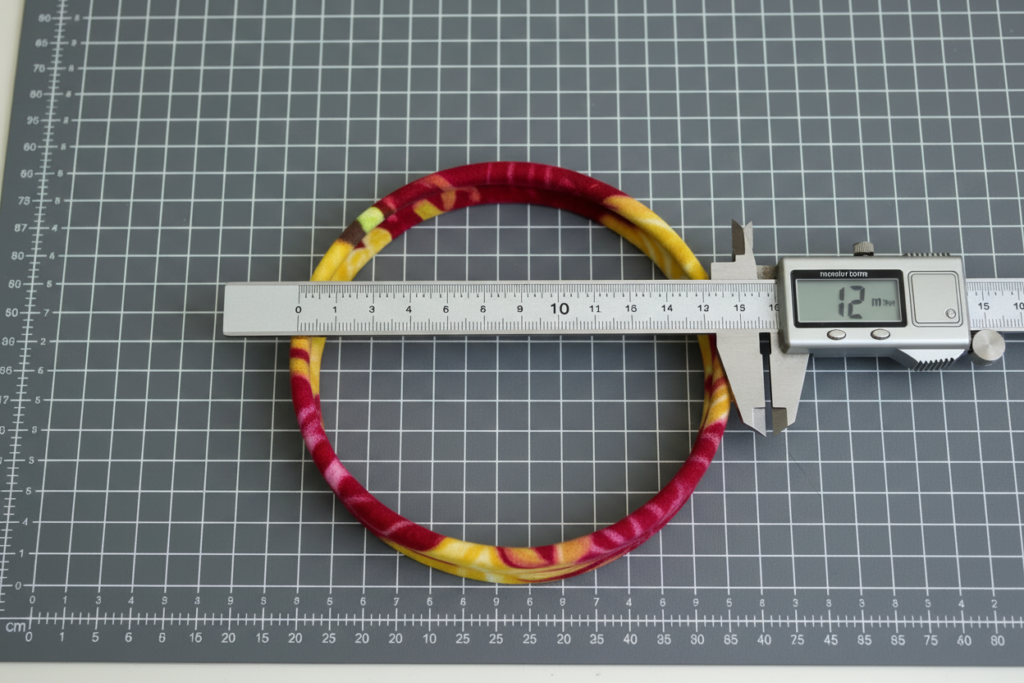
At Shanghai Fumao, we use a go/no-go fixture for each specific headband style. The finished band is placed in the fixture. If it fits within the acceptable tolerance range, it passes. If it is too narrow or too wide, it fails. This is a fast, objective, and repeatable quality check performed on a sample from every molding machine shift. This dimensional inspection using go no go fixtures for injection molded accessories ensures that every band meets the fit specification.
What Are the Standard Dimensions for Adult and Kids Acrylic Bands?
You should specify the target dimensions in your purchase order. Do not rely on the factory’s "standard" size without verifying it.
For an adult acrylic hair band, the typical inner width at the widest point is between 12.5 and 13.5 centimeters. The overall length of the band from tip to tip along the curve is typically between 34 and 36 centimeters. The thickness of the band is usually between 3 and 5 millimeters, depending on the desired flexibility.
For kids bands, these dimensions are scaled down. The inner width is typically 11 to 12 centimeters, and the overall length is 30 to 32 centimeters. We maintain a library of standard size specifications, but we always confirm the target dimensions with the client during the sampling phase. This standard size chart for adult and children acrylic hair bands provides a baseline for product development.
How Does Tooth Design Affect Grip and Comfort?
Many acrylic headbands have small teeth or combs on the inner surface to help grip the hair and prevent slipping. The design of these teeth is a critical comfort and function factor.
Teeth that are too sharp will scratch the scalp and pull hair. Teeth that are too blunt will not grip. The ideal tooth has a slightly rounded tip. The spacing of the teeth should be even. The length of the teeth should be appropriate for the width of the band.
Our mold makers pay careful attention to the tooth geometry. We inspect the teeth on every sample for sharp edges or burrs. A band with sharp teeth will fail our QC inspection. This tooth design and comfort testing for non slip hair bands is a detail that separates a premium accessory from a painful one.
What Is the Critical Sharp Edge and Burr Inspection Process?
This is the most fundamental safety test. An acrylic hair band is worn against the sensitive skin of the scalp and behind the ears. Any sharp edge, rough seam, or plastic burr can scratch the skin, snag hair, and cause pain. This is not a cosmetic defect. It is a safety hazard.
Acrylic parts come out of the injection mold with a parting line. This is a thin line of excess plastic where the two halves of the mold met. This parting line must be removed. The edges of the band must be polished smooth. Any cutouts or decorative elements must have smooth, radiused edges.
At Shanghai Fumao, every single acrylic band is visually inspected and manually touched by a finishing operator. They run their thumb along the entire inner and outer edge of the band. They feel for any roughness, sharp point, or burr. This is a 100% inspection, not a random sample. Bands that fail are sent back for re-finishing. This 100 percent visual and tactile inspection for sharp edges on plastic accessories is a non-negotiable safety protocol.
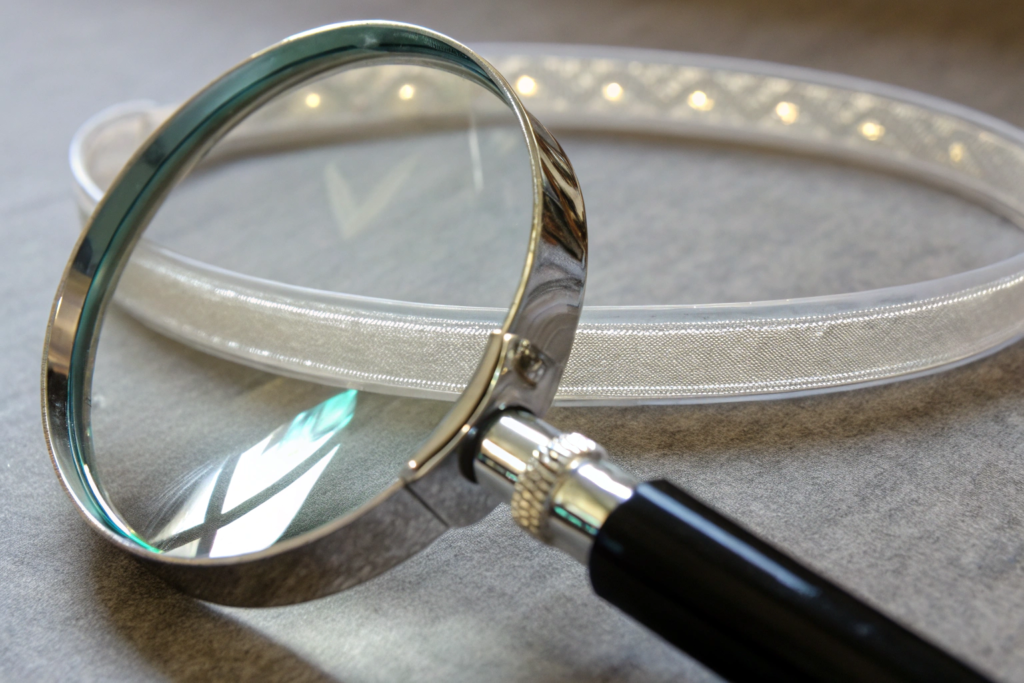
How Are Seams and Joints Inspected for Smoothness?
Many acrylic headbands are not a single continuous piece. They may have a decorative knot, a bow, or a separate embellishment attached. The joint where these pieces meet must be completely smooth. Any gap or rough edge is a hair snagging hazard.
Our assembly process ensures that components are fitted precisely and any adhesive used does not squeeze out and create a hard, sharp bead. After assembly, the joint is inspected under bright light. The inspector runs a fingernail across the joint. If the nail catches, the joint is not smooth enough. It must be reworked.
This attention to detail at the seam and joint level is what prevents the customer from experiencing that painful moment of having a strand of hair pulled out when removing the headband. This seam and joint smoothness inspection for assembled hair accessories is a critical comfort factor.
What Is the Standard for Acceptable Surface Defects on Acrylic?
Acrylic is a transparent or translucent material. Any internal bubbles, flow lines, or surface scratches are highly visible. The cosmetic standard must be defined.
We use a standard viewing condition for cosmetic inspection. The band is held at arm’s length under standard fluorescent lighting. The inspector looks for any visible defects on the top and side surfaces. Defects that are not visible under this condition are considered acceptable. Defects that are immediately apparent are not.
This standard is communicated to the production team and the QC team. It provides an objective, repeatable way to assess cosmetic quality. We also provide a set of limit samples to the client. These are physical samples that show the borderline between acceptable and unacceptable cosmetic defects. This cosmetic inspection standard and limit sample approval for acrylic accessories aligns expectations between the factory and the buyer.
Conclusion
Requesting the right quality tests for acrylic hair bands transforms your import experience from a gamble into a managed, predictable process. You move from hoping the goods are good to knowing they meet a documented standard. The tensile test prevents the snap. The adhesion test prevents the peel. The crocking test prevents the stain. The dimensional check ensures the fit. The edge inspection ensures safety and comfort.
At Shanghai Fumao, these tests are not special requests. They are integrated into our standard operating procedures. We perform them on every production run because we know that our reputation, and our clients’ brands, depend on the consistent quality of every single headband that leaves our factory in Zhejiang.
If you are developing an acrylic hair band program and want a manufacturing partner who treats quality control as a core competency, not an afterthought, I encourage you to contact our Business Director, Elaine. She can provide you with a detailed overview of our quality assurance protocols and share sample test reports. You can email Elaine at: elaine@fumaoclothing.com. Let us help you build a headband collection that delights your customers and protects your brand reputation.