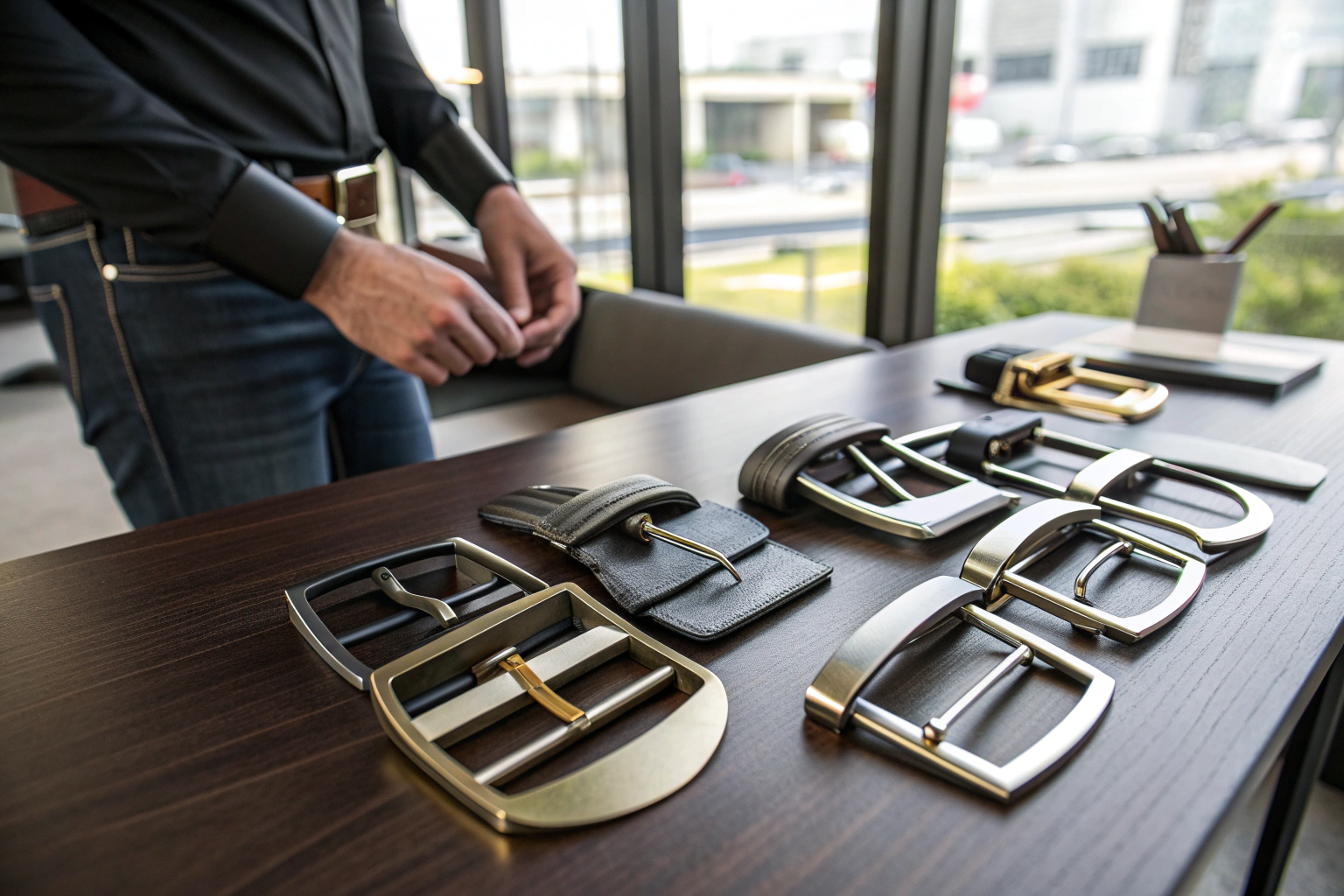
I still remember a buyer from Texas who called me in a panic last spring. He had stocked his entire menswear collection with shiny, high-polish gold buckles, and they just sat on the shelves. His customers kept picking up the matte-finished belts from a competing brand instead. He lost a full season's margin because he missed the shift in finish preferences. Every year, I see importers and brand owners make the same costly mistake. They reorder last year's finishes and then wonder why their sell-through rates collapse.
The most common men's belt buckle finishes in 2026 are matte black PVD coating, brushed gunmetal, ion-plated antique brass, and satin-finished nickel-free zinc alloy. These finishes are dominating the market because they answer the core demand for versatility, durability, and a quiet, understated look that pairs well with both casual and semi-formal wear.
As the owner of AceAccessory, I sit down with our design team every quarter to analyze exactly what finishes our European and North American clients are reordering. We track these shifts not from fashion magazines, but from actual purchase order data. Let me walk you through what is really moving off the shelves in 2026, and why these four finishes are winning the men's belt category.
What Matte and Brushed Finishes Dominate 2026 Men's Belts?
Shiny is out. Quiet is in. The biggest macro trend driving buckle finishes in 2026 is the move away from reflective surfaces. Men want texture they can feel, not gloss they can see from across the room. Our order data from the past eight months confirms this. Matte black and brushed gunmetal together account for nearly sixty percent of our current men's belt production. These finishes hide micro-scratches better, they do not clash with watch metals, and they project a rugged, intentional minimalism that the high-polish look simply cannot deliver anymore.
Why Is Matte Black PVD the Top Choice for Durability in 2026?
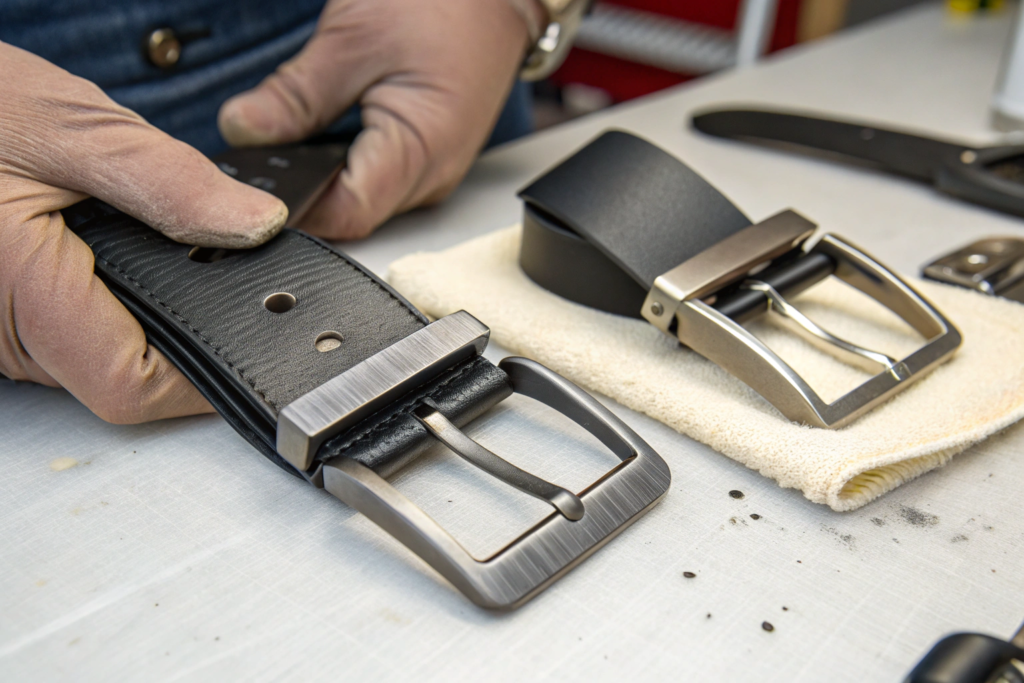
Physical Vapor Deposition, or PVD, is not a paint. It is a vacuum process that bonds a microscopic layer of coating to the base metal at the molecular level. I explain this to every new client because the term "matte black" gets thrown around loosely. Cheap matte black is just sprayed paint that chips off within a month. A real PVD matte black finish survives salt spray testing for over 48 hours without a single corrosion spot. In 2026, the key selling point is that this finish looks the same after a year of daily wear. It resists scratches from desk edges and zippers. Men are tired of disposable accessories. They want a belt that develops character without looking destroyed. When you source, ask your factory for the specific PVD test report. The finish should be a deep, charcoal black, not a shiny jet black. For detailed technical information on PVD coatings, you can check the resources at Materials Today.
How Does Brushed Gunmetal Bridge Casual and Formal Wear?
Brushed gunmetal solves a specific problem. A man wants one belt that works with dark denim on a Friday and grey wool trousers on a Monday. Polished silver looks too flashy with jeans. Matte black can feel too casual with a blazer. Brushed gunmetal sits exactly in the middle. The "brushed" texture comes from a mechanical process where fine abrasive belts create thousands of parallel, microscopic lines on the metal surface before sealing. This pattern catches light softly, giving the buckle depth without creating a mirror reflection. I have personally watched our finishing technicians adjust the brushing speed to achieve different levels of subtlety. A coarser brush gives a more industrial, workwear vibe. A finer brush feels almost silky and pairs perfectly with a business-casual ensemble. This single finish now replaces the need for two separate belts in many men's wardrobes, which is a powerful selling angle for your own online store.
What Are the Trending Antiqued and Vintage Finishes?
While matte finishes dominate the minimalist category, there is a parallel trend booming in the heritage and premium segment. Brands with a rugged, outdoorsy, or classic American aesthetic are pushing heavily into antiqued and vintage finishes. The driving force here is a desire for authenticity. A brand-new buckle that looks like it has a hundred-year history tells a story before the customer even puts it on. This trend is particularly strong in the European market, where heritage branding holds significant weight.
Is Ion-Plated Antique Brass Still a Key Finish for 2026?
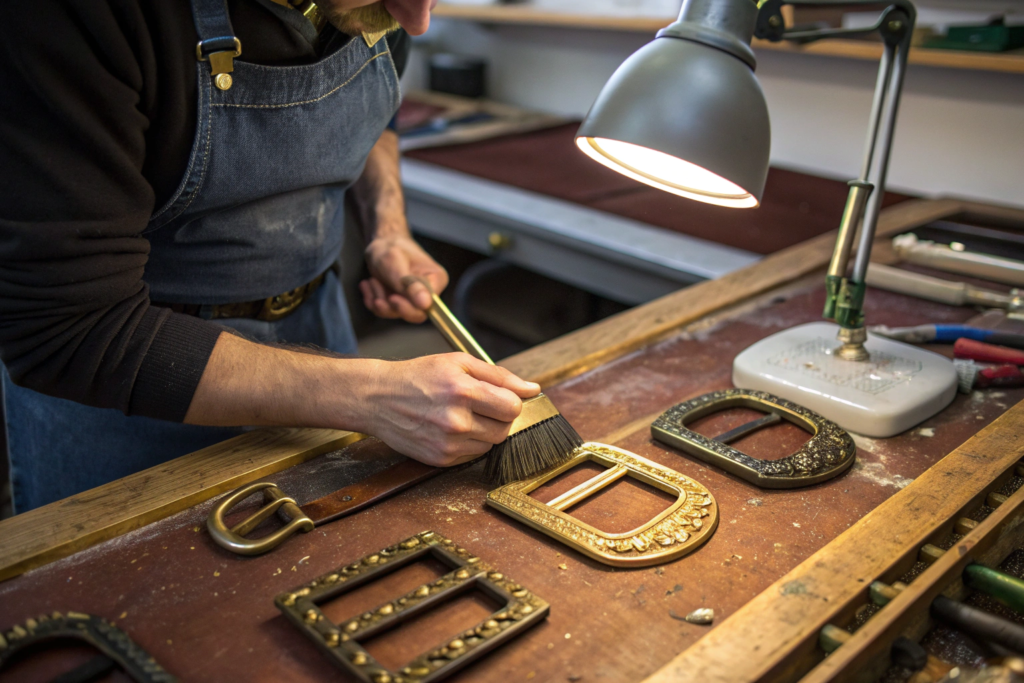
Yes, but with a critical update. The old antique brass of 2020 often had a muddy, uniform brown-yellow tone that looked artificial. The 2026 version uses a two-step ion plating process. First, a genuine brass or brass-alloy base is treated. Then, a darkened wash is applied and hand-wiped to leave the recesses dark while the raised edges show a warm, muted gold. The key visual cue is the contrast. Buyers now want the highlights to be noticeably lighter than the valleys. This hand-wiped step is what separates a cheap imitation from a premium antique finish. When I walk our inspection line, I train our QC team to check every single buckle for this contrast consistency. If the wipe is too uniform, the buckle looks spray-painted and lifeless. The right antique brass finish pairs exceptionally well with tan, cognac, and oxblood leather straps, the very colors trending in men's footwear this year. You can learn more about metal finishing standards from the National Association for Surface Finishing.
Why Is "Rubbed Oil" Bronze Gaining Popularity?
This is a finish I personally pushed our design team to develop last year after visiting a trade show in Florence. Rubbed oil bronze, or R.O.B., has a deep, almost chocolate-brown base with subtle copper undertones that emerge as the buckle ages. Unlike antique brass, which is yellow-brown, R.O.B. is cool-brown. It is specifically designed to match the growing trend of dark brown and black leather accessories. The finish is achieved by applying a darkened oil-based patina to a bronze or copper-based alloy, then hand-rubbing it with a soft cloth to create a low-sheen, satin luster. The surface feels almost soft to the touch. This finish is especially popular among smaller, niche menswear brands that want to differentiate themselves from the mass-market brushed metals. The unique selling point is the patina evolution. The finish is designed to wear slightly over time, revealing warmer copper notes underneath, which makes each belt unique to its owner.
How Do Sustainable and Hypoallergenic Finishes Affect Choices?
A silent but powerful driver of finish selection in 2026 is skin sensitivity and environmental regulation. European buyers, in particular, are pushing suppliers hard on nickel release limits and eco-friendly plating processes. This is no longer a nice-to-have checkbox. It is a hard requirement for market access. The EU's REACH regulation keeps tightening, and a belt buckle that causes a skin rash is a brand-destroying liability. The sustainable choice has unexpectedly aligned with the fashion choice, as the safest finishes also deliver the muted, organic look men now prefer.
Is Nickel-Free Satin Zinc the New Standard for Sensitive Skin?
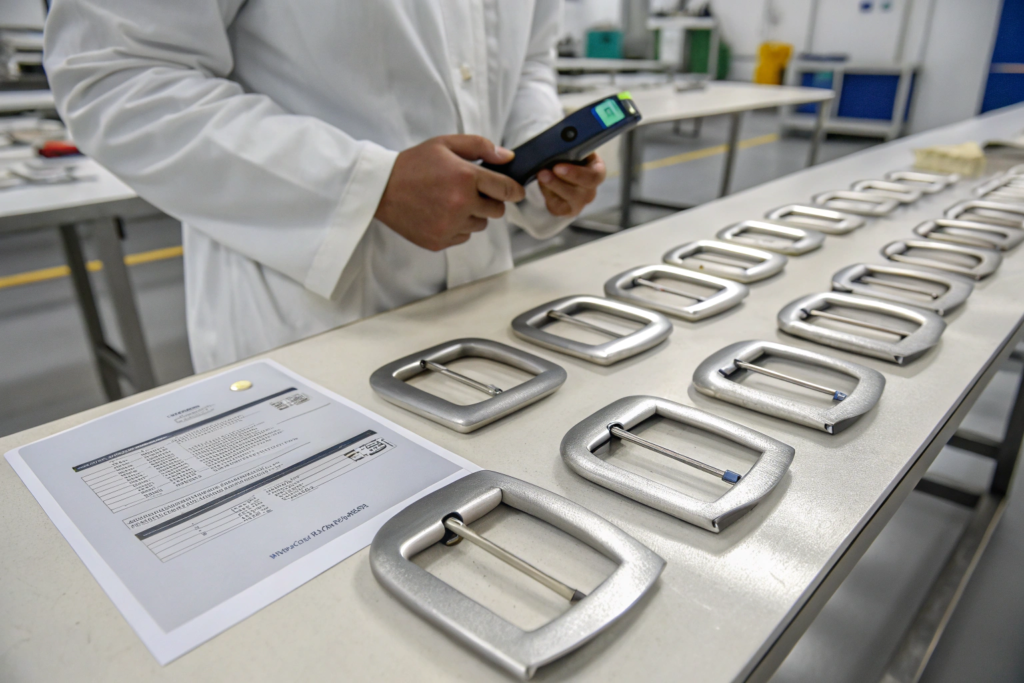
The short answer is yes. Nickel is the most common cause of metal allergy contact dermatitis. A high-shine, electroplated nickel finish might look bright and attractive, but it is a major risk. In 2026, the responsible alternative is a satin-finished, nickel-free zinc alloy. This electroplating process uses a zinc-based bath that creates a slightly warm, silver-like tone with a matte, satin texture. The finish is inherently non-reflective, which makes it perfect for the quiet luxury trend. I tell all my clients sourcing for the European market to request a nickel-release test report per the EN 1811 standard before confirming any buckle order. Our factory performs this test in-house on every batch. The satin zinc finish is also more cost-stable because it avoids the volatile nickel pricing. It offers a cleaner, safer, and aesthetically on-trend alternative. The Nickel Institute provides clear data on why nickel-free alternatives are critical for prolonged skin contact items, which I recommend all brand owners read.
Can Eco-Friendly Electrophoresis Coating Replace Traditional Electroplating?
This is the most exciting technical shift I have seen in a decade. Traditional electroplating involves heavy metals and produces toxic wastewater that is difficult and expensive to treat. Electrophoresis coating, or E-coating, is a water-based process where charged paint particles are deposited onto the buckle surface and then baked on. The result is a perfectly even, matte or satin color that encapsulates the entire metal piece. It is exceptionally chip-resistant and chemically inert, which means zero skin reactions. In 2026, we have successfully applied black, dark grey, and even earth-tone matte colors using this method on zinc alloy bases. The finish is so consistent that our QC rejection rate has dropped by forty percent compared to traditional painting. The environmental compliance paperwork is simpler, and the finish meets the strictest Japanese and European import standards. For brands that center their marketing on sustainability, an E-coated matte buckle is a powerful, verifiable story to tell. You can find more about sustainable surface treatment technologies through resources like Products Finishing.
What Custom Finish Options Are Buyers Requesting Now?
Beyond the core finishes, the real market differentiation in 2026 comes from strategic customization. Brands no longer want to just pick a finish from a catalog. They want to modify it to own a signature look. This is where the deep technical capability of your supplier matters most. You need a factory that treats finishing not as a final step, but as an integrated part of the design dialogue.
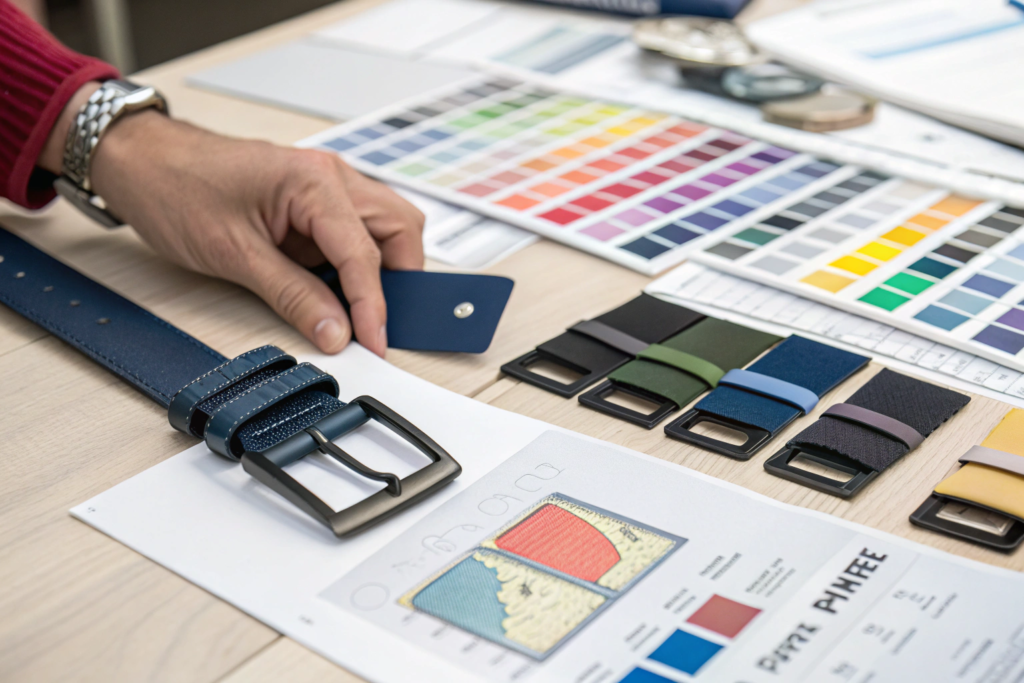
How Are Laser Etching and Matte Finishes Being Combined?
This is the number one customization request I receive from US menswear start-ups. They order a matte black PVD buckle and then ask for their logo to be laser etched onto the surface. The laser removes a microscopic layer of the dark coating, revealing a lighter, greyish-white mark underneath. The contrast is subtle and premium. It avoids the loud, shiny plate-on-plate engraving of older styles. The critical technical detail here is the etch depth. If you burn too deep, you expose the raw zinc and risk corrosion. Our laser technicians have calibrated a specific, low-heat setting for PVD surfaces. The result is a mark that looks like a ghosted signature, perfectly aligned with the quiet branding trend. If you are planning a custom-branded belt line, ask your supplier to show you a macro photo of their laser work on the specific matte finish you have chosen.
What Two-Tone and Enamel-Filled Finishes Are on the Rise?
Two-tone finishes are making a strong comeback, but not in the shiny gold-and-silver combination of the past. The 2026 version pairs a matte or brushed base metal with a deeply recessed area filled with matte enamel color. For example, a brushed gunmetal buckle with a matte navy enamel inlay in a grooved border. Another popular combination is matte black with a deep burgundy or forest green enamel fill. The buckle's outer edge remains metal, while the center panel or a decorative groove carries the color. This technique lets a brand easily coordinate belt accessories with a seasonal clothing color palette without changing the base hardware. It demands precise masking and manual enamel injection to keep the color within its designated recess. A steady hand and rigorous quality inspection are essential. A poorly done enamel fill overflows its groove and makes the whole buckle look cheap. This is a premium finish process, and it allows a brand to charge a significantly higher retail price.
Conclusion
The men's belt buckle finish landscape in 2026 is defined by restraint, texture, and technical integrity. Matte black PVD and brushed gunmetal lead the minimalist category with their scratch-resistant, versatile appeal. Ion-plated antique brass and rubbed oil bronze satisfy the heritage market with hand-wiped, contrast-rich patinas. On the regulatory front, nickel-free satin zinc and eco-friendly E-coating are rapidly becoming the baseline standards for any brand serious about the European and skin-sensitive customer segments. Finally, customization through precision laser etching and matte enamel inlays offers forward-thinking brands a way to build a truly recognizable hardware signature.
The common thread across all these finishes is that they require genuine technical expertise to execute properly. A cheap matte finish flakes. A poorly executed antique brass looks muddy and uniform. A fake nickel-free claim can result in a container held at customs. This is not just about picking a color. It is about choosing a manufacturing partner who understands the chemistry, the regulatory landscape, and the subtle visual cues that make a belt buckle feel expensive.
At AceAccessory, we have spent years perfecting these exact finishes in our Zhejiang factory. We work directly with your brand, offering real-time video walkthroughs of our plating and finishing lines, so you see the process with your own eyes.
If you are ready to develop a custom men's belt collection with the right buckle finishes for 2026, I invite you to start a conversation with us. Our project managers will guide you through every technical detail, from metal base selection to final texture testing.
For a direct and fast response on your project requirements, please contact our Business Director, Elaine. You can reach her directly at her email: elaine@fumaoclothing.com. Let's build a hardware finish that sets your brand apart.