A buyer from Canada once sent me a frustrated email. She had spent three months going back and forth with a supplier who promised custom-shaped ear warmers. Every sample that arrived was a standard round band with a different fabric glued on. The factory simply could not execute the sculptural shape she needed. She was about to cancel her entire winter accessory line. The problem was not her design. It was that she was working with a factory that only knew how to repeat basic patterns, not create new ones.
Yes, our factory can produce custom shaped ear warmers as winter accessories. We have an in-house design team, our own mold-making capability for structured shapes, and experienced seamstresses who can handle complex pattern cutting for soft fabric constructions. Whether you need animal ears, geometric knots, asymmetrical wraps, or sculptural folded designs, we can develop the pattern, create the prototype, and scale to full production.
As the owner of AceAccessory, I have seen custom-shaped ear warmers grow from a niche novelty item into a serious winter fashion category. Our clients in North America and Europe are using unique ear warmer shapes to differentiate their brands in a crowded cold-weather market. Let me explain exactly how we turn a sketch into a finished product and why choosing the right factory for this category matters more than you might think.
What Custom Ear Warmer Shapes Can Be Manufactured at Scale?
The first question every buyer asks is about the limits of what is possible. Can you make a shape that holds its structure? Can you make a shape that folds and drapes? Can you make something that looks like a cat ear but still keeps someone warm at minus twenty degrees? The answer depends on understanding the two fundamental construction methods for ear warmers. Structured shapes require internal frames. Soft shapes require precision pattern cutting and fabric knowledge. Most factories specialize in one method. We do both under one roof.
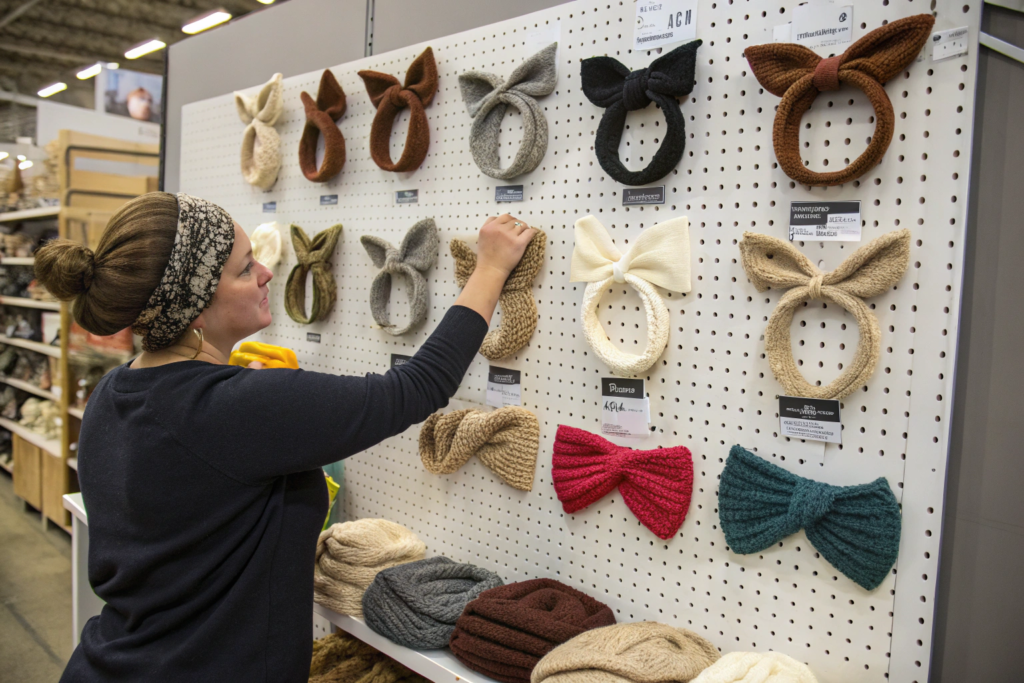
How Are Structured Ear Warmer Shapes Created with Internal Frames?
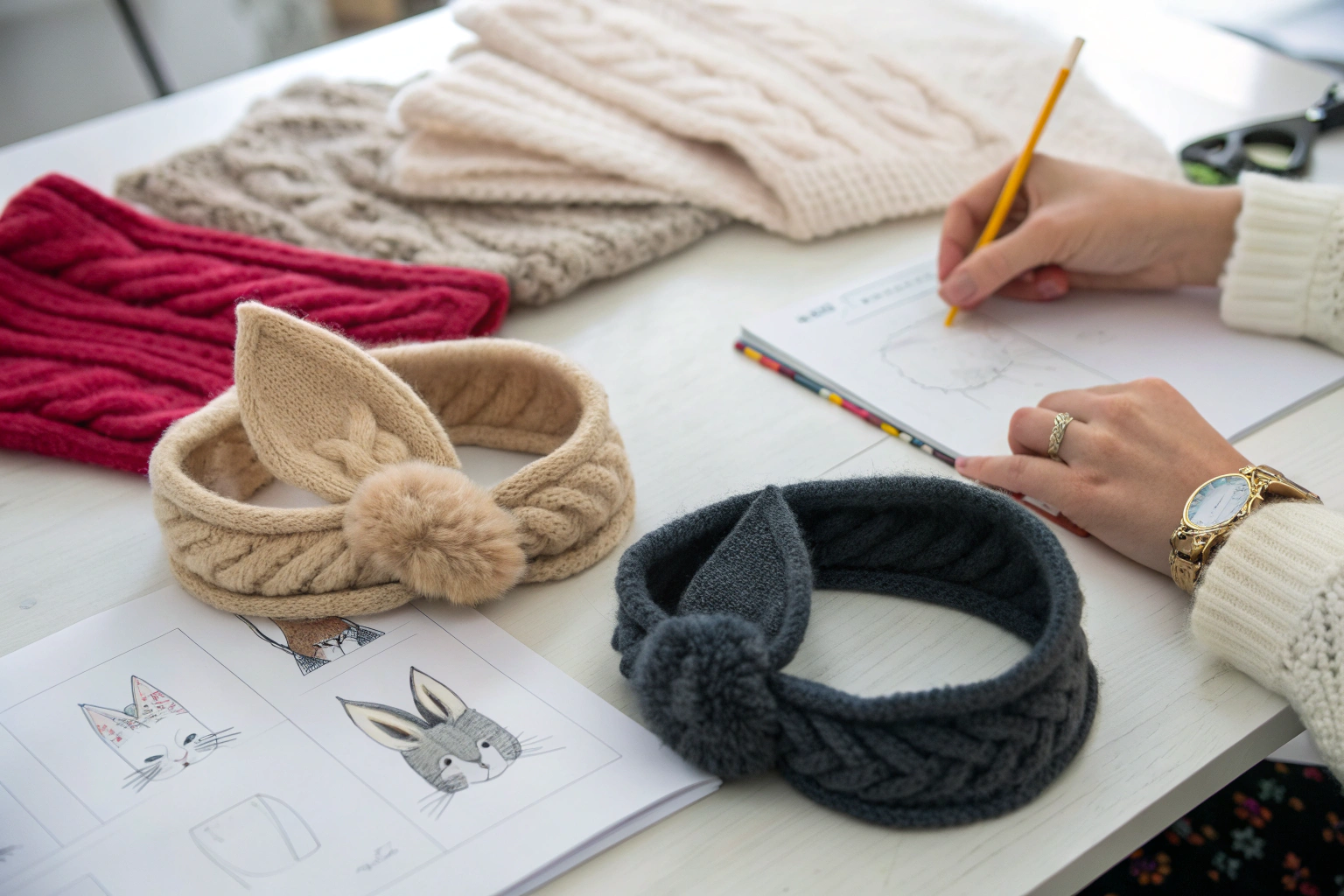
Structured shapes like animal ears, pointed elf ears, or geometric arches need an internal skeleton to hold their form. This skeleton is typically a custom-molded piece made from EVA foam, ABS plastic, or a dense polyethylene board. The process starts with your design sketch. Our 3D modeler translates the shape into a digital file. We then CNC machine a prototype mold and produce a few sample frames. These frames are wrapped in foam padding for comfort and then covered with the outer fabric, which could be faux fur, knit, or fleece. The key technical challenge is the attachment point where the frame meets the headband base. If this joint is not reinforced with proper stitching and hidden backing fabric, the ear will flop forward after a few wears. Our sampling team has developed a reinforced tab system that locks the shaped element to the band without visible stitching on the front. This method works for any silhouette you can imagine. The mold cost is a one-time investment, and the per-unit cost drops significantly at production quantities.
How Are Soft Sculptural Shapes Achieved Through Pattern Cutting?
Not every custom shape needs a hard frame. Twisted knot ear warmers, braided bands, and draped turban styles achieve their shape purely through fabric manipulation and smart pattern cutting. This is where an experienced pattern maker is worth their weight in gold. A twisted knot, for example, is not a separate piece sewn onto a band. It is created by cutting the fabric on the bias, sewing a long tube, and then hand-tying and tacking it into a knot shape that is permanently stitched in place. The pattern must account for the stretch percentage of the fabric. A knit fabric with twenty percent spandex will twist differently than a woven fleece with zero mechanical stretch. Our pattern makers test every new shape on at least three different base fabrics to identify which one holds the sculptural form best while remaining comfortable against the ear. This process takes time in the sampling phase but ensures the production units are consistent. This soft construction method is also ideal for brands that want a machine-washable product, as there are no internal plastic parts that could warp in hot water.
What Materials Work Best for Custom Shaped Ear Warmers?
The material you choose can make or break a custom shape. A fabric that is too stiff will be uncomfortable. A fabric that is too stretchy will lose the shape after an hour of wear. The outer fabric, the lining, and the structural backing all work together as a system. A factory that understands this material synergy will guide you toward combinations that look good on day one and still look good after a full winter season.
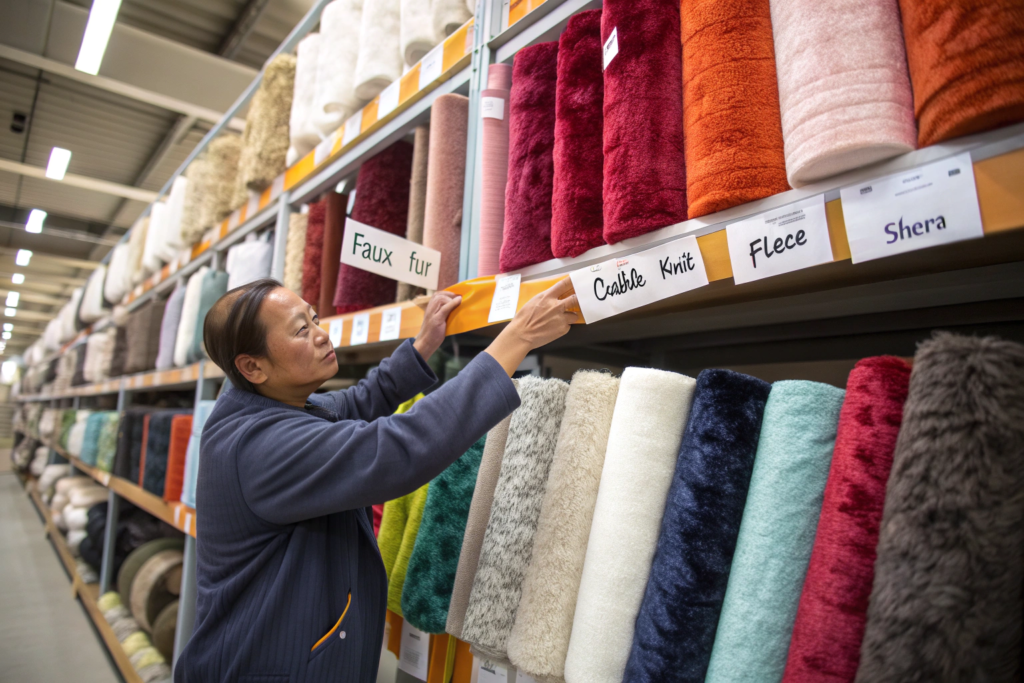
Why Is Faux Fur the Top Choice for Novelty and Animal Ear Shapes?
Faux fur is the number one material request I receive for custom shaped ear warmers, particularly for animal ear designs. The reason is visual and tactile. A long-pile faux fur hides the seam lines where the shaped piece attaches to the band. It creates a seamless, plush look that photographs beautifully for e-commerce. We source faux fur from specialized mills that offer pile heights from a short 5mm velour finish to a fluffy 50mm shag. For structured ear shapes, a medium 15mm to 25mm pile is the sweet spot. It is long enough to hide the internal frame but short enough that the shape remains crisp and defined. The backing of the faux fur must be a stable knit that does not stretch out of shape when wrapped around a curved frame. I always recommend buyers test the faux fur sample by pulling it firmly in both directions. If the backing deforms easily, the ear warmer will look baggy after a few uses. We also ensure the faux fur meets flammability standards required for accessories sold in the US and EU markets.
How Do Knit and Fleece Fabrics Perform for Knotted and Braided Designs?
For twisted knots, braided headbands, and draped turban styles, knit and fleece fabrics are the workhorses. A thick cable knit fabric made from acrylic or wool blend yarn creates a chunky, textured look that holds a knot shape beautifully. The natural bulk of the knit gives the knot volume without needing internal stuffing. Polar fleece, on the other hand, is ideal for athletic or outdoor brands. It is lightweight, wicks moisture, and has a soft, brushed interior that feels comfortable against the skin. The challenge with fleece is that it does not have the same visual texture as faux fur or knit. To solve this, we often combine fleece as the inner lining with a decorative outer fabric. A fleece-lined faux fur ear warmer gives the customer the plush look on the outside and the performance comfort on the inside. Material testing standards for fabric performance are available through organizations like ASTM International, which we reference during our internal quality checks.
How Does the Sampling Process Work for a New Ear Warmer Shape?
Turning a sketch into a physical sample is the most critical phase of the project. This is where the design either proves itself viable or reveals hidden problems. A shape that looks elegant on paper might be impossible to wear comfortably. A frame that holds perfectly on a flat table might dig into the head when curved around a human head form. Our sampling process is designed to catch these issues before you ever see the sample.
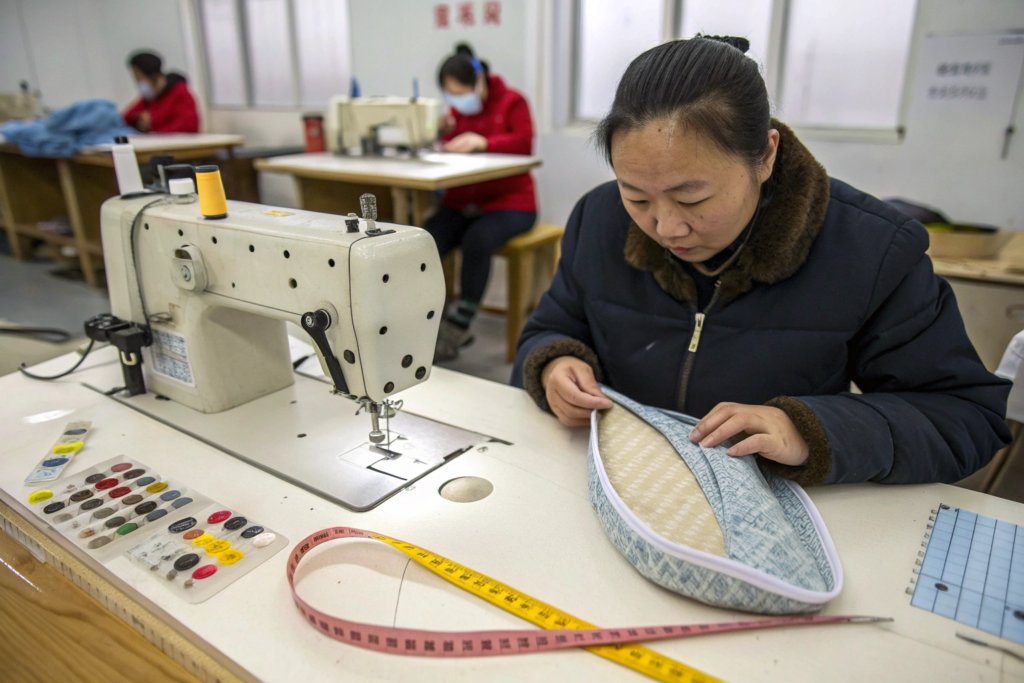
What Design Files and References Do You Need to Provide?
To start the sampling process, you should send three things. First, a clear sketch or digital rendering of the desired shape from at least two angles. A front view and a side profile view are essential. Second, dimension specifications. State the overall width, height of the shaped element, and the band circumference. If you have a competitor sample, you can send exact measurements taken from that product. Third, material preferences. Tell us if you want faux fur, knit, fleece, or a combination. If you have a specific Pantone color, include that as well. A complete design brief allows our pattern maker to start work within one working day. An incomplete brief generates a chain of clarification messages that add days to the timeline. One of our US clients sends a one-page spec sheet with every new design, and his samples almost always hit the mark on the first try because the brief leaves no room for guesswork.
How Many Sampling Rounds Are Typically Required?
For a simple shape using an existing construction method, we can often nail the sample in one round. For a complex, never-before-produced shape, expect two or sometimes three rounds. The first round sample shows you the basic shape, proportions, and material choice. You wear it, photograph it, and gather feedback. You might decide the ears need to be ten percent smaller or the band needs to be tighter. You send us that feedback, and we produce a second round sample with the adjustments. A third round is rare but sometimes necessary for very intricate designs. Each sampling round typically takes 7 to 10 working days, including shipping time. We always recommend budgeting for at least two rounds to ensure the final production units are exactly what you envisioned. A factory that promises to get a complex custom shape perfect in one sample is either overconfident or not listening carefully to your requirements.
What Quality Control Checks Are Essential for Shaped Ear Warmers?
A shaped ear warmer is not just a piece of fabric. It is a functional accessory that must stay on the head, hold its shape, and feel comfortable for hours. Our QC checklist for custom shaped ear warmers is longer than for standard bands because there are more potential failure points. A symmetrical shape that is sewn slightly off-center looks terrible on a customer. A frame that snaps after a few bends creates an immediate return. These checks are non-negotiable.
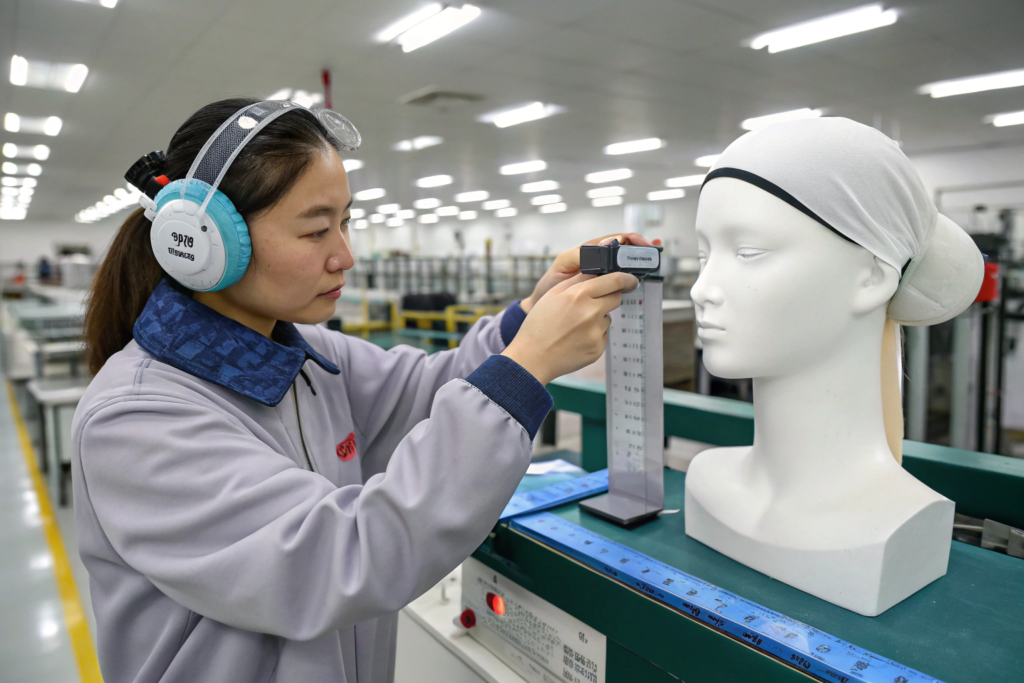
How Do You Test Shape Retention and Symmetry?
Every production batch undergoes a shape retention test. We place the ear warmer on a standard head form mannequin and leave it for 24 hours. After removal, we measure the angle and position of the shaped elements. They must be within 2 degrees of the approved sample. For structured shapes with internal frames, we perform a repeated bend test. The shaped element is bent forward and backward 100 times by a testing jig. The frame must not crack, and the fabric covering must not separate from the frame at any point. Symmetry is checked by folding the ear warmer in half along its center axis. The left and right sides must mirror each other within a 3mm tolerance. A crooked cat ear is a customer complaint waiting to happen. These tests are performed on a randomly selected sample from every production lot before the goods are packed.
What Comfort and Safety Standards Must Be Met?
Ear warmers sit against sensitive skin, often for hours. The inner lining must be free of any harsh seams, exposed glue, or scratchy labels. We specify that all internal seams on the band are flat-felled or covered with a soft binding tape. The band tension is measured with a force gauge. It must exert enough pressure to stay in place during light activity but not so much that it leaves a red mark on the skin after 30 minutes. Our standard target is a band circumference with a gentle compression of approximately 100 to 150 grams of force. Safety is also critical for children's sized ear warmers. Any small attached decorations like buttons or rhinestones must pass a pull test of at least 90 Newtons to prevent choking hazards. These standards align with international product safety requirements that are well-documented by organizations such as ASTM International. We also ensure all materials meet the relevant flammability standards for the destination market.
Conclusion
Producing custom shaped ear warmers is a capability that separates true accessory manufacturers from simple trading companies. It requires in-house pattern makers who can translate a sketch into a 3D form. It requires knowledge of internal frame materials like EVA and ABS for structured shapes. It demands a deep understanding of how faux fur, knit, and fleece fabrics behave when cut and sewn into sculptural forms. And it requires a rigorous QC process that tests shape retention, symmetry, band tension, and safety before any product leaves the factory floor.
The brand that offers a unique ear warmer shape, whether it is a whimsical animal ear or an elegant sculptural knot, owns a differentiated position in the winter accessory market. Customers are drawn to products that stand out on a crowded retail rack or a social media feed. The factory's job is to ensure that standout design is also comfortable, durable, and consistently produced.
At AceAccessory, we have built our entire factory workflow around this kind of custom development. We do not ask you to pick from a catalog of existing shapes. We ask you to send your sketch. Our design team, pattern makers, and sampling room will take it from there. We manage the mold fabrication, the material sourcing, the prototype sampling, and the final QC testing all within our Zhejiang facility.
If you are ready to develop a custom ear warmer shape for your next winter collection, I encourage you to reach out to us directly. Send us your design idea today, and we can have a preliminary feasibility assessment back to you within 24 hours.
For a direct conversation about your custom ear warmer project, please contact our Business Director, Elaine. You can reach her at elaine@fumaoclothing.com. Let us bring your unique winter accessory design to life.