I once opened a shipment of white elastic hair bands that had been stored in our warehouse for only six weeks, and my heart sank. The edges had turned a dull, uneven yellow, like old newspaper. The buyer had already paid the deposit, and his brand was built on crisp, bright white accessories. I had to eat the cost of remaking the entire order, and I spent the next week digging through technical literature to figure out exactly what had gone wrong. That experience cost me money and pride, but it taught me lessons about material science that I use every single day now.
You can avoid yellowing on white elastic hair bands during storage by controlling four critical factors: ultraviolet light exposure, atmospheric pollutants, the chemical composition of the elastic and its packaging, and ambient storage temperature and humidity. Yellowing is a chemical reaction, not a random aging process. If you control the inputs and the environment, you can keep white elastic bands looking factory-fresh for over a year.
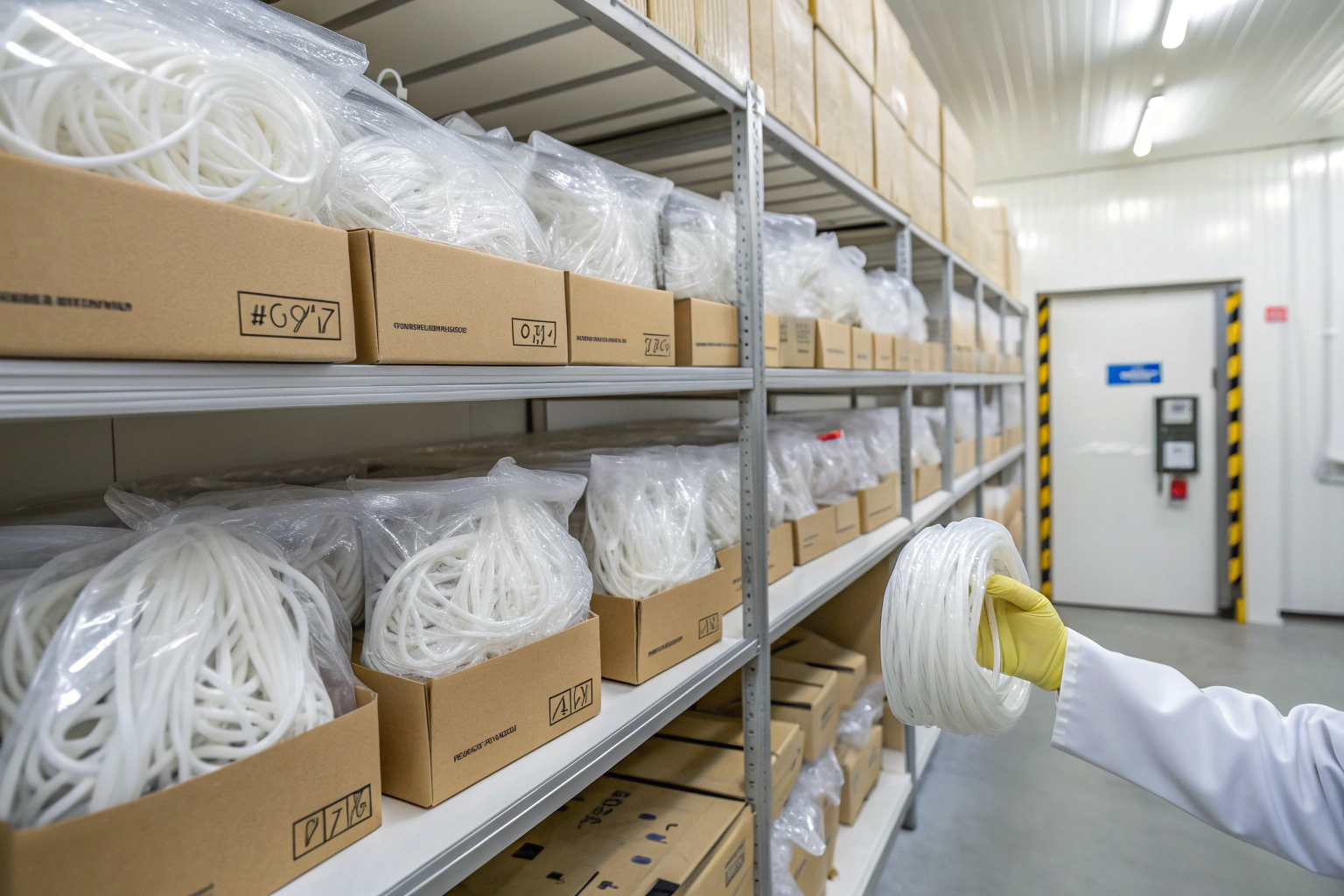
At our Zhejiang factory, we now treat white elastic products as a special handling category. They have their own designated storage zone, their own approved packaging materials list, and their own QC aging tests. Let me walk you through the exact causes of this yellowing and the practical, proven steps we take to prevent it, so you can protect your own inventory and your brand's reputation.
What Chemical Reactions Cause White Elastic Hair Bands to Turn Yellow?
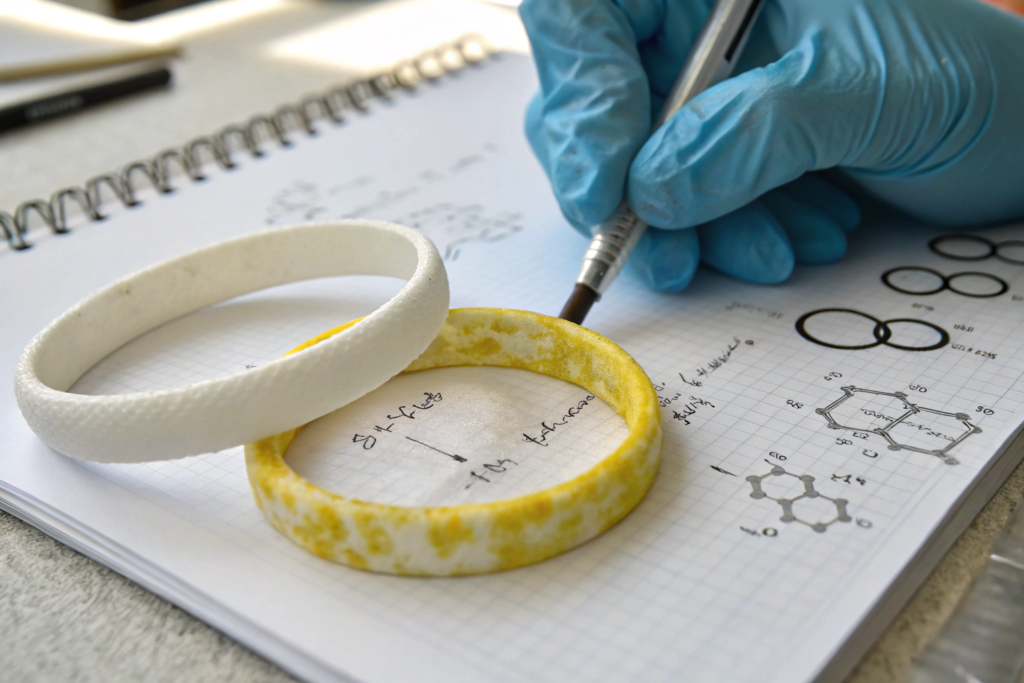
Yellowing is not a single problem. It is the visible result of at least three different chemical processes happening inside the material. If you do not know which one is attacking your product, you cannot fix it. I learned this the hard way when I first blamed the dye and replaced it, only to see the next batch still yellow. The fix was not the dye. It was the antioxidant package in the elastic polymer. Understanding these distinct mechanisms is the first step toward prevention.
How Does Phenolic Antioxidant Yellowing Occur in Elastic Materials?
This is the most common and most misunderstood cause. Elastic bands are made from a blend of rubber or spandex fibers wrapped with polyester or nylon. To prevent the rubber from degrading during high-temperature processing, manufacturers add chemical antioxidants. One common class of these is called hindered phenolic antioxidants. These chemicals do their job beautifully during production, but they have a dark side. When exposed to nitrogen oxides, which are common pollutants in warehouse air, these phenols oxidize and turn a distinct yellow-pink color. This yellowing happens even in complete darkness. The elastic can be sealed in a box inside a dark warehouse and still turn yellow because the chemical reaction is gas-phase. The nitrogen oxides in the air penetrate the packaging and react with the antioxidant residue on the fiber surface. The solution is to specify to your elastic yarn supplier that you require a "non-yellowing" or "low-phenol" antioxidant package. This is a raw material specification change, and it must be written into your purchase contract with the yarn mill.
Why Does Ultraviolet Light Degrade White Elastic Over Time?
Ultraviolet light is a different mechanism. UV photons have enough energy to break the chemical bonds in the polymer chains of the elastic and the white pigment itself. This process is called photodegradation. The visible result is not just yellowing but also a loss of elasticity and a chalky, brittle surface texture. This is the yellowing you see on hair bands that have been displayed in a sunny retail window. The UV light bleaches and then yellows the material in a patchy pattern that follows the light exposure. The fix for UV yellowing is twofold. First, the elastic must be compounded with UV stabilizers and titanium dioxide, which acts as a UV reflector. Second, the packaging and storage environment must block light completely. Even fluorescent warehouse lighting emits some UV radiation and can contribute to slow yellowing over many months. Keeping white elastic in opaque, light-proof packaging is a simple, zero-cost intervention that prevents this entire category of damage.
What Packaging Materials Prevent or Cause Yellowing of White Elastics?
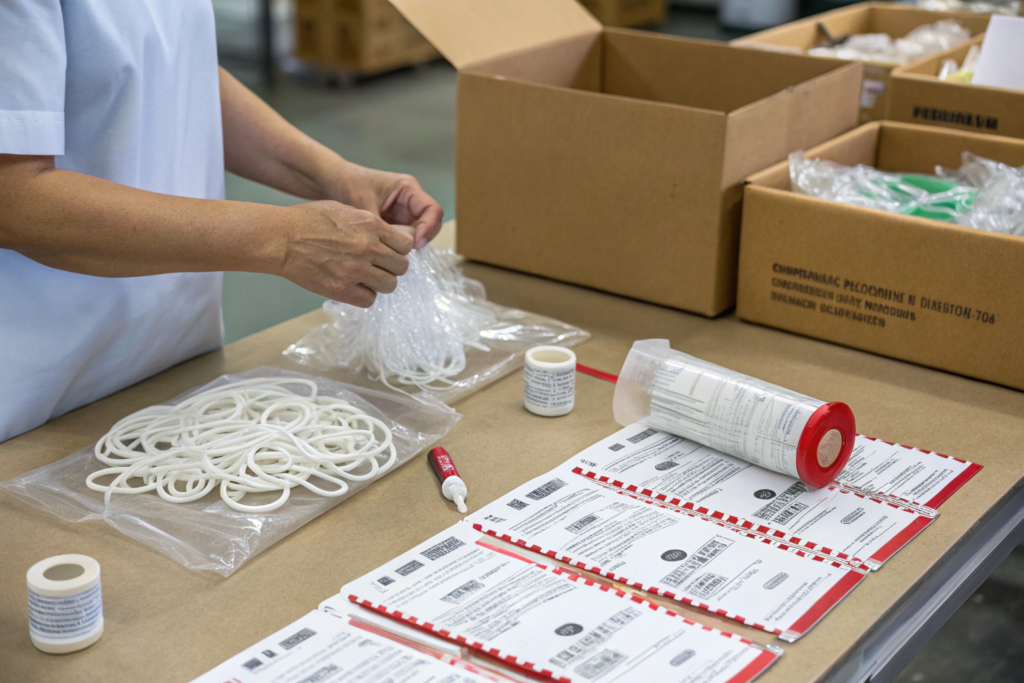
The bag you put the hair band into can actually cause the yellowing you are trying to prevent. This was the most surprising thing I learned during my investigation. Many standard plastic bags contain chemical additives that slowly release gases that stain the elastic. You can have perfect raw materials and a perfect storage room, and still get yellow bands because the packaging itself is chemically aggressive.
Why Are BHT-Free Polybags Essential for White Elastic Products?
Butylated hydroxytoluene, or BHT, is a common antioxidant added to polyethylene plastic films to prevent them from degrading during extrusion. It does for the plastic bag what phenolic antioxidants do for rubber. And it causes the exact same yellowing problem. When white elastic bands are sealed inside a polybag containing BHT, the chemical slowly volatilizes inside the closed environment and transfers onto the elastic surface. Over weeks and months, this causes a distinct, often streaky yellow discoloration. The solution is mandatory. Every polybag used for white elastic products must be certified BHT-free by the packaging supplier. We changed our entire packaging inventory after learning this. Now, every bag we use has a mill certificate stating it contains no BHT and no other volatile phenolic compounds. This single change eliminated about half of the yellowing complaints we used to receive.
Should You Use Silica Gel Packets and Vacuum Sealing for Long-Term Storage?
Moisture is an accelerator, not a direct cause. High humidity speeds up the migration of chemical additives to the fiber surface where they can react with atmospheric pollutants. For long-term storage of white elastic hair bands, especially in humid coastal climates, adding a small silica gel desiccant packet inside each sealed polybag is a low-cost insurance policy. The silica gel absorbs ambient moisture that gets trapped inside the bag during sealing. For very long storage periods exceeding six months, vacuum sealing can provide an additional layer of protection by removing the oxygen and nitrogen oxide gases that drive phenolic yellowing. However, vacuum sealing must be tested first because the mechanical compression can deform the elastic band's shape. A safer alternative is nitrogen flushing, where the air inside the bag is replaced with inert nitrogen gas before sealing. This is more expensive and is usually reserved for high-value orders destined for markets with strict quality expectations. For more details on packaging material standards, you can refer to resources from the Flexible Packaging Association.
How Should You Control the Storage Environment for Maximum Shelf Life?
The warehouse is not just a holding area. It is a chemical reaction chamber. Temperature, humidity, ventilation, and light all influence the speed at which yellowing reactions occur. A poorly managed warehouse can age a product by six months in six weeks. A well-managed one can keep it looking brand new for over a year. The difference is in the discipline of monitoring and controlling these environmental variables.
What Is the Ideal Temperature and Humidity Range for White Elastics?
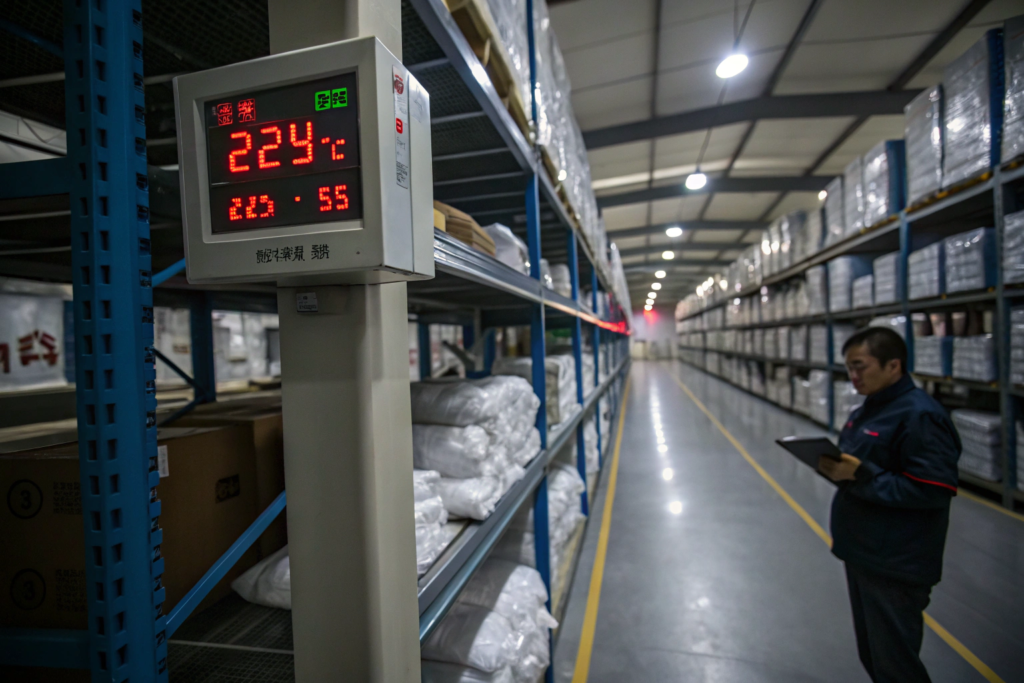
Heat is the universal accelerator of chemical reactions. For every 10 degrees Celsius increase in temperature, the rate of oxidation reactions roughly doubles. This means that storing white elastic hair bands at 35 degrees Celsius in a hot warehouse will cause them to yellow at least twice as fast as storing them at a controlled 22 degrees. We maintain our white goods storage zone at a constant 20 to 22 degrees Celsius. The relative humidity is kept between 40 and 55 percent. Below 40 percent, the air is too dry and can make some elastic fibers brittle. Above 55 percent, moisture accelerates additive migration and creates a risk of mold on any natural fiber components. We installed digital data loggers that record temperature and humidity every hour and send an alert if either parameter drifts out of range. This is not expensive equipment. It is a small investment that protects inventory worth thousands of dollars.
Why Must White Elastics Be Stored Away from Exhaust and Ozone Sources?
This is a tip that rarely appears in standard guides but is critical for factories and warehouses located in industrial zones. Ozone gas and nitrogen oxides are produced by electrical equipment, forklift exhaust, and even some air purification systems that use ionization. These gases are exactly the ones that trigger phenolic yellowing. A white elastic band stored in a warehouse corner near a forklift charging station will yellow much faster than an identical band stored in a sealed container across the room. I learned this when we traced a batch of yellowed bands back to a storage rack that happened to be near the warehouse air intake vent, which was pulling in outside air from a busy road. We relocated the white goods to an interior room with filtered air and no direct connection to vehicle exhaust. The yellowing problem on that batch stopped immediately. Seal your storage containers. Filter your warehouse air if possible. And never store white elastics near any source of combustion exhaust or high-voltage electrical equipment that generates ozone.
What Incoming Quality Control Tests Can Predict Yellowing Problems Early?
Waiting for a customer complaint to discover a yellowing problem is the most expensive way to find out. A small investment in incoming material testing and accelerated aging can catch a bad batch before it becomes a financial loss. We implemented a set of three quick tests that have saved us from multiple near-misses. These tests simulate months of storage in just a few days.
How Does the Courtaulds Phenolic Yellowing Test Work?
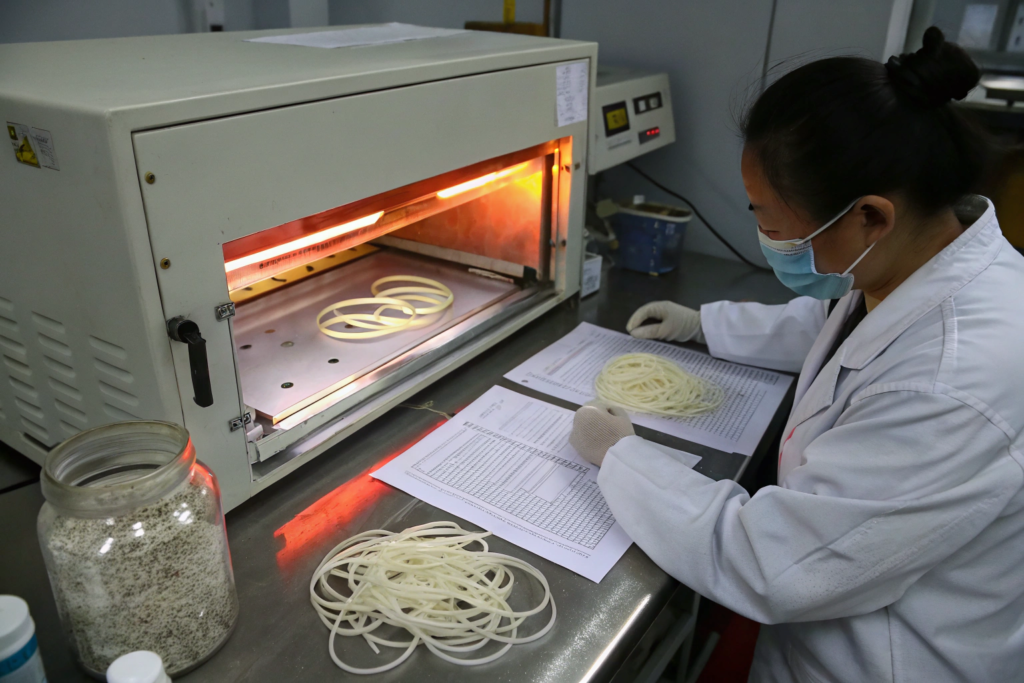
The Courtaulds test is the gold standard for predicting phenolic yellowing on white and pastel textiles. It is named after the British textile company that developed it. The test is simple in concept. A sample of the elastic is folded into a white test paper that has been impregnated with a controlled amount of a phenolic compound. This sandwich is wrapped in a polyethylene film and placed under a fixed weight in a laboratory oven at 50 degrees Celsius for 16 hours. After the test, the elastic sample is removed and compared to a standard grey scale to assess the degree of yellowing. A rating of 4 or above is generally considered acceptable for commercial white goods. We perform this test on every incoming batch of elastic before it enters our production line. If a batch scores below a 4, we reject it and return it to the yarn supplier. This test catches the phenolic antioxidant problem that is invisible to the naked eye in raw material form. The test method is standardized and you can find more about textile testing methodologies through organizations like AATCC.
What Does a UV Accelerated Aging Chamber Reveal About Long-Term Stability?
For UV-induced yellowing, we use a QUV accelerated weathering tester. This machine exposes elastic samples to intense ultraviolet light and cycles of condensation in a controlled chamber. A 72-hour QUV test cycle can roughly simulate months of indirect indoor light exposure. After the cycle, we check the sample for any visible yellowing and also test its mechanical stretch and recovery properties. A white elastic that turns yellow in the QUV chamber will certainly turn yellow on a retail shelf near a window. We also use this test to qualify new packaging materials. We place a white elastic sample inside a sample of the proposed polybag and put the entire sealed bag into the QUV chamber. If the elastic yellows inside the bag, either the bag is not UV-blocking enough or the bag material itself is causing the yellowing. This dual test catches packaging-material interactions before we commit to a bulk order of bags. More information on accelerated weathering standards can be found through ASTM International.
Conclusion
Avoiding yellowing on white elastic hair bands during storage is a matter of chemical understanding and environmental discipline. You must start with the right raw material specification, demanding a non-phenolic, low-yellowing antioxidant package from your elastic yarn supplier. You must package the finished bands in certified BHT-free polybags, ideally with a silica gel desiccant for moisture control. You must store the packaged goods in a cool, dry, dark environment, maintained at 20 to 22 degrees Celsius and 40 to 55 percent relative humidity, and absolutely away from any source of exhaust, ozone, or nitrogen oxide gases. Finally, you must verify these controls with incoming Courtaulds phenolic yellowing tests and UV accelerated aging tests before a bad batch ever leaves your factory.
These steps are not complicated, but they require consistency and a factory that treats white elastic products as a distinct category requiring special handling. A factory that throws white bands into the same storage rack as dark-colored polyester belts will eventually produce yellowed goods. The problem is entirely preventable, but prevention must be built into the system.
At AceAccessory, we maintain a dedicated white and light-colored accessories storage zone in our Zhejiang facility. Our packaging is audited and certified BHT-free. Our QC lab runs Courtaulds and QUV tests on every incoming elastic shipment. We treat your white elastic hair bands with the same care that a pharmaceutical company treats light-sensitive medicine. Because we know that a single yellowed band in a retail pack can destroy a customer's trust in your brand.
If you are sourcing white elastic hair bands and want a factory that understands the chemistry of material preservation, please reach out to us. We can share our full white goods handling protocol and test reports for your review.
To discuss your white elastic accessory project with a team that takes yellowing prevention seriously, please contact our Business Director, Elaine. You can reach her directly at elaine@fumaoclothing.com. Let us keep your white products brilliantly white.