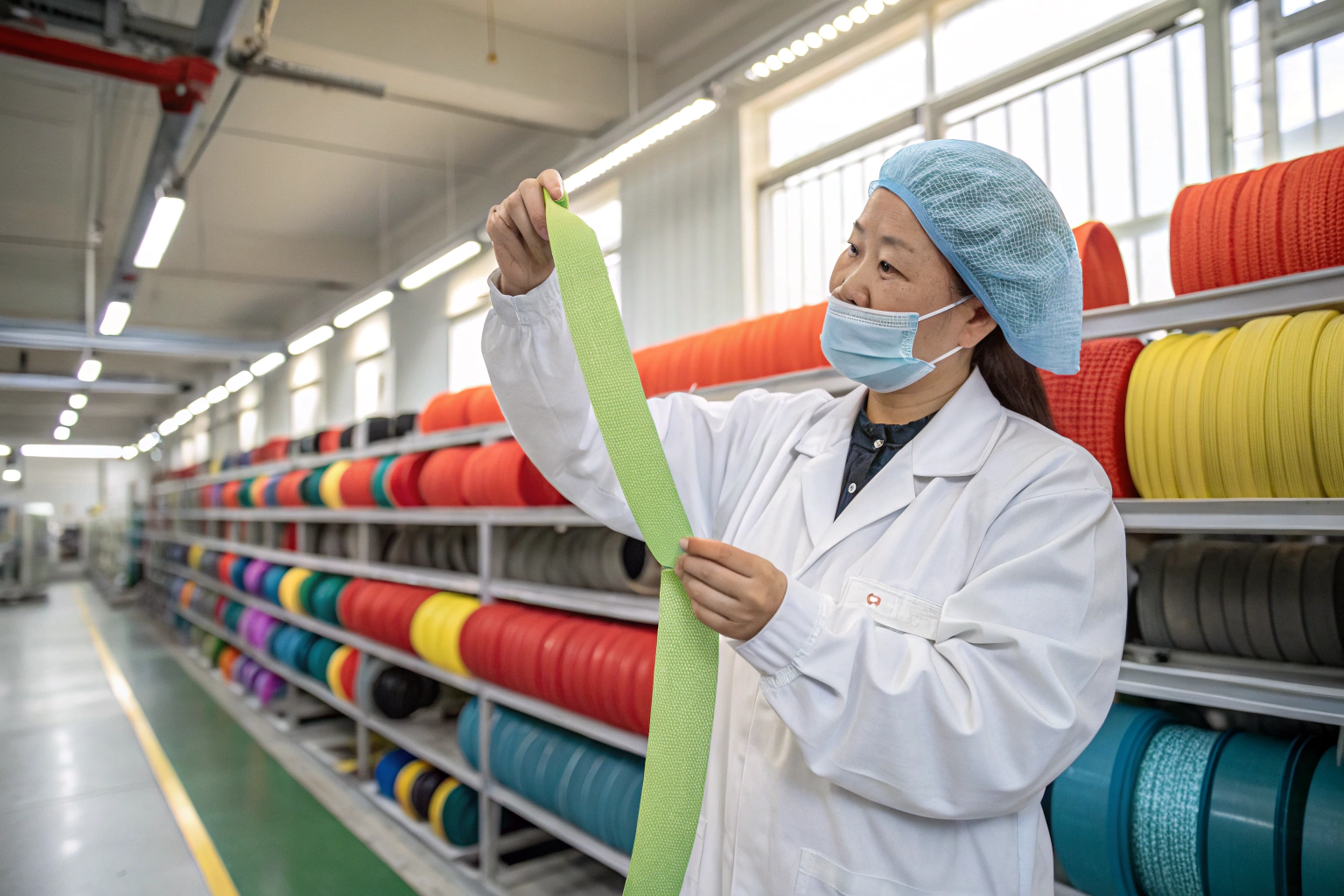
I still remember the email that made my stomach drop. A long-time client from a major American outdoor brand had just received their shipment of custom backpack straps. The quality of the nylon webbing looked perfect in every way, except for one. After just two weeks in a retail display window facing the sun, the vibrant navy blue had turned into a sad, purple-ish mess. They had to pull the entire line, and it cost them tens of thousands of dollars. That painful lesson taught me something I’ve never forgotten: when it comes to nylon webbing, what you can’t see at first glance is often what matters most.
That experience shaped how we approach sourcing at Shanghai Fumao Clothing. Durability and fade resistance aren’t just nice-to-have features. They are the foundation of your product’s reputation and your customer’s satisfaction. Whether you are sourcing webbing for pet collars, bag straps, belts, or outdoor gear, the material’s ability to withstand sun, stress, and time is what separates a premium product from a returns problem.
The good news is that sourcing high-quality, fade-resistant nylon webbing isn’t a mystery. It comes down to understanding a few key factors that happen long before the webbing ever reaches your production line. Let me walk you through exactly what I’ve learned to look for, and what you should demand from your suppliers.
What Type of Nylon is Best for Webbing Durability?
When clients ask me about webbing, they often assume all nylon is basically the same. That assumption can be an expensive mistake. In my years of sourcing materials for belts, bags, and outdoor accessories, I’ve learned that the type of nylon fiber used at the very beginning determines everything about the final product’s performance. It’s like building a house. You can have the most beautiful paint and finishing, but if the foundation is weak, the whole thing will eventually crumble.
The industry standard for high-performance webbing is nylon 6,6. I know that sounds like technical jargon, but here’s what it means for you and your customers. Nylon 6,6 has a higher melting point, better resistance to abrasion, and superior dimensional stability compared to standard nylon 6. When you’re making products that need to hold weight or endure constant use, like backpack straps or climbing gear, that difference matters. It’s not just about lasting longer. It’s about performing safely and reliably under real-world conditions. For a deeper dive into material selection, check out our section on what testing you should demand from your supplier.
Nylon 6 vs. Nylon 6,6: What’s the real difference for my products?
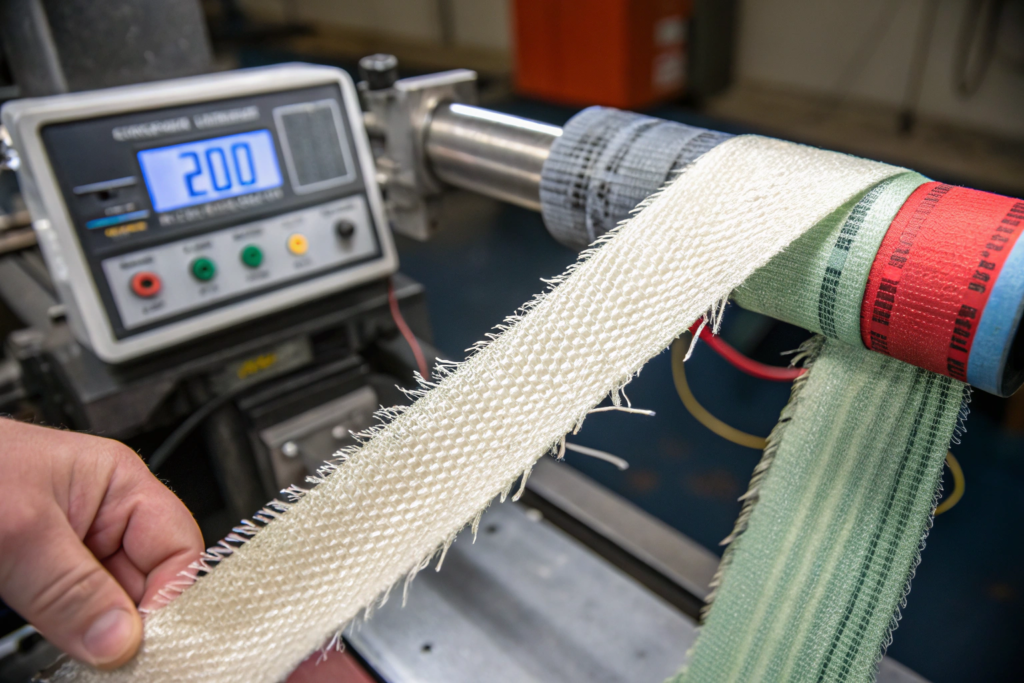
Let me break this down in practical terms. Standard nylon 6 is made from one type of chemical building block, while nylon 6,6 uses two different types that create a stronger molecular structure. Think of it like a chain. Nylon 6 has links all made from the same material, while nylon 6,6 alternates two different links that lock together more tightly. This makes the chain harder to break or deform.
For your products, this translates to several real benefits. Nylon 6,6 retains its shape better after repeated stress, meaning your belts won’t stretch out permanently after a few wears. It also withstands higher temperatures during washing or hot weather exposure. I always advise clients making products for outdoor use, military applications, or heavy-duty bags to specify nylon 6,6 from the start. Yes, it costs a bit more, but the reduction in warranty claims and customer complaints makes it worth every penny. For more detailed technical specifications, you can check resources from major fiber producers like INVISTA, who pioneered many of these nylon technologies.
How can I verify the nylon type my supplier is using?
This is where trust meets verification. Any supplier can tell you they’re using high-quality nylon 6,6. But how do you really know? At our factory, we don’t rely on promises. We use a simple but effective test called the melting point check. Nylon 6 melts at around 220°C, while nylon 6,6 melts at a significantly higher 260°C. Our quality control team regularly takes small samples from incoming webbing rolls and tests them with a calibrated heat source.
Beyond that, we require material certifications from our webbing suppliers. We demand documentation that traces the yarn back to its original manufacturer. If a supplier hesitates to provide this, that’s a red flag I’ve learned never to ignore. For your own verification, you can also request independent lab testing from firms like Intertek, who can perform spectroscopic analysis to confirm the exact polymer type. It’s an extra step, but for large production runs, it’s insurance against a catastrophic material failure.
What Makes Nylon Webbing Truly Fade-Resistant?
I once had a client in Florida who sourced beautiful red nylon dog collars from another supplier. Six months later, half his customers were complaining that their dogs looked like they were wearing pink collars. The Florida sun had simply destroyed the color. That client came to us looking for a solution, and what we discovered was that fade resistance isn’t just about the dye. It’s about the entire ecosystem of how color is applied and protected.
The truth is, all nylon webbing will eventually fade if left in direct sunlight long enough. But quality fade-resistant webbing can last years longer than cheap alternatives. The difference comes down to three things: the quality of the dye, the dyeing process itself, and any additional protective treatments applied after dyeing. When you’re sourcing for markets like the American Southwest or Australia, where UV exposure is intense, skimping on any of these three factors is a recipe for unhappy customers and returned products. Understanding the base material is the first step, which is why we discussed nylon types earlier.
Solution-dyed vs. piece-dyed: Which one lasts longer?
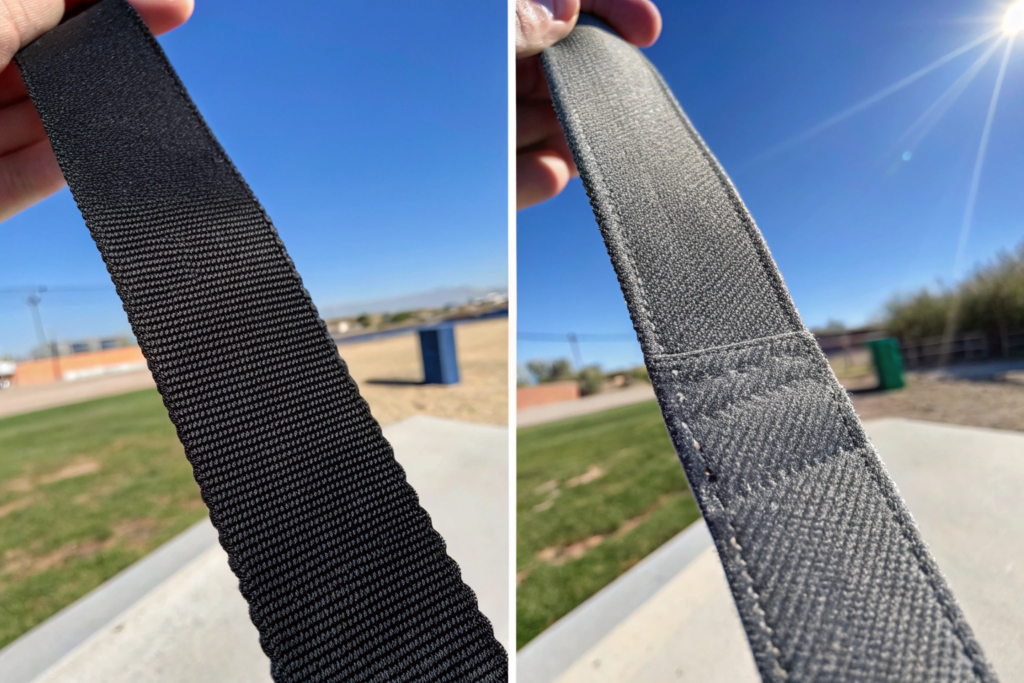
This is probably the single most important distinction in fade resistance. Most inexpensive webbing is piece-dyed, meaning it’s woven as white or natural webbing first, and then the color is added later by running it through a dye bath. The color sits mostly on the surface, like paint on a wall. Over time, UV light breaks down those surface dyes, and the color fades away.
Solution-dyed webbing is completely different. With this method, the color pigment is added to the liquid nylon polymer before it’s even spun into fibers. The color becomes part of the fiber itself, all the way through, like a carrot that’s orange from the inside out. When UV light hits solution-dyed webbing, it can only affect the very outer surface. The color underneath remains vibrant. For products that live outdoors, like boat straps, camping gear, or patio furniture, solution-dye is the only choice that makes sense. Major chemical companies like Clariant produce masterbatches specifically designed for this application.
What UV stabilizers actually work for outdoor webbing?
Dye method is half the battle. The other half is protection. Nylon itself can be degraded by UV light, even if the color remains stable. That’s why professional-grade outdoor webbing includes UV stabilizers mixed into the polymer. These additives act like sunscreen for the fibers, absorbing or blocking harmful radiation before it can break down the molecular structure.
There are different classes of UV stabilizers, and the best ones for nylon are typically Hindered Amine Light Stabilizers (HALS). They don’t just absorb UV light; they actually neutralize the free radicals that UV creates, stopping the degradation process at a chemical level. When I’m sourcing webbing for clients who need guaranteed outdoor performance, I always ask our suppliers for the specific UV additive package they’re using and request test data showing retention of strength after accelerated weathering. Organizations like ASTM International have standard test methods like G154 for UV exposure that give you objective data to compare different materials.
How Do Construction and Weave Affect Webbing Strength?
I learned about the importance of webbing construction the hard way. A few years ago, we produced a beautiful line of fashion belts for a European client. The color was perfect, the feel was soft, and the price was right. Three months later, we started getting photos back from the client. The edges of the belts were fraying, and in some cases, the webbing was literally unraveling at the buckle. We had chosen a webbing that looked great but wasn’t constructed to handle the stress of daily wear and repeated buckling.
That experience taught me that you can’t judge webbing by appearance alone. The way the fibers are woven together, the density of the weave, and how the edges are finished all determine whether a product will last for years or fail in months. When you’re holding two pieces of black webbing side by side, they might look identical. But under load, or after months of use, their true quality becomes obvious. Understanding construction is how you spot the difference before it costs you money. Just like with fade resistance, the details you can’t see are what matter most.
What is the difference between tubular and flat webbing?
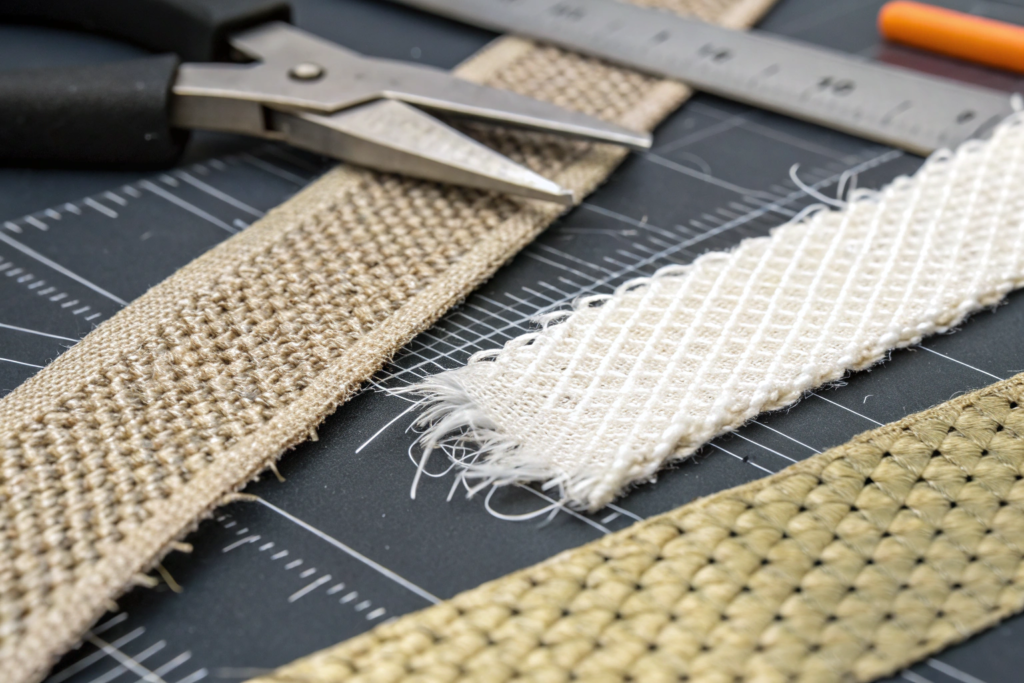
This is a fundamental distinction that affects both strength and application. Flat webbing is woven in a single layer, like a very strong piece of fabric. It’s what most people picture when they think of webbing. It’s great for applications where you need rigidity and minimal stretch, like backpack straps, belts, or tie-downs.
Tubular webbing is woven as a tube, creating a hollow center. This construction gives it unique properties. It’s thicker and more comfortable in the hand, which is why it’s often used for climbing slings and dog leashes. The tubular shape also absorbs shock better than flat webbing. However, it’s more complex to manufacture consistently. The weave must be balanced perfectly around the tube, or the webbing will twist and buckle under load. For critical safety applications like climbing or rescue equipment, tubular webbing certified to UIAA standards is non-negotiable. Organizations like the UIAA set the global standards for mountain equipment, and their certification marks are worth understanding.
How does edge sealing prevent webbing from fraying?
This is one of those details that separates premium manufacturers from commodity producers. When you cut a piece of woven webbing, you’re essentially cutting through thousands of individual fibers. Those cut ends will naturally want to unravel over time. The solution is edge sealing, and there are different ways to do it.
The cheapest method is simply using a hot knife to cut the webbing, which melts the cut ends together slightly. This works for basic applications but isn’t very durable. A better method is ultrasonic cutting, which uses high-frequency vibrations to simultaneously cut and weld the fibers together, creating a cleaner, stronger seal. The best method, for truly high-end products, is to specify webbing with woven edges, where the edges are finished during the weaving process itself and never cut at all. This adds cost, but for products where appearance and durability are paramount, it’s worth it. For technical insights into textile finishing, publications like Textile World regularly cover advances in weaving and finishing technology.
What Testing Should I Demand From My Webbing Supplier?
Here’s something I’ve learned after two decades in this business: the suppliers who hesitate to provide test data are usually the ones with something to hide. When a potential client asks me about our webbing’s performance, I don’t get defensive. I get excited. Because I know we have the data to back up our claims. Testing isn’t an obstacle to doing business. It’s the foundation of a trusting, long-term relationship.
The accessories market has become incredibly competitive. Your customers are more informed than ever, and they expect products that perform. If you’re selling bags, belts, or outdoor gear made with our webbing, your reputation is on the line every time someone buys one. That’s why we’ve invested in comprehensive testing protocols that go far beyond what most suppliers offer. We don’t just guess whether our materials will hold up. We prove it, with numbers and standards that matter to your market. This commitment to verification is why we recommend reviewing our thoughts on how to balance cost with quality as part of your sourcing strategy.
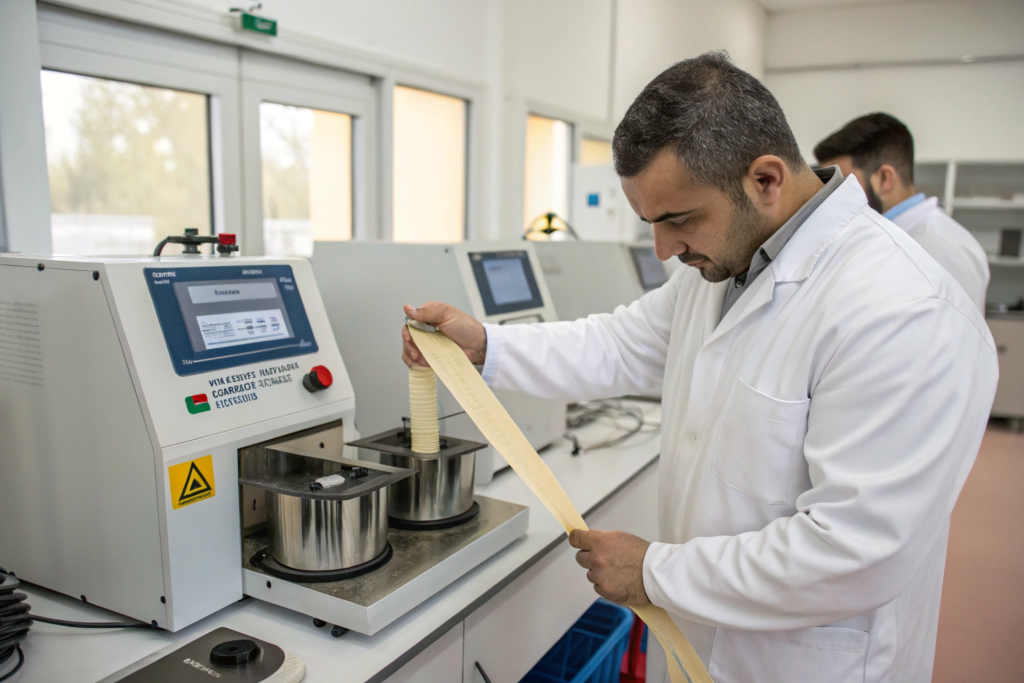
Which ASTM or ISO standards apply to nylon webbing?
This can feel overwhelming at first, but it’s actually quite straightforward once you know what to look for. For tensile strength, which measures how much force the webbing can withstand before breaking, ASTM D6775 is the standard test method. For abrasion resistance, which tells you how well the webbing will survive rubbing against rough surfaces, ASTM D3884 or D4966 are commonly used.
For colorfastness, which is directly related to fade resistance, you’ll want to look at AATCC Test Method 16, which measures color change after exposure to light. There are different options within this standard, including xenon-arc lamp exposure that simulates sunlight. The highest ratings, like a Class 5 or 4-5 after 40 or 80 hours of exposure, indicate excellent fade resistance. For European markets, ISO 105-B02 is the equivalent standard. Understanding these references lets you have an informed conversation with any supplier. The AATCC website is an excellent resource for understanding textile testing standards.
What do real UV test reports actually tell me?
A test report is only useful if you know how to read it. I’ve seen suppliers produce beautiful-looking certificates that actually prove very little. Here’s what I look for. First, I check which standard was used and whether it’s the current version. Then I look at the exposure duration. A test that only runs for 20 hours tells me almost nothing about real-world performance. For outdoor products, I want to see 100, 200, or even 500 hours of testing.
Next, I look at the grading scale. Most colorfastness tests use a blue wool scale or a gray scale, rating from 1 (terrible) to 5 (excellent). A rating of 4 or higher after significant exposure is what I consider acceptable for quality products. Finally, I check the lab that performed the test. Was it an in-house test, which can be biased, or was it done by an independent third-party lab like Bureau Veritas or SGS? Independent verification gives me much more confidence. For connecting with accredited testing labs globally, the International Laboratory Accreditation Cooperation provides directories of recognized facilities.
How Can I Balance Cost With Quality For My Webbing Needs?
Let’s be realistic. Everyone wants the best quality at the lowest price. That’s business. But after thousands of orders and countless conversations with buyers like Ron, I’ve learned that the cheapest webbing is almost never the most profitable in the long run. The real art of sourcing is finding the sweet spot where quality, performance, and price align with your specific market and customer expectations.
I’m not here to tell you to always buy the most expensive option. That would be foolish. If you’re making promotional items that will be used once and thrown away, premium solution-dyed webbing with UV stabilizers is overkill. But if you’re building a brand reputation on quality and durability, cutting corners on webbing is one of the worst places to save money. The key is matching the material to the application, and that’s where experienced guidance makes all the difference.

What is the real cost of cheap webbing over time?
This is a calculation I wish more buyers would do. Let’s say you save $0.50 per unit by sourcing cheaper webbing. On an order of 10,000 units, that’s $5,000 in immediate savings. It looks great on your P&L for that quarter. But what happens next?
If just 5% of those products fail due to fraying, fading, or breaking, that’s 500 customer complaints. Each complaint costs you time to handle, potentially a refund or replacement, and maybe even free shipping on the next order. That $0.50 savings evaporates quickly. More importantly, each of those 500 customers now has a negative impression of your brand. They might not buy from you again, and they might tell their friends. That lost future revenue is invisible on your spreadsheet, but it’s very real. For perspective on how quality impacts brand perception, resources like Qualtrics XM Institute offer research on customer experience economics.
How can I get premium quality without paying premium prices?
This is the million-dollar question, and the answer lies in partnership, not transaction. At Shanghai Fumao Clothing, we work with our clients to optimize specifications without compromising performance. Maybe you don’t need the absolute highest grade of UV stabilizer if your products are mostly used indoors. Maybe you can accept a slightly lower colorfastness rating for a seasonal color that won’t be in production long enough to fade.
The other strategy is combining orders. If you need multiple colors or widths, consolidating them into one production run with a single webbing supplier can reduce costs significantly. Our project managers are experts at finding these efficiencies. We know which webbing mills offer the best value for specific applications, and we pass that knowledge on to you. It’s not about finding a magic discount. It’s about smart, strategic sourcing that delivers real value. Industry publications like Just Style regularly cover sourcing strategies and supply chain optimization that can inform your approach.
Conclusion
Sourcing durable, fade-resistant nylon webbing isn’t complicated, but it does require attention to details that many buyers overlook. From the molecular structure of nylon 6,6 versus nylon 6, to the difference between solution-dyed and piece-dyed color, to the construction methods that prevent fraying, every choice you make ripples through to your customer’s experience. Testing standards from organizations like ASTM and AATCC give you objective tools to evaluate suppliers, but only if you know what to look for on the reports.
The suppliers who hesitate to provide material certifications, avoid discussing UV stabilizers, or can’t explain their edge finishing methods are telling you something important. Listen to them. The best partnerships are built on transparency, with suppliers who invite your questions and provide verifiable data. That’s the approach we’ve built our business on, because we know that your success is ultimately our success.
If you’re planning a new product line that requires webbing, whether for belts, bags, pet products, or outdoor gear, I’d welcome the chance to show you how our experience can help you avoid the costly mistakes I’ve learned from over the years. Please reach out to our Business Director, Elaine, at elaine@fumaoclothing.com to discuss your specific needs and see how we can build something great together.