Last winter, I had a buyer reach out to me in October. He wanted a standard cotton bucket hat. I told him, "It’s almost November. Your customers are freezing. You need fleece lining." He hesitated, stuck to his cotton plan, and his reorder rate was flat. Meanwhile, another client of mine doubled down on sherpa and faux fur linings and sold out before Christmas. The trend cycle for winter accessories is brutal and fast. If you are sourcing now for the 2026 season, you cannot rely on last year’s data. The fear of ordering 10,000 units of a style that feels "so 2024" is real. You need to know what fabrics, colors, and silhouettes will move the needle with cold-weather shoppers next year.
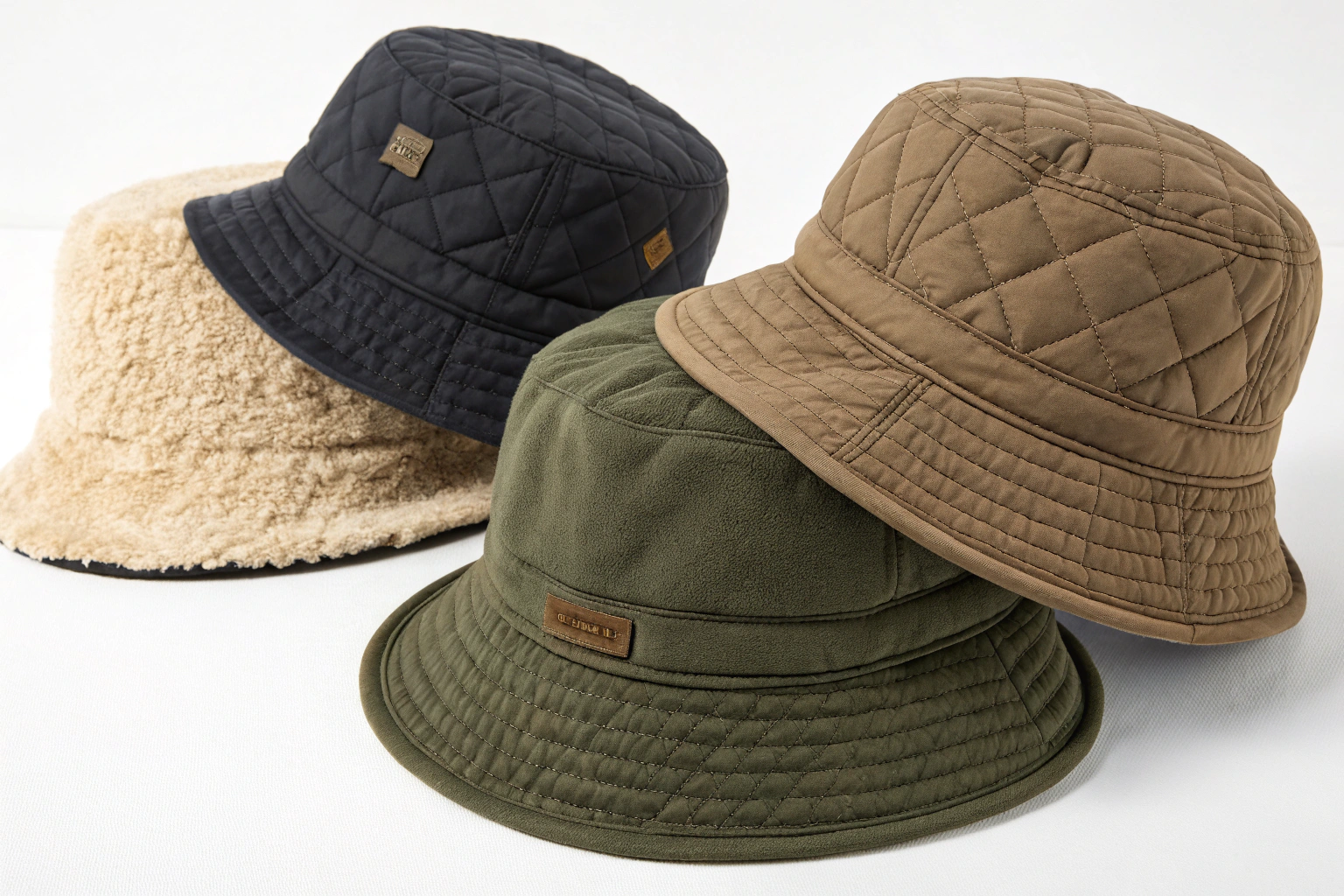
The dominant 2026 winter bucket hat trends for fleece lined styles point toward hybrid utility aesthetics, sustainable teddy textures, and deep, muted "forest core" color palettes. Key features include reversible designs with quilted nylon exteriors, extended ear flaps that tuck away, and the use of recycled sherpa fleece. The classic 90s shape remains, but the material story has shifted dramatically toward tactile comfort and visible warmth technology.
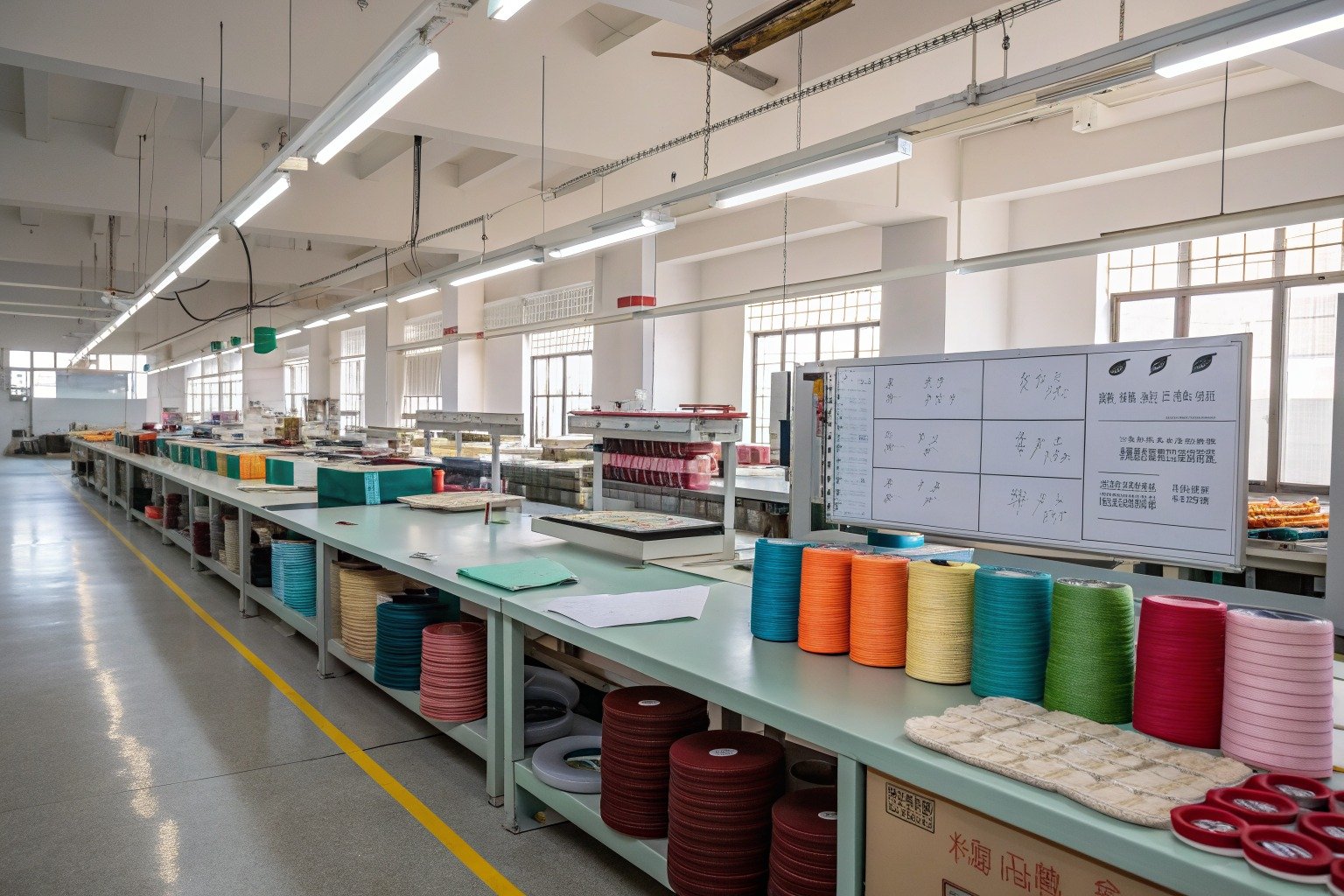
I run AceAccessory in Zhejiang Province. We supply headwear to brands that need to be ahead of the curve. Our design team doesn’t just look at what sold last month. We look at fabric mills’ innovation pipelines, color forecasting services like WGSN, and the early signals from streetwear culture in Tokyo and Seoul. For winter 2026, the bucket hat is not going away. But the cheap, thin versions are. The customer wants a bucket hat that feels like a hug for their head. Let me break down the exact materials, colors, and construction details you need to know to build a winning fleece-lined assortment for the upcoming cold season.
Why Is Fleece Lining Essential for the 2026 Winter Bucket Hat Market?
The days of selling a single-layer canvas bucket hat in December are over. The consumer has evolved. They expect their accessories to perform. A fleece lining transforms a fashion item into a functional piece of winter gear. It changes the value proposition entirely. You are no longer just selling a shape. You are selling warmth, comfort, and wind resistance.
From a manufacturing perspective at AceAccessory, adding a fleece lining increases the cost of goods sold by about 20-30%. But the perceived value and the retail price can jump by 50-100%. A basic unlined hat might retail for $28. A sherpa-lined version easily commands $48 to $55. The math works in your favor as a brand owner. The margin expansion covers the extra material and labor cost and leaves you with more profit per unit.
Moreover, the 2026 trend data we are seeing shows a strong consumer shift toward "comfort core" dressing. People want to feel cocooned. A bucket hat with a thick, soft lining delivers that sensory experience. It is the accessory equivalent of wearing a plush robe. If your winter 2026 line doesn’t have a tactile, cozy story, you are leaving money on the table. This is especially true for markets in the Northern US, Canada, and Northern Europe where our knit hats and winter accessories are in high demand.
What Are the Performance Benefits of Sherpa vs Polar Fleece Linings?
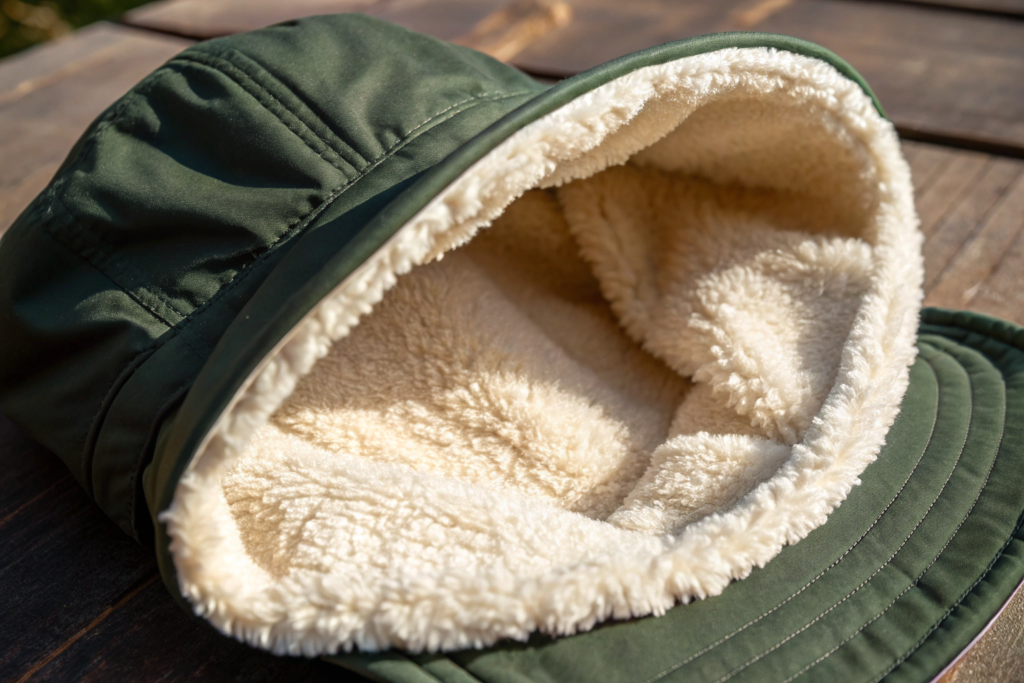
Not all fleece is created equal. The choice of lining material dictates the hat’s weight, warmth level, and aesthetic. For 2026, we are seeing two distinct paths at AceAccessory.
| Feature | Sherpa Fleece | Polar Fleece (Microfleece) |
|---|---|---|
| Texture | Lofty, curly, high-pile. Looks like sheepskin. | Smooth, flat, dense knit face. |
| Warmth | Very High. Traps significant body heat. | Medium-High. Good wind resistance. |
| 2026 Trend Vibe | Apres-Ski / Cozy Cabin. Heavyweight statement piece. | Urban Tech / Minimalist. Lightweight and packable. |
| Bulk | Adds significant volume to hat. | Adds minimal bulk. |
| Sustainability | High demand for Recycled Polyester Sherpa. | High availability of Recycled Polar Fleece. |
Sherpa is the winner for the 2026 trend cycle. It photographs beautifully on Instagram. It has that "touch me" appeal that drives e-commerce conversion. However, Polar Fleece is better for a more structured, city-ready look or for brands focusing on lightweight travel gear. At AceAccessory, we can source both. The key is to match the lining to the outer fabric. A heavy waxed canvas exterior needs a thick Sherpa lining. A lightweight recycled nylon exterior pairs better with a smooth Polar Fleece. This combination of fabric technology is what separates a premium product from a commodity.
How Does Fleece Lining Affect Sizing and Pattern Grading?
This is a technical detail that trips up new buyers. You cannot just take a standard summer bucket hat pattern and sew a fleece lining inside it without adjustment. The lining takes up internal volume. If you don’t enlarge the crown circumference slightly, the hat will fit too tight and sit too high on the head.
At AceAccessory, when we develop a fleece-lined style, our pattern maker adds approximately 0.5cm to 1cm of ease to the crown diameter and slightly deepens the crown height. This accounts for the "loft" or thickness of the fleece. This is especially critical for Reversible Bucket Hats. If the hat is designed to be worn inside out (fleece on the outside), the sizing must work for both configurations. This requires precise pattern engineering and multiple fitting sessions on head forms. We have a library of graded patterns for lined headwear . This allows us to skip the trial-and-error phase and get your samples right the first time, saving you weeks in the development calendar.
What Are the Dominant Color Trends for Fleece Lined Hats in 2026?
Color is the fastest way to signal a new season. For Winter 2026, the bright, candy-colored dopamine dressing of 2023 is fading. The palette is grounding itself. Think of colors you find on a hike in the Pacific Northwest in late autumn. Deep, mineral-rich tones mixed with comforting, food-inspired neutrals.
At AceAccessory, our design team has identified three core color stories for fleece-lined bucket hats based on fabric mill forecasts and early brand adoptions.
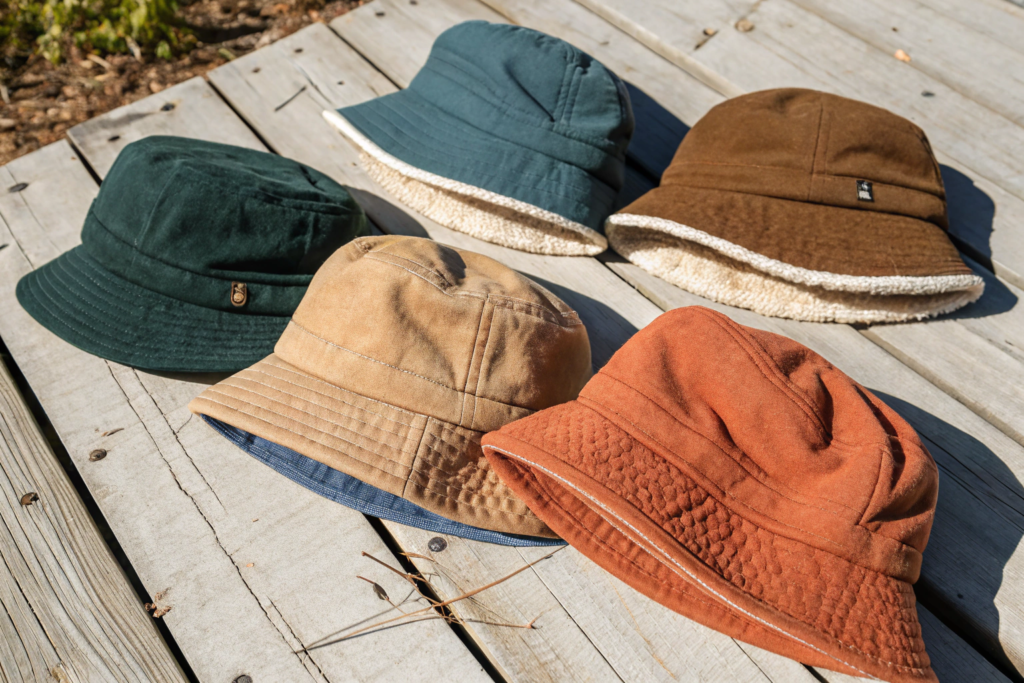
The first story is "Forest Bathing." These are deep greens like Spruce, Loden, and Dark Moss. These colors work exceptionally well with natural fiber exteriors like cotton twill or recycled nylon. They appeal to the outdoor lifestyle consumer.
The second story is "Earthy Gourmand." These are warm, delicious browns and creams. Think Espresso Bean, Toasted Oat, and Maple Sugar. These colors are incredibly versatile and pair well with the neutral winter coats everyone already owns (camel, black, gray). This is the safest volume driver for a brand like Ron’s.
The third story is an unexpected pop of "Digital Twilight." While the base is earthy, the accent colors come from the screen. Colors like Digital Lavender (a grayed purple) and Sunset Coral provide a modern contrast that keeps the collection from feeling too rustic. This is the colorway that gets featured in fashion editorial spreads.
Which Earth Tones and Neutrals Will Drive Volume Sales?
If you are placing a large order for a major retailer or online marketplace, you need to anchor your buy in commercial neutrals. These are the colors that customers buy without overthinking. For Winter 2026, the specific shades we are recommending to our volume clients are shifting slightly.
- Move away from: True Black and Bright White. (They feel harsh against the soft texture of fleece).
- Move toward: Espresso Brown and Birch Cream. A dark brown bucket hat with a cream sherpa lining is an incredibly rich, expensive-looking combination. It has replaced black as the new default dark neutral.
- Core Grey: Not just any grey. Flint Grey (a mid-tone with warm brown undertones). It bridges the gap between black and beige perfectly.
Here is a suggested volume buy ratio for a 10,000-piece order of a single style:
- 40% Espresso Brown: The new black.
- 30% Toasted Oat / Birch Cream: The light neutral staple.
- 20% Deep Forest Green: The seasonal color that still sells through.
- 10% Accent Color (e.g., Digital Lavender): For window displays and social media.
This mix ensures you are not stuck with a warehouse full of a weird seasonal color that doesn’t move. It balances safety with trend relevance. We help our clients at AceAccessory select from our stock colors to hit these exact ratios without paying custom dye minimums.
How Are Bold Accent Colors Used in 2026 Fleece Styles?
The use of bold color in 2026 is more strategic. It is not about making the whole hat neon green. It is about contrast detailing. The most compelling designs we are sampling for clients right now feature:
- Contrast Binding: The edge tape around the brim is in a bright pop color while the crown is neutral.
- Reversible Color Blocking: The nylon exterior is a deep Spruce Green, but when you reverse it, the sherpa lining is a vivid Mandarin Orange.
- Shock Cord Accents: The drawstring toggle on an adjustable bucket hat is in a fluorescent color.
This approach allows the hat to read as a premium neutral piece from a distance, but upon closer inspection, it reveals a fashion-forward detail. This is exactly the kind of design nuance that allows a brand to sell a fashion accessory at a higher price point. It signals design intention.
What Are the Key Silhouette and Construction Updates for 2026?
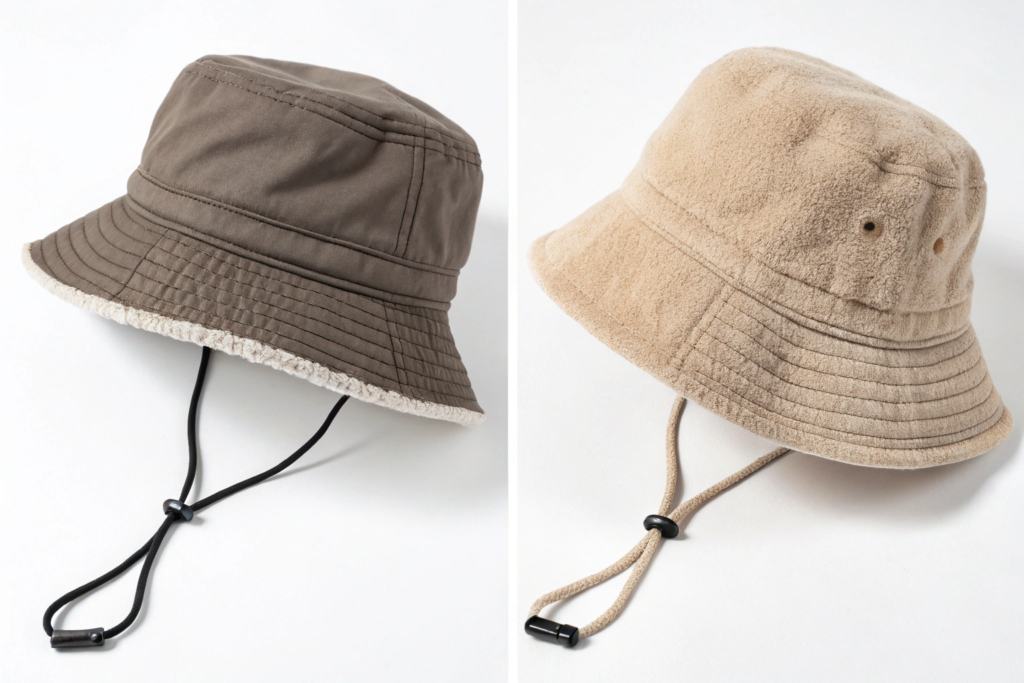
The bucket hat silhouette is evolving. The super shallow, tiny-brimmed styles that barely stayed on your head are fading. The 2026 shape is more substantial and functional. The crown is getting slightly deeper. This provides better coverage for the ears and a more secure fit, which is essential when you add the weight of a sherpa lining.
We are also seeing a strong move toward convertible features. The modern consumer wants one hat to do multiple jobs. This is why we are developing styles with snap-up brims (allowing the wearer to fold the brim up for a "fisherman" look) and hidden ear flaps. These flaps are sewn into the lining and can be pulled down on a windy chairlift, then tucked back inside the hat when you walk into the lodge.
Another key update is the brim stiffener. For fleece-lined hats, the weight of the lining can sometimes make the brim collapse and look sloppy. For 2026, we are using a slightly heavier interfacing or a sew-in plastic wire in the brim edge. This allows the wearer to shape the brim to their liking—curved down for rain protection or flipped up for a retro look. This wire detail adds a perception of quality and justifies the premium price point of a winter hat .
Why Is the Deeper Crown Silhouette Trending for Winter Headwear?
The deeper crown is not just a fashion choice. It is a functional response to consumer feedback. Standard summer bucket hats often measure around 8-9cm in crown height. For winter 2026, we are grading patterns to 10-11cm. Here is why this matters:
- Ear Coverage: The deeper crown sits lower on the head, covering the tips of the ears without needing a separate ear flap. This provides passive warmth.
- Accommodates Hair: This is a huge selling point. Customers with thick, curly, or textured hair struggle with shallow hats that perch on top of their head. A deeper crown fits over the hair, not just on top of it. This inclusivity in sizing expands your market reach significantly.
- Proportional Balance: A thicker, fleece-lined hat needs more visual height to balance the bulk of the lining. A shallow crown with thick fleece looks like a mushroom. A deep crown with thick fleece looks like a stylish, cozy beanie-bucket hybrid.
When we make samples for clients, I always advise going with the deeper block unless there is a specific vintage reason to stay shallow. The feedback from wear-testers is universally positive for the deeper fit in winter fleece hats .
What Role Does Quilted and Recycled Nylon Play in Exterior Fabrics?
The exterior fabric is just as important as the lining. For 2026, Quilted Nylon is the breakout star. It provides a puffy, textured look that visually communicates warmth. More importantly, it is almost always made from Recycled Nylon (ECONYL or similar). This allows brands to tell a sustainability story.
A quilted nylon exterior with a sherpa lining is the perfect storm of 2026 trends. It looks technical. It feels cozy. It has eco-credentials. We are running this combination for several clients right now. The construction involves sewing the quilt lines first, then cutting the pattern pieces, then assembling the hat. This requires careful pattern matching at the seams to ensure the quilt lines up, which is a hallmark of a well-made fashion accessory .
Another key exterior is Waxed Cotton Canvas. This gives a heritage, outdoorsy look. When paired with a plaid flannel lining or a sherpa lining, it appeals to the "Gorpcore" aesthetic that remains strong for Winter 2026. The key update here is organic or BCI cotton certification, which we can provide at AceAccessory.
How to Source High-Quality Fleece Lined Bucket Hats for 2026?
Knowing the trends is one thing. Getting them manufactured correctly is another. Sourcing a high-quality fleece-lined bucket hat requires a different level of scrutiny than a simple summer cap. The construction is more complex because you are dealing with two layers of fabric that behave differently. The outer nylon might be slippery. The inner fleece is stretchy and bulky. Sewing them together without puckering or twisting requires skill and the right machinery.
At AceAccessory, we use walking foot industrial sewing machines for these styles. This type of machine feeds both the top and bottom layers of fabric evenly, preventing the dreaded "nylon bubble" where the outer shell sags away from the lining. You should ask your potential supplier what kind of machines they use for bonded or lined hats. If they don’t know what a walking foot is, they are probably not a dedicated headwear factory.
You also need to verify the fleece weight. Fleece is measured in GSM (grams per square meter). A cheap, thin fleece is 180-200 GSM. It feels like a cheap blanket. For a premium 2026 winter hat, you want Sherpa at 500-600 GSM or Polar Fleece at 300-350 GSM. We provide GSM specs on all our tech packs. This is an objective measure of quality. Don’t just ask for "thick fleece." Ask for the GSM.
What Quality Control Checks Are Critical for Lined Hats?
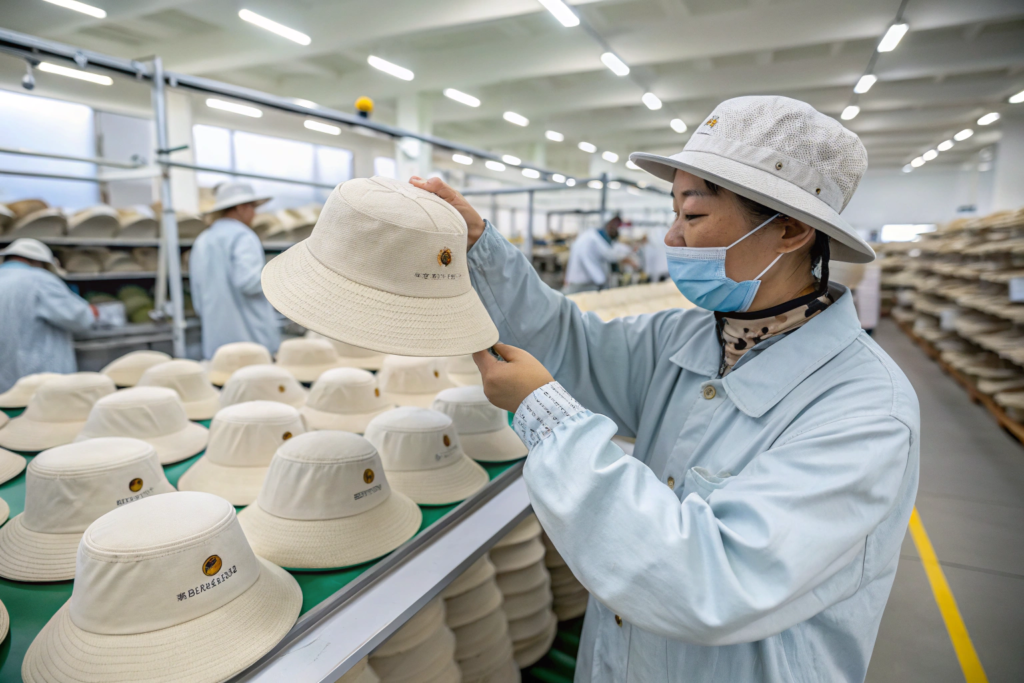
When you are buying lined hats, you are buying a hidden layer. You cannot see the quality of the lining from the outside. This is where a factory’s integrity comes in. At AceAccessory, our QC checklist for fleece-lined bucket hats includes specific points that you should ask about.
| Check Point | Standard | Common Defect |
|---|---|---|
| Lining Twist | Lining seams must align with exterior seams within 0.5cm. | Lining twisted inside, causing hat to sit crooked on head. |
| Brim Roll | Fleece should not be visible from the outside when hat is worn normally. | Lining "peeking out" because it was cut too long or sewn with too much slack. |
| Fleece Shedding | Minimal fiber loss after 3 vigorous shakes. | Cheap sherpa sheds microfibers all over customer’s hair. |
| Reversible Zipper/Closure | Zipper or snap must function smoothly from both sides. | Zipper catches on the thick fleece layer. |
We do a 100% inline inspection on these points. For a complex lined style, we do not wait until the end of the line to check quality. The project manager checks the first 5 pieces off the sewing line every morning to ensure the operator’s tension and alignment are correct. This prevents a whole day’s production from being defective. This is the kind of quality control rigor you need for a premium winter product.
How Does Material Sourcing Impact Lead Times for Winter 2026?
If you want these hats on the shelf by September 2026, you need to place your orders with the factory by May or June 2026. Why? Because the specialized fabrics take time. Quilted recycled nylon is not a stock fabric in most markets. We have to order it from specific mills. The lead time for custom-dyed sherpa fleece can be 25-30 days just for the fabric to arrive at our factory.
Here is a realistic reverse timeline for a Fall/Winter 2026 delivery:
- April 2026: Finalize designs and colors. Place fabric orders.
- May 2026: Fabrics arrive. Cutting and sewing begin.
- June 2026: Pre-production samples ready for approval.
- July 2026: Bulk production completed.
- August 2026: Ocean freight departure from Shanghai/Ningbo.
- September 2026: Goods arrive at US warehouse. Ready for retail.
Waiting until July to order means you are shipping by expensive Air Freight or missing the first cold snap. We work with our clients to manage this production timeline proactively. The earlier we lock in the fabric reservation, the smoother the process.
Conclusion
The 2026 winter bucket hat market is defined by a shift toward substance over surface. Consumers are looking for accessories that provide tangible comfort, warmth, and versatility. The fleece-lined bucket hat answers that demand perfectly. By focusing on the right materials—high-GSM sherpa, recycled quilted nylon, and earthy, grounding colors—you position your brand as a premium player in a crowded market. The updates to silhouette, particularly the deeper crown and convertible features, address real customer pain points and drive sell-through.
Sourcing these styles requires a manufacturing partner who understands the technical challenges of lined headwear. From pattern grading that accounts for fleece loft to walking foot sewing machines that prevent twisting, the details in production are what separate a $15 hat from a $50 hat. As you plan your buys for the coming cold season, remember that the investment in quality materials and construction pays off in higher retail prices, better margins, and stronger customer loyalty.
You don’t want to be the buyer stuck with thin, unlined hats while your competitor’s sherpa styles fly off the shelf. The time to act on 2026 trends is now, while fabric mills still have capacity and production slots are open.
If you are ready to develop a private label fleece-lined bucket hat program for Winter 2026, we can help you navigate the material options, color trends, and production timeline. Contact our Business Director, Elaine. She can provide you with our current swatch cards for sherpa and recycled nylons. Email Elaine at: elaine@fumaoclothing.com