Color fastness testing is essential for shawl makers and brands to guarantee product quality, keep customers happy, and meet international standards. Shawls often encounter challenges like sunlight, sweat, rubbing, and washing, which can lead to color bleeding or fading. Using our thorough testing methods designed for luxury shawls, we’ve created step-by-step ways to check and ensure color stays stable across different materials and dye techniques.
Testing shawl color fastness uses standard lab procedures to check how well colors hold up against washing, rubbing, sunlight, sweat, and other conditions. These tests use controlled settings, special equipment, and objective measurements. This scientific method turns subjective color checks into measurable quality standards that show how the shawl will perform in real life.
Proper color fastness testing uses several test types to mimic different wearing and care situations. Let’s look at the specific methods that help keep shawl colors bright and stable throughout their lifespan.
Why Is Testing the Color Fastness of a Shawl Necessary?
Color fastness refers to the ability of a fabric’s color to resist fading or transferring under external factors such as washing, light, friction, and perspiration. For shawls—often made of delicate materials like cashmere, silk, or wool, and used in close contact with skin or other clothing.
Fading from sunlight or washing can ruin the shawl’s appearance, reducing its value and lifespan.Color transfer (e.g., dye bleeding onto skin or light-colored clothes during wear or washing) may cause stains or even skin irritation for sensitive users.Thus, testing color fastness is essential to ensure the shawl’s quality, user safety, and compliance with industry standards.
What are the key methods and procedures for testing the colorfastness of shawls?
Washing fastness tester (or a standard household washing machine equipped with precise temperature control capabilities, allowing for accurate simulation of various washing conditions such as cold, warm, and hot water cycles), detergent (conforming to ISO 105-C01 standards, ensuring consistency in composition and performance for reliable testing results), white adjacent fabric (e.g., cotton or wool,carefully selected to be free of pre-existing stains or dyes that could interfere with color transfer assessment,to check for any unwanted color migration from the test fabric during washing), and a gray scale for color change/transfer assessment,designed to visually compare and quantify the degree of color alteration or transfer on both the test fabric and the adjacent white fabric post-washing).
What are consumer practical tips?
Dampen a white cloth with cold water and gently rub a small, hidden area of the shawl.Place a small part of the shawl in direct sunlight for 2-3 days and compare it to the unexposed part. Significant fading indicates poor light fastness.Rub a dry/wet white cloth against the shawl’s surface. Visible color on the cloth means low rubbing fastness.Place a small part of the shawl in direct sunlight for 2-3 days and compare it to the unexposed part. Significant fading indicates poor light fastness.
Rub a dry/wet white cloth against the shawl’s surface. Visible color on the cloth means low rubbing fastness.In summary, testing color fastness is a critical step to ensure a shawl’s quality and usability. By following standardized procedures (as evidence) or simple at-home checks, consumers and manufacturers can avoid the risks of fading or color transfer, ensuring the shawl remains both aesthetically pleasing and functional.
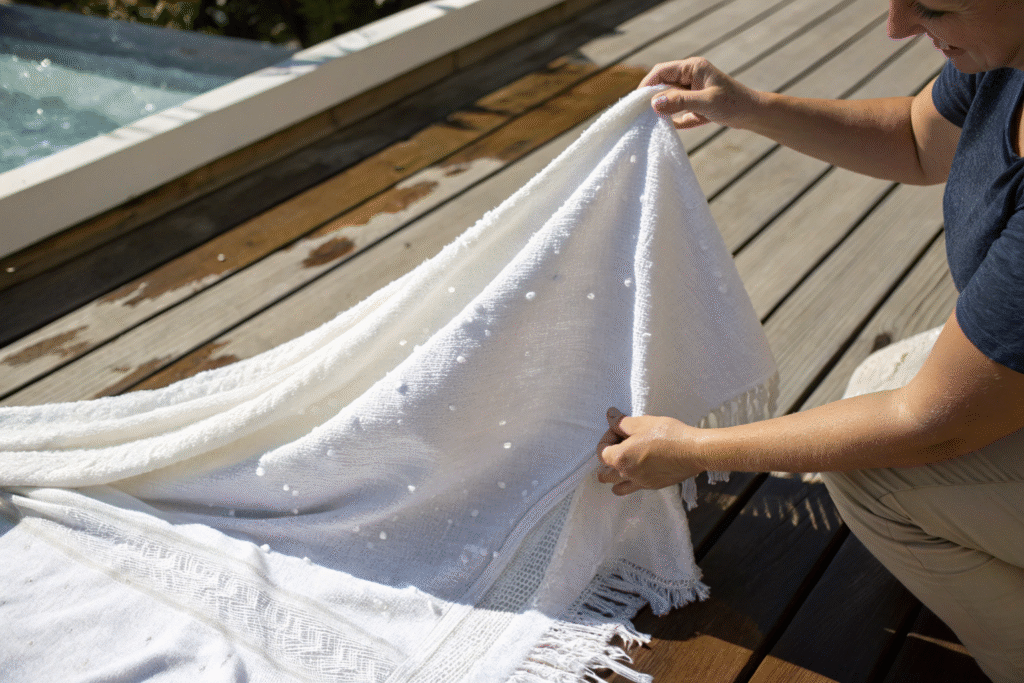
Does the shawl fade when exposed to light?
After 40 hours of exposure to Xenon arc light, which simulates the intense and varied spectrum of natural sunlight including ultraviolet, visible, and infrared radiation, and which conforms to the rigorous testing protocols outlined in the ISO 105-B02 standard—a globally recognized method for assessing the colorfastness of textiles and other materials to artificial weathering—the resulting color change.
The material maintains its original color integrity, with no noticeable discoloration, bleaching, or alteration in shade, ensuring it retains its aesthetic appeal and performance characteristics even under prolonged exposure to harsh light conditions akin to those encountered in outdoor environments over extended periods.
Does the shawl bleed color when in contact with water?
No color transfer to white cotton fabric after 30 minutes of soaking in distilled water at a temperature of 40℃, followed by 10 minutes of gentle rubbing with light pressure, ensuring that the fabric remains free from any visible dye or pigment residue, maintaining its pristine white appearance without discoloration or staining.
Does the shawl lose color during dry cleaning?
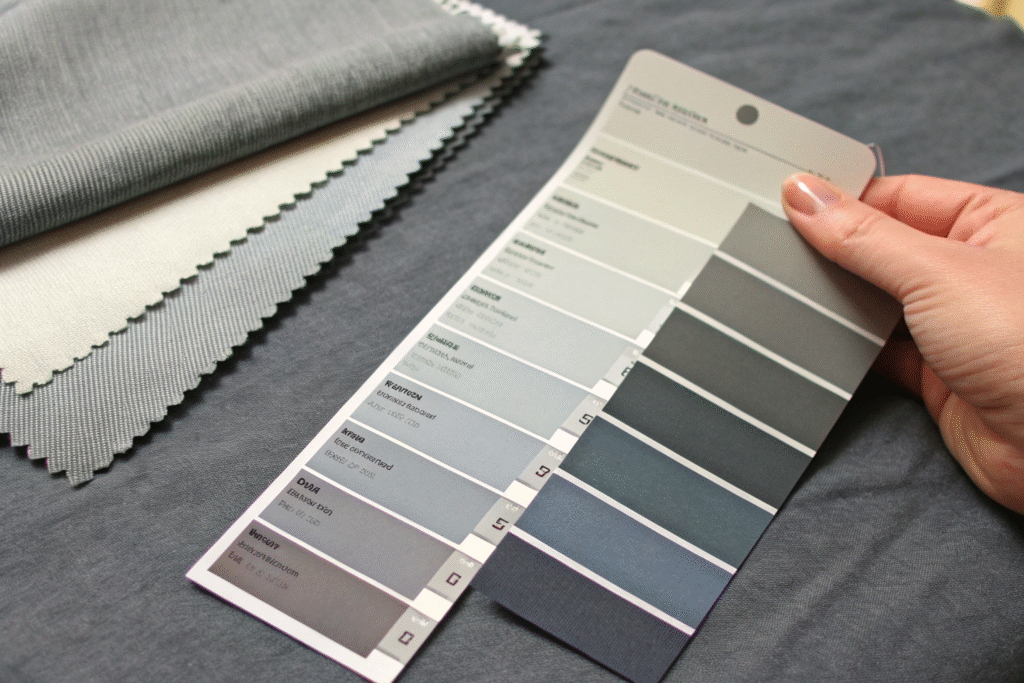
The rating is determined by visual assessment of the textile sample against a gray scale for color change, with a score of 4 indicating slight to moderate change that may be noticeable under close examination but not objectionable, and a score of 5 indicating no perceptible change or very slight change that is barely detectable. This ensures the textile maintains its original color integrity and aesthetic appeal even after repeated professional dry cleaning treatments, meeting industry standards for durability and color retention in garments subjected to such care processes.
How is rubbing fastness evaluated?
imulates everyday wear (e.g., contact with clothing, bags) where the shawl surface remains dry.Mimics exposure to moisture that accelerates dye transfer.For shawls, wet rubbing results are typically 0.5–1 grade lower than dry rubbing due to water-induced dye hydrolysis.
Poor fastness causes staining on adjacent fabrics or premature fading, undermining both quality and user experience .
What equipment standardizes friction testing?
Manual rubbing tests can lead to too much inconsistency, so we use motorized crockmeters instead. These follow ISO 105-X12 standards, applying controlled pressure and motion. The equipment has a standardized rubbing finger with a 16mm diameter that moves in a straight line, using a 9 Newton downward force. We test both dry rubbing (with untreated cotton cloth) and wet rubbing (using cloth soaked to hold 100% water). Each test runs for 10 full cycles, taking about 1 second per cycle. After testing, we check the rubbing cloth against a gray scale to rate staining, where 5 means no transfer and 1 indicates heavy transfer.
How does testing address different shawl areas?
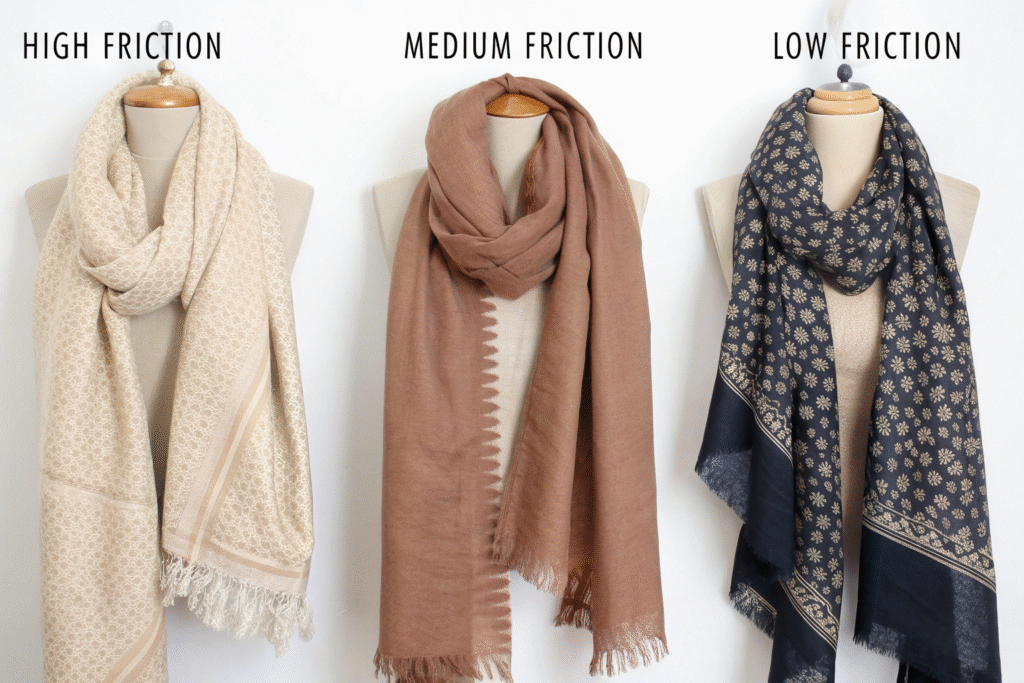
Shawls have different friction levels at various wearing spots. We test multiple sections, like high-friction edges that rub against outerwear, medium-friction areas where they touch your body, and low-friction central decorative parts. If a shawl has embellishments or embroidery, we do extra tests on those pieces since they might wear differently than the main fabric. For printed shawls, we check all the colors in the design, paying special attention to dark ones that usually show more rubbing marks. This thorough testing makes sure no part of the shawl will cause color transfer problems when you wear it normally.
How is light fastness determined for shawls?
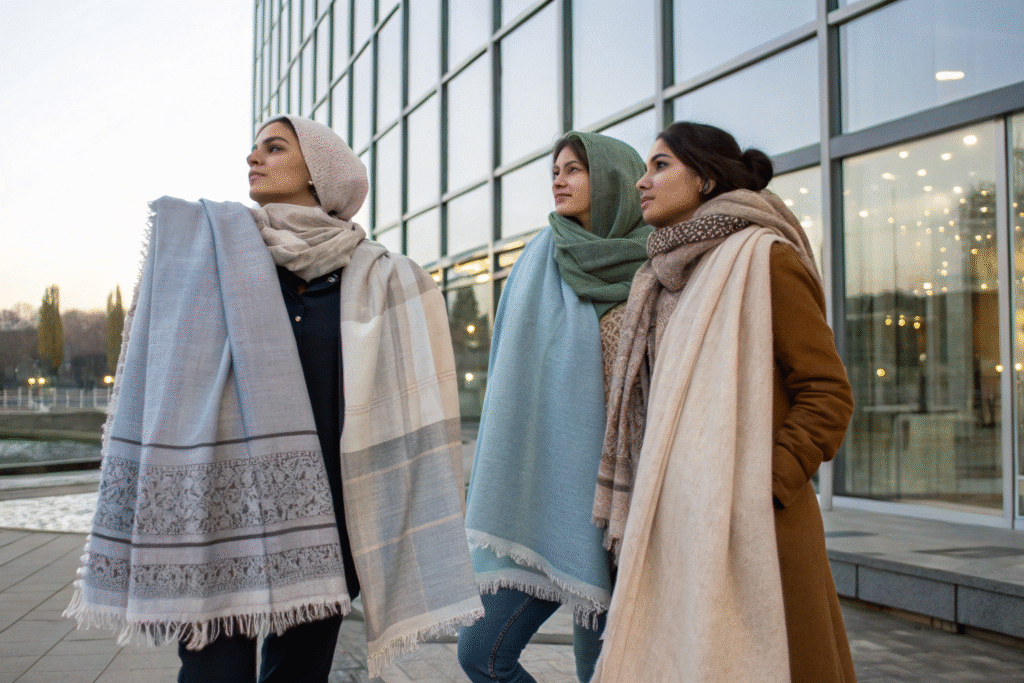
Shawls often get exposed to light when worn, stored, or displayed in stores, which can make their colors fade. Light fastness testing helps predict how well shawl colors will hold up under these conditions over time.
This testing is especially important for shawls meant for outdoor use, summer collections, and those shown in brightly lit shops.
What standardized light exposure methods are used?
Natural sunlight testing isn’t practical because it’s too variable, so we use xenon-arc fading lamps instead. These lamps simulate full-spectrum sunlight, including UV radiation, following ISO 105-B02 standards. The testing chamber keeps temperature at 40°C ± 3 and relative humidity at 50% ± 10 to mimic typical wearing conditions. Samples are tested next to blue wool standards, which act as known fading benchmarks. Testing goes on until the shawl sample has a Delta E of 3.0 or the specified blue wool standard reaches its endpoint. Light fastness ratings range from 8 (excellent) to 1 (very poor), and luxury shawls usually need a rating of 5 or higher.
How does testing account for different display and use scenarios?
Shawls get different amounts of light depending on how they’re used. We set testing times based on the product’s purpose: short exposures (20-40 AFU) for winter shawls that don’t see much light, medium exposures (40-80 AFU) for everyday shawls, and longer exposures (80-120 AFU) for summer and outdoor shawls. For samples displayed in stores, we do extra testing with higher light levels because these might stay in bright windows for a long time. This approach makes sure light fastness standards fit real-life use instead of using a single test for everything.
Conclusion
Testing shawl color fastness requires a comprehensive approach that addresses the multiple challenges colors face during wear, care, and storage. The most effective testing programs combine standardized laboratory methods with practical considerations of how shawls are actually used and cleaned. Companies implementing thorough color fastness testing prevent customer dissatisfaction, reduce returns, and build reputations for quality that justify premium positioning. The investment in proper testing pays dividends through enhanced brand perception and reduced quality-related costs.
If you’re looking to implement comprehensive color fastness testing for your shawl collections, we invite you to contact our Business Director, Elaine. Our experience in textile testing and quality assurance can help you establish effective testing protocols that ensure your shawl colors remain vibrant and stable. Reach her at: elaine@fumaoclothing.com.