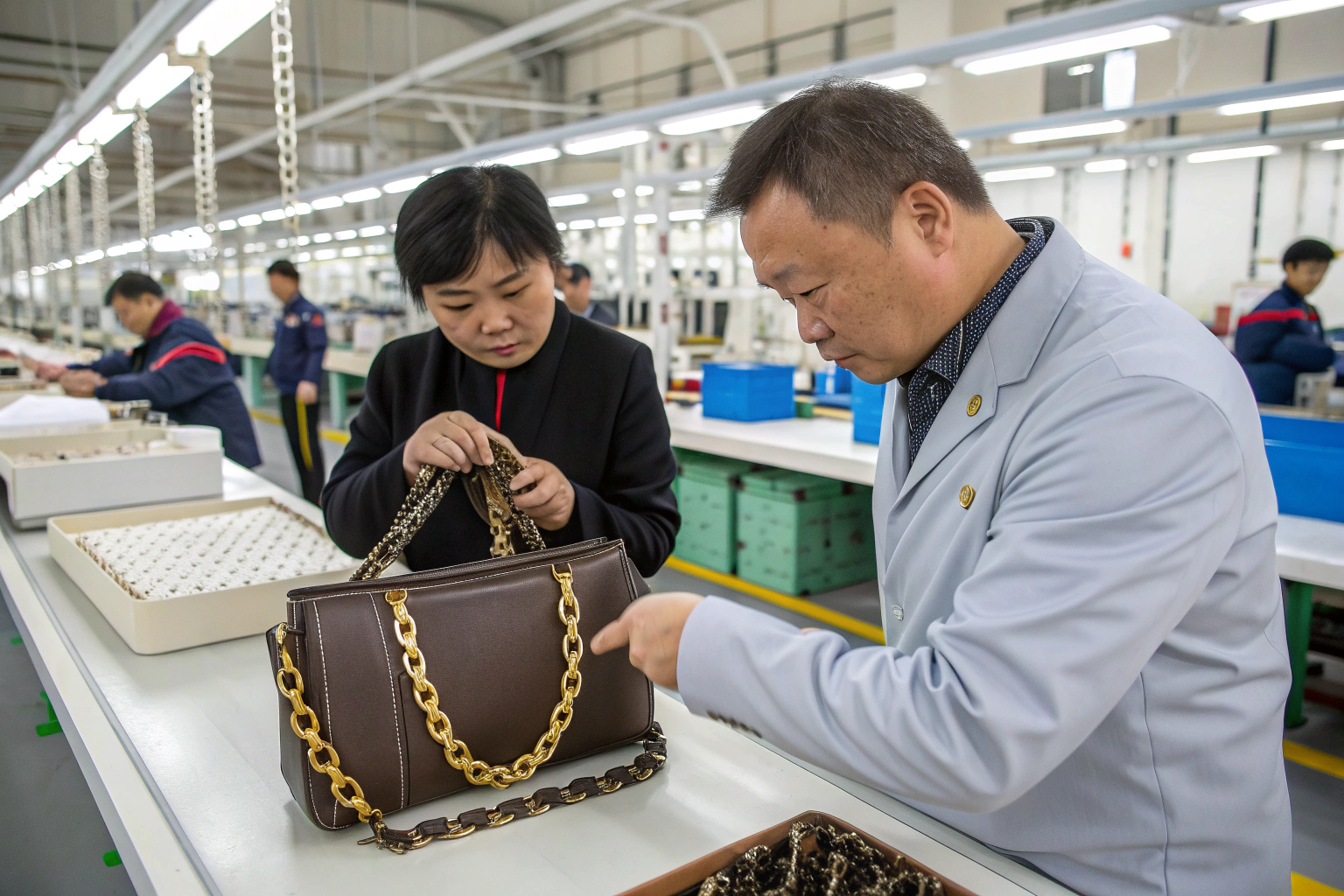
As a manufacturer of fashion accessories for over two decades, I know that few details can elevate a product from simple to luxurious as effectively as a well-chosen chain. But I’ve also seen how easily this detail can go wrong. I often talk with buyers like Ron from the US, and a recurring pain point is the "chain problem": they receive samples where the chain feels flimsy and cheap, the color tarnishes or flakes off, or the links snag on clothing. A bad chain can completely ruin the perceived value of an otherwise well-made accessory.
So, what are the key considerations for sourcing accessories with high-quality, durable, and beautiful chain details? The secret is to approach the chain not as a simple trim, but as a piece of precision-engineered hardware. This requires focusing on four critical areas: first, the Base Material of the chain; second, the Plating and Finishing process; third, the Link Style and Construction; and finally, the Weight and "Hand-Feel" of the chain.
These factors determine not just the look of the chain, but its durability, feel, and ultimate contribution to your product’s quality. At my factory, we have a rigorous sourcing and QC process for all our hardware. In this article, I’ll guide you through what you need to know to specify the perfect chain.
Why is the Base Material So Important?
The foundation of any good chain is the metal it’s made from, before any color or finish is even applied. Using the wrong base material is the most common reason for chain failure. A cheap base material will be weak, prone to rust, and will not hold a plated finish well.
The choice of base material is the single most important factor in a chain’s long-term durability and quality. While cheap iron is common in low-end products, professional-grade accessories should use a superior base material. The best options are Brass for its premium feel and corrosion resistance, and high-quality Zinc Alloy for its excellent casting ability and smooth finish. At Shanghai Fumao Clothing, we strongly advise our clients to invest in a quality base material. It’s the only way to ensure the chain will last and protect the brand’s reputation.
What are the pros and cons of Brass?
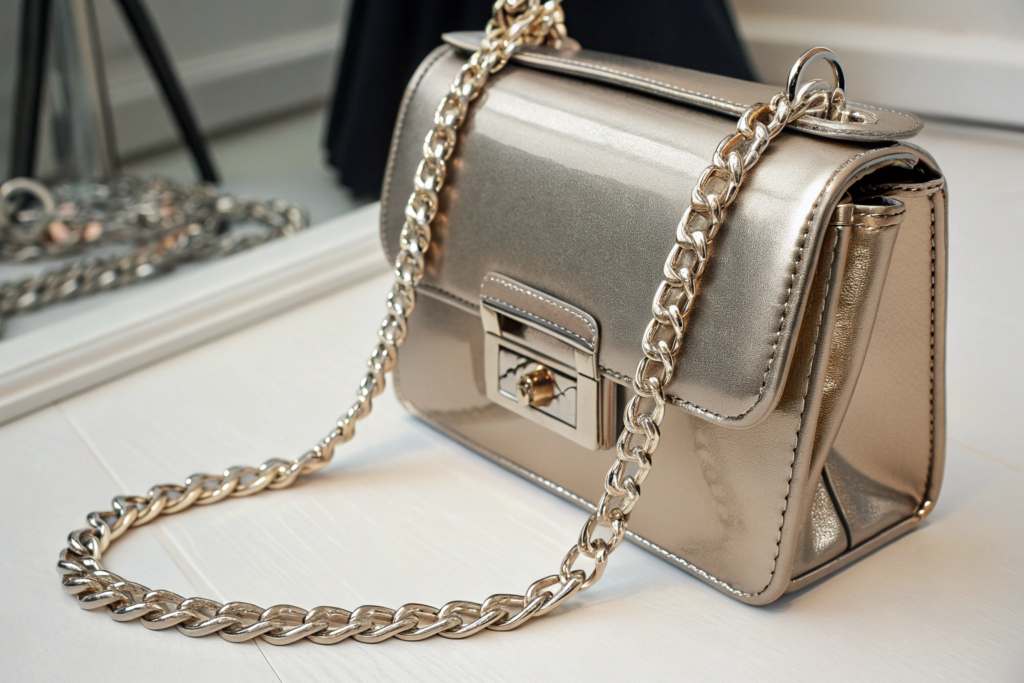
Brass is an alloy of copper and zinc. It is the premium choice for high-quality chains. Its main advantages are that it is corrosion-resistant (it won’t rust), it has a satisfying weight, and it provides an excellent surface for plating to adhere to. Even if the plating eventually wears thin after years of heavy use, the yellowish color of the brass underneath is far less noticeable than the dark grey of iron. Its only real disadvantage is its higher cost.
Why is Zinc Alloy a good alternative?
Zinc Alloy (often a brand name like ZAMAK) is another excellent choice. Its primary advantage is that it has a lower melting point than brass, making it perfect for creating custom, intricate shapes through die-casting. If you want a chain with a unique, custom-designed link shape, zinc alloy is often the best material. It provides a very smooth surface finish and also holds plating well. It is generally less expensive than solid brass. The key is to use a high-quality, lead-free alloy from a reputable supplier.
What Determines the Quality of the Plating?
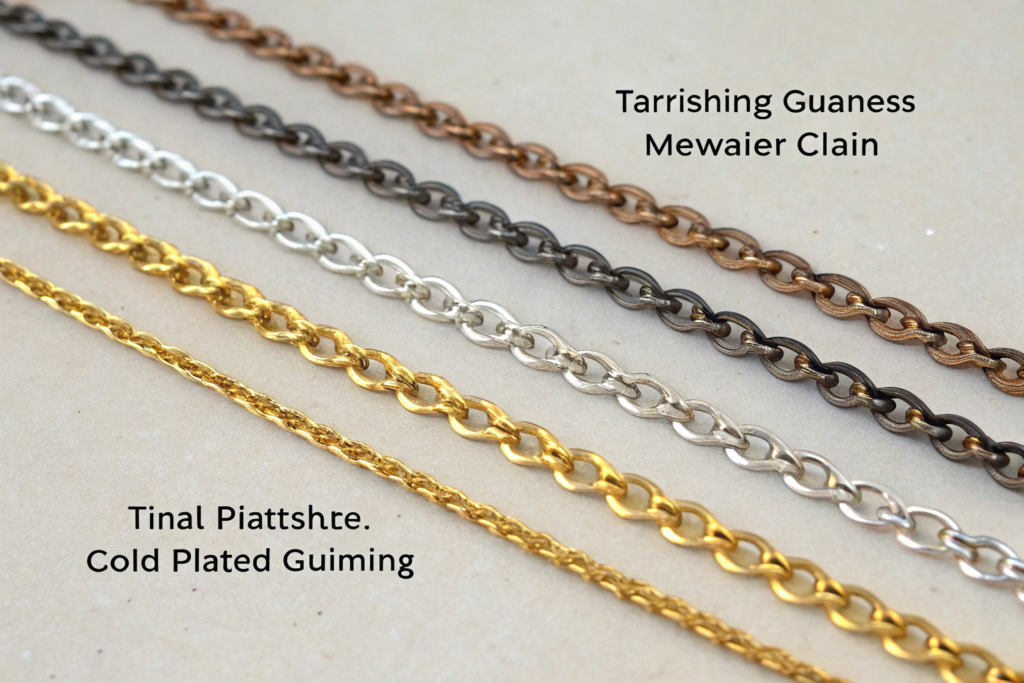
The plating is the thin layer of metal that gives the chain its final color—be it gold, silver, or gunmetal. This is where most visible quality issues occur. A poorly plated chain will tarnish, change color, or the plating will literally flake off.
The quality and durability of the plating are determined by the process used to apply it and the thickness of the deposited layer. The industry standard for durable, high-quality plating is Rack Electroplating, which provides a thicker and more uniform coating than cheaper barrel plating. Furthermore, a protective E-Coating (electrophoretic coating) should be applied as a final clear coat. This multi-step, technical process is what creates a finish that will last. It’s a crucial part of our quality specification for all hardware.
What is Rack Electroplating?
In Rack Electroplating, each chain or piece of hardware is individually hung on a rack and then submerged in the plating solution. This allows the electrical current to be distributed very evenly, resulting in a consistent and thick layer of plating across the entire surface. The alternative, barrel plating, involves tumbling a large batch of loose chains in a barrel. It’s faster and cheaper, but the pieces can bump into each other, leading to an uneven, thinner, and less durable finish. For any chain that will be a key feature of a product, you should always specify rack plating. This process is a core technology in the metal finishing industry.
What is an E-Coating and why is it essential?
E-Coating, or electrophoretic coating, is a clear, protective top coat that is applied after the color plating is finished. Think of it as a clear coat for your car’s paint job. The chain is submerged in a bath, and an electrical charge is used to deposit a very thin, hard, and perfectly clear layer of acrylic or epoxy over the entire surface. This seals the plating, protecting it from air, moisture, and skin oils, which are the primary causes of tarnishing. It also dramatically improves scratch resistance. A chain with a proper e-coating will retain its color and shine for much, much longer. This technology is a key part of modern corrosion protection.
How Does Link Style Affect the Look and Function?
Beyond the material and finish, the actual shape and construction of the links define the chain’s personality. The link style is a key design choice that impacts the aesthetic, the flexibility, and even the function of the chain.
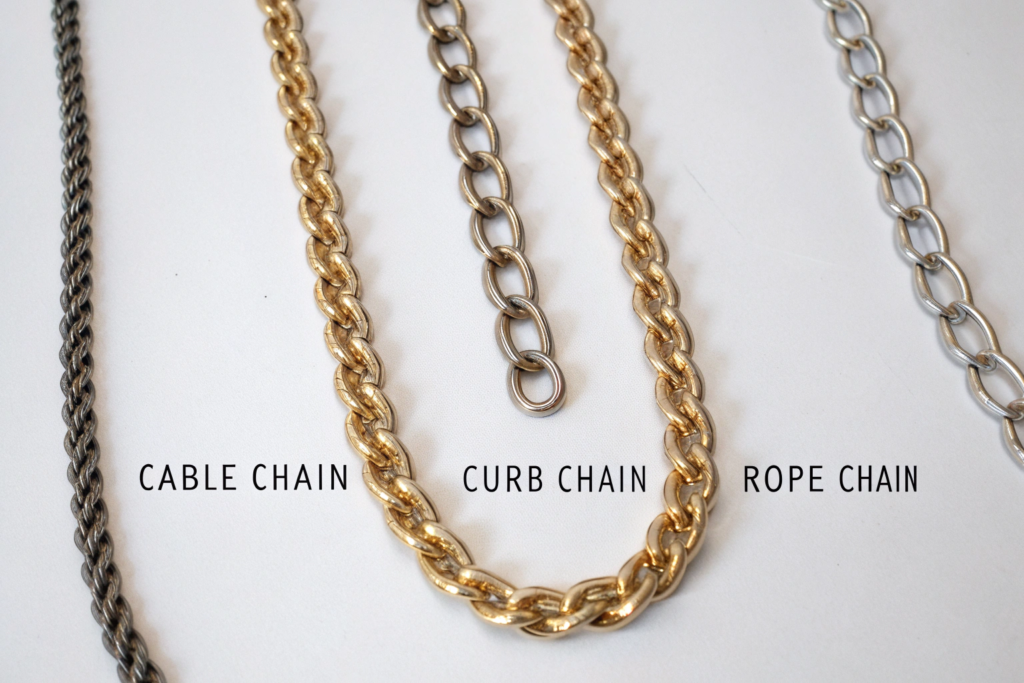
The style of the links determines the chain’s character, from delicate and classic to bold and modern. The most common and versatile styles for accessories are the classic Cable Chain, the flat and sleek Curb Chain, and the intricate and decorative Rope or Box Chain. Choosing the right link style is about matching the chain’s personality to your brand’s aesthetic.
What is a Cable Chain?
The Cable Chain is the most basic and classic style, composed of simple, uniform oval or round links. It’s the quintessential chain style. It’s versatile, timeless, and can be made in any size, from a delicate necklace chain to a chunky strap for a handbag. Its simplicity makes it a perfect, unobtrusive choice that doesn’t compete with other design elements.
What defines a Curb Chain?
A Curb Chain is made of links that have been twisted and flattened so they interlock and lie flat against a surface. This gives it a very smooth, sleek, and polished look. Diamond-cutting the surface of the links can add facets that catch the light, creating a bright, shimmering effect. Curb chains are very popular for men’s accessories and for creating a modern, high-polish look on handbag straps.
What are some more decorative options?
For a more textured or intricate look, you might consider a Rope Chain, where small links are woven together to create the appearance of a rope, or a Box Chain, which is made of small, square links that form a smooth, four-sided chain. These styles are more decorative and can become the main focal point of an accessory. The variety of chain styles is vast, as detailed by jewelry resources like the Gemological Institute of America (GIA).
Why Do Weight and "Hand-Feel" Matter?
This is a more subjective, but incredibly important, aspect of quality. When a customer picks up your product in a store, the chain is often the first thing they touch. The tactile sensation of the chain communicates a powerful, subconscious message about the product’s overall quality.
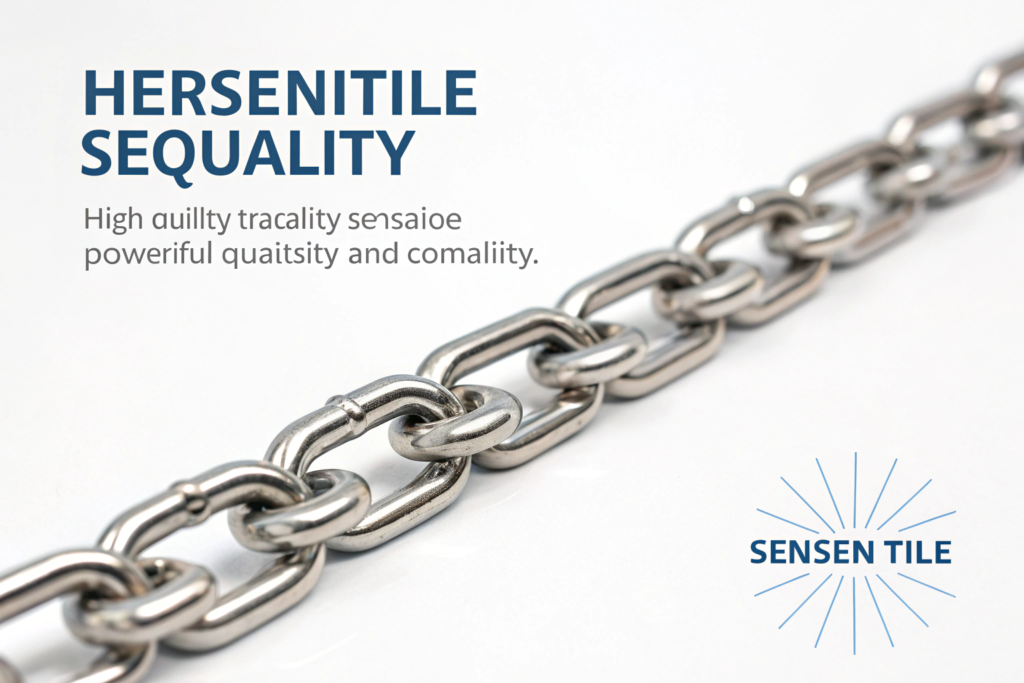
The weight and "hand-feel" of a chain are key indicators of its perceived value. A high-quality chain should have a satisfying heft and a smooth, fluid feel as it moves. It should not feel light, hollow, or "tinny," and the links should not be sharp or snag on fabric. This is something we at Shanghai Fumao Clothing test during our sample review process. We literally hold it, feel it, and listen to it.
How is a good "hand-feel" achieved?
The satisfying weight comes from using a solid (not hollow) link and a dense base material like brass. The smoothness comes from two things: first, ensuring the links are well-made with no sharp edges or burrs from the manufacturing process; and second, a high-quality, uniform plating process that creates a perfectly smooth surface. A chain with a good hand-feel will drape beautifully and move silently.
What are the red flags to watch out for?
When you receive a sample, check for these warning signs:
- It feels too light: This often indicates hollow links or a cheap, low-density base material.
- It feels sharp or rough: Run the chain over a delicate piece of fabric. If it snags, the links are poorly finished.
- It makes a "tinny" or rattling sound: A quality chain has a more muted, substantial sound when it moves. A high-pitched rattle can be a sign of cheap materials.
- The links are not soldered shut: For a chain that will bear any weight (like a bag strap), the individual links must be soldered or welded closed for strength.
Conclusion
A chain is far more than just a decorative element; it is a critical piece of hardware that heavily influences a customer’s perception of your product’s quality. Sourcing a great chain requires a technical approach. It starts with specifying a solid, corrosion-resistant Base Material like brass or a high-grade zinc alloy. It requires a durable, multi-step Plating Process that includes rack electroplating and a protective e-coating. It involves a thoughtful choice of Link Style to match your brand’s aesthetic. And it culminates in a final product that has a satisfying Weight and Hand-Feel, communicating luxury and durability through the simple sense of touch. By paying close attention to these four key considerations, you can ensure the chain details on your accessories are a mark of quality, not a point of failure.
If you are looking for a manufacturing partner who obsesses over these hardware details and has the robust supply chain to source high-quality, durable components, my team is ready to help you build a superior product. We believe quality is a chain, and every link matters. Please contact our Business Director, Elaine, at her email: elaine@fumaoclothing.com to discuss your next project.