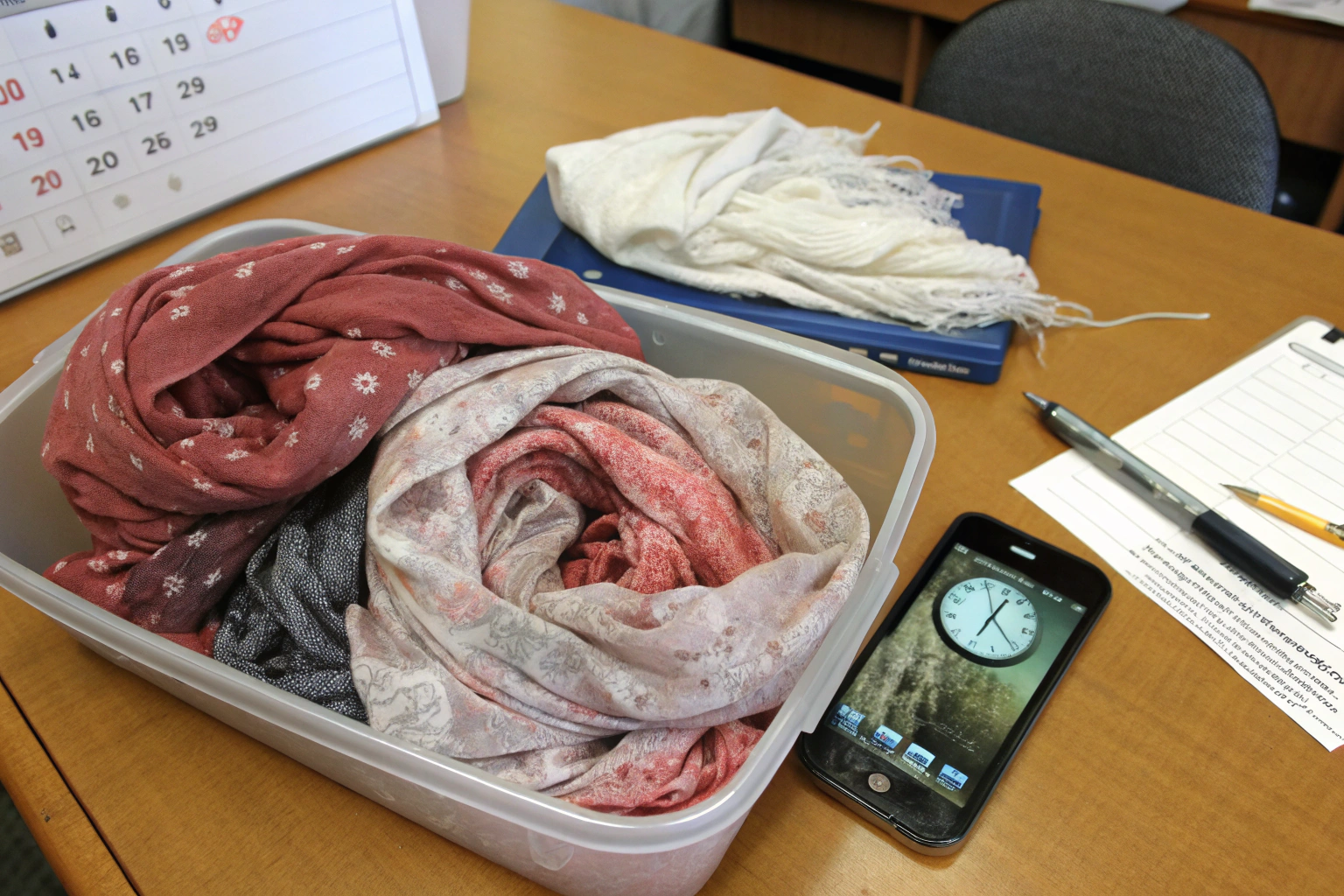
I will never forget the January morning I received a panicked phone call from a buyer in Chicago. She had just opened a container of our beautiful printed acrylic scarves, ready to ship them out to her retail accounts, when she discovered every single scarf was clinging to itself like plastic wrap. The scarves crackled when she pulled them apart. Lint and dust from the carton had embedded into the fibers. The product looked cheap. She had a photo shoot scheduled for the next day and a buyer meeting with a major department store the day after. We fixed the problem together, and we shipped a replacement batch quickly, but that experience taught me a lesson I never forgot. Static electricity is not a minor annoyance. For a fashion accessory brand, it is a direct threat to perceived value and customer satisfaction.
The most effective way to avoid static cling on synthetic scarves during winter shipping is to implement a three-part strategy inside your export cartons. First, include anti-static treated polybags or humidity-regulating desiccant packs. Second, add a light misting of anti-static spray during the final folding and packing stage at the factory. Third, use natural-fiber interleaving tissue paper between folded scarves to prevent friction-generated charge buildup during transit vibrations.
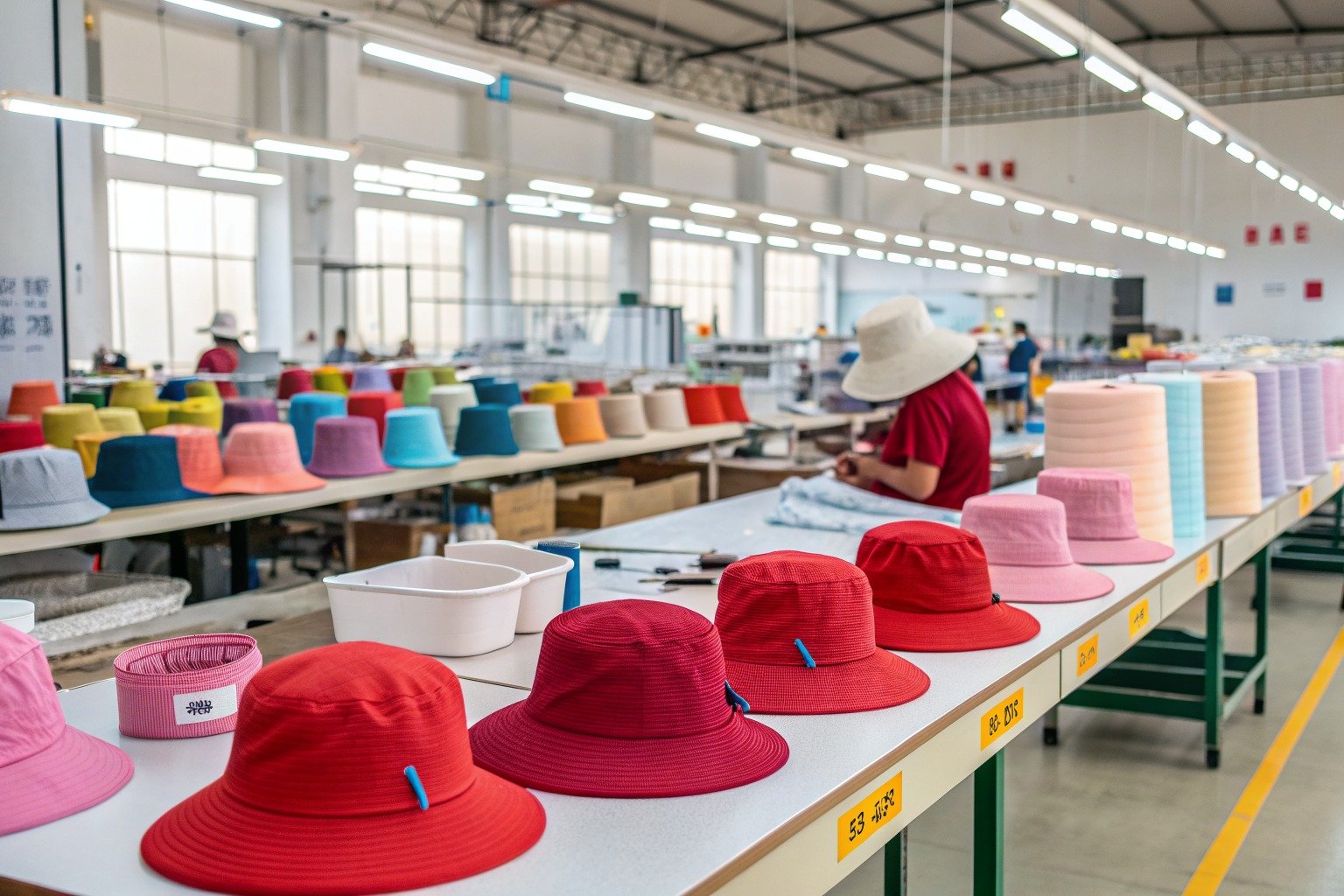
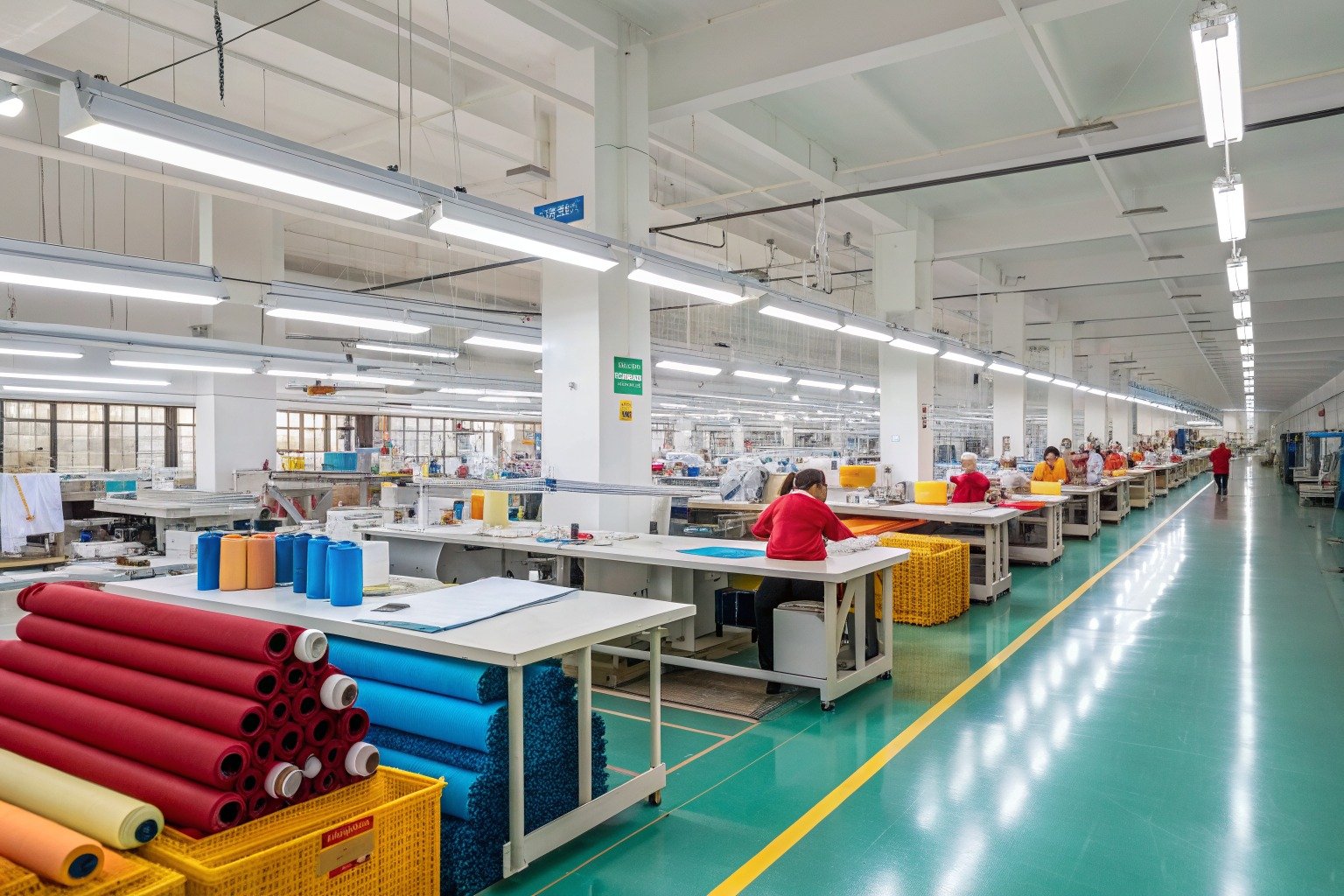
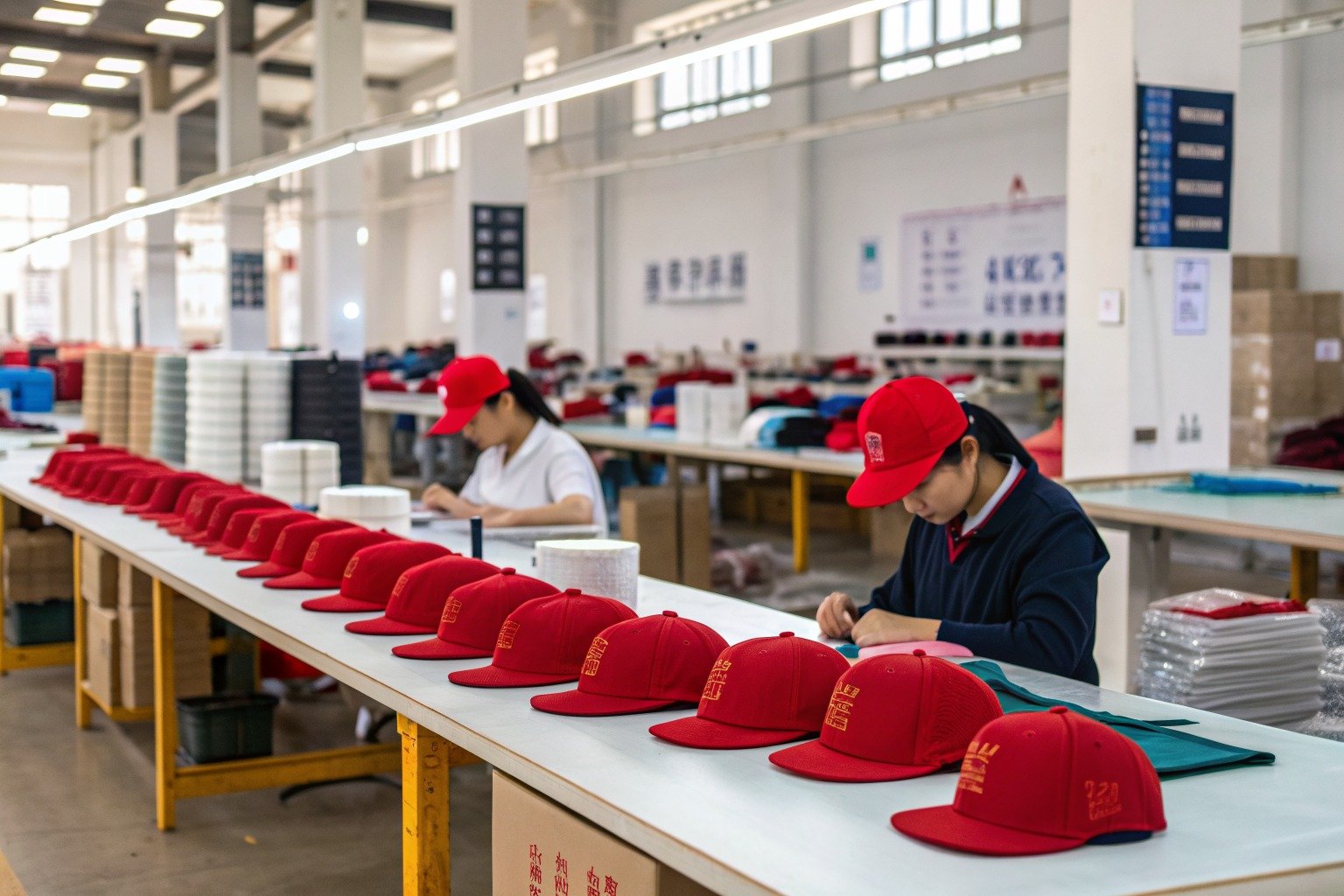
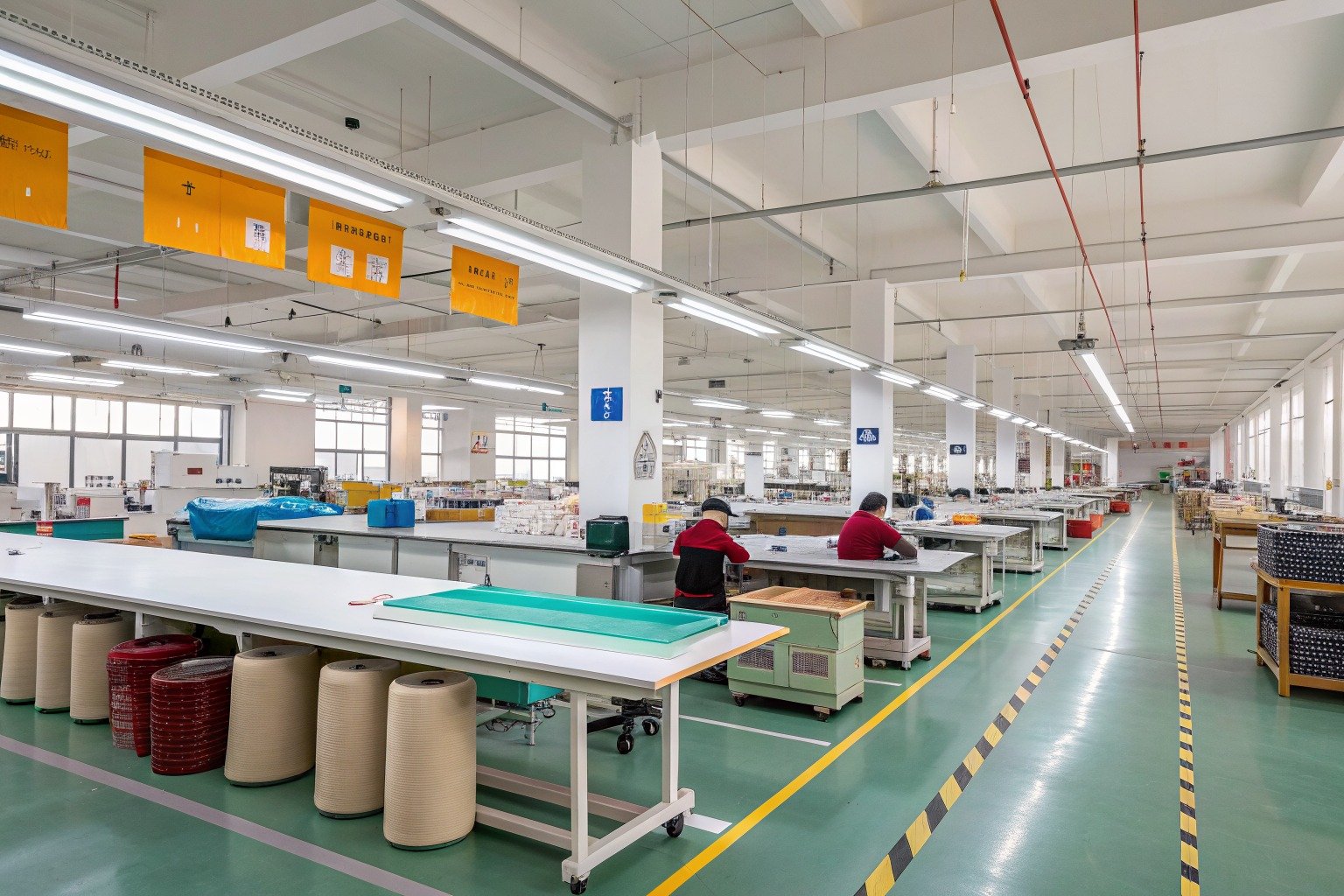
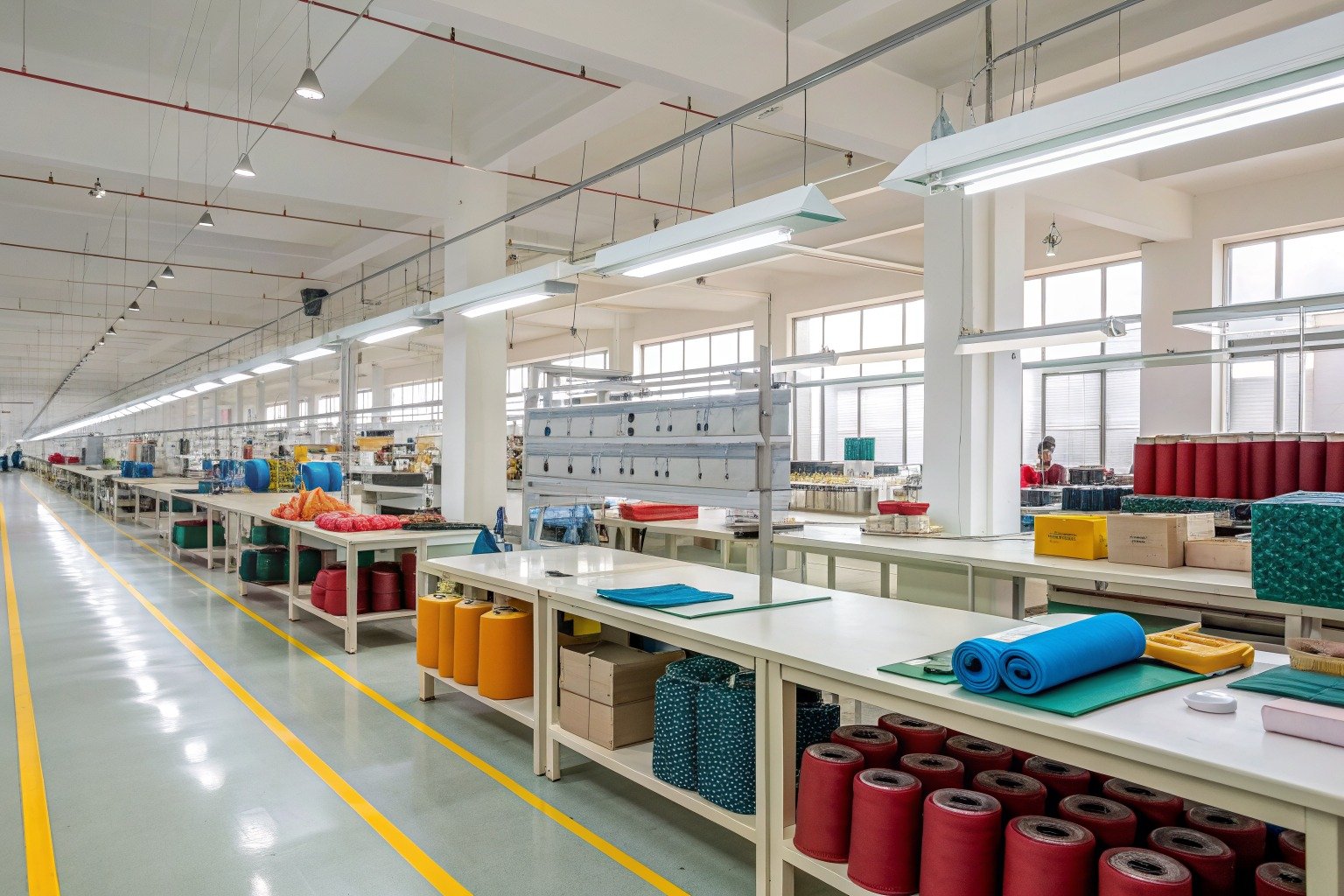
I know static seems like a small, invisible problem, but I have watched it erode margins and trigger returns. The dry, cold air of a North American or Northern European winter acts like a static generator. Combine that with weeks of vibration inside a metal shipping container rolling across the ocean, and you have a perfect laboratory for electrostatic build-up. At AceAccessory, we ship thousands of scarves, shawls, and wraps to major supermarkets and boutiques every winter. Controlling static is now a standard part of our quality control checklist. I want to share exactly how we do it, so your scarves arrive at their destination looking as flawless as they did when they left our clean, modern factory in Zhejiang.
What Causes Static Electricity in Packed Synthetic Scarves
To fix static, you have to understand what creates it in the first place. Synthetic fibers like acrylic, polyester, and nylon are essentially plastic. They are excellent electrical insulators. That means when electrons get knocked loose through friction, they do not flow away. They sit on the surface of the fiber, building up a charge. Natural fibers like cotton and wool can absorb moisture from the air, and that moisture conducts electricity away. Synthetics cannot. They stay bone-dry at a molecular level. When you pack a stack of synthetic scarves into a carton, you create a sandwich of insulating surfaces. Every bump and shake of the truck, every vibration of the container ship engine, creates microscopic friction between the folded fabric layers. Electrons transfer from one scarf to the next, leaving one positively charged and the other negatively charged. The result is that the scarves stick together, repel each other, or attract every speck of dust in the box.
Static electricity in packed synthetic scarves is caused by the triboelectric effect, where friction between dry, insulating synthetic fibers during transit vibrations strips electrons from one surface and deposits them on another. This effect is intensified by low ambient humidity, typically below 40% relative humidity, which eliminates the natural moisture layer that would normally dissipate the electrical charge. The enclosed environment of a shipping carton and container then traps this charge for weeks.
This is not just a winter problem, but winter makes it much worse. Cold air holds less moisture than warm air. When that cold air is heated inside a warehouse or a delivery truck, the relative humidity plummets. You might have a comfortable 50% humidity in our factory in China, but by the time the container reaches Minnesota in January, the air inside the carton is desert-dry. Let me break down the specific materials and environmental factors that cause the worst static problems.
Why Are Acrylic Scarves More Prone to Static Than Wool?
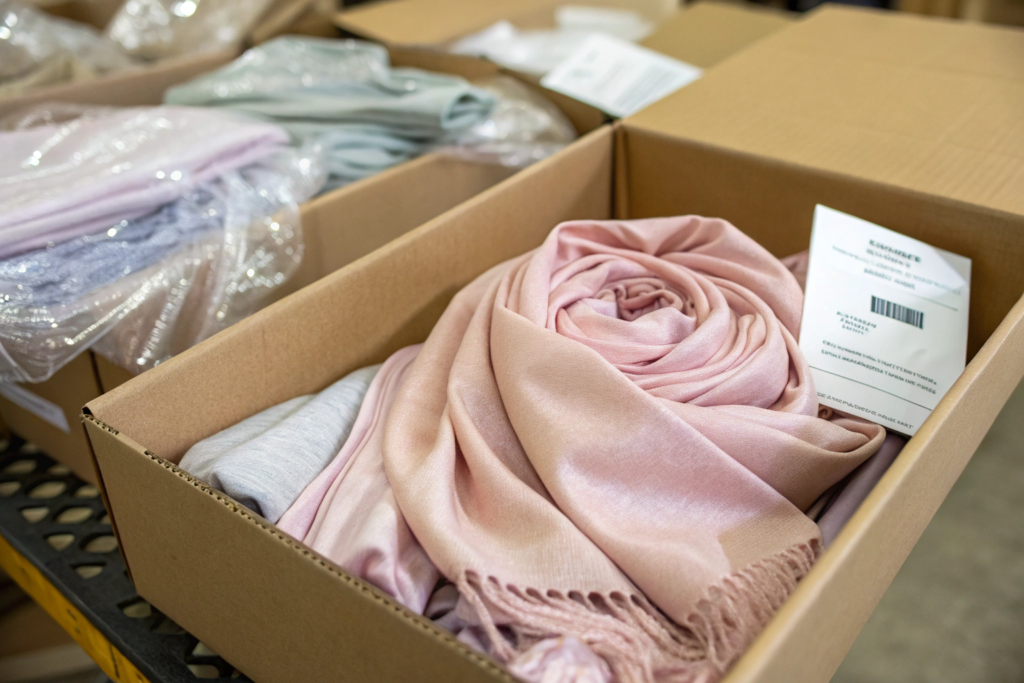
The molecular structure of acrylic is fundamentally hydrophobic. It repels water. Wool, being a protein fiber, has a natural moisture content of around 15% even in dry conditions. This moisture acts as a conductor that bleeds off static charges before they can accumulate. Acrylic has almost zero natural moisture content. It is a fantastic insulator, which makes it a fantastic static generator. I learned this lesson dramatically when we developed a new brushed acrylic scarf meant to mimic the soft hand of cashmere. The brushing process created an enormous surface area of fine, fluffy fibers. This felt beautiful on the skin, but it multiplied the contact points for friction. The first shipment we sent out without anti-static treatment came back with complaints of scarves that literally climbed out of their boxes when opened. From that point on, we treated high-pile acrylics as the highest-risk category for static. Polyester is not much better. It is slightly less static-prone than acrylic in its filament form, but when you texture or brush it to create a cozy scarf, the problem returns. Nylon is often the worst offender. It sits high on the triboelectric series, meaning it tends to give up electrons and become positively charged very easily. If you mix nylon scarves with polyester lining materials in the same carton, you have essentially built a tiny Van de Graaff generator. The two materials rub together, and the charge separation intensifies. We always segregate different synthetic fiber types into separate polybags to avoid this cross-material friction.
How Does Container Temperature Affect Fabric Static Buildup?
A shipping container crossing the Pacific Ocean in winter experiences wild temperature swings. It might be loaded in Shanghai at 10 degrees Celsius, cross the equator at 35 degrees, then land in Vancouver at minus 15. These temperature swings do not just affect the fiber directly. They cause condensation and then rapid drying cycles inside the container. When the warm, moist air from the tropics hits the cold container walls at night, water condenses. The air inside the box becomes dry because the moisture has been squeezed out. This is called the "container rain" effect. After the condensation evaporates again, the air is left with dangerously low relative humidity. The scarves, being synthetic, do not absorb this transient moisture. They stay static-sensitive. I have seen data loggers we placed inside test cartons showing relative humidity dipping to 15% during the overland leg from a West Coast port to the Midwest. That is dryer than a desert. At 15% RH, a polyester scarf can generate a static voltage of over 10,000 volts just from being slid across a cardboard divider. The temperature cycling also affects the physical properties of the fibers. Cold makes plastics more rigid and brittle. A stiff, cold acrylic fiber is more likely to snap and crackle when flexed, generating more friction than a warm, pliable fiber. This is why the scarves often feel staticky right out of the cold delivery truck, and then calm down slightly after acclimating indoors. But by the time the end customer sees them, the damage to brand perception is already done.
How to Pack Accessories to Prevent Static Damage
Packing is your primary defense against static. You cannot control the weather in Nebraska or the humidity in a container on the North Atlantic, but you can control the micro-environment inside your carton. We think of each export carton as a tiny controlled atmosphere. The goal is to eliminate friction, provide a path for charge dissipation, and maintain a stable moisture level. This requires the right materials and a strict packing protocol that our quality control team enforces. I often tell my project managers that a few cents spent on better packing materials saves dollars in returns and lost reputation.
Effective anti-static packing for synthetic scarves requires three layers of defense. The first is a primary barrier of anti-static treated polybags that prevent charge generation. The second is an interleaving layer of natural, uncoated kraft paper or tissue between each folded scarf, which acts as a physical friction isolator. The third is a controlled humidity packet, typically a clay or silica gel desiccant pre-conditioned to maintain a specific equilibrium relative humidity, not to completely dry out the box.
These techniques are not theoretical. We have tested them in real winter shipments to Moscow, Montreal, and Stockholm. The difference between a standard packed scarf and one packed with our anti-static protocol is immediately visible when you unbox them. Let me walk you through the specific materials and methods.
What Anti-Static Polybags Work Best for Scarves?
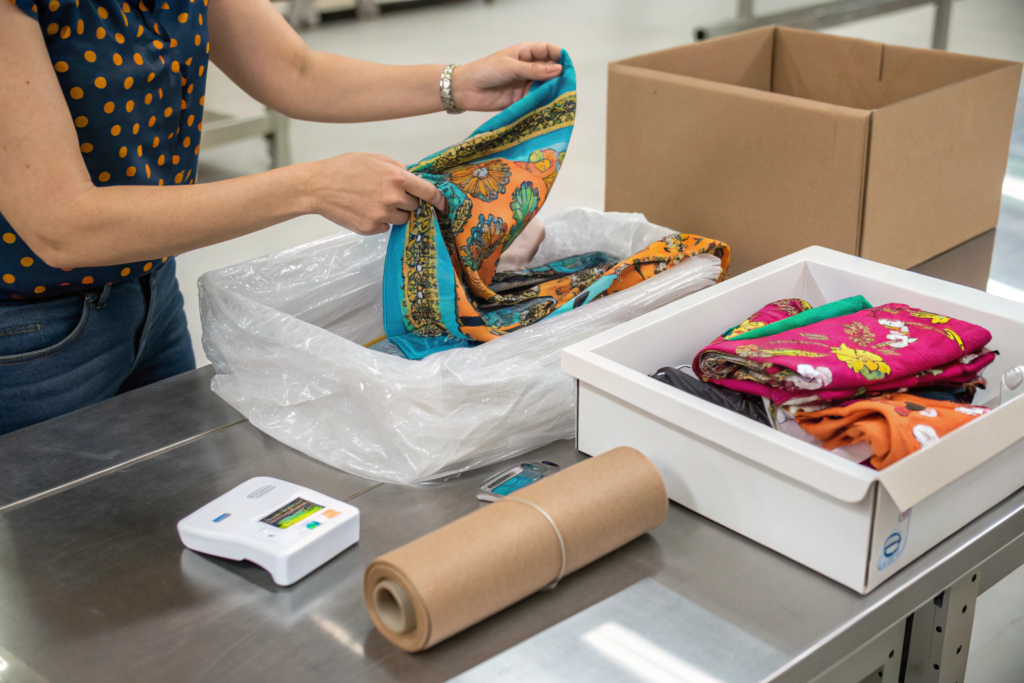
Not all polybags are created equal. Standard LDPE or polypropylene bags are static nightmares. Rubbing a regular plastic bag against an acrylic scarf is like rubbing a balloon on your hair. We use amine-free, anti-static treated polyethylene bags for all synthetic scarf shipments during the winter months. These bags have a topical anti-static agent, usually an ethoxylated amine or a glycerol ester, that migrates to the surface and attracts microscopic moisture from the air. This moisture layer provides a conductive path that dissipates charges. The bag itself does not generate static when rubbed against the fabric. There is a difference between "anti-static" and "static shielding" bags. A true static shielding bag has a metalized layer and is overkill and too expensive for scarves. We use pink or clear anti-static polybags that are designed to prevent triboelectric charging. The pink ones contain an amine additive that is visible as a slight pink tint. The clear ones often use a different chemistry that is invisible. Both work. I prefer the clear ones for retail presentation because the customer can see the scarf print through the bag. A key specification to look for is surface resistivity. A standard polybag has a surface resistivity of 10^14 to 10^16 ohms per square. An effective anti-static bag should be in the range of 10^9 to 10^11 ohms. This is dissipative, not insulative. It allows charges to bleed away slowly rather than building up and discharging in a spark. We test every batch of polybags with a simple surface resistivity meter before they enter our packing area. A bad batch of bags can ruin a shipment.
Can Kraft Paper Reduce Friction Inside Shipping Cartons?
I am a big believer in kraft paper. It is inexpensive, recyclable, and remarkably effective at reducing static. The reason is triboelectric compatibility. Kraft paper and synthetic fibers like acrylic and polyester are relatively close to each other on the triboelectric series. When two materials close on the series rub together, the charge transfer is minimal. When two materials far apart, like polyethylene and nylon, rub together, the charge transfer is huge. By placing a sheet of natural brown kraft paper between each folded scarf, we interrupt the scarf-to-scarf friction cycle. The scarf rubs against the paper, not against another scarf. The paper also has a natural moisture content, typically around 6 to 8 percent, which helps a little with conductivity. We use uncoated, unbleached kraft paper. Bleached paper has been chemically processed and can sometimes contain residual chemicals that affect its triboelectric properties. The paper also serves a secondary purpose. It prevents the printed designs on the scarves from transferring or sticking to each other in case any moisture does get into the box. For high-pile or brushed scarves, I recommend a slightly heavier weight paper, around 40 to 50 GSM, to prevent the fluffy fibers from interlocking with each other through the paper. We have a specific packing instruction for our most static-sensitive products. It goes: fold scarf, place one sheet of kraft paper on top, fold the next scarf, place it on top of the paper, and repeat. Then, the entire stack is placed inside the anti-static polybag, not the other way around. This creates a physical, triboelectric-friendly barrier system that has solved static cling problems for dozens of our North American and European buyers.
What Is the Best Anti-Static Spray for Fashion Fabrics
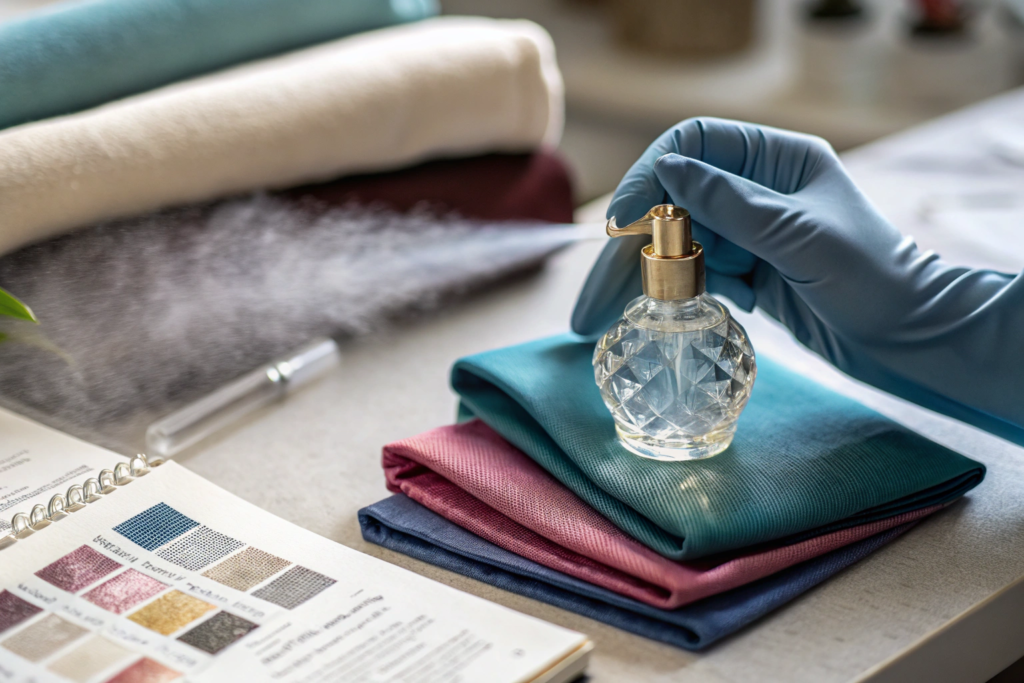
Sometimes, physical barriers are not quite enough. For particularly troublesome fabrics, or for shipments heading to the driest winter climates, we use a topical anti-static spray applied at the final finishing stage. This is a delicate process. You are applying a chemistry to fabric that will touch a person’s skin. The spray must be invisible, odorless, non-staining, and skin-safe. It must also remain effective for weeks inside a sealed polybag and carton, not just evaporate after a few hours. We have tested dozens of formulations over the years to find the right balance between efficacy and fabric compatibility.
The best anti-static spray for fashion accessories like synthetic scarves is a diluted solution of a cationic quaternary ammonium compound, specifically formulated for textile finishing and applied as a micro-fine mist that does not wet the fabric deeply. This solution works by leaving behind a molecule-thin conductive layer on each fiber, attracting ambient moisture to dissipate static charges. It must be thoroughly tested for colorfastness, skin sensitivity, and odor before use on any fashion product.
I want to be clear that not all anti-static sprays are appropriate for scarves. Many industrial sprays are designed for carpets or electronics and contain harsh solvents or strong fragrances. Those have no place on a fashion accessory. Let me share our specific evaluation criteria and how we integrate this into a quality-controlled production workflow.
How Should You Test an Anti-Static Treatment on Scarves?
Testing is non-negotiable. I learned this the hard way when a well-intentioned production assistant used a commercial anti-static spray on a batch of cream-colored polyester scarves. The spray contained a slightly yellowish quaternary ammonium salt that oxidized over two weeks and left faint yellow stains at the fold points. The entire batch was unsellable. Now, we have a rigorous testing protocol for every new anti-static formulation and every new fabric we apply it to. First, we test for colorfastness. We spray the solution on a hidden area of a sample scarf and let it cure in a sealed polybag for 72 hours in a warm environment, simulating the container transit. We then compare the treated and untreated areas under a D65 daylight lamp for any yellowing or color shift. Second, we test for skin sensitivity. We work with a certified textile testing lab that performs a cytotoxicity test and a skin irritation test to ensure the treated fabric meets OEKO-TEX standards. We do not rely on the spray manufacturer’s word alone. We need the test report. Third, we test for odor. Some quaternary ammonium compounds have a slight amine or fishy odor that becomes noticeable when the package is opened. We have an internal panel that blindly sniffs treated and untreated scarves after a 48-hour sealed bag test. If any off-odor is detected, we reformulate or switch to a different active ingredient. Fourth, we test static decay time. We use a charge plate monitor to apply a 5000-volt charge to a treated scarf and measure how many seconds it takes to dissipate to 500 volts. A good treatment should decay in under 0.5 seconds. Untreated acrylic can hold the charge for minutes. Only when a batch passes all four tests do we approve it for production use.
Can Humidification Packs Replace Chemical Sprays?
Some of my clients, particularly organic and eco-conscious vintage brands, ask if they can avoid chemical sprays entirely and rely only on humidity control. The answer is yes, with some caveats. Humidification packs, also called two-way humidity control packs, release or absorb moisture to maintain a specific relative humidity inside a sealed environment. We use packs calibrated to 62% or 65% relative humidity for synthetic scarf shipments. At this humidity level, the moisture content in the air is high enough to provide a natural conductive layer on the fiber surfaces. This dramatically reduces static generation. The packs work very well inside sealed polybags. However, once the polybag is opened, the effect is lost. The scarf will start to generate static again if the ambient air in the store or the customer’s home is dry. A chemical anti-static treatment on the fiber itself is more durable and remains effective even after unpacking. For the best results, we sometimes combine both methods. We apply a light, undetectable anti-static treatment to the fabric during finishing, and we include a humidity pack inside the sealed master polybag. This dual approach covers all the bases. The fabric itself is resistant to charge generation, and the micro-environment inside the bag prevents any additional buildup. One point of caution with humidity packs. In a freezing container, the moisture from the pack can condense and potentially freeze. We have never had this damage a scarf, because the moisture is minimal, but we always make sure the scarves are separated from direct contact with the pack by a sheet of tissue paper. This prevents any potential water spot from forming on the outermost scarf in the stack.
What Quality Checks Prevent Winter Shipping Damage
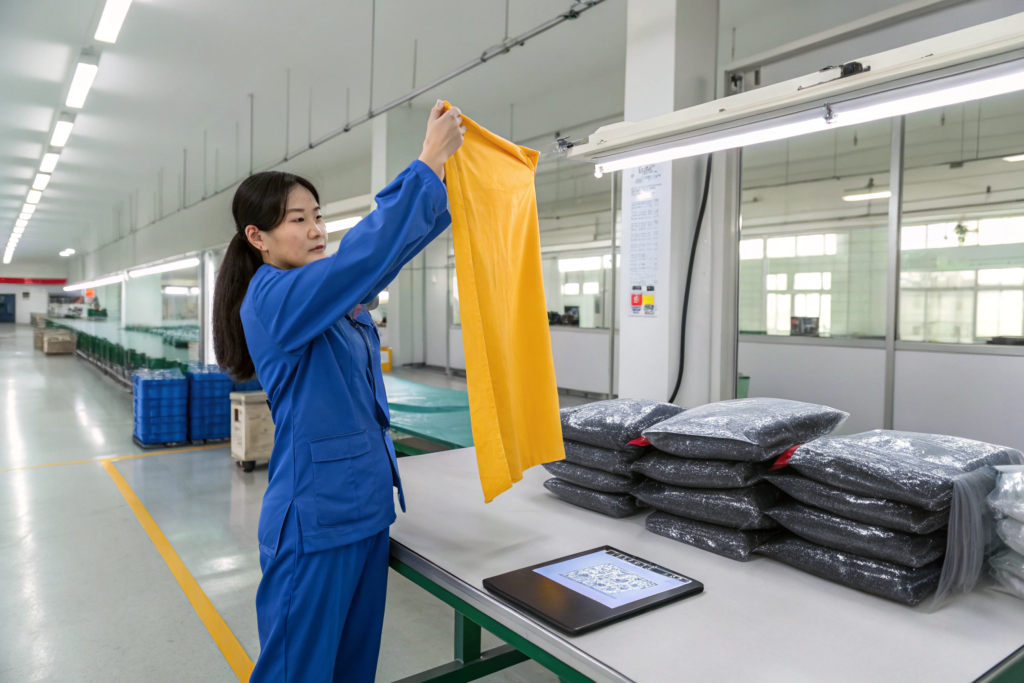
Quality control is where everything comes together. You can have the right polybags, the right paper, and the right spray, but if someone on the packing line forgets a step, a single carton of staticky scarves can slip through and cause a headache for your buyer. At AceAccessory, our QC team performs specific static-related checks during the final inspection, before the cartons are sealed and loaded into the container. We treat static control not as an afterthought but as a measurable quality parameter, just like seam strength or color accuracy.
Comprehensive winter shipping quality checks for synthetic scarves must include an electrostatic propensity test, a seal integrity check on all anti-static polybags, a carton humidity verification using a calibrated hygrometer, and a final "peel test" where a packed scarf is removed from its packaging under the inspector’s observation to ensure no visible static cling, crackling, or dust attraction occurs before the carton is approved for shipment.
These checks do not take much time, but they catch the small failures that lead to big problems. I train my QC team to think like the end customer. When they open that polybag, what is the first impression? Is the scarf falling gracefully and draping beautifully, or is it crackling and sticking to the bag? Let me detail two of our most effective testing methods.
How Can a Static Decay Test Predict Transit Performance?
A static decay test is a scientific way to measure how fast a material bleeds off an electrical charge. We do not just trust our eyes. We use a tool. Our QC team uses a portable electrostatic field meter and a charge plate setup. Here is how it works. The inspector takes a sample scarf from the production lot and places it on an insulating surface. They then rub the scarf vigorously ten times with a standard test fabric, usually a dry cotton cloth, to generate a triboelectric charge. Immediately, they hold the field meter one inch from the scarf surface and record the voltage. On an untreated acrylic scarf, this voltage can easily read 8,000 to 15,000 volts. Then they start a stopwatch and measure how long it takes for the voltage to drop below 500 volts. For a properly treated and properly packaged scarf, this decay time should be under two seconds. If it takes longer than five seconds, the scarf fails the test. We then trace back to find the root cause. Was the anti-static spray batch expired? Was the polybag missing its anti-static additive? Did the humidity in the packing room drop below 30% that day? We document every test result. For our clients who buy large volumes, we include these static decay test reports in the final shipment documentation package, along with the standard AQL inspection reports. This transparency builds trust. The buyer in Chicago who had the static disaster now receives a static test certificate with every winter shipment. She has never had a repeat problem.
Why Is a Pre-Shipment Unboxing Simulation Necessary?
The final and most revealing test is what we call the "unboxing simulation." It recreates exactly what your customer will experience when they open the carton in their warehouse or store. We take a fully packed export carton from the production batch, one that has been sealed and sitting for at least 24 hours to let the internal environment stabilize. We place it in our cold storage room, which is set to 5 degrees Celsius and 25% relative humidity, to simulate a winter warehouse in Northern Europe or the Midwest. We leave it there for 24 hours. Then, a QC inspector brings the carton into the ambient inspection room and immediately opens it, while recording the process on video. The inspector pulls out each scarf, one by one. They check if the scarves are clinging together. They check if the scarf clings to the polybag as it is being removed. They check for any crackling sound. They hold the scarf up and look for any dust or lint attracted to the surface. They then refold the scarf and test how it drapes over a mannequin form. If the scarf behaves perfectly, with no visible static effect, the carton passes. If there is even slight cling, we quarantine the entire batch and investigate. This simulation has saved us from shipping flawed product more times than I can count. Last winter, a batch of burgundy brushed polyester scarves passed the static decay test but failed the unboxing simulation. The problem turned out to be a new type of cardboard divider that was triboelectrically incompatible with the fabric. We switched back to the previous divider material, repacked, and the problem vanished. Without this simulation, the problem would have been discovered by the customer, not us.
Conclusion
Static cling on synthetic scarves during winter shipping is a solvable problem. It is not an unavoidable force of nature. It is a predictable interaction between materials, humidity, and motion, and you can control all three. We have explored the molecular reasons why acrylic and polyester build up charges while wool stays calm. You now understand that dry, cold winter air, both inside the container and at the destination, amplifies the triboelectric effect to levels that can make a beautiful scarf look like a cheap piece of plastic. The solution is a layered defense. Start with anti-static treated polybags that dissipate charges instead of generating them. Add kraft paper interleaving to break the friction cycle between fabric layers. For the highest-risk products, apply a tested, skin-safe anti-static treatment at the finishing stage. And most critically, verify your process with real-world simulation, using static decay meters and cold-room unboxing tests to catch failures before your customer does.
At AceAccessory, we have built these protocols into our standard operating procedure. Our factory in Zhejiang is equipped with the testing tools, the humidity-controlled packing rooms, and the trained QC inspectors to ensure your winter shipments arrive in pristine condition. Our project managers understand the specific challenges of shipping synthetic fashion accessories to cold climates, and they proactively adjust packing specs based on the destination and the season. We handle the complex science of static control so you can focus on selling beautiful scarves to your customers.
If you are sourcing scarves, shawls, or any synthetic fashion accessories for winter delivery, and you want a manufacturing partner who takes static control as seriously as design and quality, let us talk. Reach out to our Business Director, Elaine, directly at elaine@fumaoclothing.com. She will walk you through our winter packing protocols, share sample reports, and help you place an order that is engineered to arrive perfectly. Do not let static electricity damage your brand reputation this winter season.