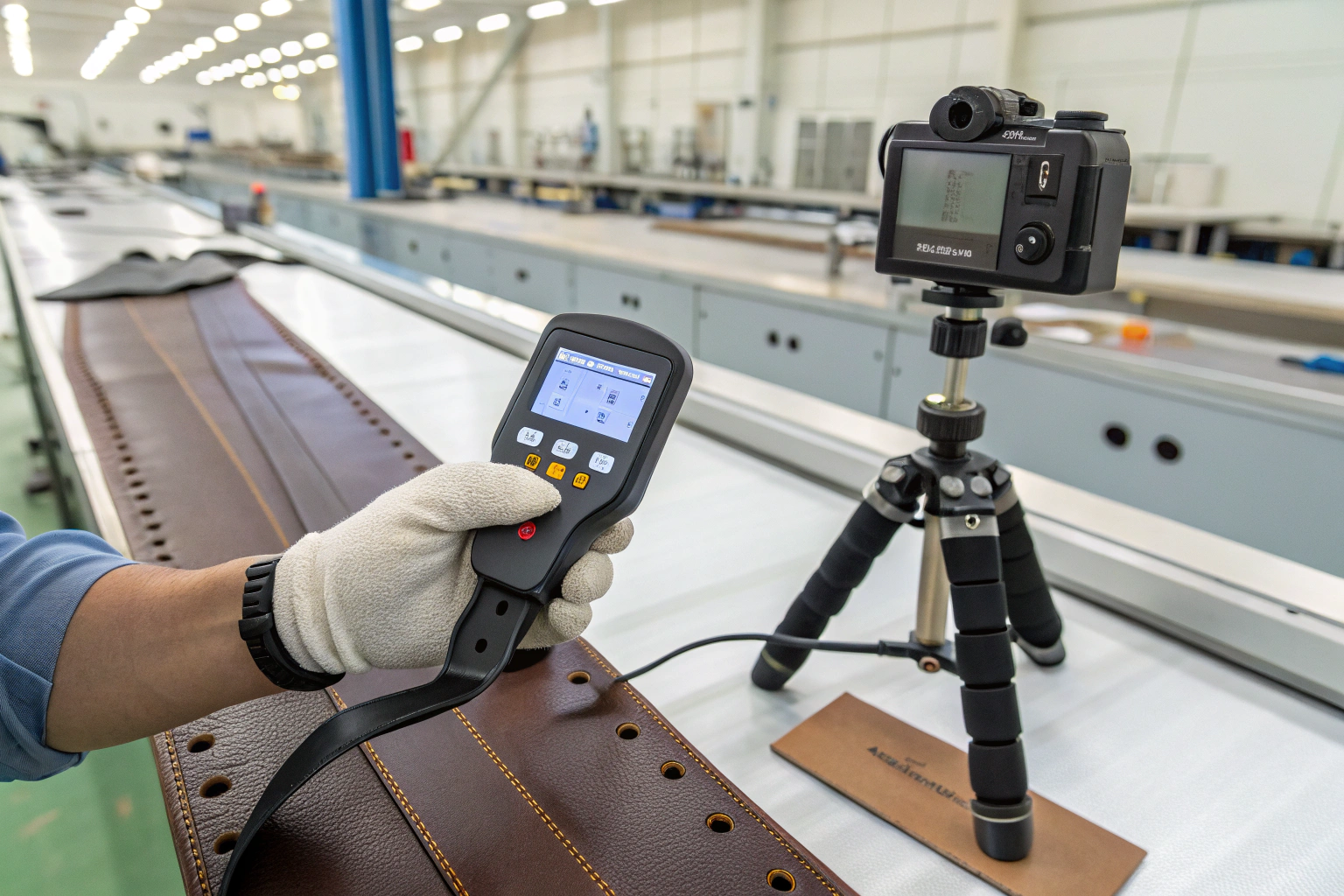
A buyer from Texas once sent me a furious email. He had received a shipment of leather belts, and within the first week of retail sales, the snap buttons were popping off. Customers were returning the belts, leaving one-star reviews, and demanding refunds. His brand's reputation was taking a beating over a tiny metal component that cost less than five cents. He asked me a question I will never forget. He said, "Why didn't anyone pull on this button before it left the factory?" He was right. No one had. And the proof he needed did not exist. That is exactly why videos are now mandatory.
US importers ask for factory videos of the button test on belts because a video provides verifiable, time-stamped evidence that a specific quality control test was actually performed on their production batch. A paper report can be faked in minutes. A video showing a technician attaching a force gauge to a snap button, pulling it to a specified kilogram threshold, and displaying the live reading on screen is much harder to falsify. This video evidence protects the importer from defective shipments, gives them documentation for their own liability insurance, and builds a chain of accountability that a static photograph or a typed report simply cannot deliver.
As a factory owner in Zhejiang, I have been on the receiving end of this request dozens of times. At first, I found it a little unusual. Now, I understand it completely, and we have built a dedicated video documentation station on our QC floor specifically for these tests. Let me explain the real reasons behind this request, the exact tests being filmed, and how this simple video practice protects both the buyer and the factory.
What Specific Button Tests Are Importers Asking Factories to Film?
The term "button test" is a shorthand that actually covers several distinct mechanical tests. A US importer who knows what they are doing will ask for video of at least two specific procedures. The first is the snap pull-off test, which measures how much force is required to detach the button from the belt material. The second is the snap cycle test, which measures how many times the button can be opened and closed before it fails. Each test answers a different question about product durability.
How Is the Snap Button Pull-Off Force Test Performed and Filmed?
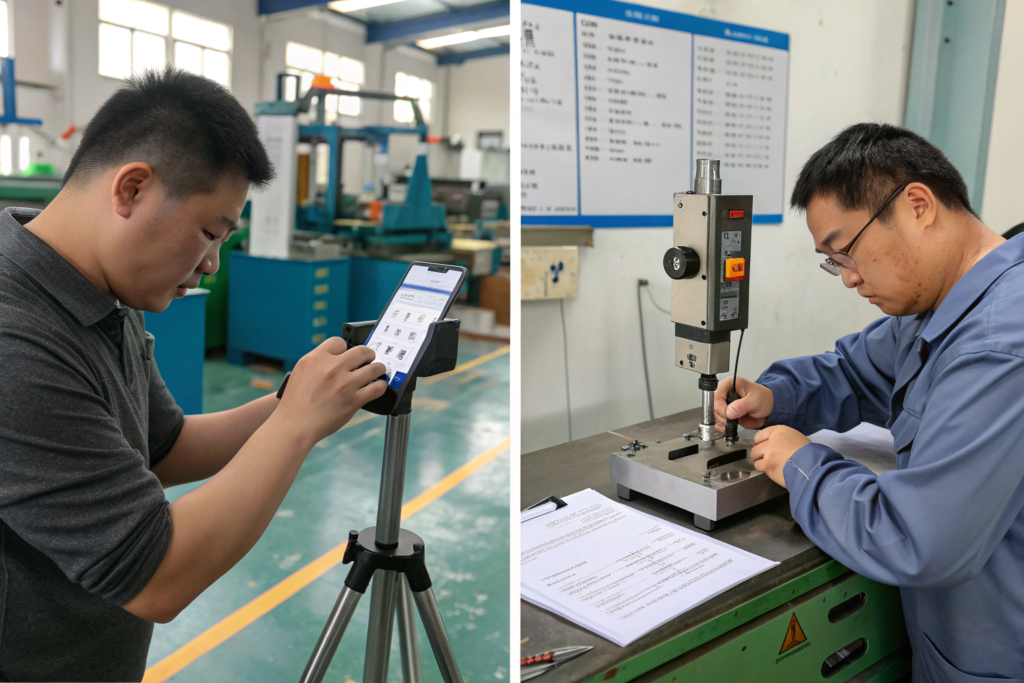
This test answers the question: will the button stay attached to the belt during normal use? A technician takes a finished belt from the production batch and clamps the leather strap into a fixed holding fixture. A digital force gauge with a hook attachment is connected to the snap button. The technician pulls the gauge steadily upward, perpendicular to the belt surface, increasing force until the button either detaches or the gauge reaches the specified pass threshold, usually 15 to 20 kilograms of force for a leather belt snap. The entire process must be filmed in one continuous, unedited shot. The video must clearly show the force gauge display, the button under test, and a printed label with the purchase order number and test date. We film this in high definition and upload the raw file to a shared cloud folder within hours of the test. A passing result shows the button holding firm at the threshold. If the button pops off at 8 kilograms, the video documents the failure, and we stop the shipment to investigate. This test is based on standardized methods that are well-documented by organizations like ASTM International, which publishes specific standards for snap fastener pull-off testing.
What Does the Snap Button Cycle Life Test Demonstrate?
The pull-off test checks attachment strength. The cycle test checks the mechanism itself. A snap button is designed to be opened and closed thousands of times over the life of a belt. A cheap snap with a weak internal spring will lose its grip and become loose after a few hundred cycles. The test uses a manual or motorized jig that repeatedly snaps and unsnaps the button. The technician counts the cycles and checks the holding force at intervals. The video shows the test in progress and the condition of the snap at the end. The standard we aim for is a minimum of 500 open-close cycles with no visible deformation and no loss of holding tension. Filming this test proves that the snap mechanism, not just the attachment, meets the durability promise. A buyer who receives this video can confidently tell their retail partners that the belt snaps will not fail during the warranty period.
Why Is Video Evidence More Trusted Than a Paper QC Report?
I have been in this industry long enough to know a dark truth. A paper QC report is only as honest as the person who filled it out. I have seen reports with perfect checkmarks for shipments that arrived with buttons falling off. The report was either filled out without doing the test, or the test was done on a cherry-picked sample while the rest of the production batch used inferior snaps. The buyer who requested that Texas belt shipment had a paper report. It was worthless. The video request is a direct response to this trust deficit.
How Does a Video Prevent Data Falsification and Sample Switching?
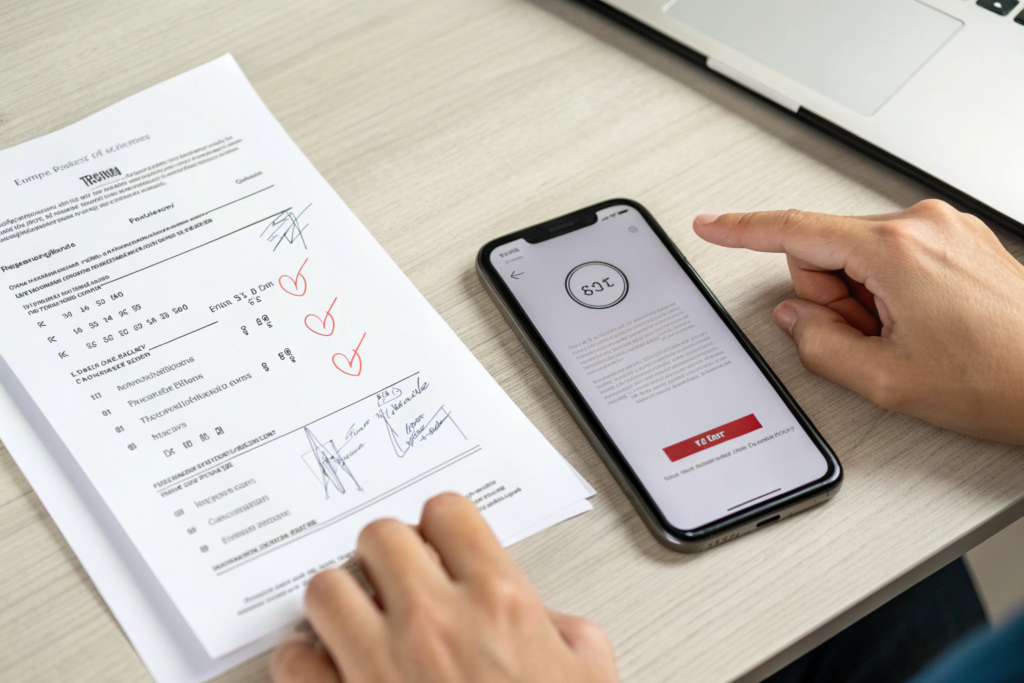
A video creates a chain of visual evidence that is much harder to manipulate. When we film a button test, we start the video by showing the purchase order number on a printed sheet. We then pan the camera to show the belt with its style number and color. We then film the force gauge being zeroed out, and we film the entire pull test without stopping the recording. The final shot shows the gauge reading and the condition of the button and belt. This continuous shot makes it extremely difficult to fake a result. A dishonest actor would need to doctor a seamless video, which requires skills and time that a simple paper forgery does not. Furthermore, the video is time-stamped by the camera and the cloud upload. This proves the test was done at a specific time, which should align with the production schedule. A paper report dated last week could have been typed this morning. A video file has metadata that tells a more complete story.
Can a Button Test Video Serve as Legal and Insurance Documentation?
For US importers, this is a critical consideration. If a consumer is injured by a defective belt, the liability claim can travel all the way up the supply chain to the importer of record. The importer needs documentation to show they exercised reasonable care in quality assurance. A video of a destructive pull test performed on their specific batch is powerful evidence of due diligence. It can be submitted to a liability insurance provider to defend against a claim or to negotiate lower premiums. I have had clients tell me that their insurance underwriter specifically asked for video evidence of product testing as part of their annual review. The video is not just a quality tool. It is a legal shield. In a courtroom or an insurance arbitration, a video of a test being performed on an actual production unit carries far more weight than a ticked checkbox on a generic inspection form.
How Does a Button Test Video Protect the Importer's Brand and Cash Flow?
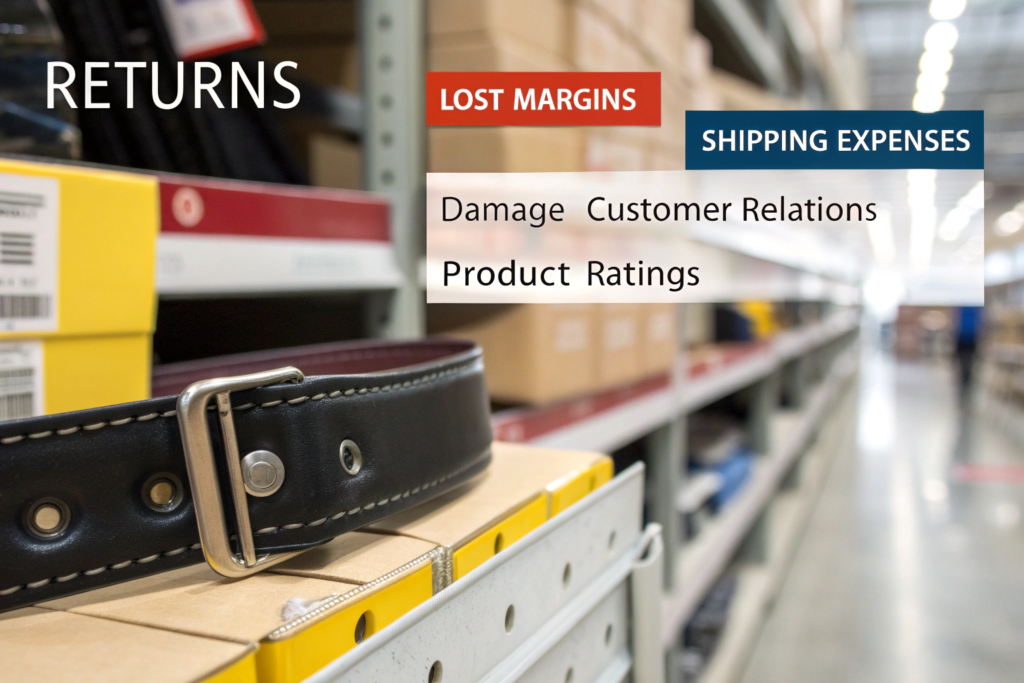
A failed button might seem like a tiny problem, but the financial consequences cascade quickly. A single returned belt costs the brand the retail margin, the return shipping, the customer service time, and potentially the lifetime value of that customer if they leave a negative review. Multiply that by a production run of five thousand belts with a two percent failure rate, and you have one hundred angry customers and a damaged product page rating. A button test video is a small, upfront investment that prevents a large, downstream loss.
How Does Early Detection Prevent Chargebacks and Return Costs?
The video test happens before the goods leave our factory. If the button fails the pull test on camera, we do not ship that batch. We stop, investigate the root cause, and either rework the belts with a different snap component or remake the order entirely. The cost of this correction is borne at the factory level, where material and labor costs are lower than the importer's landed cost. The importer avoids receiving defective inventory, which means they avoid processing returns, issuing refunds, and dealing with chargebacks from their retail partners. The video is the trigger that stops the defective goods at the source. A paper report that falsely says "pass" allows the defective goods to ship, and the costs explode once they reach US soil. The math is simple. A video test costs nothing extra to film, but it saves thousands in potential downstream costs.
How Does Video Documentation Support the Importer's Retail Relationship?
US importers often sell to large retailers with strict vendor compliance manuals. These retailers can levy chargeback fines for defective merchandise that range from a few hundred to several thousand dollars per incident. If a belt button fails in a customer's hands and the customer complains to the retailer, the retailer fines the brand. The brand then has to prove to the retailer that they had adequate quality controls in place. A video of a pull test performed on the specific shipment is the best evidence the brand can provide. It shows the retailer that the brand is a responsible vendor with a rigorous supply chain. This can mean the difference between a waived penalty and a terminated vendor relationship. The video builds trust between the importer and their retail buyer, which translates into larger future orders and better shelf placement.
What Should a Complete Button Test Video Include to Be Useful?
Not all button test videos are created equal. A shaky, out-of-focus video that shows a hand pulling on a button with no context is useless. A properly executed video follows a strict protocol that makes the evidence verifiable and auditable. We developed our filming protocol in consultation with several US clients who told us exactly what their compliance departments need to see. Every second of the video has a purpose.
What Information Must Be Visible in the Video Frame?
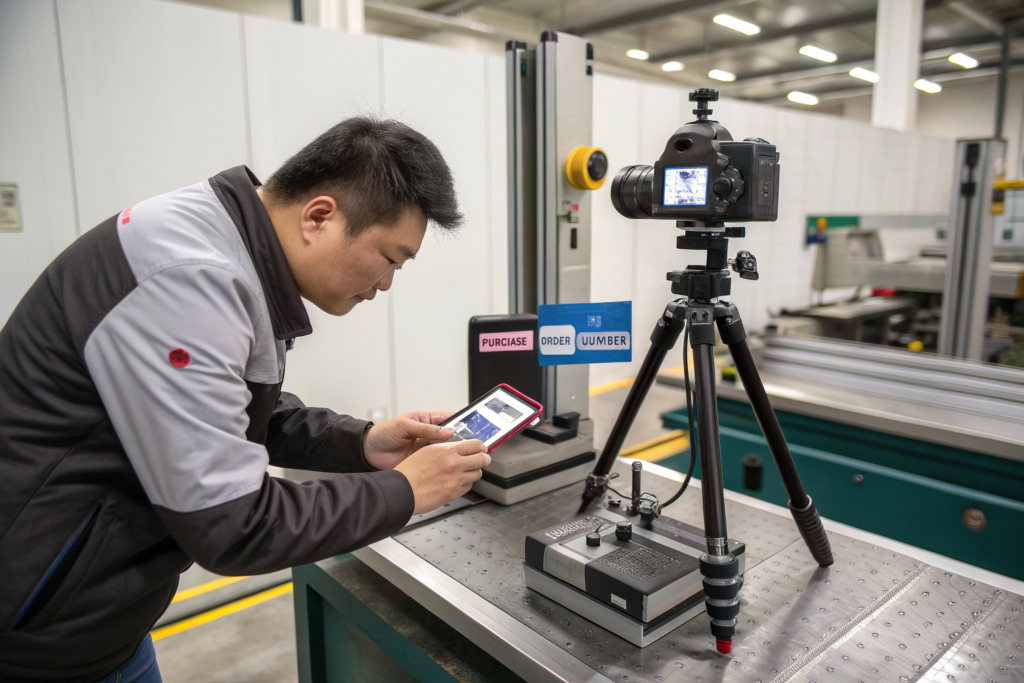
The video must capture five elements in a single, continuous frame. First, the purchase order or style reference number, clearly written on a card placed next to the test sample. Second, the digital force gauge display, zeroed at the start and showing the live reading throughout the pull. Third, the button and the surrounding material, so the viewer can see exactly where the force is being applied. Fourth, the technician's hands performing the test, to show the procedure is correct. Fifth, a timestamp, either on the camera overlay or on a visible clock in the frame. The video should be filmed in landscape orientation, in high definition, with good lighting and no background noise that obscures verbal explanations. After the test, the technician should hold the belt and the gauge reading steady for at least five seconds to allow a viewer to freeze the frame and read the final value. The raw, unedited file is then uploaded directly to a shared drive. We never trim or edit the video because an unbroken timeline is the source of its credibility. Resources on proper testing documentation can be found through standards organizations like ISO.
How Many Belts Should Be Tested and Filmed Per Batch?
The sample size depends on the order quantity and the acceptable quality level agreed upon with the buyer. For a standard order of one to five thousand belts, we follow an AQL 2.5 level II sampling plan for destructive testing. This typically means we pull and test between 20 and 50 belts from the batch, depending on the exact lot size. We do not film every single test because that would produce an unmanageable volume of video. Instead, we film a representative selection of at least five tests per batch, covering different sizes and colors if the order includes variations. The filmed tests are selected randomly from the sample group, not cherry-picked. We state in the video narration which sample number this is out of the total sample size. This gives the buyer confidence that the filmed results are representative of the entire inspection, not just the best performers. The combination of a full written inspection report and a video of representative tests provides both the statistical rigor and the visual proof that modern importers demand.
Conclusion
US importers ask for factory videos of the button test on belts because they have learned, often through painful and expensive experiences, that a paper quality report is not enough. A video provides unbroken, time-stamped visual evidence that the snap pull-off force test and the cycle life test were actually performed on their specific production batch. It prevents data falsification and sample switching. It serves as legal and insurance documentation of due diligence. It stops defective goods at the factory gate before they can generate chargebacks, returns, and one-star reviews on US soil. And it builds a documented chain of trust between the importer, their retail partners, and the factory.
A factory that resists this video request is sending a signal, whether they intend to or not. The signal is that their quality control process is not transparent enough to be filmed. A factory that welcomes the request and has a dedicated video documentation station is demonstrating genuine confidence in their manufacturing quality.
At AceAccessory, we have fully integrated video documentation into our standard quality control workflow for all belt orders. We do not wait for the buyer to ask. We film the button tests, upload the raw files, and share the link as part of our standard pre-shipment inspection package. Our project managers narrate the tests in clear English so that a buyer sitting in Chicago or New York can understand exactly what they are watching.
If you are sourcing belts with snap buttons and want a factory partner who provides transparent, video-documented quality assurance, I encourage you to contact us directly. We can share a sample test video so you can see the level of documentation we provide before you even place an order.
For a direct conversation about your belt production requirements and our video QC process, please contact our Business Director, Elaine. You can reach her at elaine@fumaoclothing.com. Let us give you the documentation you need to sell with confidence.