You run a sporting goods brand. A major baseball equipment buyer approaches you. They want your best batting gloves. But they have one non-negotiable requirement. They need both left and right-handed gloves, not just a symmetrical pair, but a true left-handed glove for a left-handed batter and a true right-handed glove for a right-handed batter. You contact several factories. They all say the same thing. They produce standard pairs. One glove for the left hand, one for the right hand. They do not make a dedicated left-handed batter's pair. You start to think the market for left-handed batters is too small for any factory to care. You might have to turn down the order.
Yes, we can produce both left and right-handed baseball batting gloves as distinct, dedicated products. A true left-handed batting glove is not simply the right-hand glove from a standard pair. It is constructed as a mirror image. The palm padding, the thumb reinforcement, the index finger grip zones, and the wrist closure are all specifically patterned for a batter who grips the bat with their left hand on top. We produce standard right-handed batter pairs, dedicated left-handed batter pairs, and even single replacement gloves for either hand. Our factory in Zhejiang has the pattern engineering capability to create true anatomical fits for both batting orientations.
I am the owner of AceAccessory. We manufacture sports gloves, including batting gloves, for brands in North America, Japan, and Latin America. I have worked with niche baseball brands that serve serious players who will not compromise on fit. A left-handed batter knows the difference immediately. If the padding is on the wrong side of the thumb, they feel it on the first swing. Let me explain exactly how we engineer these gloves and why the distinction matters for performance.
What is the difference between standard and true left-handed batting gloves?
Most casual baseball fans do not realize there is a difference. They assume every batting glove pair is the same, just a left hand glove and a right hand glove. They think a left-handed batter just wears the pair reversed. But the forces on a batter's hands are not symmetrical. The top hand, the one closest to the bat barrel, absorbs more torque and vibration. The bottom hand guides the swing. The wear patterns, the callus points, and the grip pressure distribution are completely different for a left-handed versus a right-handed batter. A glove designed for a right-handed batter fails a left-handed batter in predictable, painful ways.
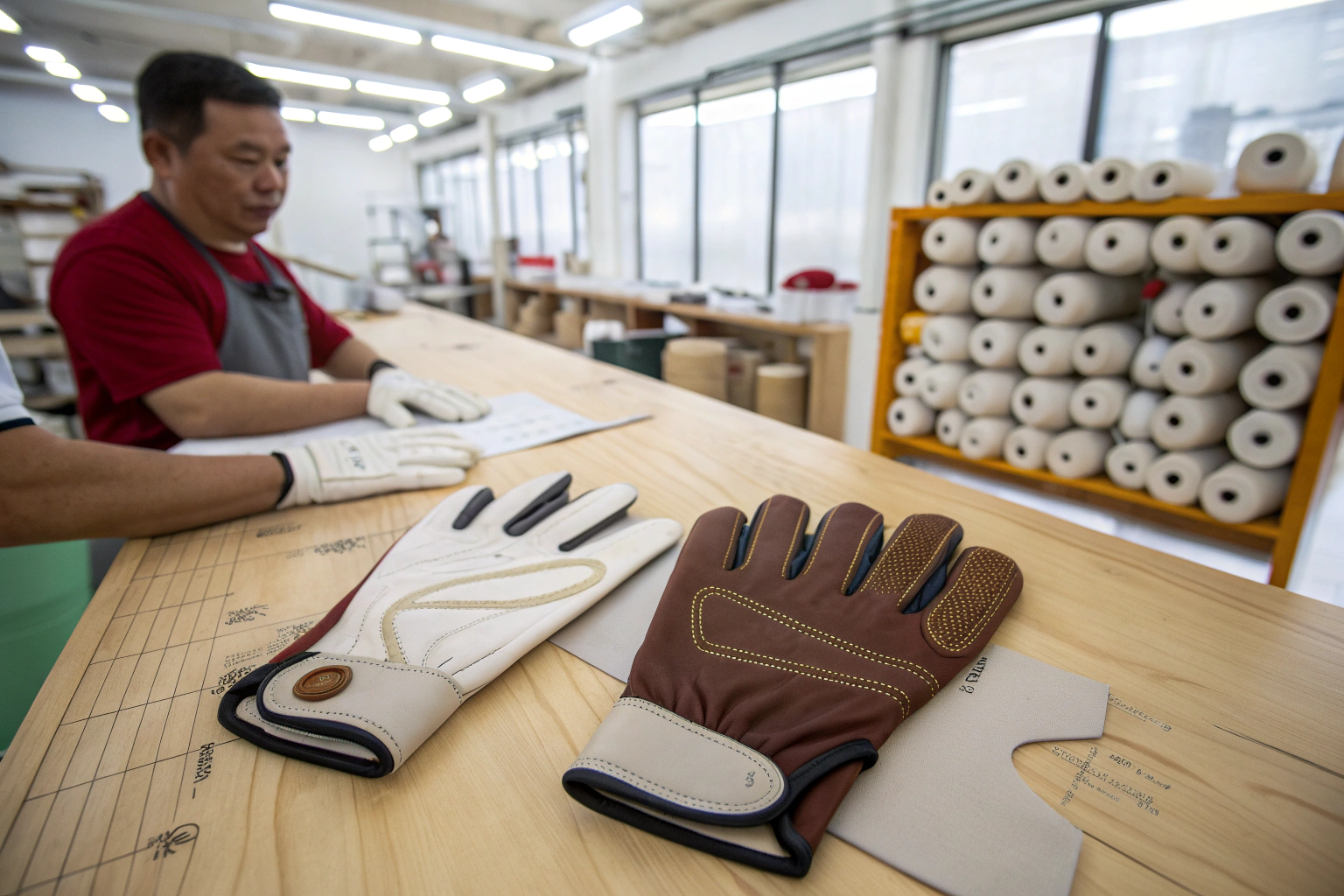
The difference between standard batting gloves and true left-handed batting gloves lies in the anatomical patterning of the palm, the thumb gusset, and the finger padding. In a standard pair made for a right-handed batter, the left-hand glove has heavy palm padding on the hypothenar area, the fleshy part below the pinky. This absorbs the pressure from the bat knob. The right-hand glove has extra reinforcement on the thumb and index finger, where the bat handle torques against the grip. For a left-handed batter, these roles are reversed. A true left-handed pair swaps all of these reinforcements. The padding and grip zones are remapped to the opposite hands.
At our factory, we do not just relabel a standard pair. We maintain separate digital pattern libraries for right-handed batter gloves and left-handed batter gloves. The patterns are not simply flipped. The specific padding densities and the silicone print patterns are re-engineered based on the biomechanics of a left-handed swing. This matters most in the palm and the thumb. Let me explain how these specific zones are built and why the wrist closure orientation also needs to change.
How does palm padding placement differ for a left-handed batter?
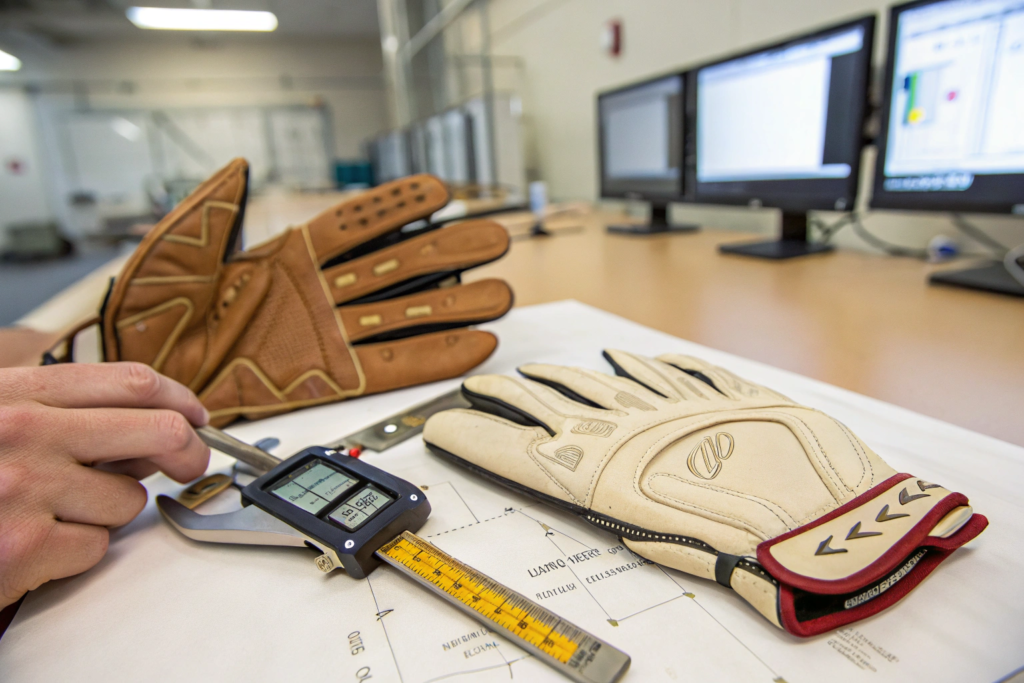
The palm of the bottom hand, the hand at the knob end, takes a beating. In a right-handed batter, the left hand is the bottom hand. The knob of the bat presses into the lower left palm. Our standard left-hand glove in a right-handed pair has a dense, shock-absorbing pad sewn into the hypothenar region. The right-hand glove in that pair has a much thinner palm because it is the top hand and needs maximum feel, not maximum protection.
For a left-handed batter, the right hand is the bottom hand. Therefore, the right-hand glove in a left-handed pair needs that dense hypothenar pad. The left-hand glove needs the thin, high-sensitivity palm. If you give a left-handed batter a standard pair, their bottom hand gets the thin palm. After a few batting practice sessions, their hand stings and bruises. They lose confidence in their grip. We solve this by building a dedicated right-hand glove with a bottom-hand palm pad for the left-handed batter pair. The pad is usually made of Poron XRD or a high-density EVA foam, covered with a durable synthetic leather. The pad is sewn internally so it does not slip. You can learn about impact protection materials for sports gloves at SATRA Technology Centre, which tests and certifies protective sports equipment. The American Society for Testing and Materials also provides standards for shock attenuation in athletic padding.
Why does the thumb construction need to change for a left-handed glove?
The thumb is the other critical difference. The top hand's thumb wraps over the bat and receives extreme friction and torque during the swing. In a standard right-handed batter pair, the right-hand glove has an extra layer of abrasion-resistant material, often a synthetic suede or a silicone grip print, sewn over the inner thumb. This prevents the bat from wearing a hole through the glove in one season.
For a left-handed batter, the left hand is the top hand. The left-hand glove in a left-handed pair must carry that thumb reinforcement. We also adjust the thumb gusset, the small piece of fabric that connects the thumb to the main body of the glove. The angle of this gusset affects how the thumb wraps around the bat handle. A thumb gusset designed for a right-handed top hand will feel restrictive to a left-handed batter. We adjust the pattern by a few degrees to match the natural grip angle of a left-handed player. This is a subtle detail, but professional and serious college players notice it immediately. They feel the difference in the smoothness of their grip and release.
What materials work best for high-wear batting glove palms?
A batting glove palm must survive a season of abuse. It rubs against a wooden or aluminum bat handle thousands of times. It absorbs sweat, dirt, and pine tar. It is stretched and twisted with every swing. If the palm material is too thin, it shreds. If it is too thick, the batter loses feel and cannot control the bat head. Finding the right balance between durability and sensitivity is the central challenge of batting glove design. A serious player will reject a glove that feels numb, and they will also reject one that falls apart after two tournaments.
The best material for high-wear batting glove palms is a premium synthetic leather with a silicone grip overlay on the key contact zones. Genuine goatskin leather is also an excellent choice for professional-level gloves. It offers a superior natural feel and conforms to the hand over time. However, it requires more care and has a higher cost. For most competitive and recreational gloves, we recommend a Clarino or similar Japanese synthetic leather. It is lightweight, machine-washable, and has extremely high abrasion resistance. We combine this with a strategically placed silicone print pattern on the palm to add mechanical grip and additional wear protection.
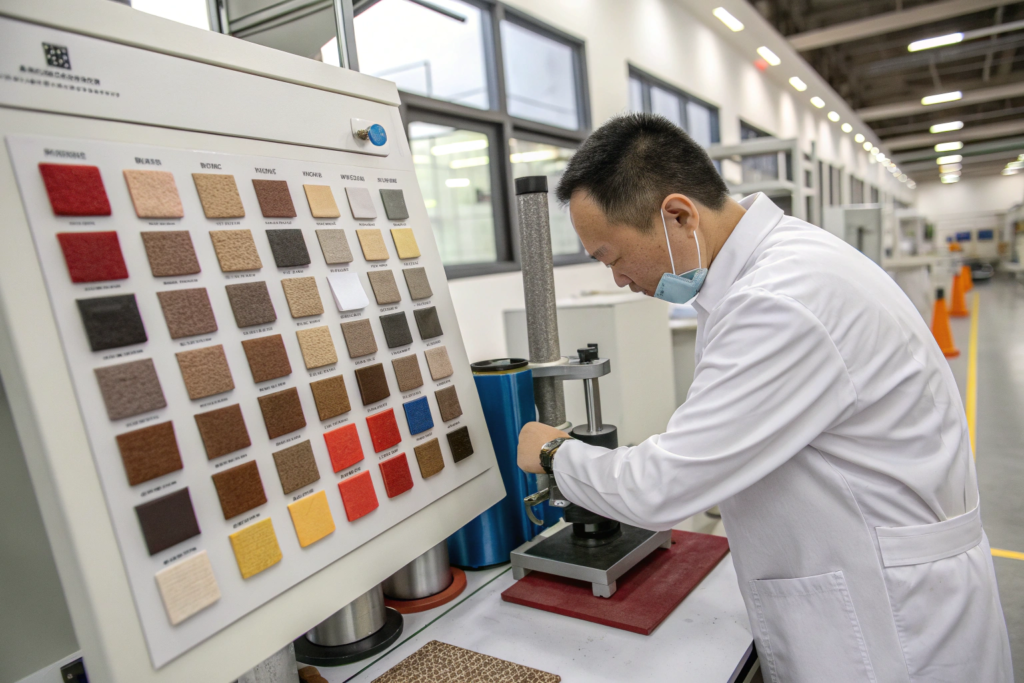
At our factory, we stock a range of performance synthetic leathers specifically selected for sports glove palms. We test each batch for abrasion resistance using a Martindale tester. We also test the coefficient of friction, both dry and wet, to ensure the grip remains consistent. The silicone print pattern is not just a design element. It is a functional grip technology. Let me explain the difference between sheepskin, goatskin, and synthetic leather, and how perforation affects durability.
Is sheepskin or goatskin better for premium batting glove palms?
For a premium, professional-grade batting glove, we recommend goatskin over sheepskin. Both are genuine leathers and offer excellent natural feel. But they perform very differently under the stress of batting. Sheepskin is incredibly soft and supple. It feels luxurious. However, it has lower tensile strength and lower abrasion resistance. A sheepskin palm on a batting glove used by a serious player will develop holes relatively quickly, especially on the thumb and index finger.
Goatskin has a tighter grain structure. It is naturally more abrasion-resistant than sheepskin. It also has a unique property called "boardiness." It starts slightly stiffer but breaks in quickly and molds to the hand permanently. A goatskin palm glove actually improves its fit over the first few games. It also absorbs less moisture than sheepskin. This is important because wet leather weakens and stretches. Professional players and serious amateurs overwhelmingly prefer goatskin for their game gloves. We source our goatskin from tanneries that specialize in sports-grade leather. The leather is drum-dyed so the color penetrates fully and does not bleed onto the player's hands. For leather performance standards, you can consult Leather Working Group which audits tanneries for quality and sustainability.
How does laser perforation affect the durability of a batting glove palm?
Breathability is a major selling point for batting gloves. A hot, sweaty hand loses grip and feels uncomfortable. Many gloves feature laser-cut perforations on the palm and fingers to allow airflow. The question is whether these holes compromise the structural integrity of the palm material. The answer depends on the perforation pattern and density.
We design our perforation patterns carefully. The holes are placed in the valleys between the grip contact zones. The high-wear areas, the thumb pad, the index finger wrap, and the hypothenar palm pad, are left solid or have very minimal perforation. The center of the palm, which has less direct bat contact, can have a more open perforation pattern. The laser cutting itself is a clean process. It seals the edges of the synthetic leather fibers as it cuts. This prevents fraying and tearing around the holes. We have tested heavily perforated palms against solid palms on our abrasion machine. The solid palm lasts longer, absolutely. But a well-designed perforated palm can achieve 80 to 90 percent of the solid palm's lifespan while offering significantly better breathability. For most players, this trade-off is worth it. The glove is replaced after a season or two anyway.
How do you size a dedicated left-handed batting glove pair correctly?
Sizing is where many online orders go wrong. A customer orders a large left-handed batting glove pair because they always wear a large in everything. The gloves arrive. They are too tight. Or too loose. The customer is frustrated. They leave a bad review. They have to return the product. Sizing batting gloves is not like sizing a casual winter glove. A batting glove must fit like a second skin. There should be no bunching at the fingertips and no excess material in the palm. A glove that is too large will twist on the bat handle during the swing. A glove that is too tight will restrict blood flow and cause hand fatigue.
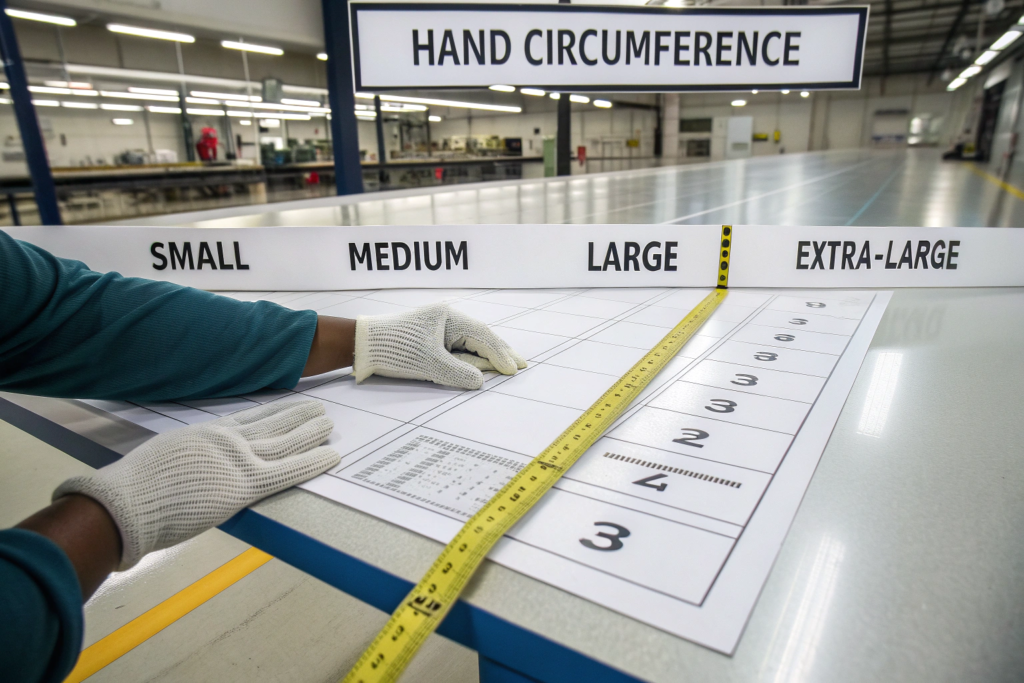
We size a dedicated left-handed batting glove pair by measuring the circumference of the player's dominant batting hand around the widest part of the palm, just below the knuckles, and matching this to our standardized sizing chart. The sizing chart applies regardless of whether the glove is for a right-handed or left-handed batter. The construction orientation changes, but the hand dimensions are the same. A left-handed batter who measures 8 inches around the palm needs a large in a left-handed pair, just as a right-handed batter with an 8-inch palm needs a large in a standard pair. The pattern grading is consistent.
We also offer a custom sizing option for professional teams and elite-level players. We can work from a traced hand outline or a 3D scan. But for retail and team sales, a simple tape measure and a good sizing chart solves most fit issues. The key is to educate the buyer on how to measure correctly. Let me explain the standard sizing chart and why finger length often causes confusion.
What is the standard sizing chart for adult and youth batting gloves?
We use a sizing chart that maps palm circumference to standard letter sizes. For adult batting gloves, the typical chart is as follows. A palm circumference of 7 to 7.5 inches is a Small. Seven and a half to 8 inches is a Medium. Eight to 8.5 inches is a Large. Eight and a half to 9 inches is an Extra Large. Nine to 9.5 inches is an XXL. These are general guidelines. The exact measurements may shift slightly depending on the brand's specific last, the hand-shaped form the glove is built on.
For youth gloves, the sizing shifts down. A Small youth glove fits a palm circumference of 6 to 6.5 inches. Medium fits 6.5 to 7 inches. Large fits 7 to 7.5 inches. It is important to note that youth gloves are not just scaled-down adults. A child's hand has different proportions. The fingers are shorter relative to the palm width. Our youth glove patterns are graded on a separate last that reflects these junior proportions. We always advise team dealers to bring a sizing kit with sample gloves when outfitting a youth league. A kid trying on a glove is worth a thousand measuring tapes. You can find general sizing guidelines for sports gloves from organizations like the National Operating Committee on Standards for Athletic Equipment, which provides fit and safety standards for sports gear.
Why is finger length a common fit issue with batting gloves?
Palm circumference is our primary sizing metric, but finger length is the variable that causes the most returns. Two people can have the exact same palm circumference but completely different finger lengths. One person has a broad, square palm with short fingers. Another has a narrow palm with long, slender fingers. The size large glove might fit both in the palm but be too short in the fingers for the second person.
Unfortunately, off-the-shelf batting gloves cannot perfectly accommodate every hand shape. We design our gloves with a standard finger length for each size that fits the statistical average of that palm circumference. For players who fall outside the average, we offer two solutions. The first is to go up one size. This adds about a quarter inch to the finger length. The palm might be slightly looser, but the wrist closure strap can cinch it down. The second solution is our custom program. We can adjust the finger length on the pattern by up to half an inch for minimum orders of 50 pairs. This is popular with college and professional teams who have roster-wide sizing needs. The team's equipment manager sends us a spreadsheet of player measurements, and we make a custom run with the exact finger lengths specified.
Can you add custom logos and team branding to both glove orientations?
A batting glove without a logo is an unbranded commodity. A batting glove with a crisp, beautifully placed team logo is a piece of team identity. Players feel pride when they pull on a glove with their school crest, their travel ball logo, or their country's flag. For a brand, the logo on the glove is prime advertising real estate. It is seen in every batter's box photo, every highlight reel, and every dugout shot. The visual impact of the branding is almost as important as the functional performance of the glove. You need a factory that can apply your logo flawlessly to both glove orientations without distortion or misplacement.
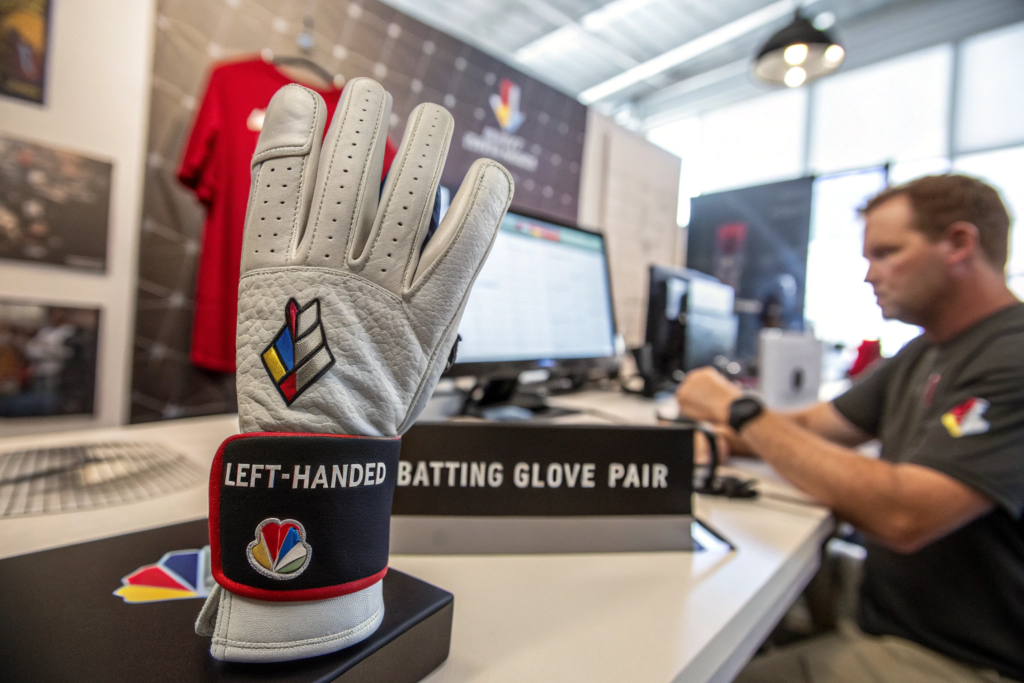
Yes, we can add custom logos and team branding to both left and right-handed batting glove orientations. We offer silicone print logos, heat-transfer vinyl logos, woven label embossing, and sublimated fabric panel logos. The artwork is positioned individually for each hand orientation. We do not simply mirror the logo. We check the visual balance. A logo on the back of a left-hand glove in a left-handed pair must read correctly when the batter is in their stance. The logo placement file is reviewed and approved by the client before production begins for each orientation.
At our factory, we have a dedicated branding station in our batting glove production line. We can apply multiple logo types in one product. For instance, a silicone print on the palm, a heat-transfer team crest on the backhand, and an embossed brand name on the wrist strap. The flexibility of our printing methods allows for full creative expression. Let me explain the different logo application methods and how we manage multi-logo artwork.
What are the most durable logo application methods for batting gloves?
The most durable logo application method for batting gloves is silicone print. Silicone is flexible, washable, and bonds permanently to synthetic leather and mesh fabrics. It will not crack, peel, or fade over the life of the glove. We use a screen-printing process to apply a controlled thickness of liquid silicone to the glove material. The silicone is then heat-cured. The result is a raised, three-dimensional logo with a premium, technical appearance. Silicone is the industry standard for high-performance sports glove branding.
Heat-transfer vinyl is another durable option. It is a thin, colored film that is cut to shape and heat-pressed onto the fabric. It offers bright, vibrant colors and sharp edge definition. It works well on the mesh backhand areas where silicone might bleed through the holes. The third durable option is a woven label sewn onto the wrist strap. A woven label has a classic, heritage look. It is often used for the main brand mark. The disadvantage is that it can fray at the edges over time if not properly sealed. We use ultrasonic cutting for our woven labels to seal the edges permanently. For more on textile printing technologies, you can explore resources at Printing United Alliance, which provides extensive education on garment and accessory decoration.
How do you ensure the logo looks correct on both left and right-hand gloves?
This is a critical quality control step. A logo that is designed for the back of a right hand cannot simply be flipped for the back of a left hand. If the logo contains text, a flipped logo would read backwards. If the logo is asymmetrical, like a swoosh or an animal facing a certain direction, flipping it changes the design intent. We create a separate artwork file for each hand. We place the logo on the left-hand glove back and the right-hand glove back as independent operations.
The client approves a digital mockup that shows the logo placement on both gloves, laid flat, and also a 3D rendering of the gloves on hands. This gives a realistic preview. We print a physical sample of both gloves before mass production. The client holds the sample gloves, checks the logo orientation in a mirror, and confirms the visual balance. This extra step prevents the nightmare of a full production run with a backwards or upside-down logo. It adds a few days to the sampling timeline, but it is non-negotiable for branded products.
Conclusion
Producing dedicated left-handed baseball batting gloves requires genuine pattern engineering, not just a label swap. The anatomical differences between a right-handed and left-handed batter's swing dictate where the padding, the grip zones, and the reinforcements must be placed. The bottom hand needs the dense palm pad. The top hand needs the thumb guard. A left-handed batter pair swaps all of these features compared to a standard pair. The materials must support this engineering. Premium goatskin or high-abrasion synthetic leather with strategic silicone print overlays provide the durability and sensitivity players demand. Sizing must be precise. A correct palm measurement and attention to finger length ensure a second-skin fit. And branding must be individually placed for each hand orientation so the logo reads correctly from every angle. These details separate a commodity glove from a performance product that serious players trust.
If your brand is ready to offer true left and right-handed batting gloves, we can manufacture them for you. Our factory in Zhejiang has the pattern files, the material inventory, the silicone printing lines, and the quality control team to deliver a professional-grade product. We work with baseball and softball brands, team dealers, and sporting goods chains. Whether you need 100 pairs for a boutique launch or 10,000 pairs for a national retail program, we have the capacity.
To start your batting glove project, request material swatches, or get a quote for left-handed and right-handed glove production, contact our Business Director, Elaine. Her email is elaine@fumaoclothing.com. We will help you develop a batting glove line that fits every player, regardless of which side of the plate they stand on.