You are about to close a big order. A Russian distributor wants to buy your children's hair clips, belts, and knit hats. You agree on the price. You confirm the delivery date. Then they send you a document you were not expecting. It's a technical regulation. They insist every single item must carry a Russian-language safety label with specific certification marks. You never needed this for your American or German clients. You start to panic. Will this delay the shipment? Will it add unexpected costs? What happens if you refuse? The reality is simple. If you do not comply, your goods will be stopped at Russian customs. They will be seized, quarantined, or destroyed. Your customer will not pay you. This is not a negotiation tactic. It is the law.
Russian buyers ask for Russian-language safety labels on kids' accessories because it is a mandatory legal requirement under the EAC certification framework and Russian consumer protection laws. Any children's product imported and sold in Russia must carry a label in the Russian language. The label must include the product name, country of origin, manufacturer details, composition, care instructions, and a valid EAC mark. Without this, the goods are considered non-compliant and cannot legally clear customs or be sold in retail stores. Russian parents also heavily rely on these labels to judge the quality and safety of imported goods for their children.
I learned this lesson many years ago with our first Russian client. We shipped a beautiful order of hair bands and scarves. We used our standard English labels. The shipment was held at the port in Saint Petersburg for three weeks. We had to pay storage fees and a fine. We then had to hire a local agent to relabel every piece. It was a costly mistake. Since then, our factory in Zhejiang has developed a rigorous system for Russian compliance labeling. I want to share exactly why this matters and how you can get it right the first time.
What are the mandatory EAC labeling rules for children's fashion accessories?
Most Western and Asian suppliers have never heard of the EAC mark until a Russian buyer brings it up. The EAC stands for Eurasian Conformity. It is the certification mark for the Eurasian Economic Union, which includes Russia, Belarus, Kazakhstan, Armenia, and Kyrgyzstan. It is like the CE mark in Europe, but with stricter documentation rules for certain product categories. Children's products are a high-risk category. The authorities treat any imported kids' accessory with zero tolerance for mistakes. I have seen customs officers open every carton just to check the label on a children's belt. They will not release the goods if the mark is missing or incorrect.
The mandatory EAC labeling rules for children's fashion accessories require a permanent label in Russian that includes the EAC conformity mark, the manufacturer's name and legal address, the product name, the fiber composition with percentages, care symbols, and the age suitability. The label must be sewn in or securely attached. Paper hangtags are not enough. The information must survive the retail journey. The EAC certificate number must be traceable in the official registry. You cannot just print the EAC logo without having a valid certificate behind it. The certification process involves sending samples to an accredited laboratory in Russia for safety and toxicity testing. Once you pass, the label must exactly match the certificate data.
At AceAccessory, we manage this process for our clients. We coordinate with accredited certification bodies in Russia. We send our hair bands, belts, and hats for testing. We handle the translation of the technical documentation. Once the certificate is issued, we design the label layout according to the technical regulation and submit it to the buyer for final approval before production begins. This prevents any surprises at customs. Let me explain the exact information you must include and what happens if the label design is wrong.
What exact information must appear on the EAC children's product label?
The requirements are specific. You cannot guess or paraphrase. The label must state the product name clearly. For example, "Children's hair clip made of polyester" or "Knitted hat for toddlers." The country of origin must be in Russian, for instance, "Сделано в Китае" meaning "Made in China." The manufacturer's name and full legal address, including the postal code, must be listed. The importer's details, meaning your Russian buyer's registered company name and address, are also required by law.
The fiber composition must be listed with exact percentages, not ranges. If the product is a blend, you write "60% хлопок, 40% полиэстер." Care symbols must comply with GOST standards, which are similar to ISO care symbols but must be understood by a Russian-speaking consumer. The age suitability is critical. The label must say, for example, "Для детей от 3 лет" meaning "For children aged 3 and over." If the product is for babies under one year, the testing and labeling requirements are even stricter. The EAC mark itself must be a specific graphic design, not just the letters typed out. The size of the mark must be at least 5 millimeters. If the product is too small for a sewn-in label, a parent packaging label is allowed, but the packaging must be sealed so the label cannot be lost before the customer sees it. You can verify the exact labeling requirements in the Technical Regulation of the Customs Union "On the Safety of Products Intended for Children and Adolescents" (TR CU 007/2011). The full text is available in Russian on the official portal of the Eurasian Economic Commission. An English summary of the labeling rules can often be found through the International Trade Administration.
What happens if the EAC label design is rejected at Russian customs?
The consequences are severe and expensive. If a Russian customs inspector finds a labeling violation, they will issue a detention order. The goods are not allowed to enter the country. They sit in a bonded warehouse. You, the exporter, are not physically there. Your Russian buyer has to deal with it. Storage fees begin to accumulate daily. The buyer now has a choice. They can try to relabel the goods under customs supervision, which is a slow and bureaucratic process requiring formal permission. They can re-export the goods back to China, which means you pay for return freight. Or, in the worst case, if the violation is considered an attempt to import unsafe products, the goods can be confiscated and destroyed.
I have seen a shipment of children's knitted gloves delayed for two months over a missing age suitability statement. The cost of the delay was greater than the profit margin on the entire order. This is why Russian buyers are so strict about labels. They are not being difficult. They are protecting themselves from a logistics nightmare. A correct label submitted with the pre-shipment documents is the cheapest insurance policy you can buy. You should always send a photo of the finished label sewn into the product to the buyer for approval before you ship the container.
Why do Russian parents specifically trust imported accessories with Cyrillic labels?
You might wonder why the label language matters so much. After all, many Russians understand some English. Young parents in Moscow and Saint Petersburg are worldly and well-traveled. They buy international brands. But when it comes to their children, logic gives way to deep parental instinct. A child's skin is sensitive. A child puts everything in their mouth. The fear of toxic materials, cheap dyes, or small detachable parts is overwhelming. A parent standing in a store aisle is not thinking about global trade. They are thinking, "Will this hurt my baby?" The label is the only source of information they have to answer that question in that moment.
Russian parents specifically trust imported accessories with Cyrillic labels because the Russian text signals that the foreign manufacturer has taken Russian safety standards seriously. It shows respect for the local consumer. It demonstrates that the product has passed specific tests for children's health in Russia, not just a generic European standard. A label in English or Chinese feels distant and unaccountable. If something is wrong, how can a Russian mother contact the manufacturer? A label with a Russian legal address for the importer, a Russian phone number, and a Russian-language care instruction feels like a promise. It means the product is legal, traceable, and safe.
I discussed this years ago with one of our longest-standing Russian distributors. He told me a story. He had two identical batches of children's hair clips, from the same factory, made with the same materials. One batch had the proper Russian label with the EAC mark. The other had a generic English label. The English-labeled batch sold less than half the quantity in the same stores. Parents picked them up, looked at the label, and put them back. They did not trust what they could not read. This taught me that labeling is not just a legal hurdle. It is a critical marketing tool. Let me explore the psychological trust factor and the confusion between EAC and European CE marks.

How does a Russian label change the perception of product quality?
The language on the label creates a direct emotional connection. When a Russian parent reads the words "100% organic cotton" in their native Cyrillic script, it feels personal. It feels like the product was made for their child, not just dumped into their market. The label also conveys accountability. A Russian-language label that lists a local importer's address means there is a legal entity inside the country that is responsible for this product. If something goes wrong, the parent knows where to complain. This feeling of legal recourse is very important in the Russian consumer market.
Furthermore, the presence of the EAC mark alongside Cyrillic text signals that the product has not been smuggled or sold through unofficial "grey" channels. The grey market in Russia is significant. Goods that enter without certification are often cheaper, but their origin and safety are suspect. A proper label separates your brand from the grey market counterfeits. It elevates the product to a premium, trustworthy tier. The label is the first physical interaction a customer has with your brand's promise of quality. If it is unreadable, the promise is broken before the customer even touches the fabric.
Is the European CE mark enough, or do Russian buyers specifically need the EAC mark?
Many European and American brands make a dangerous assumption. They think their existing CE certification is sufficient for Russia. It is not. Russia is not part of the European Union. It does not recognize the CE mark as a valid safety certificate for domestic sale. The EAC mark is the only conformity mark accepted within the Eurasian Economic Union. The testing requirements overlap somewhat with the European EN 71 toy safety standard, but the certification body must be accredited by the Russian Federal Accreditation Service. You cannot self-declare conformity for children's products in Russia as you might in Europe. A third-party testing laboratory in Russia must issue a certificate or a declaration of conformity.
The good news is that if you already have EN 71 test reports for your children's accessories, these can sometimes be used as supporting evidence in the EAC certification process. The Russian laboratory may accept existing test data for certain chemical parameters. But the certification process itself, the registration in the Russian government database, and the issuance of the EAC mark are exclusively handled under the Eurasian Economic Union framework. You cannot bypass this by simply putting a CE mark on the label and hoping the customs officer does not notice. They will notice. For more details on the difference between CE and EAC, you can consult the official technical regulations on the Eurasian Economic Commission website. The European Commission website also clarifies that the CE mark is not valid outside the European Economic Area.
How do I get an EAC certificate for kids’ hair accessories and hats?
When a new client from Russia asks us if we can provide EAC certification, I always sense their anxiety. They have heard the process is complicated, expensive, and takes months. They worry it will kill their product launch timeline. The truth is, the process is bureaucratic, but it is predictable if you work with the right partners. The biggest mistake I see exporters make is trying to navigate it alone without a local representative in Russia. You absolutely need a legal entity in Russia to act as the applicant. This is usually your buyer, your distributor, or a professional certification agent.
You get an EAC certificate for kids' hair accessories and hats by first identifying the correct technical regulation, which is TR CU 007/2011 "On the Safety of Products Intended for Children and Adolescents." Then you provide product samples to an accredited laboratory in Russia for physical, chemical, and toxicological testing. The tests check for formaldehyde, heavy metals, choking hazards, and the durability of attachments like buttons or glued-on decorations. Once the laboratory issues a positive test report, the certification body reviews the factory quality management documentation, including your ISO certificate if you have one. They then issue an EAC certificate of conformity, which is valid for one to five years. The certificate is registered in the unified registry of the Eurasian Economic Union, and you receive a unique certificate number. This number must appear on your product label.
At our factory, we have supported many clients through this process. We prepare the technical description of each product, including the exact materials, the construction method, and the age grading. We package and ship the samples to the Russian laboratory according to their specific requirements. We also stamp and sign the application forms as the manufacturer. The entire process, from sample submission to certificate issuance, typically takes three to four weeks. It can be expedited for an additional fee. Let me explain the difference between a certificate and a declaration, and how you can manage a wide product range efficiently.
What is the difference between an EAC Certificate and an EAC Declaration for accessories?
The Russian system has two levels of conformity assessment for children's products. A Certificate of Conformity is the higher and stricter level. It is mandatory for products intended for children under three years old, such as baby hats, teething rings, and accessories for infants. The certification body conducts factory audits and full laboratory testing. A Declaration of Conformity is a slightly simpler process used for products for children over three years old. The applicant still needs laboratory test reports, but the factory audit is usually not required. The declaration is registered in the same government database and carries the same legal weight.
Hair accessories like clips and headbands for children over three typically fall under the declaration process. However, if your product has any small parts that could be detached, or if it is marketed as suitable for babies, you will likely need the full certificate. The cost difference is significant. A certificate can cost several thousand dollars and requires annual surveillance audits. A declaration is less expensive but still requires valid test reports. You must correctly classify the product from the beginning. An incorrect classification can invalidate the entire process. Your Russian buyer or agent should guide this decision.
Can one EAC certificate cover a full collection of children's accessories?
Yes, you can group products under a single certificate or declaration if they share the same design principle, the same material composition, and the same age grading. For example, a range of polyester hair bands with no small metal parts, all intended for children aged three to six, can be covered by one certificate. You list each individual article number on the appendix to the certificate. This is much more cost-effective than certifying each item individually.
However, if your collection includes a mix of materials, like a cotton hat and a polyester headband with glued rhinestones, the testing requirements differ. The glued-on rhinestones present a choking hazard risk that requires additional mechanical testing. You may need a separate certificate for the decorated items. Our team prepares a regulatory mapping document before we start. We analyze the collection and group the products into certification families. This upfront planning saves time and prevents the laboratory from rejecting the samples later. It is an exercise in regulatory strategy, not just form-filling.
What are the consequences if my kids’ accessories lack a Russian safety label?
I have a friend who runs a small accessories brand in Europe. She received a trial order from a Moscow boutique. She packed her beautiful felt hair clips, the ones that sold so well in Paris and Milan, and shipped them with her standard French and English labels. She thought the EAC rules did not apply to such a small, handcrafted batch. The parcel never made it to the boutique. It was stopped at the Sheremetyevo customs office. The boutique owner was told the goods could not be released without the proper labels and documents. The cost of customs storage quickly exceeded the value of the goods. The order was abandoned. The relationship with the boutique was destroyed. This is the reality of non-compliance.
The consequences of lacking a Russian safety label range from customs detention and fines to product confiscation, destruction, and legal liability for the importer. Customs will not clear the goods. If the importer somehow gets them through and sells them, a random inspection by the Russian consumer protection agency, Rospotrebnadzor, can lead to the products being pulled from shelves, the store being fined, and the importer's legal entity being placed on a watch list. In cases where a child is harmed by a non-compliant accessory, the legal liability escalates to criminal charges for the seller and potentially civil liability for the foreign manufacturer.
These consequences are not theoretical. Russian authorities conduct regular raids on retail stores, especially large supermarkets and children's goods chains. They check labels. They take samples for laboratory testing. A major chain like Detsky Mir will not even consider your products if you cannot provide the full EAC documentation package upfront. The risk to their brand is too great. Let me detail the specific customs procedures and the retail-level enforcement that make compliance unavoidable.
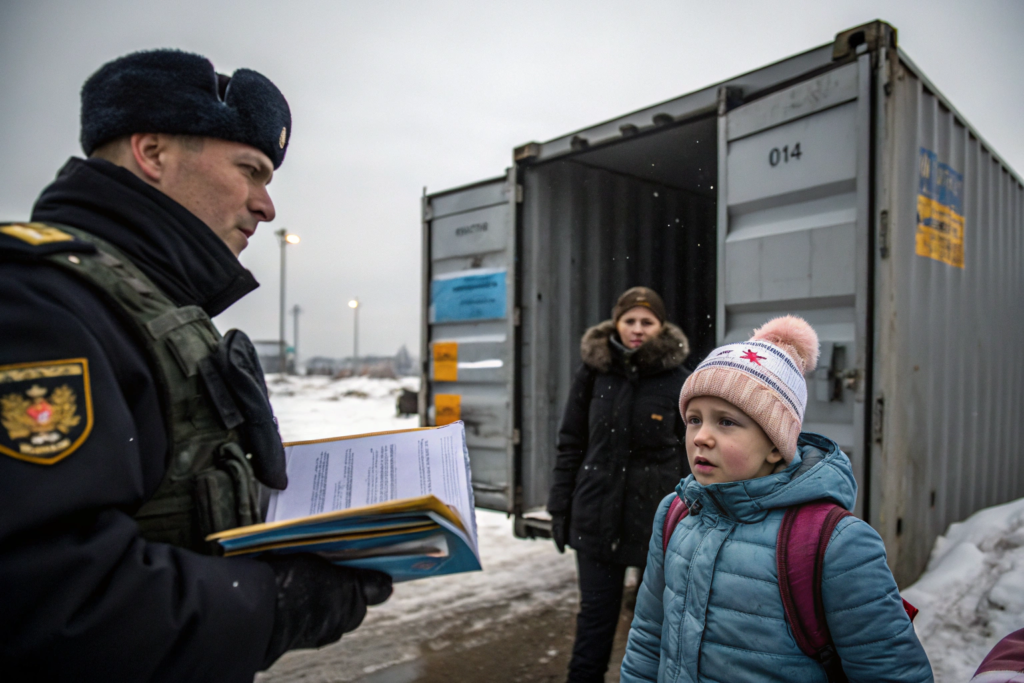
What happens exactly when Russian customs inspects a shipment of children's goods?
When your container arrives at the port or airport, the customs declaration is filed by your buyer's customs broker. The broker must upload the EAC certificate or declaration into the electronic declaration system. The system automatically flags products with the children's product commodity codes. These shipments are assigned a higher inspection risk profile. A physical inspection officer will open the cartons. They will take out the product. They will look for the label. They will compare the label information against the uploaded certificate. If the label is missing, if the EAC mark is absent, or if the manufacturer's address on the label does not match the address on the certificate, the inspector will issue a non-compliance report.
At that point, the release process stops. The buyer has ten days to correct the labeling under a special customs procedure, which is difficult to obtain, or the goods must be re-exported. If the buyer disputes the decision, they can appeal to the customs court, but this takes months. The storage fees keep running. This is why serious Russian buyers demand that you send them a pre-shipment photo of the finished label on the product. They want to check everything before the goods leave your Chinese factory. A good resource for understanding Russian customs procedures is the Federal Customs Service of Russia official website. The Eurasian Economic Commission also publishes the unified customs procedures for all member states.
Can Rospotrebnadzor really fine a store for a missing label on imported accessories?
Yes, they can and they do. Rospotrebnadzor is the Federal Service for Surveillance on Consumer Rights Protection and Human Wellbeing. They have the authority to conduct unannounced inspections of retail outlets. They inspect products intended for children with particular attention. They check for Russian-language labeling, the EAC mark, and the age suitability information. If a product is missing the required label, they classify it as an unsafe product that violates the technical regulations of the Customs Union.
The penalty for the store or the legal entity selling the product can be a fine of up to 300,000 rubles, which is around 3,000 US dollars, for a first offense. Repeat violations can lead to a suspension of the store's operations for up to ninety days. The products themselves are seized and ordered to be destroyed. For a small boutique, a fine of this size and a temporary closure can mean bankruptcy. For a large chain, it means negative media coverage and a loss of consumer trust. No legitimate retailer will accept this risk. They will simply not buy from you if you cannot provide the proper labels. Checking the official portal of the Rospotrebnadzor reveals regular press releases about such inspections and the resulting penalties.
Conclusion
The requirement for Russian-language safety labels on children's accessories is not optional. It is a legal mandate enforced by customs, consumer protection agencies, and retail buyers. The EAC certification system exists to protect Russian children from unsafe imported products. As a foreign manufacturer, your ability to comply determines whether your goods reach the store shelf or get detained at the border. The process involves securing an EAC certificate or declaration, testing your products for toxins and mechanical hazards, and printing a label that meets every specific requirement of the technical regulations. The Cyrillic text, the EAC mark, the manufacturer's address, and the age grade must all be correct. A mistake on the label is as costly as having no label at all. For Russian parents, this label is a symbol of safety and accountability. It tells them the product is legal and traceable. For retailers, it is a shield against fines and store closures. For your brand, it is the key that unlocks one of the largest fashion markets in Europe.
If you are selling children's accessories to Russian buyers and you want to avoid the stress of customs delays and rejected shipments, we can help you from the factory side. Our team in Zhejiang manages the EAC sample preparation, the documentation, and the label design. We have been through this process for hair clips, belts, hats, and scarves destined for Moscow, Saint Petersburg, and beyond. We work with accredited laboratories and Russian certification agents to make the process as smooth as possible for our clients.
To discuss your Russian market compliance needs and ensure your next shipment clears customs without problems, contact our Business Director, Elaine. Her email is elaine@fumaoclothing.com. Let us handle the labeling complexity so you can focus on growing your sales in Russia.