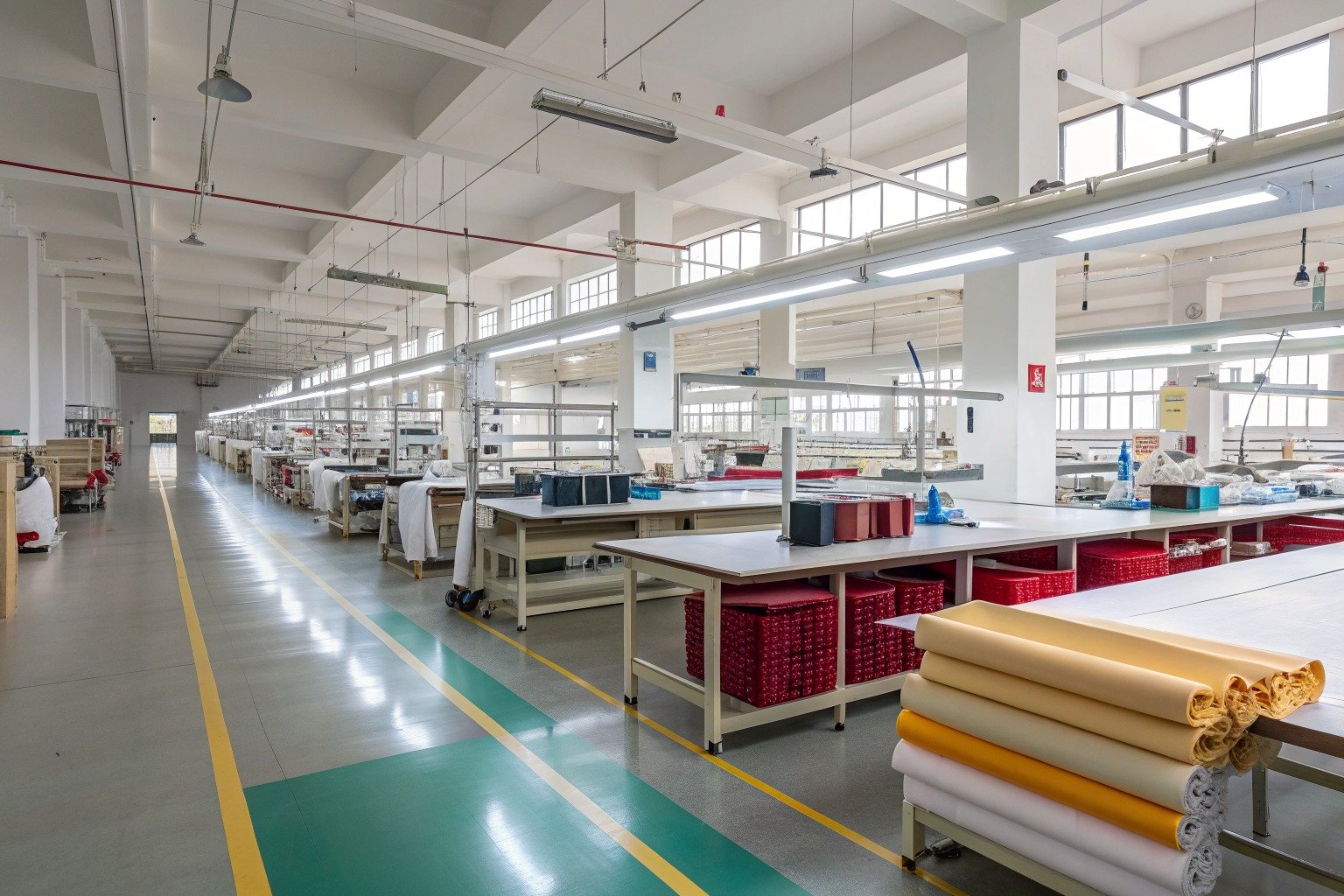
I once wired a 30% deposit to a factory for a rush order of printed scarves. They promised a 7-day ship date. Day seven arrived. No tracking number. Day ten arrived. Emails went unanswered. Day fourteen, I received a blurry photo of half-finished scarves and a request for more money. I had paid too much upfront, too early, and I had lost all leverage. The factory had my cash and no incentive to meet the deadline. That experience rewired how I think about payment terms on fast-turn orders. The payment method is not separate from the timeline. The payment method is the enforcement mechanism that makes the timeline real.
The best payment method for a factory that ships within 7 days is a 100% Letter of Credit at sight, because it ties payment directly to the presentation of shipping documents, including the bill of lading dated within the 7-day window. The factory gets paid the moment they prove they shipped on time. The buyer does not release a single dollar until that proof exists. For smaller orders where an L/C is impractical due to bank fees, a 30% deposit via T/T with a 70% balance against a copy of the shipping documents, sent by email within 24 hours of the vessel departure or air waybill issuance, provides a reasonable balance of working capital for the factory and payment security for the buyer.
I run a fashion accessories factory in Zhejiang. I have shipped rush orders on 7-day timelines for festival merchandise, event giveaways, and last-minute retail fill-ins. I know what payment terms make these orders work for both sides. The factory needs cash flow to pull materials and allocate labor immediately. The buyer needs a guarantee that the ship date will be met. The payment structure must satisfy both needs, or the rush order fails before it starts. I want to explain exactly how to structure payment for a 7-day shipment, what to avoid, and how to use the payment mechanism as a tool to protect the deadline.
Why Do Standard Payment Terms Fail on 7-Day Shipment Timelines?
Standard payment terms assume a normal production timeline. Four to eight weeks. Multiple stages. Deposit, pre-production sample, bulk production, pre-shipment inspection, balance payment, ship. This rhythm works when time is abundant. It collapses when time is compressed into a single week. On a 7-day timeline, the deposit must be received, the materials must be pulled, production must be completed, QC must be performed, and shipping documents must be generated, all before the factory has received the full payment. The payment method must operate at the speed of the production timeline, or it becomes the bottleneck.
Standard payment terms fail on 7-day timelines because the deposit transmission time and the balance payment clearance time consume days that the production schedule does not have. A T/T deposit takes 1 to 3 business days to clear international banking channels. A balance payment against a pre-shipment inspection takes another 1 to 3 days. On a 28-day timeline, these banking delays are noise. On a 7-day timeline, they consume 30% to 80% of the available production window. The payment method must eliminate banking delays by making payment available immediately upon proof of shipment, not after a multi-day clearance process.
I learned this the hard way on a rush belt order three years ago. The buyer wired the deposit on Monday. The funds cleared on Wednesday. We pulled materials Wednesday afternoon. We had four days to produce and ship. We made it, barely. But the stress of waiting for the deposit to clear while the clock was already running was unsustainable. I changed my payment terms for rush orders after that experience.
How Do International Wire Transfer Delays Eat Into a 7-Day Production Window?
A wire transfer from a US bank to a Chinese bank does not move at the speed of email. It moves through intermediary banks, each of which applies its own processing window. A transfer initiated on Monday morning in New York may not appear in the factory’s account in Zhejiang until Wednesday afternoon, or Thursday morning if a public holiday intervenes. Two to three business days are consumed by the banking system before the factory can confirm receipt and release the purchase order to the production floor.
On a 7-day timeline, the factory has approximately 5 production days after material pulling. Losing 2 days to wire transfer clearance reduces available production time by 40%. A factory that commits to a 7-day ship date before the deposit clears is gambling. A factory that waits for the deposit to clear before starting production will likely miss the ship date. The solution is a payment method that either provides immediate availability, such as a credit card or an L/C where the bank’s commitment is the factory’s assurance, or a payment structure where the deposit is small enough that the factory is willing to start production on the buyer’s payment confirmation rather than waiting for clearance. The international wire transfer processing times and intermediary bank delays are not within the factory’s or the buyer’s control, but they must be accounted for in the timeline.
Why Does a Pre-Shipment Inspection Payment Gate Create an Impossible Bottleneck?
A standard quality assurance process includes a pre-shipment inspection. The goods are produced, a third-party inspector visits the factory, the inspection report is issued, the buyer approves, and the balance payment is released. On a normal timeline, this adds 3 to 5 days between production completion and shipment. On a 7-day timeline, this delay is fatal.
The pre-shipment inspection gate must be reconfigured for rush orders. The inspection can be performed in-line during production rather than post-production. The inspector can visit the factory on day four or five while final assembly is still underway, inspecting completed units and work-in-progress simultaneously. The inspection report can be issued as a preliminary verbal pass with the written report to follow. The balance payment, if tied to inspection, must be triggered by the verbal pass, not the written report. Alternatively, the inspection gate can be replaced by a detailed factory QC photo report sent to the buyer in real time, with the buyer’s approval given by return email within one hour. The in-line quality inspection versus final inspection for fast-turn production allows the QC gate to operate without stopping the shipment clock.
How Does a Letter of Credit at Sight Protect Both Buyer and Factory on a Rush Order?
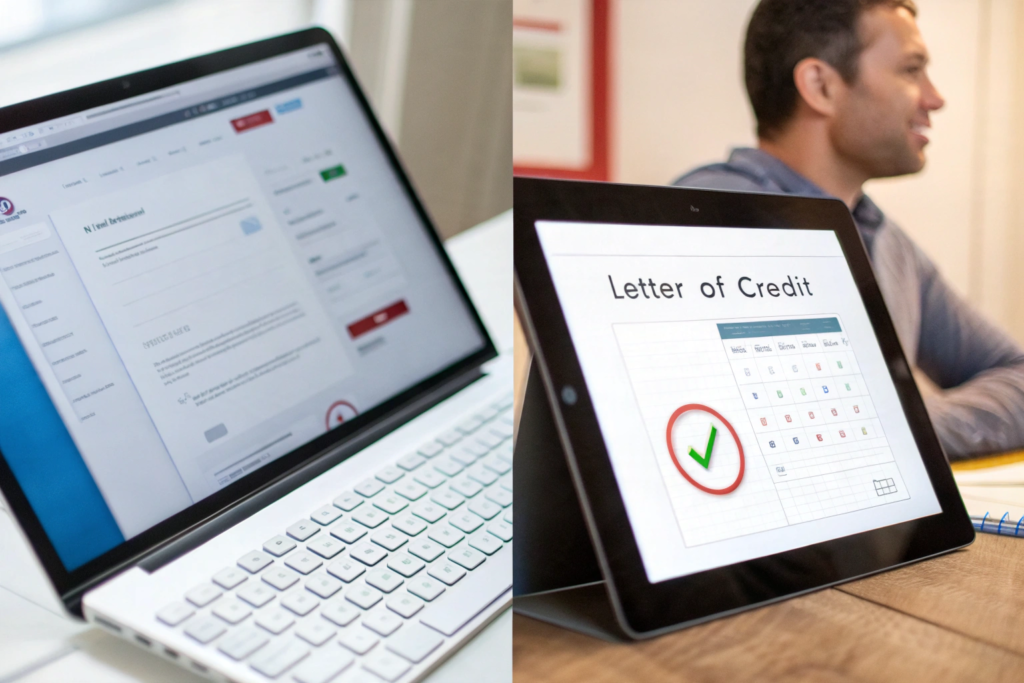
A Letter of Credit at sight is a bank instrument. The buyer’s bank issues an irrevocable promise to pay the factory a specified amount upon presentation of specified documents. The factory does not need to trust the buyer’s promise to pay. The factory trusts the bank’s legal obligation. The buyer does not release payment until the factory proves, through the presentation of the bill of lading, the commercial invoice, and any other required documents, that the goods have been shipped according to the terms of the L/C. The payment is triggered by documentary proof of performance, not by the passage of time or the buyer’s subjective satisfaction.
An irrevocable Letter of Credit at sight is the optimal payment method for a 7-day shipment because it decouples the factory’s cash flow from the buyer’s payment action. The factory knows the payment is guaranteed by the bank before production begins. The factory can start production immediately upon receiving the L/C advice from their bank, without waiting for a deposit to clear. The buyer knows the payment will only be released when the bank verifies that the shipping documents, including the bill of lading dated within the 7-day window, are compliant with the L/C terms. The payment is fast. The bank pays at sight, meaning within 5 business days of document presentation. The security is mutual.
I accept L/C at sight for all rush orders above $5,000 from new clients. I start production when my bank confirms the L/C has been received and the terms are workable. I do not wait for a deposit. The bank’s commitment is better than a deposit. It is a legal guarantee from a regulated financial institution. When I ship the goods on day seven, I present the documents to my bank on day eight. Payment arrives by day thirteen. My cash flow is protected. My buyer’s risk is protected. The deadline is enforced by documentary proof.

What Documents Must the Factory Present Under an L/C to Trigger Payment on Day Seven?
The L/C operates on the principle of strict documentary compliance. The factory is paid when the documents match the L/C terms exactly. The documents are the proof of performance. For a 7-day shipment, the document set must be complete, accurate, and presented to the bank within the time window specified in the L/C, typically 10 to 15 days after the bill of lading date.
The standard document set for an accessories shipment under an L/C includes the commercial invoice describing the goods, quantities, unit prices, and total value, the packing list detailing carton contents, weights, and dimensions, the full set of original clean on-board ocean bills of lading or the air waybill marked "freight collect" or "freight prepaid" as agreed, the certificate of origin if required by the destination country, and any inspection certificates or beneficiary certificates specified in the L/C. The bill of lading must be dated on or before day seven. A bill of lading dated day eight is a discrepancy. The bank will refuse payment. The discipline of the L/C enforces the deadline with financial consequences. The documentary requirements under UCP 600 for letters of credit are standardized globally and understood by all international banks.
What Are the Cost Implications of Opening an L/C for a Small Rush Order?
An L/C is not free. The issuing bank charges an opening fee, typically 0.1% to 0.5% of the L/C value with a minimum fee of $150 to $300. The advising bank charges an advice fee, typically $50 to $150. There may be amendment fees if the L/C terms need to be changed. There may be discrepancy fees if the documents contain errors. For a large rush order of $20,000 or more, these fees are a small percentage of the transaction value and are easily justified by the risk mitigation the L/C provides.
For a small rush order of $2,000, the L/C fees can exceed 10% of the order value. At this scale, the cost of the L/C outweighs its benefits. The alternative for small rush orders is a hybrid payment structure. A 30% T/T deposit released immediately upon receipt of the proforma invoice, paid via a method that provides the buyer with some recourse, such as a credit card or PayPal, and a 70% balance paid against a copy of the shipping documents sent by email. The copy documents prove the shipment occurred. The buyer wires the balance. The factory releases the original documents or the goods. This structure lacks the bank-grade security of an L/C but is practical for small transactions where L/C fees are disproportionate. The cost-benefit analysis for letter of credit versus open account for small trade transactions guides this decision.
What Hybrid Payment Structures Work Best When an L/C Is Impractical?
Not every 7-day shipment justifies a Letter of Credit. Small orders, repeat orders with trusted partners, and orders where the buyer and factory have an established payment history can use simpler structures. The key principle remains the same. Payment is tied to proof of shipment. The factory does not receive the balance until the goods are on the vessel or aircraft. The buyer does not release the balance until documentary evidence of shipment is received. The hybrid structure adapts this principle to lower-cost payment methods.
The most effective hybrid payment structure for 7-day shipments where an L/C is impractical is 30% T/T deposit at order confirmation, with 70% T/T balance against a scanned copy of the bill of lading or air waybill sent by email within 24 hours of shipment. The buyer confirms the document, wires the balance, and the balance clears within 1 to 3 days. For established relationships, the structure can be 50% deposit, 50% balance at 15 days from bill of lading date, providing the buyer with short-term trade credit. For very small orders under $1,000, a 100% payment via a platform with buyer protection, such as Alibaba Trade Assurance or PayPal Goods and Services, provides the fastest setup with some recourse.
I use the 30/70 against copy documents structure for most of my rush orders with repeat clients. The deposit covers my material costs. The balance is paid when the client sees the air waybill and knows the goods are moving. The trust is based on our transaction history. A new client does not get this structure on their first order. They get the L/C or a 50% deposit. The payment terms graduate as the relationship proves itself.

How Does a T/T Balance Against Copy Documents Protect the Buyer on a Fast-Turn Order?
A T/T balance against copy documents means the buyer wires the remaining 70% only after receiving scanned copies of the shipping documents. The buyer sees the bill of lading with the vessel name, the sailing date, the port of loading, and the port of discharge. The buyer sees the packing list with the carton count and weight. The buyer can verify the shipment exists and is in transit before releasing the balance.
This structure protects the buyer from the risk of paying the balance and receiving nothing. The copy documents prove the factory shipped something. They do not prove the goods are defect-free or that the cartons contain the correct quantity. Those risks are managed through the factory’s reputation, a third-party inspection if time allows, or a video QC call conducted before shipment. The copy documents prove the shipment event occurred on the date claimed. The documentary proof of shipment for international trade transactions is the trigger that shifts the balance payment from the buyer’s account to the factory’s account.
When Is a 100% Advance Payment Acceptable for a 7-Day Rush Order?
A 100% advance payment on a 7-day order gives the buyer zero leverage. The factory has all the money. The buyer has a promise and a deadline. If the factory misses the deadline, the buyer has no financial recourse except a refund request, which the factory can delay, dispute, or ignore. This structure is only acceptable under two conditions.
The first condition is an established, multi-year relationship with a factory that has never missed a deadline and has always issued prompt refunds for any quality issues. The trust is earned through years of performance, not claimed in a sales email. The second condition is a payment made through a platform with enforceable buyer protection, such as Alibaba Trade Assurance or a credit card processed through a payment gateway that allows chargebacks. The platform, not the factory, holds the leverage. If the factory fails to ship within 7 days, the buyer files a dispute and the platform adjudicates. The buyer protection mechanisms for international B2B payments provide a safety net that makes 100% advance payment viable for small rush orders with new suppliers.
How Should Quality Verification Be Structured Without Delaying the 7-Day Shipment?
Quality verification is the tension point in rush orders. The buyer needs assurance that the goods meet the agreed specification. The factory needs to ship on day seven. A traditional pre-shipment inspection with a written report, buyer review, and approval cycle cannot fit within the compressed timeline. The quality verification method must be reconfigured for speed without sacrificing the detection of major defects.
Quality verification for a 7-day shipment is structured as an in-line video inspection conducted on day four or five of production, supplemented by a detailed factory QC photo report. The inspector or the factory QC team conducts a live video call with the buyer, walking through the AQL random sampling, showing the inspection points, and demonstrating functional tests in real time. The buyer gives verbal or chat approval during the call. A photo report with 25 to 30 detailed images is emailed immediately after the call. The written inspection report follows within 24 hours. This structure compresses the QC gate from 3 to 5 days to 1 to 2 hours without compromising the detection of critical and major defects.
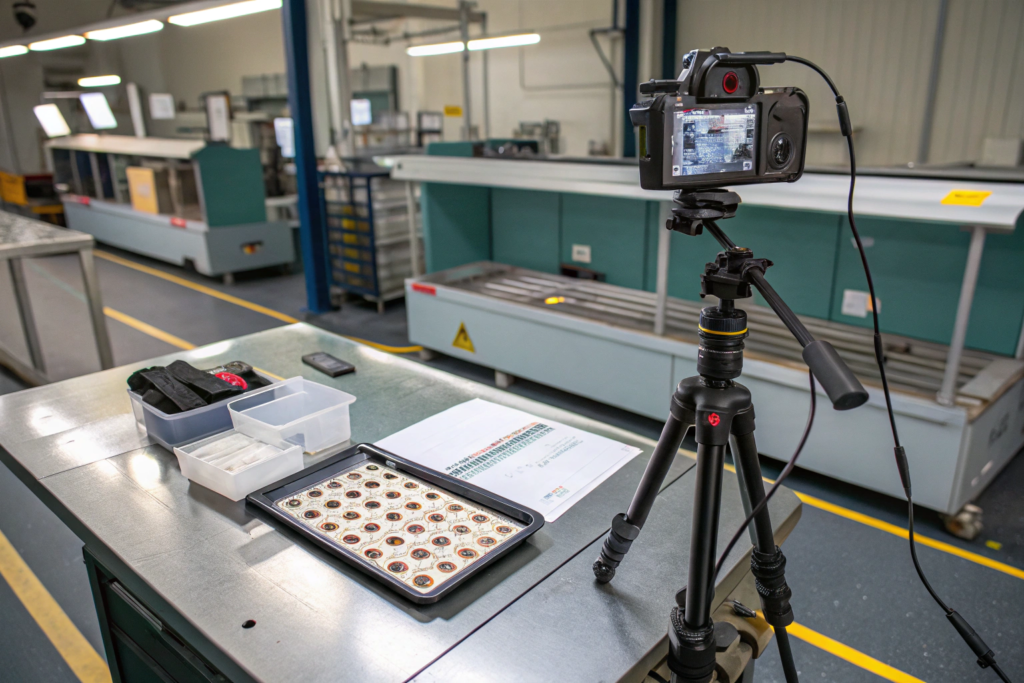
I offer a video QC call as a standard service on all rush orders. My QC team sets up a tripod with a smartphone, connects to the buyer via WhatsApp or Zoom, and walks through the inspection. The buyer sees the random samples being pulled. They see the measurements being taken. They see the function tests being performed. They ask questions in real time. They approve or reject on the spot. The call is recorded and shared as part of the quality documentation package. This process has saved rush orders that would have been delayed by a traditional inspection cycle.
How Does a Live Video QC Call Replace a Multi-Day Third-Party Inspection Process?
A third-party inspection requires scheduling. The inspection company needs 24 to 48 hours notice. The inspector travels to the factory. The inspection takes 2 to 3 hours. The report is written, reviewed by a supervisor, and issued to the buyer. The buyer reviews the report. The total cycle is 3 to 5 business days.
A live video QC call eliminates the scheduling delay, the travel time, the report writing time, and the buyer review time. The call is scheduled for a specific time on day four or five. The buyer joins from their office or home. The factory QC team performs the inspection on camera. The buyer watches the sampling, the measurements, and the tests in real time. Defects are shown on camera. The buyer decides on the spot whether the lot is acceptable. The entire QC gate is compressed into a single 60 to 90-minute call. The remote video inspection for international trade quality control has become a mainstream service since 2020 and is now an accepted alternative to in-person inspection for many product categories, including fashion accessories.
What QC Photo Report Content Satisfies a Buyer When Time Prevents a Formal Inspection?
When a live video call is not possible due to time zone differences or the buyer’s availability, a detailed QC photo report is the next best option. The report must be comprehensive enough that the buyer can make an informed approval decision from the images alone. A report that shows only the best units is fraudulent. A report that shows every defect found, with the defect count against the AQL standard, is credible.
A credible QC photo report for a rush order includes a photograph of the purchase order and the QC checklist with the inspection date, photographs of the randomly selected sample units laid out with the total count visible, close-up photographs of each critical inspection point including dimensions against a ruler, color match against the approved lab dip, function tests of closures and attachments, and surface finish under magnification, photographs of any defects found with a ruler for scale and a description of the defect type, and a summary page with the sample size, the AQL level, the acceptance number, the actual defect count by category, and the pass/fail decision. The report is emailed within one hour of the inspection completing. The pre-shipment photo report standards for consumer goods provide a template that factories can adapt for rush order documentation.
Conclusion
The payment method for a factory that ships within 7 days is not an administrative detail. It is the structural foundation that makes the compressed timeline possible. You learned that standard payment terms fail on rush orders because wire transfer clearance times and pre-shipment inspection cycles consume days that the 7-day window does not have. The payment method must operate at the speed of the production timeline.
We walked through the Letter of Credit at sight as the optimal structure. The bank’s irrevocable commitment allows the factory to start production immediately without waiting for a deposit to clear. The documentary trigger, the bill of lading dated within the 7-day window, enforces the deadline with financial consequences. The buyer’s payment is secure until the factory proves it shipped on time.
We addressed the hybrid structures for orders where an L/C is impractical. The 30/70 T/T against copy documents structure balances working capital for the factory with payment security for the buyer. The 100% advance payment is only acceptable for small orders with trusted partners or through platforms with enforceable buyer protection.
We reconfigured quality verification for the rush timeline. The live video QC call compresses the 3-to-5-day inspection cycle into a 60-minute call. The detailed photo report provides documentary evidence when a live call is not possible. Quality verification is not sacrificed. It is accelerated.
At AceAccessory, I have built my rush order process around these payment and QC structures. I accept L/C at sight for large rush orders. I offer the 30/70 against copy documents structure for established clients. I conduct live video QC calls as a standard service on every 7-day shipment. My Zhejiang factory is organized to pull materials, allocate labor, and begin production within hours of payment confirmation.
If you have a 7-day shipment requirement and need a factory that structures payment and quality verification to protect the deadline, not delay it, I invite you to contact our Business Director, Elaine. She can share our rush order payment terms, a sample video QC call recording, and references from buyers who have experienced our 7-day delivery commitment. Reach her at elaine@fumaoclothing.com. Let’s structure a payment method that funds production and protects your deadline.