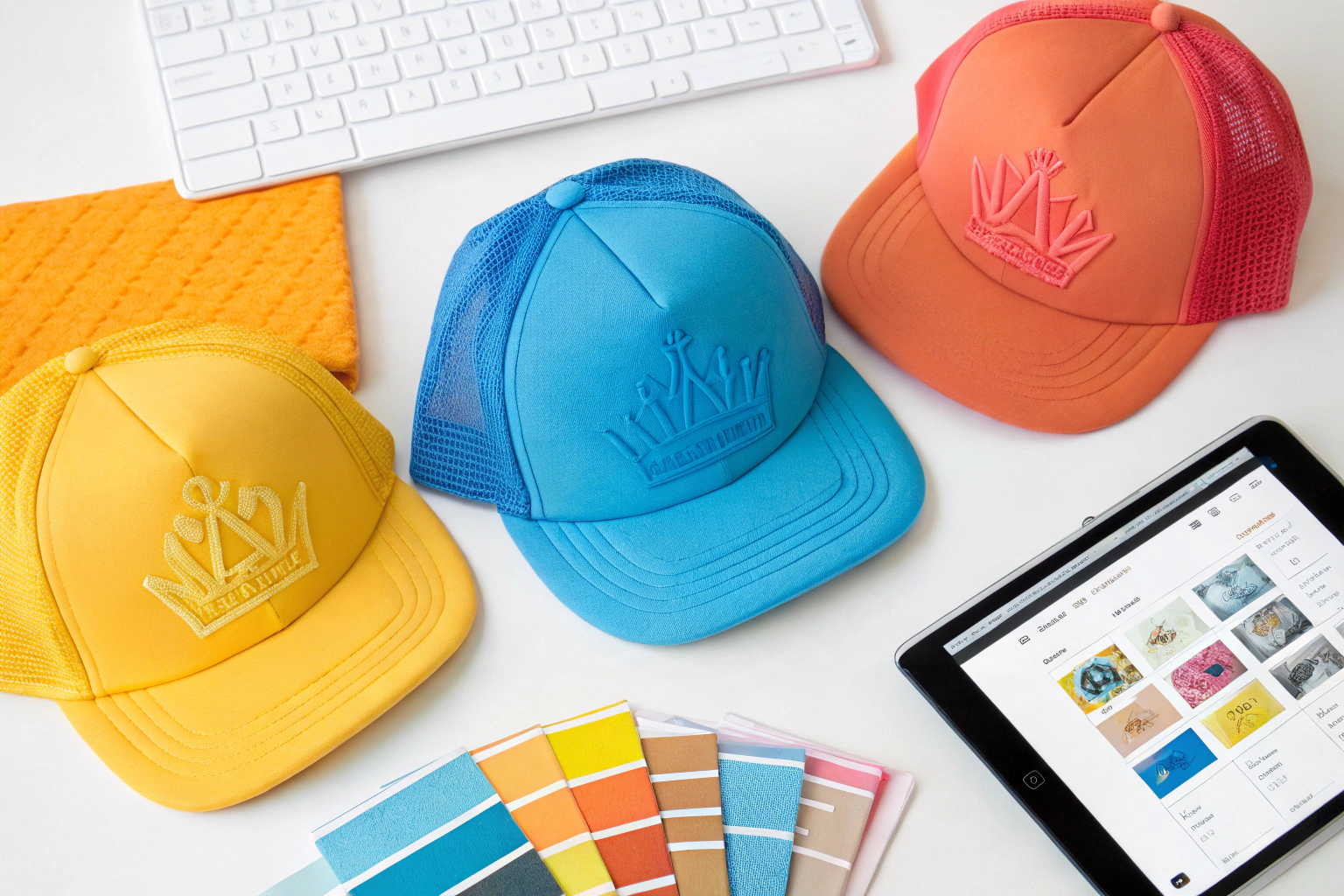
I once had a music festival merchandise manager call me in a cold sweat. His headliner had just approved the custom foam trucker hat design. The festival was five weeks away. His previous supplier quoted a twelve-week lead time and wouldn’t budge. He needed 2,000 hats with a complex, multi-color puff embroidery on a uniquely shaped foam crown, and he needed them in hand before the gates opened. I told him I could do it in four weeks. We delivered on day twenty-eight. He sold out by the second day of the festival. That experience proved something I had long suspected. The lead time for custom foam trucker hats is not fixed. It is a variable controlled by material availability, mold readiness, and the factory’s willingness to compress its internal processes.
Producing custom shaped foam trucker hats takes 3 to 6 weeks from order confirmation to delivery, depending on three variables. If the factory stocks blank foam crown panels and the custom shape uses an existing mold, sampling takes 5 to 7 business days and bulk production takes 2 to 3 weeks. If the custom shape requires a new aluminum pressing mold, add 10 to 14 business days for mold design, CNC machining, and trial pressing. The fastest path is to select a stock foam crown shape from the factory’s existing mold library, which eliminates the mold-making phase entirely and compresses the total timeline to 3 to 4 weeks, including embroidery, finishing, and express air freight.
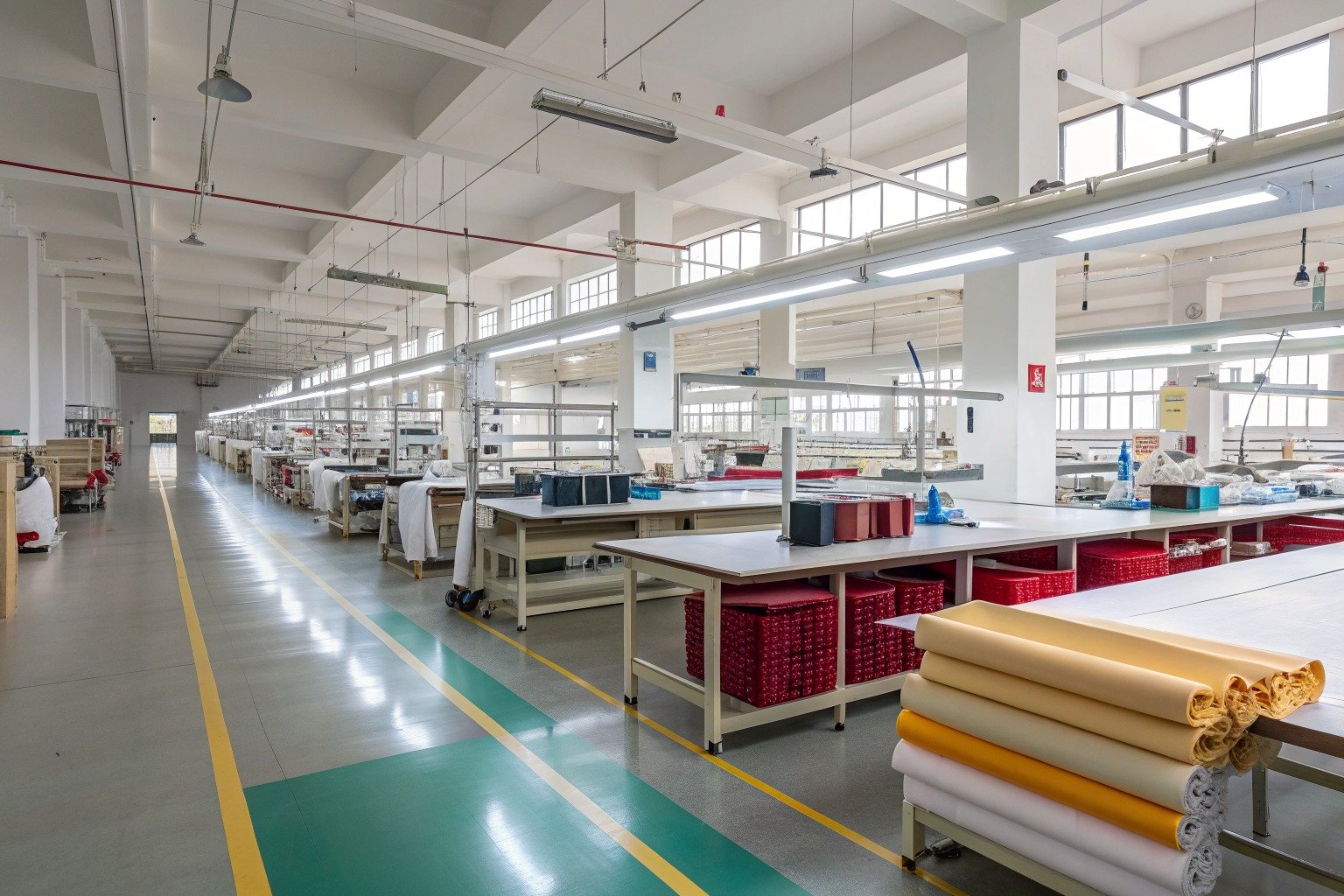
I run a headwear factory in Zhejiang. Foam trucker hats are one of my highest-volume product categories. I stock foam sheets in ten standard colors. I keep a library of thirty crown shape molds. I have a dedicated embroidery section with multi-head machines that can run puff embroidery, flat embroidery, and combination designs simultaneously. I want to walk you through exactly how the production timeline breaks down, where the bottlenecks are, and how to compress the schedule without sacrificing the structured shape, the embroidery quality, or the snapback closure function.
What Is the Step-by-Step Production Timeline for a Standard Custom Foam Trucker Hat?
A foam trucker hat is not a simple cut-and-sew product. The foam crown requires heat pressing on a shaped mold to create the structured front panel profile. The embroidery is applied to the foam before the crown is assembled. The mesh back is attached. The snapback closure is installed. The sweatband is sewn in. Each step feeds into the next. Understanding the timeline requires understanding each step’s duration and which steps can run in parallel.
The production timeline for a standard custom foam trucker hat, using an existing mold and in-stock foam, follows seven stages. Artwork digitizing and embroidery file preparation takes 1 to 2 business days. Embroidery sampling on foam takes 2 to 3 business days. Client approval of the embroidery sample takes 1 to 3 business days depending on the client’s responsiveness. Foam crown heat pressing takes 2 to 3 business days for the bulk order. Crown and mesh back assembly sewing takes 3 to 5 business days. Sweatband, closure, and finishing takes 2 to 3 business days. Quality control and packing takes 1 to 2 business days. The total production floor time is 10 to 15 business days. With a responsive client who approves samples within 24 hours, the process from artwork submission to shipment readiness is 3 to 4 weeks.
I assign a dedicated project coordinator to every custom trucker hat order. This person’s sole responsibility is to move the order through each stage without delay. When the embroidery sample comes off the machine, the coordinator photographs it immediately and emails the client. When approval arrives, the coordinator releases the bulk foam to the pressing station within the hour. The coordinator eliminates the dead time between stages, and dead time is what turns a four-week order into an eight-week order.
How Does Embroidery Digitizing and Sampling Affect the Front-End Timeline?
Embroidery on foam is different from embroidery on fabric. Foam is thicker, less dense, and more heat-sensitive. A standard embroidery digitizing file designed for a cotton cap will not produce good results on foam. The stitch density must be reduced. The underlay stitching, the foundation layer beneath the visible embroidery, must be adjusted. The pull compensation, which counteracts the fabric’s tendency to pucker as stitches tighten, must be recalculated for foam’s unique compression characteristics.
The digitizing process takes a skilled digitizer 1 to 2 hours for a standard logo. A complex design with multiple colors, small text, or puff embroidery elements takes 2 to 4 hours. After digitizing, a physical embroidery sample is run on a piece of the actual production foam. This sample reveals digitizing errors. Letters close up. Small details disappear. The foam puckers or tears. The sample is reviewed, the digitizing file is adjusted, and a second sample is run. Each iteration takes approximately one day. Allocating 2 to 3 business days for this iterative process prevents the disaster of discovering digitizing errors during bulk production, when 2,000 foam crowns have already been cut and pressed. The embroidery digitizing for foam and structured caps requires specialized knowledge that not every embroidery shop possesses.
What Role Does the Heat Pressing Mold Play in the Production Schedule?
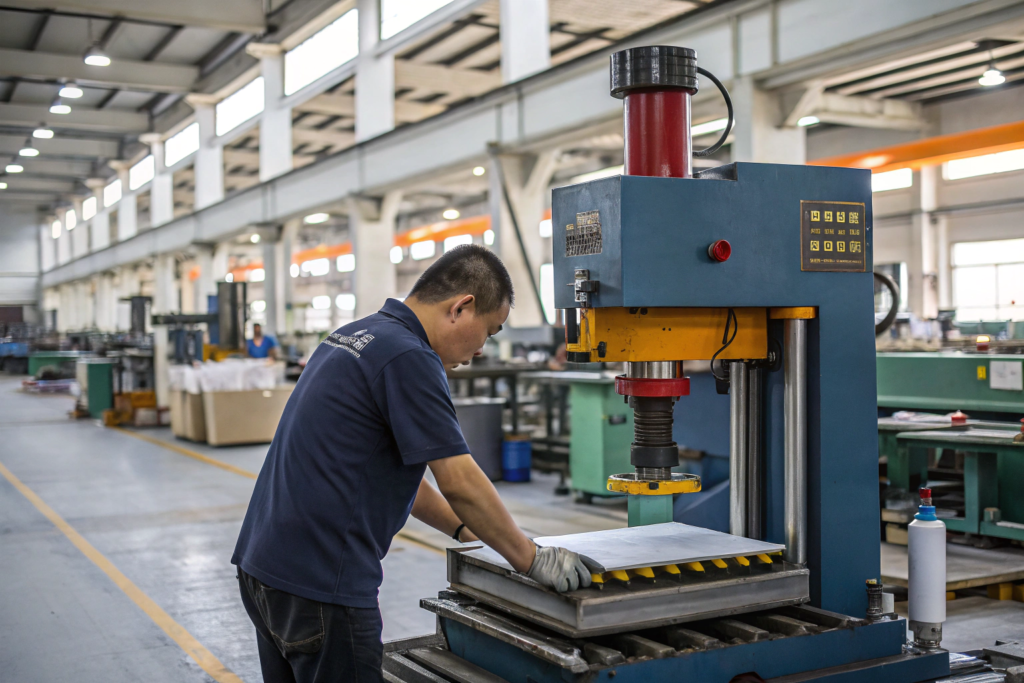
The foam crown shape is created by heat pressing. A flat sheet of foam, typically EVA or polyurethane foam with a density of 60 to 80 kilograms per cubic meter, is placed over a heated aluminum mold. A matching female mold presses down. Heat and pressure reshape the flat foam into a three-dimensional crown with a specific front profile, side curve, and top contour. The foam cools in the mold and permanently retains the shape.
The pressing cycle takes 60 to 90 seconds per crown. A single pressing station with one mold can produce approximately 50 to 60 crowns per hour. For an order of 2,000 hats, the pressing stage requires 35 to 40 machine-hours. With one pressing station running an 8-hour shift, this is 5 production days. With two stations, it is 2.5 days. The mold itself, if custom, requires 10 to 14 days to produce. The mold-making timeline runs in parallel with embroidery sampling, so it does not add to the overall schedule unless the mold design is not finalized when the order is placed. The foam heat pressing and thermoforming for headwear process is the bottleneck in the production timeline. Expanding pressing capacity is the most effective way to compress the schedule for large orders.
How Does Custom Mold Development Extend the Lead Time for a Unique Crown Shape?
A standard trucker hat crown shape is a known quantity. The mold exists. The foam blank dimensions are documented. The seam pattern is proven. A custom crown shape, a taller front panel, a more pronounced curve, a squared-off top, a retro low-profile silhouette, requires a new mold. The mold is a precision tool machined from a solid aluminum billet. Its creation adds a significant phase to the front end of the timeline, and this phase cannot be compressed beyond the physical limits of CNC machining and hand polishing.
Custom mold development for a unique foam trucker hat crown shape adds 10 to 14 business days to the production timeline. The phase breaks down into 2 to 3 days for 3D CAD modeling of the crown shape based on the buyer’s sketch or reference sample, 5 to 7 days for CNC machining of the male and female mold halves from aluminum billet, 2 to 3 days for hand polishing the mold surfaces to a mirror finish that will not imprint texture onto the foam, and 1 to 2 days for trial pressing, dimensional verification, and mold adjustment. The mold is a one-time investment. Once created, it joins the factory’s mold library and future reorders skip this phase entirely.
I encourage buyers to review my existing mold library before commissioning a custom mold. My library contains thirty crown shapes ranging from retro low-profile to modern high-profile to exaggerated streetwear silhouettes. Approximately 70% of buyers find a shape in the library that meets their design requirements. The remaining 30% require custom mold development, which I quote as a separate line item on the purchase order with a clear timeline impact.
What Is the CNC Machining and Polishing Process for an Aluminum Crown Mold?
A foam pressing mold is not a simple cavity. The male mold defines the inside shape of the crown. The female mold defines the outside shape. The gap between them is the foam thickness, typically 3 to 5 millimeters, and this gap must be uniform across the entire surface. Any variation in the gap produces a crown with thin spots that tear or thick spots that look lumpy.
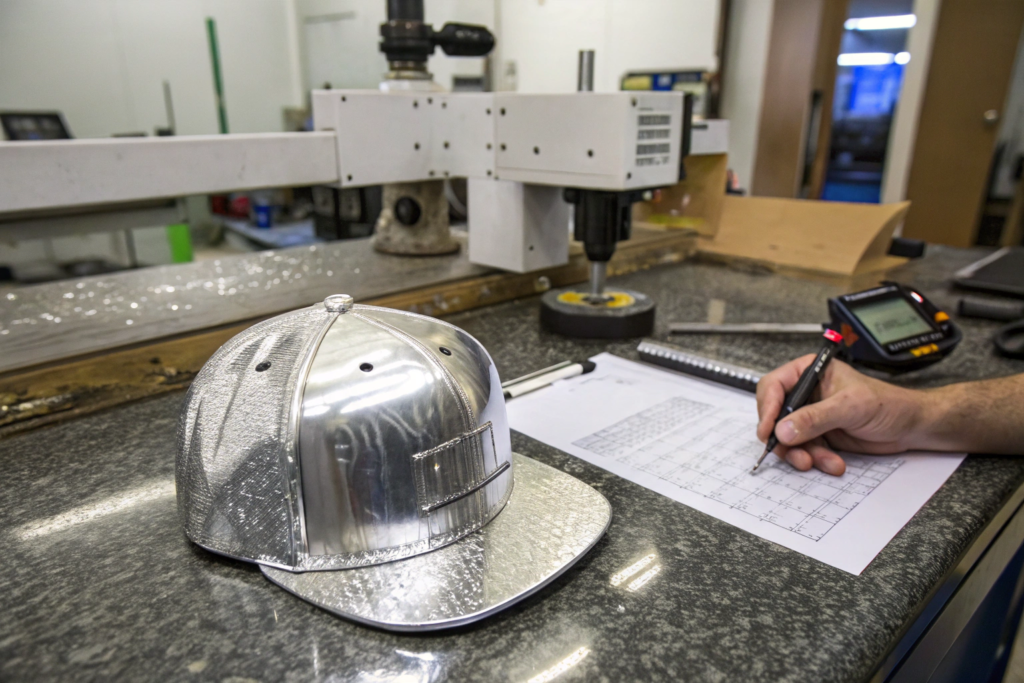
The male mold is machined from a solid aluminum billet using a 5-axis CNC milling machine. The machining time for a standard crown mold is 8 to 12 hours of continuous machine time. After machining, the mold surface has visible tool marks. These marks would transfer to the foam during pressing, creating an undesirable texture. The mold is hand-polished using progressively finer abrasives until the surface reaches a mirror finish with a roughness average below 0.4 micrometers. The female mold is machined and polished to the same standard. The two molds are test-fitted and the gap is measured with feeler gauges at 20 points across the surface. The CNC machining and polishing for injection and compression molds process is standard across the tooling industry and its timeline is determined by machine availability and the polisher’s skill.
How Does Trial Pressing Validate the Mold Before Bulk Production Begins?
A mold that measures correctly on the CMM can still produce a bad crown. The foam’s behavior under heat and pressure, its shrinkage rate, its spring-back after cooling, cannot be fully predicted from the CAD model. Trial pressing is the empirical validation that the mold works with the specific foam material.
A trial pressing run produces 10 to 20 sample crowns from the new mold. These samples are measured against the CAD specification at five critical dimensions. Crown height, front panel width, side panel curve radius, top contour curvature, and brim attachment angle. If any dimension is out of tolerance, the mold is returned to the tooling shop for adjustment. The adjusted mold is trialed again. This iterative loop continues until the samples measure within tolerance. The trial pressing also validates the foam thickness. A foam that is too thin for the mold gap produces a weak, floppy crown. A foam that is too thick produces a crown that is difficult to assemble. The trial pressing and mold validation for foam products protocol ensures that the mold is production-ready before the bulk foam is cut.
What Factors Can Compress the Custom Foam Trucker Hat Timeline?
The standard timeline is 4 to 6 weeks. The compressed timeline is 3 to 4 weeks. The compression comes from three sources. Stock material availability eliminates fabric sourcing delays. Existing mold library selection eliminates mold-making delays. Parallel processing runs embroidery sampling, mold setup, and material preparation simultaneously rather than sequentially. The factory that can compress the timeline is the factory that has invested in inventory, tooling, and a production management system that allows parallel workflows.
The most effective timeline compression strategies are selecting a stock foam crown shape from the factory’s existing mold library, which eliminates 10 to 14 days of mold development, choosing from in-stock foam colors and mesh back colors, which eliminates 5 to 7 days of material sourcing, providing print-ready, digitized embroidery files with the purchase order, which eliminates 2 to 3 days of back-and-forth digitizing, and approving the pre-production sample within 24 hours of receipt, which prevents the order from stalling in the approval queue. Combining all four strategies compresses the total timeline to 3 to 4 weeks including express air freight.
I offer a "Fast Track" program to buyers with tight event deadlines. The program is not a different production process. It is a constrained set of choices. Stock foam colors only. Existing mold shapes only. Pre-digitized embroidery only. 24-hour sample approval required. Express air freight only. The constraints eliminate the variables that cause delays. The result is a guaranteed ship date within 21 business days of order confirmation.

How Does Selecting from the Factory’s Existing Mold Library Eliminate the Longest Delay?
The mold is the single longest-lead item in the custom trucker hat production process. Ten to fourteen days for design, machining, polishing, and trial pressing. When a buyer selects a crown shape from the existing mold library, this entire phase is eliminated. The mold is on the shelf. The pressing station can be set up within hours of order confirmation.
A credible foam trucker hat factory maintains a mold library. The library should include at minimum a retro low-profile shape with a subtle front curve, a standard mid-profile shape suitable for most promotional and event hats, a modern high-profile shape for streetwear and fashion brands, and an exaggerated tall shape for the festival and souvenir market. I provide buyers with a mold library catalog that includes profile photographs, critical dimensions, and the foam colors available for each shape. The standard mold library for custom headwear manufacturing is a sign of a factory that specializes in foam trucker hats, not one that produces them occasionally.
Why Does Express Air Freight Become Essential for Event-Driven Trucker Hat Orders?
Ocean freight from Shanghai to Los Angeles takes 14 to 18 days sailing time plus port handling, adding 3 to 4 weeks to the delivery timeline. For a music festival, a trade show, a product launch, or a sports championship, a 3-week shipping delay means the hats arrive after the event. They are worthless.
Express air freight via DHL, FedEx, or UPS takes 3 to 5 business days door-to-door from our Zhejiang factory to any major US or European city. The cost for 2,000 foam trucker hats, approximately 8 to 10 cartons with a total weight of 80 to 100 kilograms, is approximately $400 to $700. This premium must be weighed against the value of the event. A festival that expects to sell 2,000 hats at $30 each generates $60,000 in revenue. A $500 air freight charge to protect $60,000 in sales is not an expense. It is insurance. The express air freight for time-critical promotional merchandise services are designed for exactly this scenario.
How Do Embroidery Complexity and Foam Color Matching Impact the Sampling Timeline?
The embroidery sample is the go/no-go gate in the trucker hat timeline. Until the buyer approves the embroidery sample, bulk foam cannot be cut, molds cannot be set up, and production cannot begin. The sample’s complexity and the buyer’s responsiveness to color matching decisions determine how long this gate remains closed. A simple, one-color flat embroidery on white foam is approved in one round. A complex, five-color puff embroidery with a specific Pantone thread match on a neon foam color may require three rounds of sampling.
Embroidery complexity impacts the sampling timeline through digitizing time and iteration cycles. A simple one-color design digitizes in under an hour and typically produces an acceptable sample on the first run. A complex design with puff elements, fine text, gradients recreated with thread blending, or metallic threads may require 2 to 3 sample iterations, each taking one business day. Foam color matching adds a parallel track. If the buyer requires a specific foam color not in the factory’s stock, the foam supplier must be engaged for a custom color run, which adds 7 to 10 business days. Selecting a stock foam color eliminates this delay entirely.
I manage embroidery complexity expectations during the quotation phase. When a buyer sends a complex design, I explain the sampling timeline honestly. Two to three iterations, each taking approximately one day. I recommend simplifying the design if the timeline is tight. Removing one color, enlarging small text, eliminating fine detail, are all changes that reduce iteration cycles without compromising the design’s impact.
How Does Puff Embroidery on Foam Differ from Flat Embroidery in Production Time?
Puff embroidery creates a raised, three-dimensional effect by placing a layer of foam under the embroidery stitches. The top stitching penetrates the foam and the base fabric, and the heat of the machine or a post-production heat tunnel causes the foam to expand and rise. The result is a bold, tactile logo that stands proud of the hat surface. Puff embroidery is a signature look on foam trucker hats.
Puff embroidery takes longer than flat embroidery. The machine must run a separate pass to place the foam underlay. The stitch speed must be reduced to prevent needle deflection when penetrating the foam layer. The post-production heat activation requires a separate trip through a heat tunnel or a careful pass with a heat gun. A puff embroidery design adds approximately 30% to 50% to the embroidery time per hat compared to a flat embroidery design of the same stitch count. For a 2,000-hat order, this can add one to two production days. The puff embroidery techniques for caps and headwear require specialized digitizing and machine settings that not all embroidery shops have mastered.
What Is the Fastest Path to Color Approval for Foam and Thread Matching?
Color matching is the most common cause of sample rejection. The buyer envisions a specific shade of forest green. The factory’s stock forest green foam is slightly different from the buyer’s expectation. The thread color, matched from a digital Pantone reference, looks different on the textured foam surface than it did on the screen. The sample is rejected. A new foam color is requested. A new thread is selected. The sample is re-run. The clock ticks.
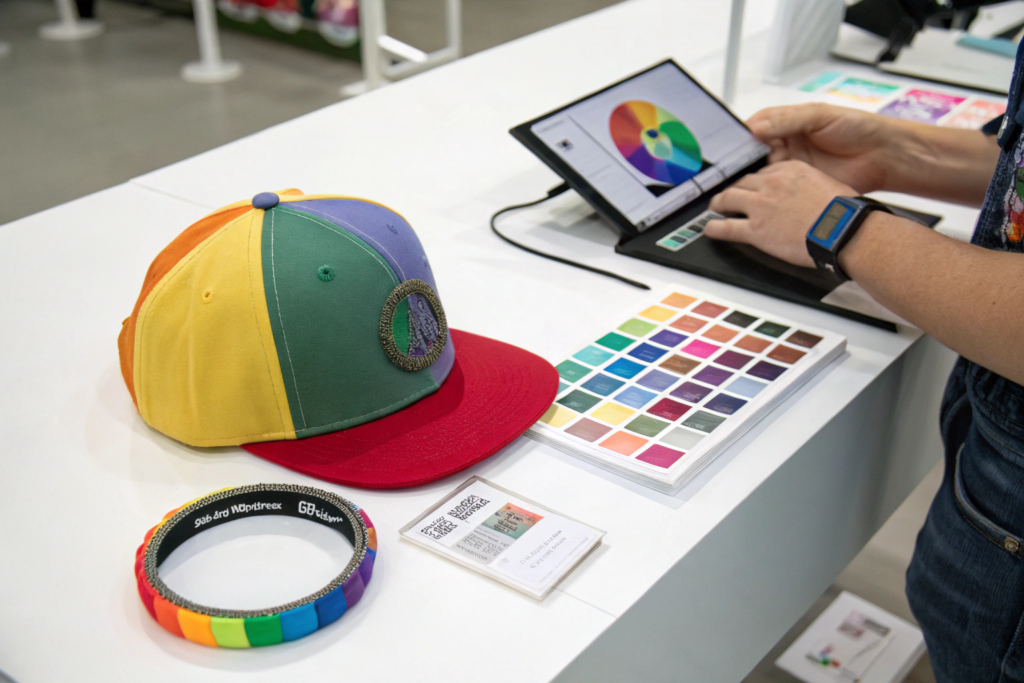
The fastest path to color approval is to use the factory’s physical color standards from the beginning. I send buyers a physical foam color swatch card and a physical thread color chart by express mail at the start of the quotation process. The buyer selects colors from physical samples under their own lighting. The selections are referenced by the factory’s internal color codes, not by Pantone numbers that may not translate accurately to foam or thread. This physical-to-physical matching process eliminates the screen-to-reality color gap that causes most first-sample rejections. The color matching best practices for promotional products emphasize physical standards over digital references for precisely this reason.
Conclusion
The production timeline for custom shaped foam trucker hats is a function of three controllable variables. Mold availability, material availability, and sample approval speed. You learned that the mold is the longest-lead item. A custom aluminum pressing mold requires 10 to 14 days for design, CNC machining, polishing, and trial validation. Selecting a crown shape from the factory’s existing mold library eliminates this phase entirely and is the single most effective timeline compression strategy.
We walked through the step-by-step production flow. Embroidery digitizing and sampling at the front end. Foam pressing as the capacity bottleneck at 50 to 60 crowns per hour per station. Assembly sewing of the crown to the mesh back. Finishing of the sweatband and snapback closure. Final QC and packing. The total floor time is 10 to 15 business days. The total order-to-ship time is 3 to 4 weeks when materials are in stock and samples are approved within 24 hours.
We addressed the sampling gate. Embroidery complexity drives iteration cycles. Puff embroidery adds production time but delivers the signature trucker hat look. Color matching is fastest when physical swatches are used instead of digital references. And we covered the logistics decision. Express air freight is essential for event-driven orders because ocean freight adds 3 to 4 weeks that a festival or trade show deadline cannot absorb.
At AceAccessory, I have structured my foam trucker hat production line for speed without sacrificing the structured shape, the crisp embroidery, and the consistent fit that the market demands. My Zhejiang factory stocks foam sheets in ten colors, mesh back fabric in eight colors, and a library of thirty crown shape molds. My embroidery section has the digitizing expertise and the multi-head machines to handle complex puff designs efficiently. My Fast Track program guarantees a 21-business-day ship date for orders that use stock materials and existing molds.
If you have an event deadline, a merchandise drop, or a brand launch that requires custom shaped foam trucker hats on a timeline that other factories have called impossible, I invite you to contact our Business Director, Elaine. She can send you our mold library catalog, our foam and thread color swatch kit, and a detailed timeline for your specific design. Reach her at elaine@fumaoclothing.com. Let’s get your hats produced, shipped, and selling before the gates open.