I walked through a leather goods trade show in Milan three years ago. A belt supplier had a beautiful display. Rich brown leather, exotic textures, perfect stitching. I picked up a belt labeled "genuine Italian leather." Something about the texture bothered me. It was too uniform for cowhide. Too fine for buffalo. I asked the supplier what animal it came from. He hesitated. Then he said "speciality leather" and changed the subject. I walked away. Six months later, that supplier was raided by Italian authorities. He was trafficking kangaroo leather mislabeled as cowhide, sourced from an unlicensed culling operation that violated CITES regulations. The brands that had bought from him faced public backlash, legal scrutiny, and destroyed inventory. They trusted a label. They lost their reputation.
To verify that a factory’s belts are ethically sourced and not from endangered animals, you must require three layers of documentation. First, a species declaration on the supplier’s letterhead stating the scientific name of the animal and the country of origin for every leather type used in your belts. Second, a CITES permit if the species is listed on any CITES appendix. Third, a Leather Working Group or similar tannery certification that audits the upstream supply chain for legality and environmental responsibility. These documents must be cross-checked against independent databases. A factory that cannot produce all three within a reasonable timeframe is either sourcing unethically or does not know its own supply chain, and neither is acceptable.
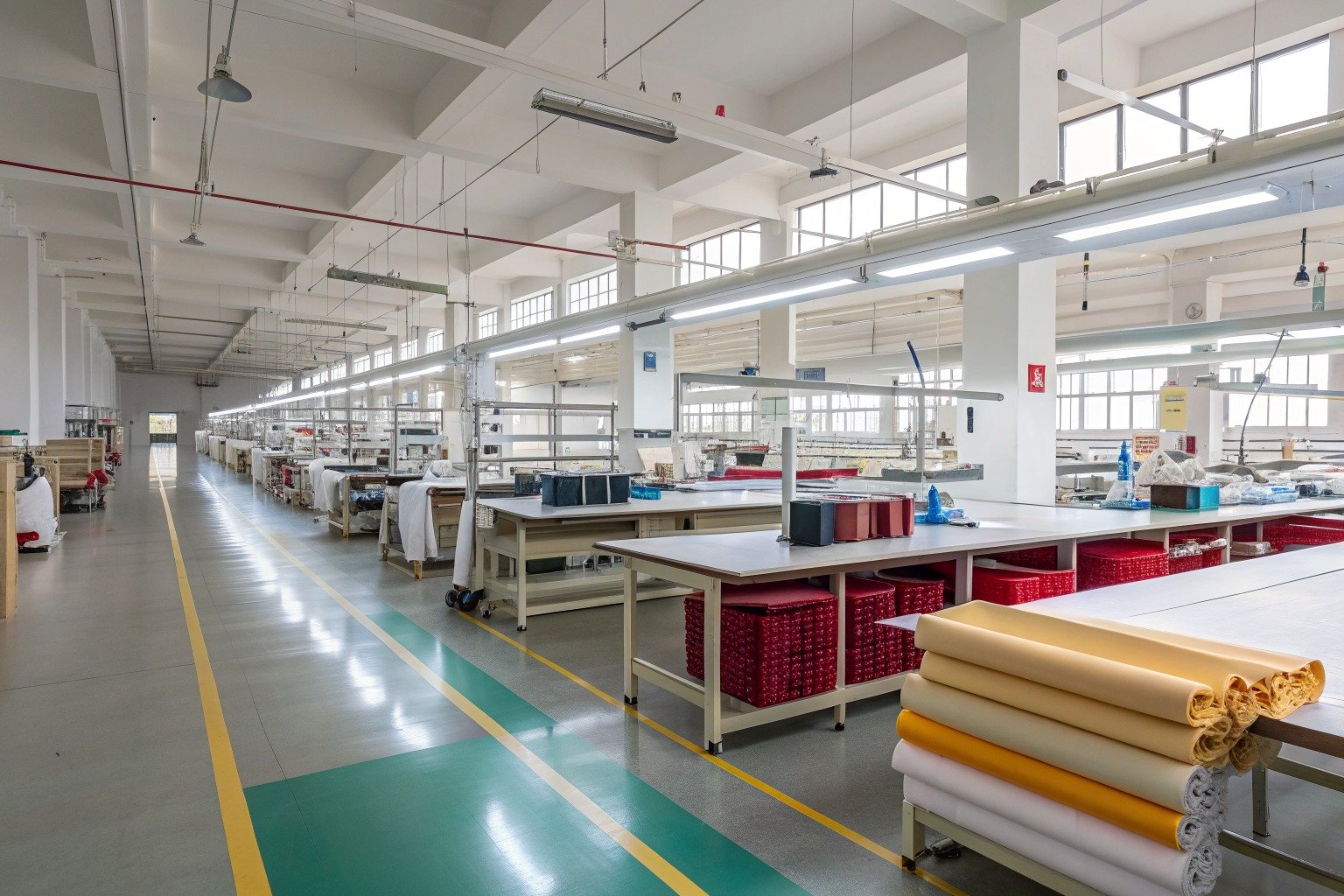
I run a fashion accessories factory in Zhejiang. I produce leather belts for European and North American brands. I learned the complexity of leather sourcing the hard way, through questions from informed buyers that I could not answer, suppliers who could not document their claims, and one very uncomfortable audit that revealed a gap in my traceability system. I want to explain exactly what documentation to demand, how to verify it independently, and how to spot the red flags that indicate a factory is hiding the true origin of its leather.
What Documentation Proves a Leather Belt Is Ethically Sourced and Legal?
A label that says "genuine leather" proves nothing. It is a marketing term with no legal definition and no verification behind it. Ethical and legal sourcing is proven by a chain of documentation that traces the leather from the finished belt back to the animal species and the country of origin. Each document in the chain serves a specific verification purpose. The absence of any document breaks the chain. A factory that cannot provide the complete documentation package either does not know its supply chain or is actively concealing it.
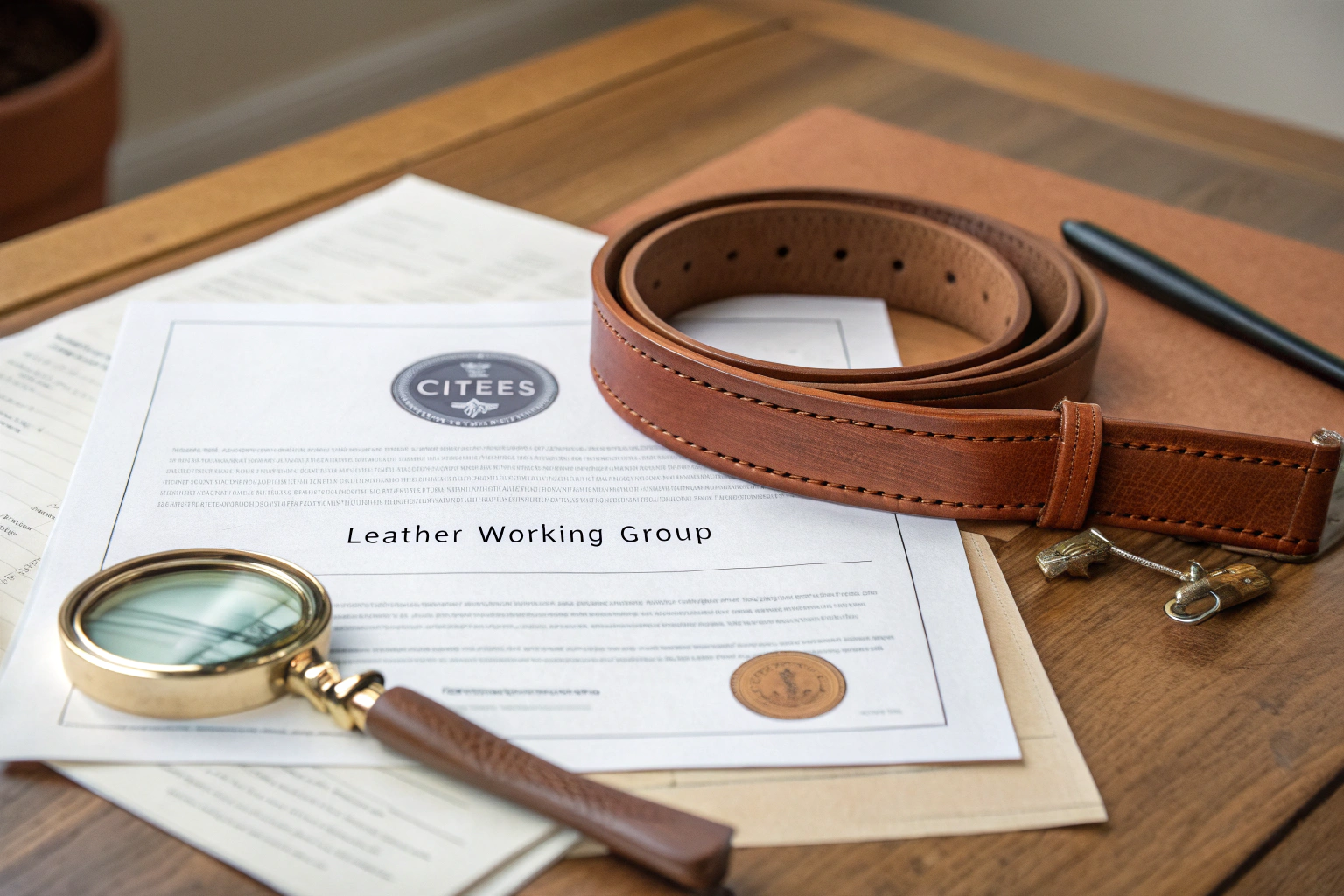
The documentation package that proves ethical leather sourcing consists of four documents. The species declaration, a letter from the tannery or the finished leather supplier on company letterhead stating the scientific name of the species, the country of origin of the raw hide, and a statement that the species is not listed on any CITES appendix or is listed with the appropriate permit number. The CITES permit, if the species is listed on Appendix I, II, or III, issued by the management authority of the exporting country. The tannery audit certificate from Leather Working Group, ZDHC, or an equivalent program that verifies environmental compliance and chemical management. And the supplier code of conduct signed by the tannery, confirming adherence to animal welfare standards and legal sourcing requirements. Each document should be current, signed, and traceable to the specific leather lot used in your belts.
I maintain a documentation file for every leather type in my inventory. When a buyer asks for ethical sourcing verification, I pull the file and share it within hours. A factory that takes weeks to produce these documents is scrambling to create them or waiting for a supplier who does not have them. Either is a red flag.

How Does a CITES Permit Confirm That a Leather Belt Does Not Come from an Endangered Species?
CITES, the Convention on International Trade in Endangered Species of Wild Fauna and Flora, is an international treaty signed by 184 countries. It classifies species into three appendices based on the level of threat they face from international trade. Appendix I includes species threatened with extinction. Commercial trade is generally prohibited. Appendix II includes species not necessarily threatened with extinction but that may become so unless trade is strictly controlled. Appendix III includes species protected in at least one country that has asked other CITES parties for assistance in controlling trade.
If a leather belt contains material from a species on any CITES appendix, the international shipment must be accompanied by a CITES permit or certificate. The permit is issued by the management authority of the exporting country and verified by the management authority of the importing country. A factory that claims a belt is made from a CITES-listed species must produce the permit number, the issuing authority, and the date of issue. You can verify the validity of the permit through the CITES online permit check system managed by the CITES Secretariat. A factory that cannot produce a valid CITES permit for a listed species is trafficking illegal wildlife products.
What Is the Difference Between a Species Declaration and a Finished Leather Certification?
A species declaration is a specific document. It states the scientific name of the animal, for example Bos taurus for domestic cattle, Bubalus bubalis for water buffalo, or Ovis aries for sheep. It states the country where the animal was raised and the country where it was slaughtered. It states whether the species is listed on any CITES appendix. It is signed by an authorized representative of the tannery or the finished leather supplier. The species declaration answers the question, "What animal is this, and where did it come from?"
A finished leather certification is a broader document. It certifies that the leather has been processed in a tannery that meets specific environmental, social, or quality standards. Leather Working Group certification audits the tannery’s water treatment, chemical management, and waste disposal. ZDHC certification confirms the tannery does not use banned hazardous chemicals. OEKO-TEX LEATHER STANDARD certifies that the finished leather is free from harmful substances. These certifications do not identify the animal species. They certify the tanning process, not the biological origin. Both documents are necessary. The species declaration identifies the animal. The tannery certification verifies the processing. The difference between leather traceability and leather certification is a critical distinction that many buyers misunderstand.
How Can You Verify That the Documentation Is Genuine and Not Forged?
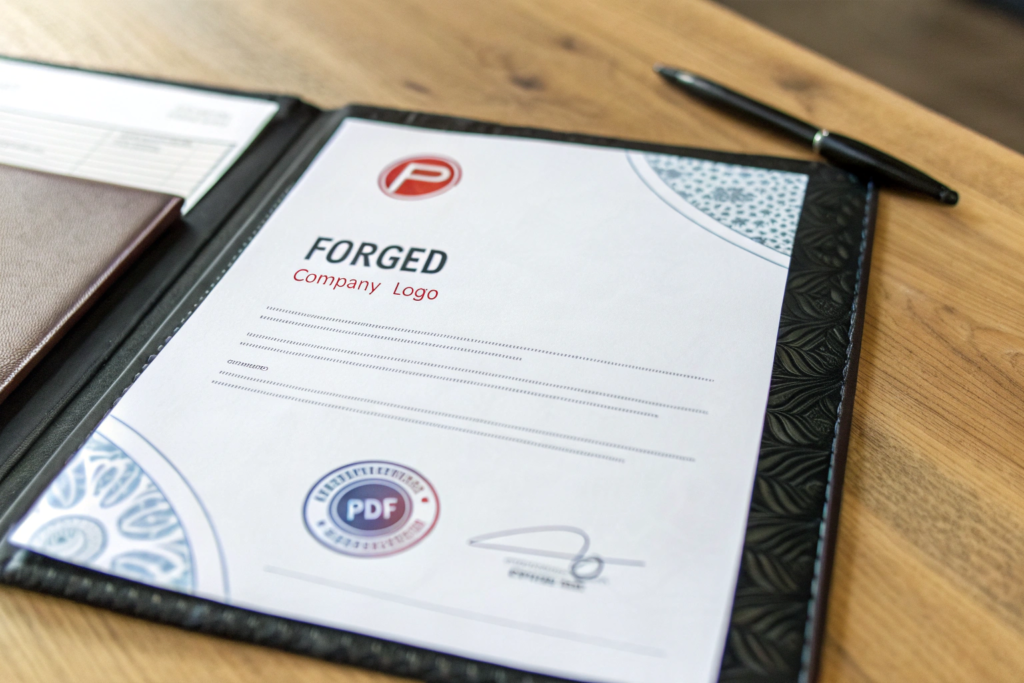
A forged document looks legitimate. It has a logo, a signature, and a stamp. A buyer who accepts a PDF and files it without verification is accepting a promise printed on paper. Forged certification documents are a known problem in international leather trade. Unethical suppliers download legitimate certificates from the internet, alter the company name and the date with basic PDF editing software, and present them as their own. The verification of the document is as important as the existence of the document.
Document verification requires independent cross-checking against the issuing body’s database. Every legitimate certification program maintains an online public registry where certificate numbers can be verified. A Leather Working Group certificate number can be entered on the LWG website to confirm the tannery name, audit score, and validity period. A CITES permit number can be verified through the national management authority that issued it. An OEKO-TEX certificate number can be checked on the OEKO-TEX label check portal. If a certificate number does not appear in the relevant database, or the company name and address on the database do not match the company name and address on the document provided by the factory, the document is forged.
I encourage every buyer to verify my certificates independently. I provide the certificate number, the issuing body, and the direct link to the verification portal. I do this because a buyer who verifies my documents and finds them valid is a buyer who trusts me. A buyer who asks for documents but does not verify them is a buyer who is still operating on hope. I want my buyers to operate on evidence.
What Online Databases Allow You to Independently Verify LWG, ZDHC, and OEKO-TEX Certifications?
Leather Working Group maintains a public directory of all certified tanneries at leatherworkinggroup.com. The directory allows a search by tannery name, LWG member number, or certificate number. The search result shows the tannery’s full name, address, audit score, certification level, and the validity dates of the certificate. A factory that claims to use LWG-certified leather must provide an LWG certificate number that matches a tannery in this directory.
ZDHC, the Zero Discharge of Hazardous Chemicals program, maintains the ZDHC Gateway, an online platform that lists tanneries and chemical suppliers that have met the ZDHC standards. The Gateway allows verification of a supplier’s ZDHC compliance status. OEKO-TEX maintains a label check portal at oeko-tex.com where the certificate number printed on the OEKO-TEX label can be entered. The portal returns the product description, the certified company name, and the certificate validity dates. The LWG certified tannery directory, the ZDHC Gateway, and the OEKO-TEX label check are the independent verification tools that transform a paper certificate into a verified fact.
What Are the Red Flags That Indicate a Species Declaration May Be Fraudulent?
A legitimate species declaration has specific characteristics. It is on the tannery’s official letterhead with full contact information. It is signed by a named individual with their job title. It references the specific leather lot or purchase order number. It uses the scientific name of the species, not a vague common name. It states the country of origin of the raw hide.
A fraudulent species declaration has red flags. Vague language such as "animal leather" or "genuine hide" instead of a scientific species name. A refusal to state the country of origin. A signature that is illegible with no printed name or job title. A company address that is a residential apartment or a virtual office. A date that is older than six months and not updated for the current order. A statement that the leather is "CITES-free" without specifying which species it actually is. The red flags for fraudulent supplier documentation in international trade are well-documented. A single red flag is a request for clarification. Multiple red flags are a reason to find a new supplier.
What On-Site Inspection Evidence Corroborates Ethical Leather Sourcing?
Documentation is the first line of verification. On-site inspection is the second. A factory that sources ethically will have physical evidence in the facility that corroborates the documentation. This evidence is visible to a trained auditor or an observant buyer. A factory that is concealing unethical sourcing will have physical evidence that contradicts the documentation, or a suspicious absence of physical evidence where it should exist. The factory tour reveals what the paper trail cannot.
On-site inspection for ethical leather sourcing should examine four areas. The raw material receiving area, where incoming leather should be accompanied by lot labels that reference the tannery name, species, country of origin, and a lot number traceable to the documentation package. The cutting tables, where the leather grain and pore structure should be consistent with the declared species. The scrap bin, where waste pieces can be examined for species identification. The supplier file cabinet or digital system, where the factory should maintain a current supplier list with contact information, certification status, and the leather types supplied by each supplier. A factory that refuses access to any of these areas is a red flag.
I welcome buyer inspections of my leather inventory. My leather store has shelves organized by supplier, with each roll or hide tagged with the lot number, species, country of origin, and tannery name. A buyer can pull any tag, cross-reference it against the documentation file, and verify the chain of custody in under five minutes. I built this system because I know that transparency is my strongest sales tool.

How Can the Physical Leather Grain and Pore Structure Reveal the True Animal Species?
Different animal species produce leather with distinct grain patterns and pore structures. Cowhide has large, irregularly spaced pores and a coarse grain pattern. Water buffalo leather has a more pronounced, pebbled grain with larger follicles. Sheepskin and lambskin have fine, evenly distributed pores and a smooth, soft grain. Goatskin has distinctive ridge patterns and small, tight pores arranged in rows. Kangaroo leather has a very fine, tight grain with almost invisible pores. Ostrich leather has large, raised quill follicles in a distinctive pattern.
A trained observer can distinguish these species by eye and touch. A belt labeled as cowhide but with the fine, even pore structure of sheepskin is a species misrepresentation. The factory may be substituting a cheaper leather for a more expensive one, or it may be deliberately obscuring the true species. The physical identification of leather by animal species is a skill that can be learned. I encourage buyers who purchase leather regularly to invest in a leather identification guidebook and a small magnifying loupe. The ability to identify leather by grain pattern is a portable, no-cost verification tool.
What Lot Traceability System Links Each Belt to Its Raw Material Batch?
A batch of leather hides arrives at the factory from the tannery. It is assigned a lot number. The lot number is recorded in the factory’s inventory system, along with the supplier name, the species, the country of origin, and the date of receipt. As the hides are cut into belt straps, the lot number is transferred to the work order and, ideally, to the finished belt through a discreet label or stamp.
This lot traceability system is the physical link between the finished product and the documentation package. A buyer who pulls a random belt from a finished carton should be able to ask the factory, "What is the lot number of the leather in this belt?" and receive an answer within minutes that traces back to the tannery documentation. A factory that cannot answer this question does not have a traceability system. Its documentation may be genuine, but there is no proof that the documented leather is the same leather in the buyer’s belts. The batch traceability requirements for leather goods manufacturing are a core component of ISO 9001 quality management systems.
What Legal and Certification Frameworks Govern Ethical Leather Sourcing Globally?
The legal landscape for leather sourcing is a patchwork of international treaties, national laws, and private certification standards. A buyer who understands this landscape can ask precise questions that separate compliant factories from non-compliant ones. A buyer who does not understand the landscape accepts vague assurances that have no legal meaning.
The key legal and certification frameworks for ethical leather sourcing are CITES for endangered species protection, the EU Deforestation Regulation for leather from cattle raised on land that was deforested after 2020, the Lacey Act in the United States for illegally sourced wildlife and plant products, Leather Working Group for tannery environmental performance, ZDHC for chemical management, and OEKO-TEX LEATHER STANDARD for finished product chemical safety. A factory that exports to Europe and North America should be able to demonstrate compliance with the legal frameworks applicable to the destination market.
I track regulatory changes in my key export markets. When the EU Deforestation Regulation was announced, I contacted my leather suppliers and requested documentation proving that their raw hides came from cattle raised on land that was not deforested after the cutoff date. Several suppliers could not provide this documentation. I replaced them with suppliers who could. The regulation changed my supply chain, and the change made my belts more marketable to European buyers.

How Does the EU Deforestation Regulation Impact Leather Belt Imports from Asia?
The EU Deforestation Regulation, which entered into force in 2023, requires that cattle products, including leather, placed on the EU market must not have contributed to deforestation or forest degradation after December 31, 2020. The regulation applies to leather imported from any country, including leather belts manufactured in China from cattle hides sourced from Brazil, Argentina, or other countries with deforestation risk.
A Chinese belt factory exporting to Europe must collect geolocation data for the farm where the cattle were raised. This requirement traces the leather back to the specific plot of land. A factory that sources leather from a tannery that does not provide geolocation data cannot legally export those belts to the EU. The regulation is enforced by EU member state customs authorities. Non-compliant shipments are detained and may be destroyed. The EU Deforestation Regulation requirements for leather products are a new compliance burden for Asian manufacturers, and factories that have not prepared for this requirement will lose access to the European market.
What Role Does the Lacey Act Play in US Import Requirements for Leather Accessories?
The Lacey Act is a US law that prohibits the importation, sale, or trade of wildlife, fish, and plants that have been taken, possessed, transported, or sold in violation of any foreign or US law. It applies to leather belts made from any animal species. A belt made from a CITES-listed species without a CITES permit violates the Lacey Act. A belt made from a species that was poached in violation of the source country’s laws violates the Lacey Act.
The Lacey Act requires importers to file a declaration at the time of entry that identifies the scientific name of the species, the country of harvest, and the quantity and value of the goods. Failure to file an accurate declaration can result in seizure of the goods, criminal prosecution, and civil penalties. The Lacey Act declaration requirements for imported plant and wildlife products place the legal burden on the importer to know and declare the species of their products. An importer who accepts a factory’s vague species description is accepting legal risk.
Conclusion
Verifying that a factory’s belts are ethically sourced and not from endangered animals is a process, not a single question. You learned that the documentation package, species declaration, CITES permit if applicable, tannery audit certificate, and supplier code of conduct, is the first line of verification. Each document serves a specific purpose, and the absence of any document breaks the verification chain. A factory that cannot produce the complete package in a reasonable timeframe is not a credible supplier.
We walked through the verification of the documentation itself. A paper certificate is a claim. A certificate number verified against the issuing body’s online database is a fact. The LWG directory, the ZDHC Gateway, and the OEKO-TEX label check portal are the independent tools that transform a paper claim into a verified truth. A buyer who files certificates without verifying them is operating on trust. A buyer who verifies certificate numbers is operating on evidence.
We explored the on-site inspection that corroborates the paper trail. The leather grain that matches the declared species. The lot traceability system that links a finished belt to a specific batch of hides from a specific tannery. The supplier file cabinet that demonstrates organized, documented sourcing. And we covered the legal frameworks that govern ethical leather trade globally. CITES for endangered species. The EU Deforestation Regulation for deforestation-free leather. The Lacey Act for legal sourcing verification. These are not voluntary standards. They are legal requirements with enforcement teeth.
At AceAccessory, I have built my leather sourcing system to meet these requirements. My Zhejiang factory maintains a documented, traceable supply chain for every leather type. My species declarations are on supplier letterhead with scientific names and countries of origin. My LWG certificate number is verifiable in the public directory. My leather inventory is lot-tagged and traceable. My buyer inspections are welcomed, not feared.
If you are sourcing leather belts for the European or North American market and you need a factory that can prove its ethical sourcing with documentation, not just promises, I invite you to contact our Business Director, Elaine. She can share our leather sourcing documentation package, including species declarations, LWG certificates, lot traceability records, and EU Deforestation Regulation compliance documentation. Reach her at elaine@fumaoclothing.com. Let’s build belts that are proven ethical, documented, and legally compliant.