
A tech-savvy buyer from an online streetwear brand contacted me last year with a question I had never been asked before. He wanted to pay for his order of custom caps and belts entirely in USDT, a stablecoin pegged to the US dollar. His brand was built on Web3 culture. His customers paid him in crypto. His investors funded him in crypto. He wanted his supply chain to operate in crypto as well. I had to tell him honestly that we were not set up for it at the time. But that conversation started me on a journey of researching, consulting, and eventually implementing a cryptocurrency payment option at AceAccessory. What I learned is that accepting crypto is not as simple as posting a wallet address on your website. The choice of cryptocurrency, the payment workflow, the compliance considerations, and the volatility management strategy all matter enormously.
The best payment method for a factory that accepts cryptocurrency is a stablecoin payment processed through a compliant, institutional-grade payment gateway, with USDT on the TRON network or USDC on the Ethereum or Solana networks being the preferred stablecoin choices due to their deep liquidity, widespread adoption, and dollar-pegged stability. The payment should be routed through a regulated crypto payment processor such as BitPay, Coinbase Commerce, or a specialized B2B crypto settlement platform that handles the Know Your Customer and Anti-Money Laundering compliance, converts the cryptocurrency to fiat currency at the point of transaction if desired, and provides a formal transaction record suitable for accounting and tax purposes. This approach combines the speed and borderless efficiency of cryptocurrency with the risk management and compliance infrastructure that a legitimate manufacturing business requires.
Cryptocurrency is no longer a fringe curiosity in international trade. I have seen a noticeable increase in buyer inquiries about crypto payments over the past two years. These inquiries come primarily from three types of buyers. Online-native brands that operate in the crypto economy. Buyers in countries with unstable local currencies or restricted access to US dollars. And tech-forward entrepreneurs who simply prefer the speed and transparency of blockchain transactions. At AceAccessory, we now offer a crypto payment option alongside our traditional bank transfer and letter of credit options. I want to share what I have learned about making crypto payments work in the real world of accessory manufacturing and export.
What Are the Benefits of Paying a Factory With Cryptocurrency
The benefits of paying a factory with cryptocurrency are not theoretical. They are practical, immediate, and increasingly relevant to the realities of global trade. The traditional international payment system, SWIFT wire transfers, correspondent banking, currency conversion, is slow, expensive, and opaque. A wire transfer from a US buyer to a Chinese factory typically takes two to five business days, costs between 25 and 50 dollars in bank fees on each end, and involves a currency conversion spread that can add another 1 to 3 percent to the effective cost. The buyer has no real-time visibility into where the money is during those days. It disappears from their account and hopefully appears in the factory’s account a few days later.
Paying a factory with cryptocurrency offers four compelling benefits compared to traditional bank wire transfers. Transaction speed is dramatically faster, with blockchain transactions typically confirming within minutes to an hour, compared to days for international wires, and with no delays for weekends, holidays, or banking hours. Transaction cost is significantly lower, with network fees for stablecoin transfers on efficient blockchains like TRON or Solana often costing less than one dollar, compared to 25 to 50 dollars for a wire transfer. Transparency and traceability are inherent in the blockchain, where every transaction is recorded on a public ledger and can be verified by both parties in real time, eliminating the "where is my money" anxiety that plagues wire transfers. Currency stability, when using US dollar-pegged stablecoins, means the buyer and the factory agree on a dollar-denominated price and the factory receives exactly that dollar value, without the currency conversion risk and forex spread that comes with traditional multi-currency payments.
These benefits are particularly meaningful for smaller orders, sample fees, and rush payments, where the fixed cost and time delay of a wire transfer are disproportionately burdensome. A buyer who needs to pay a 500-dollar sample fee can send USDT and have it confirmed in minutes for less than a dollar in fees. A wire transfer for the same amount might cost 50 dollars in fees and take three days. The economic logic is undeniable. Let me explain the two benefits that matter most in daily business.

How Much Faster Are Crypto Payments Compared to Bank Transfers?
The speed difference between crypto and traditional bank transfers is the single most transformative benefit for factory payments. I have experienced this from both sides. A traditional SWIFT wire transfer from a US buyer to our bank account in China follows a convoluted path. The buyer instructs their bank to send the wire. Their bank may batch wires and send them at specific times of day. The wire goes to a correspondent bank, often a large international bank like JPMorgan or Citibank, which acts as an intermediary. The correspondent bank forwards the wire to our bank in China. Our bank receives it, processes it, and credits our account. Each step introduces delays. Each intermediary bank may hold the funds for compliance checks. Weekends and holidays stop the process entirely. The result is that a wire initiated on a Friday afternoon may not arrive until the following Wednesday or Thursday. A stablecoin transfer on a modern blockchain works completely differently. The buyer initiates the transfer from their wallet. The transaction is broadcast to the blockchain network. Validators or miners confirm the transaction and add it to a block. Within minutes, sometimes seconds on fast networks like Solana, the transaction is confirmed. The funds are in the factory’s wallet. There is no correspondent bank. There is no waiting for business hours. There is no weekend delay. The blockchain operates 24 hours a day, 365 days a year. This speed has practical business value. A buyer who needs to pay a deposit to secure production capacity can do so instantly. A factory that needs to pay a material supplier can receive funds and forward them the same day. The working capital cycle tightens. Cash flow improves. For international trade, where time literally is money, the speed of crypto is a genuine competitive advantage.
Are Stablecoin Payments More Cost-Effective Than Wire Fees?
The cost comparison between stablecoin payments and wire transfers is stark. A traditional international wire transfer involves multiple fees. The sending bank charges an outgoing wire fee, typically 25 to 50 dollars for personal accounts, more for business accounts. The receiving bank charges an incoming wire fee, typically 10 to 25 dollars. If there is a currency conversion, the bank applies a foreign exchange spread, which is the difference between the interbank exchange rate and the rate offered to the customer. This spread is often 1 to 3 percent of the transaction value, though it is not always transparently disclosed. On a 10,000 dollar order, a 2 percent FX spread is 200 dollars. The total cost of the wire transfer, including the spread, can easily reach 250 to 300 dollars. A stablecoin transfer on an efficient blockchain has a completely different cost structure. The network fee, which goes to the validators who process the transaction, is not based on the transaction amount. It is based on network demand. For USDT on the TRON network, the typical transaction fee is around 1 dollar, sometimes less. For USDC on Solana, the fee is a fraction of a cent. There is no sending bank fee. There is no receiving bank fee. There is no currency conversion spread because both parties are transacting in a dollar-denominated asset. The factory can convert the stablecoin to fiat currency through a payment processor, which charges a fee of typically 0.5 to 1 percent, or the factory can hold the stablecoin and use it to pay suppliers who also accept crypto. Even with the processor conversion fee, the total cost of a 10,000 dollar stablecoin payment is around 50 to 100 dollars, a fraction of the wire transfer cost. The savings are even more dramatic for smaller transactions, where the fixed wire fees represent a much higher percentage of the total.
What Cryptocurrencies Are Best for Factory Payments
Not all cryptocurrencies are suitable for factory payments. The ideal cryptocurrency for a business transaction is stable in value, widely accepted, fast to transact, and inexpensive to use. This immediately rules out volatile cryptocurrencies like Bitcoin and Ethereum for the core payment. A factory cannot quote a price in Bitcoin and have any confidence that the value will be the same when the payment arrives an hour later. A 5 percent price swing during the transaction window could wipe out the factory’s profit margin on the order. Stablecoins solve this problem by pegging their value to a stable asset, almost always the US dollar.
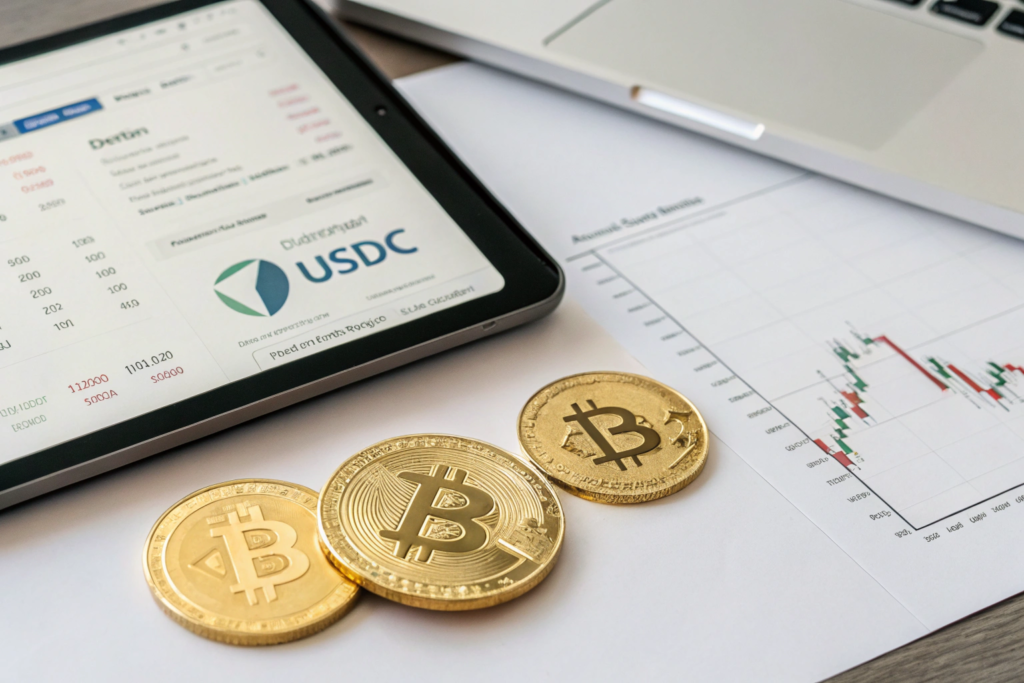
The best cryptocurrencies for factory payments are US dollar-pegged stablecoins, with USDT, Tether, on the TRON network and USDC, USD Coin, on the Solana or Ethereum Layer-2 networks being the two leading choices. USDT on TRON is the most popular combination in international trade due to its extremely low transaction fees, typically around 1 dollar, fast confirmation times of a few minutes, and widespread adoption among Asian and Latin American trading partners. USDC on Solana offers even faster speeds and near-zero fees, and USDC is issued by Circle, a US-regulated entity that provides a high level of transparency and regulatory compliance. DAI, a decentralized stablecoin, is a third option preferred by buyers who prioritize decentralization and censorship resistance, though it has lower liquidity and less widespread merchant acceptance. Bitcoin and Ethereum should be avoided as payment currencies due to their price volatility, though they can be used as the funding source if converted to stablecoins before the transaction.
The choice of blockchain network is as important as the choice of stablecoin. A stablecoin like USDT exists on multiple blockchains, including Ethereum, TRON, BNB Smart Chain, and Solana. The transaction fee and speed vary dramatically between these networks. Sending USDT on the Ethereum mainnet can cost 5 to 50 dollars in gas fees depending on network congestion. Sending the same USDT on the TRON network costs around 1 dollar. We always specify the preferred network to our buyers to avoid unnecessary fees. Here is a closer look at the two market leaders.
Why Is USDT the Most Common Crypto for Trade Payments?
USDT, issued by Tether, is the undisputed market leader in stablecoin usage for international trade and payments. It has the largest market capitalization of any stablecoin, over 80 billion dollars, and the highest daily trading volume, often exceeding Bitcoin. Its dominance in trade payments is driven by several factors. First, network effects. USDT is the most widely accepted cryptocurrency among factories, trading companies, and suppliers in Asia. When a buyer asks if we accept crypto, they almost always mean USDT. When our material suppliers accept crypto, they accept USDT. The ecosystem has standardized around it. Second, the TRON network advantage. The majority of USDT in circulation is on the TRON blockchain, known as TRC-20 USDT. TRON was specifically designed for high-throughput, low-cost payments. Transactions confirm in seconds to minutes and cost around 1 dollar regardless of the amount sent. This is a fraction of the cost of an international wire transfer and even significantly cheaper than USDT on the Ethereum network. The TRON network has become the de facto payment rail for B2B crypto transactions in many parts of the world. Third, widespread wallet support. Almost every crypto wallet, from basic mobile wallets to institutional-grade custody solutions, supports USDT on TRON. Buyers and factories do not need specialized software. They can use the wallet they already have. The criticisms of USDT center on transparency. Tether has historically been less transparent about its reserve composition than its competitor Circle, which issues USDC. Some buyers and institutions prefer USDC for this reason. However, in terms of practical utility for trade payments, USDT remains the dominant choice.
Should Factories Accept Bitcoin or Ethereum Directly?
I advise factories not to accept Bitcoin or Ethereum as the direct payment currency for order transactions. The reason is simple. Price volatility. Bitcoin can move 5 percent or more in a single day. Ethereum can be similarly volatile. If a buyer agrees to pay 1,000 dollars for an order and sends Bitcoin worth 1,000 dollars at the moment of the transaction, the value of that Bitcoin when the factory converts it to fiat currency, perhaps minutes or hours later, could be 980 dollars or 1,020 dollars. This uncertainty is unacceptable for a manufacturing business that operates on thin margins. A 2 percent adverse price movement on a large order can represent thousands of dollars of unexpected loss. The factory is in the business of making accessories, not speculating on cryptocurrency prices. Bitcoin and Ethereum do have a role in the crypto payment ecosystem. A buyer may hold their wealth in Bitcoin. They may prefer to transact in Bitcoin. The solution is a payment processor that accepts Bitcoin and instantly converts it to a stablecoin or to fiat currency at the point of transaction. The buyer sends Bitcoin. The processor locks in the dollar exchange rate at that instant. The factory receives USDT or US dollars. The factory is never exposed to Bitcoin’s volatility. This is the model used by BitPay, Coinbase Commerce, and other crypto payment gateways. It gives the buyer the flexibility to pay with the cryptocurrency they hold while protecting the factory from price risk. For direct, wallet-to-wallet transactions without a processor, the payment must be in a stablecoin. There is no safe way for a factory to accept a volatile cryptocurrency directly.
How to Set Up a Factory Crypto Payment System
Setting up a factory to accept cryptocurrency payments is a project that requires planning, but it is not technically difficult. The key decisions are whether to use a payment gateway or a direct wallet, which custody solution to use, and how to integrate crypto payments into the existing accounting and compliance framework. A factory should not simply post a personal wallet address and ask buyers to send funds. That approach is unprofessional, creates accounting nightmares, and may run afoul of tax and anti-money laundering regulations.
Setting up a factory crypto payment system requires five key steps. First, choose a payment gateway or a custody solution. A payment gateway like BitPay or Coinbase Commerce handles the entire payment process, including invoice generation, exchange rate locking, KYC compliance, and conversion to fiat currency. This is the recommended option for most factories because it minimizes technical complexity and compliance risk. Second, establish a business wallet if opting for direct wallet-to-wallet payments. This should be a multi-signature wallet or a hardware wallet solution that requires multiple approvals for outgoing transactions, ensuring that no single employee can move funds unilaterally. Third, integrate crypto payments into the accounting system by treating crypto as a payment method alongside wire transfers, with each transaction recorded in its dollar value at the time of receipt. Fourth, develop a crypto payment policy document that specifies which cryptocurrencies are accepted, on which networks, with what minimum and maximum transaction amounts, and what the refund policy is if a refund is necessary. Fifth, implement a compliance procedure that includes verifying the buyer’s identity, screening wallet addresses against sanctions lists using blockchain analytics tools, and maintaining transaction records for the legally required period.
The technical setup can be completed in a matter of days. The compliance and accounting integration takes longer and should be done with the guidance of a qualified accountant or financial advisor familiar with cryptocurrency. Let me explain the two most important setup decisions.
What Is a Crypto Payment Gateway and Do You Need One?
A crypto payment gateway is a service that sits between the buyer and the factory, handling the entire cryptocurrency payment process. The best-known gateways are BitPay, Coinbase Commerce, and NOWPayments. The gateway works as follows. The factory creates an invoice in the gateway’s dashboard, specifying the dollar amount and the accepted cryptocurrencies. The gateway generates a payment link or a QR code that is sent to the buyer. The buyer opens the link, selects their preferred cryptocurrency, and sends the payment. The gateway monitors the blockchain for the transaction, confirms when it is received, locks in the exchange rate, and either forwards the cryptocurrency to the factory’s wallet or converts it to fiat currency and deposits it in the factory’s bank account. The gateway handles all the technical complexity. The factory does not need to manage private keys, worry about network fees, or deal with different wallet software for different cryptocurrencies. The gateway also handles compliance. Reputable gateways perform KYC checks on both the merchant and the buyer. They screen transactions for links to sanctioned addresses. They provide transaction records and reports that are suitable for accounting and tax purposes. The cost of using a gateway is a transaction fee, typically 1 percent of the transaction value. This fee covers the payment processing, the currency conversion, and the compliance infrastructure. For most factories, I strongly recommend using a payment gateway. The 1 percent fee is a small price to pay for the convenience, security, and compliance peace of mind. Direct wallet-to-wallet payments are an option for factories with in-house crypto expertise, but they shift the burden of key management, network fee management, and compliance onto the factory.
How Should a Factory Manage Crypto Price Volatility?
Volatility management is the core financial risk of accepting cryptocurrency. The strategy depends on whether the factory holds the cryptocurrency or converts it immediately. The simplest and safest strategy is immediate conversion. As soon as the payment is received, either through the gateway or into the factory’s wallet, the cryptocurrency is converted to a stablecoin or to fiat currency. This eliminates volatility exposure entirely. The factory receives the dollar value of the invoice, no more, no less. The conversion can be automated. A payment gateway does this by default. For direct wallet payments, the factory can use an automated conversion service or manually convert upon receipt. If the payment is received in a stablecoin like USDT, the need for conversion is less urgent because the value is stable. The factory can hold the USDT for days or weeks without meaningful value change. Some factories choose to hold a portion of their crypto receipts in stablecoins to build a working capital buffer for paying crypto-accepting suppliers, or to earn yield through decentralized finance lending protocols. This is a more advanced strategy that carries its own risks and should only be pursued with a clear understanding of the counterparty and smart contract risks involved. The one strategy to absolutely avoid is holding volatile cryptocurrencies like Bitcoin or Ethereum as a speculative treasury asset. A factory’s working capital is not a trading portfolio. The funds needed to pay workers, buy materials, and cover overhead should never be exposed to crypto market volatility. If a buyer insists on paying in Bitcoin, the factory should use a gateway that instantly converts to dollars, or manually convert the Bitcoin to USDT immediately upon receipt. The goal is to separate the payment method, which can be crypto, from the factory’s operating capital, which should be in stable, predictable assets.
What Are the Compliance Risks of Crypto Factory Payments
Cryptocurrency payments, for all their benefits, come with a unique set of compliance risks that traditional bank transfers do not. These risks are manageable, but they must be understood and addressed proactively. The primary risks are regulatory, counterparty, and reputational. Regulatory risk arises because the legal status of cryptocurrency varies by jurisdiction, and regulations are evolving rapidly. Counterparty risk arises because blockchain transactions are pseudonymous. A factory may receive funds from a wallet address without knowing the real-world identity of the sender. Reputational risk arises because crypto payments can be associated in the public mind with illicit activity, even when the transaction is perfectly legitimate.
The compliance risks of crypto factory payments fall into three categories. Anti-Money Laundering and Counter-Terrorism Financing risk is the most serious concern. Factories must ensure they are not inadvertently receiving funds from sanctioned individuals, criminal enterprises, or wallets associated with illicit activity. This requires screening incoming transactions against sanctions lists maintained by the Office of Foreign Assets Control in the US, the European Union, and the United Nations. Tax compliance risk arises because crypto payments are taxable events in most jurisdictions. The factory must record the dollar value of the crypto at the time of receipt and report it as income. Failure to do so can result in tax penalties and audits. Regulatory licensing risk is emerging as some jurisdictions require businesses that accept crypto payments to register as money services businesses or obtain specific crypto licenses. A factory accepting crypto should consult with legal counsel to determine if any licensing requirements apply in their jurisdiction or in the jurisdictions of their major buyers.
The compliance burden is one of the strongest arguments for using a regulated payment gateway. The gateway handles the KYC, the sanctions screening, and the transaction monitoring. It provides the compliance documentation that the factory needs for its own records and for any regulatory inquiries. For factories that choose to accept crypto directly, compliance must be built in-house, which requires investment in blockchain analytics tools and compliance personnel. Here are the two most important compliance areas.
How Can Factories Screen Crypto Payments for Sanctions Risk?
Sanctions screening is the non-negotiable foundation of crypto payment compliance. The Office of Foreign Assets Control, OFAC, in the United States maintains a list of sanctioned individuals, entities, and cryptocurrency wallet addresses. It is illegal for US persons, and for anyone using the US financial system, to transact with these sanctioned parties. Other countries have their own sanctions lists. A factory that receives payment from a sanctioned wallet address is at risk of having its own bank accounts frozen, its assets seized, and its business relationships terminated. Screening a crypto transaction for sanctions risk involves checking the sender’s wallet address against a database of known sanctioned addresses. This is done using blockchain analytics tools provided by companies like Chainalysis, Elliptic, and TRM Labs. These tools have mapped the blockchain and tagged millions of addresses with real-world identities and risk categories. When a factory receives a payment, the analytics tool checks the sender’s address and the addresses that have previously transacted with it. If the address is flagged as high-risk or directly sanctioned, the payment should be rejected and, if required by local law, reported to the relevant financial intelligence unit. For factories using a payment gateway, this screening is done automatically by the gateway. The factory never sees a payment from a sanctioned address because the gateway blocks it. For factories accepting direct wallet payments, a blockchain analytics subscription is a necessary cost of doing business. The cost is typically a few thousand dollars per year for a basic compliance package, which is a small investment compared to the cost of a sanctions violation.
What Tax Implications Do Crypto Payments Create?
Tax implications are the area of crypto payment compliance that catches many businesses off guard. In most jurisdictions, including China, the United States, and the European Union, receiving cryptocurrency as payment for goods or services is a taxable event. The factory must recognize the revenue at the fair market value of the cryptocurrency at the time of receipt. If the cryptocurrency is later sold or converted to fiat currency, any gain or loss relative to the value at the time of receipt is a capital gain or loss. The record-keeping requirements are more demanding than for traditional payments. For each crypto transaction, the factory must record the date and time of receipt, the type and amount of cryptocurrency received, the fair market value in the local fiat currency at the moment of receipt, the purpose of the payment, the invoice number, and the identity of the payer. If the cryptocurrency is later converted, sold, or used to pay a supplier, a separate record must be kept of that subsequent transaction, including the value at the time of the subsequent transaction and the resulting gain or loss. This record-keeping is manageable but requires discipline and good systems. A payment gateway simplifies the process by providing exportable transaction reports with all the required data fields. For direct wallet transactions, the factory must manually record the information or use crypto accounting software like CoinTracking, Koinly, or CryptoTaxCalculator. I recommend that any factory considering accepting crypto payments consult with a tax professional who has specific experience with cryptocurrency. The rules are complex, they vary by country, and they are changing rapidly. The cost of the consultation is a fraction of the cost of a tax audit and penalty.
Conclusion
The best payment method for a factory that accepts cryptocurrency is a stablecoin payment, USDT or USDC, processed through a regulated payment gateway that handles compliance, volatility, and conversion. This approach delivers all the benefits of crypto, speed, low cost, transparency, and borderless transfer, while mitigating the risks that have historically kept traditional businesses away from digital assets. We have explored why the speed and cost advantages of stablecoin payments are transformative for international trade, with transactions clearing in minutes for pennies instead of days for dollars. We have identified USDT on TRON and USDC on Solana as the practical standard for B2B crypto payments, and explained why volatile cryptocurrencies like Bitcoin should not be accepted directly without instant conversion. We have walked through the setup process, from choosing a payment gateway to establishing a business wallet to integrating crypto into the accounting system. And we have addressed the compliance realities, sanctions screening, tax reporting, and regulatory awareness, that must be part of any legitimate crypto payment program.
At AceAccessory, we have invested the time and resources to implement cryptocurrency payments properly. We accept USDT, USDC, and a limited selection of other stablecoins through a regulated payment gateway. Our buyers receive a payment link with their invoice, can pay in seconds from their wallet, and receive immediate confirmation. We handle the compliance, the conversion, and the accounting on our end. The feedback from our crypto-native buyers has been overwhelmingly positive. For them, paying in crypto is not a novelty. It is how their business operates.
If you are a buyer who prefers to pay in cryptocurrency, or if you are a factory owner considering adding crypto to your payment options, I am happy to share our experience in more detail. Contact our Business Director, Elaine, at elaine@fumaoclothing.com. She can discuss our accepted cryptocurrencies, walk you through our payment process, and answer any questions about how crypto payments work in practice. The future of international trade payments is faster, cheaper, and more transparent. We are proud to be part of that future.